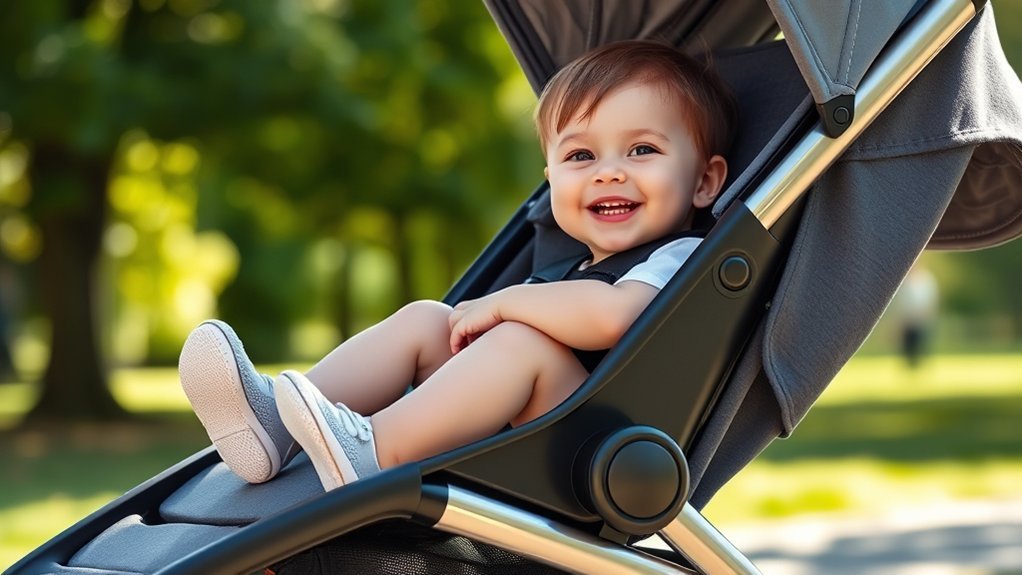

Stroller safety on windy days starts with knowing when not to go out. If strong or unpredictable gusts affect your ability to steer, debris is blowing, or a High Wind Warning or severe thunderstorm warning is in effect, postpone the walk and move to a sturdy indoor location. In lighter wind, use the stroller’s restraint system correctly, keep control of the handle, avoid hanging bags from it, and follow the manufacturer’s limits for the storage basket and accessories.
Windy weather can also make a child feel colder when temperatures are low. Dress your child for the actual temperature and conditions, stay alert for changing weather, and turn back if the stroller becomes difficult to control.
Understanding Windy Day Risks for Stroller Safety

Wind can make stroller outings more difficult by affecting steering, catching a raised canopy, and blowing dust, leaves, or other loose objects into your path. Very light strollers may also feel harder to control when exposed to sudden gusts, although stroller design, loading, terrain, and wind direction all affect stability.
A wide, stable base is a useful general stroller safety feature, but no stroller should be treated as safe for severe wind simply because it is heavier or wider. If a gust noticeably moves the stroller, makes steering difficult, or causes you to struggle to maintain control, head indoors.
Keep your child properly restrained according to the stroller manufacturer’s instructions whenever they are riding. Apply the stroller brake whenever you stop, and never leave a child unattended in the stroller.
Loose items are another concern. Bags, toys, blankets, or accessories can blow around or interfere with control. Avoid hanging bags from the stroller handle because doing so can change the stroller’s balance and increase the risk of tipping.
Preparing Your Stroller for Windy Conditions

Before heading outside, inspect the stroller rather than trying to modify it specifically for the wind. The wheels should roll properly, the frame should lock securely into its open position, the restraint system should work correctly, and the brakes should hold the stroller when applied.
Use these precautions before a breezy-weather outing:
- Follow the storage-basket limit: Keep necessary items in the stroller’s lower basket only within the weight limit stated in the manufacturer’s instructions. Do not add heavy objects simply to act as ballast.
- Keep the handle clear: Do not hang purses, shopping bags, backpacks, or heavy accessories from the handle unless the stroller manufacturer specifically approves the setup.
- Secure loose belongings: Store lightweight items where they cannot blow away or distract you while you are steering.
- Check the restraint: Buckle your child in correctly before moving the stroller.
- Check the brakes: Make sure they work before leaving and apply them whenever the stroller is stopped.
- Use the canopy as directed: Position and secure it according to the stroller manual. If gusts repeatedly catch the canopy or make the stroller harder to control, end the outing.
Aftermarket stroller weights or improvised straps should not be assumed to make a stroller safe in strong winds. They can change the balance or loading of the stroller, so use only accessories and configurations permitted by the manufacturer.
Dressing Your Child Appropriately for Windy Weather

Windy weather is not always cold, so dress your child for the temperature, wind chill, moisture, and length of the outing rather than for wind alone. Overdressing a child on a warm but breezy day can make them uncomfortable.
In cold conditions, several thin layers can help keep children warm and dry. A weather-appropriate outer layer can reduce exposure to cold wind, while a well-fitting hat, mittens or gloves, and warm footwear help protect the extremities.
For older babies and young children, a commonly used cold-weather rule is to dress them in roughly one additional layer compared with what an adult would comfortably wear in the same conditions. Check your child regularly rather than relying only on this rule, because individual comfort and weather conditions vary.
Choose clothing without loose cords or unsecured items that could catch on the stroller. If clothing becomes wet, your child seems unusually cold, or conditions deteriorate, move indoors.
Choosing Safe Routes for Stroller Outings
Route choice becomes more important when wind is present. Choose a route where you can maintain good stroller control and reach a sturdy indoor location quickly if conditions worsen.
For a breezy-day stroller walk:
- Prefer wide, even sidewalks with limited vehicle traffic and enough room to maneuver safely.
- Avoid construction areas, scaffolding, temporary signs, trash containers, and other objects that could become loose or fall.
- Stay away from trees with potentially falling branches when winds are strong.
- Avoid routes beneath damaged trees, utility lines, or visibly unstable objects.
- Be cautious around building corners and exposed intersections, where gusts may change suddenly.
- Choose a shorter route if the forecast calls for strengthening winds or rapidly changing weather.
Do not depend on trees as shelter during strong winds. Branches and other overhead objects can themselves become hazards.
When to Skip a Stroller Walk
There is no single wind-speed number that guarantees a stroller walk will be safe in every situation. Stroller design, terrain, surrounding objects, gust strength, temperature, and your ability to control the stroller all matter.
| Conditions | Safer approach |
|---|---|
| Light breeze, clear path, stroller remains easy to control | A walk may be reasonable with normal stroller precautions and close supervision. |
| Repeated gusts affect steering or catch the canopy | Shorten the outing or move indoors. |
| Dust, branches, signs, trash, or other debris is blowing | Do not continue the stroller walk; seek a safer indoor location. |
| High Wind Watch | Reconsider your plans and check updated local forecasts before leaving. |
| High Wind Warning or severe thunderstorm warning | Stay indoors or seek shelter in a sturdy building rather than taking a stroller walk. |
| Cold temperatures combined with strong wind | Limit outdoor exposure and dress the child appropriately for the temperature and wind chill. |
If conditions feel difficult enough that you are concentrating more on keeping the stroller under control than on safely navigating your surroundings, that is a practical sign to end the walk.
Essential Safety Tips for Stroller Use on Windy Days
The most useful windy-day precautions are the same fundamentals that improve stroller safety in ordinary conditions, combined with extra attention to the weather.
- Use the restraint system: Secure your child according to the stroller manufacturer’s directions every time they ride.
- Apply the brakes when stopped: Do not rely on holding the stroller in place with one hand while distracted.
- Do not overload the stroller: Follow the manufacturer’s basket, tray, seat, and accessory weight limits.
- Keep bags off the handle: Hanging heavy items from the handle can affect balance and increase tip-over risk.
- Maintain control: Keep a secure grip while moving and avoid situations where another object or activity prevents you from controlling the stroller.
- Watch for debris: Leaves may be harmless, but branches, construction materials, signs, and other wind-blown objects can create serious hazards.
- Monitor the weather: Check forecasts and official alerts before leaving and remain alert to changing conditions during the walk.
- Know when to stop: If gusts affect steering, visibility, your footing, or the stroller’s stability, go indoors.
Safety note: Always follow the instructions and limits in your specific stroller’s manual. Official local weather warnings take priority over general outdoor advice.
Frequently Asked Questions
Can I Use a Lightweight Stroller on Windy Days?
A lightweight stroller may be usable in a mild breeze if it remains easy to control and you follow the manufacturer’s instructions. However, do not assume that adding weight will make it safe in stronger winds. If gusts move the stroller, interfere with steering, or create blowing-debris hazards, postpone the outing.
What Are the Signs of an Unstable Stroller in the Wind?
Warning signs include noticeable sideways movement, wheels changing direction unexpectedly, repeated canopy movement that affects steering, difficulty keeping the stroller on your intended path, or any sensation that it may tip. If you have to struggle to maintain control, turn back or move indoors.
How Can I Secure My Stroller in Strong Winds?
Do not rely on weights, straps, or the parking brake to make a stroller safe for a strong-wind outing. During dangerous winds, the safer choice is to take your child and stroller into a sturdy building. When the stroller is stationary in ordinary conditions, apply its brake as directed by the manufacturer and keep your child supervised.
Are There Specific Strollers Designed for Windy Conditions?
Strollers vary in weight, wheel design, base width, and stability, but those features should not be treated as a guarantee that a stroller is safe in strong winds. Choose a stroller with appropriate safety features, follow its user manual and weight limits, and avoid outings when weather conditions make safe control difficult.
What Should I Do if My Child Becomes Frightened by the Wind?
Speak calmly, stop in a safe location, and reassure your child. You can use familiar conversation, singing, or another soothing activity. If the noise, temperature, blowing debris, or movement continues to upset your child, shorten the walk and move indoors.
Should I Use the Stroller Canopy in Strong Wind?
Use the canopy only in the positions and configurations permitted by your stroller manufacturer. If gusts repeatedly catch the canopy, move it unexpectedly, or make steering difficult, do not continue the walk simply by adjusting the canopy; move to a safer indoor location.
Does Wind Chill Matter for a Child in a Stroller?
Yes, when the weather is cold. Wind can increase heat loss from exposed skin, and young children require extra caution in cold conditions. Dress your child in appropriate layers, keep them dry, limit exposure during very cold or windy weather, and move indoors if they become uncomfortable or unusually cold.
Conclusion
Safe stroller use on a windy day depends more on judgment and weather conditions than on trying to make the stroller heavier. In a mild breeze, proper restraints, working brakes, sensible loading, a clear route, and close supervision can reduce avoidable risks.
When stronger gusts begin affecting stroller control or when official high-wind or severe-weather warnings are in effect, postpone the outing. Keeping your child indoors until conditions improve is safer than trying to stabilize a stroller against dangerous wind.