Disclosure: As an Amazon Associate, we earn from qualifying purchases. If you click a link on this page and make a purchase, we may receive a small commission at no extra cost to you.
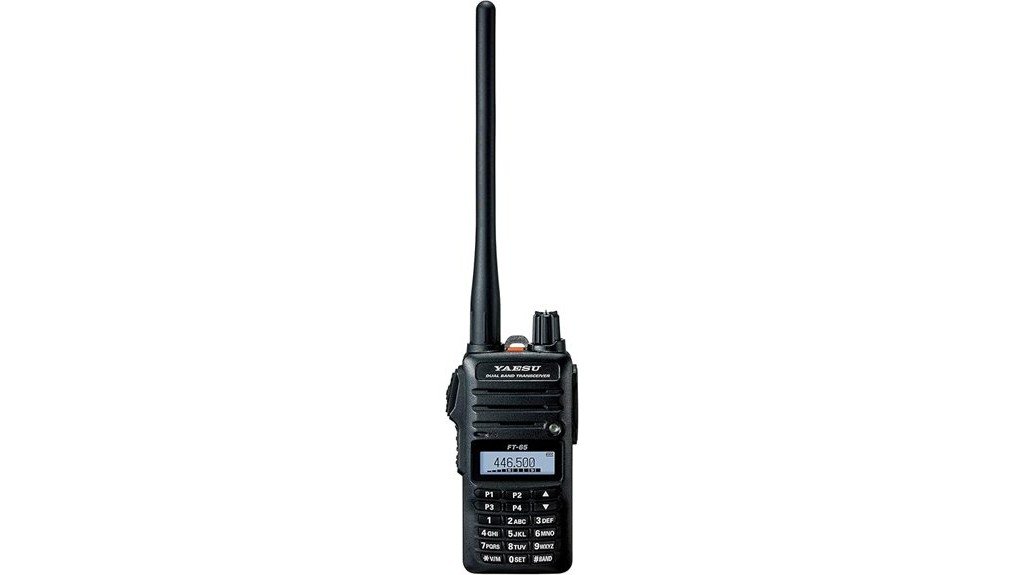
Choosing a handheld ham radio can be frustrating when you need clear audio, reliable controls, and enough battery life for a full outing. The Yaesu FT-65R offers dual-band analog FM communication, three transmit-power settings, and a rugged IP54-rated body. Its loud front speaker and removable battery make it appealing for licensed operators who prefer simple, practical equipment. This review explains its specifications, real-world uses, limitations, and whether it fits your communication needs.
Quick Verdict
Editorial Rating: 8/10
Best For: Licensed amateur-radio operators who want a rugged, straightforward VHF/UHF analog FM handheld for repeaters, local communication, and outdoor activities.
Bottom Line: The Yaesu FT-65R combines selectable 5 W, 2.5 W, and 0.5 W transmission with a loud speaker, removable lithium-ion battery, and useful scanning features. It is a strong analog option, but you should choose a different radio if you need C4FM digital voice, GPS, APRS, Bluetooth, or aviation-band reception.
Yaesu FT-65R Key Specifications
The FT-65R is designed around conventional analog FM operation. These specifications describe the USA model unless otherwise stated. Frequency limits, supplied power accessories, and warranty conditions may vary by region.
| Specification | Detail |
|---|---|
| Brand | Yaesu |
| Model | FT-65R |
| Product type | Dual-band VHF/UHF analog FM handheld transceiver |
| Amateur bands | 2 meters and 70 centimeters |
| Transmit power | 5 W high, 2.5 W middle, 0.5 W low at 7.4 V |
| USA transmit coverage | 144-148 MHz and 430-450 MHz |
| USA receive coverage | 136-174 MHz and 400-480 MHz |
| FM broadcast reception | 65-108 MHz, receive only |
| Receiver design | Direct conversion |
| Receiver sensitivity | 0.2 µV at 12 dB SINAD on specified VHF/UHF narrow-FM ranges |
| Speaker output | 0.8 W rated at 10% THD; 1 W maximum internal speaker output |
| Standard battery | SBR-25LI, 7.4 V, 1,950 mAh lithium-ion |
| Optional battery | SBR-26LI, 7.4 V, 2,500 mAh lithium-ion |
| Claimed operating time | About 9-10 hours with the standard battery and 11.5-12.5 hours with the optional battery on amateur bands, under specified test conditions |
| Standard battery charging | Approximately 3.5 hours from fully discharged |
| Optional battery charging | Approximately 4.5 hours |
| Memory capacity | 200 standard memory channels, 10 memory banks, and additional dedicated memories |
| Quick Recall Keys | Four programmable keys |
| Programming | On-radio keypad or compatible Yaesu PC software with optional SCU-35 cable |
| Digital connectivity | No built-in C4FM, DMR, GPS, APRS, or Bluetooth |
| Case construction | Die-cast chassis with polycarbonate front panel |
| Dimensions | 2.0 x 4.1 x 1.2 inches (52 x 104.5 x 30 mm), excluding knob and antenna |
| Weight | 9.17 oz (260 g), including SBR-25LI battery and antenna |
| Protection | IP54 dust and splash resistance; MIL-STD-810 C, D, and E specifications |
| Operating temperature | -20°C to +60°C (-4°F to +140°F), subject to operating and charging restrictions |
| Antenna impedance | 50 ohms |
| Included accessories | SBR-25LI battery, SBH-22 charging cradle, antenna, belt clip, documentation, and regional power accessories |
| Warranty | Yaesu advertises a three-year manufacturer warranty; regional terms apply |
| Best use | Licensed amateur-radio communication, analog repeaters, local simplex contacts, and field operations |
Key Takeaways
- Flexible transmit power: Select 5 W, 2.5 W, or 0.5 W based on the communication path and battery needs.
- Loud audio: The front speaker delivers up to 1 W of output, making voice communication easier to hear in many outdoor settings.
- Removable battery: The standard 1,950 mAh pack supports around nine hours or more under Yaesu’s specified operating cycle.
- Useful memory system: You get 200 standard channels, four Quick Recall Keys, and several scanning options.
- Rugged, not waterproof: IP54 helps protect against dust and splashes but does not permit immersion.
- Analog-only operation: You do not get built-in digital voice, GPS, APRS, Bluetooth, or smartphone programming.
What Is the Yaesu FT-65R?
The Yaesu FT-65R is a handheld amateur-radio transceiver designed for analog FM communication on the 2-meter and 70-centimeter bands. The USA model transmits on 144-148 MHz and 430-450 MHz. Its broader receive ranges let you monitor additional compatible analog FM signals where reception is permitted.
Its main appeal is a practical set of radio features rather than a complex digital interface. You get adjustable power, repeater functions, a physical keypad, memory channels, scanning, and a removable battery. Four programmable Quick Recall Keys also help you reach frequently used channels or menu functions.
The FT-65R is meant for operators who prefer direct control over connected features. You can use it for local repeaters, simplex contacts, and licensed field communication. It is not a substitute for a certified aviation or marine radio, and it is not designed for license-free consumer radio services.
How This Review Was Evaluated
This editorial assessment uses Yaesu’s published specifications, operating instructions, supported accessories, and documented limitations. The 8/10 score reflects its feature set and suitability for analog amateur-radio use. It is not a laboratory measurement or a claim of independent hands-on testing.
For additional technical details, see the official Yaesu FT-65R product page and the FT-65R operating manual.
Who Should Buy It?
Best For
- Licensed operators who regularly use analog FM repeaters and simplex frequencies.
- Hikers, event volunteers, and field operators who want a compact radio with splash resistance and clear speaker audio.
- Buyers who prefer physical controls, removable batteries, memory channels, and optional PC programming.
Skip If
- You need digital voice modes, built-in GPS, APRS, Bluetooth, or phone-based programming.
- You want aviation-band monitoring or a certified radio for marine or aviation transmission.
- You expect guaranteed long-distance communication regardless of terrain, antenna position, or repeater availability.
Before You Buy: The FT-65R is an amateur-radio transceiver, not a license-free walkie-talkie. Check your country’s licensing rules and the exact regional model before transmitting. Also confirm the included charger and battery, since seller packages can differ. IP54 means dust and splash resistance, not waterproof or submersible protection.
Design, Build Quality, and Portability
The FT-65R measures approximately 2.0 inches wide, 4.1 inches high, and 1.2 inches deep without the antenna and knob. Its operating weight is about 9.17 ounces with the standard battery and antenna. These dimensions make it practical to carry on a belt, in a radio pouch, or in a field bag.
Yaesu describes a die-cast chassis and polycarbonate front panel. The construction is designed to withstand normal field handling while keeping the radio compact. The physical keypad and large display also support operation without relying on a touchscreen.
How Durable Is the FT-65R?
The IP54 rating means the radio has protection against limited dust entry and water splashes. Yaesu also lists MIL-STD-810 C, D, and E specifications for its rugged construction.
This makes the FT-65R suitable for many outdoor situations, including light rain and dusty areas. However, it is not waterproof. You should avoid immersion, heavy water exposure, and damaged accessory seals.
For the rated protection to remain effective, keep the battery secured and the MIC/SP rubber cap closed when no accessory is connected. A loose cap or damaged seal can reduce resistance to moisture.
Battery Life and Charging Options
The standard SBR-25LI is a removable 7.4 V, 1,950 mAh lithium-ion battery. Yaesu lists approximate operating times of 10 hours on the 144 MHz band and 9 hours on the 430 MHz band under its stated test cycle.
The optional SBR-26LI increases capacity to 2,500 mAh. Yaesu’s corresponding estimates are about 12.5 hours on 144 MHz and 11.5 hours on 430 MHz.
These are not guaranteed continuous-transmission figures. The published operating cycle includes six seconds of transmission, six seconds of reception, and 48 seconds of standby. Your results may be shorter if you transmit often, use high power, keep the volume high, or operate in cold conditions.
How Long Does Charging Take?
The supplied SBH-22 rapid-charging cradle charges a fully depleted standard SBR-25LI battery in approximately 3.5 hours. The higher-capacity SBR-26LI takes about 4.5 hours.
The charging cradle uses the specified AC adapter. It is not intended to operate the radio as an external power supply while transmitting or receiving.
The removable battery design is helpful when you need to operate for extended periods. Instead of depending on one charge, you can carry a compatible, fully charged spare pack.
How Can You Extend Battery Life?
- Use 0.5 W or 2.5 W when those settings provide a reliable connection.
- Reduce unnecessary scanning and excessive speaker volume.
- Enable available battery-saving and automatic power-off features when appropriate.
- Carry a charged spare battery for long outings.
- Turn off the radio when it is not needed.
- Follow Yaesu’s charging and storage instructions rather than leaving the battery charging for days.
Pro Tip: Before a long event, charge both your installed battery and a spare. Start with the lowest transmit-power setting that gives a clean signal, then increase power only when necessary. This can help conserve battery energy without sacrificing reliable communication.
RF Performance, Audio, and Reception
Transmit Power and Communication Range
The FT-65R offers three selectable transmit-power settings: 5 W, 2.5 W, and 0.5 W. This lets you adjust output for different operating conditions.
High power provides more link margin when a signal is weak. Middle or low power may be sufficient when you communicate through a nearby repeater or with another operator at a short distance.
However, 5 W does not guarantee a fixed communication range. Hills, buildings, foliage, antenna quality, and elevation can make a large difference. A clear path to a repeater may provide better communication than high power in a heavily obstructed area.
Receiver Sensitivity and Signal Quality
Yaesu specifies a direct-conversion receiver with 0.2 µV sensitivity at 12 dB SINAD across the stated VHF and UHF narrow-FM test ranges. This is a technical indication of the receiver’s ability to detect relatively weak signals under controlled conditions.
Actual reception still depends on the antenna, surrounding radio signals, local interference, and station location. A sensitive receiver cannot remove every source of interference or overcome poor antenna placement.
Speaker Audio and Clarity
The large front speaker is one of the FT-65R’s more practical features. Yaesu specifies 0.8 W audio output at 10% total harmonic distortion, with a maximum internal speaker output of 1 W.
This gives the radio useful audio capacity for voice communication in many outdoor environments. You can increase the volume when monitoring calls near a gathering or around moderate background noise.
Very loud surroundings may still make a handheld speaker hard to hear. In those situations, a compatible speaker microphone or earpiece may be a better choice.
Controls, Scanning, and Everyday Features
Physical Keypad and Quick Recall Keys
The front keypad allows direct frequency entry and access to memory channels, repeater settings, power options, and menu functions. You do not need a smartphone to complete basic setup.
Four programmable Quick Recall Keys provide shortcuts to preferred channels or selected menu functions. Once configured, they can reduce the number of button presses needed during regular operation.
Memory Channels and Scanning
The FT-65R supports 200 standard memory channels and 10 memory banks. This gives you room to organize local repeaters, simplex frequencies, and other permitted channels.
Supported scanning functions include programmable VFO scanning, memory scanning, priority-channel scanning, and weather-alert scanning. These features can help you monitor selected frequencies without manually entering each one.
The radio also supports CTCSS and DCS signaling for compatible repeater and group-squelch arrangements. These tones help manage which signals open your receiver’s squelch, but they do not encrypt communications.
Emergency and Convenience Features
Other features include an LED flashlight, emergency alarm functions, ARTS, busy-channel lockout, automatic power off, and a transmitter time-out timer.
The time-out timer is especially useful because it can limit an accidentally prolonged transmission. Busy-channel lockout can help prevent transmission when the radio detects an occupied channel, depending on its configuration.
Weather-channel features are useful where compatible broadcasts are available. You should still maintain other ways to receive emergency information rather than relying on one handheld radio.
PC Programming and Connectivity
You can program the FT-65R directly from its keypad. For a larger channel list, Yaesu also provides compatible PC programming software that uses the optional SCU-35 programming cable.
Radio-to-radio cloning is supported with the optional SCU-36 cable. This can be convenient when you need to copy compatible settings between radios.
The FT-65R has no built-in Bluetooth, native smartphone-app programming, GPS, APRS, C4FM, or DMR. If you need those features, you should compare other models before buying.
How It Performs in Real Use
The following scenarios describe how the FT-65R’s documented features apply to common operating needs. They are practical buying assessments, not claims of independent field testing.
For Local Repeater Use
The FT-65R covers the core functions needed for conventional analog amateur repeaters. You can configure the correct frequency, offset, and CTCSS or DCS settings, then store the channel for later use.
The 200-channel memory system is helpful when you regularly access several repeaters. If a nearby repeater receives your signal clearly on low power, you may not need to transmit at the full 5 W setting.
For Simplex and Outdoor Use
On hikes or outdoor activities, the compact body, removable battery, and IP54 protection make the radio convenient to carry. The belt clip and physical controls also help when you need quick access.
Direct simplex communication depends heavily on terrain. Two operators on opposite sides of a hill may have a weak connection, while operators with clear line of sight may communicate over a greater distance.
For better results, choose a suitable location, use a properly installed antenna, and avoid assuming the maximum power setting will overcome every obstruction.
For Noisy Events and Volunteer Work
The front speaker provides up to 1 W of output, which is useful when monitoring voice calls around crowds or moderate background noise.
Memory channels and Quick Recall Keys can also reduce setup time during a scheduled amateur-radio event. You can prepare approved working frequencies before arriving rather than entering them repeatedly.
For louder environments, a compatible earpiece or external speaker microphone may improve usability. Any event communication must still follow applicable licensing and frequency rules.
For Emergency Backup Communication
The FT-65R can be a useful part of a licensed operator’s emergency communication kit. Its removable battery, scanning functions, LED flashlight, and alarm features add practical flexibility.
However, it should not be your only method of seeking help. Communication depends on available contacts, operating frequencies, repeater access, charged batteries, and lawful radio use.
Keep an updated contact and frequency plan, carry backup power, and use appropriate emergency services whenever available.
Setup and Usage Tips
Setup Tips Before First Use
- Check your license and regional model: Confirm that your license permits transmission on the selected frequencies.
- Install the antenna: Secure the appropriate antenna before transmitting. Do not transmit without a suitable antenna attached.
- Charge the battery: Use the specified charger and follow the manual’s battery instructions.
- Set volume and squelch: Adjust these controls so you can hear intended signals without unnecessary background noise.
- Program useful channels: Enter local repeater frequencies, offsets, and tone settings as required.
- Configure safety functions: Consider the transmitter time-out timer and keypad lock to reduce accidental operation.
- Test before an outing: Confirm that you can receive and communicate on an authorized frequency before relying on the setup.
Common Operating Mistakes to Avoid
- Using the wrong repeater offset or CTCSS/DCS tone.
- Transmitting on frequencies outside your authorization.
- Expecting high power alone to provide long-distance coverage.
- Leaving the accessory-port cover open in wet or dusty conditions.
- Forgetting to charge the battery before a long event.
- Assuming that broader receive coverage also permits transmission.
Compatibility and Safety
Compatible Batteries and Accessories
The FT-65R supports accessories designed for its platform. Yaesu identifies the SBR-25LI standard battery, SBR-26LI extended-capacity battery, SBH-22 charging cradle, SCU-35 programming cable, and SCU-36 cloning cable.
Compatible audio accessories include selected speaker microphones and the SSM-512B VOX earpiece microphone. Check the accessory’s exact model compatibility before ordering.
Accessories from other Yaesu handheld families should not be assumed compatible. Charging contacts, connectors, battery shapes, and electrical requirements can differ.
Radio Operation and Licensing
In the United States, ordinary amateur-radio transmission requires the appropriate FCC amateur-radio license and must remain within the operator’s authorized privileges. Other countries have their own licensing and spectrum rules.
The FT-65R is not a certified marine or aviation transmitter. Its ability to receive some frequencies outside the amateur bands does not authorize transmission on those services.
The USA version also does not include the common 118-136 MHz aviation AM receive band. If airband monitoring is a major requirement, you need a receiver that specifically supports it.
Battery and Equipment Safety
Use the charging equipment specified by Yaesu and inspect batteries for damage before use. Do not charge a swollen, leaking, overheated, or visibly damaged battery.
The operating manual specifies charging the battery within approximately 5°C to 35°C (41°F to 95°F). The radio’s wider operating-temperature specification does not mean batteries can safely be charged across that entire range.
Do not immerse the radio, expose it to unnecessary heat, or leave the battery on the charger for several days. Remove the battery for extended storage according to the manufacturer’s guidance.
Follow local rules on transmitting while driving and observe the manual’s RF exposure and equipment separation guidance. Keep the radio away from areas where transmission is prohibited or could interfere with sensitive equipment.
Pros and Cons
Pros
- Three selectable transmit-power levels up to 5 W.
- Loud front speaker with up to 1 W of output.
- IP54 protection and rugged commercial-grade construction.
- Removable 1,950 mAh battery with a higher-capacity option.
- 200 memory channels, Quick Recall Keys, scanning, and repeater functions.
Cons
- No built-in digital voice, GPS, APRS, Bluetooth, or smartphone programming.
- PC programming requires an optional cable, adding cost and setup work.
- IP54 does not protect against immersion, and the USA model lacks aviation AM reception.
Is It Worth the Price?
The Yaesu FT-65R belongs in the entry-to-midrange segment of branded amateur handheld radios. Its value comes from the practical combination of analog FM communication, a rugged body, selectable transmit power, and a removable battery system.
It is worth considering if you regularly use analog amateur repeaters or simplex channels and want a straightforward radio with physical controls. The loud front speaker, memory system, and optional higher-capacity battery are useful advantages for this type of operation.
However, it offers less value if your local communication group uses digital voice or if you need GPS, APRS, wireless programming, or wideband monitoring. You may also need to account for an optional programming cable, spare battery, or audio accessory. Check the current seller package before comparing the total cost.
How It Compares to Alternatives
The Yaesu FT-60R is worth comparing if broad receive coverage and a long-established analog platform matter more than the FT-65R’s standard lithium-ion battery setup. The FT-60R offers much wider receive coverage, but its battery system and overall design differ.
The Yaesu FT-70DR is a better match if you need both conventional analog FM and Yaesu C4FM System Fusion digital communication. It also supports wider receive coverage than the FT-65R.
The FT-65R makes the most sense when you want a focused analog handheld with three power settings, a loud speaker, removable lithium-ion batteries, and a rugged IP54 body without paying for digital features you will not use.
Frequently Asked Questions
Do you need a license to use the Yaesu FT-65R?
You can receive signals where listening is permitted, but ordinary transmission on amateur frequencies requires the appropriate amateur-radio license. Your permitted bands and operating privileges depend on local regulations. Check those rules before transmitting.
Is the Yaesu FT-65R waterproof?
No. The FT-65R has an IP54 rating for dust and splash resistance. It can handle limited water exposure when correctly assembled, but it is not designed for immersion. Keep the accessory-port cap and battery properly secured.
How far can the Yaesu FT-65R transmit?
There is no guaranteed transmission distance. Range depends on terrain, buildings, antenna position, power settings, and repeater access. Clear line of sight and elevation can improve results, while hills and dense structures may reduce coverage.
Can you program the FT-65R with a phone or Bluetooth?
No. The FT-65R has no built-in Bluetooth or native smartphone programming feature. You can enter channels through the keypad or use compatible Yaesu PC software with the optional SCU-35 programming cable.
Does the FT-65R support APRS, GPS, or digital voice?
No. The FT-65R is a conventional analog FM radio without built-in GPS, APRS, C4FM, or DMR. If you need Yaesu C4FM digital voice alongside analog FM, the FT-70DR is an alternative worth comparing.
What comes in the Yaesu FT-65R package?
The standard package includes the radio, SBR-25LI lithium-ion battery, SBH-22 charging cradle, antenna, belt clip, and documentation. Regional power accessories may differ. Confirm the exact included items with the seller before buying.
Can the FT-65R receive aviation frequencies or transmit on marine channels?
The USA FT-65R does not cover the common 118-136 MHz aviation AM receive band. It is also not a certified marine or aviation transmitter. Do not modify or use it for unauthorized transmission on those services.
How long is the Yaesu FT-65R warranty?
Yaesu advertises a three-year manufacturer warranty for the FT-65R. Coverage, eligibility, and service arrangements may vary by region. Keep your purchase receipt and check the warranty terms that apply to your seller and location.
The Bottom Line
The Yaesu FT-65R earns an 8/10 editorial verdict for its practical analog FM features, loud front speaker, removable battery, and rugged IP54 construction. It is a strong choice for licensed operators who want a straightforward VHF/UHF handheld for repeaters and local communication. Skip it if digital voice, GPS, APRS, Bluetooth, aviation-band reception, or waterproof protection is essential to your setup.
Ready to Buy?
Check the latest Amazon price, regional version, seller package, and warranty information before you decide.