Disclosure: As an Amazon Associate, we earn from qualifying purchases. If you click a link on this page and make a purchase, we may receive a small commission at no extra cost to you.
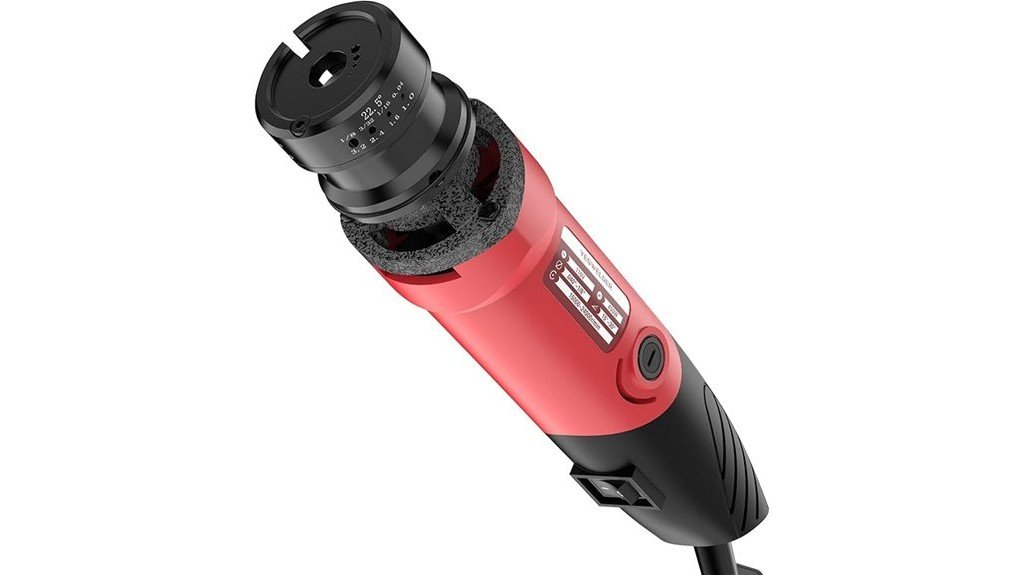
A damaged or poorly ground tungsten electrode can make TIG welding harder than it needs to be. The YESWELDER MJQ01 Tungsten Electrode Sharpener Grinder gives you guided grinding for four common electrode sizes, three fixed tip angles, and six motor speeds. Its double-sided diamond wheel and acrylic dust cover make it a useful option for repeatable tungsten preparation. This review explains its features, limitations, maintenance needs, and which welders are most likely to benefit.
Quick Verdict
Rating: Recommended with caveats
Best For: TIG beginners, home workshop users, and welders who need repeatable preparation of standard tungsten sizes.
Bottom Line: The YESWELDER MJQ01 offers a practical way to sharpen tungsten without freehand grinding. Its fixed guides and replaceable grinding wheel are useful strengths, but the 110V power requirement and limited angle choices may rule it out for some workshops.
Key Takeaways
- Four electrode sizes: Supports 0.040″, 1/16″, 3/32″, and 1/8″ tungsten, covering common TIG welding needs.
- Three grinding angles: Fixed guides at 15°, 22.5°, and 30° help you repeat your chosen tip shape.
- Six adjustable speeds: The operator’s manual lists a range of 15,000 to 24,000 RPM, with suggested settings for different electrode sizes.
- Replaceable diamond wheel: Both grinding faces can be used, which helps extend the wheel’s useful life.
- Useful accessories: Includes a storage case, acrylic dust cover, hex driver, and two spare carbon brushes.
- Main limitations: Uses 110V power, has no continuously adjustable grinding angle, and still requires proper dust control and protective equipment.
Key Features and Specifications
The YESWELDER MJQ01 is a corded tungsten preparation tool designed for TIG welding. Its main specifications and included parts are listed below.
| Specification | Detail |
|---|---|
| Brand | YESWELDER |
| Model | MJQ01 |
| Product Type | Corded tungsten electrode sharpener grinder |
| Primary Use | TIG tungsten electrode preparation |
| Electrode Sizes | 0.040″, 1/16″, 3/32″, 1/8″ (1.0, 1.6, 2.4, 3.2 mm) |
| Grinding Angles | 15°, 22.5°, 30° |
| Speed Control | Six adjustable levels |
| Speed Range | 15,000 to 24,000 RPM, per operator’s manual |
| Power Supply | 110V AC, corded |
| Tool Weight | Approximately 2.22 lb (1.008 kg), per operator’s manual |
| Grinding Wheel | Double-sided diamond wheel, replaceable |
| Diamond Wheel Size | 34 mm outer diameter, 5 mm bore, 2.3 mm thickness |
| Construction | CNC-finished aluminum alloy grinding head |
| Dust Control | Acrylic dust cover |
| Additional Function | Cut-off slot and tip-flattening capability |
| Included Accessories | Storage case, hex driver, acrylic dust cover, two spare carbon brushes |
| Replaceable Parts | Diamond grinding wheel and carbon brushes |
Specification note: Some retail listings show a 4.44 lb weight and package dimensions of 12.48 × 10.39 × 4.06 inches. These should not be confused with the grinder’s own weight and dimensions. The official operator’s manual lists the tool weight as approximately 2.22 lb.
What Is the YESWELDER MJQ01 Tungsten Grinder?
The YESWELDER MJQ01 is an electric sharpener made for preparing tungsten electrodes used in TIG welding. Instead of shaping the tungsten against an exposed bench grinding wheel by hand, you insert it into a guide hole that matches its diameter and your selected grinding angle.
Its guided design helps you produce a repeatable tip shape without relying as much on freehand positioning. The grinder also has a cutting slot for shortening a damaged electrode and a way to flatten a prepared tip when your welding procedure calls for it.
It is best viewed as a dedicated TIG electrode maintenance tool. It does not replace your welding machine, and it is not meant for sharpening ordinary stick-welding electrodes, drill bits, or general metal tools.
Design and Build Quality
Double-Sided Diamond Grinding Wheel
The MJQ01 uses a diamond grinding wheel with two usable faces. When one face becomes worn, the wheel can be turned over according to the service instructions. This can reduce how often you need a replacement.
The manufacturer’s manual identifies a wheel measuring 34 mm in outer diameter, with a 5 mm bore and 2.3 mm thickness. Use the correct replacement specification rather than assuming that any small diamond disc will fit.
The wheel is a wear item. Its useful life depends on how often you sharpen electrodes, the condition of those electrodes, and how you operate the grinder.
Aluminum Alloy Grinding Head
The CNC-finished aluminum alloy head holds the electrode guides and grinding wheel assembly. Its solid structure supports repeatable electrode positioning.
The grinder’s approximately 2.22 lb tool weight makes it practical to move between work areas. However, it still needs a suitable electrical outlet and a stable working position.
Acrylic Dust Cover and Cut-Off Slot
The acrylic cover helps contain grinding debris near the sharpening head. It is useful for keeping loose particles from spreading as freely across the workbench, although it does not replace ventilation or proper dust collection.
The cut-off slot gives you another option when a tungsten tip is damaged or contaminated. Rather than forcing a badly deformed end into the sharpening guide, you can remove the affected section first, following the manufacturer’s instructions.
These two features make the MJQ01 more useful than a simple grinding attachment with no dedicated tip preparation guides.
Electrode Compatibility and Grinding Angles
The grinder accepts four standard TIG tungsten diameters. Its three fixed angle guides give you several ways to prepare the tip, but you cannot dial in an arbitrary angle between the preset positions.
| Tungsten Diameter | Metric Equivalent | Manual Speed Recommendation |
|---|---|---|
| 0.040″ | 1.0 mm | Levels 3–4 |
| 1/16″ | 1.6 mm | Levels 3–4 |
| 3/32″ | 2.4 mm | Levels 5–6 |
| 1/8″ | 3.2 mm | Levels 5–6 |
These settings come from the MJQ01 operator’s manual. They are starting points for the listed electrode sizes, not guarantees that every tungsten type and tip condition will grind in the same way.
The correct tip angle also depends on your welding current, electrode type, and procedure. Use the guidance for your TIG process rather than assuming that one angle is always best.
Who Should Buy It?
Best For
- Beginner TIG welders: Guided holes reduce the need to judge the grinding position by eye.
- Home workshop users: Four size guides cover common electrode diameters without requiring several separate tools.
- Regular TIG users: Repeatable angle settings and a replaceable wheel support routine electrode maintenance.
Skip If
- You need a continuously adjustable grinding angle.
- You only have a 220–240V electrical supply and do not have a suitable manufacturer-approved power solution.
- You regularly prepare electrodes outside the 1.0–3.2 mm supported range.
How It Performs in Real Use
The following scenarios explain how the MJQ01’s verified features can help in a workshop. They are practical assessments based on product specifications and operating instructions, not claims of independent hands-on testing.
1. Routine TIG Workshop Use
When you prepare the same tungsten diameter throughout a job, the fixed guides can make your process more consistent. You can return to the same angle and speed setting instead of adjusting the electrode’s position by hand every time.
This is especially useful when you want the electrode preparation process to remain predictable. The main trade-off is that your grinding angle choices are limited to three settings.
2. Beginner TIG Practice Sessions
New TIG welders may touch the tungsten to the weld pool or filler wire while learning. That can leave the tip contaminated and require fresh preparation.
The MJQ01 allows you to remove a damaged section when needed and sharpen the electrode using a matching guide hole. This can simplify repeated preparation during practice, although the amount of tungsten you must remove depends on the damage.
3. Preparing Different Electrode Sizes
A workshop that uses both 1/16″ and 3/32″ tungsten can prepare either size with the same grinder. You select the correct diameter and angle guide rather than changing to another sharpening machine.
The six-speed control adds flexibility. YESWELDER recommends levels 3–4 for smaller electrodes and 5–6 for the two larger supported diameters.
4. Mobile Welding and Storage
The included storage case helps keep the grinder and its accessories together. At about 2.22 lb for the tool, it is manageable for moving around a workshop or carrying to another work area.
However, this is a corded unit. You need compatible 110V power and a safe place to operate it. If you often work away from an outlet, a cordless tungsten grinder may be more convenient.
Setup Tips Before First Use
Correct setup helps you get consistent results and reduces the risk of damaging the grinder or electrode.
- Inspect the grinder. Check the power cord, grinding wheel, head assembly, and accessories for visible damage. Make sure the wheel is properly secured.
- Fit the acrylic dust cover. Install it as directed in the manual before starting work.
- Select the tungsten diameter. Use the marked guide that matches the electrode. Do not force an oversized or bent electrode into a hole.
- Choose your grinding angle. Select 15°, 22.5°, or 30° based on your TIG welding procedure.
- Set the grinding speed. Use the manufacturer’s size-based recommendations as your starting point.
- Prepare the electrode. Follow the manual’s insertion and grinding steps. Keep your hands clear of rotating components.
- Inspect the finished tip. Check for an even shape and remaining contamination before putting the tungsten back into your TIG torch.
Pro Tip: Keep separate tungsten electrodes ready for the jobs you perform most often. When a tip becomes contaminated, switch to a clean electrode and sharpen the damaged one during a safe break. This reduces interruptions without rushing the grinding process.
Compatibility and Safety
Electrical Compatibility
The MJQ01 is specified for 110V AC operation. It is not a native 220–240V grinder, so you should never connect it directly to an incompatible electrical supply.
If you work in a country that commonly uses 220–240V, confirm a suitable power solution with the manufacturer or a qualified electrician before use. A grinder designed for your local supply may be a simpler choice.
Before You Buy: Confirm that you have compatible 110V power and that the 1.0–3.2 mm size range and three fixed angles meet your needs. Also check the exact motor rating if it matters to your setup: the MJQ01 manual states 450W, while the reviewed Amazon listing states 550W.
Tungsten Dust and Eye Protection
Grinding tungsten produces fine particles. The included acrylic cover helps contain some debris, but it should not be treated as a complete dust collection system.
Use suitable eye protection, ventilation, and dust controls. Follow the grinder manual and the safety guidance for your specific tungsten electrodes. Extra care is needed when handling thoriated tungsten and its grinding dust.
Keep fingers, loose clothing, and bulky gloves away from rotating parts. Do not assume that wearing welding gloves makes contact with the grinding area safe.
Safe Maintenance
Disconnect the grinder from power before cleaning, inspecting, or replacing parts. If you notice unusual vibration, smoke, abnormal noise, or a burning smell, stop using it and investigate the cause.
Do not use compressed air to scatter collected grinding dust around your workspace. Follow suitable dust collection and disposal practices for the tungsten material being ground.
Cleaning, Wheel Life, and Maintenance
Routine maintenance matters because both the diamond wheel and motor carbon brushes wear with use. The good news is that YESWELDER provides service instructions for these parts.
When Should You Replace the Diamond Wheel?
According to the operator’s manual, a wheel that has become smooth and lost its abrasive surface needs attention. Because the wheel is double-sided, you can use its second face before buying another one, following the replacement procedure.
Do not continue grinding with a damaged, loose, or badly worn wheel. Use a replacement made for the MJQ01.
Carbon Brush Maintenance
The motor uses replaceable carbon brushes. The package includes two spares in addition to those fitted inside the grinder.
The manual recommends regular inspection and replacement when brushes wear close to their springs. Follow the manufacturer’s procedure, and make sure the unit is unplugged before opening any service parts.
Storage and Replacement Parts
Keep the grinder clean and dry after use. Store it in its case once it has been safely powered down and the grinding area has been cleaned.
YESWELDER lists an MJQ-PJ replacement kit for the MJQ01. The kit contains one double-sided diamond wheel and two carbon brushes. Availability can change, so check that suitable parts can be purchased when you need them.
Pros and Cons
Pros
- Four guide sizes support common TIG tungsten diameters from 1.0 to 3.2 mm.
- Three fixed grinding angles make repeatable tip preparation easier.
- Six motor speeds allow different settings for small and large electrodes.
- Double-sided diamond wheel and replaceable brushes support maintenance.
- Dust cover, cut-off slot, and included storage case add practical value.
Cons
- 110V power limits direct use in regions with different electrical supplies.
- Three fixed angles may not suit advanced welders who need fine angle adjustment.
- The dust cover helps contain debris but does not eliminate the need for ventilation and dust controls.
Buying advice: Choose the MJQ01 if you mainly sharpen common tungsten sizes and value fixed guides over full angle adjustment. If your work requires unusual electrode diameters, more angle choices, or cordless operation, compare other grinders before deciding.
Is It Worth the Price?
The YESWELDER MJQ01 is worth considering when a basic bench grinding setup no longer meets your needs for repeatable tungsten preparation. It offers a middle-ground approach between freehand grinding and specialized adjustable-angle systems.
Its value comes from the combination of fixed guides, six speeds, a double-sided diamond wheel, and useful accessories. You also get a cutting slot and serviceable wear parts, which can make it practical for ongoing TIG work.
However, the MJQ01 may not be a smart purchase if you only sharpen tungsten occasionally and already have a suitable dedicated grinding setup. Its value depends on how often you use it, whether its fixed angles fit your welding procedures, and the current selling price.
How It Compares to Alternatives
The Arc-Zone Sharpie DX is one alternative if you want adjustable grinding angles. Its corded version offers adjustment from 15° to 45°, while the YESWELDER MJQ01 uses three preset angles. Note that accessory bundles and included collet sizes can differ.
The CK Worldwide Turbo-Sharp X is another dedicated tungsten grinder. It offers adjustable angles from 20° to 60° and is available in different voltage versions. The YESWELDER makes more sense when its standard size guides and fixed-angle design cover your needs without paying for additional adjustment options.
A dedicated bench grinder wheel is also an option for experienced welders, but it usually requires more care to maintain the same angle by hand and to avoid cross-contamination from other materials.
Frequently Asked Questions
What Tungsten Sizes and Angles Does the YESWELDER MJQ01 Support?
It supports 0.040″, 1/16″, 3/32″, and 1/8″ tungsten electrodes, equivalent to 1.0, 1.6, 2.4, and 3.2 mm. You can select fixed grinding angles of 15°, 22.5°, or 30°. It does not offer continuous angle adjustment.
Can It Sharpen Non-Tungsten Electrodes or Other Metal Rods?
The MJQ01 is designed for TIG tungsten electrodes. Do not use it as a general-purpose metal grinder or stick-electrode sharpener. Other materials may contaminate the grinding wheel or create operating conditions the tool was not designed for.
Is the Grinder Compatible With 220V or International Voltages?
The reviewed MJQ01 is rated for 110V AC operation. It should not be connected directly to a 220–240V outlet. Ask YESWELDER or a qualified electrician about a suitable power solution, or choose a grinder designed for your local supply.
How Noisy Is the Grinder During Operation?
A verified operating noise rating in decibels was not found for the MJQ01. Noise may vary with speed, electrode contact, and wheel condition. Use hearing protection when your working conditions call for it, and stop the grinder if it produces unusual sounds.
Are Replacement Diamond Wheels Available?
YESWELDER lists the MJQ-PJ replacement kit for the MJQ01. It includes one double-sided diamond wheel and two carbon brushes. Check current availability before ordering, and follow the manual when replacing the wheel.
Can You Use the Grinder While Wearing Welding Gloves?
Bulky welding gloves may reduce your control when handling a small tungsten electrode. Loose material can also become hazardous near rotating equipment. Follow the manual and applicable workshop safety rules, and keep hands and clothing clear of the grinding area.
Does the Acrylic Cover Contain All Tungsten Dust?
No complete dust containment claim is supported. The cover is intended to help collect particles around the grinding area, but additional ventilation and safe dust handling may still be needed. Follow the safety instructions for the grinder and the type of tungsten you use.
What Comes in the YESWELDER MJQ01 Package?
The manufacturer’s package list includes the electric grinder, storage case, hex driver, acrylic dust cover, and two spare carbon brushes. The grinder uses a double-sided diamond wheel. Confirm the current seller’s package contents before purchasing, especially when comparing bundles.
The Bottom Line
The YESWELDER MJQ01 Tungsten Electrode Sharpener Grinder is a practical choice for TIG welders who want guided preparation of four common tungsten sizes, three fixed angles, and adjustable grinding speeds. Its serviceable diamond wheel and included accessories add value, but welders needing variable angles, other electrode diameters, or native 220–240V power should consider alternatives. It earns a recommended with caveats verdict for home workshops and regular TIG electrode maintenance.
Ready to Buy?
Check the latest price, electrical specifications, and included accessories before you decide.