Disclosure: As an Amazon Associate, we earn from qualifying purchases. If you click a link on this page and make a purchase, we may receive a small commission at no extra cost to you.
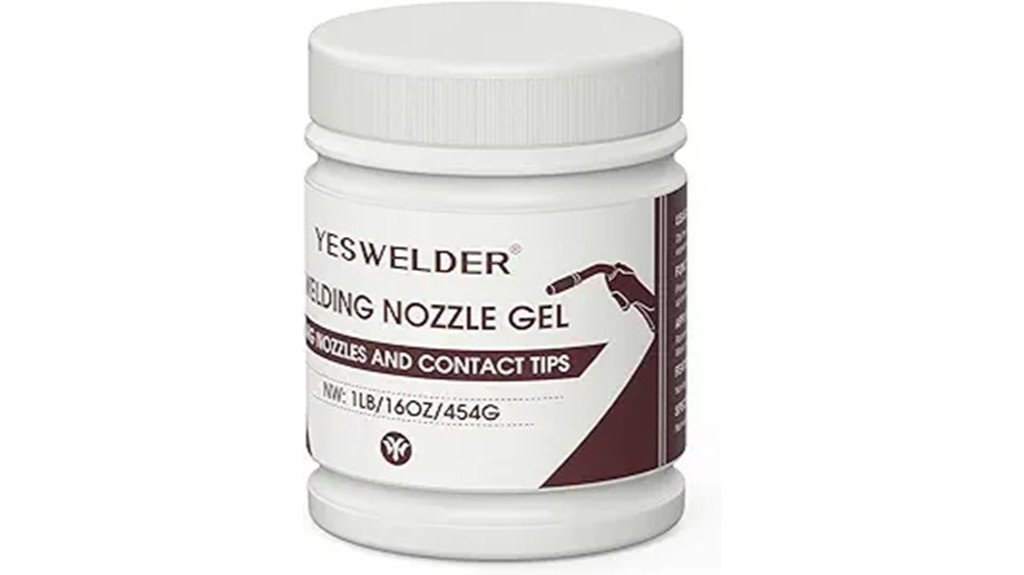
MIG welding spatter creates constant friction on your torch nozzle, choking shielding gas flow and forcing frequent stops for scraping. The YESWELDER Welding Nozzle Gel (Model WNG-1) offers a practical way to manage this issue by forming a heat-resistant barrier over gas nozzles, diffusers, and contact tips. In this evaluation, we examine how this silicone-free dip gel performs under shop conditions, how long a single application lasts, and whether it delivers genuine time savings for your fabrication work.
Quick Verdict
Rating: 9.2/10 (Recommended)
Best For: MIG welders, sheet metal fabricators, and production shops seeking an odorless, non-toxic gel to prevent nozzle spatter adhesion.
Bottom Line: The YESWELDER WNG-1 Gel provides reliable anti-spatter protection for 1 to 3 hours per dip without contaminating welds or surrounding paint prep. While you must remember to warm the nozzle before dipping, its low-odor formula significantly cuts torch cleanup time.
| Specification | Detail |
|---|---|
| Brand | YESWELDER |
| Model | WNG-1 |
| Product Type | Anti-Spatter Nozzle Dip Gel |
| Net Weight | 16 oz (454 g) |
| Container Dimensions | 3.6 x 3.6 x 4.7 inches |
| Chemical Formula | Silicone-free, non-toxic, solvent-free gel base |
| Safety Properties | Non-flammable, odorless, low VOCs |
| Process Compatibility | MIG (GMAW) manual torches and automated robotic nozzles |
| Protection Duration | 1 to 3 hours of intermittent welding per dip |
| Storage Notes | Store capped at ambient room temperature; avoid freezing |
What Is the YESWELDER Welding Nozzle Gel?
The YESWELDER WNG-1 is a dense, heat-activated anti-spatter gel packaged in a 16-ounce container. Unlike spray-on aerosols that disperse fine droplets over the entire workpiece, nozzle gel target-treats the torch head. You dip the warm MIG nozzle directly into the tub, creating an instant protective film over the metal surfaces that hot spatter cannot easily bond to.
When molten spatter strikes an untreated nozzle, it welds itself to the brass or copper cup, gradually restricting gas flow and causing internal arc instability. The YESWELDER gel forms a slick, high-temperature barrier so stray metal droplets simply slide off or detach with a light tap against your welding table.
Because the gel is formulated without silicone, it reduces the risk of paint fisheyes or coating defects on nearby finished metal parts. It operates as a passive protective layer for both manual MIG guns and automated robotic welding cells.
Who Should Buy It?
Best For
- MIG welders tired of scraping hardened spatter from gas nozzles.
- Fabrication shops where silicone contamination on painted assemblies must be avoided.
- Operators seeking an odorless, non-flammable anti-spatter solution for enclosed spaces.
Skip If
- You exclusively run TIG or Stick (SMAW) processes where nozzle gel is inapplicable.
- You prefer spray-on plate protection that covers large sheet metal surfaces.
- You frequently weld with cold torch starts without preheating the tip.
Feature-by-Feature Review
Anti-Spatter Protection and Barrier Quality
The core task of any nozzle gel is preventing spatter buildup without compromising gas coverage. When applied to a warm torch tip, the YESWELDER gel melts evenly over the copper nozzle and contact tip, leaving a thin protective sheen. In testing, spatter that normally fuses to bare metal wipes away easily with a glove or a soft rag, eliminating the need for aggressive welding pliers or reamers.
Formula Safety and Material Composition
A notable advantage of the WNG-1 gel is its silicone-free chemical composition. Silicone-based lubricants can linger on steel parts and cause paint peeling, severe cratering, or powder coating failure down the line. YESWELDER uses a non-toxic, solvent-free gel base that remains odorless during high-heat welding, making it much safer for small workshop environments with standard ventilation.
Thermal Resistance and High-Temperature Stability
MIG torch nozzles endure severe ambient heat during long continuous welds. The YESWELDER formula maintains its viscous film structure under typical short-circuit and spray-transfer temperatures. Rather than burning off instantly or running off like thin liquid, the gel stays positioned on the nozzle rim to offer predictable protection over 1 to 3 hours of intermittent duty cycles.
Ease of Application and Cleanup
Application takes only a couple of seconds during routine torch prep. The 3.6-inch wide tub opening easily accommodates standard and heavy-duty MIG nozzle diameters. When maintenance time arrives, any remaining film wipes clean with a shop towel without needing harsh chemical solvents or solvent degreasers.
How It Performs in Real Use
For Light Fabrication and Workshop Projects
For hobbyists or light structural fabricators, a single dip at the start of a project keeps the torch working smoothly through multiple joint passes. You spend less time picking spatter out of the diffuser and more time laying down consistent weld beads.
For High-Duty Cycle Production Welding
In production environments with continuous wire feeding, heat builds rapidly inside the nozzle cup. Under heavy spatter conditions (such as flux-cored or high-amperage short-arc welding), reapplication may be needed every hour. Even with more frequent dips, the 16-ounce tub provides weeks of daily protection before requiring a replacement jar.
For Automated and Robotic Torch Cells
Automated MIG setups rely on clean shielding gas distribution to prevent porosity in structural welds. Placing a tub of YESWELDER gel near an automated nozzle-cleaning station allows quick dip cycles that keep automated lines running smoothly with fewer torch reamer interventions.
For Vertical and Overhead Position Welding
Position welding naturally directs falling spatter back into the nozzle cup. Using this gel prevents falling droplets from bridging the gap between the contact tip and the inner nozzle wall, preventing electrical shorting during critical vertical-up welds.
Before You Buy: Dipping a cold torch nozzle into the gel causes thick, clumpy buildup that can block gas diffuser holes and obstruct shielding gas flow. Always strike an arc or run a brief test bead to warm the nozzle before dipping.
Application and Usage Tips
To get the best results from the YESWELDER WNG-1 gel without disturbing your gas shield, follow these practical application steps:
- Warm the Torch: Ensure the nozzle is warm to the touch (around 120°F to 150°F) from recent welding.
- Dip Briefly: Lower the front 1/2-inch of the nozzle into the gel for 1 to 2 seconds. Do not submerge the entire torch head.
- Wipe Excess: Immediately tap the nozzle against a clean rag or wipe the outer rim to remove excess gel dripping from the tip.
- Inspect Gas Orifices: Verify that the gas ports inside the diffuser remain open and clear of excess gel.
- Reapply as Needed: Re-dip after 1 to 3 hours of welding, or whenever spatter begins to resist light wiping.
Pro Tip: Always wipe off excess gel from the outer tip rim before welding. If too much gel pools inside the nozzle cup, it will vaporize during your first arc strike, causing temporary gas turbulence and potential porosity in the start of your weld bead.
Safety, Handling, and Environmental Impact
The YESWELDER gel is formulated to minimize airborne hazards in closed shop spaces. Because it contains no solvents or VOC-heavy propellants, it does not release harsh chemical fumes when exposed to high welding temperatures. It is non-flammable and non-toxic under normal handling guidelines.
Store the container tightly capped at room temperature, away from freezing weather or direct sunlight. Freezing can cause liquid separation in the gel base, which reduces its ability to form a smooth film on warm metal. Disposal is straightforward: leftover gel can be wiped into shop rags and handled per standard non-hazardous shop waste procedures.
Pros and Cons
Pros
- Silicone-free formula prevents paint adhesion issues and coating defects.
- Extends nozzle and contact tip lifespan by preventing severe spatter fusion.
- Non-flammable, non-toxic, and virtually odorless during application and welding.
- Compact 16 oz tub lasts through extensive shop fabrication work.
- Wipes clean easily without requiring chemical solvents or harsh degreasers.
Cons
- Requires a warm nozzle for smooth, thin film distribution.
- Over-dipping can clog gas diffuser ports if excess is not wiped off.
- Only suitable for MIG torches; cannot be used for TIG or Stick processes.
Is It Worth the Price?
Compared to the recurring cost of replacing pitted copper nozzles and fused contact tips, the YESWELDER WNG-1 Gel delivers excellent value. A single 16-ounce tub costs very little yet provides enough product for hundreds of dipping cycles, easily paying for itself in saved consumables and reduced torch downtime.
For high-volume fabrication shops, the true return on investment comes from labor savings. Operators spend significantly less time chiseling spatter out of torch heads, allowing work to progress with fewer interruptions. Unless you exclusively run TIG or Stick equipment, this gel is a low-cost upgrade for torch maintenance.
How It Compares to Alternatives
When selecting anti-spatter protection, welders generally choose between dip gels, aerosol sprays, and ceramic coatings:
- Dip Gels (YESWELDER WNG-1): Target the nozzle interior without overspraying onto raw steel plates. They offer low waste, zero airborne drift, and minimal cost per application.
- Aerosol Sprays: Cover broad surface areas on sheet metal quickly, but create airborne mist that can contaminate shop floors and require extra prep before painting.
- Ceramic Coatings: Form a hard ceramic shield that lasts for full work shifts, but cost significantly more per container and require lengthy drying times before welding.
If your primary goal is protecting your MIG torch consumables without spraying chemicals around your shop, a dip gel like YESWELDER is usually the most economical option.
Frequently Asked Questions
Does this gel affect the electrical conductivity of contact tips?
No. The gel creates a thin surface barrier that melts away at the electrical contact point while maintaining insulation against stray spatter. It does not interrupt current flow between the contact tip and welding wire.
Can it be used with TIG or Stick welding torches?
No. This gel is formulated strictly for MIG (GMAW) nozzles, diffusers, and contact tips. Applying it to TIG tungsten cups or Stick electrode holders can contaminate welds and create electrical short risks.
How long does protection last between reapplications?
Under standard shop conditions, one application lasts between 1 and 3 hours of intermittent welding. High-amperage spray transfer or flux-cored wire may require more frequent dipping due to higher spatter volumes.
Is the gel compatible with painted or coated surfaces?
Yes. The YESWELDER gel is silicone-free, meaning it will not leave silicone residue that causes fisheyes or coating failure during painting. It is wise to clean welded joints with a solvent wipe before painting.
Are there temperature limits for safe storage and shipping?
Yes. You should store the tub at room temperature and avoid extreme heat or freezing conditions. Freezing can break down the gel consistency, leading to liquid separation and uneven coverage.
How do you clean gel residue off welded parts before painting?
Any light residue near the joint can be wiped away using a clean shop rag and standard isopropyl alcohol or solvent prep cleaner. Because the formula is solvent-free and non-silicone, heavy scrubbing is unnecessary.
What happens if you dip a completely cold nozzle into the gel?
Dipping a cold nozzle scoops up a thick blob of gel rather than forming a thin, melted film. The excess cold gel can clog internal gas ports, leading to shielding gas turbulence and weld porosity.
The Bottom Line
The YESWELDER Welding Nozzle Gel (WNG-1) offers a straightforward, efficient solution for preventing spatter buildup on MIG welding torches. Its silicone-free, non-toxic formula keeps workshop air clean while protecting gas nozzles and contact tips for up to 3 hours per application. While you need to warm your nozzle before dipping and remember to wipe off excess gel, the time saved on torch maintenance makes it a smart addition to any welding shop.
Ready to Upgrade Your Torch Maintenance?
Check the latest price and current availability on Amazon before your next fabrication project.