Disclosure: As an Amazon Associate, we earn from qualifying purchases. If you click a link on this page and make a purchase, we may receive a small commission at no extra cost to you.
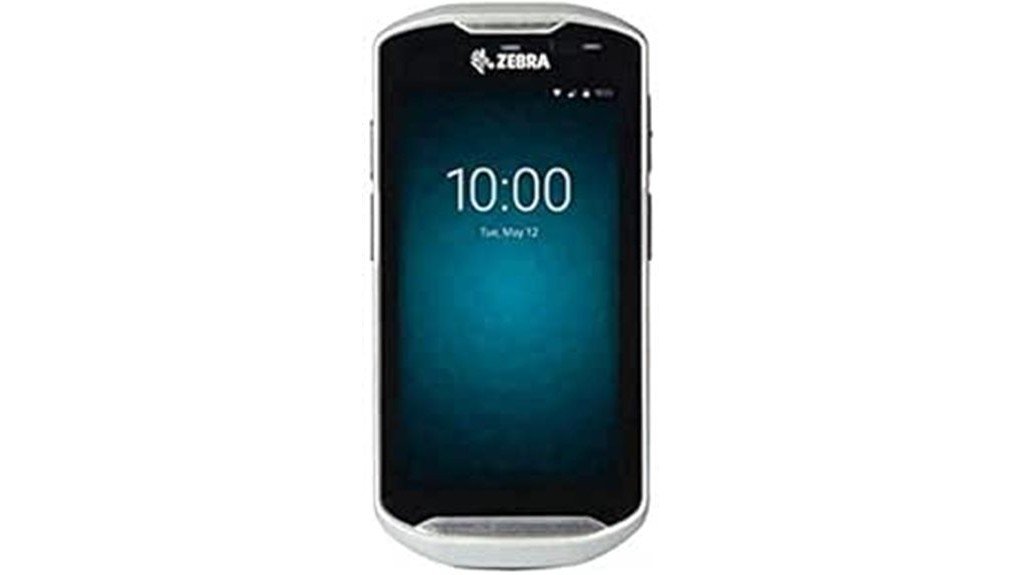
Buying a renewed enterprise barcode scanner can save money, but older hardware creates an important tradeoff between rugged capability and long-term software support. The Zebra TC56 Wireless Android Handheld Barcode Scanner combines a dedicated 1D/2D imager, Android 8.1, wireless connectivity, a replaceable battery, and a rugged body designed for business use. It can still make sense for inventory, retail, warehouse, and field workflows, but Zebra has discontinued the TC56 and ended official service and support. This review explains where the TC56 still works well, what you should verify on a renewed unit, and when a newer model is the safer purchase.
Quick Verdict
Rating: 7/10, Recommended with caveats
Best For: Buyers who need a rugged renewed Android handheld for barcode capture and can accept an older, unsupported platform.
Bottom Line: The TC56 offers dedicated enterprise scanning, a replaceable battery, and rugged construction that consumer phones do not provide. Its main weakness in 2026 is age: Android 8.1 is dated, Zebra support has ended, and the condition of renewed batteries and accessories can vary.
Key Specifications
| Specification | Detail |
|---|---|
| Brand | Zebra Technologies |
| Model | TC56 / renewed listing identified as TC56CJ |
| Product type | Enterprise Android touch computer with integrated barcode imager |
| Display | 5.0-inch, 1280 × 720 HD touchscreen |
| Dimensions | 155 × 75.5 × 18.6 mm (6.1 × 2.9 × 0.73 in.) |
| Device weight | 249 g / 8.8 oz with battery |
| Scanning | Integrated SE4710 2D imager for supported 1D and 2D barcodes, including QR codes |
| Operating system | Android 8.1 configurations; renewed listing describes Play Store access |
| Battery | User-replaceable rechargeable Li-ion, more than 4,150 mAh typical |
| Battery runtime | Zebra states approximately 14 hours from a full healthy battery under its usage assumptions; renewed-unit runtime can vary |
| Wireless | Wi-Fi, Bluetooth 4.1 Low Energy, and TC56 cellular connectivity depending on configuration and carrier compatibility |
| Ruggedness | IP65/IP67 sealing; designed for repeated drops and enterprise use |
| Included item noted by listing | Charger |
| Lifecycle status | Discontinued by Zebra; official Zebra service and support ended July 30, 2025 |
What Is the Zebra TC56?
The Zebra TC56 is an enterprise mobile computer built around a smartphone-style touchscreen but designed for work that requires frequent barcode capture. Instead of relying only on a phone camera, it uses an integrated SE4710 2D imager. That makes it suited to jobs such as stock counts, receiving, picking, asset tracking, order fulfillment, and field-service data capture.
The TC56 also combines scanning with Android applications, Wi-Fi, Bluetooth, and cellular capability on compatible configurations. Zebra produced different hardware and software configurations, so you should not assume that every renewed TC56 has identical memory, carrier support, Google services, or accessories.
The renewed ASIN reviewed here is listed as a TC56CJ with Android 8.1, 1D/2D/QR scanning, and a charger. The important catch is age. Zebra no longer sells the TC56, and official service and support ended in 2025.
Before You Buy: Do not treat the TC56 like a current-generation Zebra device. Confirm the exact Android build, Google Play availability, battery health, scanner operation, charger, carrier compatibility, and seller warranty for the renewed unit you will receive.
Who Should Buy It?
Best For
- Small businesses that need dedicated 1D and 2D barcode scanning without buying a current flagship enterprise handheld.
- Warehouses or retailers running software that is already known to work with Android 8.1.
- Buyers who value a replaceable battery, rugged body, physical scan controls, and Zebra’s enterprise scanning tools.
Skip If
- You require a current Android version, active manufacturer support, or a long future deployment cycle.
- Your business application has dropped Android 8.1 support.
- You cannot verify battery condition, device configuration, or renewed-product warranty before purchase.
Scanning Performance
The TC56’s core advantage over a normal Android phone is its dedicated barcode hardware. Zebra’s Android 8.1 documentation identifies an integrated SE4710 2D imager, which can capture supported 1D and 2D symbols. QR codes fall within its 2D scanning role, so you can use one handheld for common product, inventory, shipping, and asset labels.
Dedicated scan buttons also make repeated scanning more practical than opening a phone camera for every label. For warehouse picking or retail inventory, that workflow difference matters because your employees can keep the device in hand and trigger scans as they move through a task.
Actual results still depend on barcode condition, label size, application configuration, lighting, and scan settings. Before deploying multiple renewed units, test your smallest and most difficult real labels with the exact device configuration you plan to buy.
Android 8.1 and Application Compatibility
The renewed listing describes Android 8.1 with Play Store access. Zebra documentation confirms that TC56 configurations were offered with Android 8.1 in both Android Open Source Project and Google Mobile Services forms. That distinction matters because not every TC56 configuration should automatically be assumed to have the same Google services.
Android 8.1 is now old for a business device. An existing warehouse or inventory app may continue to work, but newer versions of an app can eventually require a more recent Android release. Security and device-management requirements can also make an older platform unsuitable for some organizations.
Pro Tip: Before ordering several TC56 units, test one with the exact inventory, POS, field-service, or warehouse app your team uses. Confirm login, scanning, Wi-Fi, synchronization, and any required Google services before scaling the deployment.
Battery Life and Charging
The TC56 uses a user-replaceable PowerPrecision+ lithium-ion battery rated at more than 4,150 mAh typical capacity in Zebra’s Android 8.1 documentation. Zebra states that a full 100% charge provides approximately 14 hours of use under its assumptions. The same guide says a depleted battery can reach about 90% in approximately 2.5 hours and 100% in about three hours with suitable Zebra charging equipment.
Those figures describe the platform with a healthy battery. A renewed TC56 may contain an older battery that has already lost capacity, so real runtime can be significantly different. The replaceable design is therefore valuable because a weak battery does not automatically make the entire handheld unusable.
If your operation depends on full-shift runtime, battery health should be one of the first things you test during the seller’s return or warranty period.
Build Quality and Durability
The TC56 is much closer to rugged enterprise equipment than a typical consumer phone. Zebra specifies IP65 and IP67 sealing for the TC51/TC56 platform. The original specifications also cite repeated 4-foot drops onto tile over concrete, with 5-foot drop protection when the optional rugged boot is fitted.
The 5-inch 1280 × 720 display uses a touch interface designed for finger, glove, or compatible stylus operation. At 249 g, or 8.8 oz with battery, the device is heavier than many consumer smartphones but still designed for handheld work.
Renewed condition adds another variable. Inspect the display, barcode-imager window, battery latches, charging contacts, buttons, USB area, speaker, cameras, and housing when the device arrives. Rugged specifications do not guarantee that a previously used unit has never been damaged.
Connectivity and Mobile Work
The TC56 supports Wi-Fi and Bluetooth 4.1 Low Energy, while the TC56 line also includes wide-area cellular connectivity. This combination can support warehouse networks, Bluetooth accessories, and field workflows that need data away from a fixed workstation.
Cellular support should be checked carefully on a renewed device. Network bands, SIM configuration, carrier requirements, and the exact TC56 variant can determine whether cellular service works for you. Do not buy it for mobile-data use based only on the word “wireless.”
How It Performs in Real Use
For Retail Inventory
The integrated scanner and Android interface suit shelf checks, cycle counts, price verification, and stock lookup. The main advantage is having scanning and the business application on one handheld rather than pairing a separate scanner with a phone.
For Warehouse Picking and Receiving
The rugged housing, dedicated scan buttons, 1D/2D imaging, Wi-Fi, and replaceable battery fit repetitive barcode workflows. The limitation is software age. A modern warehouse-management platform should be tested for Android 8.1 compatibility before you depend on the TC56.
For Field Service or Delivery
The TC56 can combine barcode capture, wireless networking, cameras, and mobile applications in a single device. Cellular capability can be useful outside Wi-Fi coverage, but you must confirm that the specific renewed unit and network are compatible.
For Long-Term Deployment
This is the weakest scenario for the TC56 in 2026. Zebra ended manufacturer service and support in July 2025, so businesses planning several more years of standardized deployment should compare newer hardware before committing to a large fleet.
Setup Tips Before First Use
- Check the exact model and software build: Confirm that the received unit matches the configuration promised by the seller.
- Test battery health: Fully charge the device and measure runtime during your normal workflow rather than relying only on the original battery specification.
- Scan your own labels: Test 1D, QR, damaged, small, and screen-displayed codes that your business actually handles.
- Verify your applications: Install or sign in to your required inventory, POS, warehouse, or field-service software before the return window closes.
- Check Wi-Fi and Bluetooth: Connect to the networks and accessories used at your workplace.
- Verify cellular service separately: If mobile data matters, confirm SIM, carrier, band, and activation compatibility for the exact unit.
- Inspect the charger: The renewed listing states that a charger is included, but confirm that the supplied charging equipment works correctly with the device.
Compatibility and Safety
Use compatible charging equipment and batteries, and follow Zebra’s battery handling guidance. Zebra’s Android 8.1 guide specifies charging between 0°C and 40°C (32°F to 104°F) and notes that charging can be temporarily limited at higher temperatures to protect the battery.
For business deployment, compatibility extends beyond physical accessories. Your device-management software, security policy, required Android applications, Wi-Fi authentication, and cellular network all need to support this older platform. This is especially important for organizations with compliance or centrally managed IT requirements.
Pros and Cons
Pros
- Integrated SE4710 imager handles supported 1D and 2D barcode workflows.
- Rugged IP65/IP67 enterprise construction is better suited to work environments than a typical consumer phone.
- User-replaceable battery makes an aging battery easier to address.
- Wi-Fi, Bluetooth, Android applications, and cellular capability combine scanning and mobile computing.
- 5-inch touchscreen keeps business applications and scan results on the same handheld.
Cons
- Zebra has discontinued the TC56 and ended official service and support.
- Android 8.1 is an aging operating system and may not support newer business apps indefinitely.
- Battery condition, configuration, accessories, and cosmetic condition can vary with a renewed unit.
Is It Worth the Price?
The TC56 is most attractive when a renewed unit costs meaningfully less than a newer enterprise handheld and your software already works on Android 8.1. In that situation, you are still getting purpose-built Zebra scanning hardware, rugged construction, a replaceable battery, and an integrated Android workflow.
Value becomes weaker if you must deploy the device for several more years, need current security support, or cannot tolerate variation between renewed units. A low purchase cost can disappear quickly if you later need batteries, accessories, troubleshooting time, or an early replacement because an important app no longer supports the operating system.
For a small compatible deployment, the TC56 can still be worth considering. For a new fleet intended to remain standardized well into the future, newer hardware is the better place to invest.
How It Compares to Alternatives
Zebra’s TC52/TC57 generation followed the TC51/TC56 family with a newer platform, while later TC5-series models such as the TC58 family move further toward current enterprise requirements. These newer generations are worth comparing if operating-system longevity and active support matter more than the lowest renewed-hardware cost.
The TC56 makes the most sense when your priority is obtaining a proven dedicated barcode terminal at a renewed price and you already know your software works with it. If this is a fresh deployment with no existing TC56 dependency, a newer Zebra model is easier to justify for long-term use.
Frequently Asked Questions
What types of barcodes can the Zebra TC56 scan?
The TC56 Android 8.1 configuration uses an integrated SE4710 2D imager. It is designed to capture supported 1D and 2D barcode formats, including QR codes, making it suitable for common inventory, retail, shipping, and asset-label workflows.
Does this Zebra TC56 have Google Play Store access?
The renewed listing for this ASIN describes Android 8.1 with Play Store access. Zebra also produced Android 8.1 TC56 configurations in both Google Mobile Services and AOSP forms, so confirm the exact software configuration of the unit being sold.
How long does the TC56 battery last?
Zebra’s Android 8.1 documentation states that a full healthy battery provides approximately 14 hours of use under its assumptions. A renewed battery may provide less runtime because capacity declines with age and charge cycles, so test the received unit under your normal workload.
Can I use the Zebra TC56 for inventory management?
Yes, barcode-based inventory is a natural use for this type of enterprise handheld. The important question is software compatibility: verify that your inventory or warehouse application still supports Android 8.1 and works with the TC56 scanning configuration.
Is the Zebra TC56 still supported by Zebra?
No. Zebra lists May 30, 2021 as the TC56’s last sale date and July 30, 2025 as its service and support discontinuation date. That makes support status one of the most important limitations to consider in 2026.
How rugged is the Zebra TC56?
Zebra specifies IP65/IP67 sealing for the TC51/TC56 platform and repeated 4-foot drops in its original specifications. Protection increases with the optional rugged boot, but the physical condition of a previously used device should still be inspected when it arrives.
What warranty comes with the renewed TC56?
Marketplace data associated with this renewed listing reports a 90-day limited warranty. Seller and Amazon Renewed terms can change, so check the warranty and return information shown on the Amazon listing at the time you order rather than relying only on older listing data.
What should I check as soon as a renewed TC56 arrives?
Confirm the model, Android build, Google services, barcode imager, battery runtime, charging, Wi-Fi, Bluetooth, buttons, touchscreen, cameras, and any cellular function you require. Testing these items early gives you time to identify a configuration or condition problem while seller return options are still available.
The Bottom Line
The Zebra TC56 remains useful if you need a rugged 1D/2D Android barcode terminal, your business software still supports Android 8.1, and the renewed unit is priced appropriately for older hardware. Its dedicated scanner, replaceable battery, wireless connectivity, and enterprise construction are real strengths, but ended Zebra support and variable renewed-unit condition prevent it from being an easy recommendation for a new long-term fleet.
Buy it when compatibility and cost make sense for a defined workflow. Skip it and compare newer Zebra hardware when current software support, security life, and multi-year deployment are higher priorities.