🔧 Why a medium-duty truck like this matters
Not everyone needs a pickup that feels like a small apartment. But if your job requires carrying heavy, bulky loads without fuss, a medium-duty chassis is where things start to make sense. The Ford F-650 sits squarely in that world: built to haul serious weight, engineered for durability, and designed to be configured for dozens of commercial uses.
This is not about weekend heroics. It is about workday reliability, serviceability, and simple controls that keep downtime low. The F-650 isn’t pretty for show; it’s purpose-built, and that shows in nearly every detail.
🛠️ Powertrain and core specs
At the heart of this F-650 is a 7.3 liter gas V8 paired with a 6-speed automatic. That combo produces about 335 horsepower and a stout 468 lb-ft of torque. The fuel capacity is generous, with a 50-gallon tank, which suits its role hauling heavy payloads over long distances.
If you want numbers at a glance: the chassis weighs roughly 9,500 pounds, while the gross vehicle weight rating is 26,000 pounds, giving a practical payload of about 16,500 pounds. That payload figure is the core value proposition of this truck — it turns a single vehicle into a moving workshop or a massive cargo hauler.
🚪 Exterior and build: raw function over fashion
The exterior design is unapologetically functional. The entire front clip tilts forward, providing easy access to the engine and drivetrain. For anyone who has had to troubleshoot roadside or in a tight shop, that tilt-forward design is a huge time saver.
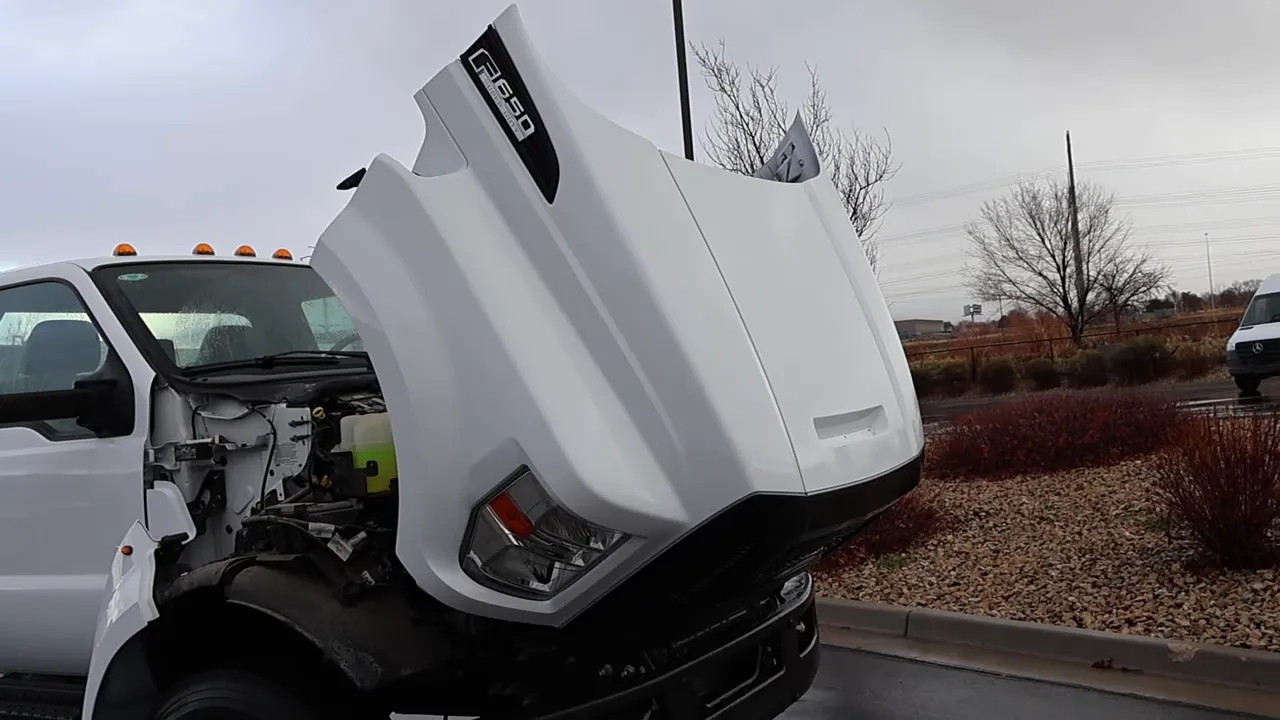
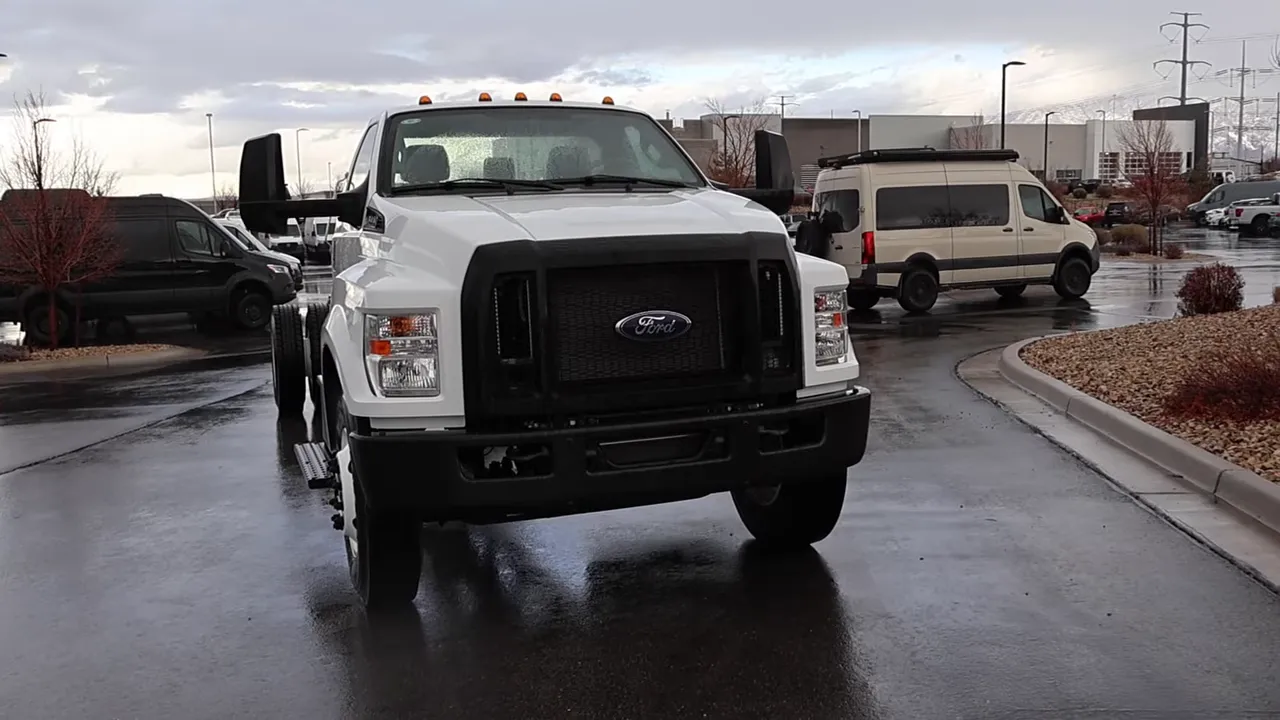
Lights and hardware lean toward the practical. Cab marker lights sit up top; the headlamps and grille are oversized because they need to be visible and serviceable. Tie-down points and welded brackets are heavy duty and obvious — nothing here is pretending to be luxury.
Wheels and tires are commercial-sized: these were 295/75R22.5 (40-inch) tires with a load range G rating on dual rear wheels. Those tall sidewalls and big rims underline the truck’s intent — heavy loads, longevity, and a chassis that can accept a variety of upfits.
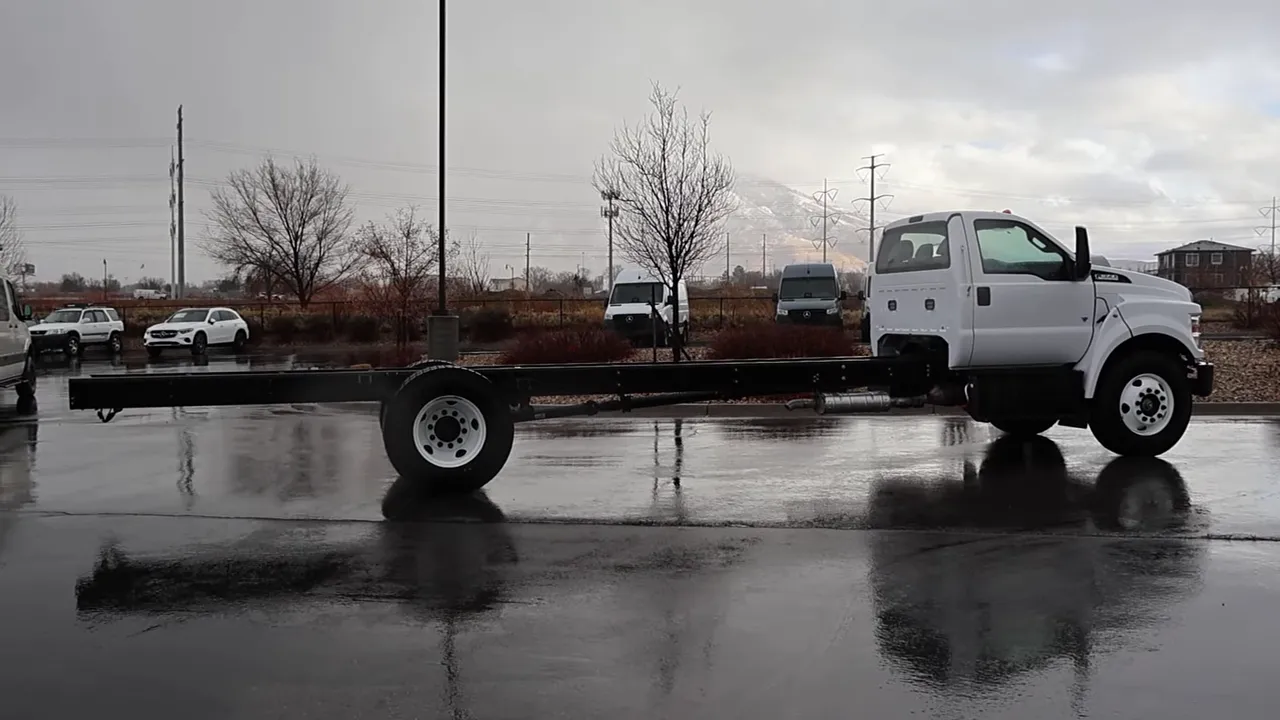
The frame is long and exposed on purpose. That gives fleet managers and upfitters flexibility to add flatbeds, box bodies, cranes, fuel tanks, or specialized equipment without having to rebuild the chassis layout.
🪑 Interior and controls: simple, rugged, reliable
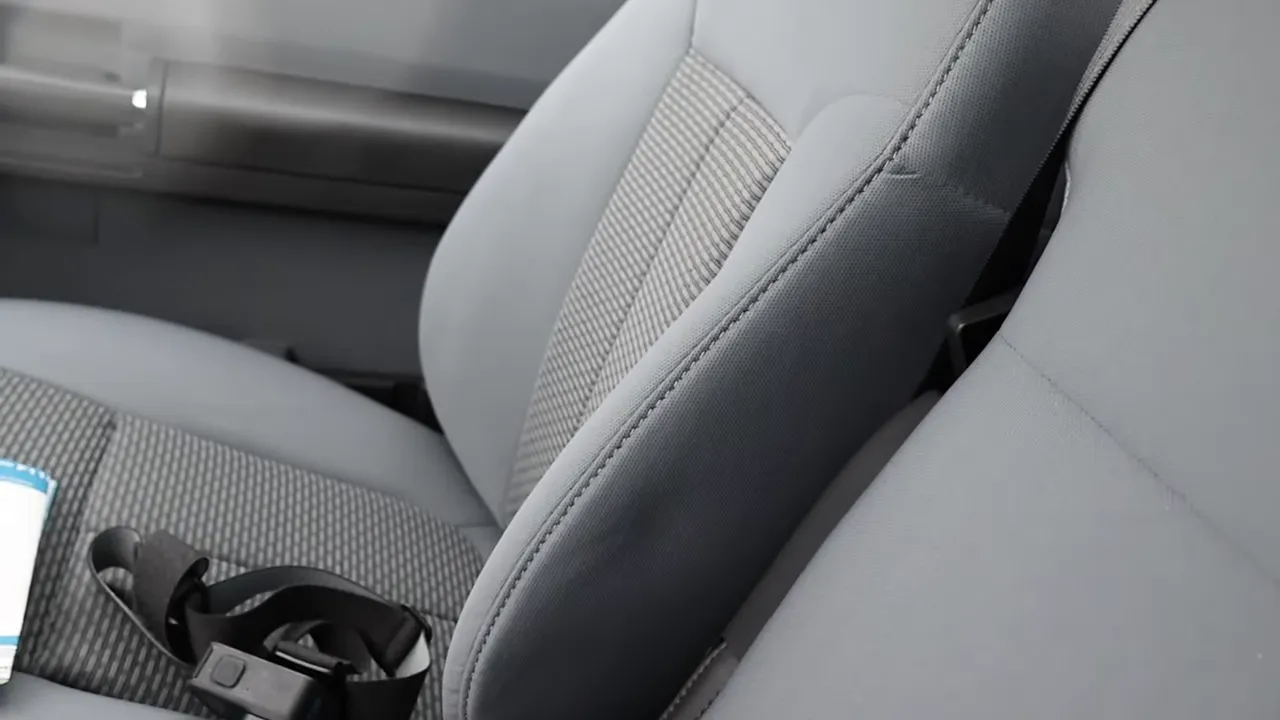
The interior favors simplicity. Manual cloth seats, practical controls, and an analog-centric gauge cluster create an environment built for durability. There are USB ports and a standard radio with preset buttons. No flashy infotainment here — and for many fleet applications, that is a feature, not a bug.
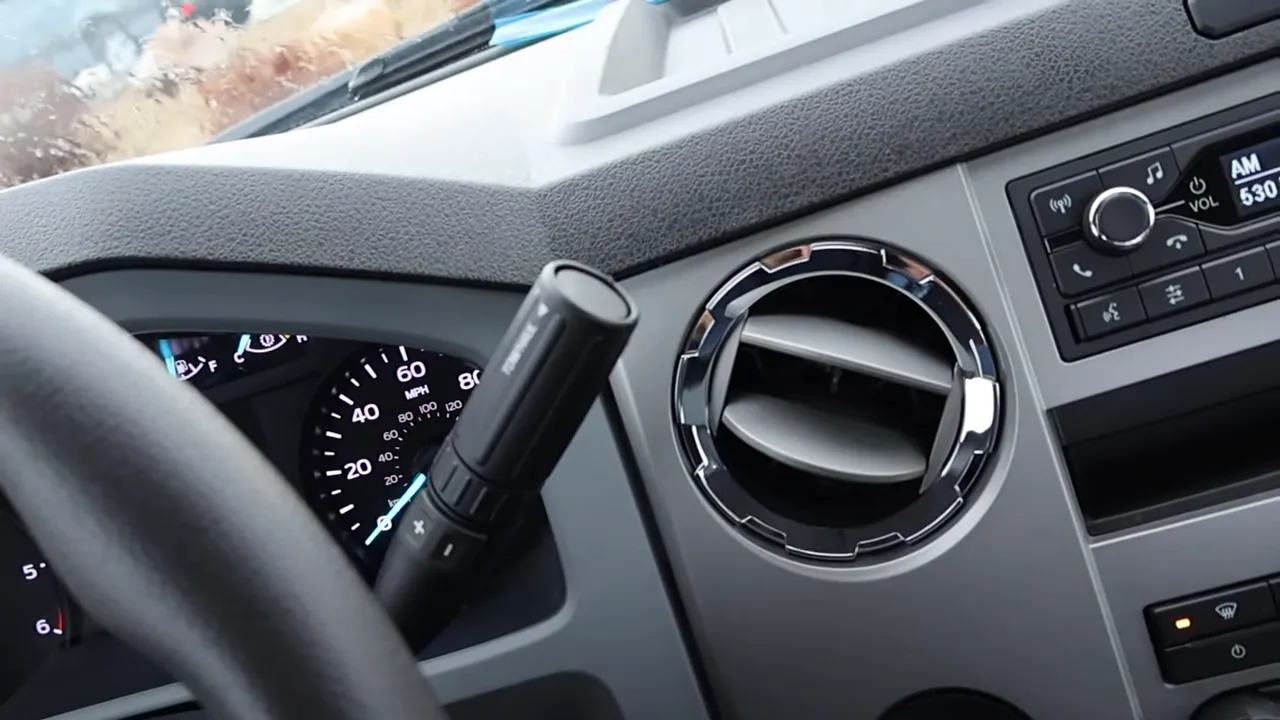
Small touches matter: column shifter for the 6-speed, tow mode selection, manual shift capability, four auxiliary switches for accessories, a full household-style outlet, and large mirrors that let you see to the end of the frame. The door handles and step-in areas are more robust than consumer pickups — everything is designed to survive daily heavy use.
The analog cluster with a small central screen is both dependable and easy to read. Compared with complex digital systems, fewer electronics mean fewer electronic gremlins on a rig that spends years on job sites and in variable conditions.
⚙️ Serviceability and durability
The F-650 emphasizes serviceability: engine accessibility, straightforward mechanical systems, and durable fittings. These trucks are intended for mechanics, not mall walkers. If uptime is your metric, the design choices here are aligned with minimizing the time a truck spends in the shop.
🚚 Driving impressions: what it feels like behind the wheel
Driving the F-650 demands a different mindset. It is large, heavy, and happiest when hauling its intended load. Empty, the ride is very firm. That stiffness is the trade-off for the leaf springs, frame, and suspension tuned for massive payloads.

Steering is surprisingly light for a truck this size, which helps with maneuverability around tight job sites and in urban delivery situations. Braking is solid considering the truck’s mass, but be aware that braking inputs can feel a little “sketchy” if the chassis is unloaded and bouncing over rough surfaces.

Torque is the standout. The 7.3 V8 doesn’t scream top-end speed, but it pulls like a bulldog. The truck feels monstrous in low-rev situations — exactly where you need grunt for loading ramps, towing trailers, and hill starts with heavy cargo.
“This thing’s an absolute tank.”
That quote captures the character: durable, relentless, and designed for work that would break lesser machines. But remember: it rides like a commercial truck. If comfortable, plush cruising is priority, this is not the truck for you.

Unloaded dynamics matter. If you plan on running this truck mostly empty, expect a harsh ride and a lot of suspension chatter. Loaded up, the whole package smooths out and becomes purpose-driven — exactly as intended.
📋 Practical considerations for buyers
Price is dependent on configuration. Base examples land in the roughly $70,000 to $80,000 range before upfits. Once you add boxes, racks, bodies, or other commercial gear, sticker prices commonly exceed $100,000. Keep that in mind when planning total cost of ownership.
Licensing and driving regulations vary by state. Many medium-duty trucks like the F-650 do not require a commercial driver’s license in every jurisdiction, but thresholds for weight and configuration differ. Check local rules before operating or registering a vehicle of this size.
Upfitting flexibility is a major advantage. The long frame, exposed parts, and straightforward electrical switch provisioning make it easy to install auxiliary tanks, crane mounts, utility bodies, and more. Fleets that need custom equipment will appreciate how accommodating the chassis is to modification.
✅ Pros and ❌ Cons
- Pros: Massive payload capacity, robust 7.3 V8 torque, simple and durable interior, easy service access, highly configurable chassis.
- Cons: Brutal unloaded ride, high up-front cost with upfits, basic comforts compared with consumer trucks, no standard backup camera on the base shown.
🔍 Common use cases that make sense
The F-650 shines in applications where a single-body truck must replace multiple smaller vehicles. Typical roles include:
- Flatbed delivery for heavy building materials
- Crew cab service trucks with tool and parts storage
- Cargo boxes for municipal services
- Platform or crane trucks for utility and construction
- Tanker or bulk transport on shorter routes
💡 Ownership tips
- Specify the right overload and suspension options for your typical payload. Running under- or over-spec suspension will hurt ride quality and component life.
- Plan upfits before purchase to ensure electrical, fuel, and mounting points are in the correct places.
- Maintain a regular service schedule. Simple mechanical systems mean minor maintenance goes a long way toward longevity.
- Train drivers on empty vs loaded dynamics. Handling and braking characteristics change dramatically with payload.
🧾 Frequently asked questions
How much payload can the F-650 carry?
Does the F-650 require a commercial driver’s license?
What engine and transmission are in this model?
How big is the fuel tank and what is real-world range?
Are the tires and wheels commercial spec?
Is the ride comfortable unloaded?
📌 Final thoughts
The F-650 is a tool more than it is a lifestyle statement. Its strengths are obvious: big payload, heavy-duty build, and a chassis designed to accept nearly any commercial body. The trade-offs are equally clear: a spartan interior, a harsh empty ride, and the need to plan upfits and configuration thoughtfully.
If your priority is moving large loads reliably, minimizing downtime, and building out a custom commercial platform, the F-650 is a compelling option. It is a heavy-duty workhorse that knows what it is and doesn’t apologize for it.