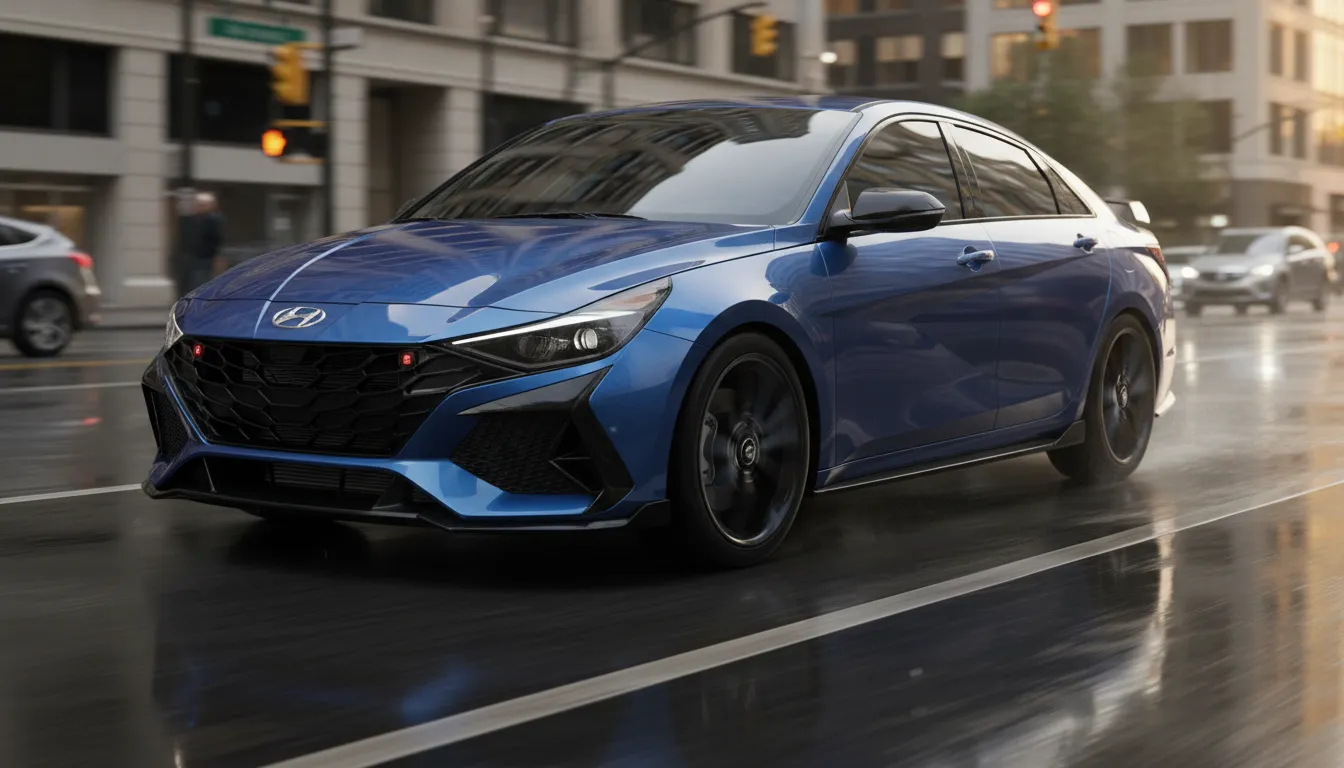
“The Elantra N-Line is a super commuter.”
A sporty compact sedan can feel exciting on a test drive yet tiring during a daily commute. The 2026 Hyundai Elantra N-Line aims for a more useful balance with a 201-horsepower turbo engine, a seven-speed dual-clutch transmission, firm chassis tuning, and a practical four-door cabin. This review explains how its styling, comfort, technology, fuel economy, and low-speed transmission behavior affect everyday ownership. Its strongest quality is its mix of performance and usability, while its main tradeoff is a firmer ride and occasional hesitation from the dual-clutch gearbox.
Quick Verdict
Rating: 8.3/10, Recommended with caveats
Best For: Commuters who want stronger acceleration and sharper handling without moving to a track-focused sedan.
Bottom Line: The Elantra N Line delivers useful power, a roomy cabin, and good fuel economy for a sporty compact. Choose it only if you are comfortable with firm seats, a firmer suspension, and the low-speed behavior of a dual-clutch transmission.
| Specification | Detail |
|---|---|
| Brand | Hyundai |
| Model | 2026 Elantra N Line |
| Vehicle type | Front-wheel-drive compact sport sedan |
| Engine | 1.6-liter turbocharged GDI four-cylinder |
| Output | 201 horsepower and 195 lb-ft of torque |
| Transmission | Seven-speed dual-clutch automatic with paddle shifters |
| Fuel economy | Approximately 28 mpg city, 35 mpg highway, and 31 mpg combined |
| Fuel tank | 12.4 gallons |
| Wheels and tires | 18-inch alloy wheels with 235/40 tires |
| Seating | Five passengers |
| Passenger volume | 99.4 cubic feet |
| Trunk capacity | 14.2 cubic feet |
| Curb weight | About 3,020 pounds |
| Best use | Daily commuting, highway trips, and occasional spirited driving |
Specification note: Core figures were checked against current 2026 Hyundai Elantra N Line specifications. Equipment and pricing can vary by market and build.
What Is the 2026 Hyundai Elantra N Line?
The Elantra N Line sits between the standard Elantra trims and the much more aggressive Elantra N. You get a stronger turbocharged engine, sportier suspension tuning, 18-inch wheels, performance-inspired exterior details, and a cabin with supportive seats and red accents.
It is built for drivers who want an automatic transmission and a noticeable performance upgrade without accepting the cost, tire demands, ride stiffness, or track-focused hardware of the full Elantra N. You still get a usable rear seat, a 14.2-cubic-foot trunk, and fuel economy suited to regular commuting.
🚘 Exterior Design and Road Presence
Hyundai gives the N Line a sharper visual identity than the standard Elantra. The body uses strong creases and intersecting character lines, while dark mirror caps, side trim, wheel accents, a lower front valance, and slim daytime running lights create a lower and wider appearance.
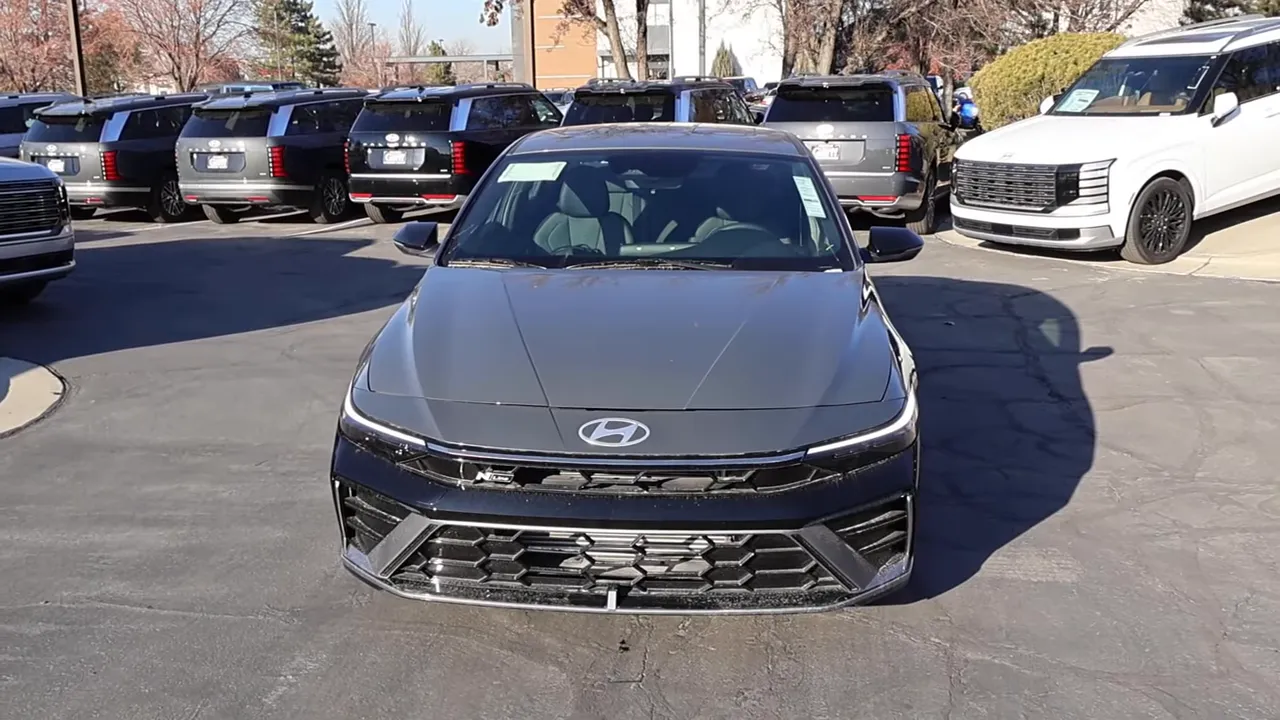
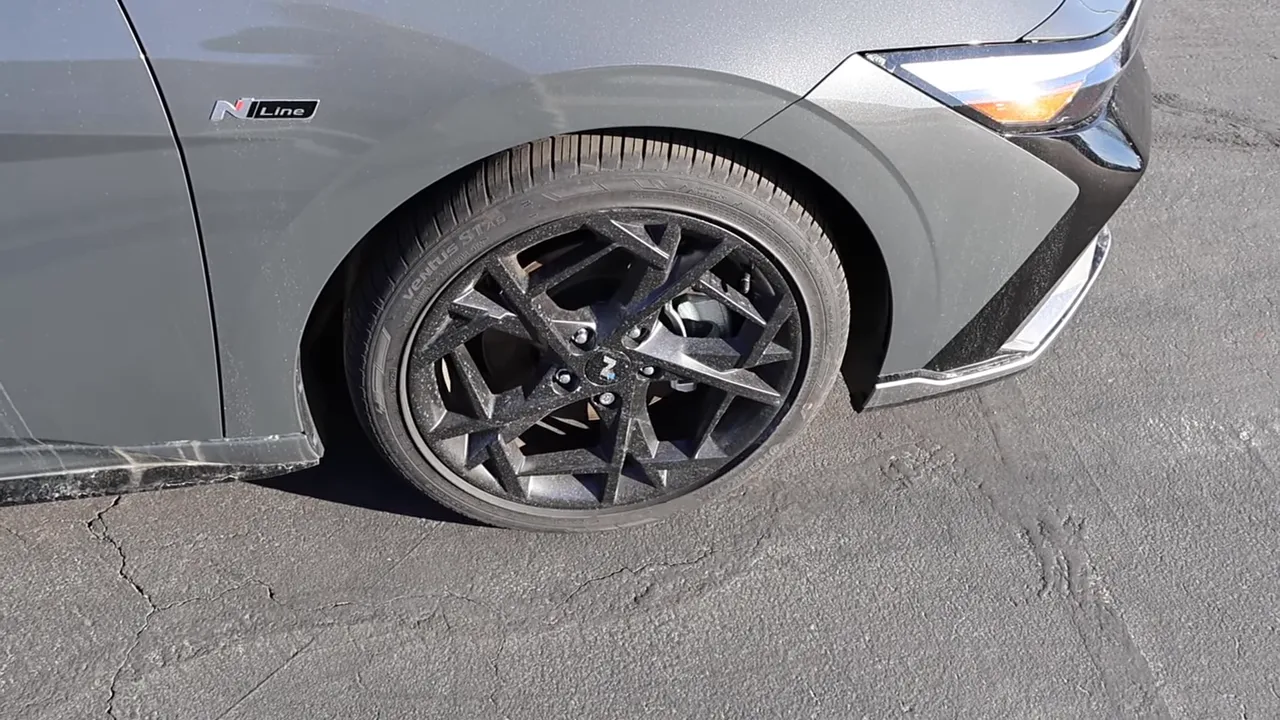
The 18-inch wheels use 235/40 tires, which give the car a broad stance and support quicker steering response. An N-Line badge, subtle rear spoiler, rear light bar, and dual exhaust tips finish the package without making it look like the full Elantra N.
🧳 Cargo Space and Everyday Practicality
The Elantra N Line remains a practical sedan despite its sportier tuning. Its 14.2-cubic-foot trunk can handle groceries, carry-on luggage, or several weekend bags. Pull tabs in the trunk release the folding rear seatbacks when you need extra length for larger items.

N Line floor mats match the trim’s interior theme. They are a small detail, but they help the cabin and cargo area feel like one complete package rather than a standard Elantra with only exterior add-ons.
🪑 Interior Comfort and Passenger Space
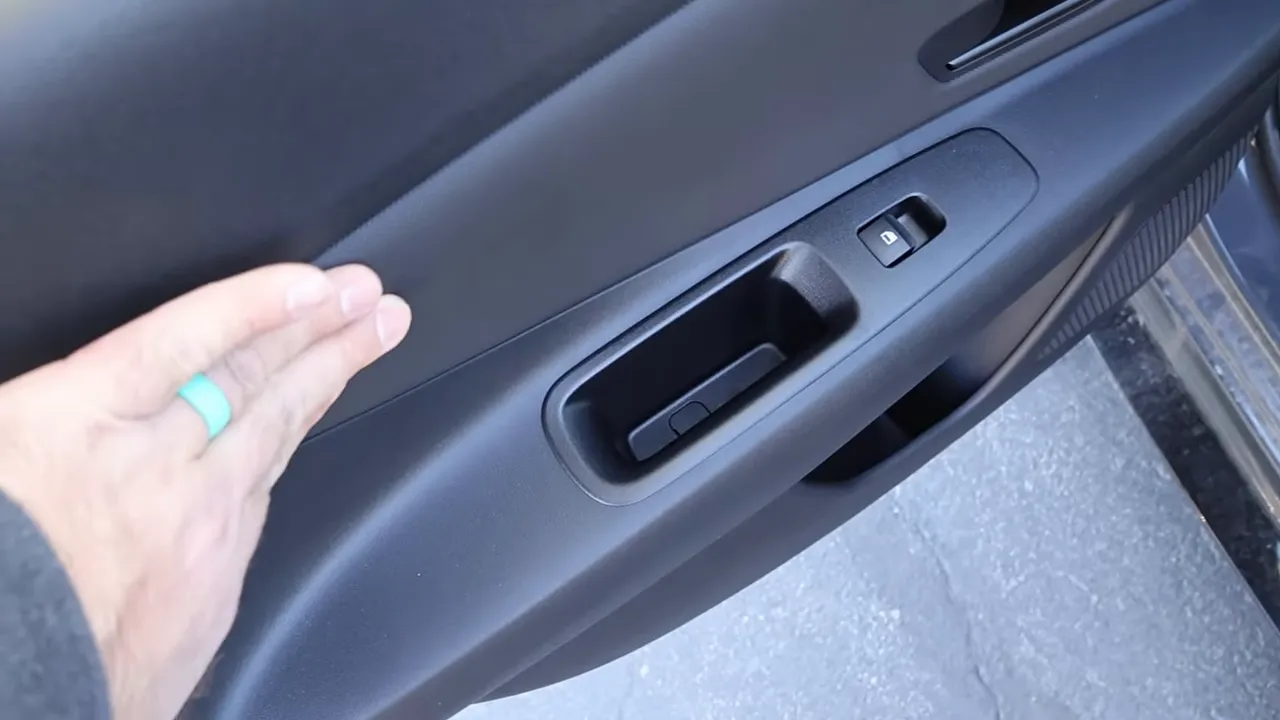
The cabin combines soft-touch areas with harder plastics in lower-contact zones. Red contrast stitching and stronger side bolsters reinforce the sporty theme. The cloth and synthetic leather-trimmed seats feel supportive, but they are firmer than the seats in a comfort-focused compact sedan.
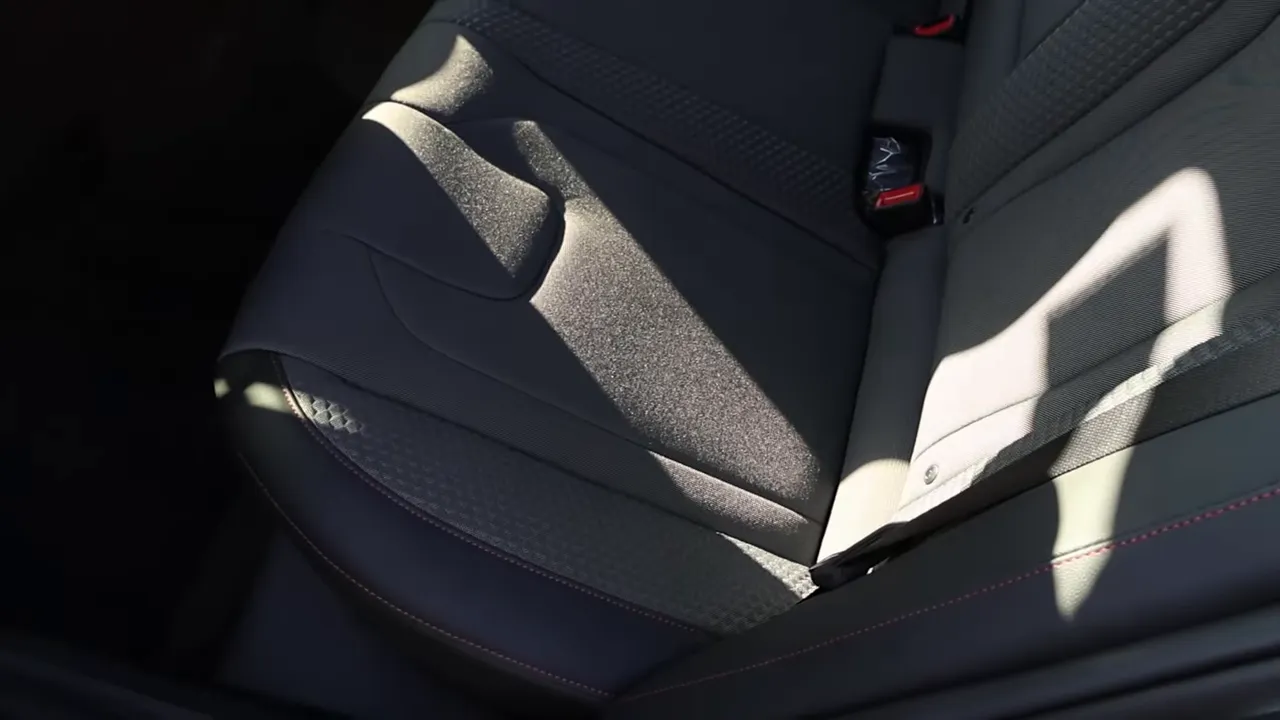
The 99.4-cubic-foot passenger compartment gives adults useful rear legroom and headroom for a compact sedan. Rear USB ports help passengers keep devices charged. The driver receives power adjustment and lumbar support, while the front passenger uses manual controls.
Before You Buy: Spend time in the front seat and drive over rough pavement before signing. The seat bolsters, 18-inch tires, and sport-tuned suspension can feel noticeably firmer than a standard Elantra.
🎛️ Technology, Infotainment, and Controls
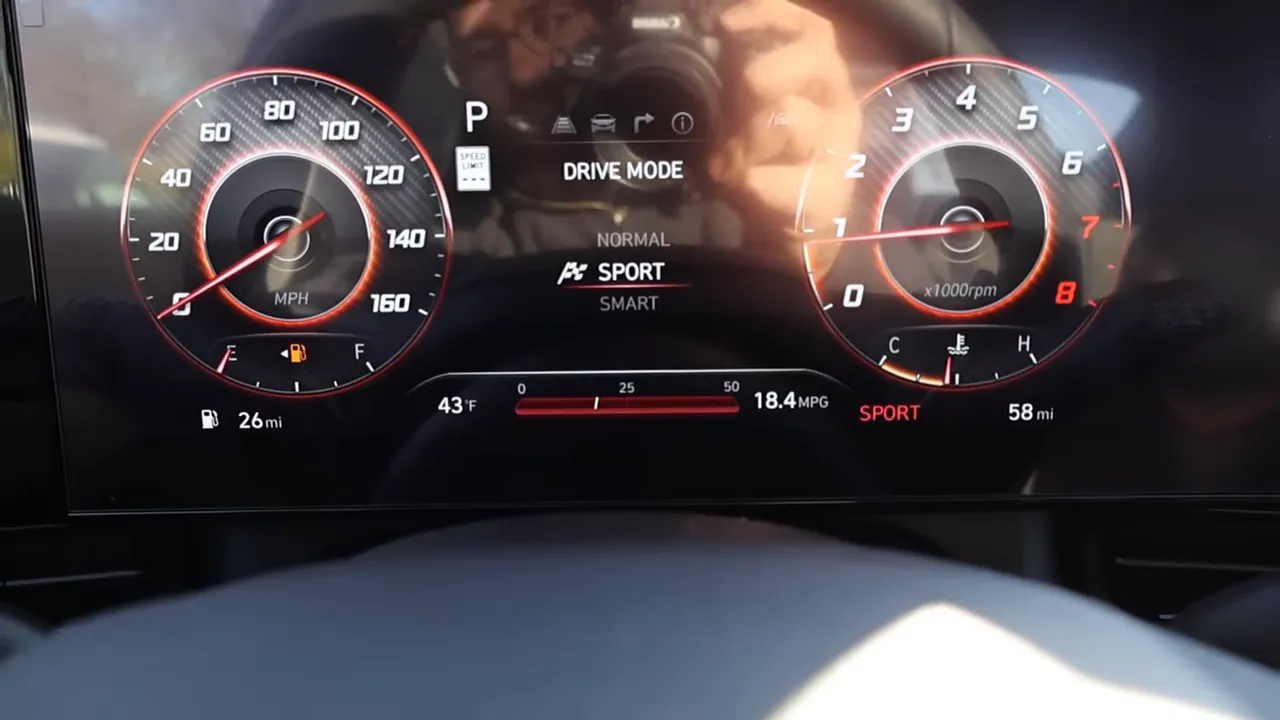
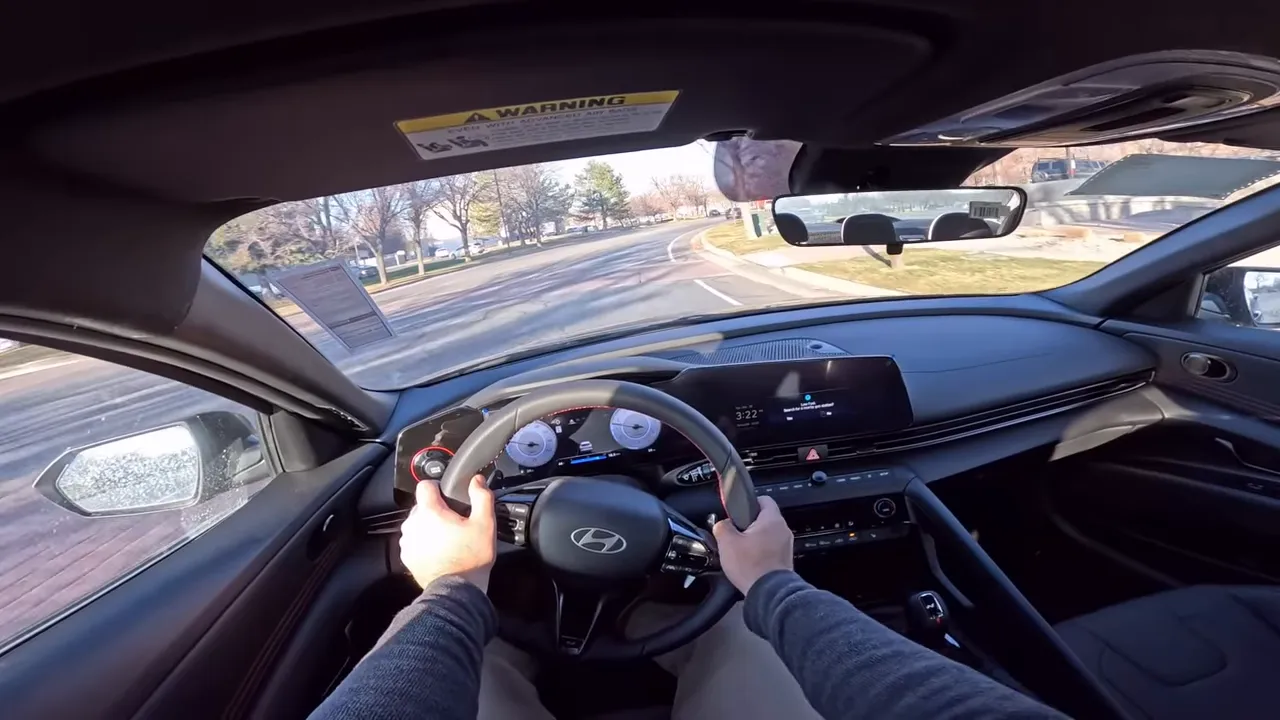
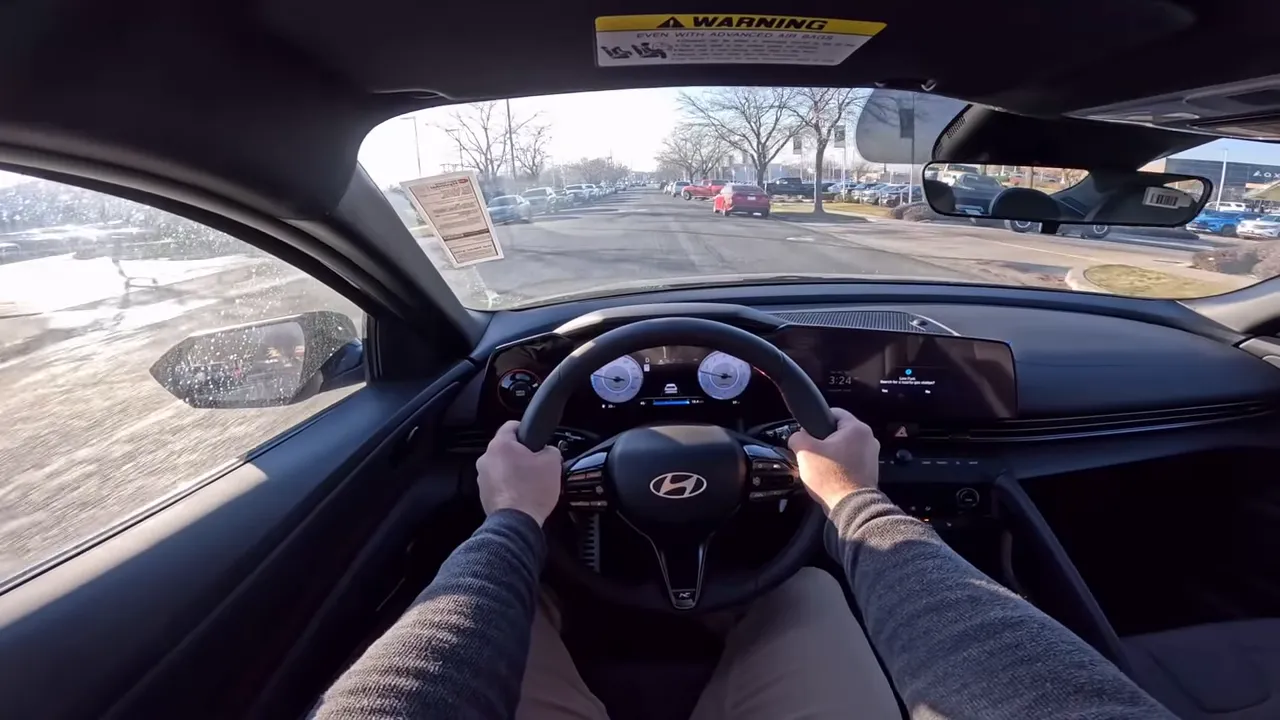
The Elantra N Line combines a digital instrument display with a central infotainment screen. The gauge graphics change with the selected drive mode, which makes the sport setting easy to recognize. Hyundai also keeps physical climate and audio controls, reducing the need to search through touchscreen menus while driving.
Useful features in the reviewed configuration include a wireless phone charging pad, USB ports, a 12-volt outlet, heated front seats, a sunroof, steering-wheel controls, and paddle shifters. Driver-assistance equipment can vary by market and build, so confirm the window sticker for features such as adaptive cruise control or lane-centering support.
⚙️ Engine, Transmission, and Fuel Economy
The 1.6-liter turbocharged four-cylinder produces 201 horsepower and 195 lb-ft of torque. Power goes to the front wheels through a seven-speed dual-clutch automatic. The engine’s broad torque delivery makes passing and merging easier than in the standard non-turbo Elantra.
Published fuel economy is approximately 28 mpg city, 35 mpg highway, and 31 mpg combined. The 12.4-gallon tank supports a useful highway range, although real results will depend on speed, weather, traffic, tire pressure, and how often you use the engine’s boost.
🚦 Driving Performance
The Elantra N Line feels quick enough to make commuting enjoyable without demanding the attention of a high-output performance car. Midrange torque is the main advantage. The engine responds strongly when you accelerate onto a highway or pass slower traffic, and the dual-clutch transmission usually changes gears quickly once the car is moving.
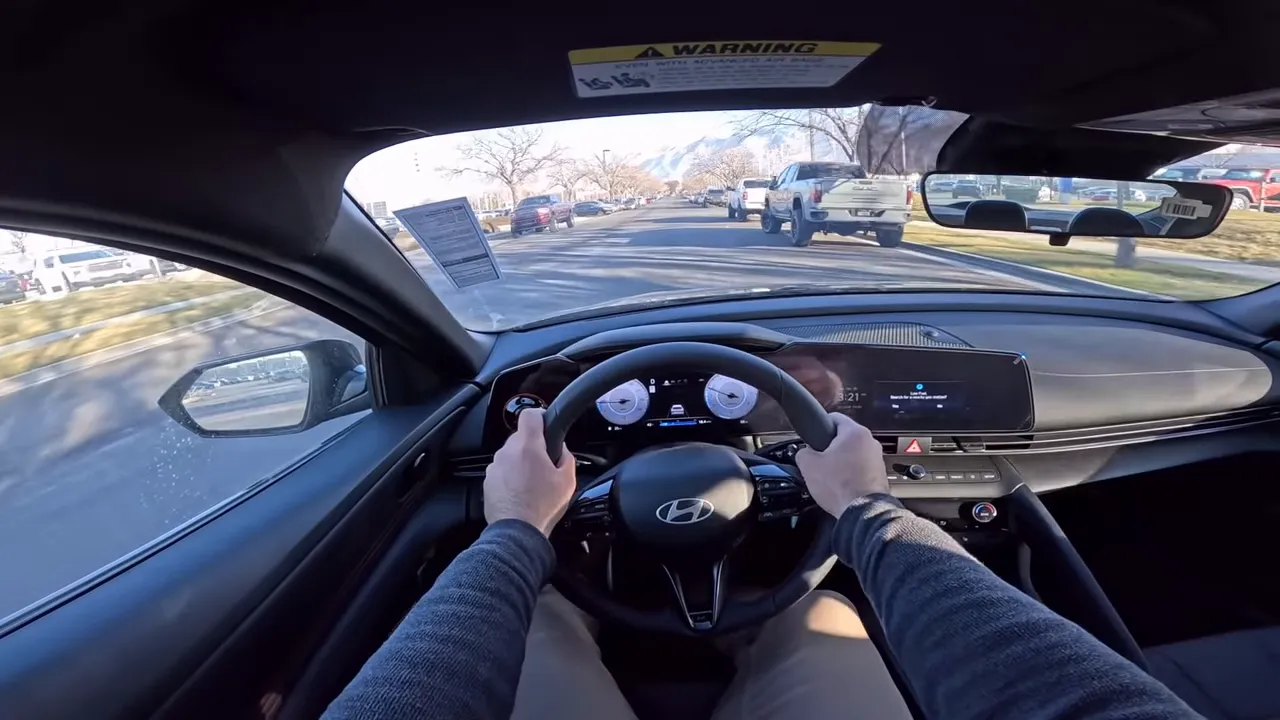
At parking-lot speeds, the gearbox can feel less smooth than a conventional torque-converter automatic. You may notice a short pause when pulling away or a slight change in response as the clutch engages. This is a normal characteristic of many dual-clutch systems, but it can be frustrating in stop-and-go traffic.
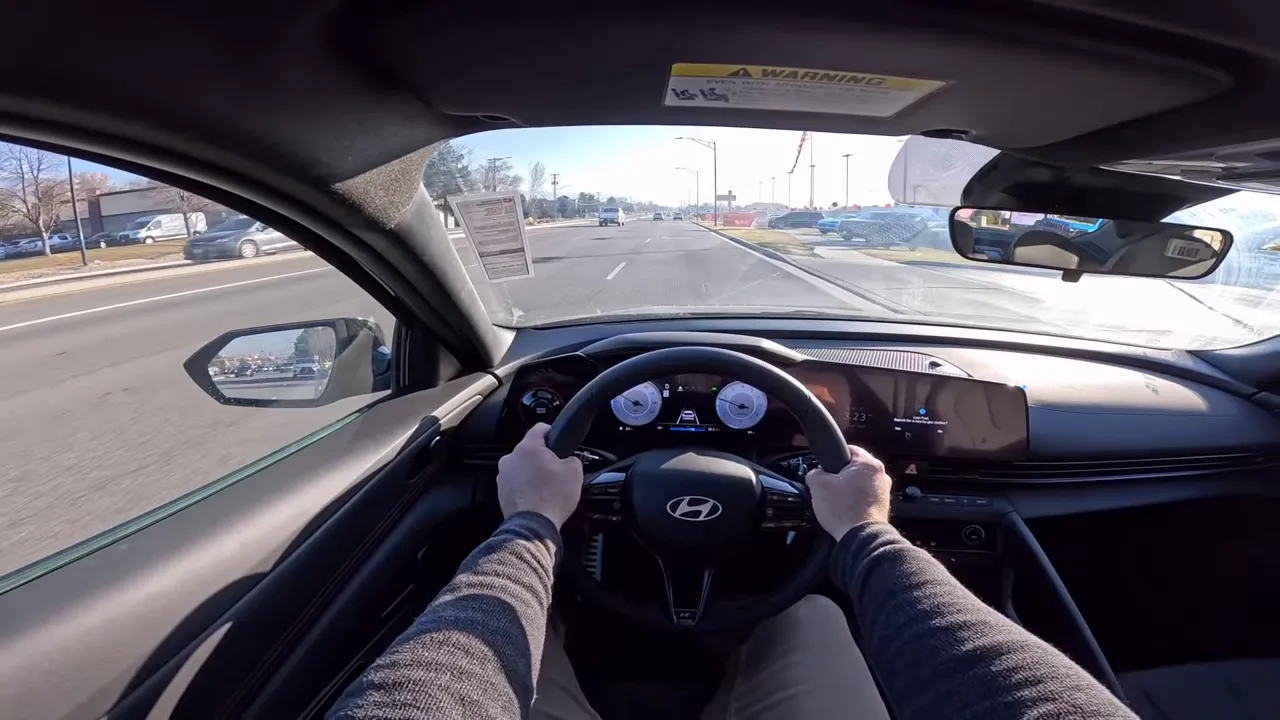
Steering response is quick and predictable, while the suspension keeps the body composed through bends. Brake feel in the reviewed car required a short adjustment period, but stopping performance remained functional and easy to manage after that initial learning curve.
How It Performs in Real Use
City Commuting
The compact footprint, clear controls, and useful torque make urban driving easy. The main concern is the transmission’s low-speed clutch behavior, especially when traffic repeatedly moves and stops.
Highway Trips
The 35-mpg highway estimate, supportive seats, and strong passing power suit longer journeys. Drivers who prefer soft cushions may find the seat bolsters and suspension tiring after several hours.
Winding Roads
The N Line’s sharper steering and firmer body control make direction changes more engaging than in a standard economy sedan. The car feels composed, but it does not offer the brakes, differential, tires, or power of the full Elantra N.
Family and Cargo Use
Five-seat capacity, adult-friendly rear space, folding rear seatbacks, and a 14.2-cubic-foot trunk make the car practical for school runs, groceries, and weekend luggage. The low-profile rear roofline may still require taller passengers to duck slightly when entering.
🛣️ Ride Quality and Chassis Character
The N Line’s suspension is firmer than a comfort-focused Elantra, but it is not punishing on ordinary roads. Smooth pavement highlights the car’s stable body control. Broken surfaces and sharp expansion joints make the 18-inch wheel and tire package more noticeable.
Steering precision is the chassis highlight. The car turns in cleanly and maintains a predictable line without constant corrections. That balance makes it more satisfying on a curved road while keeping it manageable for daily driving.
🔧 Build Quality, Safety, and Ownership Checks
The reviewed car felt tightly assembled, with consistent trim fit and no obvious loose panels. Hard plastics remain visible in several cabin areas, so buyers expecting a near-luxury interior may be disappointed. The stronger value comes from the powertrain, cabin space, equipment, and warranty coverage rather than premium materials.
Before buying, confirm the exact safety equipment on the window sticker and test every driver-assistance feature. Check all four 235/40 tires for correct size, pressure, and even wear. Low-profile tires can cost more to replace and provide less cushioning against potholes than taller sidewalls.
Pro Tip: During your test drive, include a cold start, a slow parking maneuver, stop-and-go traffic, a highway merge, and a rough road. That route reveals the transmission response, seat comfort, wind noise, and suspension firmness better than a short loop around the dealership.
Who Should Buy It?
Best For
- Drivers who want stronger acceleration than a standard compact sedan.
- Commuters who need a roomy rear seat and a practical trunk.
- Buyers who prefer an automatic gearbox but still want paddle shifters and sportier handling.
Skip If
- You want the softest ride and most relaxed low-speed transmission response.
- You need the power, brakes, limited-slip differential, and track ability of the full Elantra N.
- You prefer a manual transmission.
Pros and Cons
Pros
- 201-horsepower turbo engine provides useful midrange acceleration.
- Sharp steering and stable body control make the car enjoyable on curved roads.
- 28/35-mpg estimates are reasonable for a sporty compact sedan.
- Five-passenger cabin and 14.2-cubic-foot trunk support everyday use.
- Physical climate and audio controls reduce touchscreen distraction.
Cons
- Dual-clutch engagement can feel hesitant in slow traffic.
- Firm seats and 18-inch tires may reduce comfort on rough roads.
- Cabin materials are functional rather than premium.
Is It Worth the Price?
The reviewed N Line was listed around $30,710, although final pricing can change with destination charges, accessories, taxes, and regional dealer adjustments. At that level, it sits above ordinary compact sedans but below many dedicated performance models.
It offers strong value when you want turbocharged performance, useful fuel economy, a roomy cabin, and an automatic transmission in one package. It is less convincing if ride comfort matters more than steering response or if you plan to pay close to full Elantra N money after options and dealer charges.
How It Compares to Alternatives
The Honda Civic Si is the natural comparison for drivers who prioritize a manual transmission and a more traditional enthusiast experience. The Kia K4 GT-Line Turbo is worth comparing if you want a turbocharged compact with a conventional automatic feel and a strong technology focus.
The full Hyundai Elantra N is the better choice for track days and maximum performance, but it costs more and asks you to accept a firmer, louder, and more demanding ownership experience. The Elantra N Line makes the most sense when daily usability remains the priority.
Long-Term Ownership Considerations
Follow Hyundai’s maintenance schedule, use the recommended engine oil, and inspect the low-profile tires regularly. A turbocharged engine and dual-clutch transmission reward consistent service, while delayed maintenance can make long-term ownership more expensive.
Resale value, wear, and repair costs will depend on mileage, climate, driving style, and service history. Keep maintenance receipts and address warning lights, abnormal shifts, or uneven tire wear early rather than waiting for the next scheduled service.
Frequently Asked Questions
What engine and transmission come in the 2026 Elantra N Line?
It uses a 1.6-liter turbocharged four-cylinder with 201 horsepower and 195 lb-ft of torque. A seven-speed dual-clutch automatic sends power to the front wheels.
What fuel economy does the Elantra N Line get?
Published estimates are about 28 mpg city, 35 mpg highway, and 31 mpg combined. Your results will change with traffic, speed, weather, tire pressure, and acceleration habits.
Is the dual-clutch transmission smooth in traffic?
It shifts quickly once the car is moving, but it can hesitate or feel less smooth during parking and stop-and-go driving. Test it in slow traffic before buying so you know whether the behavior suits you.
Is the Elantra N Line comfortable for long trips?
The cabin has useful passenger space and supportive front seats. The firm bolsters, sport-tuned suspension, and low-profile tires may feel tiring if you prefer a soft highway ride.
How much cargo space does it have?
The trunk holds 14.2 cubic feet. Folding rear seatbacks provide extra length for larger items, although the sedan opening is less flexible than a hatchback.
What should you check before buying one?
Confirm the exact safety and convenience features on the window sticker. Test the dual-clutch transmission at low speed, inspect all four tires, and compare the final out-the-door price with a standard Elantra and the full Elantra N.
Who should skip the Elantra N Line?
Skip it if you want a very soft ride, a manual transmission, or full track-ready hardware. A standard Elantra may suit comfort and value buyers, while the Elantra N better serves serious performance drivers.
The Bottom Line
The 2026 Hyundai Elantra N Line is recommended for drivers who want a quick, practical, automatic compact sedan with good highway economy and sharper handling. Its 201-horsepower turbo engine and roomy cabin are the main strengths, while the firm ride and low-speed dual-clutch response are the main reasons to test it carefully before buying.