Best Slide-In Camper for Toyota Tacoma Buyer Guide
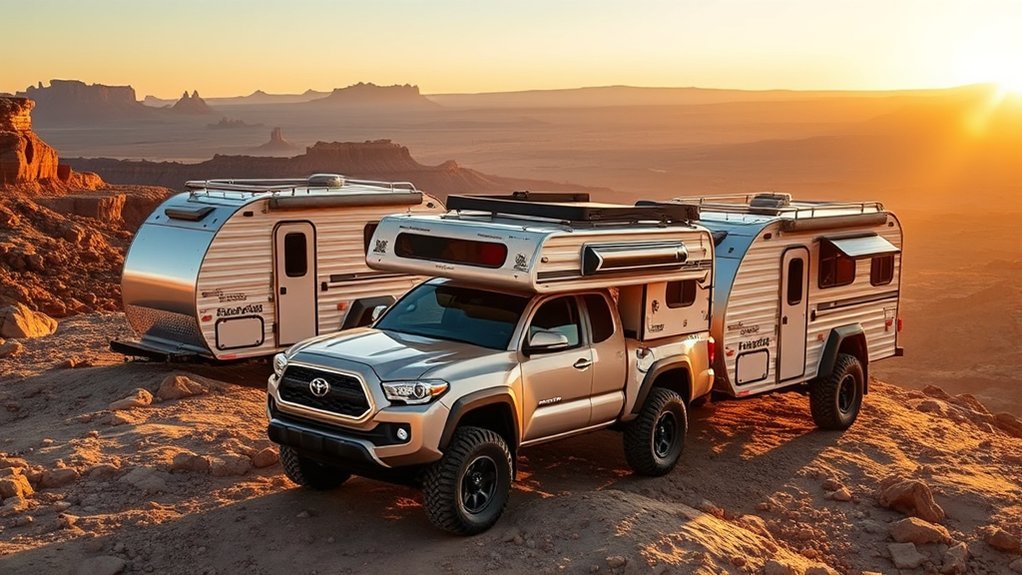
A slide-in camper for a Toyota Tacoma needs to do more than fit in the bed. It must stay within your truck’s payload rating, clear the wheel wells and bed rails, mount securely to the frame, and still leave enough capacity for passengers, water, tools, food, and camping gear. For Tacoma owners, the safest choice is usually a compact, lightweight truck camper designed for midsize pickups rather than a full-size camper or a heavy truck-bed accessory.
How to Choose the Best Slide-In Camper for Toyota Tacoma
Before comparing campers, confirm your Tacoma’s door-jamb payload sticker, gross vehicle weight rating, bed length, wheel-well spacing, and tie-down compatibility. A camper that looks compact can still overload the truck once you add water, batteries, propane, bedding, recovery gear, food, and passengers.
| Buying Factor | Why It Matters for Tacoma Owners | What to Check Before Buying |
|---|---|---|
| Loaded Weight | The camper, passengers, water, fuel, and gear all count against payload. | Compare the camper’s wet weight against the exact payload rating on your Tacoma. |
| Bed Fit | Short-bed and long-bed Tacomas require different camper footprints. | Measure bed length, bed width, wheel-well clearance, and tailgate overhang. |
| Mounting System | A secure mount reduces sway and protects the bed from stress. | Confirm Tacoma-specific frame-mounted tie-down compatibility. |
| Interior Layout | Small campers need efficient storage, sleeping, cooking, and entry space. | Look for fold-away tables, under-bed storage, and a clear walkway. |
| Climate Control | Poor insulation can cause condensation, heat loss, and summer discomfort. | Check insulation type, ventilation, window design, and roof vent options. |
Factors to Consider When Choosing Slide In Camper For Toyota Tacoma
Before you shop, check your Tacoma’s payload and gross vehicle weight ratings so you won’t overload the truck. You’ll also want to confirm the camper’s weight, dimensions, and mounting points match your bed size and tie-down system. Pay attention to compatibility specs and how payload limits change once gear and water are loaded.
Weight Capacity Limits
Because your Tacoma’s payload and handling depend on how much weight you load, you need to match a slide-in camper to the truck’s payload rating and keep the combined weight of camper, gear, and accessories below the GVWR. Check the camper’s dry weight and add realistic gear, water, and fuel loads to get a true on-truck weight.
Pay attention to weight distribution. Centering mass over the axle reduces sway and improves stability. If planned loads approach the limit, consider suspension upgrades to preserve ride quality and braking performance. Never exceed capacity: doing so shortens tire life, degrades braking, and risks frame or suspension damage.
Truck Compatibility Specs
Matching a camper to your Tacoma goes beyond weight limits — you also need to verify the truck bed’s size and configuration, payload rating, frame and suspension specs, and how the camper’s height and clearance will affect driving and off-road handling.
Start by matching camper attachment points to your specific bed length and any factory features like bed rails or tie-downs. Compare camper weight to your Tacoma’s payload capacity so you don’t overload springs, tires, or brakes. Inspect frame and suspension specs to see if reinforcements, heavier springs, or aftermarket tie-downs are needed for safe mounting. Finally, check overall camper height and ground clearance to verify it won’t compromise approach/departure angles or handling on rough trails.
Camper Dimensions Fit
If you’re fitting a slide-in camper to your Tacoma, precise measurements matter. Bed width, interior length, and wheel-well clearance determine whether a unit will sit flush without forcing modifications.
Measure your bed interior, accounting for wheel wells and any rail or box liners, so the shell seats snugly. Check overall camper height to avoid cab interference and low bridges. Confirm the camper’s center of gravity aligns with the truck’s design to preserve handling; too far aft or forward unsettles steering and braking. Finally, verify dimensions against your Tacoma model year and configuration before purchasing. Proper fit prevents costly alterations and keeps loading and driving predictable and safe.
Payload Vs Gross Vehicle
Now that you’ve confirmed a camper will physically fit your Tacoma’s bed, the next step is to compare the camper’s weight with your truck’s payload and GVWR. Payload is the maximum weight your Tacoma can safely carry — passengers, gear, and the camper — while GVWR is the upper limit for the truck plus everything aboard.
Subtracting the truck’s curb weight from GVWR tells you the actual payload available. You must guarantee the camper’s fully loaded weight, including water and gear, stays within that payload number and doesn’t push the truck past GVWR. Exceeding either limit harms handling, braking, and components. Check manufacturers’ specs, weigh your loaded camper, and leave a safety margin for fuel and supplies.
Tie-Down & Mounting
Because a secure mounting system directly affects safety and handling, you should prioritize tie-downs that anchor the camper to your Tacoma’s frame and offer independent attachment points to minimize sway. Choose frame-mounted systems to protect your truck and improve stability; they distribute loads more safely than bed-only mounts.
Look for no-drill installation options if you want quick setup without altering the frame, but confirm manufacturer fitment for your Tacoma model. Independent tie-down points matter because each corner anchored separately reduces movement and improves handling on turns and rough roads. Finally, pick a system backed by a warranty so you’re covered if hardware fails or corrodes, giving you confidence in long-term durability and camper security.
Bed Accessory Clearance
When choosing a slide-in camper for your Tacoma, check how the camper’s height, width, and mounting points interact with bed rails and any installed accessories so you don’t block access or create clearance conflicts. Measure bed rail height and the profile of accessories—cargo slides, toolboxes, and drawer systems—to confirm the camper won’t interfere with opening lids or sliding mechanisms.
Verify weight distribution stays within Tacoma payload limits; overloaded rear suspension can change clearance and handling. Pick sliding organizers and toolboxes designed to work with the camper’s footprint so you retain full access. Finally, install tie-downs and mounting hardware that secure the camper without occupying critical clearance zones. Doing this preserves function and keeps your Tacoma safe and usable.
Interior Layout Efficiency
If you want to make the most of a Tacoma-sized slide-in, prioritize layouts that pack multifunctional elements—like beds that fold into seating or tables that stow away—so every square inch pulls double duty. Place the kitchen and any wet bath along one side to keep a clear circulation path, add overhead and under-bed storage to hide gear, and fit windows or a skylight where they’ll brighten tight corners and improve perceived space.
You should choose a floorplan that lets you move without contorting. Clear walkways between door, galley, and sleeping area matter. Inspect cabinet depth and drawer access for real-world use. Favor modular components you can reconfigure for chores, sleeping, or dining, and confirm natural light placement to avoid dark, cramped zones.
Insulation and Climate
Although Tacoma owners often focus on layout and weight, you’ll want to give insulation top priority because it directly controls comfort, energy use, and condensation risk across seasons. Insulation maintains interior temperature—reducing heat loss in winter and keeping things cooler in summer—so look for higher R-values suited to your climate.
Check insulation type: closed-cell foam offers moisture resistance and light weight, while fiberglass can be cheaper but may trap moisture and lose effectiveness. Don’t skip ventilation: roof vents, intake fans, and proper airflow prevent condensation, mold, and mildew in humid conditions. Finally, prioritize thermal features like double-pane windows and insulated doors, since materials and design greatly improve climate control and energy efficiency.
Who Should Skip a Slide-In Camper for a Tacoma?
A slide-in camper may not be the best choice if your Tacoma already carries heavy armor, oversized tires, a drawer system, a rooftop tent, recovery gear, or a constant tool load. Those additions reduce remaining payload before the camper is even installed.
You may also want to skip a slide-in camper if you need a full wet bath, standing-room interior, large refrigerator, or family sleeping space. In that case, a lightweight trailer, pop-up camper, or rooftop tent setup may be more practical than pushing a midsize truck close to its limits.
Frequently Asked Questions
Can a Slide-In Camper Fit Tacoma Models With Short Beds?
Yes — you can fit a slide-in camper in short-bed Tacomas, but you’ll need a compact model specifically designed for short beds, verify weight limits and tie-downs, and consider bedrail clearance, overhang, and payload before buying.
How Does a Camper Affect Fuel Economy on Long Trips?
A slide-in camper increases drag and weight, so you’ll see lower MPG on long trips; you’ll likely lose 10–25% fuel economy depending on camper size, load, and driving speed, especially at sustained highway velocities.
Are Slide-In Campers Compatible With Factory Towing Packages?
Like a snug puzzle piece, yes — slide-in campers can work with factory towing packages if their tongue weight and gross vehicle weight ratings match; you’ll check specs, distribute load properly, and avoid exceeding the truck’s limits.
Can I Live Full-Time in a Compact Slide-In Camper?
Yes — you can live full-time in a compact slide-in camper if you prioritize essentials, optimize storage, manage power and water, embrace minimalism, and adapt to limited space; you’ll need smart systems and a flexible mindset.
What Maintenance Does a Slide-In Camper Roof Require?
You’ll inspect seams and seals monthly, clean debris, rinse with mild soap, check for soft spots, lubricate vents and hinges, re-seal any cracks annually, and promptly repair punctures or delamination to prevent leaks and structural damage.
Conclusion
The best slide-in camper for a Toyota Tacoma is the one that fits your exact truck, stays within payload, and supports the way you actually camp. Focus first on loaded weight, bed fit, center of gravity, tie-down compatibility, and interior efficiency. Once those basics are right, you can compare comfort features like insulation, ventilation, storage, and sleeping layout without risking safety or drivability.