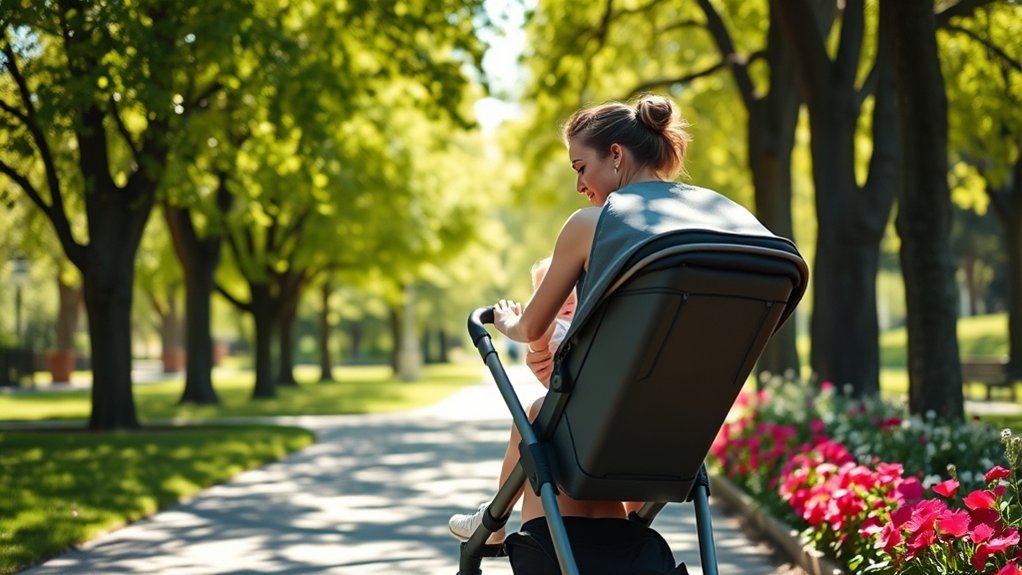
Understanding proper stroller seat recline positions is essential for your baby’s spinal development, posture, and respiratory safety. Newborns require a fully flat seat recline to keep their airways clear, while older infants can safely transition to semi-reclined or fully upright angles as they gain neck control and core strength. Navigating these seat adjustments ensures your child stays comfortable and secure on every walk.
Quick Answer
Newborns (0–6 months) must use a fully flat stroller seat recline (150° to 180°) or a bassinet attachment to protect their developing spine and prevent positional asphyxiation. Once an infant achieves steady head control and can sit unassisted—typically between 6 and 9 months—they can safely transition to a fully upright stroller seat position (70° to 90°).
Key Takeaways
- 0–6 Months (Newborn Stage): Seat must recline fully flat (150°–180°) or use an approved bassinet to prevent chin-to-chest airway obstruction.
- 3–6 Months (Transition Stage): A semi-reclined angle (~45°) is acceptable only after the infant demonstrates partial head control.
- 6–9+ Months (Upright Stage): Full upright seating (70°–90°) is safe once the infant sits unassisted without slumping.
- Safety Harness Adjustment: Re-thread and tighten 5-point safety harness shoulder straps whenever you change the seat recline angle.
At a Glance: Stroller Seat Recline Stages
| Age Range | Recline Angle | Primary Safety Requirement |
| 0–6 Months | Flat (150°–180°) | Airway preservation & spine support |
| 3–6 Months | Semi-Reclined (~45°) | Partial head control monitoring |
| 6–9+ Months | Upright (70°–90°) | Unassisted sitting & 5-point harness |
Understanding the Importance of Stroller Recline Positions

Selecting the correct stroller seat recline position directly impacts your infant’s anatomical growth, comfort, and physiological safety during outings. In the early stages of life, a baby’s head accounts for roughly 25% of their total body weight, while their neck muscles remain under-developed.
Recline benefits are most critical for newborns (0–6 months), who require a near-flat position (150° to 180°). Placing a newborn in an inclined seat causes their heavy head to drop forward toward their chest. This posture can compress their flexible trachea, drastically reducing oxygen intake—a hazard known as positional asphyxiation. According to American Academy of Pediatrics (AAP) stroller safety guidance, infant transport systems must maintain an open airway and support proper curvature of the spine.
Warning: Never place a infant under 6 months old in an upright or semi-reclined stroller seat unless the stroller is specifically engineered with a fully flat newborn carriage mode or paired with an approved bassinet or infant car seat adapter.
As your baby grows, you can gradually shift to a semi-reclined position around 3 to 6 months. This middle angle provides peak head and neck support while easing infant reflux symptoms after feedings. By 6 to 9 months, most infants develop the trunk stability required for a fully upright position, opening up a wider field of view to interact with their environment.
When Can Babies Transition to an Upright Stroller Position?
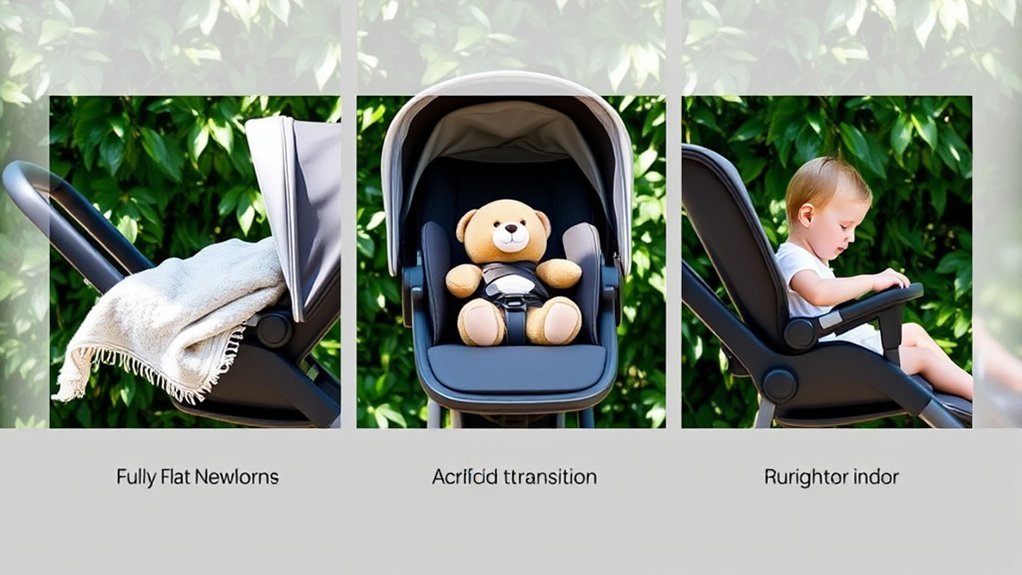
Most infants are ready to transition to a fully upright stroller position between 6 and 9 months of age. However, calendar age is secondary to meeting specific developmental milestones. Before raising the seat back, observe whether your baby can hold their head steady without wobbling during movement and sit upright for extended periods without slumping sideways.
“Transitioning your baby to an upright stroller seat is driven by physical readiness—specifically unassisted sitting and neck stability—rather than age alone.”
Transitioning an infant prematurely can strain their back muscles, cause discomfort, and compromise breathing efficiency. If your baby tires during a walk, their torso will slump forward or sideways, causing the harness straps to rub against their neck.
Pro Tip: When adjusting the seat recline angle upright, always check the shoulder strap slots on your stroller backrest. The harness straps should emerge at or slightly above your baby’s shoulders to prevent downward compression on their spine.
Recognizing Signs of Readiness for Upright Stroller Use
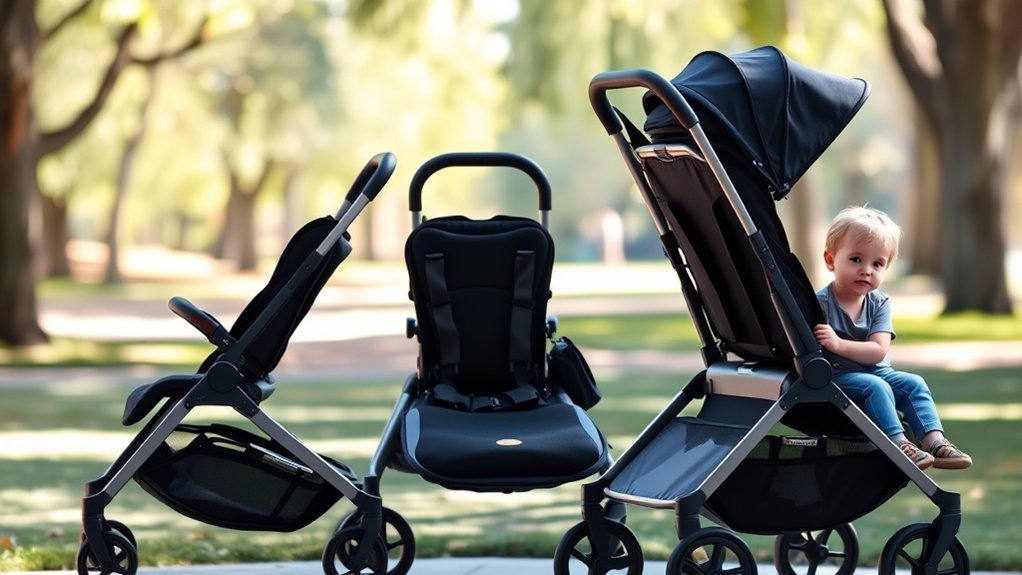
Evaluating developmental readiness ensures your child moves to an upright seat at the right pace. Watch for these clear physical and behavioral cues:
- Full Head and Neck Control: Your baby maintains a centered head posture without bobbing or falling forward when the stroller rolls over small bumps.
- Unassisted Sitting Ability: They can sit independently on the floor for several minutes using their core muscles, showing strong spinal support.
- Active Environmental Curiosity: They strain forward, push against a reclined backrest, or express frustration when lying flat, indicating a desire to see their surroundings.
Note: If your baby falls asleep while strolling in an upright position, immediately adjust the seat back into a semi-reclined or flat position to prevent their head from slumping forward during sleep.
Safe Methods for Transitioning From Recline to Upright
Transitioning from a flat newborn setup to an upright toddler seat should be a gradual, multi-stage process. Start by adjusting the seat back a few degrees higher during short outings. Monitor your baby’s posture continuously, watching for spinal curvature or chin slumping.
| Age Range | Recline Angle | Action Plan & Tips |
|---|---|---|
| 0–3 Months | Flat (150°–180°) | Use flat carriage seat or bassinet attachment exclusively. |
| 3–6 Months | Semi-Reclined (~45°) | Introduce moderate incline for short walks; verify head stability. |
| 6–9 Months | Gradual Upright (60°–70°) | Increase angle as core strength improves; engage 5-point harness. |
| 9+ Months | Fully Upright (70°–90°) | Full upright seating for awake exploration; recline for naptime. |
Always consult your specific stroller model’s instruction manual. Weight limits and minimum age requirements for upright seat usage vary between umbrella strollers, jogging strollers, and modular travel systems.
Common Pitfalls to Avoid With Stroller Positions
To ensure maximum safety and prevent accidental injuries during stroller rides, avoid these frequent mistakes:
- Premature Upright Positioning: Moving an infant to an upright seat before 6 months or before they sit unassisted creates airway compression risks and severe postural fatigue.
- Bypassing the 5-Point Harness: Failing to fasten or properly adjust the 5-point safety harness—especially when changing recline angles—increases the risk of the baby sliding down or tipping out.
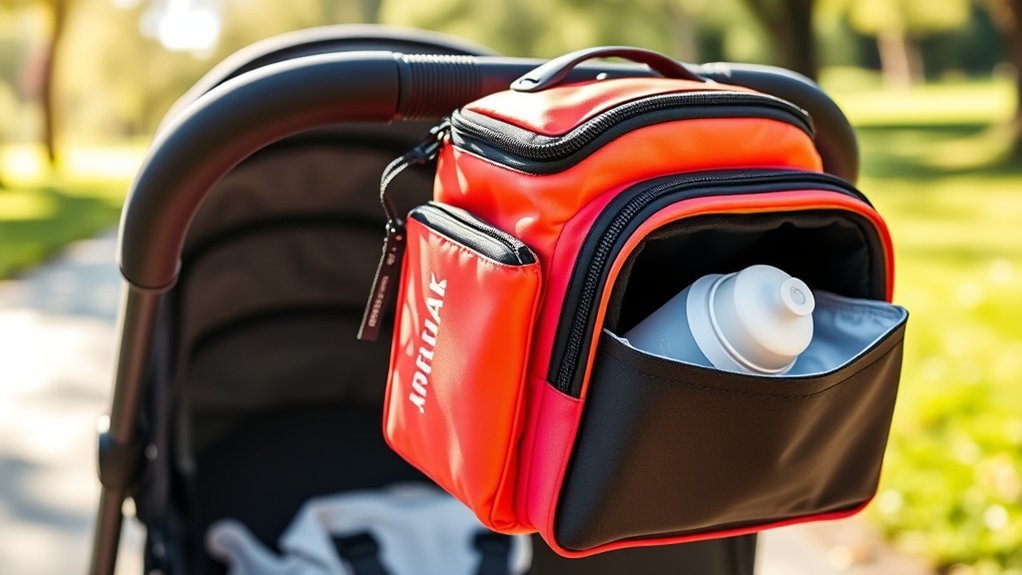
- Overloading Handlebars with Heavy Bags: Hanging heavy diaper bags or shopping bags over the stroller handlebar alters the center of gravity. According to the U.S. Consumer Product Safety Commission (CPSC), handlebar instability is a primary cause of stroller tip-overs.
- Ignoring Naptime Recline Needs: Leaving a sleeping infant in a fully upright seat allows their head to tilt forward, constricting their upper airway.
Frequently Asked Questions
How do I know if my stroller recline is correctly adjusted?
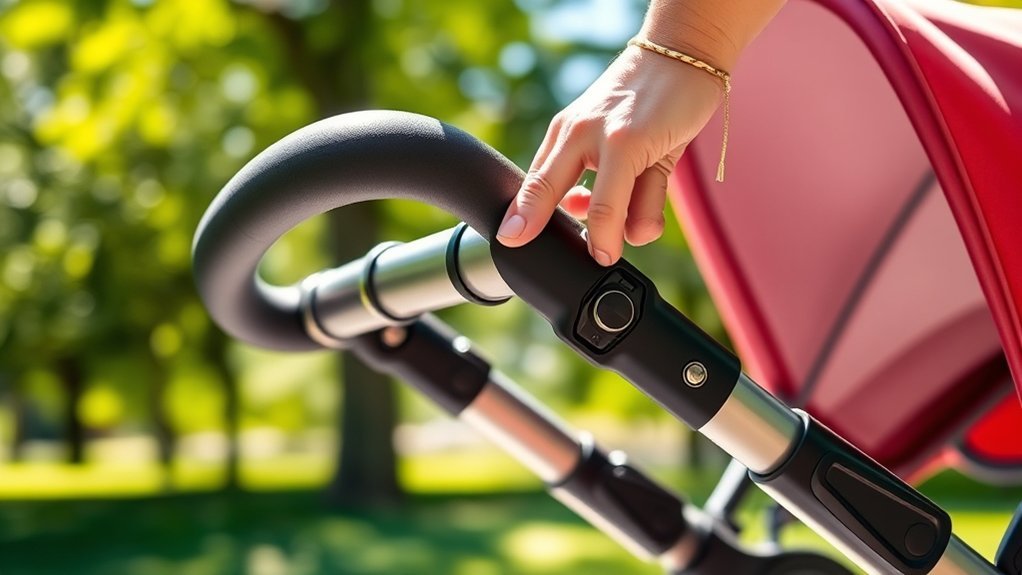
Check that the recline locking mechanism clicks firmly into place on both sides of the frame. For newborns, verify that the seat surface is flat (150° to 180°). For older babies sitting upright, ensure the backrest supports their spine without forcing their neck forward or allowing them to slump sideways.
Can I use a rolled blanket to support my baby in a reclined position?
Rolled blankets should only be placed alongside a baby’s torso for lateral stability if recommended by your stroller manufacturer. Never place thick blankets or unapproved padding behind a baby’s head or beneath their body, as unapproved accessories can push the head forward or present a suffocation risk.
What are the risks of using an upright position too early?
Using an upright seat before an infant has sufficient head and trunk control can cause postural slumping. This leads to airway narrowing (positional asphyxiation), excessive strain on the developing spine, and risk of slumping out of the safety harness.
Are there strollers with adjustable recline positions for different ages?
Yes. Most multi-position and convertible strollers offer 3 to 5 recline angles ranging from flat newborn modes to fully upright sitting angles. Bassinet attachments and infant car seat adapters also serve as dedicated newborn recline solutions for standard stroller frames.
How often should I check the stroller’s recline mechanism for safety?
Inspect the recline lever, fabric tension, and locking latches before every outing. Ensure that weight limits are respected and that the mechanical locks engage securely so the seat does not slip unexpected during a walk.
Conclusion
Matching your stroller’s seat recline position to your baby’s age and motor development is one of the simplest ways to protect their health and comfort on the go. By prioritizing a lie-flat position during the newborn months and paying close attention to signs of physical readiness before shifting upright, you provide optimal support for their growing spine and airway. Always secure the 5-point harness and adjust harness straps as your child grows to ensure every stroller ride is safe, restful, and enjoyable.
Sources
- American Academy of Pediatrics (HealthyChildren.org) — Stroller Safety and Infant Transport Guidelines
- U.S. Consumer Product Safety Commission (CPSC) — Stroller Safety Standards and Tip-Over Prevention