
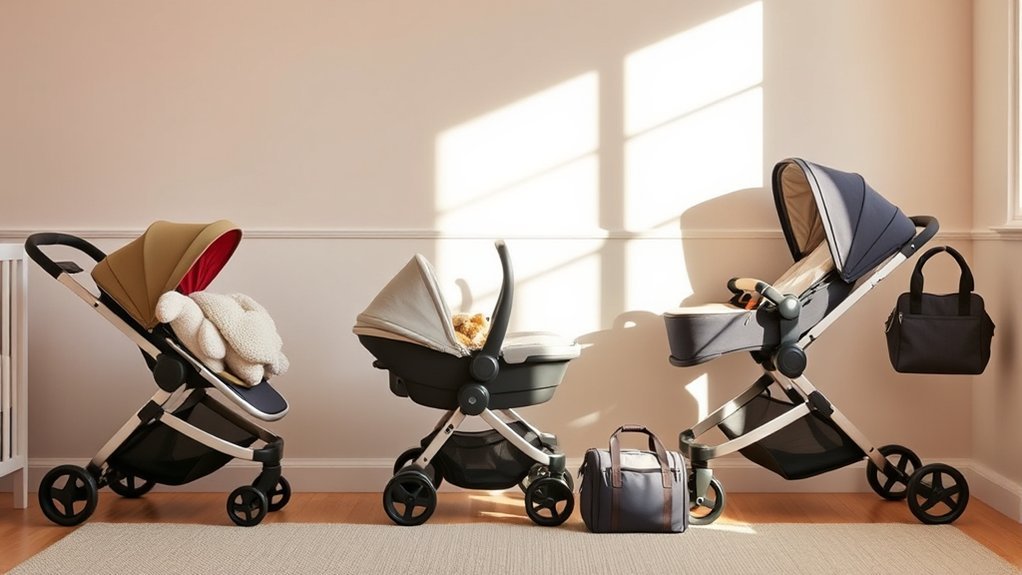
A travel system can make your life as a parent much easier by combining an infant car seat and stroller, allowing you to move your sleeping baby effortlessly from car to stroller. It’s designed for safety and convenience, but keep in mind it can be bulky and may not fit every lifestyle. Reflect on your space, budget, and how you’ll use it. There’s more to contemplate, so let’s explore whether a travel system suits your family’s needs.
What Exactly Is a Travel System?
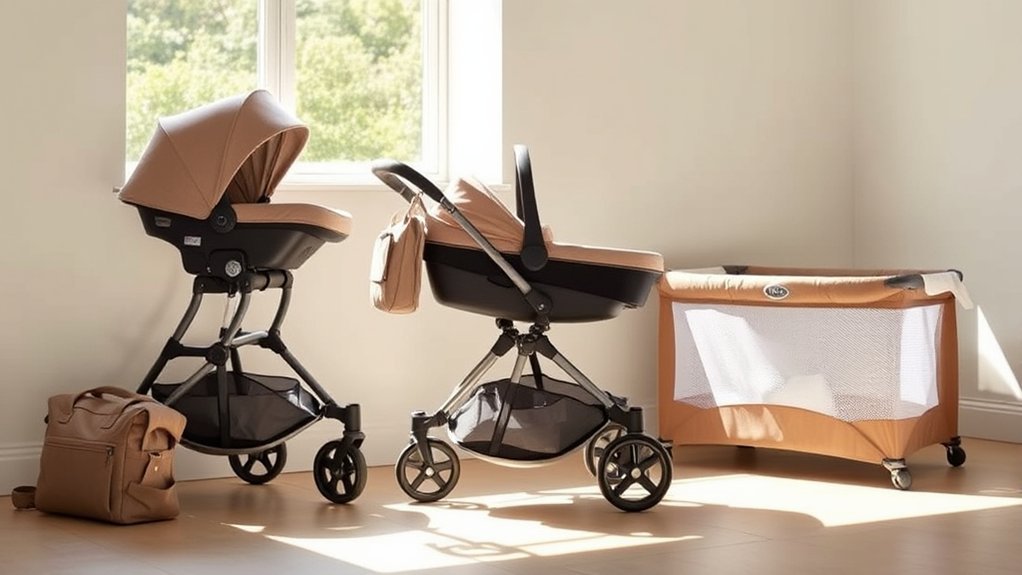
When you’re maneuvering through life with a little one, a travel system can be a game-changer.
These coordinated bundles typically include an infant car seat, a compatible stroller, and often a vehicle base, designed to work seamlessly together.
The standout travel system features allow you to lift the infant car seat directly from your car to the stroller without waking a sleeping baby, enhancing convenience on the go.
Chicco markets its offering as a “true travel system,” ensuring all components come packaged together for your ease.
Whether you choose a 2-in-1 or a more versatile 3-in-1 system, you’ll appreciate how these travel system benefits simplify changes, keeping your baby safe and comfortable while freeing you to explore the world together.
The Core Components and Why They Matter

Understanding the core components of a travel system is key to maximizing its benefits for your family. A typical travel system includes an infant car seat, a compatible stroller, and often a vehicle base. These elements work together to guarantee your baby’s safety and comfort.
The infant car seat boasts essential safety features like a five-point harness and side-impact protection, crucial for infants. The car seat base simplifies installation, minimizing risks of errors.
The infant car seat ensures safety with a five-point harness and side-impact protection, while the base makes installation a breeze.
For everyday use, the stroller offers adjustable recline, good suspension, and ample storage for your baby’s needs. These components allow you to shift a sleeping baby seamlessly from car to stroller, making outings easier and more liberating for you both.
Don’t forget those installation tips!
What a Travel System Does Well
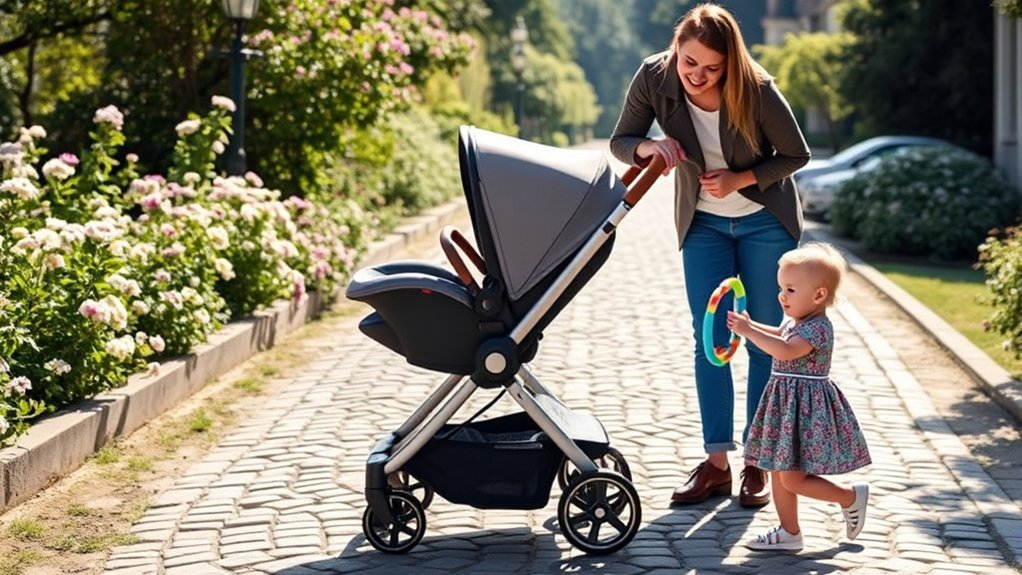
A travel system excels at simplifying your life as a parent, seamlessly blending safety and convenience in one cohesive package.
With its coordinated components—a car seat, stroller, and often a vehicle base—it makes shifts between car and stroller effortless. You can lift the infant seat from the car to the stroller without waking your sleeping baby, a key convenience factor that makes outings less stressful.
Each part is rigorously tested for compatibility, ensuring essential safety features like a five-point harness and side-impact protection. Plus, travel systems adapt as your child grows, providing long-term value.
You gain psychological reassurance knowing you have a reliable solution for transporting your little one, allowing you to enjoy the journey ahead.
Where Travel Systems Fall Short
While travel systems offer impressive convenience and safety, they also come with some drawbacks that parents should consider. Many find that size limitations can turn into daily frustrations, especially in compact living spaces. The bulkiness of some models can lead to maneuverability issues in tight spots or crowded areas. Additionally, the infant car seats often have limited height and weight limits, forcing you to invest in new gear as your child grows. Here’s a quick overview of potential challenges:
| Drawback | Description | Impact on Parents |
|---|---|---|
| Size Limitations | Bulky and heavy to transport | Difficult in small spaces |
| Maneuverability Issues | Awkward in narrow doorways | Frustration in crowded areas |
| Limited Longevity | Weight limits lead to extra purchases | Increased costs over time |
| Inflexibility | May not fit all lifestyles | Less adaptable for parents |
| Daily Inconvenience | Can feel cumbersome | More hassle than convenience |
Is a Travel System Necessary? Key Questions to Ask Yourself
Have you considered whether a travel system truly fits your family’s lifestyle? Think about your travel needs and how often you use public transport or navigate tight spaces.
Evaluate if a travel system suits your family’s lifestyle by considering your travel habits and space constraints.
If you live in a compact apartment, a full-size travel system may not be necessary. Evaluate your budget—while travel systems can be cost-effective, you might prefer buying individual components that align with your preferences.
Convenience is essential; seamless shifts between the car and stroller can save you time and hassle, especially with a sleeping baby. Safety compatibility is key, so make sure all parts are designed to work together.
Finally, consider the long-term value—a travel system can adapt from infancy to toddlerhood, making it a versatile investment for your family.
Frequently Asked Questions
Can I Use a Travel System for Toddlers?
Yes, you can use a travel system for toddlers. Look for models with safety features like secure harnesses and sturdy frames. They’ll keep your little one comfortable while you enjoy your adventures together.
How Much Should I Expect to Spend on a Travel System?
You’ll want to budget between $150 to $800 for a travel system. Check brand comparisons to find budget options that suit your needs. Remember, investing wisely can make your travels smoother and more enjoyable!
Are Travel Systems Compatible With All Car Models?
Not all travel systems are compatible with every car model, so you’ll want to check for compatibility concerns. Prioritize safety features to guarantee your baby’s secure and comfortable during every journey.
What Is the Weight Limit for the Infant Car Seat?
When it comes to safety, “better safe than sorry.” Most infant car seats have a weight limit around 30 to 35 pounds. Always check the infant seat specifications and follow safety guidelines for your little one’s protection.
Can I Buy a Travel System Second-Hand Safely?
Yes, you can buy a second-hand travel system safely. Just guarantee you check for recalls and perform a safety inspection. Trust your instincts, and prioritize your child’s safety over savings. It’s worth it!
Conclusion
In the end, choosing a travel system is like finding the right pair of shoes—comfort and practicality matter most. If you’re constantly on the go and need convenience, a travel system can be a game-changer. However, if you’re more of a homebody or prefer using other transport options, it might not be necessary. Reflect on your lifestyle, preferences, and budget to decide what fits best for you and your little one. Happy travels!


