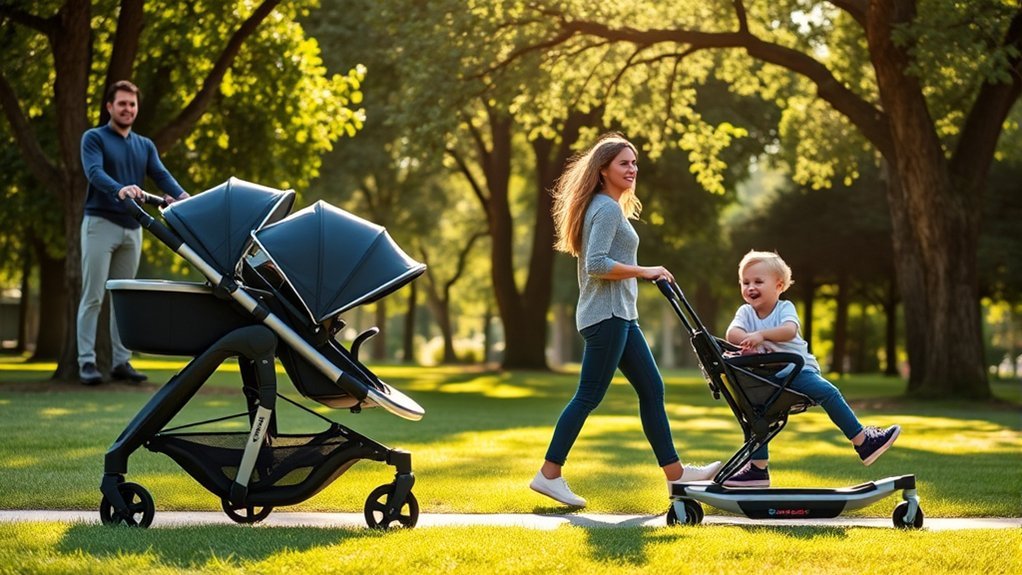
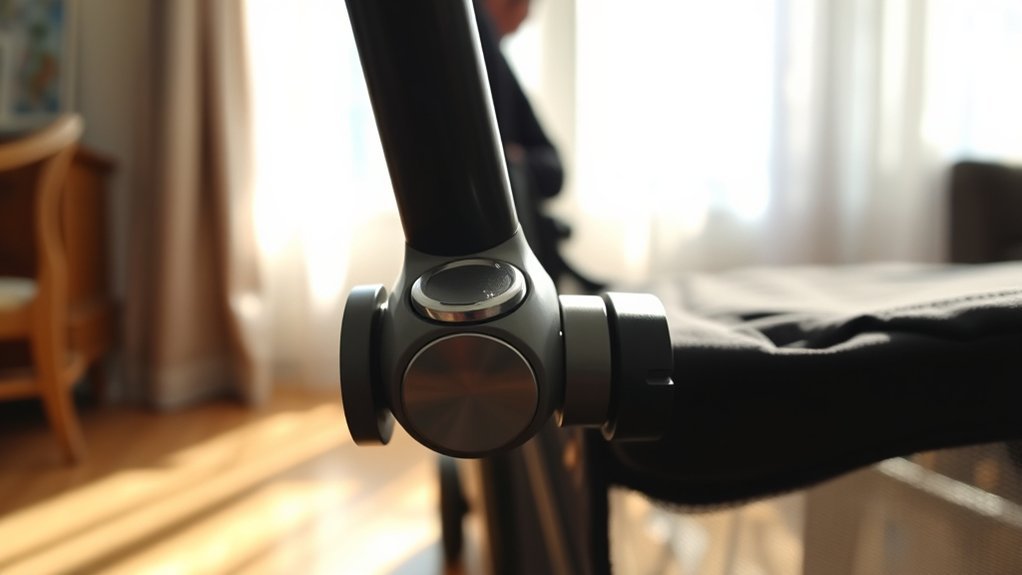
To check your stroller’s expiration, start by locating the manufacturer’s label, usually found inside the frame. This label includes the model number and safety compliance details. Though there’s no universal expiration date, inspect for signs of wear, such as frayed straps or cracked parts. Verify it complies with safety standards and test key components like brakes. If it’s damaged or missing the compliance label, it’s time to replace it. More insights on maintaining stroller safety await.
Locating the Manufacturer’s Label
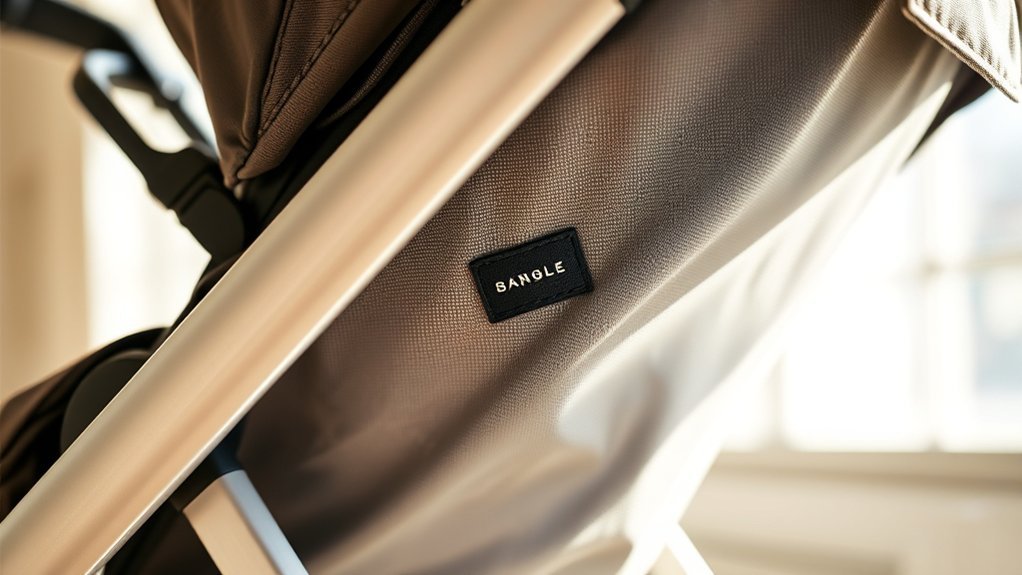
To locate the manufacturer’s label on your stroller, start by inspecting the area inside the frame, specifically above the storage basket. This label placement is essential, as it typically contains important details like the model number and safety compliance information.
If you can’t find it, don’t hesitate to consult the user manual or reach out to the manufacturer’s customer service for assistance. Regularly checking the label can help you stay informed about safety standards and recalls, ensuring your child’s safety.
Understanding Stroller Lifespan

While strollers don’t have a universal expiration date like car seats, understanding their lifespan is essential for guaranteeing your child’s safety.
A stroller’s usable life can vary based on its condition and compliance with current safety standards. Regular stroller maintenance tips, such as checking tire condition and adhering to weight ratings, can greatly extend its lifespan.
High-quality strollers can often serve multiple children if properly cared for. Be sure to review manufacturer guidelines, as they often outline lifespan expectations and warranty details.
Inspecting for Signs of Wear
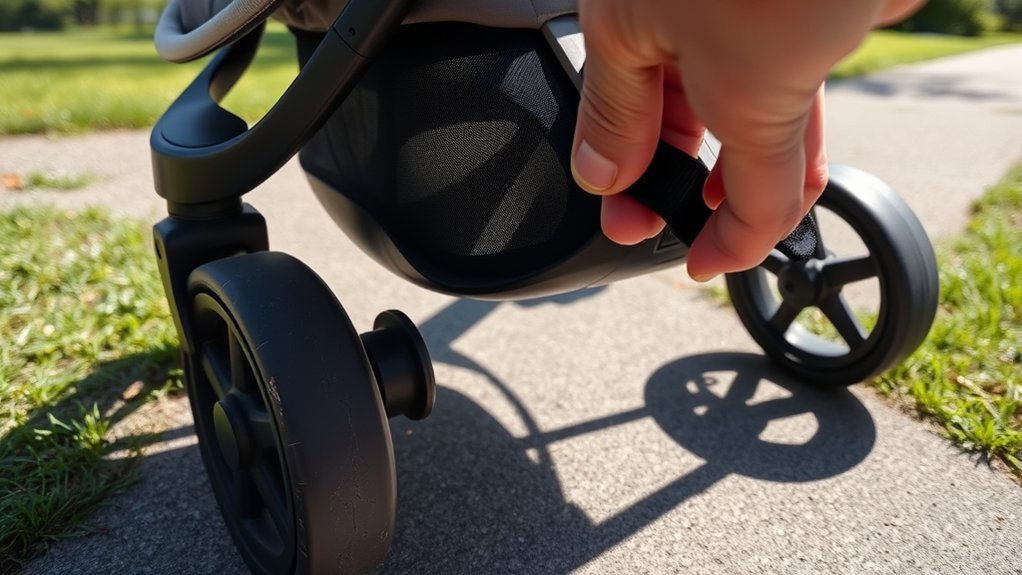
Regular inspections are essential for maintaining stroller safety and performance.
Start by checking for visible wear indicators like frayed straps, cracked frame components, or loose wheels. These issues can greatly compromise safety.
Don’t overlook the tires; brittleness or excessive wear can affect stability.
Look for rust or corrosion on metal parts, as these can weaken structural integrity.
Test the braking system by engaging the brakes to confirm they hold securely; ineffective brakes can lead to accidents.
Finally, examine the stitching on fabric and harnesses for unraveling or tearing.
Following these maintenance tips helps guarantee your stroller remains safe and functional, empowering you to enjoy outings with confidence.
Regular checks keep both you and your child safe.
Checking Compliance With Safety Standards
To guarantee your stroller meets safety regulations, start by checking for compliance labels that indicate adherence to standards like ASTM F833-15.
Understanding these safety regulations is essential, as they cover important features like brake holding and tip resistance.
Regularly inspect your stroller for wear and stay updated on recalls to maintain ongoing compliance.
Understanding Safety Regulations
Understanding safety regulations is essential for ensuring your stroller remains a safe choice for your child. Compliance with safety standards set by regulatory agencies, like ASTM and CPSC, is critical.
Here are a few key points to keep in mind:
- Strollers made after 2015 must meet updated Federal Safety Standards.
- The ASTM F833-15 Standard covers crucial safety criteria, including brake holding and tip resistance.
- Regular checks for compliance can reveal outdated models lacking the latest safety enhancements.
Inspecting Compliance Labels
Safety regulations play a vital role in ensuring your stroller’s reliability, but checking compliance labels is where you can confirm that those regulations are being met.
Look for the compliance label, typically placed on the stroller’s frame or under the seat, as it provides essential information like the manufacturer’s name, model number, and compliance date. This label helps you verify whether your stroller adheres to the ASTM F833-15 Standard, the latest benchmark for safety performance.
If it was manufactured after 2015, you can trust it meets modern safety standards for brake holding and stability. However, if the label is missing or illegible, it’s wise to discontinue use, as compliance verification becomes impossible.
Your child’s safety depends on it.
Evaluating the Condition of Key Components
As you evaluate the stroller’s condition, paying close attention to its key components is essential for guaranteeing your child’s safety and comfort.
Start with these critical checks:
Begin your evaluation with essential checks to ensure safety and comfort for your child.
- Wheel maintenance: Inspect the wheels for wear, guaranteeing they roll smoothly and are free from cracks.
- Harness inspection: Examine the harness for frays and tears, guaranteeing it securely holds your child without being overly worn.
- Brake functionality: Guarantee brakes engage securely, holding the stroller in place on inclines.
Additionally, look for signs of structural integrity issues like frame cracks or loosened rivets.
Regular cleaning of high-contact areas, such as the seat and harness, helps maintain hygiene and prevents microbial buildup.
Your diligence in these areas noticeably contributes to a safe stroller experience.
Knowing When to Replace or Repair
When it comes to deciding whether to replace or repair your stroller, it’s vital to focus on its functional performance rather than just its age.
Regular inspections are important; look for structural cracks, worn wheels, or frayed straps. If you notice a decline in braking efficiency, especially on a 5° slope, it’s time for a replacement to guarantee safety.
While high-quality strollers can last several years with proper care, manufacturers typically recommend part replacements every 5–7 years, especially for high-use models.
Implementing stroller maintenance tips and considering safety feature upgrades can enhance longevity, but don’t compromise on safety.
If key components show significant wear, prioritize replacement over repair for maximum performance and peace of mind for you and your child.
Responsible Disposal and Recycling Options
After ensuring your stroller is in good condition or deciding to replace it, consider how to dispose of it responsibly. Here are some options you can explore:
Consider responsible disposal options for your stroller, whether donating, recycling, or marking non-functional ones to prevent misuse.
- Donation centers: If your stroller is functional, donate it to local charities or shelters to help families in need.
- Recycling programs: Check with local waste management about specific recycling programs that accept stroller materials, minimizing environmental impact.
- Marking non-functional strollers: If your stroller is beyond repair, mark it as “DO NOT USE” and cut the straps to prevent accidental reuse.
Frequently Asked Questions
How Can I Contact the Manufacturer for More Information?
To contact the manufacturer, visit their website for customer service details. You’ll find warranty information and contact options, ensuring you get the support you need for your stroller’s safety and maintenance.
Are There Specific Brands Known for Longer Stroller Lifespans?
High-end brands like Bugaboo and UPPAbaby often use durable materials, ensuring longer stroller lifespans. Investing in these options means you’ll enjoy reliable performance and safety, giving you peace of mind during your child’s early years.
Can I Use a Stroller if It’s Past Its Expiration Date?
You shouldn’t use a stroller past its expiration date due to safety concerns. Product longevity diminishes over time, risking your child’s safety. Always prioritize a reliable, current stroller for peace of mind during outings.
What Should I Do if My Stroller Is Recalled?
If your stroller’s recalled, stop using it immediately. Check the manufacturer’s website for recall procedures. Follow their instructions for safe return or repair, ensuring your child’s safety remains your top priority throughout the process.
How Often Should I Inspect My Stroller for Safety?
You should inspect your stroller for safety every month. Regular safety check frequency guarantees your child’s well-being. Stroller maintenance tips can help you spot wear or damage before it becomes a serious issue.
Conclusion
In summary, regularly checking your stroller’s expiration can guarantee your child’s safety while traversing the world. While some believe that strollers can last indefinitely with care, the reality is that materials degrade over time, potentially compromising safety. By following the steps outlined—locating the manufacturer’s label, inspecting for wear, and knowing when to replace—you can confidently maintain your stroller. Remember, a well-maintained stroller not only protects your child but also provides peace of mind during every outing.