When using a stroller for your preemie, prioritize a fully reclining seat and a lightweight design for maneuverability. Always secure your child with a snug five-point harness to guarantee safety. Keep an eye on the temperature and avoid loose items during naps. Regularly inspect the stroller for any wear and confirm it’s properly unfolded before use. Following these tips helps keep rides safe and comfortable. You’ll discover more essential practices for stroller safety as you explore further.
Choosing the Right Stroller Features
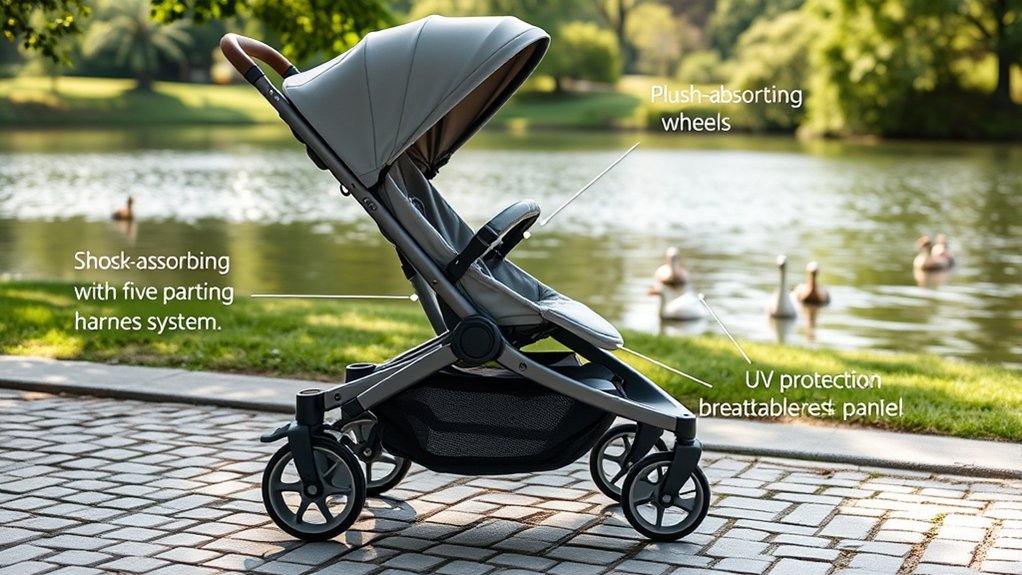
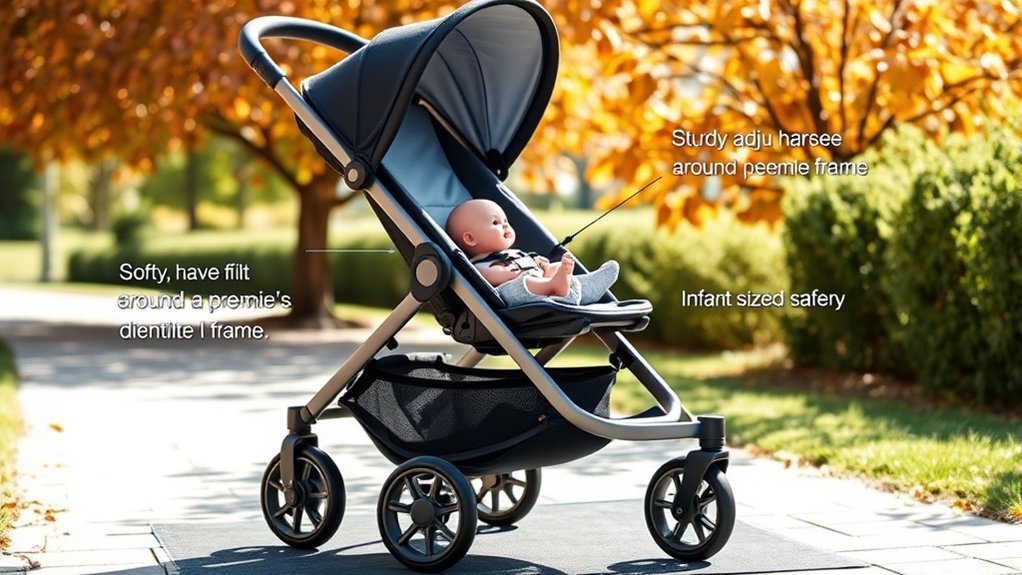
When you’re choosing a stroller for your preemie, it’s essential to prioritize features that guarantee their safety and comfort. Look for models with a fully reclining seat, ensuring proper positioning for their delicate bodies.
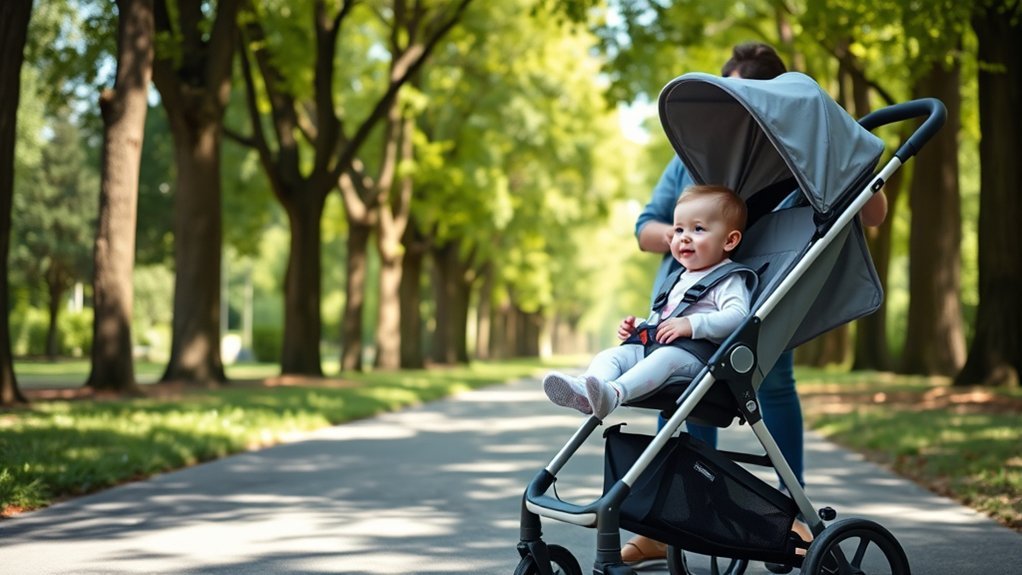
Stroller weight matters too; a lightweight design enhances maneuverability, making it easier for you to navigate tight spaces. Aim for strollers with a five-point harness system to secure your baby firmly, reducing the risk of sliding or falling out.
A wide base with a low center of gravity minimizes tipping, important for lightweight preemies. Don’t forget adjustable canopies for UV protection and easy-to-use brakes that lock securely on inclines.
Your choices can make all the difference in ensuring safe and enjoyable rides.
Ensuring Proper Harness Usage
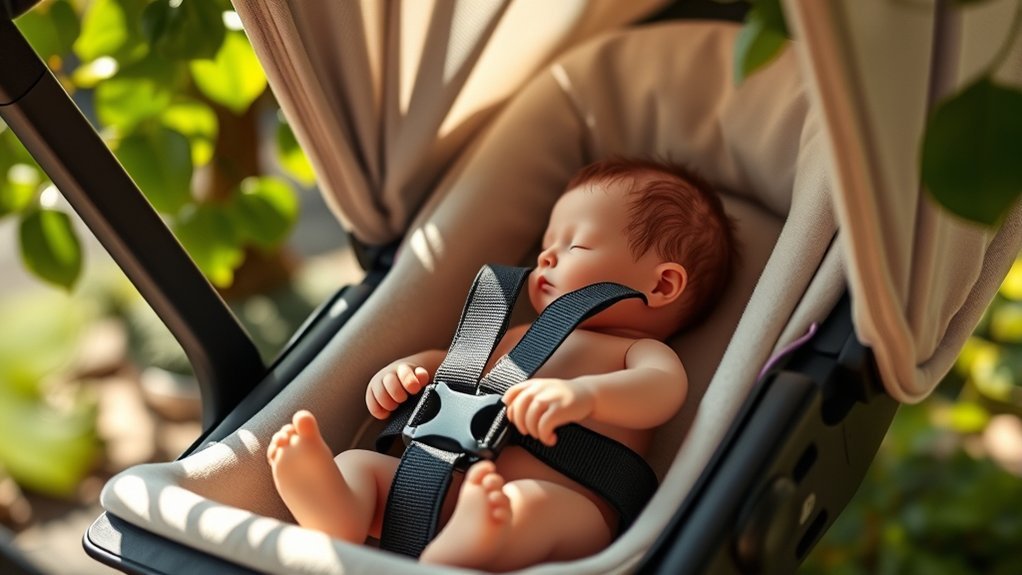
Choosing the right stroller features is just the beginning; securing your preemie properly is equally important. Always use a five-point harness to minimize the risk of sliding or falling out during movement.
Make sure the harness straps are adjusted snugly against your child’s body without causing discomfort. This snug fit is essential for safety and security.
Regularly inspect the harness system for any wear and tear, like frayed straps or broken buckles, which could compromise safety. Familiarize yourself with the stroller’s user manual for specific instructions on harness adjustments suitable for your preemie’s size and weight.
Don’t forget to teach older siblings or caregivers about the importance of secure buckling every time the stroller is used to promote consistent safety practices.
Safe Stroller Napping Practices

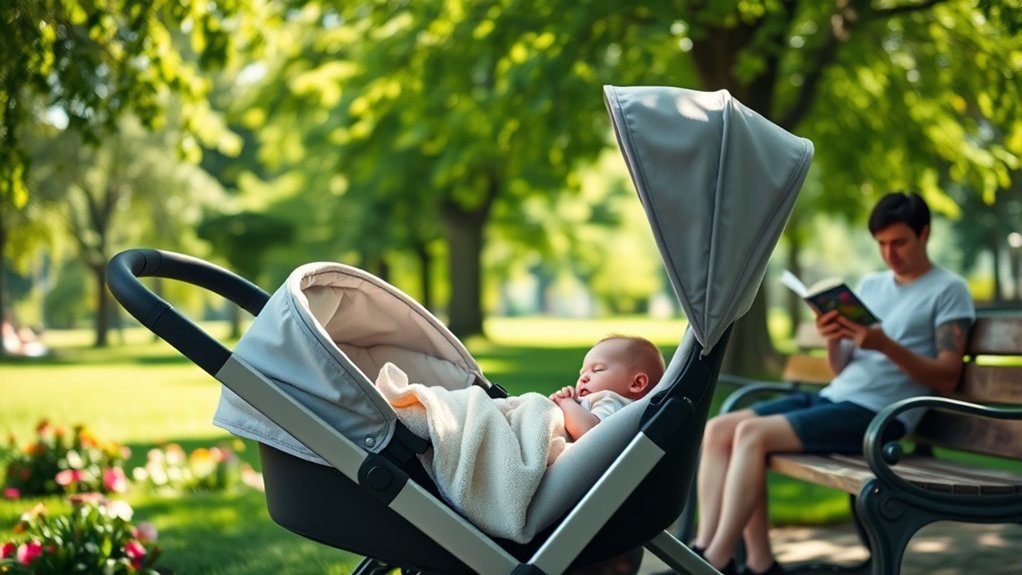
To guarantee your preemie naps safely in the stroller, it’s vital to recline the seat fully, providing the flat position they need for proper support.
Always secure your little one with a snugly fastened five-point harness to prevent sliding or accidental falls during stroller naps.
Ensure your preemie is safely secured with a snug five-point harness to prevent any sliding or falls during their stroller naps.
Keep a close eye on the temperature around the stroller, making sure your preemie isn’t overheated or exposed to direct sunlight, which can disrupt their sleep environment.
Regularly check the recline mechanism to confirm it functions smoothly, adjusting as necessary for comfort.
Finally, avoid using loose blankets or pillows, as these can pose serious suffocation risks.
Prioritizing stroller nap safety is essential for your preemie’s well-being while they catch those much-needed Z’s.
Maintaining Stroller Safety
Napping comfortably in a stroller is just one part of guaranteeing your preemie’s safety.
Regular stroller inspections are essential; check for wear or damage, especially on brakes, wheels, and harness straps. Always confirm the stroller is fully unfolded and locked before use to prevent accidental collapse.
Keep it clean by removing debris that could obstruct moving parts, maintaining its functionality. Adhere to the manufacturer’s weight limits and guidelines, especially for preemies who’ve specific needs.
Don’t forget to register your stroller with the manufacturer; this way, you’ll receive timely updates on safety recalls.
Finally, practice proper stroller storage to avoid damage and make sure it’s ready for safe outings whenever you need it.
Understanding Age-Appropriate Stroller Use
How can you guarantee your preemie is safe and comfortable in a stroller? Understanding age-appropriate stroller use is essential. Preemies often need more time to reach developmental milestones, like sitting unassisted, usually around six months. Until your little one is ready, use a stroller compatible with an infant car seat or bassinet for a secure, flat position. Always check the manufacturer’s guidelines for age and weight limits.
| Stage | Stroller Use |
|---|---|
| Newborn | Bassinet or infant car seat |
| 4 months | Consult pediatrician for readiness |
| 6 months | Stroller with support |
| 9 months | Regular stroller use |
| 12 months+ | Explore different models |
Monitor head and neck control to guarantee safety. Your pediatrician can guide you on stroller readiness.
Keeping the Stroller Clean and Functional
While you may be enthusiastic to take your preemie out for a stroll, keeping the stroller clean and functional is crucial for their safety and well-being.
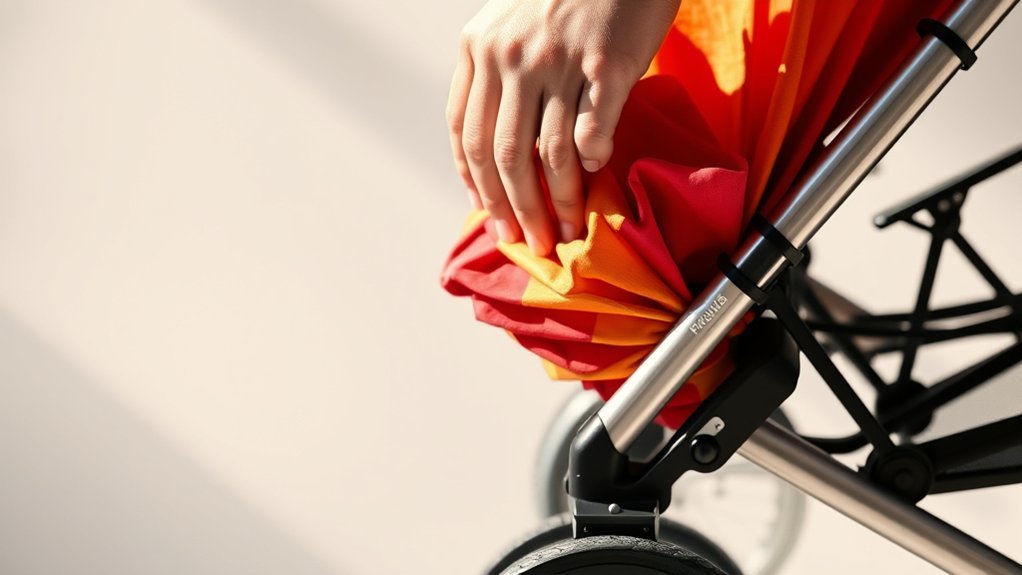
Regularly clean the fabric and frame to prevent dirt buildup, which can harbor bacteria harmful to your little one’s sensitive immune system. Use a damp cloth and mild soap for cleaning, avoiding harsh chemicals that could irritate their skin or respiratory system.
Don’t forget to inspect wheels and moving parts for debris to guarantee smooth functionality. Also, check harness straps and attachment points for wear and tear.
Follow the manufacturer’s cleaning guidelines for proper maintenance. These stroller maintenance tips and cleaning products recommendations will help keep your rides safe and enjoyable.
Additional Safety Resources for Parents
Keeping your stroller clean and functional is just one aspect of ensuring your preemie’s safety. It’s essential to tap into expert resources and stay updated on safety regulations. Pediatric specialists can provide tailored advice on stroller use, while the CPSC outlines important safety standards. Engaging with organizations like Pathways.org gives you access to invaluable information on infant development and safe stroller practices. Additionally, consider using instructional videos for visual guidance and the Baby Milestones app to track your preemie’s growth.
| Resource | Purpose |
|---|---|
| Pediatric Specialists | Tailored advice for preemie safety |
| CPSC | Safety regulations and updates |
| Pathways.org | Support on infant development |
| Instructional Videos | Demonstrations of safe stroller usage |
| Baby Milestones App | Growth tracking for stroller readiness |
Frequently Asked Questions
What Is the Best Age to Start Using a Stroller for My Preemie?
You can start using a stroller for your preemie around three to six months, depending on their growth. Make certain the stroller features appropriate support and safety measures to accommodate their needs during this vital developmental stage.
How Do I Know if My Preemie Fits the Stroller Properly?
To guarantee your preemie fits the stroller properly, check for preemie stroller safety guidelines. Use proper harnessing techniques, making sure the straps are snug but not restrictive. This helps maintain comfort and security during rides.
Can I Use a Car Seat With the Stroller for My Preemie?
Yes, you can use a car seat with the stroller, but verify car seat compatibility with your stroller. Always check for stroller safety features to protect your preemie during rides. Prioritize secure connections and proper positioning.
What Are the Signs of Stroller Wear and Tear to Look For?
Look for frayed straps, rusted frames, and wobbly wheels as wear indicators. Regular stroller maintenance is essential; don’t ignore these signs. Your child’s safety depends on a well-maintained stroller, so check it often.
Is It Safe to Jog With a Stroller for My Preemie?
It’s not safe to jog with a stroller for your preemie. Stroller features designed for jogging may not provide adequate support. Prioritize your child’s safety, and choose walking until they’re older and stronger.
Conclusion
In summary, ensuring your preemie’s safety in a stroller is essential. Did you know that nearly 7,000 children under the age of five are injured in stroller-related incidents each year? By choosing the right features, using the harness properly, and maintaining cleanliness, you can greatly reduce those risks. Remember, every safe ride counts toward your little one’s well-being. Stay vigilant, and always prioritize safety to make every outing a positive experience for both you and your child.