Disclosure: As an Amazon Associate, we earn from qualifying purchases. If you click a link on this page and make a purchase, we may receive a small commission at no extra cost to you.
AWithZ UF20B Spot Welder Review: Compact 10.5KW Capacitor Welder for Battery Packs
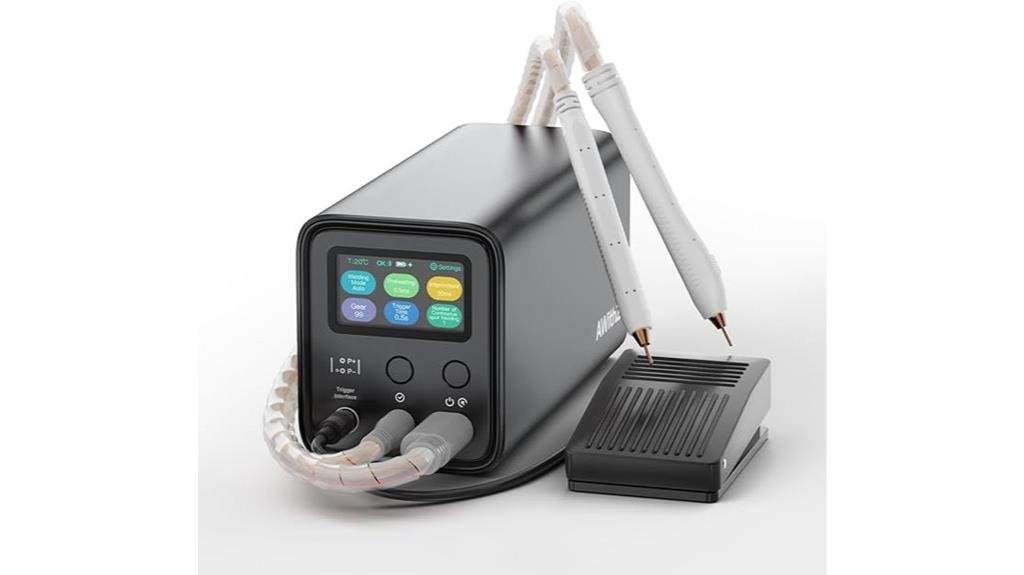
Battery-pack welding is unforgiving. Too little pulse energy can leave a weak joint, while too much can burn through thin strip or add unwanted heat near a cell. The AWithZ UF20B addresses that balance with 99 adjustable levels and automatic, pen-trigger, and foot-pedal modes.
This review helps you decide whether its compact, wall-powered capacitor design suits your battery projects. Its control options are useful, but the learning curve, thin-material limits, and need for mains power make it a poor fit for some buyers.
Quick Verdict
Rating: 8/10
Best For: DIY battery builders and small repair benches working with thin strip on 18650, 21700, and LiFePO4 packs.
Bottom Line: The UF20B gives you fine pulse adjustment and three practical trigger methods in a compact bench format. It must remain connected to wall power, and you need scrap testing and careful heat management before using it on cells.
Key Specifications and What’s in the Box
| Specification | Detail |
|---|---|
| Brand | AWithZ |
| Model | UF20B |
| Product Type | Capacitor battery spot welder |
| Seller-Stated Power | 10.5KW in the supplied title and 10KW maximum pulse welding power in the supplied product details |
| Input | 100–240V AC with a listed 15A adapter |
| Energy Storage | Built-in Farad super capacitors |
| Operating Requirement | Must remain plugged in and charging during use |
| Trigger Modes | Automatic contact trigger, manual pen trigger, and foot pedal |
| Adjustment Range | 99 adjustable levels |
| Listed Material Support | Up to 0.4mm nickel-plated sheet, steel, and iron; about 0.1mm pure nickel or copper with flux |
| Pack Compatibility | 18650, 14500, 21700, 26650, 32650, and LiFePO4 pack work |
| Listed Item Weight | About 1.84 kg |
| Listed Package Size | About 28.5 x 23.01 x 10.39 cm |
| Included Accessories | Welder, charger cable, 2m foot pedal, welding pens, 2m nickel-plated sheet, file, and manual |
| Best Use | Controlled thin-strip welding for battery-pack assembly, repair, and prototypes |
| Safety Note | Test on scrap, protect your eyes, stabilize cells, follow the manual, and stop when probes or leads become too hot |
Key Takeaways
- The UF20B is a compact capacitor welder designed for thin battery strip, not structural fabrication.
- Its 99 levels help you adjust pulse energy for different strip types and thicknesses.
- Automatic, manual, and foot-pedal triggers support fast repetition or more deliberate probe placement.
- The welder must stay connected to wall power, so it does not replace a cordless field unit.
- Safe results depend on scrap testing, clean probe tips, stable cells, consistent pressure, and cooling breaks.
What Is the AWithZ UF20B?
The AWithZ UF20B is a bench-style capacitor spot welder for battery-pack assembly and repair. The supplied product details position it for cylindrical cells such as 18650, 21700, 26650, and 32650, along with LiFePO4 pack work.
Its main feature is control. You can choose from 99 energy levels and trigger a weld automatically on contact, manually from the pen, or with the included 2m foot pedal. The foot pedal is especially useful when you want both hands available to hold the probes steady.
The supplied package list includes the welder, charger cable, welding pens, foot pedal, nickel-plated practice strip, file, and manual. That setup gives you the basic parts needed to test pressure and pulse settings before working on a real pack.
How we reviewed it
We reviewed the supplied article, its model-specific specifications, package details, compatibility claims, and buyer guidance. The exact Amazon ASIN did not return an accessible product page or independent search result during verification, so model-specific listing claims remain attributed to the supplied product information.
Who Should Buy It?
Best For
- DIY builders joining thin nickel-plated strip to common cylindrical battery cells.
- Makers who want a foot pedal for careful probe positioning on parallel groups and small tabs.
- Small repair benches handling prototypes, tab replacement, and short controlled welding runs.
Skip If
- You need cordless operation away from a mains outlet.
- You plan to weld structural metal or material beyond the listed thin-sheet limits.
- You want fixed presets with almost no trial-and-error setup.
Before You Buy: The listed 0.4mm capacity does not apply equally to every metal. Pure nickel and copper are listed only around 0.1mm and may require flux, so confirm the exact strip material and thickness before ordering.
Performance and Welding Modes
The UF20B offers three trigger methods, and each favors a different workflow. Automatic mode can speed up repeated weld patterns, manual pen mode lets you place the probes before firing, and the foot pedal keeps the trigger away from your hands.
Automatic Contact Trigger
Automatic mode suits repetitive patterns after you have established a stable setting on scrap. It can save time across a row of cells, but poor probe contact can still cause sparks, surface marks, or weak joints.
Manual Pen Trigger
Manual mode gives you more control over timing. You can place both probe tips flat on the strip, check your angle, then trigger the pulse from the pen instead of relying on contact detection.
Foot-Pedal Control
The included 2m foot pedal supports precise two-handed placement. This mode makes sense for small tabs, repair work, or layouts where a sliding probe could touch the wrong point.
Power and Pulse Adjustment
The 99 levels provide a wide adjustment range, but the number itself does not remove the need for testing. A setting that works on nickel-plated steel may be too strong or too weak for pure nickel, copper, or a different strip thickness.
The supplied details describe 10.5KW in the title and 10KW maximum pulse welding power elsewhere. Treat those figures as short-pulse seller claims, not as a general continuous-output rating for fabrication work.
Charging and Mains-Power Behavior
The built-in Farad capacitors store energy for short welding pulses, but the unit is not presented as a cordless welder. It must stay plugged in and charging during normal use.
The supplied information says it can become ready in about five minutes after connection. Long or high-energy runs can still heat the probes and leads, so charging speed should not be confused with an unlimited duty cycle.
Material Compatibility
The supplied material range covers nickel-plated sheet, thin steel, and thin iron up to 0.4mm. The original product notes also state that a 0.4mm figure may refer to joining two 0.2mm nickel-plated pieces rather than welding one solid 0.4mm layer in every setup.
Pure nickel and copper are harder to weld consistently. The listed range drops to about 0.1mm for those materials and may require flux, careful pressure, clean surfaces, and more trial runs.
Setup Tips Before First Use
- Read the supplied manual first. Confirm the correct ports, trigger selection, charging behavior, and any model-specific warning labels.
- Work on a stable, nonflammable surface. Keep loose metal, flammable liquids, and conductive clutter away from the cell group and probe leads.
- Inspect every cell. Do not weld swollen, leaking, corroded, punctured, or heat-damaged cells. Ask an experienced battery technician when you are unsure.
- Start with scrap strip. Use the same material and thickness planned for the pack, then increase energy gradually until a pull test shows a firm joint without burn-through.
- Keep pressure and probe spacing consistent. Uneven pressure, dirty tips, or a tilted probe can change weld quality even when the displayed level stays the same.
- Pause when heat builds. Stop if the pen, cables, terminals, or welder become unusually hot, and let the equipment cool before continuing.
Pro Tip: Label a few scrap strips with the tested level, material, and thickness. That simple reference can help you repeat a proven starting point on future builds without guessing.
Build Quality, Design, and Maintenance
The supplied description lists a rounded aluminum-alloy shell, a weight of about 1.84 kg, and package dimensions near 28.5 x 23.01 x 10.39 cm. Those figures point to a compact bench tool that is easier to store than a large transformer welder but heavier and steadier than many pocket units.
The welding pens use removable tips. This matters because probe condition directly affects contact area, resistance, heat, and weld consistency. Clean residue from the tips after use, smooth light surface damage with the included file only as directed, and replace badly worn tips.
Store the welder dry, keep the cable connections free of metal dust, and avoid sharply bending the probe leads. Before each session, check the adapter, plugs, pedal cable, and pen insulation for looseness or damage.
Compatibility and Safety
The UF20B is intended for thin battery-pack conductors, not heavy fabrication. Match the strip material, combined thickness, cell chemistry, and pack layout to the product manual and the cell manufacturer’s guidance.
Wear eye protection and keep cells secured so they cannot roll or short against loose metal. Avoid prolonged heating near cell terminals, never bridge positive and negative points with a tool, and keep an appropriate emergency plan for lithium-battery work.
Battery-pack assembly can create fire, shock, and chemical hazards. Beginners should practice only on safe scrap materials and seek help from an experienced technician before building high-current, high-voltage, or safety-critical packs.
How It Performs in Real Use
For 18650 and 21700 Pack Assembly
The three trigger modes are most useful when you need repeatable welds across cylindrical cells. Automatic mode favors speed, while the foot pedal gives you more time to align both probes before each pulse.
For LiFePO4 and Prototype Layouts
The broad cell list makes the UF20B relevant to small prototype layouts and LiFePO4 projects that use compatible thin tabs. You still need to confirm the actual terminal design because not every cell format accepts the same strip, pressure, or welding approach.
For Repair Bench Work
Manual pen triggering can help when replacing a damaged tab or working around an existing connection. You can position the probes first and reduce the chance that automatic contact fires before the tips are stable.
For Longer Welding Sessions
The compact capacitor design suits short, controlled runs better than rushed continuous production. Repeated high-energy pulses can heat the probes and leads, so inspect the tips and schedule cooling breaks during larger packs.
Pros and Cons
Pros
- 99 adjustable levels support fine changes across different strip types and thicknesses.
- Automatic, manual, and foot-pedal triggers cover repetitive work and careful placement.
- The included 2m pedal lets you keep both hands on the welding probes.
- The supplied compatibility list covers several common cylindrical cell formats and LiFePO4 work.
- The package includes practice strip, welding pens, a file, charger cable, pedal, and manual.
Cons
- It must remain connected to wall power and is not a cordless field welder.
- Pure nickel and copper support is limited to much thinner material than nickel-plated sheet.
- The wide adjustment range requires scrap testing, consistent pressure, and heat management.
Is It Worth the Price?
The UF20B offers strong value for the price when you expect to build or repair more than one battery pack. The foot pedal, multiple triggers, removable-tip pens, and 99-level control provide more bench flexibility than a basic fixed-output pocket welder.
You get the most value when careful placement and repeatability matter more than cordless portability. It is not the best fit if you need heavy-duty production capacity, verified professional support, or a tool that works without trial-and-error setup.
How It Compares to Alternatives
A small rechargeable spot welder is easier to carry and may suit occasional field repairs, but it usually gives you less stable bench positioning and may have a smaller energy reserve. A larger professional bench welder may offer a stronger duty cycle and better documentation, but it will usually take more space and cost more.
The UF20B makes the most sense between those categories. It favors compact bench use, adjustable pulse control, and foot-pedal operation rather than maximum portability or industrial throughput.
Frequently Asked Questions
Does the AWithZ UF20B work with 18650 and 21700 battery packs?
The supplied compatibility list includes 18650 and 21700 cells, plus 14500, 26650, 32650, and LiFePO4 pack work. You still need compatible tabs, safe cell holders, and the correct strip material for your specific pack design.
Can the UF20B weld pure nickel strip?
The supplied details list pure nickel support around 0.1mm and say flux may be needed. That is much thinner than the stated nickel-plated range, so test the exact strip on scrap and do not assume one setting works across both materials.
Does the UF20B work without being plugged in?
No. The supplied instructions describe built-in Farad capacitors that charge for short welding pulses, but normal operation requires a wall connection. Choose a rechargeable portable welder if unplugged use is essential.
Which trigger mode is best for battery-pack work?
Use the foot pedal when precise two-handed probe placement matters. Manual pen triggering suits repairs and awkward tabs, while automatic mode is better for repeated welds after you have confirmed a safe setting on scrap.
Why does the UF20B have 99 adjustable levels?
The levels let you change pulse energy for different strip materials, thicknesses, and contact conditions. Start low, test joint strength on matching scrap, and increase gradually rather than jumping to a high setting.
What comes in the UF20B package?
The supplied package list includes the UF20B welder, charger cable, 2m foot pedal, welding pens, 2m nickel-plated sheet, a file, and a manual. Confirm the current seller package before ordering because bundle contents can change.
Do the welding pens and tips need maintenance?
Yes. Clean residue, inspect the removable tips for pitting or uneven wear, and replace damaged parts when contact becomes inconsistent. Worn tips can increase heat and make weld strength less repeatable.
Is the UF20B suitable for a complete beginner?
A beginner can learn the controls, but battery welding is not risk-free. Practice on scrap, follow the manual, avoid damaged cells, and get experienced help before building high-current or safety-critical packs.
The Bottom Line
The AWithZ UF20B earns an 8/10 for its 99-level adjustment, three trigger options, compact bench format, and useful included pedal. Buy it for controlled thin-strip battery work, but skip it if you need cordless use, heavy fabrication capacity, or an industrial duty cycle.
Ready to Buy?
Check the latest product details and included accessories before you decide.