Disclosure: As an Amazon Associate, we earn from qualifying purchases. If you click a link on this page and make a purchase, we may receive a small commission at no extra cost to you.
The wrong tire can turn a desert ride into a struggle. Loose sand needs open tread and tall knobs, while sharp rocks demand a durable compound and a stable carcass. Your best choice also depends on the motorcycle, front and rear rim sizes, tube setup, and the type of desert terrain you ride most often.
This guide covers off-road dirt-bike and motocross tires for sand, washes, loam, hardpack, and rocky desert trails. It does not cover pavement-first ADV tires, street motorcycle tires, or general-purpose dual-sport tires.
Quick Answer: The Maxxis MaxxCross Desert-IT Rear Tire is the best match in this comparison for rocky desert routes, heat, and loose sandy sections. Choose a Tusk EMEX T-35 set when you need matching front and rear tires for soft-to-intermediate terrain. Choose the WIG Racing package when your priority is getting tires and correctly matched inner tubes together.
Quick Picks
- Best Overall for Rocky Desert: Maxxis MaxxCross Desert-IT 110/100-18 Rear Tire
- Best Full-Size Front and Rear Set: Tusk EMEX T-35 80/100×21 and 120/90×18 Set
- Best Smaller-Bike Set: Tusk EMEX T-35 70/100×19 and 90/100×16 Set
- Best Package with Tubes: WIG Racing 80/100-21 and 110/90-19 Set
Fitment and Road-Use Warning: Match the front and rear tire sizes, rim diameters, approved rim widths, tube requirements, position, load rating, speed rating, and motorcycle clearance before ordering. Do not assume a motocross or off-road tire is DOT-approved for public-road use.
How we chose: We compared the published tire sizes, package contents, terrain positioning, tread design, tube requirements, and manufacturer or seller descriptions. We prioritized sand traction, rocky-terrain durability, clear fitment information, and practical package value. We did not include street-first or sport-touring tires because they do not match this off-road desert-riding guide.
Editor’s Pick: Maxxis MaxxCross Desert-IT M7305D Rear Tire
Its desert-focused compound, tall knobs, and stiffer carcass make it the most purpose-built option here for riders who regularly encounter loose sand, abrasive ground, heat, and rocky trail sections.
| Product | Package Type | Exact Size | Best Terrain | CTA |
|---|---|---|---|---|
| Maxxis MaxxCross Desert-IT M7305D | Rear tire only | 110/100-18 | Rocky desert, hardpack, intermediate ground, and loose sand | Check Fit and Price |
| Tusk EMEX T-35 | Front and rear tires | 80/100×21 front and 120/90×18 rear | Sand, loam, loose dirt, and soft-to-intermediate trails | Check Availability |
| Tusk EMEX T-35 | Front and rear tires | 70/100×19 front and 90/100×16 rear | Soft sand, loam, loose dirt, and smaller-bike trails | Check Availability |
| WIG Racing Motocross Set | Front and rear tires plus tubes | 80/100-21 front and 110/90-19 rear | Sandy washes, loose dirt, mud, and mixed trails | Check Fit and Price |
Maxxis MaxxCross Desert-IT M7305D Rear Tire 110/100-18
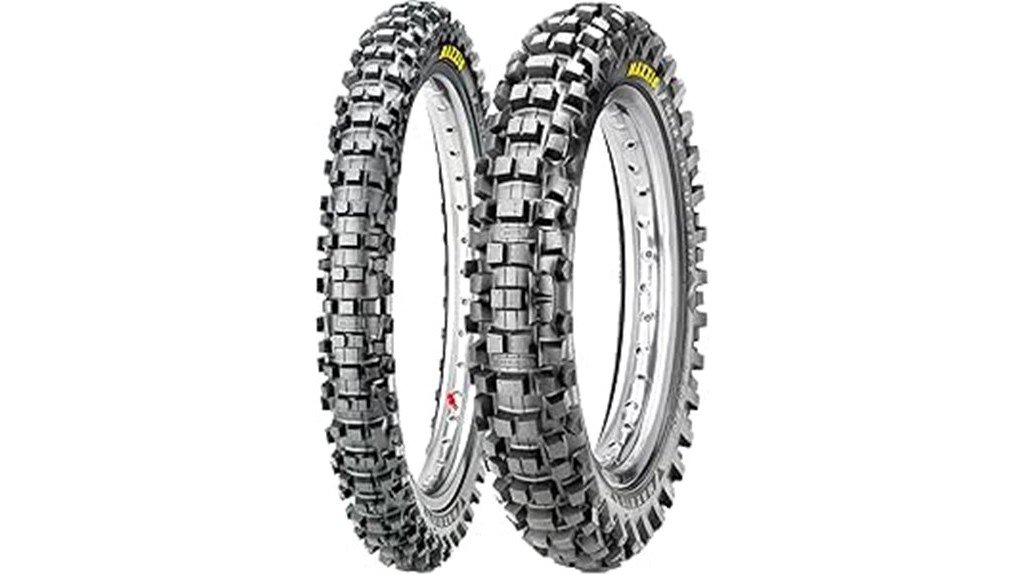
Best Overall for Rocky Desert Riding
The Maxxis MaxxCross Desert-IT is the most desert-focused product in this comparison. This listing is for a 110/100-18 rear tire, not a complete front and rear set. Maxxis positions the Desert-IT for desert, hardpack, and intermediate terrain.
Its compound is designed to improve durability in rocky or desert conditions by reducing chipping and cutting. Maxxis also uses tall knobs for sandy conditions and a stiffer carcass intended to limit flex and reduce the chance of pinched tubes. Those features make it a better match for abrasive desert routes than a general soft-terrain motocross tire.
Why You’ll Like It: It combines loose-terrain bite with construction intended for rocky, hot, and abrasive riding conditions.
Best For: Riders who need a durable rear tire for rocky desert trails, hardpack, intermediate ground, and sandy sections.
Avoid If: You need a complete tire set, a pavement-oriented tire, or a lightweight soft-terrain race tire.
Fitment Check: Confirm that your motorcycle accepts a 110/100-18 rear tube-type tire. Also verify the recommended rim width, load and speed rating, tube size, rim lock setup, and available swingarm and chain clearance.
Verdict: This is the strongest overall match for the article’s desert-riding intent. It is especially appealing when rocky ground and tire durability matter as much as sand traction.
Pros:
- Purpose-built positioning for desert, hardpack, and intermediate terrain.
- Compound is designed to reduce chipping and cutting on abrasive ground.
- Tall knobs can improve traction in loose and sandy conditions.
- Stiffer carcass is designed to limit flex and help reduce pinched-tube risk.
Cons:
- Rear tire only, so you must select a compatible front tire separately.
- May feel firmer than a softer motocross tire on smoother ground.
- Not presented as a pavement-first or general street tire.
Tusk EMEX T-35 Dirt Bike Front and Rear Tire Set (80/100×21 & 120/90×18)
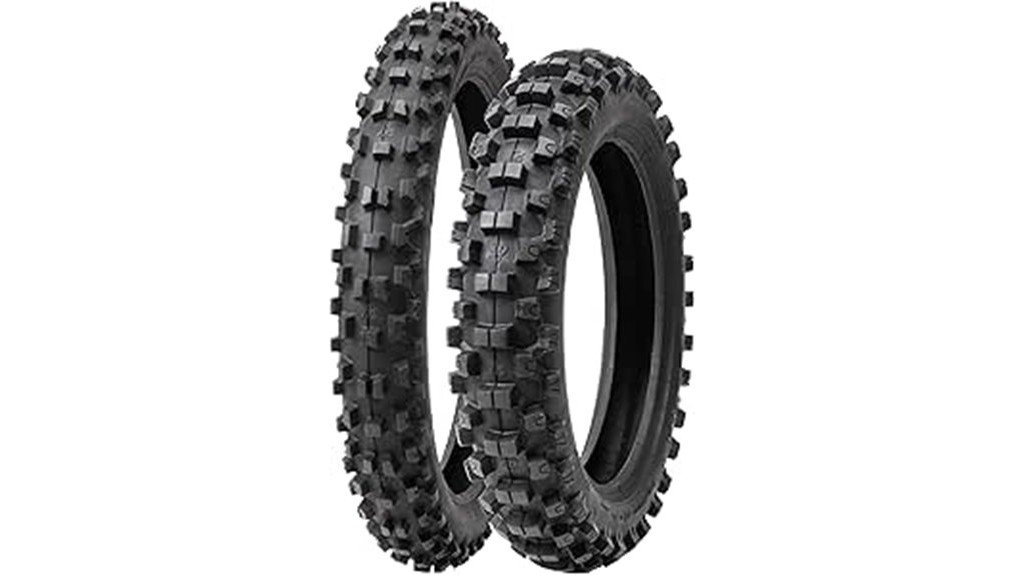
Best Full-Size Front and Rear Set
This Tusk EMEX T-35 package includes an 80/100×21 front tire and a 120/90×18 rear tire. It is designed for motorcycles that use these exact sizes and for riders who want matching soft-to-intermediate tires at both ends of the bike.
The EMEX T-35 uses deep center lugs, an open tread pattern, reinforced side knobs, and a large contact area. Its main strengths are loose dirt, sand, loam, and changing trail surfaces. It can transition onto firmer ground, but riders who spend most of their time on sharp rock or hardpack should consider a tire designed specifically for harder terrain.
Why You’ll Like It: You get matching front and rear tread behavior without choosing two separate tire models.
Best For: Full-size dirt bikes used on sand, loam, loose dirt, and mixed soft-to-intermediate desert trails.
Avoid If: You primarily ride pavement, sharp rock, extreme hardpack, or a motorcycle that uses different tire sizes.
Fitment Check: Confirm an 80/100×21 front and 120/90×18 rear fit your motorcycle. These are tube-type tires. The set is described as two tires, so plan for correctly sized inner tubes and rim strips unless the current Amazon listing specifically states that they are included.
Verdict: This is the best complete tire-set option here for larger dirt bikes that use these common off-road sizes. It offers a practical balance of sand bite and mixed-trail control without being positioned as a dedicated rocky-desert tire.
Pros:
- Includes matching front and rear tires in one package.
- Deep, open tread is suited to loose soil, sand, and loam.
- Reinforced side knobs help support cornering control.
- Tube-type format suits many conventional dirt-bike wheels.
Cons:
- Inner tubes are not clearly listed as part of the tire set.
- Soft-to-intermediate design is not ideal for prolonged pavement use.
- Dedicated hard-terrain tires may suit sharp, rocky routes better.
Tusk EMEX T-35 Soft/Intermediate Terrain Dirt Bike Front and Rear Tire Set
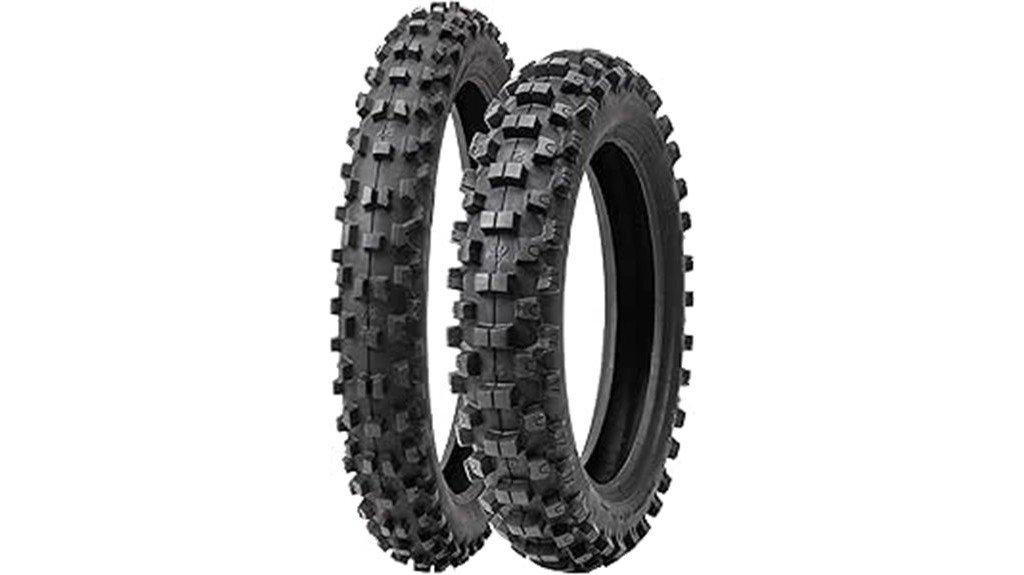
Best Smaller-Bike Tire Set
Choose this Tusk EMEX T-35 set only if your motorcycle uses a 70/100×19 front tire and a 90/100×16 rear tire. These smaller sizes are the main difference between this package and the larger Tusk set above.
The soft-to-intermediate tread is designed for loose dirt, sand, loam, and changing off-road surfaces. Deep lugs help the tires find traction in softer ground, while the reinforced side-knob design supports more predictable cornering as the bike moves between loose and firmer sections.
Why You’ll Like It: It provides matching front and rear tires for smaller dirt bikes without requiring separate tire-model research.
Best For: Smaller dirt bikes used on soft sand, loose soil, loam, and intermediate trail surfaces.
Avoid If: Your motorcycle uses 17-inch, 18-inch, or 21-inch sizes that do not match this exact front and rear combination.
Fitment Check: Confirm both rim sizes and positions. The tires are tube-type, but the tire set does not clearly state that inner tubes are included. Buy tubes separately if your current tubes are worn, damaged, incorrectly sized, or unsuitable for reuse.
Verdict: This is the most practical smaller-bike option in the comparison. Its value comes from the matched sizes and loose-terrain tread, not from street capability or hard-rock specialization.
Pros:
- Matched 70/100×19 front and 90/100×16 rear sizes.
- Deep tread supports traction on sand, loam, and loose dirt.
- Non-directional tread simplifies orientation during installation.
- Suitable for riders who want consistent front and rear behavior.
Cons:
- Only fits motorcycles designed for these exact smaller-bike sizes.
- Inner tubes may need to be purchased separately.
- Not intended as a pavement-first or hard-terrain tire set.
WIG Racing 110/90-19 and 80/100-21 Motocross Dirt Bike Tires with Inner Tubes
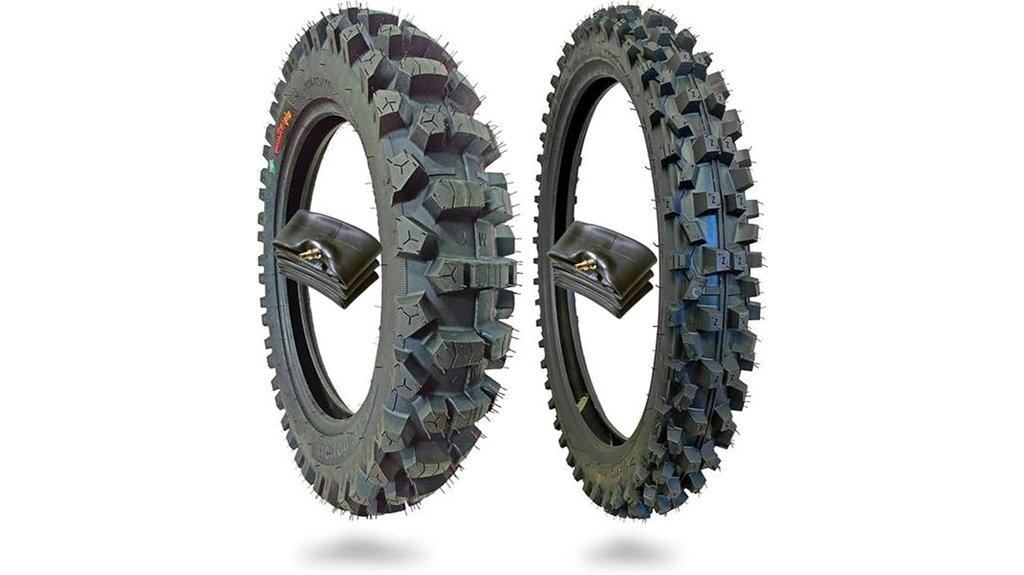
Best Complete Tire-and-Tube Package
The WIG Racing package is the convenience-focused option. It includes a 110/90-19 rear tire, an 80/100-21 front tire, a 4.10×19 rear inner tube, and a 2.75×21 front inner tube.
The listing describes an intermediate rubber compound and tread spacing intended for mud, loose dirt, and sand. That makes the set relevant for sandy washes and mixed trails. However, it is a general off-road motocross package rather than a purpose-built rocky-desert tire.
Why You’ll Like It: The included tubes reduce the number of separate parts you need to source before installation.
Best For: Riders whose motorcycles use these exact sizes and who want a complete package for sand, loose dirt, mud, and mixed trails.
Avoid If: You need DOT-approved road tires, a dedicated desert-racing compound, an 18-inch rear tire, or a tubeless setup.
Fitment Check: Confirm the 80/100-21 front and 110/90-19 rear sizes, along with the included tube sizes and valve requirements. The product is identified for off-road use only.
Verdict: Choose this package for convenience rather than maximum desert specialization. It is particularly useful when both tires and tubes need replacement at the same time.
Pros:
- Includes front and rear tires plus matching inner tubes.
- Tread spacing is designed for mud, loose dirt, and sand.
- Reduces the need to source tubes in a separate order.
- Useful for mixed off-road and motocross-style riding.
Cons:
- Off-road use only.
- Less desert-specific than the Maxxis Desert-IT.
- Included tubes do not replace tire irons, patches, inflation equipment, and other trail-repair supplies.
Key Takeaways
- Start with the exact front and rear tire sizes listed in your motorcycle manual or on the current tires.
- Choose open tread and taller knobs when loose sand, loam, and washes are your main challenges.
- Choose a desert-focused compound and stronger carcass when sharp rocks, heat, and abrasion are bigger concerns.
- Do not confuse tube-type tires with packages that include tubes. Only the WIG Racing set clearly includes inner tubes.
- Do not assume an off-road or motocross tire is DOT-approved for public-road use.
- Match pressure to the motorcycle, tire, tube or mousse system, load, terrain, and manufacturer guidance.
Before You Buy: Desert Tire Checklist
- Confirm the tire is for the correct front or rear position.
- Match the full size, including width, aspect ratio, and rim diameter.
- Check the approved rim width and available motorcycle clearance.
- Confirm whether the tire is tube-type or tubeless.
- Check whether tubes, rim strips, or rim locks are included.
- Verify the load index and speed rating against motorcycle requirements.
- Check DOT markings before using the tire on a public road.
- Inspect the current wheel, spokes, rim strip, tube, valve, and rim lock during installation.
Factors to Consider When Choosing Dirt-Bike Tires for Desert Riding
Desert tires often need to handle two competing conditions. They must find traction in loose sand while resisting damage from rocks, heat, hard edges, and repeated impacts. Fitment comes first, followed by terrain, construction, and package contents.
Traction on Loose Sand
Sand moves beneath the tire, so an open tread pattern and pronounced knobs can help the tire dig and clear loose material. The front tire must still provide steering stability, while the rear needs enough drive traction without excessive digging or wheelspin.
A wider tire is not automatically better. Use only a size approved for your motorcycle and rim. An oversized tire can create clearance, handling, gearing, and mounting problems.
Rocky Desert Durability
Rocky routes can cut tread blocks, tear knobs, damage tubes, and dent rims. A desert-focused compound and firmer carcass may provide better durability than a soft motocross tire, although no tire can prevent every puncture or impact failure.
Tread Pattern and Terrain Range
Deep, widely spaced knobs usually suit softer ground. Closely supported knobs and firmer compounds often work better on harder or more abrasive terrain. Mixed desert routes may require a compromise between sand bite and hard-ground stability.
Tire Compound Durability
Softer compounds can provide useful grip but may wear or tear faster on abrasive ground. Firmer desert compounds generally prioritize heat resistance, knob stability, and service life. Consider the hardest terrain on your normal route, not only the softest section.
Carcass and Sidewall Strength
A firmer carcass can reduce unwanted flex and improve stability during impacts. It may also feel less compliant than a softer tire. The correct balance depends on the motorcycle, rider, speed, terrain, tube choice, and suspension setup.
Rim, Tube, and Mousse Compatibility
Most tires in this guide are tube-type. Use an inner tube that matches the tire and rim, and inspect the rim strip and valve area during installation. A mousse or tubeless conversion should only be used when the tire, wheel, and conversion system are compatible.
Rim Lock Compatibility
A rim lock helps reduce tire movement on the rim when riders use lower off-road pressures. It must match the rim and be installed and balanced correctly. A rim lock does not make an incompatible tire size safe.
Load and Speed Ratings
The tire must support the motorcycle, rider, equipment, and dynamic riding loads. Match the load and speed ratings to the motorcycle manufacturer’s requirements. Do not choose by tread appearance alone.
Tire Pressure
Lower pressure can improve compliance and traction in some loose conditions, but going too low can increase tube pinching, tire movement, heat, and rim damage. Excess pressure can reduce grip and comfort. Begin with motorcycle and tire-manufacturer guidance, then make small adjustments for the terrain and installed tire system.
Common Buyer Questions Before You Choose
Do I Need a Front and Rear Set or One Rear Tire?
Buy a set when both tires are worn, incorrectly matched, aged, or unsuitable for your terrain. A rear-only purchase can make sense when the front tire is still serviceable and compatible with the new rear tire. Avoid mixing tires with sharply different purposes unless the combination is recommended for your motorcycle and riding conditions.
Are Inner Tubes Included?
The WIG Racing package explicitly includes front and rear tubes. The Tusk products are tube-type tire sets, but tubes are not clearly listed as included. The Maxxis product is a rear tire only. Check the current listing and buy correctly sized tubes when needed.
Are These Tires Street Legal?
Do not assume they are street legal. The WIG Racing set is identified for off-road use only, while the Tusk products are motocross and off-road tires. Check the tire sidewall for DOT markings and review local road requirements before using any tire on a public street.
What Is the Most Important Fitment Check?
Match the complete tire size and front or rear position first. Then confirm the rim width, tube or tubeless requirement, load and speed rating, available clearance, and any manufacturer-specific restrictions.
Which Tire Is Best for Rocky Desert Riding?
The Maxxis MaxxCross Desert-IT is the best match in this comparison because Maxxis specifically positions it for desert terrain and uses a compound designed to reduce chipping and cutting in rocky or desert conditions.
Frequently Asked Questions
What Do Dirt-Bike Tire Size Numbers Mean?
In a size such as 110/100-18, the first number is the nominal tire width in millimeters, the second describes the sidewall height as a percentage of the width, and the final number is the rim diameter in inches. Always match the complete size rather than only the rim diameter.
Can I Use a Different Rear-Tire Width?
Only use an alternative size when the motorcycle or tire manufacturer approves it. A wider or taller tire can affect rim fit, chain and swingarm clearance, handling, gearing, and suspension movement.
Can Tubeless Tires Be Used in Deep Desert Sand?
Yes, when the tire and wheel are designed for tubeless operation. Many motocross and dirt-bike wheels use tubes, however. Do not install a tire as tubeless unless the wheel, tire, valve, bead area, and sealing system support it.
How Do Rim Locks Help in Sand?
A correctly fitted rim lock helps resist tire movement on the rim when using lower off-road pressures. It can reduce valve-stem damage and tire slip, but it adds installation and balancing requirements. Follow the wheel and rim-lock manufacturer’s instructions.
How Long Do Desert Dirt-Bike Tires Last?
Service life varies with compound, terrain, pressure, motorcycle power, rider weight, speed, throttle use, and installation. Replace a tire when knobs are torn or heavily rounded, the carcass is damaged, cords are exposed, the bead is compromised, or the tire no longer provides predictable control.
Spec and Fitment Sources
Amazon titles, sellers, and availability can change. Before ordering a fitment-sensitive motorcycle tire, compare the current Amazon listing with your motorcycle manual and available manufacturer information. Useful reference pages include the Maxxis MaxxCross Desert-IT product page and the Tusk EMEX T-35 product information page.
Final Recommendation
Choose the Maxxis Desert-IT when rocky desert terrain, heat, abrasive ground, and rear-tire durability are your main concerns.
Choose the larger Tusk EMEX T-35 set when your bike uses an 80/100×21 front and 120/90×18 rear and you ride mostly sand, loam, and soft-to-intermediate trails.
Choose the smaller Tusk EMEX T-35 set when your motorcycle requires a 70/100×19 front and 90/100×16 rear.
Choose the WIG Racing package when your bike uses an 80/100-21 front and 110/90-19 rear and you want matching inner tubes included.
Conclusion
The best desert dirt-bike tire depends on your exact wheel sizes and the hardest terrain you expect to encounter. The Maxxis MaxxCross Desert-IT is the most purpose-built option here for rocky desert routes and sandy sections. The Tusk EMEX T-35 sets make more sense when you need matching front and rear tires for soft-to-intermediate ground. The WIG Racing package is the convenient choice when both tires and tubes need replacement.
Check your motorcycle manual, current tire markings, rim sizes, tube setup, and clearance before ordering. A tire that suits the terrain but does not correctly fit the motorcycle is not a safe replacement.