If you drive a small pickup or another vehicle with a tight rear cabin, choosing a convertible car seat takes more than looking for the word “slim” on the box. You need to consider the seat’s actual width, front-to-back clearance, rear-facing angle, your child’s size, and whether the restraint can be installed correctly in your specific truck.
This guide compares three space-conscious convertible car seats that suit different needs. The Britax Poplar S and Safety 1st Crosstown Slim focus on 17-inch designs, while the Graco SlimFit 3-in-1 offers three stages of use with space-saving rotating cupholders. The right choice is the one that fits your child and your vehicle correctly—not simply the seat with the smallest advertised number.
Affiliate disclosure: This article contains Amazon affiliate links. If you make a qualifying purchase through one of these links, we may earn a commission at no extra cost to you.
Quick Verdict
Best overall for a tight truck cabin: Britax Poplar S. Its 17-inch design, 50-lb rear-facing limit, ClickTight installation system, and two-mode convertible setup make it a strong starting point when back-seat space is limited.
Best slim 3-in-1 option: Safety 1st Crosstown Slim. Its advertised 17-inch design combines rear-facing, forward-facing harness, and belt-positioning booster modes.
Best for long-term three-mode versatility: Graco SlimFit 3-in-1. It provides rear-facing, forward-facing, and highback-booster modes, but its approximately 19.9-inch overall width means you should measure carefully before choosing it for a particularly narrow truck bench.
Small-Truck Safety Note
Always follow both the car-seat manual and your truck owner’s manual. Pickup trucks can have unusual rear-seat dimensions and tether-anchor locations. A rear-facing car seat must never be placed in front of an active frontal airbag. Keep children rear-facing until they reach the manufacturer’s rear-facing height or weight limit, and confirm that the installed restraint is secure at the belt path.
Quick Comparison
| Product | Best For | Rear-Facing | Forward-Facing Harness | Booster | Width / Space Note |
|---|---|---|---|---|---|
| Britax Poplar S | Tight cabins and extended rear-facing capacity | 5–50 lb | 22–65 lb | No | 17-inch design; vehicle fit still must be confirmed |
| Safety 1st Crosstown Slim | Slim 3-in-1 versatility | 5–40 lb | 30–65 lb | 40–100 lb | Advertised 17-inch slim design |
| Graco SlimFit 3-in-1 | Three-stage use when a wider shell fits | 5–40 lb | 26.5–65 lb | 40–100 lb | Approx. 19.9 inches wide; rotating cupholders save space |
Britax Poplar S Convertible Car Seat (Glacier Graphite)
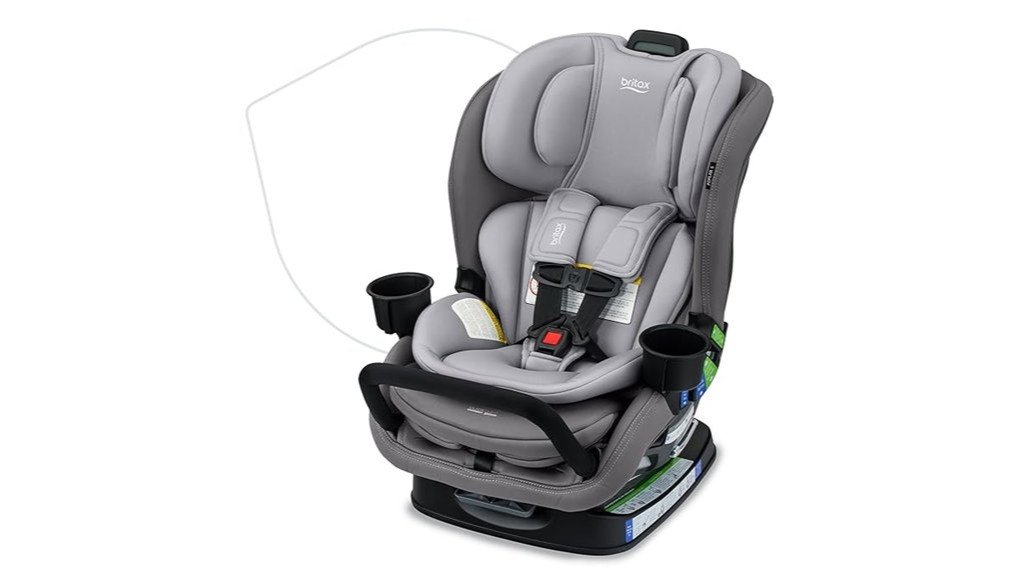
If your main concern is fitting a convertible car seat into a narrow truck cabin, the Britax Poplar S deserves a close look. Its 17-inch SpaceSaver design is built to preserve rear-seat room, while its convertible setup supports rear-facing use from 5–50 lb and forward-facing harness use from 22–65 lb.
The ClickTight installation system is designed to simplify seat-belt installation, and the seat also includes a high-strength steel frame, SafeCell technology, a V-shaped top tether, and a ReboundReduce stability bar for rear-facing installations. The 14-position no-rethread harness and headrest adjust together as your child grows.
Britax markets the Poplar S as being designed to fit three across, but that does not guarantee three-across compatibility in every pickup or vehicle. Seat contours, buckle positions, adjacent restraints, doors, and independent installation space can all affect the final fit.
Best For: Families who want a genuinely narrow convertible seat, a higher 50-lb rear-facing weight limit, and an installation system designed to simplify seat-belt installation in a tight cabin.
Why You’ll Like It:
- 17-inch design helps preserve valuable rear-seat width.
- Rear-facing use up to 50 lb offers more rear-facing weight capacity than the other two seats in this comparison.
- ClickTight installation, a 14-position no-rethread harness/headrest, and washable cover improve day-to-day usability.
Consider Before Buying:
- This is a 2-in-1 convertible seat, not an all-in-one booster seat.
- A 17-inch width does not guarantee that three seats will install correctly across your particular truck bench.
- The steel-frame construction and stability bar can make the seat less convenient to move frequently between vehicles.
Safety 1st Crosstown Slim All-in-One Convertible Car Seat, City Storm
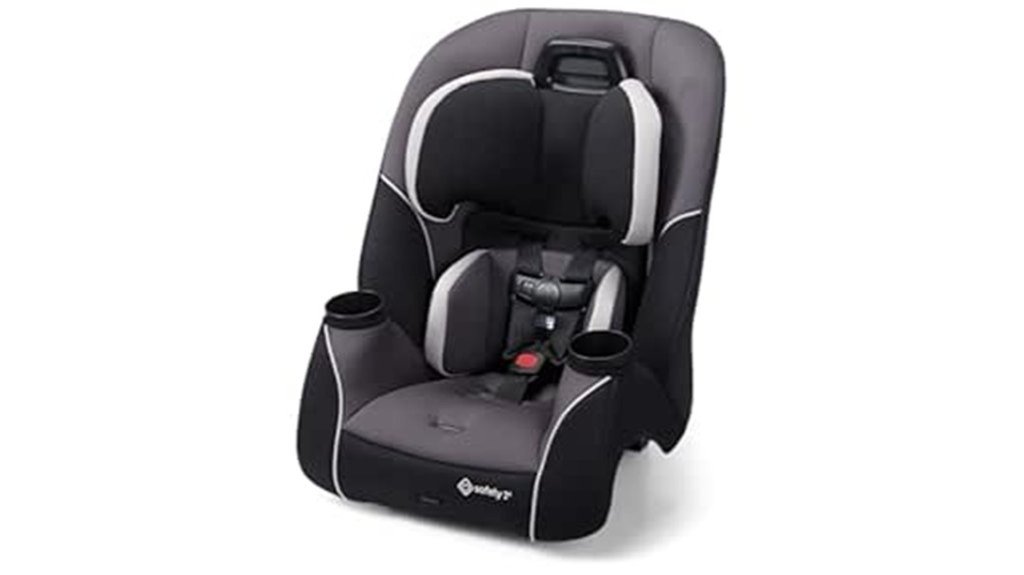
The Safety 1st Crosstown Slim All-in-One is aimed directly at families who want to preserve rear-seat width while keeping three stages of use in one restraint. Its advertised 17-inch slim design can help when you are working with a narrow bench or trying to leave usable space beside the car seat.
Its three modes cover rear-facing use from 5–40 lb, forward-facing harness use from 30–65 lb, and belt-positioning booster use from 40–100 lb, subject to the manufacturer’s height, age, and fit requirements. A one-hand adjustable harness and 8-position headrest allow height changes without rethreading the harness.
Easy-access belt paths, an adjustable base foot, removable dishwasher-safe cupholders, and a machine-washable seat pad add practical convenience. The 17-inch design is promoted for three-across use in many vehicles, but you still need to confirm that each restraint can be installed independently and correctly in your truck.
Best For: Families who want a narrow 3-in-1 seat with rear-facing, forward-facing harness, and booster modes while preserving as much bench width as possible.
Why You’ll Like It:
- Advertised 17-inch design targets tight rear-seat spaces.
- Three modes cover a broad range of child sizes and stages.
- One-hand harness/headrest adjustment avoids manual harness rethreading as your child grows.
Consider Before Buying:
- The 40-lb rear-facing weight limit is lower than the Britax Poplar S limit in this comparison.
- A slim width alone does not guarantee three-across fit in a specific pickup.
- Product availability can change, so confirm the exact model, color, specifications, and current listing before ordering.
Graco SlimFit 3-in-1 Convertible Car Seat (Darcie)
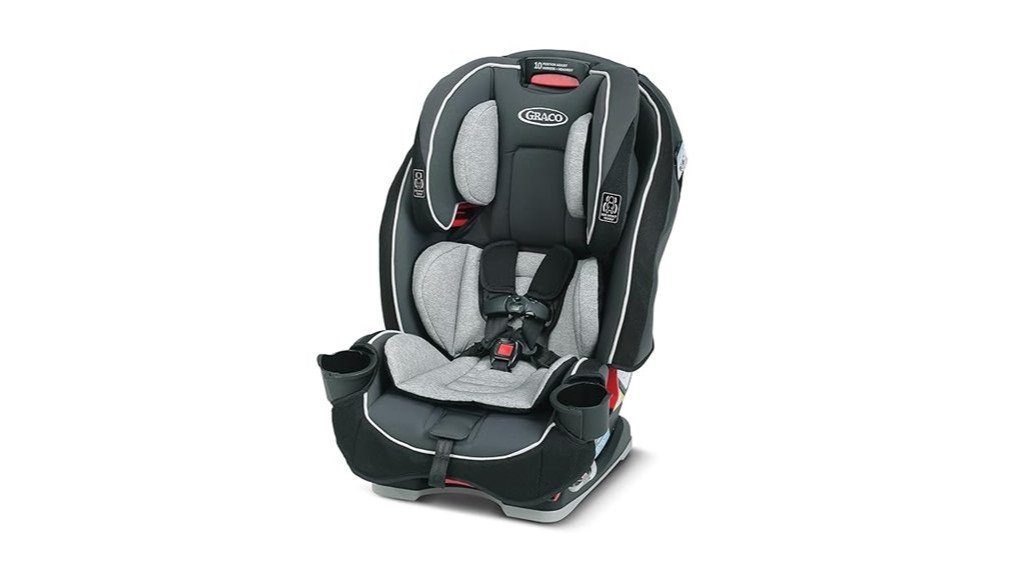
The Graco SlimFit 3-in-1 is a practical choice if you want rear-facing, forward-facing harness, and highback-booster modes in one seat and its approximately 19.9-inch width fits your truck. It is not as narrow on paper as the 17-inch options above, so measuring your actual seating position is especially important.
The seat supports rear-facing harness use from 5–40 lb, forward-facing harness use from 26.5–65 lb, and highback booster use from 40–100 lb, along with the manufacturer’s applicable height and age requirements. Its rotating integrated cupholders help reduce the space they occupy when not needed.
The Simply Safe Adjust no-rethread system adjusts the harness and 10-position headrest together. Four recline positions help with installation and comfort, while InRight LATCH provides push-button lower-anchor attachment when lower-anchor installation is permitted for your child and vehicle setup.
Best For: Families who want three stages of use in one familiar design and have confirmed that the approximately 19.9-inch shell works with their truck’s available seating space.
Why You’ll Like It:
- Rear-facing, forward-facing harness, and highback-booster modes provide long-term flexibility.
- 10-position headrest and no-rethread harness make growth adjustments simpler.
- Rotating cupholders help reduce unnecessary side-space use.
Consider Before Buying:
- At approximately 19.9 inches wide, it is wider than the two advertised 17-inch options in this guide.
- Its 40-lb rear-facing limit is lower than the Britax Poplar S limit.
- Do not assume that the SlimFit name means it will fit a particular truck or three-across configuration; measure and confirm installation first.
Factors to Consider When Choosing a Convertible Car Seat for a Small Truck
A narrow shell helps, but width alone does not determine whether a car seat will work in a small truck. You also need enough front-to-back room for the required rear-facing recline, access to the correct belt path or lower anchors, a usable tether anchor for forward-facing use, and enough room to tighten the installation correctly.
Backseat Width and Fit
Measure the usable seating area where the car seat will actually sit rather than relying only on the truck’s total interior width. Seat bolsters, raised center sections, door trim, buckles, and adjacent passengers can reduce the space available to a child restraint.
Compare those measurements with the manufacturer’s dimensions, but remember that a listed width is only a starting point. The shape of the restraint at the base, shoulder area, and cupholders can affect how it fits beside another seat or passenger.
Seat Slimness
A design around 17 inches wide can be useful when preserving bench space is the priority. However, do not choose a car seat solely because it has the smallest width. Your child still needs to fit within the manufacturer’s limits, the seat needs the correct recline, and the installation must work with your truck.
If you are planning a three-across setup, each restraint should be installed securely and independently. Do not rely on neighboring restraints pressing against one another to make an otherwise loose installation appear tight.
Front-to-Back Clearance
Small pickups can be especially challenging when a convertible seat is installed rear-facing because the required recline may bring the shell close to the front seat. Check your car-seat manual for permitted contact or required clearance from the vehicle seat in front, and check your truck manual for any restrictions related to airbags or occupant-detection systems.
Do not make the car seat more upright than the manufacturer allows simply to gain front-passenger legroom.
Installation Ease
A seat that is theoretically narrow is not useful if you cannot install it correctly in your truck. Look for clear belt paths, accessible tightening points, useful angle indicators, and installation instructions that work with your vehicle.
Depending on the child’s size and the restraint, installation may use the vehicle seat belt or lower anchors. Follow the car-seat manual rather than assuming LATCH is always the better or easier method.
Rear-Facing Fit
Keep your child rear-facing until they reach the top rear-facing height or weight limit allowed by the car-seat manufacturer. The restraint also needs to sit at an approved recline angle, particularly for younger infants.
In a small truck, confirm both the child-fit limits and the amount of front-to-back cabin space required by the installed seat. A narrow restraint can still take up significant front-to-back room when rear-facing.
Harness Adjustability
No-rethread harness systems make it easier to change harness height as your child grows. Check that the headrest and harness can move through their required positions without contacting the vehicle interior in a way prohibited by the manufacturer.
Always use the harness position, chest-clip position, and snugness specified in your car-seat instructions. Convenience features should never replace correct harness fit.
Vehicle Anchors and Tether Compatibility
Check your truck owner’s manual for the exact locations of lower anchors and tether anchors. Pickup-truck tether routing can differ significantly from what you may have seen in a sedan or SUV.
Lower anchors also have weight limits. When the applicable lower-anchor limit is reached, follow the manufacturer’s instructions for switching to a seat-belt installation. For a forward-facing harnessed car seat, use the top tether when permitted by the car-seat and vehicle manufacturers.
Cupholders and Storage
In a tight cabin, protruding cupholders can affect passenger room or interfere with neighboring restraints. Rotating or removable cupholders can therefore be useful, but only use the seat in configurations permitted by its manual.
Do not remove required components simply to make the restraint narrower.
Before You Buy: Small-Truck Checklist
- Confirm your child is within the exact height, weight, and age requirements for the mode you plan to use.
- Measure the usable width of the truck seating position.
- Check front-to-back room for the required rear-facing recline.
- Read the truck manual for approved child-restraint seating positions.
- Locate the correct lower anchors and tether anchor if you plan to use them.
- Check whether your installation will use the vehicle belt or lower anchors at your child’s current weight.
- Never place a rear-facing restraint in front of an active frontal airbag.
- For three-across setups, confirm that every restraint can be installed correctly and independently.
- If possible, test-fit the seat or buy from a retailer with a practical return policy in case it does not fit your truck.
Frequently Asked Questions
Can These Seats Fit a Center Rear Seat With a Middle Seat Belt?
Possibly. A center installation can work when both the vehicle manufacturer and car-seat manufacturer allow that seating position and the seat belt can be routed and locked exactly as instructed. Do not assume the center is automatically the best position if you cannot achieve a correct installation there.
Can I Install a Car Seat if My Truck Has No Lower LATCH Anchors?
Often, yes. Many convertible and all-in-one car seats allow installation with the vehicle seat belt. Follow the car-seat manual and truck owner’s manual for belt routing and locking instructions. For a forward-facing harnessed seat, use the top tether when the manuals permit it and a suitable tether anchor is available. A top tether does not replace the normal seat-belt or lower-anchor installation.
Can Aftermarket Vehicle Seat Covers Affect Installation?
They can. Do not place aftermarket padding, mats, covers, or other accessories under or behind the child restraint unless their use is permitted by the car-seat manufacturer and is compatible with the vehicle manufacturer’s instructions. Extra material can interfere with installation or make it difficult to judge whether the restraint is tight enough.
Can I Keep My Child Rear-Facing Beyond the Listed Limits?
No. Keep your child rear-facing as long as the child remains within the car seat’s permitted rear-facing height and weight limits, but never exceed those limits. Once the rear-facing limit is reached, move to the next appropriate mode or restraint according to the manufacturer’s instructions.
Can I Transfer the Seat Between Multiple Vehicles Frequently?
Yes, provided the seat is approved for each vehicle and you reinstall it correctly every time. Recheck the belt path, recline angle, harness settings, lower-anchor limits, and tether routing rather than assuming the previous vehicle’s setup will work in the next one.
Is a 17-Inch Car Seat Guaranteed to Fit Three Across?
No. A 17-inch width can improve your chances, but three-across fit depends on the shape of the vehicle bench, buckle locations, door clearance, other child restraints, and whether each seat can be installed securely and independently. Always verify your exact configuration.
Which Car Seat Is Best for a Small Truck?
For the narrowest shell in this group combined with a 50-lb rear-facing limit, the Britax Poplar S is the strongest starting point. Choose the Safety 1st Crosstown Slim if a 17-inch 3-in-1 design better matches your long-term needs. Consider the Graco SlimFit 3-in-1 if you prefer its three-stage setup and have confirmed that its approximately 19.9-inch width fits your truck comfortably.
Conclusion
The best convertible car seat for a small truck is the one that gives your child the correct fit while installing properly in the limited space you actually have. For a genuinely narrow convertible design and higher rear-facing weight capacity, the Britax Poplar S stands out. The Safety 1st Crosstown Slim is appealing when you want a 17-inch design plus booster capability, while the Graco SlimFit 3-in-1 offers useful three-stage versatility if its wider 19.9-inch dimensions work in your cabin.
Measure first, check both manuals, confirm your child’s limits, and test the actual installation whenever possible. Those steps matter more than any “slim,” “three-across,” or convenience claim when you are choosing a child restraint for a tight truck interior.