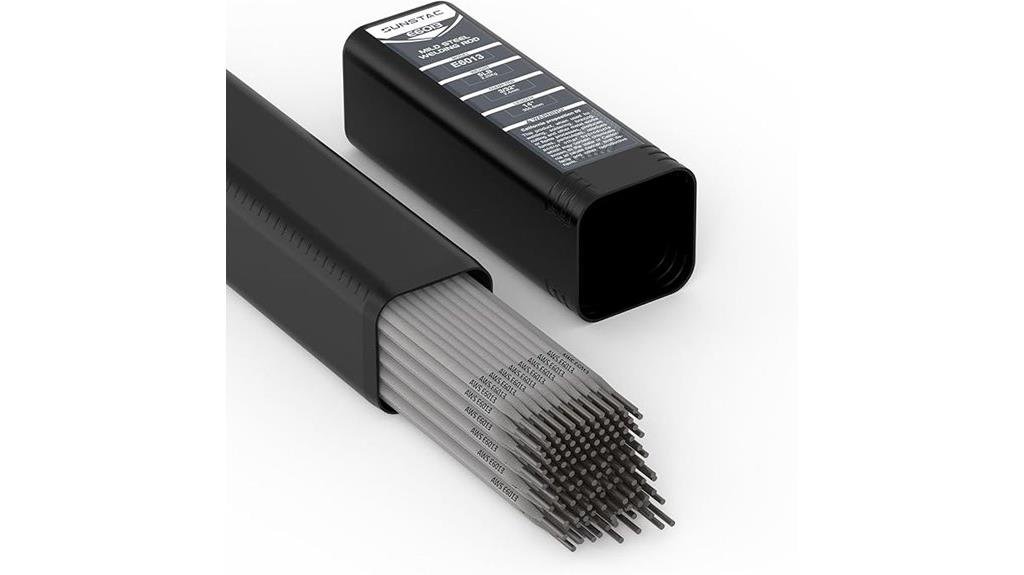
The E6013 welding rod is presented as a reliable, easy-to-use electrode with a titanium oxide-rich coating, 14-inch length, and 3/32-inch diameter that supports smooth ignition and a stable arc. It offers low spatter, good bead appearance, and capability in flat, horizontal, vertical, and overhead positions. What are the best current settings, joint types, and handling tips to get consistent thin-plate welds? Read on for measured guidance and practical limits.
Key Takeaways
- E6013 rods with titanium oxide coating deliver a stable arc, low spatter, and smooth-burning characteristics for predictable welds.
- 3/32″ × 14″ rods in 5 lb packs are well suited for thin-plate work and tight joints in all welding positions.
- Controlled slag behavior and precise molten-pool control enable neat beads and easy re‑arc during cover and fine work.
- Keep rods dry, store sealed or at 200°F if baked, and use clean gloves to prevent coating contamination and weld defects.
- Recommended techniques: short arc, whip‑and‑stab, and stringer beads for best results on steel with minimal cleanup.
E6013 Coating, Composition, and Arc Characteristics
The E6013 welding rod uses a titanium oxide (TiO₂)-rich coating that classifies it among acidic electrodes; this coating, measured by industry composition standards, contributes to a stable arc, reduced spatter, and smooth-burning characteristics.
The reviewer notes coating benefits, composition impact, and practical metrics: 3/32″ diameter, 14″ length, 5 lb pack.
Reviewer highlights coating benefits, composition effects, and specs: 3/32″ diameter, 14″ length, 5 lb pack
What is its arc like? Stable, easy to re-arc, low spatter.
Practical considerations: suited for thin steel, fine seams, sensitive surface work.
Questions answered: how does composition affect performance? TiO₂-rich mix yields consistent ignition, predictable bead shape, and controlled slag behavior for liberated, precise welding.
Welding Performance: Control, Positions, and Applications
Having established how the TiO₂-rich coating shapes arc stability and bead control, this section reviews how those characteristics translate into day-to-day welding performance: control of the molten pool, workable positions, and practical applications.
The rod permits precise molten pool control, low spatter, smooth re-arc; suitable for thin plate work, 3/32″ electrode fits 14″ pieces, ideal in tight joints.
What positions are feasible? Flat, horizontal, vertical, overhead, and upward.
Which techniques work best? Short arc, whip-and-stab, and stringer beads.
Note electrode maintenance: keep rods dry, store at 200°F if baked, replace damp rods to preserve consistency.
Practical Considerations: Handling, Suitability, and Best Uses
Workshop practice shows that handling and storage greatly affect the E6013 welding rod’s reliability and final weld quality.
Workshop practice shows handling and storage greatly affect E6013 rod reliability and final weld quality.
It recommends dry storage, 3/32″ diameter rods kept in sealed containers, and avoiding moisture for acidic titanium oxide coatings.
What handling techniques improve results? Use clean gloves, short arc lengths, and steady feed to exploit easy re-arc and flexible molten pool control.
Is it suitable for specific materials? Material compatibility favors steel and thin plates, in all positions, for cover welding and fine work.
Best uses: thin plate repair, narrow spaces, and high surface quality tasks, 14″ rod length, 5 lb packs.
Frequently Asked Questions
Is E6013 Compatible With Stainless Steel or Non-Ferrous Metals?
No; the respondent notes E6013 is not suitable for stainless or non‑ferrous metals. Electrode compatibility favors steel welding applications. Freedom‑seeking welders should choose appropriate rods or filler metals matched to base‑metal chemistry and requirements.
What Storage Conditions Prolong Electrode Shelf Life?
Like a fortress against rust, electrode storage should be dry, cool, and ventilated; humidity control is strict—sealed containers, desiccants, and climate rooms preserve rods’ coating integrity, freeing welders to rely on consistent, long-lasting performance.
Can E6013 Be Used With Inverter-Type Welding Machines?
Yes. The rod is inverter compatible; it pairs well with inverter machines, delivering stable arc and improved welding performance. Users seeking freedom in technique find responsive, smooth burning, flexible molten pool control across positions.
Are There Specific Safety Precautions for Titanium Oxide Coatings?
Yes: titanium oxide requires ventilation and fume control; juxtaposition of liberation and restraint highlights welding safety—use respirators, local exhaust, eye protection, and avoid confined exposure, empowering confident work while minimizing respiratory and ocular hazards.
How Does E6013 Compare Cost-Wise to Other Common Rods?
E6013 typically offers mid-range cost comparison: rod pricing is affordable versus low-end rutile rods, slightly cheaper than specialized low-hydrogen electrodes, enabling liberated buyers to choose reliable value without compromise on performance or budget freedom.
Conclusion
The E6013 rod stands as a steady compass for welders, its titanium oxide-coated jacket guiding arcs with predictable ignition, smooth beads, and minimal spatter. It suits thin plate and tight joints, performs in flat, vertical, and overhead positions, and comes as a 14-inch, 3/32-inch diameter electrode for precision work. Which jobs benefit most? Light- to medium-gauge fabrication, repairs, and instructional practice. Practical note: use recommended amperage ranges and clean joints for best results.