Disclosure: As an Amazon Associate, we earn from qualifying purchases. If you click a link on this page and make a purchase, we may receive a small commission at no extra cost to you.
High-performance V8 engines, modified street rods, and heavy-towing trucks often suffer from heat soak and rapid coolant temperature spikes under load. Stock factory thermostats open at higher temperatures and can restrict fluid circulation during aggressive driving. The Edelbrock 8603 High Flow Thermostat is designed to open at 160°F and maximize coolant volume through your radiator before temperatures climb into dangerous territory. This review breaks down fitment, build quality, and thermal performance to help you decide if a low-temp high-flow thermostat is the right cooling upgrade for your setup.
Quick Verdict
Rating: 8.8/10 (Recommended for Performance & Towing)
Best For: High-performance V8 engines, track day builds, heavy towing vehicles, and street rods operating in warm climates.
Bottom Line: The Edelbrock 8603 delivers fast opening at 160°F and high volume coolant flow to combat heat soak, though its lower opening threshold is not ideal for cold-climate daily drivers requiring factory emissions temperatures.
| Specification | Detail |
|---|---|
| Brand | Edelbrock |
| Model / Part Number | 8603 |
| Product Type | High Flow Engine Thermostat |
| Opening Temperature | 160°F (71°C) |
| Material Construction | Corrosion-Resistant Stainless Steel & Brass |
| Flange Diameter | Standard 2.5 Inches (approx. 63.5 mm) |
| Flow Rate Category | High-Flow Bypass Design |
| Item Weight | 0.15 lbs (0.068 kg) |
| Compatibility | Standard V8 Thermostat Housings (Chevy, Ford, Mopar standard 2.5″ water neck) |
| Warranty & Returns | Manufacturer Limited Warranty / Amazon 30-Day Return Policy |
What Is the Edelbrock 8603 High Flow Thermostat?
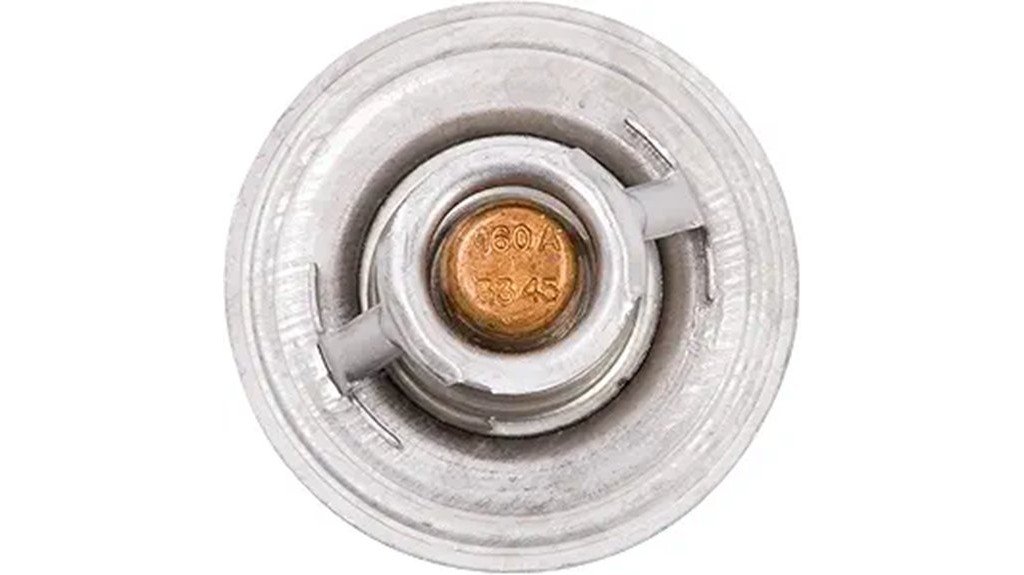
The Edelbrock 8603 is a premium automotive thermostat engineered to improve engine cooling efficiency over standard OEM replacement units. Unlike conventional thermostats that restrict fluid movement, this unit features a widened valve opening and optimized internal bypass geometry to significantly increase gallons-per-minute coolant turnover between the engine block and radiator.
Constructed with durable stainless steel components and a brass thermal wax capsule, the Edelbrock 8603 begins opening precisely at 160°F. By initiating coolant circulation earlier in the warming cycle, it helps maintain lower cylinder head temperatures and cushions against severe thermal spikes under hard acceleration or sustained heavy engine load.
Who Should Buy It?
Best For
- High-compression performance V8 street/strip cars
- Vehicles frequently towing trailers or driving steep grades in warm weather
- Custom engine builds experiencing heat soak in traffic
Skip If
- Stock daily drivers driven in freezing winter climates where cabin heater output is critical
- Modern computer-controlled vehicles requiring a 180°F–195°F thermostat to satisfy factory computer closed-loop emissions
- Vehicles with specialized or non-standard metric thermostat housing sizes
Key Features and Performance Breakdown
High-Flow Valve Geometry and Circulation Rate
Standard thermostats often act as restrictive choke points in high-rpm or high-horsepower setups. The Edelbrock 8603 uses a redesigned valve bridge and larger passage diameter that minimizes fluid drag. This enables the water pump to push a higher volume of coolant per minute, reducing localized hot spots around rear cylinders and valve pockets.
Stainless Steel and Brass Construction
Cooling systems are harsh environments exposed to mineral deposits, rust inhibitors, and rapid temperature changes. The Edelbrock 8603 features a stainless steel frame and spring assembly that resists corrosion, weakening, and mechanical binding over time. The copper-wax actuation element ensures reliable thermal expansion and smooth valve cycling across thousands of heat cycles.
160°F Temperature Calibration
While factory thermostats often wait until 180°F or 195°F to open, the 160°F rating of the Edelbrock 8603 opens coolant passages sooner. This provides a greater cooling margin before under-hood temperatures climb during hard runs, making it an effective passive upgrade alongside high-flow water pumps and upgraded aluminum radiators.
Before You Buy: Verify your engine computer’s operating requirements. Running a 160°F thermostat on stock EFI engines may cause the computer to remain in open-loop warm-up mode, leading to rich fuel mixtures and a potential Check Engine light (P0128 fault code).
How It Performs in Real Use
For High-Performance Street & Track Use
During back-to-back quarter-mile runs or road course sessions, thermal buildup occurs rapidly. The Edelbrock 8603 keeps bulk coolant temperatures lower between runs, reducing thermal detonation risk and allowing consistent power output without timing retard caused by excessive cylinder head heat.
For Heavy Towing & Hauling
Pulling heavy loads up steep highway grades places sustained load on the cooling system. With the high-flow design opening at 160°F, maximum radiator cooling capacity is engaged earlier, flattening temperature spikes before the engine reaches critical thresholds.
For Hot Summer Traffic & Idling
In low-airflow situations like summer traffic jams, a standard thermostat can struggle as engine bay heat climbs. The increased fluid throughput of the Edelbrock 8603 ensures maximum available coolant movement to the radiator fan shroud, stabilizing water temps even when vehicle speed is zero.
Installation and Fitting Tips for Better Results
Replacing an engine thermostat is a simple DIY procedure, but clean preparation ensures a leak-free seal and optimal thermal operation:
- Housing Prep: Thoroughly clean old gasket material or RTV silicone from both the intake manifold flange and water neck housing to prevent alignment leaks.
- Bleed Hole Orientation: Place the thermostat into the housing recessed pocket with the copper wax pellet facing down toward the engine intake manifold.
- Torque Specs: Tighten housing bolts evenly to factory torque specifications to avoid cracking cast iron or aluminum water necks.
Pro Tip: If your thermostat housing lacks an internal air bypass, drill a small 1/16-inch hole on the outer brass flange (away from the rubber seal ring) at the 12 o’clock position during installation. This lets trapped air pockets purge easily when refilling coolant, preventing air locks that cause false overheating.
Pros and Cons
Pros
- High-flow bypass design increases fluid volume to eliminate thermal hot spots
- All stainless steel and brass construction offers corrosion resistance and durability
- 160°F opening temperature provides earlier thermal headroom under severe engine load
- Fits standard 2.5-inch domestic V8 water necks with precise alignment
Cons
- Can reduce winter cabin heater performance due to cooler steady-state engine temperatures
- May trigger low-coolant-temperature trouble codes on strict factory ECU vehicles requiring 180°F+
- Requires proper system bleeding upon fill to prevent air pockets
Is It Worth the Price?
As a cooling system upgrade, the Edelbrock 8603 sits in an affordable price tier while providing tangible performance insurance for high-value engines. Compared to inexpensive budget store replacement thermostats, its stainless steel construction and expanded flow area offer superior durability and fluid volume.
If you have invested in performance engine modifications, an aftermarket aluminum radiator, or heavy-duty towing equipment, this thermostat is a cost-effective addition that complements your cooling system investments without breaking the bank.
How It Compares to Alternatives
When shopping for cooling thermostats, buyers typically choose between standard replacement thermostats, 180°F high-flow units, and 160°F high-flow options like the Edelbrock 8603:
If you drive a standard commuter vehicle year-round in cold climates, a standard OEM-spec 180°F or 195°F thermostat (such as a standard Gates or Stant unit) is better suited to maintain factory heater performance and fuel economy. However, if you are building a modified street machine, towing heavy rigs, or driving in hot desert conditions, the Edelbrock 8603 provides superior flow volume and earlier cooling engagement that standard units cannot match.
Frequently Asked Questions
Will the Edelbrock 8603 thermostat fit my stock water neck housing?
The Edelbrock 8603 features a standard 2.5-inch (63.5 mm) flange diameter designed to fit traditional American V8 thermostat housings, including standard Chevrolet, Ford, and Mopar water necks. Always double-check your existing housing dimensions before installation.
What is the main difference between a 160°F and a 180°F thermostat?
A 160°F thermostat begins opening 20 degrees earlier than a 180°F model, allowing coolant to flow into the radiator sooner. This creates a larger cooling buffer under hard acceleration or towing, whereas a 180°F thermostat allows the engine to reach higher baseline temperatures for winter warming and emissions control.
Will installing a 160°F thermostat affect my car’s heater in winter?
Yes, operating a 160°F thermostat in freezing winter weather may lower cabin heater output because the coolant stays cooler overall. Drivers in cold climates who use their vehicle for daily winter driving usually prefer a 180°F or 195°F thermostat.
Do I need a new gasket or RTV silicone when replacing this thermostat?
Yes, you should always install a new thermostat housing gasket or high-temperature RTV sealant when replacing the thermostat. Reusing an old crushed gasket almost always results in coolant leaks under pressure.
Will a 160°F thermostat trigger a Check Engine light on modern vehicles?
On stock computer-controlled engines, running a 160°F thermostat can trigger code P0128 (Engine Coolant Temperature Below Thermostat Regulating Temperature) because the engine computer expects coolant to reach 180°F+ within a set time. It is best suited for carbureted, performance-tuned, or stand-alone ECU setups.
How does a high-flow thermostat help prevent engine overheating?
High-flow thermostats feature enlarged valve openings and streamlined internal frames that reduce flow resistance. This allows your water pump to circulate coolant faster, carrying heat away from cylinder heads quickly and reducing localized thermal hot spots.
Which direction does the thermostat face during installation?
The side with the copper wax element capsule must face down into the engine intake manifold where hot coolant accumulates. Installing the thermostat backward prevents the wax capsule from sensing engine temperature, leading to severe engine overheating.
The Bottom Line
The Edelbrock 8603 High Flow Thermostat is an effective, durable cooling upgrade for high-performance engines, towing vehicles, and hot-climate builds. Its 160°F opening point and stainless steel high-flow design help manage engine heat soak during aggressive driving. However, stock daily drivers in cold climates should stick with a standard 180°F or 195°F thermostat to maintain proper engine computer operation and cabin warmth.
Ready to Upgrade Your Cooling System?
Check the latest price and current availability for the Edelbrock 8603 on Amazon.