Disclosure: As an Amazon Associate, we earn from qualifying purchases. If you click a link on this page and make a purchase, we may receive a small commission at no extra cost to you.
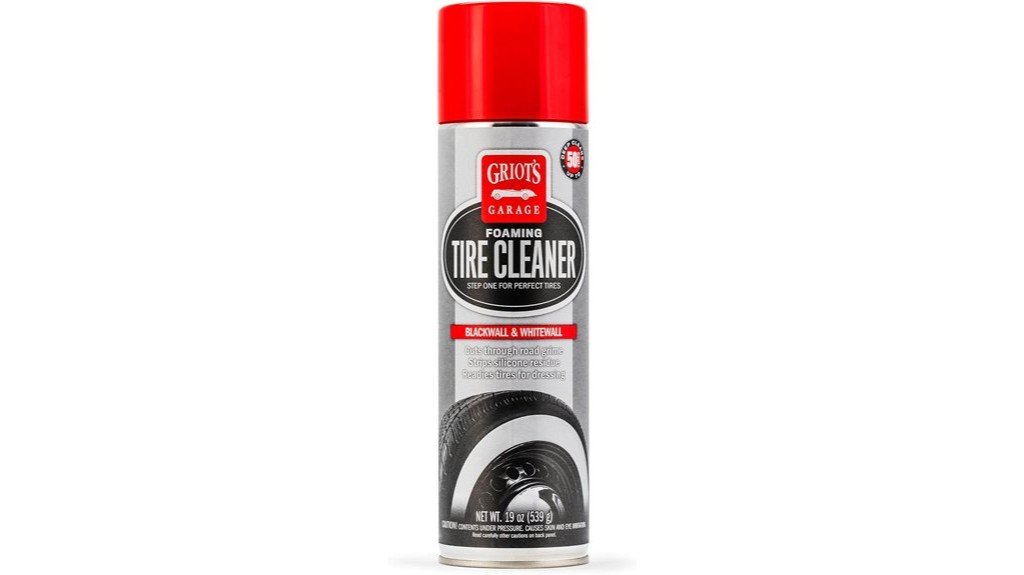
A tire dressing can look uneven, turn brown early, or sling onto the bodywork when it is applied over old silicone and road film. Griot’s Garage Foaming Tire Cleaner, model 10952, is made to strip that buildup from tire sidewalls with a thick foam that stays in place long enough to loosen grime. It works on blackwalls, whitewalls, and raised-white-letter tires, and one 19 oz can is rated to clean up to 50 tires. The tradeoff is that neglected sidewalls may still need brush agitation, and this is a dedicated tire cleaner rather than an all-purpose wheel-cleaning product.
Quick Verdict
Rating: 8.8/10 (Highly Recommended)
Best For: Car-care enthusiasts who want clean, residue-free tire sidewalls before applying a fresh dressing.
Bottom Line: The clinging foam removes road grime, brake dust, and old silicone residue while preparing rubber for a more even tire dressing. It is convenient for routine detailing, but heavily browned or neglected tires may need a brush and a second application.
| Specification | Detail |
|---|---|
| Brand | Griot’s Garage |
| Model | 10952 |
| Product Type | High-foaming tire cleaner |
| Item Form | Foam |
| Container Size | 19 oz aerosol can |
| Scent | Unscented |
| Estimated Yield | Up to 50 tires per can |
| Recommended Dwell Time | 3 to 5 minutes |
| Compatible Tire Types | Blackwalls, whitewalls, and raised-white-letter tires |
| Vehicle Applications | Car, truck, motorcycle, and RV tires |
| Primary Cleaning Targets | Road grime, brake dust, and silicone dressing residue |
| Application Method | Spray, allow to dwell, agitate if needed, then rinse or wipe clean |
| Finish After Cleaning | Clean rubber with no greasy residue |
| Best Use | Preparing tire sidewalls before applying dressing or coating |
What Is Griot’s Garage Foaming Tire Cleaner?
Griot’s Garage Foaming Tire Cleaner is a 19 oz tire-care aerosol designed specifically for rubber sidewalls. Its high-foaming formula targets road grime, brake dust, and silicone residue left by previous tire-shine products. The foam spreads in a controlled pattern and clings to the sidewall instead of running off as quickly as a thin liquid cleaner.
The main purpose is surface preparation. Removing greasy buildup gives a new tire dressing or coating a cleaner surface, which can help it spread more evenly and last longer. The product is listed for blackwall, whitewall, and raised-white-letter tires on cars, trucks, motorcycles, and RVs.
This is not a shine product and it does not leave a glossy coating. After rinsing or wiping, the tire should have a clean, natural rubber appearance that is ready for a separate protectant or dressing.
Who Should Buy It?
Best For
- Owners who apply tire dressing and want a clean surface before each application
- Detailers removing old silicone residue, brake dust, or road film from sidewalls
- Drivers maintaining blackwalls, whitewalls, or raised-white-letter tires
Skip If
- You need one product to clean both wheel faces and tire sidewalls
- You regularly clean large commercial fleets and need a bulk liquid concentrate
- You expect a fully touchless result on thick mud or severely neglected tires
Key Performance Features
High-Foaming, Controlled Spray
The controlled spray pattern helps place a thick layer of foam across the sidewall with less waste than a loose mist. Because the foam stays visible, you can see whether the entire tire has been covered and add product only where needed.
The clinging action also gives the cleaner time to work through surface grime. Griot’s Garage recommends a 3 to 5 minute dwell period before rinsing or wiping the tire clean.
Removal of Old Silicone Dressing
Silicone-based tire products can leave a layer that attracts dust and interferes with the next dressing. This cleaner is formulated to remove that residue along with road film and brake dust. A cleaner sidewall helps the next dressing spread with fewer dark and light patches.
Removing buildup can also reduce the dirty brown or yellow cast that appears when residue and grime collect on the rubber. The product is designed to clean the surface, not permanently recolor damaged or aged tire rubber.
Compatibility With Common Tire Styles
The formula is listed as safe for blackwall, whitewall, and raised-white-letter tires. That makes it useful for modern daily drivers as well as vehicles with decorative white rubber details that show staining quickly.
For older, repaired, painted, or specialty sidewalls, spot-test a small area and follow the label. Tire age, previous treatments, and aftermarket lettering can affect how any cleaner behaves.
Residue-Free Surface Preparation
After rinsing, the cleaner is intended to leave no greasy residue. That matters because a slippery film can prevent a water-based dressing or coating from bonding evenly. A bare, dry surface also makes it easier to judge whether another cleaning pass is needed before dressing the tire.
How It Performs in Real Use
Routine Maintenance Washes
On tires cleaned regularly, a uniform coat and the full dwell time may be enough to remove light road film without aggressive scrubbing. Rinse thoroughly and inspect the rubber after it dries. If the sidewall looks evenly matte and no brown residue transfers to a clean towel, it is ready for dressing.
Old Tire Shine and Brown Buildup
Neglected tires usually need more work. Apply the foam, let it dwell for 3 to 5 minutes, and agitate with a dedicated tire brush if brown or gray residue remains. A second application may be more effective than scrubbing one application until the cleaner dries.
Whitewalls and Raised White Letters
White rubber details make grime easy to see. The foam can help loosen the film that dulls whitewalls and raised lettering, but the final result still depends on tire age and staining. Use a clean brush reserved for light-colored rubber so you do not transfer dark residue from another tire.
Cars, Trucks, Motorcycles, and RVs
The same product can be used across several vehicle types, but yield will vary with sidewall size and how heavily you apply it. A large truck or RV tire needs more foam than a compact-car tire, so the stated yield of up to 50 tires should be treated as a best-case estimate under routine cleaning conditions.
How to Use It Correctly
- Work on a Cool Tire: Park in the shade and allow the tire and wheel to cool before applying any cleaner.
- Remove Loose Debris: Rinse away sand, mud, and grit so the foam can contact the rubber directly.
- Apply an Even Layer: Spray enough foam to cover the sidewall without flooding the wheel or surrounding bodywork.
- Allow 3 to 5 Minutes: Give the formula time to loosen grime, but do not let it dry on the surface.
- Agitate When Needed: Use a tire brush on old dressing, brown residue, or textured lettering.
- Rinse or Wipe Clean: Remove the cleaner and loosened contamination until no foam or dirty runoff remains.
- Inspect Before Dressing: Let the tire dry fully. Repeat the cleaning process if the sidewall still feels slick or shows uneven residue.
Before You Buy: This product is marketed as a tire-sidewall cleaner, not as a dedicated wheel cleaner. Avoid deliberately coating wheel faces, brakes, painted body panels, or other nearby surfaces, and rinse accidental overspray promptly according to the label.
Pro Tip: Keep a separate tire brush for sidewalls and rinse it after each wheel. A contaminated brush can spread old silicone and brown residue onto the next tire, making it harder to tell when the rubber is fully clean.
Compatibility and Safety
Use the cleaner only on cool surfaces and do not let the foam dry. Work in a ventilated area, avoid breathing the spray, and keep the can away from heat or flame. As with any detailing chemical, wear suitable hand and eye protection when the label recommends it.
The product is intended for tire rubber. It is not a substitute for a wheel cleaner, brake cleaner, or degreaser, and it should not be sprayed onto the tread as a dressing-preparation step. Follow the directions and warnings printed on the can, especially when working around motorcycle tires where accidental product on the tread could affect grip.
Pros and Cons
Pros
- Thick foam gives visible, controlled coverage on vertical sidewalls
- Targets road grime, brake dust, and old silicone dressing residue
- Safe for blackwalls, whitewalls, and raised-white-letter tires
- Leaves no greasy residue before a new dressing is applied
- One 19 oz can is rated to clean up to 50 tires
Cons
- Heavy browning or layered dressing residue may require brushing and a second pass
- The aerosol format is less economical than bulk concentrate for fleet or shop use
- It is designed for tires, so you still need a separate product for wheel faces and barrels
Cleaning and Storage Tips
Rinse your tire brush after each wheel and allow it to dry before storage. Leaving old dressing and grime in the bristles can reduce cleaning performance during the next wash. Do not use the same brush on painted wheels or vehicle bodywork.
Store the aerosol can upright in a cool, dry place away from direct sun, sparks, flames, and high heat. Aerosol products may have transport restrictions, so check carrier rules before packing the can for air travel or shipping it to another location.
Is It Worth the Price?
Griot’s Garage Foaming Tire Cleaner offers strong value for an individual owner who wants a purpose-built tire-preparation product. The 19 oz can, controlled foam, and stated yield of up to 50 tires make it practical for home detailing without mixing concentrate or carrying a large bottle.
The value is strongest when you use a separate tire dressing and care about even application. It is less compelling for a commercial shop that cleans many oversized tires, because a bulk concentrate may cost less per use. You will also need a dedicated wheel cleaner if you want to clean the rim, barrel, and tire in the same wash.
How It Compares to Alternatives
A combined wheel-and-tire cleaner may be more convenient when you want one spray for both surfaces. The tradeoff is that a multipurpose formula may not focus as closely on stripping old tire dressing. Griot’s Garage Foaming Tire Cleaner makes more sense when sidewall preparation is the priority.
Compared with Griot’s Garage Rubber Cleaner, the aerosol foam is easier to distribute quickly and stays visible during the dwell period. A liquid rubber cleaner can offer more control when applied with a brush or towel, while the foaming can is better suited to fast, even coverage.
Frequently Asked Questions
What does Griot’s Garage Foaming Tire Cleaner remove?
It is designed to remove road grime, brake dust, and silicone residue from tire sidewalls. The goal is to leave clean rubber with no greasy film before you apply a separate tire dressing.
Is it safe for whitewalls and raised white letters?
Yes. The manufacturer lists the cleaner for blackwall, whitewall, and raised-white-letter tires. Spot-test older or specialty sidewalls if you are unsure about previous coatings or repairs.
How long should the foam stay on the tire?
Allow the foam to dwell for 3 to 5 minutes. Do not let it dry, and shorten the working time if heat or wind is causing rapid evaporation.
Do I need to scrub every tire?
Not always. Light maintenance dirt may rinse away after the dwell period, but old dressing, brown residue, and textured lettering often need agitation with a dedicated tire brush.
Can I use it as a wheel cleaner?
It is sold as a tire cleaner, not a dedicated cleaner for wheel faces or barrels. Keep the application focused on the sidewall and rinse accidental overspray promptly according to the product label.
Can I apply tire dressing immediately after cleaning?
Rinse or wipe away all cleaner, then let the tire dry fully. Applying dressing to a wet or partly cleaned sidewall can cause uneven coverage and reduce adhesion.
How many tires will one 19 oz can clean?
The stated yield is up to 50 tires. Large truck or RV sidewalls, heavy applications, and repeat cleaning passes will reduce the total number.
Who should skip this cleaner?
Skip it if you need a bulk concentrate for frequent fleet cleaning or one chemical for both wheels and tires. It is also not the best choice when you expect heavy mud to wash away without brushing.
The Bottom Line
Griot’s Garage Foaming Tire Cleaner is a strong choice for owners who want a dedicated sidewall cleaner before applying tire dressing. Its controlled foam, 3 to 5 minute dwell time, broad tire compatibility, and residue-free finish are the main strengths, while heavy buildup may require brushing and a repeat pass. Skip it if you need a bulk fleet solution or a single product for both wheels and tires.
Ready to Clean Your Tires?
Check the latest product details and seller options before you decide.