Replacing a stroller tire or inner tube is manageable when the wheel uses a pneumatic, tube-type tire. The exact tube size, valve, wheel-release method, and inflation pressure depend on your stroller model. Check the tire sidewall and official manual first, then follow the steps below to remove the damaged tube, inspect the wheel, and install the replacement safely.
Quick Answer
To change a stroller tire, remove the wheel according to its manual, deflate the tube, lift one tire bead with plastic tire levers, and remove the tube. Inspect the tire and rim, fit a matching tube, seat the bead evenly, and inflate it to the pressure specified for your stroller model.
Key Takeaways
- Use this method only for pneumatic tires that contain a removable inner tube.
- Match the new tube to the tire diameter, compatible width range, and valve type.
- Inspect the tire interior, rim, and rim strip so the same object does not puncture the new tube.
- Stroller tire pressure is model-specific. Do not assume that 35 PSI is correct.
- Reinstall the wheel securely and test the stroller without a child before the next outing.
At a Glance
| Time Required | About 20–40 minutes for a first attempt |
| Difficulty | Beginner to moderate |
| Tools Needed | Compatible inner tube, two plastic tire levers, hand or bicycle pump with gauge, clean rag, and any wrench or hex key required by the wheel axle |
| Cost | Low if you already own a pump and tire levers; professional labor may add to the cost |
Warning: Remove the child and all cargo before working on the stroller. Do not use the stroller if the tire bead, rim, axle, wheel lock, or brake is damaged. Never exceed the pressure stated in the official stroller manual.
Preparation for Tire Repair

Start by confirming that the flat wheel has a pneumatic tire with an inner tube. A valve stem passing through the rim usually indicates an air-filled tire, but some pneumatic wheels are tubeless. Solid, foam-filled, and permanently sealed wheels require a different repair or a complete replacement wheel.
Find the stroller’s model name or number on its frame label. Check the official manual for the wheel-release method, recommended replacement parts, tire size, valve style, and inflation pressure.
Choose the Correct Inner Tube
Read the size printed on the tire sidewall and compare it with the old tube. A tube may cover a small width range, but its diameter must match the wheel. Also match the valve type and shape. Common stroller tubes use a Schrader-style valve, although some models use a bent or angled stem for easier pump access.
Do not assume that every stroller uses a 16 × 1 3/4 tube. Bumbleride, for example, lists different 12-inch and 16-inch tubes for different models. Continental’s tire mounting guidance also advises matching the marked tire size and using a valve that fits the rim.
Gather the Tools
- A correctly sized replacement inner tube
- Two plastic tire levers
- A hand or bicycle pump with an accurate pressure gauge
- A clean cloth
- Tweezers for removing a thorn or small fragment
- The wrench or hex key required by an axle nut, when applicable
- A small bowl of mild soapy water for a stubborn bead, only if the stroller manual allows it
Do not use a screwdriver, knife, or another sharp metal tool as a tire lever. It can damage the rim, cut the new tube, or slip toward your hand.
Note: Tire pressure varies by stroller. Official guidance includes 20–22 PSI for applicable phil&teds buggies, 25–30 PSI for certain Bumbleride models, 30 PSI for BOB jogging strollers, and 30–35 PSI for the Thule Coaster XT. Your own stroller manual takes priority.
Removing the Wheel, Tire, and Inner Tube
Place the empty stroller on a stable, clean surface. Protect the frame and handle with a folded towel if you need to place the stroller on its side.
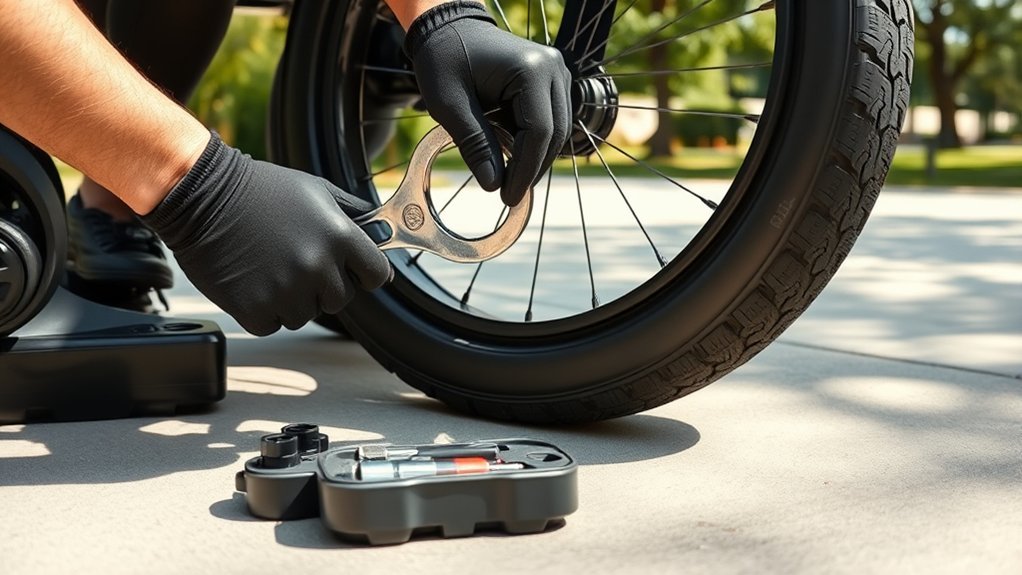
- Remove the wheel. Follow the official manual for the axle button, quick-release lever, retaining pin, axle nut, or other attachment. Some models require the parking brake to be released before the wheel can slide off.
- Remove the valve cap. Press the center pin of a Schrader valve until no air remains. A partly inflated tube makes the bead harder to remove.
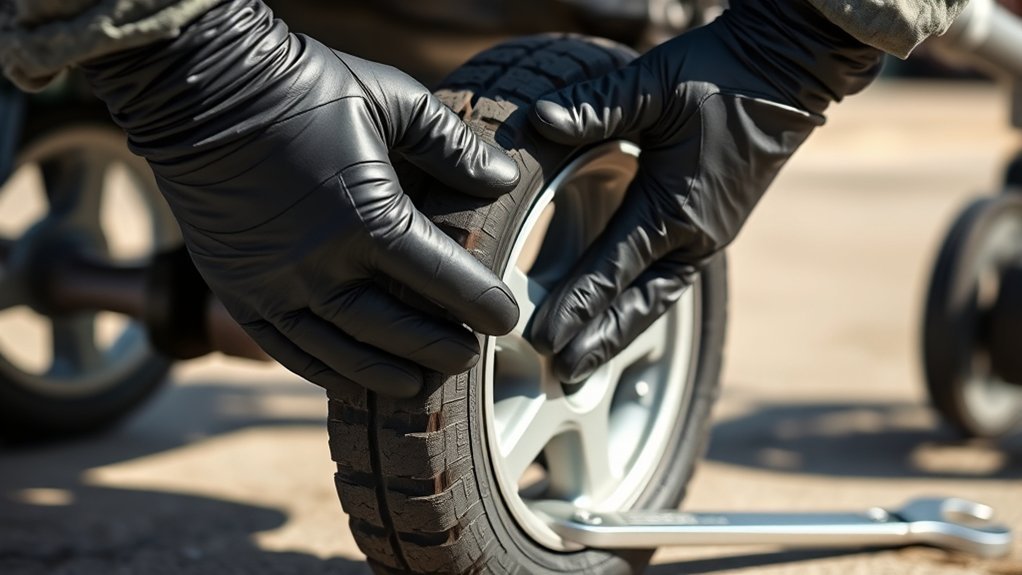
- Move the bead toward the rim center. Squeeze the tire inward around its full circumference. The center channel gives the bead more slack.
- Lift one bead over the rim. Insert the blunt end of a plastic tire lever under the bead without catching the tube. Use a second lever a short distance away if needed.
- Remove the tube. Pull the valve stem out of the rim hole, then work the rest of the tube from inside the tire.
You normally need to remove only one side of the tire. Leave the other bead on the rim unless the tire itself needs replacement or the rim requires a closer inspection.
Find the Cause of the Flat
Do not install the new tube until you know what damaged the old one. Check the outside tread first. Then carefully inspect the inside of the tire for glass, wire, thorns, stones, or a rough patch. Use a cloth or gloved finger so a hidden sharp object does not cut you.
Inspect the rim channel, valve hole, and rim strip. The strip should cover spoke holes and sharp edges without cracks, folds, or gaps. Replace a damaged or displaced strip before fitting the tube. Continental specifically recommends inspecting the rim and rim strip during a tube change.
Replace the entire tire if its bead is stretched or torn, its casing is split, the fabric under the rubber is visible, or a hole is too large to support the tube safely.
Warning: A thorn, glass fragment, exposed spoke hole, or sharp rim edge left in place can puncture the replacement tube as soon as you inflate it.
Installing the New Inner Tube

Confirm the new tube has the correct diameter, compatible width, and matching valve. Check that the tire’s first bead is fully inside the rim before inserting the tube.
Inflate the New Inner Tube Slightly
Add only enough air to give the tube a round shape. It should remain soft and flexible. This small amount of air reduces folding and makes it easier to keep the tube away from the tire bead.
- Insert the valve through the rim hole.
- Keep the valve straight and push the tube gently into the tire.
- Work around the wheel until the tube lies evenly inside the casing.
- Check for twists, folds, stretched sections, or tube material hanging outside the tire.
Do not inflate the loose tube to normal operating pressure. A tube without the support of a tire can stretch unevenly or burst.
Check the Valve Position
The valve stem should point straight toward the wheel hub rather than leaning to one side. A leaning valve usually means the tube is twisted or pulling against the rim hole.
If the valve is crooked, release the small amount of air, reposition the tube, and check it again. Do not pull hard on the valve stem because that can damage the tube where the stem joins the rubber.
Pro Tip: Keep the slightly inflated tube inside the tire while you work. If the tube repeatedly slips beneath the bead, release a little air rather than forcing the tire into place.
Securing the Tire on the Rim
Begin seating the open bead on the side opposite the valve. Push it over the rim with your thumbs, then work toward the valve evenly from both directions.
As the final section becomes tight, squeeze the bead already installed into the rim’s center channel. This creates the slack needed to finish the last section. Use a plastic tire lever only when your hands cannot complete the job, and keep the lever’s blunt side away from the tube.
A tire is not ready for full inflation until the bead is even, the valve is straight, and no part of the inner tube is visible between the tire and rim.
Check both sides of the wheel. The molded line near the tire bead should remain an even distance from the rim around the full circumference. Look closely near the valve, where a tube is most likely to become trapped.
Add a small amount of air and inspect the tire again. If the tire develops a bulge or one bead section rises higher than the rest, deflate it immediately and reseat that area.
Skip WD-40, penetrating oil, grease, and general-purpose lubricant on the tire bead. They are unnecessary and may contaminate the tire, rim, brake, or surrounding parts. For a stubborn rubber bead, use only a light film of mild soapy water when the stroller manufacturer permits it, then wipe the wheel clean.
Final Steps for a Successful Installation
Inflate to the Manufacturer’s Recommended Pressure
Connect a hand or bicycle pump that fits the valve and includes a pressure gauge. Inflate in small stages while watching the bead on both sides.
Use the pressure specified in the official stroller manual or current manufacturer support guidance. Do not treat the maximum pressure molded on a generic tire as an automatic target. Bumbleride, for example, recommends 25–30 PSI for applicable models even when a tire displays a 35 PSI maximum. Its maintenance guidance explains that improper pressure can increase the chance of a tube becoming punctured or misaligned.
A pressure gauge is more reliable than squeezing the tire or judging it by sight. Stop inflating if the bead becomes uneven, the tube appears beneath the bead, or the tire forms a bulge.
Replace the Valve Cap
Screw the valve cap on by hand until it is snug. The cap protects the valve opening from dirt and moisture. It is not a substitute for a working valve core or an undamaged inner tube.
If air continues to escape, check the valve for bubbles with a small amount of soapy water. A persistent leak may require a new valve core, another tube, or professional inspection.
Reinstall and Secure the Wheel
Reattach the wheel using the exact axle, button, lever, pin, or nut procedure in the stroller manual. Confirm that every locking component returns to its normal position.
For a removable quick-release wheel, pull it firmly away from the frame after installation. It should not slide out or feel loose. The Thule Coaster XT manual, for example, directs users to pull the installed wheel to verify that it is locked in the axle.
Perform a Pre-Outing Check
- Spin the repaired wheel. It should turn freely without a large wobble, rubbing, or clicking.
- Check the bead. Confirm that the bead line remains even on both sides.
- Check the pressure. Use a gauge and compare the reading with the stroller manual.
- Test the brake. Confirm that the parking brake holds the stroller and releases normally.
- Test the wheel attachment. Pull on the wheel and check every retaining part.
- Roll the stroller empty. Push it slowly on a flat surface and confirm that it tracks and handles normally.
Do not place your child in the stroller until it passes each check.
Troubleshooting Common Stroller Tire Problems
The Tire Bead Will Not Seat Evenly
Deflate the tube completely and move both tire beads toward the rim’s center channel. Check for a trapped tube, twisted rim strip, debris, or a mismatched tire. Reseat the bead by hand and add air gradually.
The New Tube Goes Flat Again
Remove the tube and compare the new puncture with the old one. A puncture on the tread side often points to a sharp object still inside the tire. A pair of cuts may indicate a pinch flat. A hole on the rim side can point to a damaged rim strip, exposed spoke hole, burr, or rough valve opening.
Also confirm that the tube is not too narrow, too wide, or the wrong diameter. A poorly matched tube may fold, stretch, or move inside the tire.
The Valve Stem Leans to One Side
Deflate the tire and reposition the tube. A leaning stem means the tube is pulling sideways and may eventually tear near the valve base. Do not try to straighten it by forcing the stem while the tire remains fully inflated.
The Wheel Wobbles or Rubs
Check whether the wheel is fully inserted into the axle and whether its retaining mechanism is closed. Also inspect the rim for damage and confirm that the tire bead is even.
Stop using the stroller if the axle, bearing, wheel lock, or rim remains loose or bent. Have an authorized service center or experienced bicycle mechanic inspect it.
The Tire Is Hard to Install
Small stroller tires can be tight. Confirm the tire and tube sizes before applying more force. Keep the opposite bead in the rim’s center channel, work toward the valve from both sides, and use only blunt plastic tire levers.
A bicycle shop can usually install a standard tube-type stroller tire. Professional help is safer than repeatedly pinching new tubes or damaging the wheel.
Pro Tips for Stroller Tire Maintenance
Check the tires before each outing for low pressure, cracks, cuts, bulges, exposed casing, or embedded objects. Pull gently on removable wheels to confirm that they remain secure.
The correct pressure is the number specified for your stroller model, not a universal 35 PSI target.
Use a gauge on the schedule recommended by the manufacturer. BOB Gear recommends checking tire condition and wheel attachment before outings, while Bumbleride recommends pressure checks every one to two weeks or more often when needed.
Clean the tires and rims with a damp cloth or mild soap solution. Avoid harsh solvents, pressure washers, and oil on the tire bead. Apply axle or bearing lubricant only where the stroller manufacturer directs.
Keep a correctly sized spare tube, tire levers, a compact pump, and the required axle tool with the stroller. Store the stroller in a dry area away from prolonged direct sunlight and extreme heat.
Check the U.S. Consumer Product Safety Commission recall database or the relevant safety authority in your country for stroller recalls and product warnings.
Frequently Asked Questions
How often should I check stroller tires for wear?
Give the tires and wheel attachments a quick visual check before each use. Measure pneumatic tire pressure on the schedule in the stroller manual and whenever a tire feels soft, the stroller pulls to one side, or it has been stored for an extended period.
Can I use any inner tube in my stroller tire?
No. The tube must match the tire diameter, fit its width range, and use a valve compatible with the rim and pump. Check the tire sidewall, old tube, stroller manual, or official replacement-parts listing before ordering.
What tools do I need to change a stroller tire?
You usually need two plastic tire levers, a compatible inner tube, a hand or bicycle pump with a pressure gauge, and the wrench or hex key required by the wheel axle. A clean rag and tweezers are useful for inspection.
How do I know whether the tire is properly inflated?
Use an accurate pressure gauge and compare the reading with the pressure specified by the stroller manufacturer. A visual or squeeze test cannot confirm the exact pressure. Also check that the bead line is even and the tire has no bulges.
Is it safe to use a stroller with a partially inflated tire?
Do not use it until the cause is identified and the tire is restored to the approved pressure. Low pressure can affect handling, let the tube move inside the tire, and make pinch damage more likely.
Can I patch the old stroller inner tube?
A proper tube patch may repair a small puncture away from the valve and seams. Replace the tube if it is split, badly stretched, damaged near the valve, or has several punctures. Always remove the object that caused the flat before reinstalling it.
Can I use WD-40 to install a stroller tire?
Do not use WD-40, penetrating oil, or grease on the tire bead. Use clean plastic tire levers and proper bead-positioning technique. When the manual permits it, a small amount of mild soapy water can help a stubborn bead slide into place.
Conclusion
Changing a tube-type stroller tire is easier when you slow down and verify each detail. Match the replacement tube, remove the cause of the puncture, keep the tube clear of the bead, and use the pressure approved for your stroller model.
Before carrying your child, confirm that the wheel is locked, the tire is seated evenly, the brake works, and the empty stroller rolls normally. Ask a bicycle shop or authorized stroller service center for help if the tire will not seat, the wheel remains loose, or any structural part is damaged.
Sources
- Continental Mounting and Care Instructions for Clincher and Folding Tyres — tube sizing, rim-strip inspection, valve alignment, bead seating, and inflation checks
- Bumbleride Safety and Maintenance 101 — stroller inspections, pressure guidance, tubes, and wheel maintenance
- BOB Gear Jogging Stroller Maintenance Guide — pressure, tire inspection, wheel-security checks, brakes, and replacement parts
- phil&teds Inner Tube and Tire Replacement Guide — model-specific pressure and step-by-step tube replacement
- Thule Coaster XT Instructions — wheel installation, attachment checks, pressure range, and wheel removal
- U.S. Consumer Product Safety Commission Recalls — current stroller and child-product recall information