Spills, crumbs, and sticky hands can make a stroller harness dirty faster than you expect. You can clean most everyday messes without soaking or damaging the straps, but the correct method depends on your stroller model. Find the manual first, use only approved cleaners, and test every buckle and adjuster before your child rides again.
Last updated: July 14, 2026
Quick Answer
Check your stroller manual before cleaning or removing the harness. Brush or vacuum away crumbs, then spot clean approved areas with a lightly damp cloth and the cleaner listed in the manual. Avoid soaking, disassembly, heat, bleach, stain removers, or machine washing unless your exact instructions allow them. Dry and test everything before use.
Key Takeaways
- Use the cleaning directions for your exact stroller model, not a universal method.
- Remove the harness only when the manual provides clear removal and reinstallation steps.
- Start with dry debris removal and use as little moisture as possible.
- Keep unapproved cleaners, disinfectants, lubricants, and stain removers away from the webbing and buckle.
- Let every cleaned part dry and test the harness before placing your child in the stroller.
- Stop using the stroller if straps, stitching, anchors, adjusters, or buckles appear damaged or unreliable.
At a Glance
| Time Required | About 20 to 40 minutes of active cleaning, plus complete drying time |
| Difficulty | Easy for spot cleaning; moderate if the manual permits harness removal |
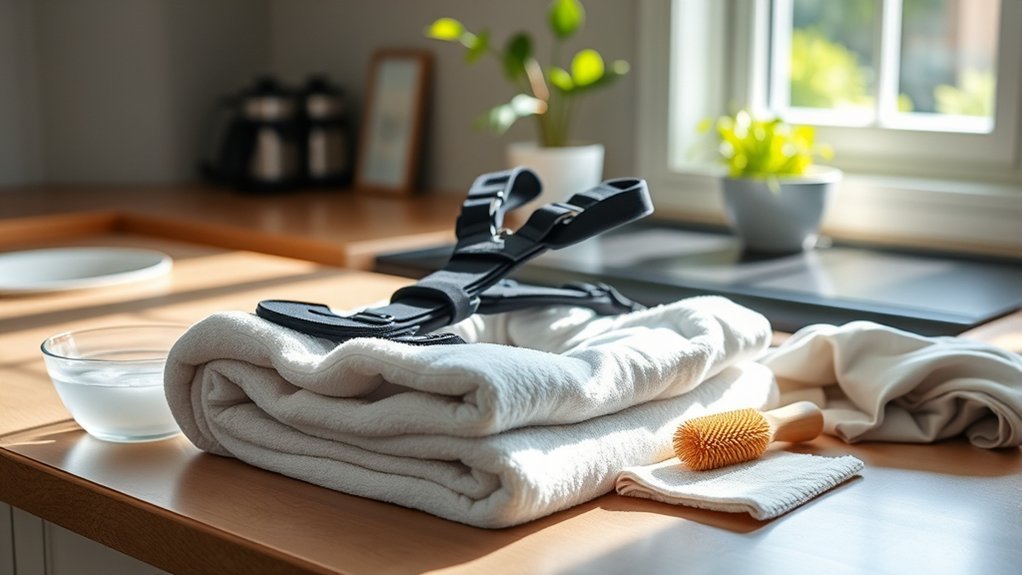
| Tools Needed | Stroller manual, soft brush or handheld vacuum, soft cloths, bowl, towel, and an approved mild cleaner |
| Cost | Usually no extra cost when you already have the supplies approved in the manual |
Why Cleaning Your Stroller Harness Matters
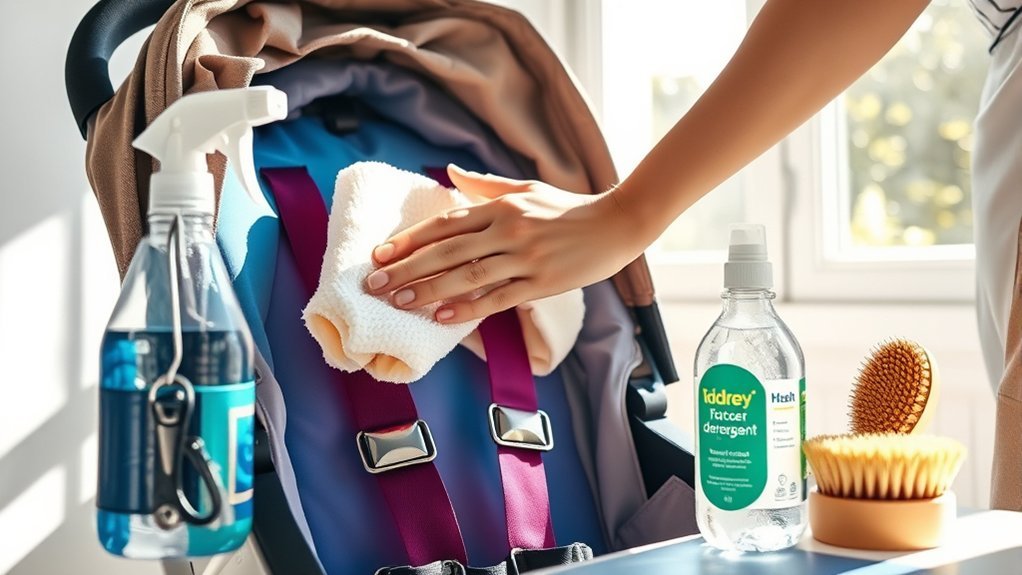
Harness straps collect crumbs, sweat, sunscreen, dirt, milk, and other spills. Removing that buildup can improve your child’s comfort, reduce odors, and keep debris away from the buckle and adjusters.
Cleaning also gives you a chance to inspect the webbing, stitching, anchors, and buckle. Health Canada advises caregivers to use the safety harness, follow the manufacturer’s instructions, and check the stroller for signs of damage.
The safest cleaning method is the one approved for your exact stroller model. A clean-looking harness is not worth incorrect routing, damaged webbing, or an unreliable buckle.
Do not treat stroller harness webbing like ordinary clothing. The seat cover, shoulder pads, crotch pad, buckle, and load-bearing straps may each have different care instructions.
Check the Manual and Recall Status First
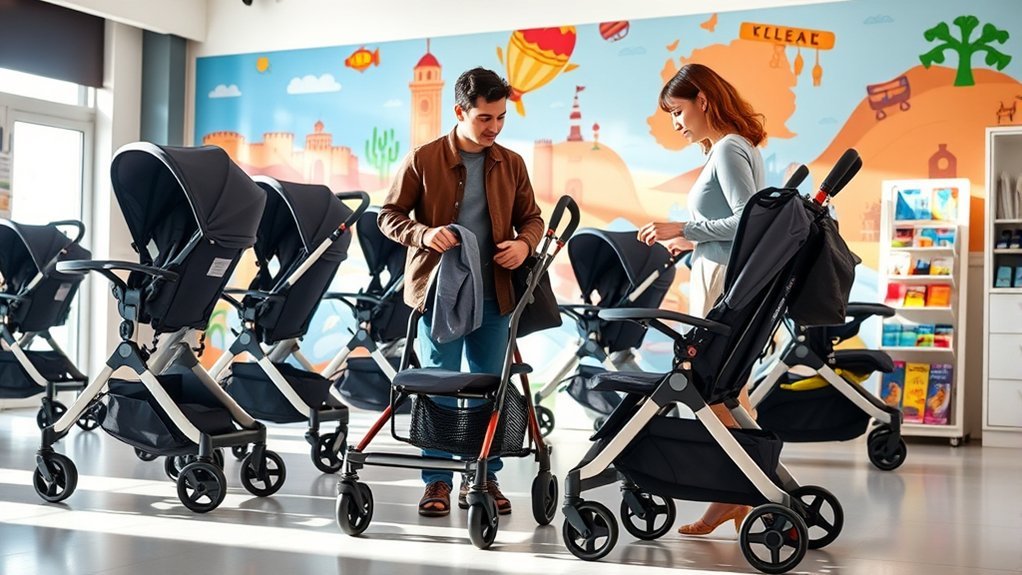
Find the stroller’s brand, model number, and manufacture date before you begin. The identification label may be on the frame, under the seat, near the basket, or beside a wheel. Use those details to locate the correct manual on the manufacturer’s website.
Read the cleaning and maintenance section closely. Confirm all four points before applying water:
- Whether the harness must remain attached or may be removed
- Which cleaner and water temperature are allowed
- Whether the buckle can be rinsed or only wiped
- Whether any pads or covers have separate washing instructions
Use the model information to search the U.S. Consumer Product Safety Commission recall database or your country’s official product-safety database. Follow any recall remedy before cleaning, repairing, or continuing to use the stroller.
Note: A general online cleaning guide cannot replace the manual. If these steps conflict with your manufacturer’s directions, follow the manufacturer.
What You’ll Need to Clean a Stroller Harness
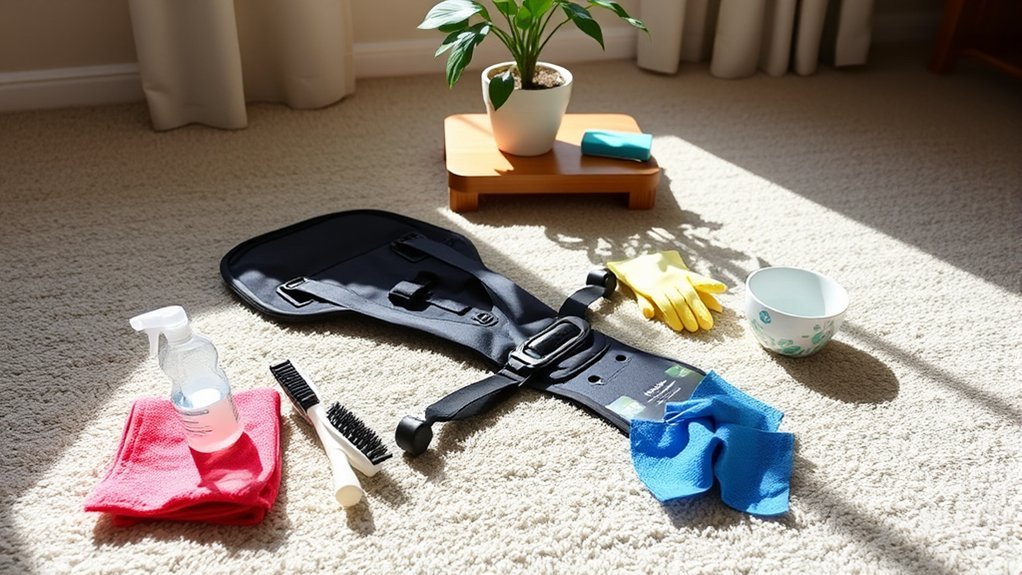
Gather your cleaning supplies before you start. Keeping everything nearby helps you control moisture and prevents dirty water from spreading across the stroller seat.
- The manual for your exact stroller model
- A handheld vacuum with a gentle attachment or a soft brush
- A small bowl of cool or warm water, as allowed by the manual
- The mild soap or detergent specifically permitted by the manufacturer
- Two or three soft, light-colored cloths
- A soft toothbrush for exposed seams, only when gentle brushing is allowed
- A clean, absorbent towel
- A phone for photographing the original strap routing
- A small container for removable pads or approved fasteners
A light-colored cloth makes it easier to see the dirt you remove and notice color transfer from the harness. Do not add vinegar, baking soda, alcohol, hydrogen peroxide, bleach, enzyme cleaner, fragrance spray, or stain remover unless the manual specifically approves it.
Warning: Never sew, glue, knot, melt, dye, lubricate, or patch damaged harness webbing. Do not install a third-party replacement harness unless the stroller manufacturer lists it as compatible with your exact model.
How to Prepare the Stroller
Move the stroller to a bright, well-ventilated work area. Remove your child, apply the brake, unfold the frame fully, and take out toys, snack trays, liners, and other accessories that block access.
- Photograph the harness. Take clear pictures of the shoulder, waist, and crotch straps from the front and back.
- Check the routing. Note which slots, anchors, loops, and buckle tongues each strap uses.
- Remove dry debris. Vacuum or brush crumbs away before adding moisture.
- Protect nearby fabric. Place a dry towel beneath the strap you are cleaning.
- Test an approved solution. Try it on a small, hidden area if the manual permits spot testing.
Do not pour water over the stroller or spray cleaner directly onto the harness. Apply the approved solution to your cloth instead.
Can You Remove the Stroller Harness?
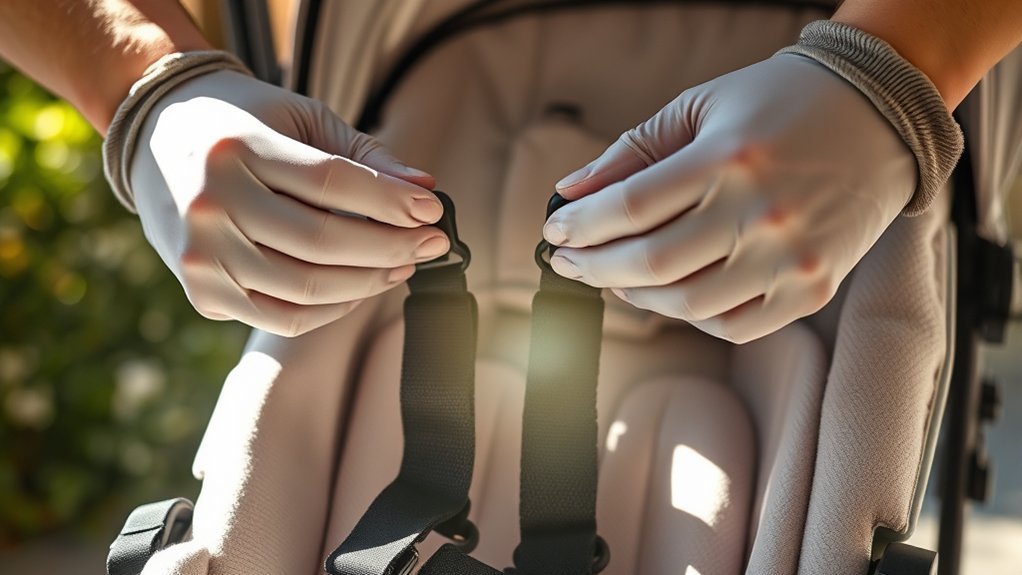
Some stroller harnesses are removable, while others are fixed to the frame or seat. A removable shoulder pad or seat cover does not automatically mean the load-bearing harness webbing can come out.
Remove the harness only when your manual provides instructions for your exact model. Do not copy a removal video for a stroller that merely looks similar.
- Compare the stroller label with the manual. Confirm the model name, version, and manufacture year.
- Save photos of the original routing. Include every slot, anchor, buckle tongue, and adjustment point.
- Follow the illustrated sequence. Release only the clips, loops, or approved fasteners identified in the manual.
- Keep parts organized. Place removable pads and approved hardware in a container.
- Stop if you meet resistance. Do not force straps through narrow slots or remove rivets, fixed anchors, or unlisted screws.
If the manual does not clearly describe harness removal, clean the straps while they remain attached. Contact the manufacturer when you cannot confirm the correct procedure.
How to Spot Clean Stroller Harness Straps
Spot cleaning is the safest starting point when the manual permits it. Work on one short section at a time so you do not saturate the webbing, padding, seat fabric, or frame.
Routine Cleaning Steps
- Mix the approved solution. Use the cleaner, dilution, and water temperature listed in the manual.
- Dampen the cloth. Wring it thoroughly so it feels damp rather than wet.
- Wipe gently. Support the strap with one hand and wipe along both sides without stretching or twisting it.
- Clean seams carefully. Use a soft cloth or approved soft brush with light pressure.
- Remove soap residue. Wipe the area with a second cloth dampened with clean water if the manual calls for rinsing.
- Blot moisture. Press the strap between sections of a clean towel. Do not wring it.
Avoid aggressive back-and-forth scrubbing. If the strap surface begins to fuzz, fray, stiffen, lose color, or change texture, stop cleaning and contact the manufacturer.
How to Handle Stubborn Stains
Dampen dried food or mud with the approved cleaning solution and give it a few minutes to soften. Blot the stain repeatedly rather than scraping it or adding a stronger chemical.
- Do not assume a product is compatible because its label says baby-safe or child-safe.
- Do not use an upholstery cleaner, carpet cleaner, disinfecting spray, solvent, or laundry pre-treatment without manufacturer approval.
- Do not conceal a stain with dye, paint, marker, or fabric coating.
- Do not continue scrubbing if the webbing changes texture or shape.
For vomit, urine, feces, mold, an unknown chemical, or a spill that soaked deep into padding or an adjuster, contact the manufacturer. Ask whether the part can be cleaned safely or needs an approved replacement.
How to Clean the Buckle and Adjusters
First, use a dry soft brush or handheld vacuum to remove visible crumbs around the buckle. Hold the opening downward when possible so loosened debris falls out instead of moving farther inside.
Clean only the surfaces and openings covered by your manual. Some buckles may permit limited rinsing, while others should only be wiped. Do not immerse the buckle or allow soap to collect inside unless the manufacturer specifically instructs you to do so.
Never apply cooking oil, silicone spray, petroleum lubricant, graphite, soap, or another slippery product to make a buckle or adjuster move more easily. If the buckle sticks, releases unexpectedly, fails to click, or remains unreliable after approved cleaning, stop using the stroller and contact the manufacturer.
Quick Cleaning Tips
Clean small spills as soon as practical because fresh residue usually needs less moisture and rubbing. Remove dry crumbs before wiping the straps so they do not become paste inside seams or buckle openings.
Pro Tip: Keep a clean, slightly damp cloth in a sealed bag during outings. Use it for quick surface cleanup only, then follow the full manual-approved process at home.
How to Dry and Reassemble the Harness
Follow the drying method in your manual. When air drying is required, place the stroller or removable parts in a ventilated area away from direct heat. Keep the straps untwisted and allow air to reach both sides.
Do not place the harness back into service while it feels damp. Unless your manual expressly allows it, do not use a tumble dryer, hair dryer, heater, iron, radiator, or prolonged direct sunlight to speed drying.
Reassembly Checklist
- Compare the parts with your photos and manual. Confirm that nothing is missing.
- Route each strap correctly. Use the proper shoulder slots, waist anchors, and crotch-buckle opening.
- Remove twists. Every strap should lie flat from its anchor to the buckle.
- Secure each approved attachment. Check that loops, clips, and retainers sit exactly as illustrated.
- Pull-test every anchor. Apply firm hand pressure without jerking or damaging the webbing.
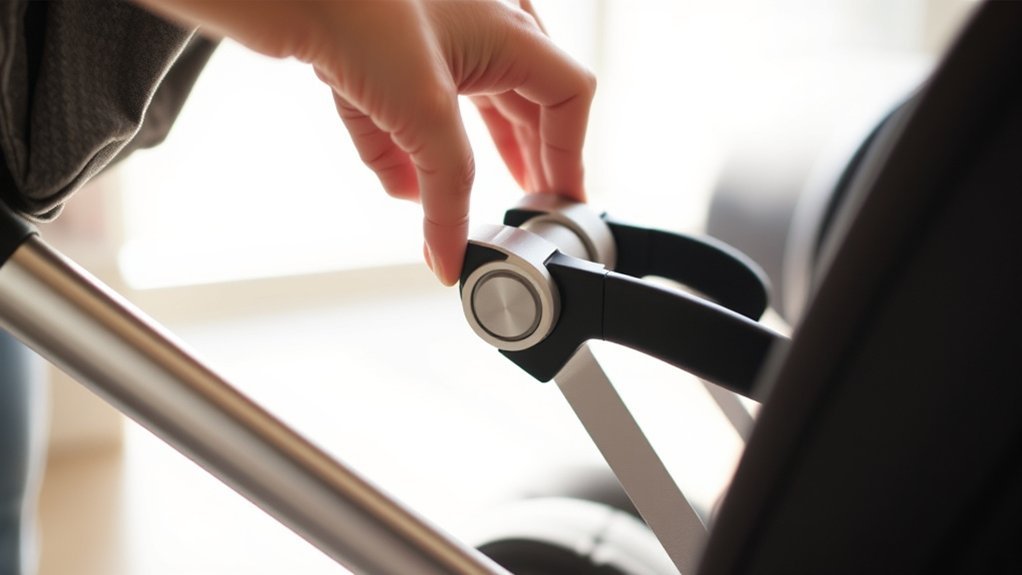
- Test the buckle repeatedly. Each tongue should click, remain locked, and release normally.
- Test the adjusters. Tighten and loosen the harness to confirm that it holds its setting.
Do not place your child in the stroller until the harness is dry, correctly routed, securely anchored, and working normally.
Common Mistakes to Avoid
- Cleaning before reading the manual for the exact stroller model
- Assuming the harness is removable because the seat cover comes off
- Soaking straps, padding, anchors, or buckle mechanisms
- Using bleach, fabric softener, disinfectant, stain remover, or another unapproved cleaner
- Using hot water or machine washing when the manual allows only spot cleaning
- Scrubbing with a stiff brush, abrasive pad, or sharp tool
- Applying oil or lubricant to a sticky buckle or adjuster
- Removing fixed screws, rivets, or anchors
- Drying with high heat when the manual does not permit it
- Reassembling the harness from memory instead of using the manual and photos
- Using the stroller before all cleaned parts are dry and tested
When to Stop Using the Harness
Do not use the stroller when the harness cannot hold your child securely or you cannot verify its correct assembly. Contact the manufacturer if you notice any of these problems:
- Cut, torn, melted, badly abraded, or heavily frayed webbing
- Loose, pulled, or broken stitching
- A stretched strap or a strap with an altered texture
- A cracked, bent, missing, or deformed buckle component
- A buckle that does not click, lock, or release normally
- An adjuster that slips after you tighten the harness
- A loose, damaged, or missing anchor or retainer
- Incorrect routing that you cannot resolve from the manual
- Mold, strong chemical exposure, or contamination that approved cleaning cannot remove
- A recall or safety notice that tells owners to stop using the stroller
Warning: Do not continue using a damaged harness while waiting to see whether the problem gets worse. Ask the manufacturer for an approved repair, replacement part, or product remedy.
Tips for Regular Maintenance and Care
Cleaning frequency depends on spills, weather, food use, and the manufacturer’s schedule. Use the following routine as a practical inspection guide rather than a replacement for your manual.
| Task | When to Do It | What to Check |
|---|---|---|
| Quick harness check | Before each use | Correct routing, flat straps, secure fit, normal buckle operation, and no visible damage |
| Remove crumbs | After snacks or messy outings | Buckle openings, adjusters, seams, seat folds, and strap surfaces |
| Spot clean | After visible spills or soil | Use only the approved cleaner and the smallest practical amount of moisture |
| Detailed inspection | During routine stroller maintenance and after deep cleaning | Webbing, stitching, anchors, buckle tongues, release button, and adjusters |
| Recall check | When buying used, after a safety concern, and periodically during ownership | Brand, model, manufacture date, lot number, and current remedy instructions |
| Storage preparation | Before folding or long-term storage | Make sure the harness is clean, fully dry, untwisted, and protected from chemicals and pests |
Address small messes promptly and keep food residue away from the buckle. Consistent light care usually reduces the need for soaking, strong cleaners, or repeated disassembly.
Frequently Asked Questions
How often should I clean my stroller harness?
Clean it after visible spills, sticky residue, mud, or other contamination and follow the care schedule in your stroller manual. No universal monthly deep-clean interval applies to every model. Check the routing, buckle, adjusters, and visible webbing before each use.
Can I use bleach on the stroller harness?
Do not use bleach unless the manufacturer explicitly approves it for that harness. Bleach is not part of a safe default cleaning method for load-bearing webbing. Use only the cleaner and dilution listed in the manual.
What should I do about a stubborn stain?
Soften the stain with the approved solution and blot it gently. Do not switch to a stain remover, disinfectant, solvent, or abrasive tool unless your manual permits it. Contact the manufacturer if the stain or contamination cannot be removed safely.
Is it safe to wash the harness in hot water?
Use only the water temperature specified in the manual. If the instructions do not mention hot water, do not assume it is safe. A lightly damp cloth with cool or warm water is a more conservative starting point when spot cleaning is allowed.
Can I use fabric softener on the harness?
Do not use fabric softener unless your stroller manufacturer specifically allows it. Softener can leave a coating, and it is unnecessary for routine harness cleaning.
Can I put stroller harness straps in a washing machine?
Only machine-wash a harness or removable strap component when the exact manual says it is machine washable. Do not assume the harness follows the same care instructions as the removable seat cover or shoulder pads.
What should I do if the buckle still sticks after cleaning?
Stop using the stroller if the buckle does not click, lock, hold, or release normally. Do not add oil or lubricant. Contact the manufacturer for troubleshooting, an approved replacement buckle, or another remedy.
Conclusion
A clean stroller harness can make rides more comfortable and help you notice wear before it becomes a larger problem. Start with the exact manual, remove dry debris, use only approved cleaning products, and control the amount of moisture. Never improvise removal, repair, or buckle lubrication.
Let every part dry, route the harness exactly as instructed, and test each buckle, anchor, and adjuster before your child rides. With careful maintenance, your stroller can remain cleaner and safer throughout daily use or before you follow a safe stroller donation guide.
Sources
- Health Canada: Stroller and carriage safety — supports harness use, damage checks, recall checks, and following manufacturer instructions.
- U.S. Consumer Product Safety Commission: Recalls and Product Safety Warnings — searchable U.S. recall database covering strollers and other children’s products.
- Health Canada: Consumer product recalls and safety alerts — searchable Canadian database for product recalls and remedies.