

How to Remove Pet Hair From a Stroller
Last updated: May 28, 2026
Quick answer: To remove pet hair from your stroller, start with a lint roller for quick surface cleanup. Use a damp rubber glove or microfiber cloth for seams and crevices, then vacuum the seat, straps, canopy, cupholders, frame joints, and storage basket with a brush or crevice attachment. For removable fabric parts, always check the stroller manual before washing, and let all fabric air dry fully before reattaching it.
A stroller can collect pet hair after one short walk, one car ride, or even one night parked near your pet’s bed. The hair may look like a small mess, but it can also carry dander, dust, pollen, and odors into the seat, straps, canopy folds, and storage basket.
This guide gives you a safe cleaning order, the best tools for each stroller area, and simple prevention steps that help you keep the stroller cleaner between deep cleans.
Why Pet Hair Removal Is Important
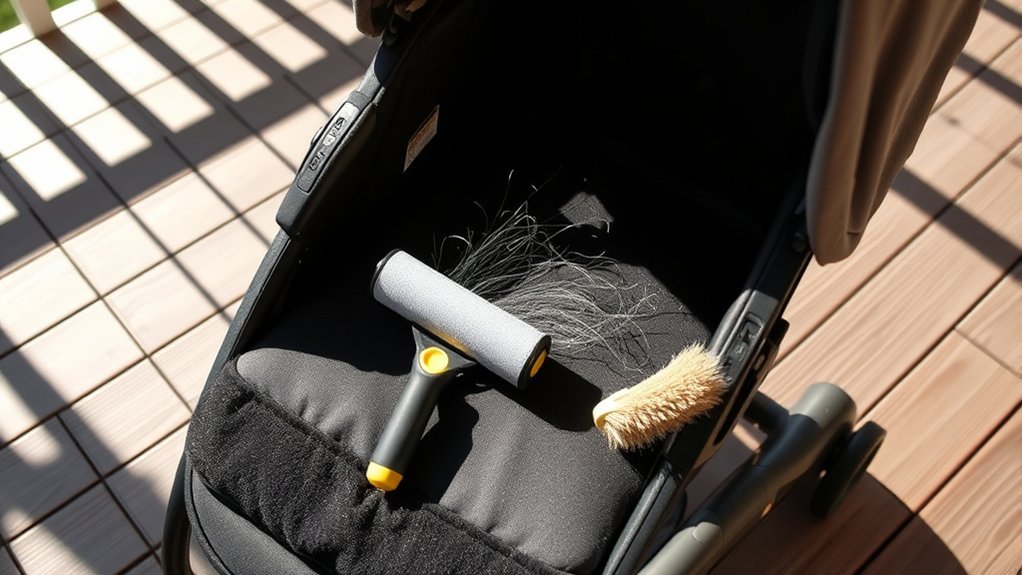
When you have pets, it’s easy to overlook the impact of their hair on your child’s stroller. Pet hair itself is usually a carrier. The main allergy triggers come from proteins in pet dander, saliva, urine, and skin flakes. Hair and fur can also collect pollen, dust, mold spores, and other outdoor allergens.
These allergens can cause sneezing, itchy eyes, runny nose, coughing, wheezing, or asthma symptoms in sensitive children and adults. You can learn more from the American Academy of Allergy, Asthma & Immunology, the National Institute of Environmental Health Sciences, and the Mayo Clinic.
Keeping your stroller free from hair also helps reduce odors and keeps the seat, harness straps, canopy, and storage basket more comfortable for your child. Regular cleaning can also help protect stroller fabric and moving parts from dirt, lint, and tangled hair.
Key takeaway: You are not just removing visible fur. You are also reducing the dust, dander, and odor that can collect in the fabric areas your child touches most.
Tools You’ll Need for the Job

Keeping your stroller free from pet hair is easier when you use the right tool for each area. A lint roller works well on smooth fabric, but seams, straps, folds, and baskets need stronger cleanup methods.
Safety note: Before washing any stroller fabric, check the manufacturer’s manual or care label. Some removable fabrics can be machine-washed, while others can shrink, warp, or lose shape if washed or dried the wrong way.
Here are the most useful tools for removing pet hair from a stroller:
- Lint Roller: Best for quick cleanups on the stroller seat, canopy, and outer fabric.
- Damp Rubber Glove: Helps pull hair from seams, corners, and textured fabric.
- Vacuum with Brush or Crevice Attachment: Best for upholstery, harness straps, cupholders, folds, and the storage basket.
- Microfiber Cloth: Useful for wiping hard surfaces and lifting loose hair without spreading dust into the air.
- Soft Brush or Toothbrush: Helpful for buckles, seams, and tight areas where hair gets trapped.
- Mild Soap and Water: Useful for spot cleaning if the stroller manual allows it.
| Stroller Area | Best Tool | Best Use |
|---|---|---|
| Seat fabric | Lint roller or vacuum brush | Fast surface hair removal |
| Harness straps | Lint roller and soft brush | Hair trapped around stitching |
| Seams and crevices | Damp rubber glove or crevice tool | Deep hair buildup |
| Canopy folds | Lint roller and vacuum brush | Loose fur and dust in folded fabric |
| Storage basket | Vacuum | Loose fur, crumbs, and dust |
| Frame and handles | Damp microfiber cloth | Dust and light hair |
Step-by-Step Stroller Pet Hair Removal
Use this cleaning order when the stroller has visible pet hair, dander, crumbs, or odor. It keeps you from pushing hair deeper into seams while you clean.
- Remove loose items first: Take out toys, blankets, snack trays, stroller liners, and loose storage basket items.
- Shake removable liners outside: If you use a blanket or liner, shake it outside before washing or vacuuming it.
- Start with a lint roller: Roll the seat, canopy, straps, and basket to lift loose surface hair.
- Use a damp rubber glove on seams: Rub seams, corners, folds, and textured fabric so the hair gathers into clumps.
- Vacuum hidden areas: Use a brush or crevice attachment on straps, buckles, cupholders, canopy folds, wheel areas, and frame joints.
- Wipe hard surfaces: Use a damp microfiber cloth on handles, trays, frame bars, and wheels.
- Spot clean only if needed: Use mild soap and water only if the stroller manual allows it.
- Air dry fully: Let every damp part dry before you fold, store, or reuse the stroller.
Real-world example: If your dog rode in the car beside the folded stroller, start with the storage basket and canopy folds. Those areas often trap hair before you notice it on the seat.
Using a Lint Roller Effectively

A lint roller is one of the fastest tools for removing pet hair from your stroller. Roll it across the seat, canopy, harness straps, and storage basket in short, firm passes. Work in more than one direction so the sticky sheet can grab hair from different angles.
Keep a lint roller in your diaper bag, car, or stroller pocket for quick touch-ups after your pet sits near the stroller. Replace the adhesive sheet as soon as it loses stickiness. A dull sheet makes you press harder, which can waste time and may pull at delicate fabric.
For larger stroller surfaces, a wide lint roller can cover more area quickly. For straps and corners, use a smaller roller or wrap tape around your fingers with the sticky side facing out.
Best use: A lint roller works best before deep cleaning, not after hair has already packed into seams and stitched areas.
The Rubber Glove Technique
If pet hair sticks to stroller fabric after lint rolling, use the rubber glove technique. A slightly damp glove helps hair clump together, which makes it easier to lift from fabric and seams. This method uses no harsh cleaner, so it works well for quick maintenance around children and pets.
Here’s how to do it:
- Dampen your rubber glove slightly. Do not soak it.
- Rub your gloved hand over the stroller fabric, especially along seams, corners, and crevices.
- Gather the hair into small clumps and remove it by hand.
- Follow with a vacuum to pick up any remaining hair and dust.
This technique helps keep your stroller pet hair-free between deeper cleanings. It also works well on fabric areas where a lint roller does not press evenly, such as curved seat corners and canopy folds.
Vacuuming Your Stroller
To keep your stroller free of pet hair, use the right vacuum attachments and clean the areas where hair hides most often.
A handheld vacuum, crevice tool, or brush attachment can reach the seat, harness straps, canopy folds, cupholders, storage basket, and frame joints.
If your child has allergies or asthma, consider using a vacuum with a HEPA filter. The Asthma and Allergy Foundation of America recommends HEPA-filter vacuums as part of pet allergen control.
Choose Suitable Vacuum Attachments
Choosing the right vacuum attachments helps you remove pet hair from your stroller without scrubbing too hard. Use smaller tools for tight areas and softer brush tools for fabric.
Here are three vacuum attachment types to use:
- Crevice Tool: Best for tight spaces, seams, buckles, and folds where pet hair often hides.
- Brush Attachment: Helps lift pet hair from fabric surfaces without rough scraping.
- Handheld Vacuum with Pet Hair Attachment: Useful for fast cleaning after outings.
Empty the vacuum canister or replace the bag often so suction stays strong. If you use a HEPA vacuum, clean or replace the filter based on the product instructions.
Regular Cleaning Schedule
Regular vacuuming can reduce the amount of pet hair that builds up over time. Aim to vacuum at least once a week, and clean sooner after pet-heavy outings. Focus on high-contact areas like the seat, straps, canopy, and storage basket.
| Scheduling Frequency | Cleaning Benefits | Best For |
|---|---|---|
| After pet exposure | Stops hair from settling into fabric | Car rides, walks, and indoor storage near pets |
| Once a week | Reduces hair buildup | Regular pet households |
| Monthly deep clean | Helps maintain fabric condition | Removable liners, canopy folds, and basket cleaning |
For a quick touch-up, use a lint roller after vacuuming. Always follow the manufacturer’s guidelines for cleaning fabric components.
Wiping Down With Microfiber Cloth
Using a microfiber cloth is a simple way to remove pet hair, dust, and light dirt from your stroller. A damp microfiber cloth can also help keep pet dander and fur from floating back into the air.
Here’s how to get better results:
- Dampen the Cloth: Lightly moisten the cloth before use. Do not soak the stroller fabric.
- Wipe in Small Circles: Use a circular motion to lift hair from fabric surfaces and crevices.
- Clean Hard Surfaces Too: Wipe handles, frame bars, trays, and wheels with a separate damp cloth.
- Wash the Cloth: Clean your microfiber cloth regularly so it keeps working well.
This technique is best for light hair, dust, and daily maintenance. Use a separate cloth for wheels and dirty frame areas so you do not transfer grit back to the seat or straps.
Cleaning Removable Fabric Parts
Cleaning the removable fabric parts of your stroller is important, but you need to do it safely.
Start by checking the manufacturer’s instructions. Carefully remove the seat cover, liner, or canopy only if the manual says those parts are removable.
If the fabric is machine-washable, use the recommended wash setting, often a gentle cycle with mild detergent. If the fabric is not machine-washable, spot clean it with a soft cloth, mild soap, and water. Avoid bleach, harsh chemicals, and soaking the padding unless the manual specifically allows it.
Before or after washing, use a lint roller, damp rubber glove, or vacuum to remove stubborn hair.
Once cleaned, allow the fabric parts to air dry completely before reattaching them to the stroller. Reattaching damp fabric can lead to musty odors, mildew, or fabric damage. Chicco also recommends air drying stroller components before reassembly in its stroller cleaning guidance.
Do not skip this step: If the fabric still feels damp, wait longer before folding or storing the stroller. Damp folded fabric can trap odor quickly.
Regular Maintenance Tips
To keep your stroller pet-hair-free, set a simple cleaning routine that fits your schedule.
Using protective covers can save time, while vacuuming after outings helps stop hair from settling deep into fabric.
These simple steps can make a big difference in maintaining a clean and comfortable space for your child.
Daily Cleaning Routine
A daily cleaning routine can greatly reduce pet hair accumulation if your stroller sits near pets often.
Use these simple tasks when your stroller has been near pets:
- Quick Wipe-Down: Use a damp cloth to wipe hard surfaces and remove loose hair.
- Lint Roller: Keep a lint roller handy to remove stray pet hair from fabric before and after each use.
- Vacuum: Vacuum seams, straps, and storage areas where hair and crumbs collect.
You can also reduce stroller hair by grooming your pet regularly and storing the stroller away from your pet’s favorite resting spots.
Use Protective Covers
Protective covers are a smart solution for keeping your stroller free from pet hair. A removable blanket, stroller liner, or washable cover can catch fur before it embeds in the stroller fabric.
Wash the protective cover based on its care label. If your child has allergies or your pet sheds heavily, wash it more often. In between washes, shake it outside or vacuum it to remove loose hair.
These simple steps help you enjoy outings without a long cleanup afterward.
Vacuum After Outings
Maintaining a clean stroller after outings is just as important as using protective covers. Regular vacuuming helps prevent pet hair buildup and keeps the stroller ready for your child.
Here are some stroller vacuuming techniques to keep in mind:
- Focus on key areas: Vacuum the seat, harness straps, canopy folds, and crevices where hair tends to hide.
- Use the right tools: A handheld vacuum, brush attachment, or crevice tool can lift hair without rough scrubbing.
- Clean after pet exposure: Vacuum after outings where your pet rode in the car, walked beside the stroller, or rested near it.
You might also want to keep a lint roller handy for quick touch-ups.
Preventing Future Hair Buildup
To keep pet hair from piling up in your stroller, start using a removable cover that catches hair and makes cleanup easier.
Regularly grooming your pet can also help reduce loose hair before it transfers to your stroller.
Finally, consider creating pet-free storage zones for your stroller when it’s not in use.
Regular Stroller Cover Use
A removable stroller cover is a useful tool for pet owners who want to keep their strollers cleaner.
By using a cover, you can reduce pet hair buildup and make routine cleaning faster.
Here are three practical ways to get better results:
- Choose machine-washable materials: This makes the cover easier to clean when it collects hair and odors.
- Select smooth or hair-resistant fabrics: These fabrics usually release hair more easily than fuzzy or textured fabric.
- Use a protective blanket: During outings, place a clean blanket on the stroller seat or storage area to catch loose hair.
Frequent Pet Grooming Routine
Establishing a frequent grooming routine for your pet can help control hair before it reaches your stroller. Regular brushing reduces loose fur and can make cleanup easier.
Choose grooming tools designed for your pet’s coat type. A short-haired dog, long-haired dog, and cat may need different brushes. If your pet sheds heavily, ask your veterinarian or groomer about the right brushing and bathing schedule.
You can also use the rubber glove technique during grooming to catch loose surface hair before it transfers to your clothes, car, or stroller.
Designated Pet-Free Zones
Creating designated pet-free zones for stroller storage can reduce the amount of pet hair that collects before you even leave the house.
Here are three effective steps to use:
- Store the stroller in a closet, garage area, or entryway where pets do not sleep.
- Use a stroller cover or clean blanket when the stroller is parked indoors.
- Keep pet beds, blankets, and favorite resting spots away from the stroller.
Allergy-Friendly Stroller Cleaning Tips
If your child has allergies, asthma, eczema, or sensitive skin, treat stroller cleaning as part of your regular home allergen routine. The goal is to remove visible hair and reduce the dander and dust that can cling to fabric.
- Clean outside when possible: Shake removable covers outdoors so hair and dust do not spread inside your home.
- Use damp cleaning methods: A damp microfiber cloth can trap dust better than dry wiping.
- Use a HEPA-filter vacuum if available: This can help capture small allergen particles during cleaning.
- Wash hands after cleaning: This helps reduce allergen transfer from your hands to your child’s face, toys, or snacks.
- Ask a doctor when symptoms continue: Cleaning can reduce exposure, but it does not replace medical advice.
When to Seek Professional Help
Sometimes, pet hair becomes so embedded in your stroller that regular cleaning methods do not remove it well. If the seat, seams, wheels, or frame still look dirty after vacuuming and wiping, it may be time to consider professional cleaning services.
This is especially true for high-end strollers, delicate fabrics, heavy odor, spilled food, mildew concerns, or deep buildup around wheels and joints.
If your child has ongoing sneezing, wheezing, itchy eyes, or breathing symptoms around pet hair, talk to a pediatrician or allergist. Cleaning can reduce exposure, but it does not replace medical advice.
Common Mistakes to Avoid
- Do not soak stroller padding unless the manual clearly allows it.
- Do not use bleach or harsh chemicals on child-contact surfaces unless the manufacturer recommends them.
- Do not reattach damp fabric because it can lead to mildew or odors.
- Do not rely only on a lint roller if hair is deep in seams, straps, or the storage basket.
- Do not use a dryer unless the stroller manual or care label clearly says it is safe.
- Do not scrub buckles with too much water because trapped moisture can affect small parts.
- Do not use strong tape on delicate fabric because it may pull fibers or leave sticky residue.
Frequently Asked Questions
Can Pet Hair Cause Allergies in Children?
Pet hair can carry allergens, but the main allergy triggers usually come from proteins in pet dander, saliva, urine, and skin flakes. If your child has sneezing, itchy eyes, coughing, wheezing, or breathing trouble around pets, ask a pediatrician or allergist for advice.
How Often Should I Clean My Stroller?
For regular stroller maintenance, clean it once a week if it is often near pets. Use a lint roller for quick touch-ups and vacuum after outings where your pet was nearby. Do a deeper clean monthly or whenever the stroller looks dirty.
Is It Safe to Use a Dryer for Pet Hair Removal?
A dryer is usually not the best choice for stroller fabric unless the care label clearly allows it. Heat can shrink, warp, or damage some stroller fabrics. Air drying is the safer option for most stroller parts.
Will Pet Hair Damage My Stroller’s Fabric?
Pet hair does not usually damage stroller fabric by itself, but it can trap dust, odors, dander, and dirt. If hair stays embedded in seams and straps, it can make cleaning harder over time. Regular removal helps keep the stroller cleaner and more comfortable.
Can I Use Tape Instead of a Lint Roller?
Yes, you can use tape instead of a lint roller for small areas. Wrap tape around your fingers with the sticky side facing out, then press it gently onto the fabric. Avoid strong tape on delicate fabric because it may pull fibers or leave residue.
What Is the Best Tool for Pet Hair Stuck in Stroller Seams?
A slightly damp rubber glove works well because it gathers stuck hair into clumps. After that, use a vacuum crevice tool or soft brush to remove hair from stitching, buckles, folds, and corners.
Can I Wash Stroller Fabric in a Washing Machine?
You can wash stroller fabric in a washing machine only if the manufacturer’s manual or care label says it is safe. If the manual does not allow machine washing, spot clean with mild soap and water instead.
How Do I Remove Pet Odor From a Stroller?
Start by removing hair, crumbs, and dust with a lint roller and vacuum. Then spot clean approved fabric areas with mild soap and water. Let the stroller air dry fully before storing it, because trapped moisture can make odors worse.
How Can I Stop My Pet From Shedding on the Stroller?
Use a washable stroller cover, groom your pet regularly, and store the stroller away from pet beds or favorite resting spots. These steps reduce how much loose hair reaches the stroller before you leave the house.
Sources and Safety Notes
- American Academy of Allergy, Asthma & Immunology: Pet allergy causes, symptoms, and allergen management.
- National Institute of Environmental Health Sciences: Pet dander and allergen information.
- Asthma and Allergy Foundation of America: Pet allergen cleaning tips, damp microfiber cloths, and HEPA vacuum guidance.
- Mayo Clinic: Pet allergy triggers, symptoms, and airborne dander information.
- Chicco: Stroller fabric cleaning, manual-checking guidance, and air-drying safety.
Conclusion
Pet hair on a stroller is more than a small mess. It can carry dander, dust, pollen, and odors into the seat, straps, canopy, and storage basket. Start with a lint roller, use a damp rubber glove for crevices, vacuum the fabric and folds, and wipe hard surfaces with a microfiber cloth.
For removable stroller fabric, always check the manual before washing and let each part air dry fully before reattaching it. Keep a lint roller nearby, use a washable cover, and store the stroller away from pet resting areas. With that simple routine, you can keep your stroller cleaner, fresher, and more comfortable for your child.


