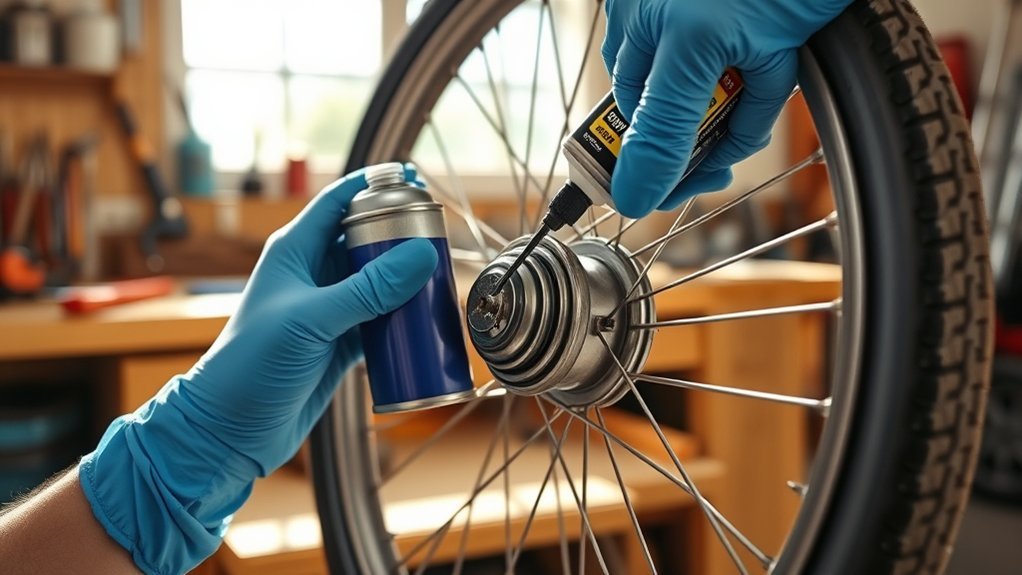
A squeaky stroller wheel is often caused by dirt around the axle, a dry moving part, a dirty swivel assembly, brake contact, or a worn component. Before spraying anything, identify where the sound comes from and check your stroller’s manual. The safest fix is usually to clean and dry the wheel first, then use only the lubricant and service points approved for your model.
Quick Answer
To fix squeaky stroller wheels, first locate the noisy wheel, remove hair, sand, and dirt, and dry the axle or hub completely. If your manufacturer allows lubrication, apply a small amount of the recommended lubricant—often silicone—to the approved moving point. Keep lubricant away from brakes and tire tread, then reinstall and test the wheel.
Key Takeaways
- Check the stroller manual before removing a wheel or applying lubricant because maintenance instructions vary by model.
- Clean dirt, sand, hair, and thread from the axle and hub before lubricating anything.
- Do not pry bonded foam or tire material away from a rim unless the manufacturer specifically instructs you to do so.
- Some manufacturers recommend silicone lubricant for squeaking wheels, while others specify different maintenance procedures.
- Keep all lubricant off the brake mechanism, wheel tread, fabric, and child-contact surfaces.
- If a wheel grinds, wobbles, will not stay attached, or has cracked or damaged parts, stop using the stroller until it is repaired.
At a Glance
| Time Required | About 10–20 minutes for basic cleaning and lubrication |
| Difficulty | Easy for routine maintenance; stop if parts are damaged or disassembly is unclear |
| Tools Needed | Soft brush, clean cloth, manufacturer-approved lubricant, and model-specific wheel-removal tool if required |
| Cost | Usually minimal for routine cleaning; replacement wheels, bearings, or other damaged parts cost extra |
Warning: Remove the child and all loose cargo before working on the stroller. Never spray lubricant onto brake surfaces or tire tread. Do not continue using a stroller with a loose wheel, cracked hub, damaged axle, unreliable brake, or other structural problem.
Understanding the Squeaking Issue
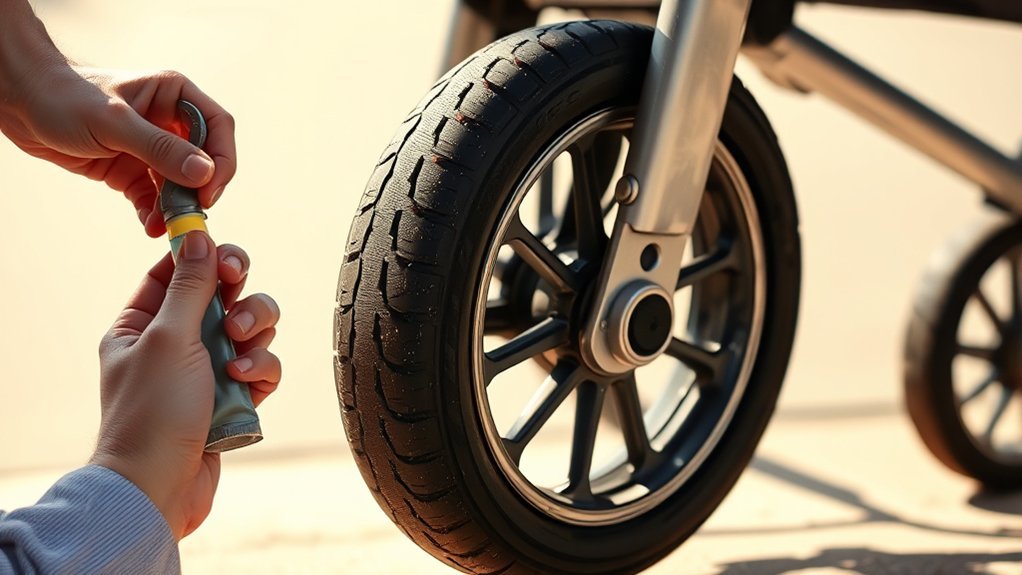
A stroller can squeak for several reasons, so the sound does not automatically mean that the tire or foam is rubbing on the rim. Common areas to inspect include the wheel axle, wheel hub, front swivel joint, brake mechanism, suspension or frame joint, and removable-wheel connection.
Dirt is an important first suspect. Sand, hair, thread, dried mud, and other debris can collect around the axle or inside the wheel hub and increase friction. Bugaboo, for example, recommends periodically removing compatible wheels and brushing dirt or sand from the inside axle area. Its guidance also says not to submerge wheel bearings in water. Bugaboo’s stroller-cleaning guidance provides model-independent cleaning principles, although your own stroller manual should still take priority.
Identify the Noise Before You Lubricate
With the stroller empty and parked on a flat surface, release the parking brake and test one wheel at a time. Spin each wheel by hand, then turn the front swivel wheels from side to side.
- Squeak once per wheel rotation: inspect the axle, hub, debris, and wheel attachment.
- Squeak mainly while steering: inspect the front swivel mechanism.
- Scraping or rubbing: make sure the brake is fully released and nothing is touching the wheel.
- Grinding: stop repeatedly lubricating the wheel and inspect for grit, hub damage, or a worn bearing.
- Squeak when pressing the handle or going over bumps: the sound may come from a suspension or frame joint rather than the wheel itself.
Pro Tip: Record a short video while slowly spinning each wheel. Watching and listening closely can make it much easier to match the squeak to one specific wheel, swivel, or frame movement.
Materials Needed for the Fix

You do not need many supplies for basic stroller-wheel maintenance. Start with cleaning materials and add lubricant only if your stroller manufacturer allows it.
Essential Lubrication Supplies
- Soft brush: An old toothbrush or similar soft brush works well for removing sand, hair, and dried dirt.
- Clean cloths: Use one damp cloth for cleaning and a dry cloth for removing moisture and excess lubricant.
- Manufacturer-approved lubricant: Some stroller makers specifically recommend silicone lubricant for squeaking wheels.
- Precision applicator: A straw applicator can help place a very small amount of lubricant exactly where it is needed.
For example, the Thule Sleek instructions say that squeaking wheels can be lubricated sparingly with silicone lubricant and specifically warn against oil- or grease-based products because they attract dirt.
Tools for Safe Handling
Do not assume that every stroller wheel should be removed with a screwdriver or pry tool. Many models use a release button or another model-specific retention system. Check the manual before attempting removal.
If your manual calls for a screwdriver, wrench, coin, or another tool, use the specified size and method. Do not substitute hardware, force a retaining clip, or modify the wheel mount.
Cleaning Materials Overview
For routine cleaning, a soft brush, mild soap where the manufacturer permits it, a damp cloth, and a dry towel are usually enough. Avoid soaking wheel bearings, and dry the wheel and axle completely before reassembly.
UPPAbaby’s cleaning and care guidance, for example, recommends cleaning the stroller frame with a damp cloth and mild detergent, drying it thoroughly, and periodically inspecting the stroller for worn or broken parts.
Preparing Your Workspace
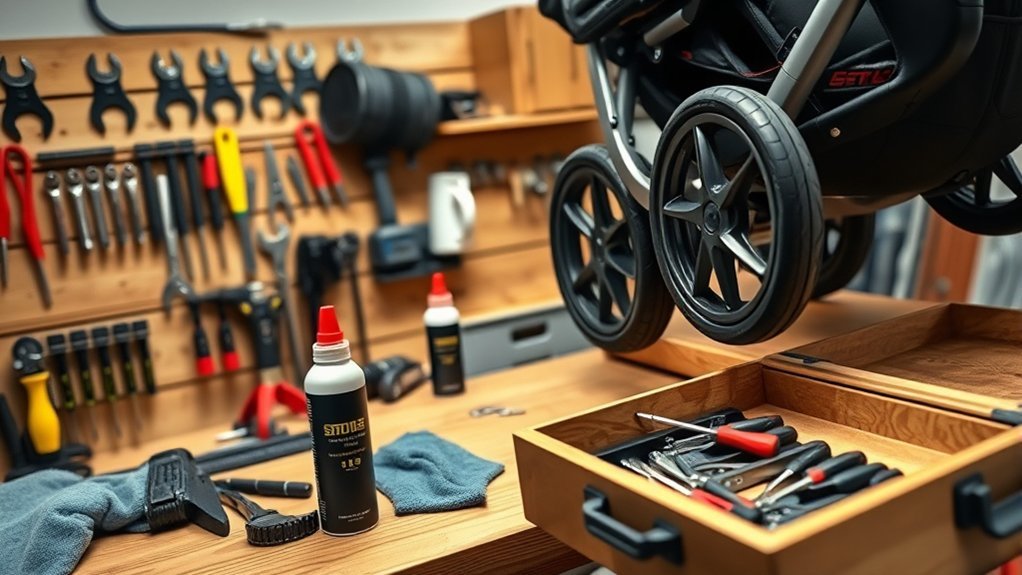
Work in a clean, well-lit area with the stroller empty. Engage the brake while preparing your tools, but release it when you need to spin a wheel for diagnosis. Put an old towel or cardboard under the wheel area to catch dirt or a small amount of overspray.
Keep the stroller stable and prevent it from rolling or tipping while a wheel is removed. Before taking anything apart, look up the manual for your exact model and confirm how the wheel is designed to detach and reinstall.
The safest stroller-wheel repair starts with the model manual: clean first, lubricate only approved points, and replace damaged parts rather than trying to hide a mechanical problem.
Do You Need to Pry Up the Foam?
In most cases, you should not pry a stroller’s foam or tire material away from the wheel rim just to reach a squeak. Some wheels use bonded foam, molded tires, sealed hubs, or other construction that is not intended to be separated by the owner.
Why the Original Foam-Gap Method Is Risky
A squeak may come from the axle or swivel mechanism even when it sounds as if it is coming from the outer wheel. Prying the tire material can damage the tire, weaken a bond, mark the rim, or create a new source of wobble.
If your exact stroller manual shows an owner-serviceable access point near the wheel, follow those instructions. Otherwise, leave the tire or foam attached and work only on the removable wheel, axle, hub, or swivel points approved by the manufacturer.
When a Tool Is Actually Needed
Use a tool only when the manufacturer’s wheel-removal procedure calls for one. Do not insert a screwdriver between the tire and rim merely to create a space for lubricant.
Remove a Wheel Safely
- Empty the stroller and place it on a stable surface.
- Confirm the correct wheel-removal procedure in the manual.
- Release the wheel using the specified button, clip, fastener, or tool.
- Keep washers, spacers, clips, and other small parts in their original order.
- Inspect the axle and hub for hair, thread, sand, corrosion, cracks, or unusual wear.
Choosing and Applying the Right Lubricant
Do not treat “WD-40” as one universal stroller-wheel product. Lubricant choice should come from your stroller manual. Some manufacturers recommend silicone, while another model may require a different product or no routine lubrication at all.
If silicone lubricant is permitted, use it sparingly. WD-40 Specialist Silicone, for example, is a silicone lubricant that the manufacturer describes as suitable for most common metal, plastic, rubber, and vinyl surfaces when used as directed. That is different from assuming that any multipurpose spray is automatically the best choice for every stroller.
Note: Do not use vegetable oil as a stroller-wheel lubricant. Some stroller manufacturers explicitly warn against oil- or grease-based products because they can attract dirt and interfere with smooth movement.
How to Lubricate an Approved Wheel or Axle Point
- Clean loose dirt, sand, hair, and thread from the wheel, axle, and hub.
- Wipe the area clean and let it dry fully.
- Apply a very small amount of the approved lubricant to the specified axle, bushing, or swivel point.
- Keep spray and residue off the brake mechanism, tire tread, seat, straps, and fabric.
- Rotate the wheel by hand several times to distribute the lubricant.
- Wipe away visible excess.
- Reinstall the wheel exactly as the manual specifies.
Testing the Results
You should not need to push the stroller for an hour before deciding whether the repair worked. After the wheel has been cleaned, lubricated where permitted, and correctly reinstalled, test it immediately.
- Pull gently on the removable wheel to confirm that it is fully locked into its mount.
- Spin the wheel by hand and listen for the original squeak.
- Check that it rotates freely without excessive side-to-side movement.
- Engage the parking brake and confirm that it holds the stroller as designed.
- Release the brake and verify that it is not rubbing against the wheel.
- Push the empty stroller slowly on a flat surface and make several gentle turns.
- Only return the child to the stroller after the wheels and brakes are operating normally.
Stroller Wheel Troubleshooting Guide
| What You Notice | What to Check | Next Step |
| Rhythmic squeak | Axle, hub, hair, thread, dirt | Clean and dry; lubricate only if the manual allows it |
| Squeak while turning | Front swivel assembly | Clean the swivel area and follow model-specific lubrication guidance |
| Scraping or wheel drag | Brake release, debris, wheel seating | Remove debris and verify the brake and wheel are operating correctly |
| Grinding or rough rotation | Sand, damaged hub, worn bearing | Clean first; seek replacement or service if roughness remains |
| Wheel wobbles | Wheel attachment, axle, hub, fasteners | Stop using the stroller if the wheel cannot be secured correctly |
| Jogging stroller pulls or feels soft | Pneumatic tire pressure and tire condition | Inflate only to the pressure specified on the tire or in the manual |
Tips for Regular Maintenance
Regular cleaning is more useful than repeatedly spraying lubricant. Inspect the wheels periodically and pay extra attention after sandy, muddy, wet, or salty outings.
- Brush sand, hair, thread, and dirt away from wheels and accessible axle areas.
- Wipe dirty wheels with a damp cloth or clean them according to the manufacturer’s instructions.
- Dry wheels and the stroller frame thoroughly before storage.
- Check removable wheels to make sure they lock securely into place.
- Inspect tires, hubs, axles, fasteners, brakes, and swivel mechanisms for damage or excessive wear.
- For pneumatic tires, maintain the pressure specified for that model.
- Apply lubricant only when needed and only where the manufacturer permits it.
- Store the stroller in a dry area rather than folding it away while wet.
There is no single “every few months” lubrication schedule that applies to every stroller. Usage, terrain, wheel design, climate, and manufacturer requirements all differ. Follow the inspection and maintenance interval in your manual instead.
When to Stop DIY Maintenance and Get Service
A normal squeak caused by dirt or a dry approved lubrication point may be easy to correct. Mechanical damage is different. Stop using the stroller and contact the manufacturer, an authorized service provider, or a qualified repair professional if you notice:
- a wheel that will not lock securely into the frame;
- a cracked wheel, hub, mount, or frame component;
- an axle that appears bent;
- persistent grinding after cleaning;
- significant side-to-side wheel play;
- a parking brake that does not engage or release correctly;
- a wheel that repeatedly binds or jams; or
- a squeak accompanied by instability or unusual movement.
UPPAbaby advises owners to inspect connecting hardware, brakes, tires, harnesses, and locks and to seek prompt repairs or replacement when parts are worn or broken. Its guidance also says not to continue using a structurally unsafe stroller. See UPPAbaby Cleaning and Care.
What About the Warranty?
Read the warranty terms before performing repairs beyond normal owner maintenance. Warranty rules vary. For example, UPPAbaby’s warranty terms state that defects caused by misuse or poor maintenance are not covered and direct owners to the instruction booklet for proper maintenance.
Frequently Asked Questions
Can I use another lubricant instead of WD-40?
Use the lubricant specified by your stroller manufacturer. Some models call for silicone lubricant. Do not substitute vegetable oil, grease, or another household product unless the manual specifically allows it. If you choose a silicone spray, also check that it is compatible with the materials around the lubrication point.
How often should I perform maintenance on stroller wheels?
Follow the schedule in your stroller manual rather than using one universal interval. Inspect the wheels periodically and clean them sooner after sand, mud, rain, salt, heavy outdoor use, or whenever rotation becomes noisy or rough.
Is it safe to wash stroller wheels with water?
Many manufacturers allow wheel surfaces to be cleaned with a damp cloth, brush, or water, but the exact method varies. Avoid submerging bearings unless your manual specifically permits it, and dry the wheel and axle thoroughly before storage or reassembly.
Will fixing squeaky wheels void my stroller warranty?
Routine maintenance performed exactly as the manufacturer instructs is different from unauthorized modification or improper repair. Warranty rules vary by brand and country, so check your model’s manual and warranty terms before disassembling, modifying, or replacing components.
What are signs that stroller wheels need lubrication?
A clean wheel that squeaks at an approved axle or swivel lubrication point may need a small amount of the manufacturer-recommended lubricant. Clean first. Grinding, wobbling, cracking, binding, or brake problems may indicate wear or damage rather than a simple need for lubricant.
Should I pry the foam tire away from the stroller wheel?
Not unless your exact stroller instructions tell you to do so. Bonded foam or molded tire material may be part of the wheel assembly. Prying it away can damage the tire or rim without fixing a squeak that actually comes from the axle, hub, swivel, or brake area.
Why does the stroller still squeak after lubrication?
The noise may be coming from another wheel, a dirty swivel, a rubbing brake, a suspension or frame joint, grit inside the hub, or a worn component. Clean and isolate the source rather than repeatedly adding more lubricant.
Sources
- Thule Sleek Instructions — wheel cleaning, silicone-lubricant guidance, inspection, and storage.
- Bugaboo: How to Clean a Stroller — wheel cleaning, dirt removal, drying, and model-specific care guidance.
- UPPAbaby Cleaning and Care — inspection, maintenance, cleaning, and replacement of worn parts.
- UPPAbaby Warranty — maintenance, misuse, modification, and warranty considerations.
- WD-40 Specialist Silicone — silicone-lubricant properties and material compatibility guidance.
Conclusion
Fixing squeaky stroller wheels starts with diagnosis, not a can of lubricant. Find the noisy wheel or joint, clean away debris, dry the parts, and follow the maintenance instructions for your exact stroller. If lubrication is permitted, use only a small amount of the recommended product and keep it away from brakes and tire tread. A wheel that continues to grind, wobble, bind, or come loose needs inspection or replacement rather than more spray.