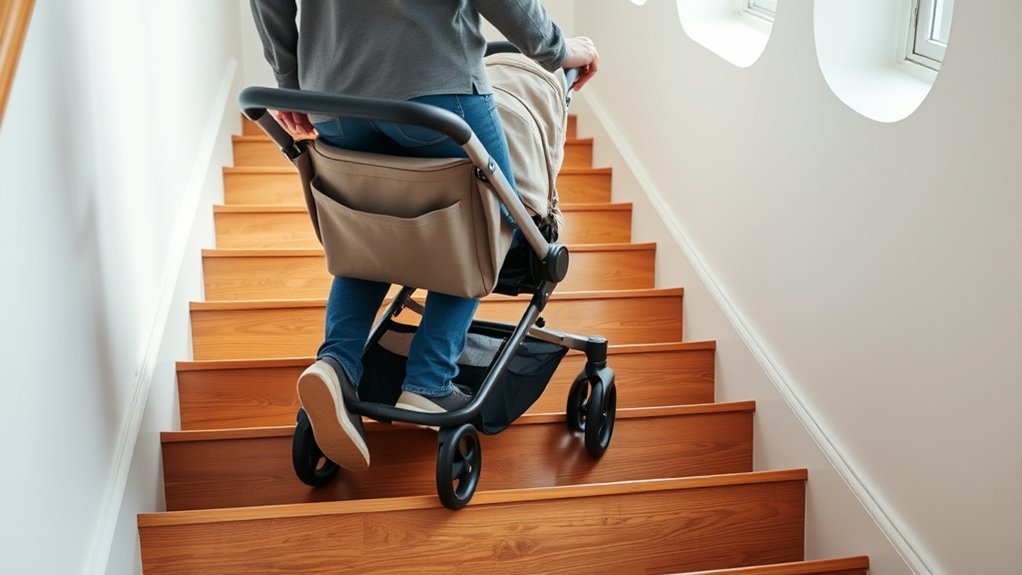
Navigating stairs with a stroller is one of the most challenging daily hurdles for parents and caregivers, especially in urban areas, walk-up apartments, or public transit hubs. To navigate stairs safely with a stroller, your primary directive should always be separating your child from the stroller whenever possible. By using an ergonomic baby carrier, mastering the rear-wheel single-step method for empty strollers, and choosing a true lightweight stroller, you can manage staircases without sacrificing safety or physical stability.
Quick Answer
The safest way to navigate stairs with a stroller is to remove your child first and wear them in a baby carrier before moving the stroller. If you are solo and handling an empty stroller, tilt it back onto its rear wheels and navigate one step at a time. Never attempt to push or bounce an occupied stroller up or down stairs alone.
Key Takeaways
- Separate Baby and Stroller: Transport your child in a baby carrier or carry them in your arms before handling the stroller separately.
- Master Rear-Wheel Mechanics: For empty strollers, lower or raise the frame using only the back wheels while keeping front wheels elevated.
- Always Wear a Wrist Strap: A tether strap attached to your handle prevents runaway accidents if you slip.
- Strictly Avoid Escalators: Escalators present severe tip-over hazards; always use elevators or traditional stairs.
- Use Two Adults for Occupied Carries: If carrying a child inside a stroller is unavoidable during emergencies, use two adults holding the permanent frame.
At a Glance
| Time Required | 2–5 minutes per staircase flight |
| Difficulty Level | Moderate (requires proper technique and balance) |
| Essential Gear | Ergonomic baby carrier, handlebar wrist strap, lightweight stroller |
| Safety Standard | High (when child is unseated) / Critical Risk (if rolling occupied solo) |
Invest in a Good Baby Carrier

When you regularly maneuver stairs with a stroller, investing in a structured, ergonomic baby carrier (such as an Ergobaby or BabyBjörn) is one of the single best safety decisions you can make. A quality carrier secures your infant firmly against your chest or back, distributing their weight evenly across your shoulders and hips while keeping both of your hands completely free.
Pro Tip: Place your child into the baby carrier before approaching the stairwell. This ensures your child is fully secured before you handle folding or lifting the stroller frame.
Carrying your child in an ergonomic carrier enhances their comfort and safety during urban outings. By securing your child to your body, you eliminate the risk of a tipping stroller or accidental fall, allowing you to focus entirely on maintaining your footing on steep or slick staircases.
Carry One at a Time
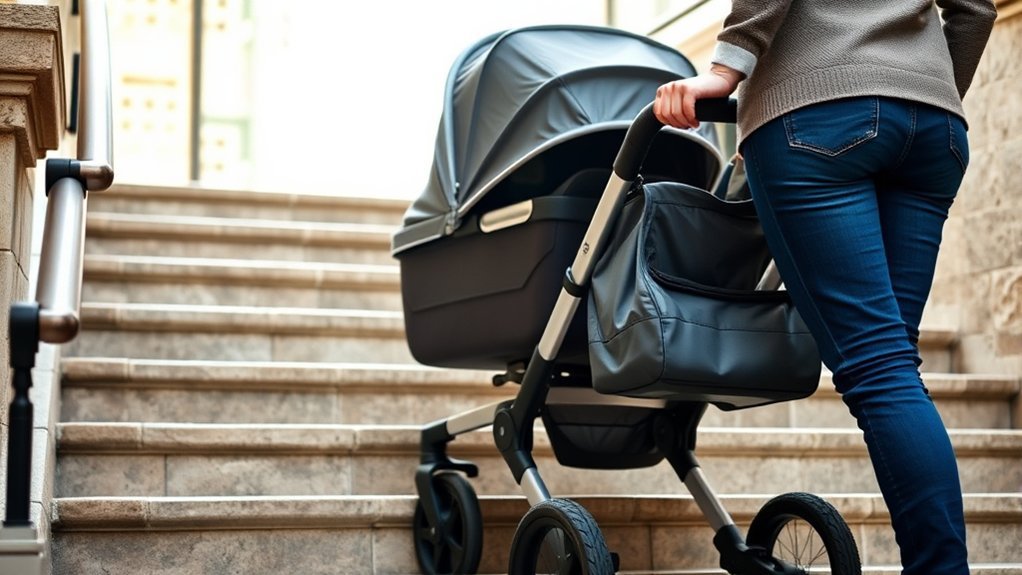
When encountering a flight of stairs without elevator access, always separate the task into two distinct steps: carry your baby first, then transport the stroller (or vice versa, provided your baby is safely attended).
Prioritize Safety First
Handling a stroller on stairs requires uncompromising safety protocols. If you are in a secure home setting, place your baby in a crib or pack ‘n play while you carry the folded stroller downstairs first. In public environments, wear your baby in a carrier while carrying the lightweight folded stroller in one hand, keeping your other hand firmly on the staircase handrail.
Warning: The U.S. Consumer Product Safety Commission (CPSC) warns against carrying an occupied stroller up or down stairs alone. Harnesses can slip, mechanisms can fold unexpectedly, and center-of-gravity shifts can lead to severe falls.
Making two dedicated trips or using a carry system ensures full control over your center of gravity, drastically lowering the incidence of trips, slips, and emergency room visits associated with juvenile product accidents.
Get Fit While Carrying
Transporting items separately not only maximizes safety but also turns routine stair climbing into a functional core and leg strength workout. Managing your outings with intentional posture builds postural stability and assists post-partum fitness recovery without putting your child in harm’s way.
Choose a Lightweight Stroller
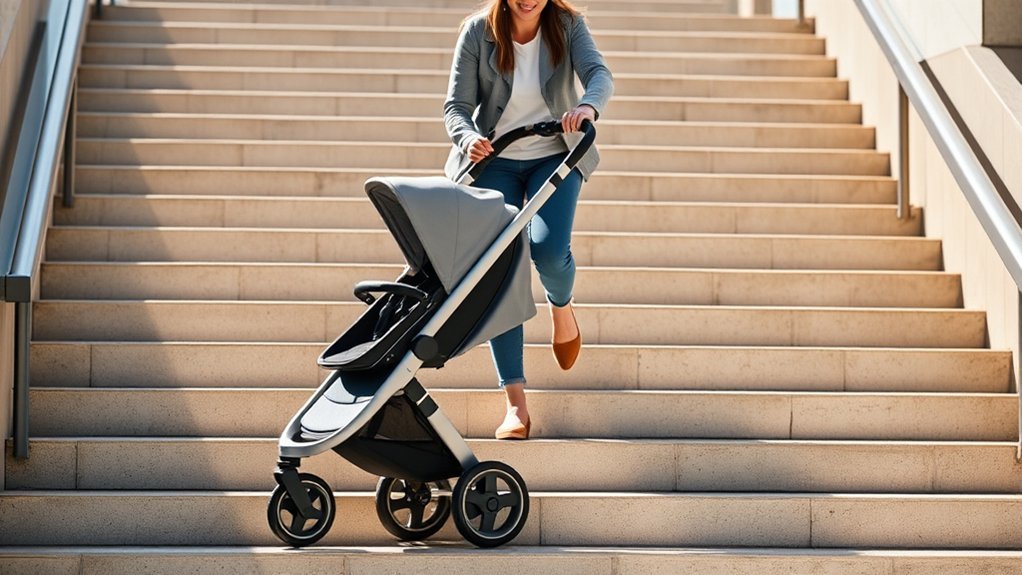
Selecting a lightweight travel stroller makes daily stair climbing significantly easier. Heavy full-sized strollers (weighing 25 to 35 lbs) are cumbersome and dangerous to carry on stairs solo. Compact travel strollers offer quick one-hand folding mechanisms and integrated carry straps, allowing you to sling the stroller over your shoulder like a tote bag.
Below is an accurate comparison of top compact strollers suitable for frequent stair navigation:
| Stroller Model | Weight (lbs / kg) | Folding Mechanism & Carry Option |
|---|---|---|
| BABYZEN YOYO2 | 13.6 lbs (6.2 kg) | One-hand fold, padded shoulder strap |
| GB Pockit Air | 10.6 lbs (4.8 kg) | Ultra-compact 2-step fold, handbag size |
| Summer Infant 3Lite | 13.0 lbs (5.9 kg) | Umbrella fold, carry strap, durable frame |
Master the One Step at a Time Technique
When you must maneuver an empty stroller (or an occupied stroller with the assistance of a second adult), mastering the one-step-at-a-time technique gives you maximum physical leverage.
“When descending stairs solo with an empty stroller, tilt the frame backward so only the large rear wheels make contact. Lower the rear wheels down one step at a time, keeping front wheels elevated throughout the descent.”
When ascending stairs with an empty stroller, turn the stroller around so you are standing on the step above it, facing backward. Pull the stroller up toward you, allowing the rear wheels to roll up over the edge of each step one by one.
General Tips for Safe Stair Navigation
Before stepping onto any staircase with baby gear, take a moment to perform a quick environmental check and utilize all built-in safety features.
Assess Your Surroundings First
Perform a quick hazard assessment before tackling any flight of stairs. Check for wet patches, loose treads, debris, or poor lighting. Always locate and utilize the handrail.
| Key Considerations | Actions to Take |
|---|---|
| Stair Layout & Surface | Assess step depth, steepness, and slipperiness |
| Structural Support | Keep one hand free to hold sturdy handrails |
| Pedestrian Traffic | Wait for crowded groups to pass before starting |
| Weather Hazards | Wipe shoe soles dry on wet or snowy days |
Use Stroller Safety Features
Modern safety strollers include built-in features designed to prevent runaway accidents:
- Safety Wrist Tether: Always loop the handlebar wrist strap around your dominant wrist.
- Five-Point Harness: Ensure the internal harness is properly tightened whenever your child is seated.
- Wheel Locks: Engage wheel locks while folding or securing the frame near stair edges.
Seek Help When Needed
Never hesitate to ask a bystander for assistance on public stairways. When accepting help from a helper:
- Communicate Clearly: Direct the helper to grip the sturdy, non-detachable metal frame at the front (footrest area), while you maintain control of the handlebar at the top.
- Avoid Detachable Parts: Never allow a helper to lift a stroller by the bumper bar, snack tray, or canopy, as these can unlatch instantly.
- Synchronize Movement: Count “1, 2, 3” aloud to coordinate each step together.
Understanding Two-Wheel Mode Safety
Certain high-end strollers (such as select Bugaboo models) feature a specialized “two-wheel mode” designed for pulling the frame through soft sand or snow. However, using two-wheel mode on stairs carries distinct safety hazards.
Note: Premium manufacturers specifically state in their official user manuals that two-wheel mode is intended for off-road terrain and should never be used on stairs or escalators while occupied by a child.
Dragging a stroller up stairs in two-wheel mode causes excessive vibration, frame stress, and wear on internal suspension joints, while creating a tipping risk if a wheel catches on a step tread.
Managing Stroller Wear and Tear
Frequent stair navigation exerts significant stress on stroller axles, wheels, and folding joints. Regular maintenance prevents mechanical failures during outings:
- Component Inspection: Monthly, check handle latches, wheel locks, and frame rivets for loosening or stress fractures.
- Weight Limit Compliance: Respect the manufacturer’s maximum seat weight limit; overloading accelerates frame fatigue on stairs.
- Tire Care: Keep foam or air tires free of embedded gravel to maintain optimal traction on smooth tile stairs.
Community Insights and Experiences
Experienced urban parents across community forums consistently advocate for a “safety-first, equipment-second” mindset. Experienced parents strongly emphasize that attempting to carry a full stroller with a child inside solo is rarely worth the risk.
Connecting with local parent groups can help you identify accessible routes, elevator-equipped transit stops, and the best compact strollers suited for walk-up living.
Frequently Asked Questions
What type of stroller is best for navigating stairs?
Ultra-lightweight travel strollers weighing under 14 lbs (such as the BABYZEN YOYO2 or GB Pockit) are best. Their compact folds and integrated shoulder straps allow you to fold the stroller effortlessly and carry it hands-free while wearing your baby in a carrier.
How can I practice stair navigation safely?
Practice on a short carpeted flight of 2 to 3 steps at home using an empty stroller loaded with a bag of flour or heavy towel. Master tilting the stroller onto its rear wheels and maintaining foot balance before trying public staircases.
Are there specific stairs to avoid with a stroller?
Yes. Avoid steep, narrow, wet, icy, or poorly lit stairways, as well as metal grate steps that can catch small front swivel wheels. Always seek accessible elevators or ramps when available.
Can I use a stroller on escalators?
No. Major safety organizations, including the CPSC and the Elevator Escalator Safety Foundation, strictly forbid taking strollers on escalators due to high tipping, entrapment, and fall risks. Always use an elevator.
What should I do if the stroller tips over?
If a stroller tips over, stay calm and immediately assess your child for injuries, paying close attention to their head and neck. Check that the harness remained secure, and seek immediate emergency medical care if you suspect head trauma or severe impact.
Conclusion
Traversing stairs with a stroller doesn’t have to be a daunting task. By investing in an ergonomic baby carrier, choosing a lightweight travel stroller, and adhering to safe one-step-at-a-time techniques, you can navigate stairways confidently and safely. Always prioritize unseating your child before handling the frame, inspect your gear for wear, and never hesitate to ask for a helping hand. Equipped with these best practices, you and your little one can enjoy smooth, stress-free outings wherever your days take you!
Sources
- U.S. Consumer Product Safety Commission (CPSC) — Stroller Safety Standards & Recall Database
- American Academy of Pediatrics (AAP) – HealthyChildren — Stroller Safety Guidelines for Parents
- Elevator Escalator Safety Foundation (EESF) — Escalator & Passenger Safety Protocols