How to Inflate Stroller Tires Safely
Last updated: May 28, 2026
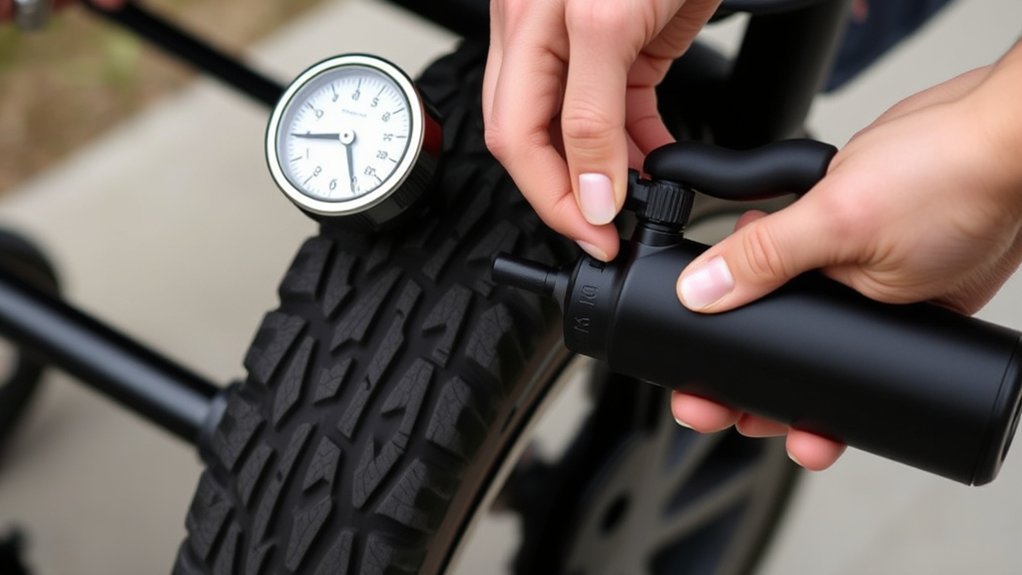
To inflate stroller tires safely, first find the pressure range printed on the tire sidewall or listed in your stroller manual. Do not assume every stroller uses 30 to 40 PSI. Some jogging strollers use about 30 PSI, while some child-carrier tires list a lower range, such as 20 to 25 PSI. Use a bicycle floor pump with a pressure gauge, attach it firmly to the valve, inflate slowly, then recheck the pressure before you replace the valve cap.
Quick Answer
Check the stroller manual or tire sidewall first. Attach a pump with a gauge to the valve, inflate to the listed PSI range, remove the pump carefully, recheck the reading, and reinstall the dust cap. Never inflate above the maximum PSI printed on the tire.
Key Takeaways
- Stroller tire PSI is model-specific, so check the tire sidewall or manual before pumping.
- A bicycle floor pump with a built-in gauge gives better control than a high-pressure air compressor.
- Under-inflated tires can make the stroller harder to push and may increase pinch-flat risk.
- Over-inflated tires can create a harsh ride and may damage the tube or tire.
- Check pressure more often during hot or cold weather because air pressure changes with temperature.
Understanding Recommended PSI for Stroller Tires
The recommended PSI for stroller tires is not universal. You should treat the number on the tire sidewall or in the manufacturer’s manual as the main guide. For example, some BOB Gear jogging strollers recommend 30 PSI, while some Thule child-carrier manuals list a 20 to 25 PSI range for specific models.
That means a general range like 30 to 40 PSI can be wrong for some strollers. It may also be unsafe if the tire sidewall shows a lower maximum pressure.
Use the PSI printed on your stroller tire or listed in the manual. Never inflate above the tire’s maximum PSI.
Pressure also changes with temperature. A tire that felt firm indoors may feel softer after time outside in cold weather. A tire can also read higher after sitting in heat. Check pressure when the tire is cool, then adjust it within the approved range.
| What to Check | Why It Matters | Best Action |
|---|---|---|
| Tire sidewall | Shows the tire’s pressure limit or range. | Use this number if it matches your manual. |
| Stroller manual | Gives model-specific safety guidance. | Follow the manual if it gives a specific PSI. |
| Valve type | The pump must fit the valve securely. | Use the correct pump head or adapter. |
| Tire condition | Cracks, bulges, or repeated flats can signal damage. | Replace damaged tires or tubes before use. |
Tools You’ll Need for Stroller Tire Inflation
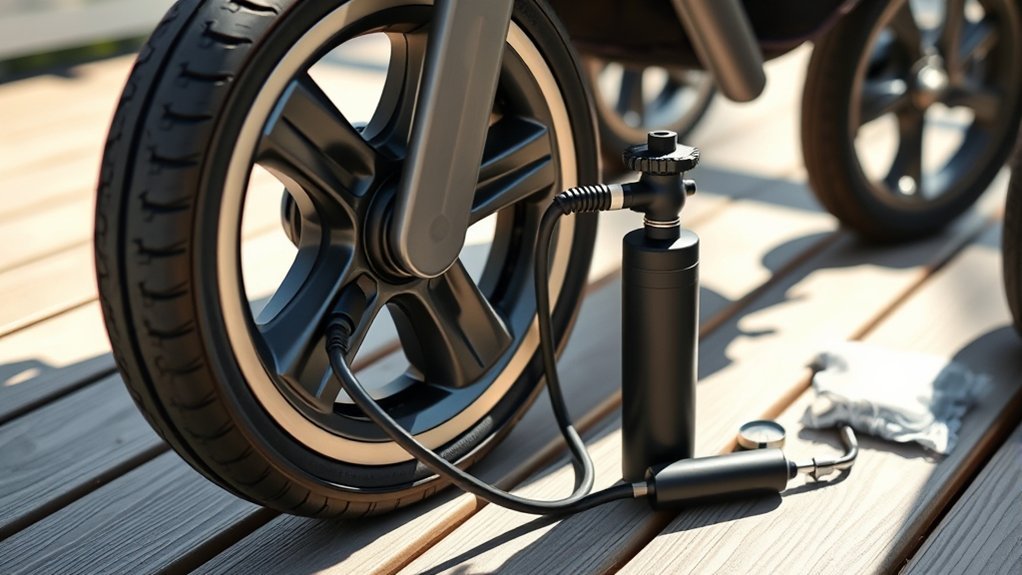
You do not need many tools to inflate stroller tires, but you do need the right fit. A loose pump head can leak air and make the pressure reading inaccurate.
- Bicycle floor pump with a gauge: This gives steady airflow and helps you avoid over-inflation.
- Correct valve head or adapter: Your stroller may use a Schrader valve or a narrower Presta valve.
- Separate tire pressure gauge: This is helpful if your pump gauge is hard to read or unreliable.
- Valve dust caps: These help protect the valve from dirt and moisture.
- Replacement inner tube: Keep one available if your stroller often gets flats.
Avoid using a gas-station air compressor unless you can control the pressure carefully. These pumps can add air quickly, which makes over-inflation more likely on small stroller tires.
How to Find the Right Valve Type
Before you inflate the tire, look at the valve stem. A Schrader valve looks like a car tire valve and usually works with a standard bicycle pump head. A Presta valve is thinner and has a small screw tip that you loosen before pumping.
If the pump will not seal, do not force it. Check whether your pump head has a second setting, or use a small adapter. Forcing the wrong pump head can bend the valve, damage the tube, or cause a slow leak.
Step-by-Step Guide to Inflating Stroller Tires
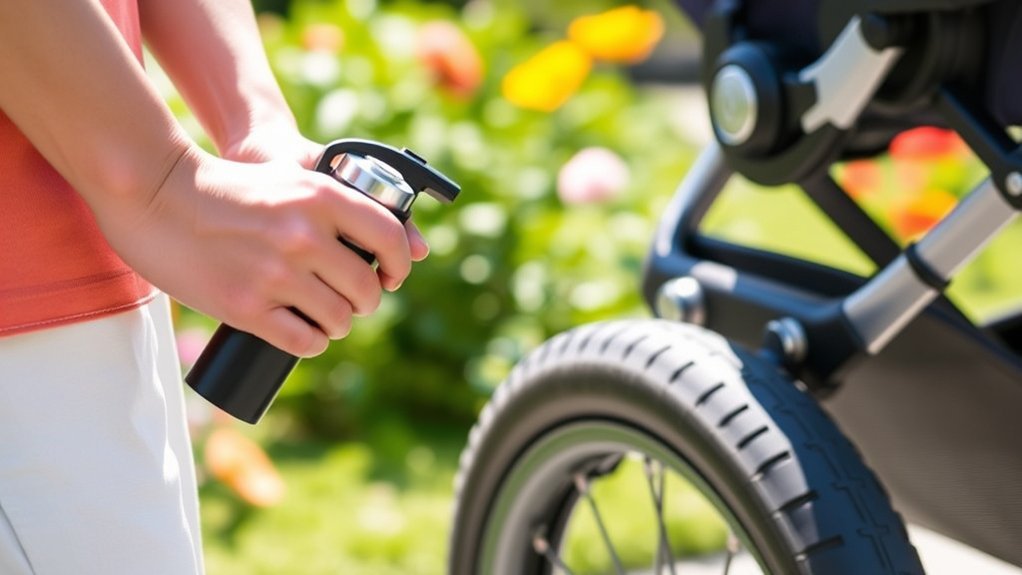
Follow these steps when your stroller tires look soft, feel uneven, or make the stroller harder to push.
- Park the stroller on a flat surface. Set the brake and remove your child from the stroller before inflating the tires.
- Find the recommended PSI. Check the tire sidewall first, then confirm the number in your stroller manual if available.
- Remove the valve cap. Put it somewhere safe so it does not get lost.
- Attach the pump securely. Press the pump head straight onto the valve and lock it in place if your pump has a lever.
- Inflate slowly. Add air in short bursts and watch the gauge as the pressure rises.
- Stop within the approved range. Do not exceed the maximum PSI printed on the tire.
- Remove the pump carefully. A small hiss is normal, but a long leak means the pump head was not removed cleanly.
- Recheck the pressure. Use the pump gauge or a separate gauge to confirm the final reading.
- Replace the valve cap. This helps keep dirt out of the valve.
- Check both sides. Uneven pressure can make the stroller pull left or right.
Inflate slowly and recheck the pressure after removing the pump. Small stroller tires can over-inflate quickly.
Tips for Maintaining Proper Tire Pressure
Maintaining proper tire pressure helps your stroller roll smoothly and reduces the chance of avoidable flats. It also helps the stroller track straighter, especially on jogging strollers and all-terrain models.
- Check pressure every few weeks during regular use.
- Check pressure before long walks, jogging, travel, or rough-terrain use.
- Recheck pressure after large temperature changes.
- Keep both rear tires at the same pressure unless your manual says otherwise.
- Do not use child weight as a reason to exceed the tire’s listed PSI limit.
- Inspect the tread, sidewall, and valve before each longer outing.
Safety note: If a tire has cracks, a bulge, exposed tube, repeated flats, or a damaged valve, replace the tire or tube before using the stroller again.
Troubleshooting Common Tire Inflation Issues
Inflation problems usually come from a poor pump connection, damaged valve, punctured tube, or wrong pressure range. Use this table to find the likely cause.
| Problem | Likely Cause | Exact Fix |
|---|---|---|
| Pump will not attach | Wrong pump head, dirty valve, or bent valve stem. | Clean the valve, check the valve type, and use the correct adapter. |
| Air leaks while pumping | Pump head is not seated straight. | Remove the pump, press it straight onto the valve, and lock it again. |
| Tire deflates quickly | Punctured tube, loose valve core, or damaged valve. | Check for punctures, tighten the valve core if possible, or replace the tube. |
| Stroller pulls to one side | Uneven tire pressure or wheel alignment issue. | Match pressure on both sides. If pulling continues, check the front wheel alignment or manual. |
| Ride feels too bumpy | Pressure may be too high for the tire or terrain. | Confirm the approved PSI range and stay within it. Do not exceed the tire limit. |
Clean the valve before attaching the pump. Dirt around the valve can stop the pump from sealing properly.
When to Replace a Stroller Tire or Inner Tube
Inflation will not fix every tire problem. Replace the inner tube if the tire loses air again soon after pumping, especially if you find a puncture or hear air escaping near the valve.
Replace the tire itself if you see deep cracks, a sidewall bulge, exposed threads, or a tread surface that has worn smooth. If the stroller has been recalled or the wheel system feels loose, stop using it until you check the manufacturer’s guidance or the U.S. Consumer Product Safety Commission recall database.
Common Mistakes to Avoid
- Using a guessed PSI: Always check the tire or manual first.
- Over-inflating to make the tire feel firm: Firm does not always mean safe.
- Leaving off the dust cap: Dirt can get into the valve and cause slow leaks.
- Ignoring one soft tire: Uneven pressure can affect steering and handling.
- Using a compressor too quickly: Small stroller tires fill fast and can exceed the limit before you notice.
Frequently Asked Questions
How Often Should I Check Stroller Tire Pressure?
Check stroller tire pressure every few weeks during normal use. Check it sooner before jogging, travel, long walks, or rough-terrain outings. You should also check it after major temperature changes because air pressure can rise or fall with the weather.
Can I Use a Car Pump for Stroller Tires?
You can use a car-style pump only if it fits the valve and lets you control pressure carefully. A bicycle floor pump with a gauge is usually safer for small stroller tires because it adds air more slowly and lowers the risk of over-inflation.
What Happens if I Over-Inflate the Tires?
Over-inflated stroller tires can create a rough ride, reduce grip, strain the tube, and increase the chance of tire or tube damage. Release air until the pressure sits within the range printed on the tire or listed in your manual.
Are There Specific Pumps Recommended for Stroller Tires?
A bicycle floor pump with a built-in pressure gauge is the best choice for most air-filled stroller tires. Choose a pump head that matches your valve type. If your stroller uses Presta valves, you may need a small adapter.
How Can I Tell if a Tire Is Damaged?
Look for cracks, bulges, exposed threads, uneven wear, or air leaking near the valve. If the tire loses pressure again shortly after inflation, the inner tube may have a puncture. Replace damaged tires or tubes before using the stroller again.
What PSI Should Stroller Tires Be?
Stroller tire PSI depends on the model and tire size. Do not use one general number for every stroller. Check the tire sidewall and the stroller manual, then inflate within that stated range. Some models use about 30 PSI, while others list lower ranges.
Should Both Stroller Tires Have the Same Pressure?
In most cases, both rear tires should have the same pressure. Uneven pressure can make the stroller pull to one side or feel harder to steer. Follow your manual if it gives different guidance for front and rear tires.
Why Does My Stroller Tire Keep Going Flat?
A stroller tire that keeps going flat may have a punctured tube, loose valve core, cracked valve stem, or damaged tire. Inflate it, listen for escaping air, and inspect the tube. If the leak returns, replace the inner tube or tire.
Can Cold Weather Make Stroller Tires Look Flat?
Yes. Air pressure can drop when temperatures fall, so a stroller tire may look softer in cold weather. Check the pressure with a gauge instead of guessing by feel. Inflate only within the approved PSI range.
Do Foam-Filled Stroller Wheels Need Inflation?
No. Foam-filled and solid stroller wheels do not need air. This guide applies only to pneumatic stroller tires with an inner tube or air chamber. If your stroller has solid wheels, inspect them for cracks, flat spots, or loose wheel parts instead.
Sources and Safety References
- BOB Gear stroller maintenance guidance
- Thule child carrier instructions with tire pressure guidance
- U.S. Consumer Product Safety Commission recalls database
Conclusion
Inflating stroller tires is simple, but the safe PSI depends on your exact stroller and tire. Start with the tire sidewall or manual, use a pump with a gauge, inflate slowly, and check both sides before your next walk.
Before longer outings, make tire pressure part of your quick stroller safety check. Look at the tires, wheels, brakes, and frame. If a tire keeps losing air or shows damage, replace the tube or tire before you use the stroller again.