

A stroller car seat adapter lets you attach a compatible infant car seat to a stroller without switching to the regular stroller seat. It’s a convenient way to handle short errands, appointments, and trips with your baby. But a secure fit depends on using the correct adapter, following the installation steps, and checking both locking connections before every outing.
Quick Answer
Confirm that your exact stroller, infant car seat, and adapter are approved to work together. Open the stroller and set its brake. Attach the adapter in the specified position until its locks engage, then lower the car seat into place. Check both connections with a gentle upward pull before using the stroller.
At a Glance
| Difficulty | Straightforward with model-specific instructions |
| Tools Needed | Compatible stroller, approved car seat adapter, infant car seat, and product manuals |
Stroller Car Seat Adapter Compatibility: What Must Match?
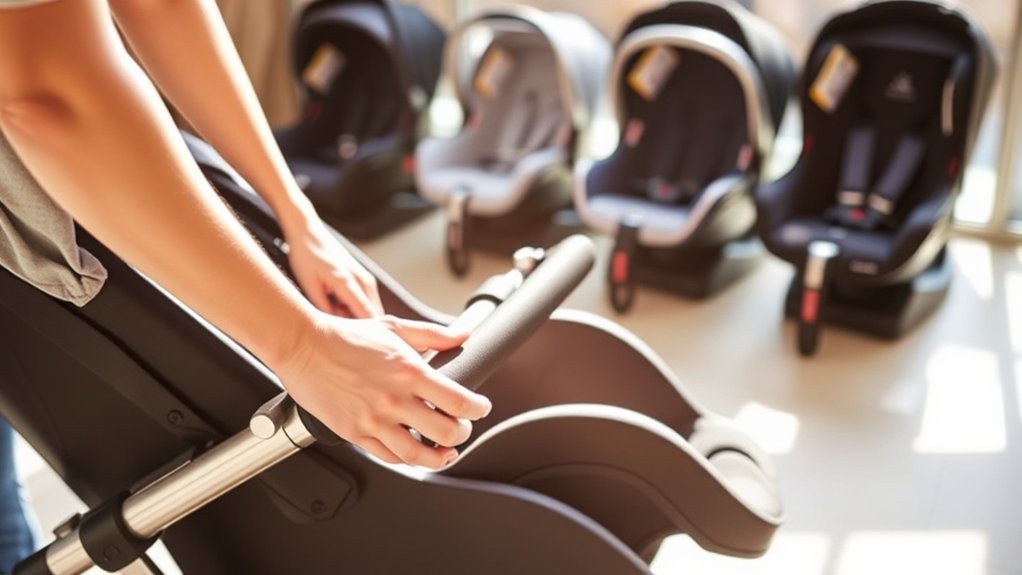
Before installing anything, confirm that your stroller, car seat, and adapter are designed to work together. Car seat adapters are not universal, even when products come from the same manufacturer.
A stroller car seat adapter connects the infant seat to the stroller frame through approved attachment points. The connection must match the exact models, not simply look or feel compatible.
Check these details before buying or installing an adapter:
- Stroller model: Find the exact model name and version or generation. Adapters for older frames may not fit newer ones.
- Car seat model: Confirm the exact infant car seat is listed as compatible. Brand compatibility alone is not enough.
- Adapter model: Use the adapter specifically approved for that stroller and car seat combination.
- Size limits: Follow the infant car seat’s height and weight restrictions, along with any additional limits in the stroller and adapter instructions.
The manufacturer compatibility guidance explains why stroller generation, car seat model, and adapter approval all matter.
A car seat that appears to fit or makes a clicking sound is not necessarily approved for that stroller. Always confirm the complete combination before use.
Remember that some adapters work only with particular infant car seats. Convertible car seats and booster seats generally are not designed for stroller adapter systems.
If you cannot find your exact combination on the manufacturer’s compatibility list, contact the manufacturer before using it. Never force an adapter into place or modify its attachment points.
How to Install a Stroller Car Seat Adapter Step by Step
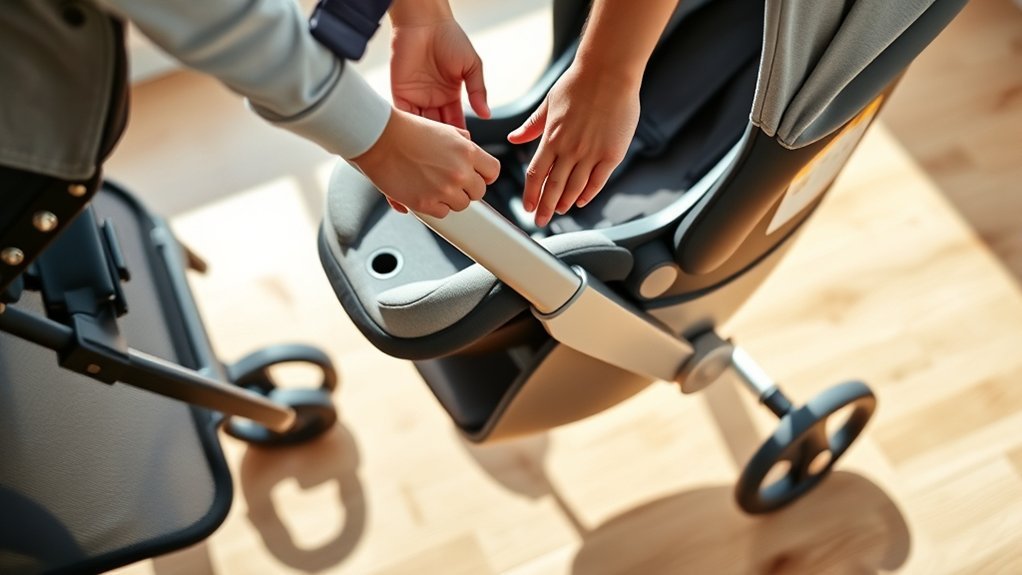
Most approved adapters attach to designated points on the stroller frame, followed by the infant car seat. The exact release buttons, locking positions, and assembly requirements vary by model.
Start on a flat surface with the stroller fully opened and locked. Keep your baby away from moving frame parts while installing the adapter.
- Apply the stroller brake. Lock the wheels so the stroller cannot roll while you attach the adapter.
- Prepare the stroller frame. Remove or adjust the regular stroller seat, bumper bar, or other parts only if your instructions require it. Some adapters can be installed without removing the stroller seat.
- Identify the adapter’s mounting points. Locate the designated slots, posts, or brackets on the stroller. If the adapter has separate left and right pieces, identify each one before installation.
- Align the adapter correctly. Follow the manufacturer’s orientation markings. Check that each piece faces the correct direction and sits squarely against its mounting point.
- Lock the adapter onto the stroller. Press or slide each attachment into position until the required locking mechanism engages. Check any indicators or latches specified in the manual.
- Check the adapter connection. Gently pull upward on the adapter without pressing its release controls. It should remain firmly attached to the frame.
- Attach the infant car seat. Lower the compatible seat into the adapter in the approved direction. Guide it into the connectors until both sides lock as described in the instructions.
- Test the car seat connection. Gently lift upward on the car seat without operating its release handle. Confirm that it remains securely attached before using the stroller.
You can compare this process with the manufacturer’s illustrated installation instructions, which show the locking, attachment, and release sequence for one adapter system.
Always follow your own product manual when its instructions differ. Some adapters have extra latches, locking indicators, or specific assembly steps that are essential for secure installation.
Common Installation Mistakes and How to Avoid Them
Most installation problems involve compatibility, orientation, or incomplete locking. This table helps you recognize common mistakes before placing your baby in the stroller.
| Step | Common Mistakes | Installation Challenges |
|---|---|---|
| Check Compatibility | Ignoring exact model requirements | Adapter does not match the frame or seat |
| Align Adapter | Reversing parts or using the wrong position | Adapter will not enter its mounting points |
| Attach Securely | Failing to engage every lock | Adapter moves or feels loose |
| Click in Car Seat | Failing to confirm both connections | Seat does not lock into the adapter |
| Test Stability | Skipping the upward-pull check | An unsecured connection goes unnoticed |
What if the Adapter or Car Seat Will Not Click Into Place?
If the adapter does not lock, stop and remove it using the approved release method. Do not apply extra force or attempt to use the stroller with an incomplete connection.
Check for these possible causes:
- The adapter is facing the wrong direction.
- A left-side or right-side component is installed incorrectly.
- The stroller seat or another accessory is blocking the attachment area.
- Dirt or debris is interfering with the locking mechanism.
- The adapter is not approved for the exact stroller or car seat model.
- A connector, latch, or mounting point is damaged.
After identifying the cause, repeat the installation using the product instructions. If the parts still fail to lock, discontinue use and contact the manufacturer.
How to Use a Stroller Car Seat Adapter Safely
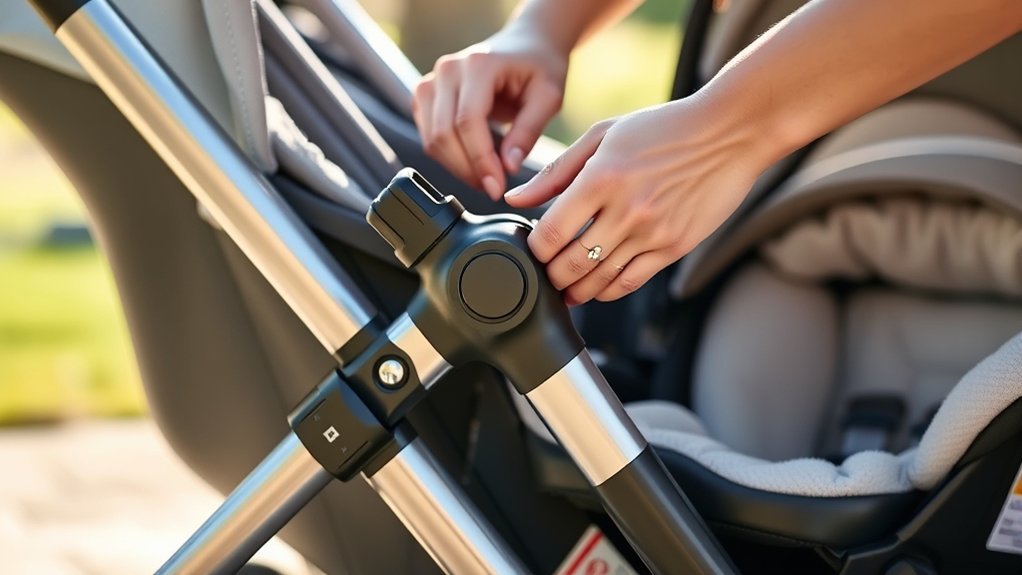
A properly installed adapter is only one part of safe stroller travel. You also need to secure your baby, respect the product limits, and check the stroller’s condition before each outing.
Inspect the adapter for cracks, broken parts, unusual movement, and loose connections. Check that the stroller frame is fully opened and locked before attaching the infant seat.
Warning: Never use an adapter that does not lock correctly, appears damaged, or is subject to an unresolved safety recall. A failed connection can allow the infant car seat to detach from the stroller, creating a serious fall hazard.
Keep Your Baby Properly Harnessed
Always use the infant car seat’s built-in harness while the seat is attached to the stroller. A secure adapter does not replace the restraint system that holds your baby in position.
For rear-facing infant seats, check that the harness straps lie flat and are properly tightened. Follow the car seat manufacturer’s instructions for shoulder strap height and chest clip placement.
The NHTSA rear-facing car seat guidance explains that the harness should fit snugly and that the chest clip should sit at armpit level.
Never leave your baby unattended in the stroller, even when the brake is engaged.
Prevent Rolling, Tipping, and Attachment Problems
Use the stroller brake whenever you stop. Before moving again, confirm that the car seat remains securely attached and that nothing is caught in the frame.
The American Academy of Pediatrics’ stroller safety recommendations also emphasize reliable brakes, a stable stroller base, and keeping children away from folding mechanisms.
Check both connections separately: the adapter must be locked to the stroller, and the infant car seat must be locked to the adapter.
Stay within the manufacturer’s height and weight limits. Avoid hanging heavy bags from the stroller handle, since extra weight can affect its balance.
Do not use the adapter setup for running, jogging, or skating unless the stroller and complete car seat configuration are expressly approved for that activity.
Check for Car Seat Adapter Recalls
Even a familiar adapter can develop a safety concern. Product recalls have involved adapters that could detach or fail to hold a car seat securely.
For example, the CPSC car seat adapter recall notice describes a fall hazard caused by an attachment failure.
Check the model identification on your adapter against any applicable recall notice. If your product is affected, stop using it and follow the recall remedy instructions.
How Long Can a Baby Stay in a Car Seat on a Stroller?
An infant car seat is intended for travel, not prolonged sitting or routine sleep. Even when attached correctly, it should not replace a suitable stroller seat or approved sleep space for extended periods.
Give your baby regular breaks during longer outings. Watch for discomfort and make sure your baby’s head and neck remain properly positioned.
If your baby falls asleep, the AAP safe-sleep guidance recommends moving them to a firm, flat sleep surface on their back as soon as possible.
Note: If your baby was born prematurely, has breathing concerns, or needs special positioning, ask your pediatrician about suitable travel arrangements and time spent in an infant car seat.
How to Clean and Maintain a Stroller Car Seat Adapter
Regular cleaning and inspection help keep the adapter’s attachment points working properly. Dirt, moisture, and physical damage can interfere with its locking mechanism.
Maintenance is simple, but always follow your adapter manufacturer’s care instructions.
Clean the Adapter Without Damaging It
For routine cleaning, wipe the adapter with a damp cloth. If allowed by the manufacturer, use mild soap and water to remove stubborn dirt.
Pay attention to the areas around the locking tabs and connectors. Remove visible debris gently without forcing any moving parts.
Dry the adapter thoroughly before storing or reinstalling it. Avoid abrasive cleaners, harsh chemicals, and dishwashers unless the manufacturer’s instructions specifically permit a cleaning method.
Inspect the Adapter Before Every Outing
Look for cracked plastic, bent components, loose fasteners, or damaged locking tabs. Check whether the moving parts work as described in the manual.
If you find damage, stop using the adapter and obtain the correct manufacturer-approved replacement. Do not attempt to repair structural damage with glue, tape, or improvised parts.
Store the Adapter Properly
Keep the adapter clean and dry when not in use. Store it away from unnecessary moisture, prolonged direct sunlight, and extreme temperatures.
If your adapter has separate components, keep them together so none are misplaced before the next trip.
Tips for Easier Travel With a Stroller Car Seat Adapter
Once you’ve mastered installation, a few practical habits can make everyday outings easier. Focus on manageable gear, comfortable positioning, and a simple routine for attaching and removing the car seat.
- Choose lightweight gear. A manageable stroller and adapter setup can make lifting, packing, and moving between locations easier. Consider the combined weight when choosing your equipment.
- Confirm your travel setup in advance. If you use different strollers or infant car seats, verify compatibility for every combination. An adapter that works with one setup may not work with another.
- Prioritize infant comfort. Check the harness fit, your baby’s position, and the weather before leaving. Allow opportunities for your baby to move freely outside the car seat during longer outings.
How to Remove the Infant Car Seat and Adapter
Removing the car seat is usually straightforward, but release mechanisms vary. Some infant seats use a rear release handle, while others require buttons or latches on the sides.
To remove the equipment safely:
- Stop on a level surface and apply the stroller brake.
- Support the infant car seat and operate its designated release control according to the manual.
- Lift the car seat clear of the adapter without twisting or forcing it.
- Release the adapter’s locking controls if you need to remove it from the stroller.
- Store the removed pieces where they cannot become damaged or lost.
Follow any model-specific restrictions on removing the car seat while your baby is inside it.
Can You Leave the Adapter Attached When Folding?
Whether the adapter can remain attached depends on your stroller model. Some adapters must be removed, while others can stay on the frame or fold down before storage.
For example, manufacturer folding guidance confirms that certain adapters can fold with their compatible stroller after being positioned correctly.
Always remove the infant car seat before folding the stroller. Follow the folding instructions for your exact setup, and never force the frame closed around an adapter.
Frequently Asked Questions
Can I Use Any Car Seat With My Stroller Adapter?
No. An infant car seat must be specifically approved for your stroller and adapter combination, including the model generation. A seat that clicks in or seems to fit is not proof of safe compatibility.
How Do I Know if the Adapter Is Secure?
Check the adapter-to-frame connection and the car-seat-to-adapter connection separately. With the stroller brake set, gently pull up on each without pressing release controls; neither should detach or lift out. If either connection fails, stop using the setup.
Is It Safe to Leave My Baby in the Car Seat for Long Periods?
No. An infant car seat is meant for travel, not extended sitting or routine sleep outside the car. Give your baby breaks during long outings, and move a sleeping baby to a firm, flat sleep surface on their back as soon as possible.
Can I Fold the Stroller With the Adapter Attached?
It depends on the stroller and adapter model. Some adapters can stay attached when the stroller folds, while others must be removed or folded down first. Remove the car seat before folding, and never force the frame shut.
What Should I Do if the Adapter Breaks?
Stop using the damaged adapter immediately. Check the manufacturer’s replacement process and any recall notice; do not glue, modify, or keep using a cracked or broken part. Contact the manufacturer if you cannot identify the correct replacement.
Conclusion
Using a stroller car seat adapter safely comes down to choosing an approved combination, following the correct installation process, and checking both locking connections every time.
Keep the adapter clean, respect your baby’s size limits, and follow the manufacturer’s instructions for removal and storage. With those habits in place, moving between the car and stroller can be simpler, more comfortable, and safer for your little one.
Sources
- Stokke – Compact Stroller Car Seat Compatibility Guide: Explains approved model combinations and compatibility requirements.
- Veer – Infant Car Seat Adapter Instructions: Provides manufacturer installation, locking, removal, and maintenance procedures.
- American Academy of Pediatrics – How to Choose a Safe Baby Stroller: Supports stroller brake, stability, and folding safety guidance.
- NHTSA – How to Install Rear-Facing Car Seats: Supports correct infant harness positioning and fit.
- U.S. Consumer Product Safety Commission – Car Seat Adapter Recall: Documents adapter detachment and fall hazards.
- American Academy of Pediatrics – How to Keep Your Sleeping Baby Safe: Supports advice on avoiding routine sleep in infant car seats and moving babies to approved sleep surfaces.
- UPPAbaby – Folding With Infant Car Seat Adapters: Confirms that folding compatibility depends on the stroller and adapter configuration.