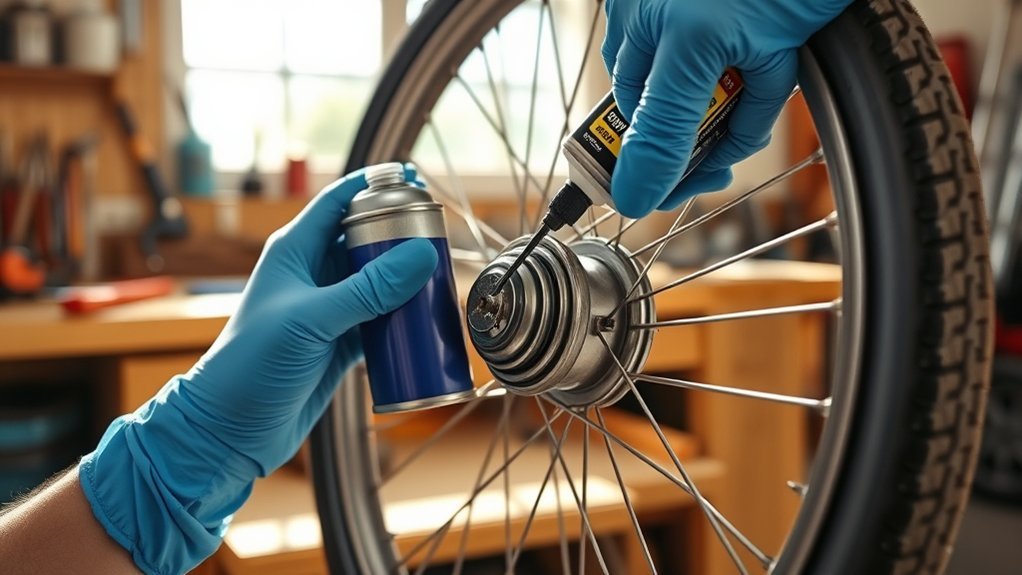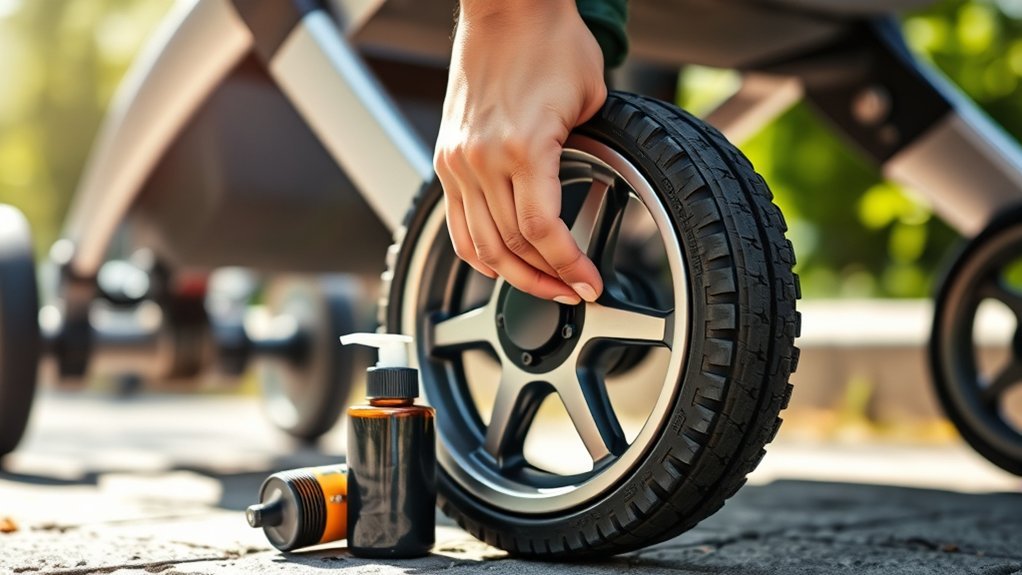
To lubricate stroller wheels safely, first identify where the squeak or stiffness comes from, then check your stroller manual for approved products and wheel-removal instructions. Clean and dry the axle or swivel area, apply the smallest practical amount of compatible lubricant, rotate the wheel, wipe away residue, reinstall any removed parts, and test the brakes with the stroller empty.
Quick Answer
Clean hair, sand, and dried dirt from the wheel and axle, let the area dry, then use a small amount of lubricant approved for your stroller’s materials. Rotate the wheel to spread it, wipe away all excess, reinstall the wheel securely, and test steering, wheel retention, and the parking brake before placing your child in the stroller.
Key Takeaways
- Check the stroller manual first because lubricant type, wheel removal, and maintenance intervals vary by model.
- Clean and dry the moving area before adding lubricant. Spraying over grit creates an abrasive, sticky buildup.
- Use one compatible product sparingly. Do not mix or layer lubricants unless the stroller or lubricant manufacturer confirms compatibility.
- Keep lubricant away from brakes, tire tread, fabric, harnesses, handles, and every child-contact surface.
- Lubrication cannot repair a loose, cracked, bent, badly worn, or recalled wheel assembly.
At a Glance
| Time Required | About 10–20 minutes for basic cleaning, lubrication, and testing |
| Difficulty | Easy when the manual allows user maintenance |
| Tools Needed | Manual, damp cloth, soft brush, dry cloth, gloves, cardboard or a mat, and a compatible lubricant |
| Cost | Usually low if you already have cleaning supplies and an approved lubricant |
Understanding Different Types of Lubricants

The right lubricant depends on the stroller model, the wheel design, and the materials at the moving point. Start with the manufacturer’s manual or support page. A product that works on one stroller may damage another stroller’s plastic, rubber, coating, sealed bearing, or brake assembly.
Silicone spray can suit some plastic, rubber, vinyl, and metal surfaces when the product label and stroller manual allow it. For example, the manufacturer of WD-40 Specialist Silicone says it is safe on most common metals, plastics, rubbers, and vinyl when used as directed, and it recommends testing a small area when compatibility is uncertain.
A light oil or multi-use spray may help a permitted metal pivot, axle, or hinge, but it is not automatically suitable for every stroller. Some formulas penetrate and displace moisture as well as lubricate, so they can travel farther than intended. Apply them only with precise control and only when the stroller maker permits that product type.
A compatible grease stays in place longer than a thin spray and may suit an exposed axle or swivel mechanism that the manual identifies as greaseable. Do not pack grease into a sealed bearing or enclosed wheel unit unless the manufacturer specifically instructs you to open and service it.
Avoid choosing a lubricant only because it is labeled “food grade.” NSF explains that food-grade lubricant registration concerns possible incidental contact in food-processing equipment. It does not certify a product as suitable for stroller materials, brakes, or child-contact surfaces.
Warning: Never spray lubricant toward the brake mechanism, brake disc, tire tread, seat fabric, harness, child tray, handlebar, or storage basket. If overspray reaches a brake or child-contact surface, stop using the stroller until you have cleaned the area according to the manufacturer’s instructions and confirmed that the brake works correctly.
Preparing Your Stroller for Lubrication

Move the stroller to a bright, well-ventilated area. Put cardboard or a protective mat under the wheels, remove your child and personal items, and keep children and pets away until the work area and stroller are clean.
Read the model-specific manual before removing a wheel or applying a chemical. Confirm whether the wheel is user-removable, whether the bearing is sealed, which lubricant is approved, and whether maintenance could affect warranty coverage. Manufacturer instructions take priority over general advice.
Open and lock the stroller frame as directed. Engage the parking brake while you inspect the stroller, but release it before spinning a wheel. Never tip or support the stroller in a way that could make it fold, roll, or fall onto you.
Inspect each tire, wheel, axle, swivel lock, wheel fork, retaining button, brake part, and fastener. Stop if you find a crack, bent axle, missing hardware, loose rivet, damaged wheel-retention part, exposed sharp edge, or brake that will not engage and release normally. Lubricant cannot make damaged hardware safe.
Gather a damp cloth, soft brush, dry cloth, gloves, paper towels, a second cloth to block overspray, and the approved lubricant. Safety glasses are sensible when you must spray upward or work close to the nozzle.
Cleaning the Wheel Area
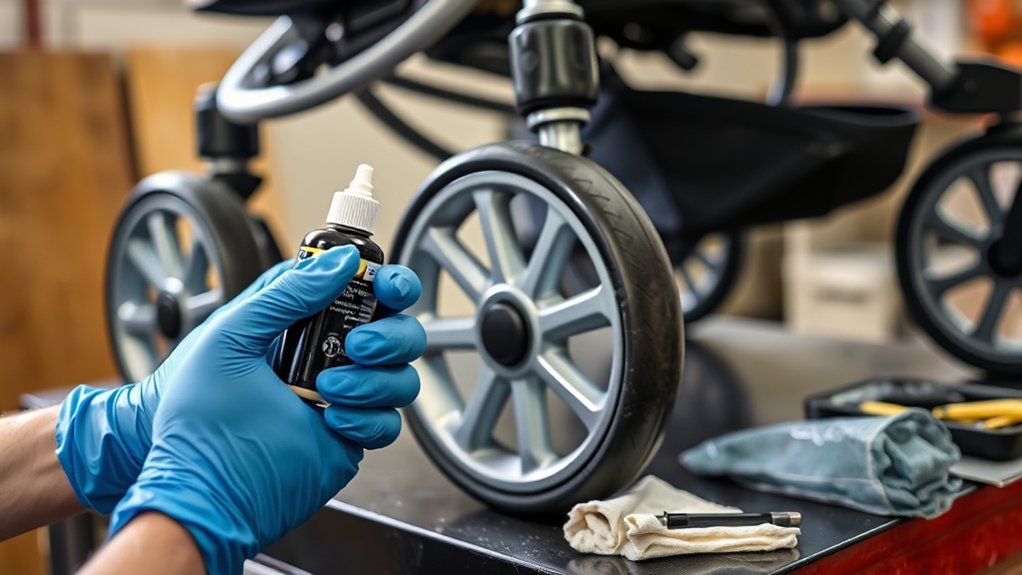
Clean before you lubricate. Hair, thread, grass, sand, dried mud, and old oily residue can bind a wheel or swivel. New lubricant can trap that debris and turn it into an abrasive paste.
Wipe the tire, wheel hub, fork, axle end, and swivel housing with a damp cloth. Use a soft brush or a wooden toothpick to lift debris from accessible gaps. Do not push grit deeper into a bearing, use a metal pick near plastic, or flood the wheel with water.
Clean first, lubricate only the approved moving point, and finish by wiping the outside completely dry.
If the manual allows wheel removal, press the release button or remove the retaining part exactly as shown. Keep small clips, washers, and caps in order so they return to the same position. If the wheel does not release easily, do not pry or force it.
Inspect for corrosion, but do not automatically use a penetrating chemical. Surface rust, grinding, or a seized part can signal water damage or bearing failure. Contact the manufacturer when the manual does not describe a safe cleaning or service method.
Dry every cleaned part before applying lubricant. Water left around an axle or inside an accessible wheel socket can encourage corrosion and dilute some products.
How to Lubricate Stroller Wheels Step by Step
- Locate the problem. Spin and swivel each wheel separately. Listen for the noise and check whether it comes from the axle, swivel pivot, brake contact, tire rub, or frame joint.
- Check the manual and label. Confirm that the wheel area is user-serviceable and that the chosen lubricant is compatible with every material it may touch.
- Clean and dry the part. Remove wrapped hair and grit, wipe away old residue, and let moisture evaporate.
- Remove the wheel only when approved. Follow the manual and keep all retaining parts in their original order.
- Apply a minimal amount. Use one short, controlled spray or a very thin film on the approved axle or pivot. Applying product to a cloth or swab first can reduce overspray.
- Distribute the lubricant. Rotate the wheel and swivel the fork several times. Do not force a stiff mechanism.
- Wipe away residue. The outside of the hub, fork, frame, and tire should feel clean, not oily.
- Reassemble and pull-test the wheel. Confirm that every wheel clicks or locks into place. Pull outward gently to check retention.
- Test the empty stroller. Push it forward, backward, and through several turns. Engage the parking brake on a flat surface and verify that it holds before normal use.
Applying a Light Spray Lubricant
A light spray lubricant can be useful on an approved axle, pivot, hinge, or swivel joint because it reaches a narrow moving point. The key is precise placement, not coating the whole wheel assembly.
A suitable spray may:
- Reduce friction: A thin film can help a dry, clean, serviceable joint move more freely.
- Displace limited moisture: Some multi-use products are designed to penetrate and move moisture from metal surfaces.
- Reach a tight pivot: A straw nozzle or application to a cotton swab can target a small accessible point.
Do not treat a universal spray interval as a maintenance rule. Inspect the stroller during routine cleaning and lubricate only when the manual calls for it or when a clean, undamaged, approved moving point is dry or stiff.
Hold a cloth behind the target to catch overspray. Use the shortest controlled application possible, rotate the wheel, wait as directed on the label, and wipe the surrounding area until no residue transfers to a clean paper towel.
Pro Tip: Before applying anything, mark the noisy wheel with removable tape. Test one wheel at a time so you can tell whether cleaning or lubrication solved the problem and avoid unnecessary product on the other wheels.
Choosing the Right Thicker Grease
Use thicker grease only when the stroller manual permits grease at an accessible axle or swivel point. Grease can remain in place longer than a light spray, but the wrong formula can attack plastic, swell some rubber, collect grit, or interfere with a sealed mechanism.
Choose by manufacturer approval and material compatibility, not by a broad label such as automotive, marine, household, or food grade. Check the product’s technical information for the surfaces it can contact, and test a hidden noncritical area when the product maker recommends a compatibility test.
Avoid cooking oil, butter, petroleum jelly, chain wax, heavy automotive chassis grease, and unknown workshop products unless your stroller manufacturer explicitly specifies one of them. Household substitutes can become sticky, migrate, stain fabric, or react with parts.
Types of Thicker Greases
The following categories help you understand labels, but they do not replace your stroller manual:
- Silicone grease: May suit certain plastic, rubber, and mixed-material contact points, but it is not universally compatible with every elastomer or stroller finish.
- White lithium or multipurpose grease: Often intended for metal mechanisms. Use it only when the stroller maker confirms that the nearby plastic, rubber, coating, and brake parts can tolerate it.
- NSF-registered food-grade grease: Designed for defined food-processing uses involving possible incidental food contact. That registration does not prove stroller compatibility or make residue acceptable on a child-contact surface.
Application Techniques Explained
Remove a wheel only if the design provides a user-operated release. Wipe the axle and wheel socket clean, then apply a film thin enough that you can still see the part beneath it. More grease does not improve alignment or repair wear.
If a wheel wobbles, pulls sideways, or feels loose, inspect the retaining mechanism, bearings, fork, axle, and fasteners. Stop using the stroller when the wheel can detach, the wobble is severe, or a structural part is damaged. Ask the manufacturer about adjustment, replacement parts, or service.
| Product Type | Use Only When | Main Caution |
|---|---|---|
| Silicone grease | The manual and label allow it on the specific materials | Not compatible with every rubber or silicone part |
| White lithium or multipurpose grease | The service point is primarily metal and manufacturer-approved | Can be unsuitable for nearby plastic, rubber, or finishes |
| Food-grade grease | It also meets the stroller maker’s material and service requirements | “Food grade” is not a stroller-safety approval |
Maintenance Tips for Longevity
- Keep the application thin: Wipe away any grease squeezed out after reinstalling and rotating the wheel.
- Protect the swivel and axle from grit: Clean promptly after beach trips, muddy paths, heavy rain, or road salt exposure.
- Replace worn parts: Lubrication may reduce friction, but it cannot restore a damaged bearing, loose wheel lock, bent fork, or worn tire.
Store the stroller dry and out of prolonged weather exposure. Before each use, make sure the wheels are attached, the swivel locks work as intended, and the brake engages and releases normally.
Lubricating Swivel Wheels
A front swivel wheel can feel stiff when hair or sand collects around the vertical pivot, when old residue dries, or when the swivel lock partly engages. Clean the pivot and verify that the lock moves fully before adding lubricant.
Apply a compatible light spray or a very thin grease film only to the approved pivot point. Rotate the fork through 360 degrees several times, then wipe the fork, wheel, and surrounding frame clean.
A sticky swivel often needs debris removal, while a wobbly swivel often needs inspection or repair. These are different problems.
Do not use thicker grease to “stabilize” a loose wheel. Wobble can come from a worn bushing or bearing, a loose fastener, a bent fork, an incorrectly installed wheel, or damage to the retaining mechanism. Correct the mechanical cause before carrying a child.
If the wheel still sticks after cleaning and approved lubrication, contact the manufacturer. Repeatedly adding product can hide symptoms and collect more dirt without fixing the underlying fault.
Should You Mix Lubricants?
Do not mix, blend, or layer stroller lubricants as a general maintenance method. Products can use different base oils, solvents, thickeners, and additives. Combining them may change consistency, cause separation, soften a material, or create residue that attracts dirt.
If you need to change products, remove as much of the previous residue as the stroller manual safely allows, clean and dry the service point, and then use one approved lubricant. Ask the stroller maker when you cannot identify the old product or fully access the part.
Why Mixing Can Cause Problems
- Unknown compatibility: A product may be safe alone but react poorly with another lubricant or cleaner.
- Excess buildup: Layering a spray and grease can trap sand, hair, and dust around the axle or swivel.
- Harder troubleshooting: Multiple products make it difficult to identify what caused swelling, staining, noise, or stiffness.
A Safer Single-Product Approach
Choose the least aggressive product that the stroller manual approves for the exact part. Silicone spray may suit some plastic or rubber-adjacent pivots, while a manufacturer-approved grease may suit an exposed metal axle. That does not mean both should be used on the same point.
When a penetrating product is needed to free a corroded metal part, treat that as troubleshooting rather than routine lubrication. Follow the product label, keep it away from brakes and child-contact areas, and ask the stroller maker whether the part should be replaced instead.
Application Tips for Longevity
- Use one product: Do not layer lubricants unless written manufacturer guidance says the combination is compatible.
- Target the moving point: Apply with a straw, swab, or cloth so the product does not coat the tire, brake, fabric, or frame.
- Record what you used: Note the product and date in your phone or manual for future maintenance and troubleshooting.
Close the container after use and store it according to the label, away from heat, flames, and children.
Regular Maintenance Tips
Inspect the stroller wheels during routine cleaning and after rough, wet, sandy, salty, or muddy use. Brush away debris before it becomes tightly wrapped around an axle or swivel.
Do not follow a fixed “every few months” lubrication schedule unless your manual gives one. Some wheel systems need occasional lubrication, while sealed or maintenance-free systems may need only cleaning and part replacement.
If the model allows wheel removal, periodically check the release button, axle, socket, washer, pin, and locking click. Reinstall the wheel exactly as instructed and pull-test it before use.
Check air-filled tire pressure against the tire sidewall and stroller manual. Low or uneven pressure can make steering heavy or cause pulling, and lubricant will not correct it.
Store the stroller clean and dry. Do not leave wet wheels folded against fabric, and do not store an aerosol lubricant inside a hot vehicle.
Signs That Your Stroller Needs Cleaning, Lubrication, or Repair
Noise does not always mean the wheel needs more lubricant. Use the symptom to decide whether to clean, lubricate, adjust, inflate, or stop using the stroller.
- Squeaking: Clean the axle and swivel first. If the clean, undamaged moving point is dry and serviceable, apply the approved lubricant.
- Grinding: Stop and inspect for sand, corrosion, a damaged bearing, or metal contact. Grinding can require replacement rather than lubrication.
- Stiff rotation or swiveling: Check for wrapped hair, a partly engaged swivel lock, dried residue, or a bent part.
- Pulling to one side: Compare tire pressure, wheel rotation, swivel locks, tire wear, and alignment. Do not assume grease will fix the pull.
- Wobbling or looseness: Check wheel installation and retaining parts. Severe or persistent wobble needs manufacturer service or replacement.
- Brake rubbing or poor brake hold: Keep lubricant away and stop using the stroller until the brake system is cleaned, adjusted, or repaired.
Before investing time in a repair, search the U.S. Consumer Product Safety Commission recall database and the manufacturer’s safety notices using the brand, model, and serial or lot number.
Safety Considerations When Lubricating
Remove your child, unload the basket, and work where the stroller cannot roll or fold unexpectedly. Read the chemical label for ventilation, protective equipment, drying time, flammability, storage, and first-aid instructions.
Use the smallest practical quantity. Excess product can migrate to tire tread, brakes, floors, car upholstery, clothing, and your child’s hands. After service, wash your hands and dispose of oily towels according to the label and local rules.
Wear Protective Gear
- Gloves: Wear gloves recommended by the lubricant label, especially when cleaning old residue or using a solvent-containing spray.
- Eye protection: Wear safety glasses when spraying near your face or working below an elevated wheel.
- Ventilation: Use sprays outdoors or in a well-ventilated space and keep them away from flames, sparks, and hot surfaces.
Keep children and pets outside the work area until the stroller is dry, odor-free, and wiped clean.
Avoid Over-Lubrication
Too much lubricant attracts grit and can move into areas that must stay dry. A thick visible coating is usually a sign that you used more than the mechanism needs.
After rotating the wheel, wipe the axle end, hub face, fork, frame, tire, and floor protection. Press a clean paper towel against the serviced area. If it picks up wet product, continue wiping and allow more drying time.
Test the parking brake with the stroller empty on a flat, dry surface. If the brake slips, feels different, or has lubricant contamination, do not place your child in the stroller. Follow the manual or contact the manufacturer.
Common Mistakes to Avoid
- Skipping the manual: Wheel removal, approved lubricant, and service limits vary by stroller.
- Lubricating over dirt: Sand and hair mixed with oil or grease can create abrasive buildup.
- Using cooking oil or random household products: They may become sticky, stain, migrate, or damage materials.
- Assuming “food grade” means child-safe: Food-processing registration does not approve a product for stroller parts or direct child contact.
- Mixing lubricants: Layering products can create compatibility and buildup problems.
- Spraying the brake or tire tread: Slippery residue can reduce control.
- Using grease to fix wobble: Mechanical looseness, wear, or damage needs inspection and repair.
- Forcing a wheel off: You can damage the release mechanism, axle, or retaining parts.
- Skipping the final test: Always verify wheel retention, steering, swivel locks, and the parking brake with the stroller empty.
Note: If the stroller is under warranty, use only maintenance methods and products allowed by its manual. Opening a sealed unit, using an unapproved chemical, or damaging a wheel during disassembly may affect warranty service.
Frequently Asked Questions
How often should I lubricate my stroller wheels?
Follow the model-specific manual rather than a universal calendar. Inspect and clean the wheels regularly, especially after rain, sand, mud, or road salt. Lubricate only an approved moving point when the manual calls for it or when that clean, undamaged part is dry, noisy, or stiff.
Can I use cooking oil instead of grease?
No. Cooking oil can oxidize, become sticky, collect dirt, migrate onto fabric, and wear away quickly. Use only a lubricant approved for the stroller model and compatible with the materials at the service point.
What tools do I need for lubrication?
Use the stroller manual, a damp cloth, soft brush, dry cloth, gloves, paper towels, cardboard or a protective mat, and one compatible lubricant. A cotton swab or cloth can provide more control than spraying directly.
Is it safe to lubricate while my child is in the stroller?
No. Remove your child and all personal items first. Keep children away from the work area, and do not use the stroller again until it is reassembled, wiped clean, dry, and tested with no passenger.
What should I do if the wheels still squeak after lubrication?
Clean the area again and identify the exact source. Check for wrapped hair, sand, brake contact, tire rubbing, a partly engaged swivel lock, corrosion, loose hardware, or a worn bearing. Stop using the stroller and contact the manufacturer if the wheel is loose, cracked, grinding, or unstable.
Can I use WD-40 on stroller wheels?
Do not choose by brand name alone because WD-40 sells different formulas. Use a specific product only when the stroller manual and product label allow it on that part and material. Keep every formula away from brakes, tire tread, fabric, harnesses, handles, and child-contact areas.
Should I remove the stroller wheels before lubricating?
Remove a wheel only when the manual shows a user-operated release and reinstallation procedure. Wheel removal can improve cleaning access, but forcing a wheel off may damage the axle or retention system. Pull-test every reinstalled wheel before use.
Can grease fix a wobbly stroller wheel?
No. Grease may reduce friction at an approved service point, but it cannot tighten a loose wheel, straighten a bent fork, restore a worn bearing, or repair a damaged retaining mechanism. Inspect the hardware and contact the manufacturer when wobble persists.
Should I mix silicone spray and grease?
Not unless the stroller or lubricant manufacturer provides written compatibility guidance. Clean away old residue as safely as the manual allows, dry the part, and use one approved product. Mixing can change consistency and create dirt-holding buildup.
Sources
- UPPAbaby Product Manuals — model-specific operating, wheel-removal, care, and safety instructions.
- WD-40 Specialist Silicone product information — labeled surface compatibility, application guidance, and product limitations.
- WD-40 Multi-Use Product information — distinguishes the penetrating, moisture-displacing multi-use formula from dedicated silicone lubricant.
- NSF: How Registrations Prove Lubricants Are Food Grade — explains that food-grade registration addresses regulated incidental food contact.
- U.S. Consumer Product Safety Commission recall database — official product recall and safety-warning search.
Conclusion
Safe stroller wheel lubrication is a small, controlled maintenance job. Find the source of the problem, follow the model’s manual, clean and dry the area, use one compatible lubricant sparingly, wipe away residue, and test the stroller empty.
Do not use lubricant to hide wobble, grinding, brake trouble, or structural damage. Those signs call for inspection, an approved replacement part, or manufacturer service. Regular cleaning and prompt attention after wet or gritty trips will often prevent stiffness before extra lubricant is needed.