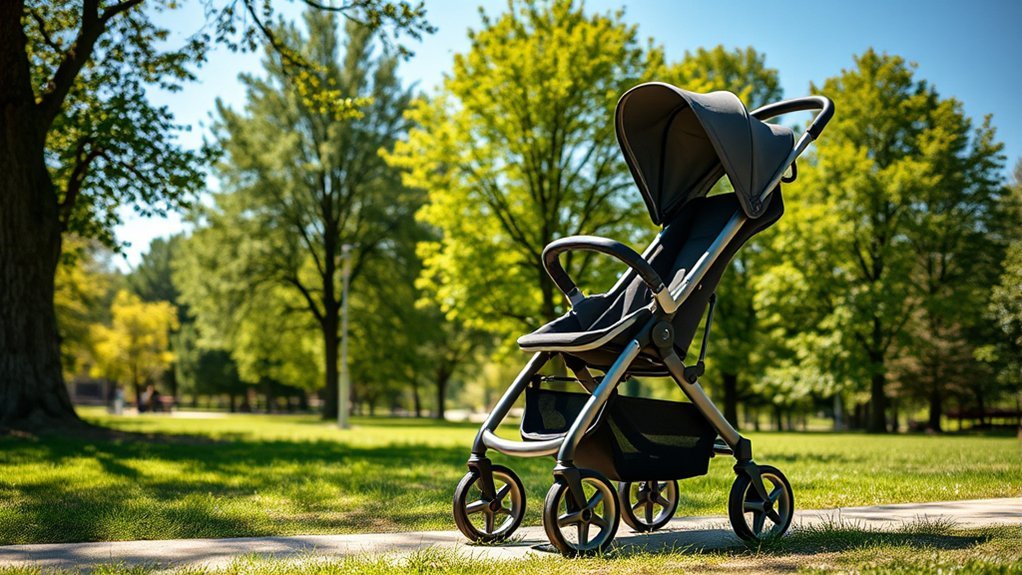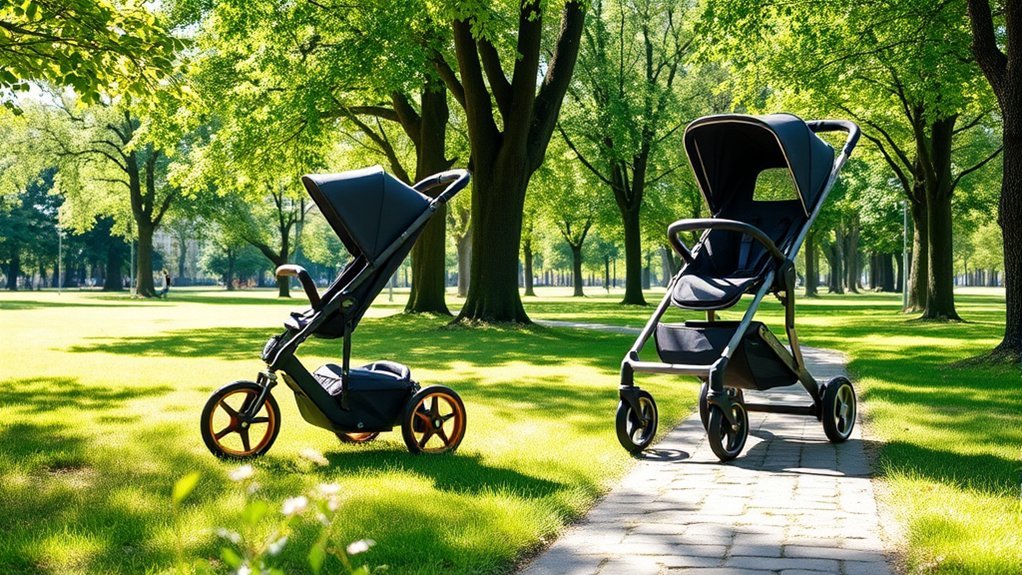
When choosing between a 3-wheel and a 4-wheel stroller, consider your lifestyle needs. 3-wheel strollers offer superior maneuverability and are great for uneven terrains, but can be bulkier. In contrast, 4-wheel strollers provide excellent stability and are ideal for urban outings, although they may struggle in tight spaces. Think about the terrain you’ll navigate, your child’s age, and storage requirements. There’s a lot more to explore in finding the perfect stroller that suits you.
Understanding 3-Wheel Strollers: Features and Benefits
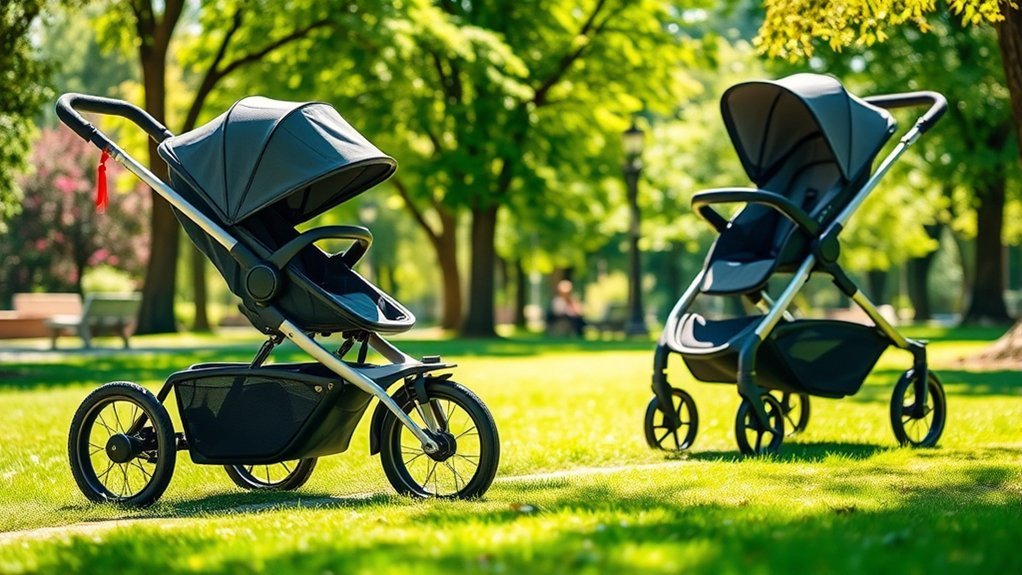
When it comes to choosing a stroller, 3-wheel models stand out for their unique design and functionality.
These strollers offer significant maneuverability benefits, thanks to their lightweight build and a swivel front wheel, making it easy to navigate tight spaces and uneven terrain. You’ll appreciate the larger back wheels that enhance stability on various surfaces while providing a smoother ride.
Additionally, 3-wheel strollers typically come with ample storage options, including a handy storage basket, parent tray, and child tray, ensuring you have everything you need within reach.
Designed for active parents, they accommodate children from six months old, especially when paired with an infant car seat attachment.
Embrace the freedom of outdoor activities with this versatile stroller choice.
The Advantages of Jogging Strollers
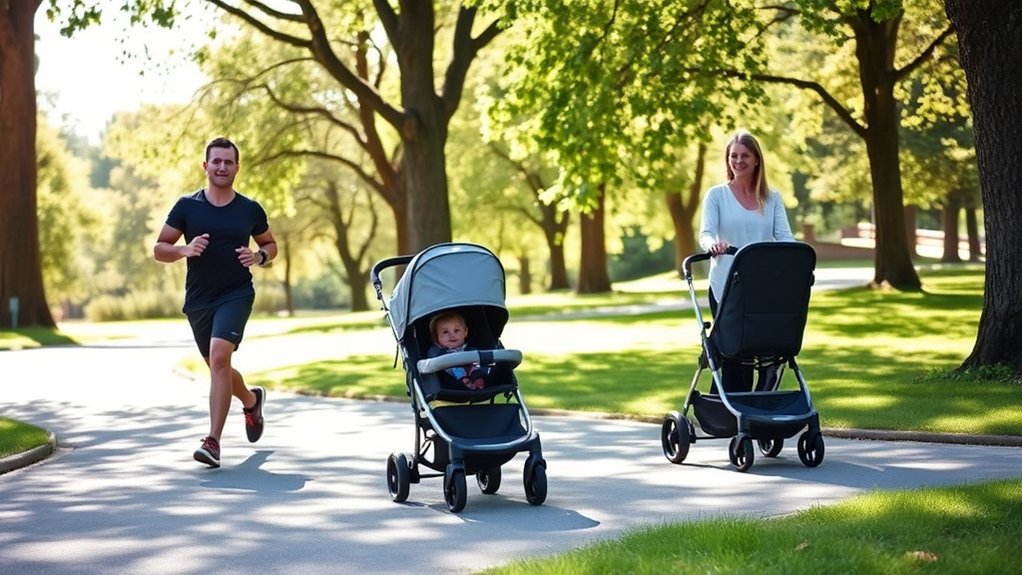
While you’re maneuvering the demands of parenthood, jogging strollers offer a fantastic solution for staying active without sacrificing convenience.
One of the key jogging stroller benefits is their exceptional maneuverability, thanks to two large back wheels and a swivel front wheel. This design allows you to navigate various terrains effortlessly. Equipped with treaded rubber tires, these strollers provide a smooth ride, making them perfect for outdoor activities.
Experience effortless navigation across terrains with jogging strollers, designed for a smooth ride and outdoor adventures.
Their lightweight aluminum frames enhance transportability while ensuring durability. Plus, they’re built for an active lifestyle adaptability, catering to parents who want to jog with their little ones.
Just remember, jogging strollers are best for children who can sit independently, usually around six months old, ensuring safety during your runs.
Exploring 4-Wheel Strollers: Types and Options

When considering 4-wheel strollers, you’ll find several types tailored to your needs.
Full-size strollers offer extensive features and storage, while lightweight options are perfect for parents on the go.
For those with multiple children, double strollers provide added convenience without sacrificing stability.
Full-Size Strollers Overview
Full-size strollers, often featuring four wheels, offer a range of styles and configurations to suit various parenting needs. You’ll find traditional, lightweight, double, and frame strollers among your options, each designed to adapt as your child grows.
Full-size strollers features include multiple seating configurations and reclining options, accommodating infants through toddlers. They also come with spacious storage bins, making it easy to transport baby essentials and personal items.
When folded, these strollers are typically lighter and more compact, perfect for urban living or travel. The versatility of full-size strollers benefits families, especially with models that convert into double strollers, allowing for seamless family expansion.
Choose wisely to enhance your parenting experience!
Lightweight Stroller Benefits
Lightweight 4-wheel strollers offer numerous benefits, making them a popular choice for parents on the go. Their portability features, including simple stow-and-go folds, make traveling a breeze.
You’ll appreciate how easy it’s to maneuver these strollers in urban settings, thanks to their stability on smooth surfaces. Many lightweight models provide versatile seating configurations, accommodating your child from infancy through toddler years.
Additionally, they often come with convenient storage options, like spacious baskets and parent trays, ensuring you have everything you need at your fingertips.
With choices ranging from full-size to frame strollers, you can find the perfect fit for your family’s lifestyle. Embrace the freedom and ease that lightweight 4-wheel strollers bring to your daily adventures!
Double Stroller Options
Double strollers offer incredible versatility for parents with two children, providing a practical solution for everyday outings. Many 4-wheel strollers can be configured as double strollers, allowing you to choose between side-by-side or tandem seating. These strollers often feature adjustable canopies and multiple seat recline positions to cater to each child’s comfort.
Here’s a quick comparison of popular double stroller configurations and features:
| Configuration | Features |
|---|---|
| Side-by-Side | Equal space, easy interaction |
| Tandem | Compact design, great maneuverability |
| Infant Car Seat Compatible | Versatile for newborns and toddlers |
| Full-Size Storage | Ample space for essentials |
Investing in a 4-wheel double stroller guarantees you’re prepared for any adventure with your little ones.
Comparing Foam Filled Vs Air Filled Tires
When choosing between foam-filled and air-filled tires for your stroller, it’s essential to take into account durability, adaptability to different terrains, and maintenance needs.
Foam-filled tires are flat-proof and require no upkeep, making them great for city streets, while air-filled tires excel on rough surfaces but need regular inflation.
Understanding these differences will help you select the best option for your lifestyle and your child’s comfort.
Tire Durability Comparison
Choosing the right tires for your stroller can greatly impact your experience, especially if you often navigate different terrains.
Foam-filled tires offer impressive tire longevity with no risk of flats, making them maintenance-free and ideal for urban environments. However, they can be heavier and bulkier, potentially affecting maneuverability.
In contrast, air-filled tires excel in terrain performance, providing a smoother ride over rough surfaces. While they require regular maintenance to avoid flats, their lightweight design can enhance agility.
If you’re planning to tackle varied terrains, consider keeping a mini bike pump handy.
Ultimately, your choice should align with your typical environment—foam tires suit city streets, while air-filled ones are better for adventurous outings.
Terrain Adaptability Differences
While both foam-filled and air-filled tires have their advantages, understanding their terrain adaptability is essential for making the right choice for your stroller.
Foam-filled tires are flat-proof and low-maintenance, making them suitable for urban environments where smooth surfaces are common. However, they can feel bumpy on rough terrains.
On the other hand, air-filled tires excel in tire performance, providing better shock absorption and adapting to various terrains, perfect for outdoor adventures on gravel or dirt trails.
When considering your terrain preferences, think about how often you’ll encounter uneven surfaces. Your choice between foam and air tires will greatly influence your stroller’s adaptability and comfort, ensuring a smoother ride tailored to your lifestyle.
Maintenance and Care Needs
Although both foam-filled and air-filled tires serve the purpose of providing a smooth ride, their maintenance and care needs differ markedly.
Foam-filled tires are flat-proof and require no tire maintenance, making them a hassle-free choice for parents focused on convenience. In contrast, air-filled tires demand regular inflation to maintain peak performance, especially on uneven terrains. Keeping a mini bike pump handy guarantees you’re always prepared for inflation needs.
While foam tires may lead to a bumpier ride, air-filled ones excel at shock absorption, enhancing stroller care on rough surfaces.
When deciding, weigh your terrain and willingness to manage maintenance; foam tires simplify your life, while air-filled ones offer superior adaptability for diverse landscapes.
Pros and Cons of 3 Wheel Strollers
When considering a 3-wheel stroller, you’ll find several advantages and disadvantages that can impact your choice.
One major benefit is their superior maneuverability, allowing you to navigate tight spaces and uneven terrains with ease. If you enjoy walking or running, these strollers provide a smoother ride on gravel and dirt trails.
However, they tend to be bulkier and heavier, which can complicate transport and storage solutions in smaller areas.
Stroller safety is another concern, as many 3-wheel models are only suitable for babies six months or older, unless you use an infant car seat attachment.
Additionally, while air-filled tires handle rough terrain well, they require regular maintenance to avoid flats.
Pros and Cons of 4 Wheel Strollers
Four-wheel strollers offer several advantages that make them a popular choice for many parents. Their affordability comparison with 3-wheel strollers allows you to stick to your budget without sacrificing quality. They’re generally lighter and more compact when folded, providing excellent storage convenience for small living spaces or car trunks.
| Pros | Cons |
|---|---|
| More affordable | Larger turn radius |
| Lighter and compact | Less maneuverable in tight spaces |
| Versatile seating options | Best for smooth surfaces |
In urban environments, these strollers excel, making trips to malls and city streets enjoyable. However, be mindful of their limitations in crowded areas. Consider your lifestyle to determine if a four-wheel stroller fits your needs.
Performance of 3 Wheel Strollers on Different Terrains
If you’re considering a stroller that can handle a variety of terrains, 3-wheel strollers stand out for their performance.
Designed with larger back wheels and a swivel front wheel, they offer exceptional stroller maneuverability on uneven surfaces like gravel, dirt trails, and sandy areas. Their air-filled tires enhance terrain performance, adapting well to rugged paths and providing a smoother ride.
The front suspension effectively absorbs bumps, making your journey more comfortable. However, while they excel on rougher terrains, be mindful that 3-wheel strollers might feel less stable compared to their 4-wheel counterparts on uneven ground.
Performance of 4 Wheel Strollers: What to Expect
While exploring your options, you’ll find that 4-wheel strollers excel in providing stability and comfort on smooth, flat surfaces.
They’re particularly well-suited for urban outings and mall trips, where their lightweight design and compact fold make transport and storage a breeze.
Many 4-wheel strollers feature multiple seating configurations, allowing you to adapt as your family grows, even converting into double strollers.
Many 4-wheel strollers offer versatile seating options, easily adapting to your family’s needs as it expands.
With two front-swiveling wheels, these strollers offer decent maneuverability in larger spaces, though they do require a wider turning radius.
However, keep in mind that they aren’t designed for rough terrains, limiting their performance compared to 3-wheel counterparts.
Factors to Consider When Choosing Between 3 Wheel and 4 Wheel Strollers
Choosing the right stroller can greatly impact your daily outings with your child. Start by evaluating your lifestyle—if you jog or navigate uneven terrains, a 3-wheel stroller might be ideal.
For urban environments and smooth surfaces, a 4-wheel stroller excels. Consider stroller safety, especially if your child is younger; 4-wheel models often accommodate newborns better.
Storage needs matter too; 4-wheel strollers usually fold compactly, fitting into tighter spaces. Maneuverability is another factor: 3-wheel strollers offer agility in tight spots, while 4-wheel strollers need more room to turn.
Finally, budget considerations are essential; weigh the features you value most against the cost to find the best option for your family’s needs.
Frequently Asked Questions
Can I Use a Three-Wheel Stroller for Everyday Errands?
Yes, you can use a three-wheel stroller for everyday errands. Its ergonomic design and urban maneuverability make traversing crowded spaces easier, ensuring you enjoy both comfort and convenience while managing your daily activities.
How Do I Clean and Maintain a Four-Wheel Stroller?
About 80% of stroller owners neglect regular maintenance. To clean your four-wheel stroller, use mild soap on fabric and plastic materials, wipe down with a damp cloth, and check wheels for debris regularly.
Are Three-Wheel Strollers Suitable for Newborns?
Three-wheel strollers can be suitable for newborns if they have proper safety features and meet age recommendations. Always check the manufacturer’s guidelines to guarantee your little one’s safety during outings. Happy strolling!
What Is the Average Weight of a Four-Wheel Stroller?
A four-wheel stroller typically weighs between 15 to 30 pounds. While heavier models often boast extra features, lighter ones enhance mobility. Consider this weight comparison to find the perfect balance between functionality and ease for your needs.
How Much Storage Space Do Three-Wheel Strollers Typically Have?
Three-wheel strollers usually offer a decent storage capacity, thanks to their design. You’ll find ample space for essentials, making it easier to carry everything you need for your adventures while keeping your hands free.
Conclusion
So, whether you choose a 3-wheel or 4-wheel stroller, remember: it’s all about your lifestyle. If you’re a jogger, the 3-wheel might seem perfect for you—until you realize maneuvering tight spaces is a workout in itself. On the other hand, a 4-wheel stroller may seem bulky, but it’ll handle those crowded sidewalks like a champ. Ultimately, the right choice isn’t just about wheels; it’s about finding the best excuse for those inevitable bumps in the road!