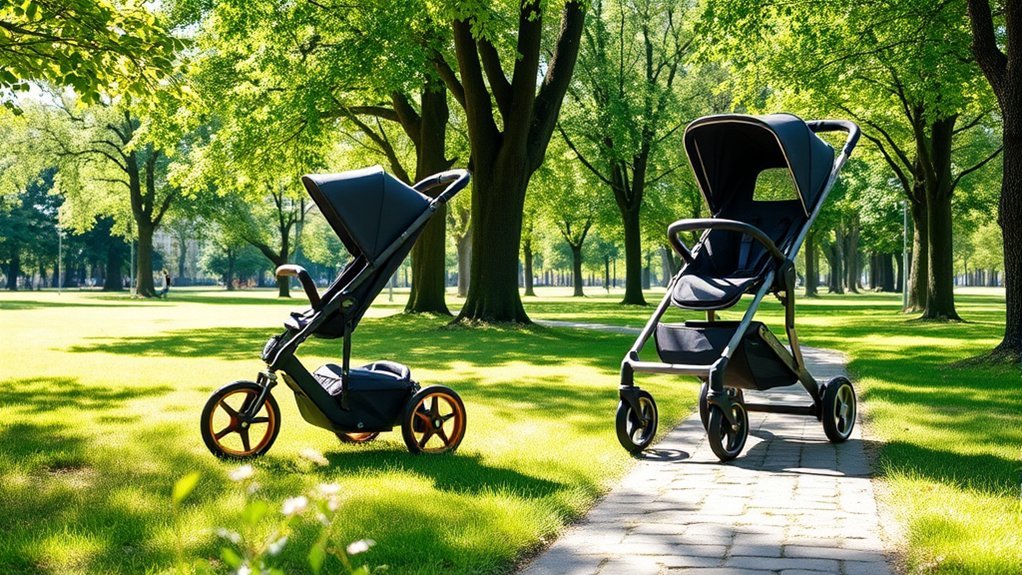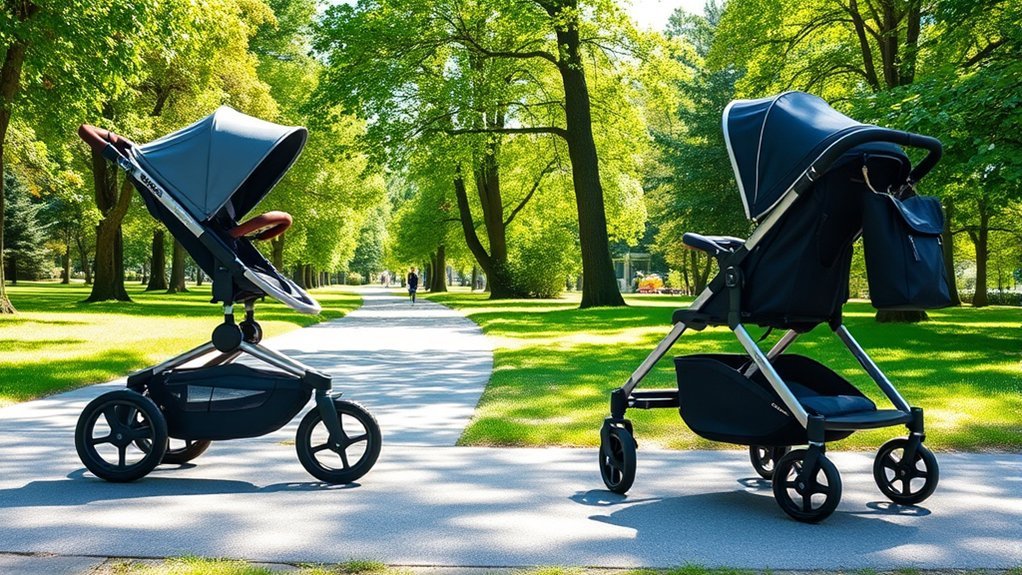
When choosing between a jogging stroller and a regular stroller, consider their key differences. Jogging strollers are designed for rough terrains and feature a three-wheel design, larger tires, and advanced safety features like five-point harnesses and wrist straps. Regular strollers offer easier portability and storage options but aren’t built for jogging. Assess your activity needs and lifestyle before deciding. You’ll discover more about selecting the perfect stroller for your family as you continue exploring this topic.
Benefits of a Jogging Stroller
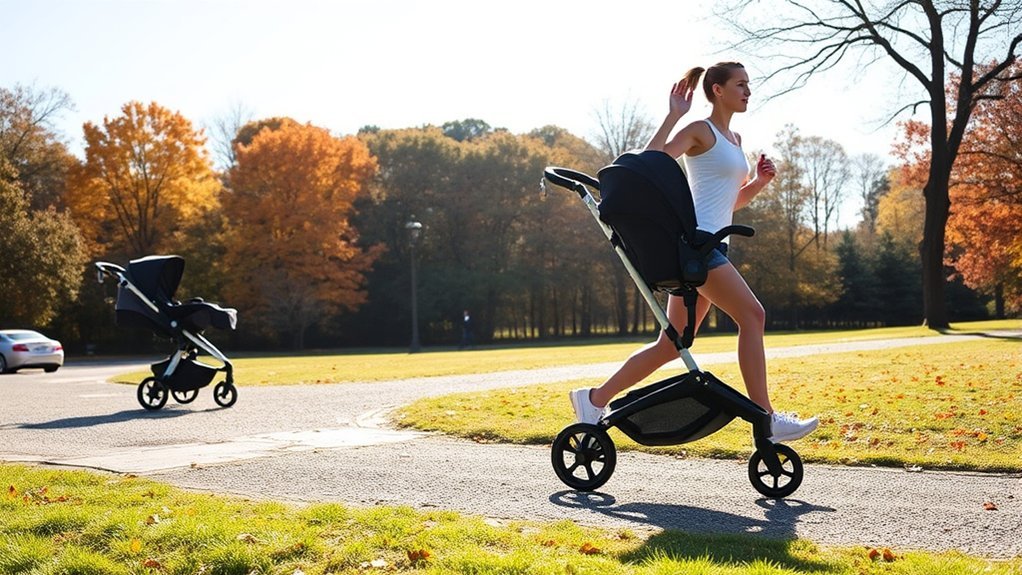
When you choose a jogging stroller, you’re not just investing in a piece of equipment; you’re also enhancing your family’s lifestyle. Jogging strollers promote cardiovascular exercise, greatly improving your health benefits by reducing the risk of heart disease and boosting mental well-being.
While you engage in outdoor activities, you create essential family bonding time with your child, sharing quality moments during workouts. These strollers eliminate the need for a babysitter, allowing you to maintain your fitness routine while keeping your child close.
Designed for stability and safety, they feature large, air-filled tires and a 5-point harness, making them ideal for varied terrains. By incorporating jogging strollers into your routine, you instill fitness values in your child and promote outdoor exploration together.
Safety First: Jogging Strollers vs. Regular Strollers
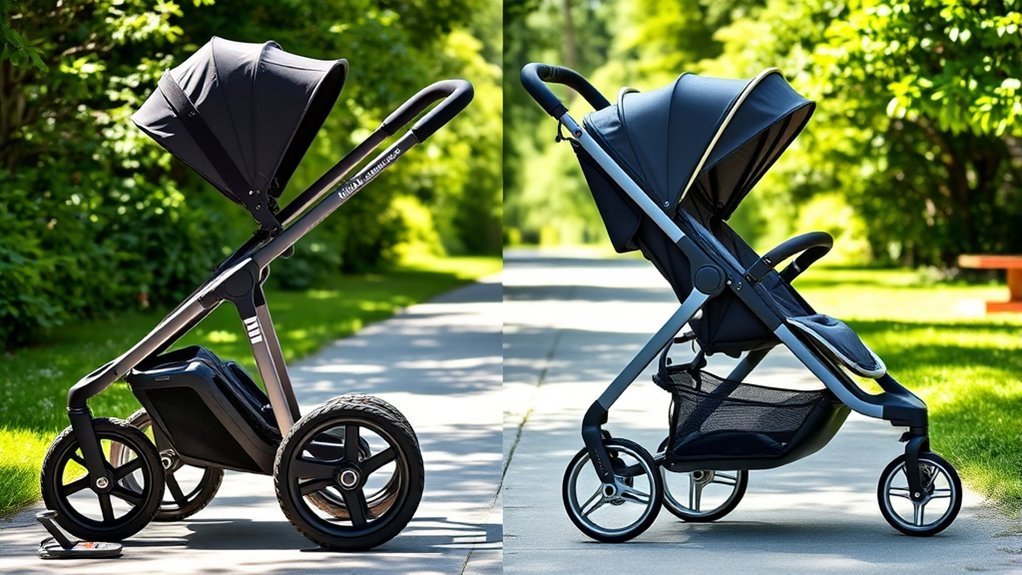
While both jogging strollers and regular strollers serve the purpose of transporting your child, their safety features and design distinctions are vital for different activities.
Here’s what you should know about stroller safety and child security:
- Jogging strollers have large, air-filled tires for better shock absorption.
- A three-wheel design with a fixed front wheel guarantees stability during exercise.
- Five-point harness systems and wrist straps enhance child security in jogging strollers.
- Regular strollers typically feature smaller wheels and basic harnesses, suitable for smooth surfaces.
Choosing the right stroller is significant, especially if you plan to involve your child in your exercise routine.
Understanding these differences can help you prioritize safety while enjoying outdoor activities together.
Maintenance Tips for Longevity
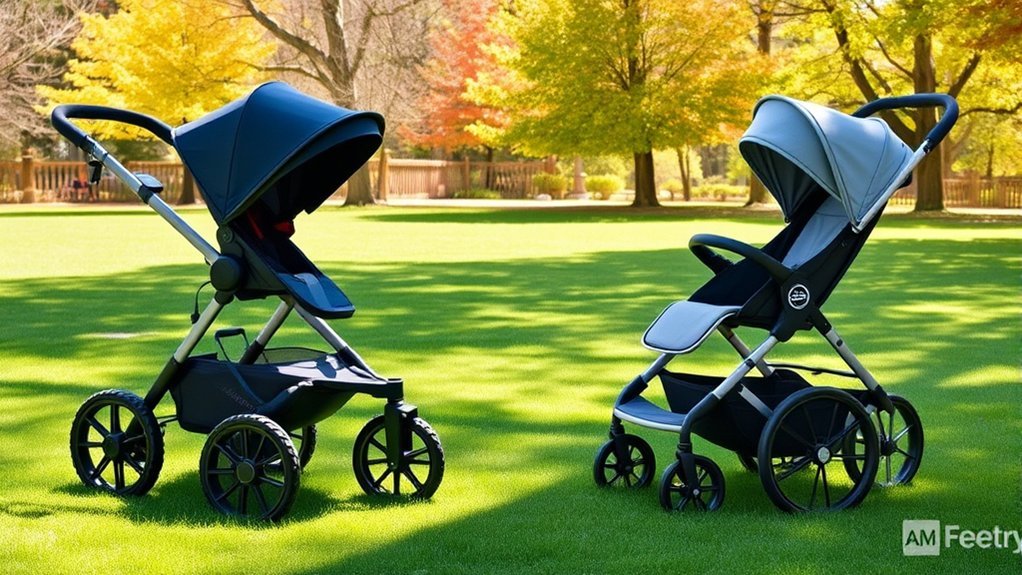
To keep your jogging stroller in top condition, establish regular cleaning practices and pay attention to tire maintenance.
It’s essential to clean the fabric with mild detergent and guarantee the tires are properly inflated and free of punctures.
Additionally, proper storage and drying techniques will help prolong your stroller’s lifespan and maintain its performance.
Regular Cleaning Practices
Maintaining your stroller is essential for its longevity and safe use, and following a few regular cleaning practices can make a significant difference.
To keep your stroller in top shape, consider these tips for effective fabric care and cleaning frequency:
- Clean fabric parts with mild detergent and warm water; some fabrics are machine washable for convenience.
- Always confirm the stroller is completely dry before folding to prevent damage.
- Store the stroller in a cool, dry place to avoid fading and mold growth.
- Regularly inspect the brakes and harness for wear and tear to maintain safety features.
Tire Maintenance Essentials
Proper care for your stroller doesn’t stop at cleaning; tire maintenance is just as important for ensuring a safe and enjoyable experience.
Regularly check the tire pressure of your jogging stroller’s air-filled tires—under-inflated tires can cause increased rolling resistance, making your ride uncomfortable.
Inspect for signs of wear, such as cracks or punctures, and replace tires as needed to maintain safety.
Cleaning the tires and rims from dirt and debris is essential for ideal traction.
Pay attention to tire alignment to prevent wobbling, especially when jogging at higher speeds.
Finally, store your stroller in a cool, dry place to protect the tires from heat and moisture, enhancing longevity and reliability for your outings.
Storage and Drying Tips
Storing your jogging stroller correctly is essential for extending its lifespan and maintaining its functionality. To guarantee you’re on the right track, follow these tips for effective stroller storage and drying techniques:
- Store in a cool, dry place to prevent fading and mold growth.
- Always dry the stroller completely before folding to avoid moisture-related damage.
- Clean fabric parts regularly with mild detergent and warm water; some fabrics may be machine washable.
- Regularly inspect tires for punctures and proper inflation, and check brakes and harness for wear.
Expert Opinions
While many parents seek versatile options for their children, expert opinions highlight the distinct advantages of jogging strollers over regular models.
Dr. Jane Smith points out that jogging strollers offer enhanced stability and safety, featuring advanced safety mechanisms like a five-point harness and superior suspension systems.
Mark Daniels emphasizes that these strollers allow new parents to stay active post-pregnancy, integrating fitness into family life.
Parental feedback supports this, noting that outdoor activities with jogging strollers promote child development and strengthen family bonds.
Fitness professionals also praise the flexibility jogging strollers provide, ensuring parents can exercise while spending quality time with their children.
These expert insights clearly advocate for jogging strollers as a worthwhile investment for active families.
Different Types of Jogging Strollers
When considering jogging strollers, it’s important to recognize the variety of options available to meet different needs and lifestyles.
Here are some popular jogging stroller types:
- Traditional Jogging Strollers: Designed for running with a locking front wheel for stability.
- Hybrid Strollers: These offer the hybrid stroller benefits, combining features of regular and jogging strollers for versatile use.
- Double Jogging Strollers: Perfect for families with two kids, available in side-by-side or tandem styles.
- Specialty Jogging Strollers: Equipped with advanced features like hand-operated brakes and enhanced suspension for smoother rides on uneven terrains.
Each type serves a unique purpose, ensuring you can find the ideal fit for your active family lifestyle while maintaining comfort and safety.
Choosing the Right Stroller for Your Lifestyle
When you’re choosing a stroller, think about your main activities and how often you’ll be using it.
If you enjoy jogging or running on rough terrains, a jogging stroller may be the best fit, but consider how much storage you need for outings.
Regular strollers typically offer more space for essentials and are easier to maneuver in crowded areas, making them ideal for casual trips.
Assess Your Activities
Choosing the right stroller hinges on understanding your lifestyle and primary activities. Evaluating your activity preferences and terrain considerations is essential for making the best choice.
Consider these factors:
- Do you plan to jog or run regularly?
- What surfaces do you typically navigate—smooth sidewalks or rugged trails?
- Are you looking to combine fitness with family time?
- How important is stroller portability for your day-to-day routine?
If you frequently exercise outdoors, a jogging stroller with larger wheels offers stability and safety.
For urban dwellers or those who prioritize compactness, a regular stroller is easier to maneuver.
Remember, jogging strollers are suitable for children over one year old, while regular strollers accommodate infants with car seat compatibility.
Choose wisely!
Consider Storage Needs
Storage needs play an essential role in selecting the right stroller for your lifestyle. Jogging strollers often have larger frames and bulkier designs, which means they require more storage space compared to regular strollers.
Weighing between 24 to 43 lbs, jogging strollers can be cumbersome, especially if you need to transport them frequently. Regular strollers, on the other hand, offer greater portability, making them easier to fold and store in tight spaces or vehicles.
If you often travel or use public transport, a regular stroller might be the better choice. Before making a decision, measure your vehicle’s trunk space and storage areas at home to guarantee the stroller you choose, whether jogging or regular, fits comfortably.
Frequently Asked Questions
Can I Use a Jogging Stroller for Regular Walks?
Yes, you can use a jogging stroller for regular walks. Its safety features often exceed those of a regular stroller, ensuring stability and protection. Just be mindful of the terrain and your baby’s comfort during strolls.
How Much Weight Can a Jogging Stroller Hold?
“Don’t put all your eggs in one basket.” Most jogging strollers typically support a weight capacity of 75 to 100 pounds. Prioritize stroller safety by checking manufacturer guidelines for specific limits and recommendations.
Are Jogging Strollers Suitable for Newborns?
Jogging strollers aren’t typically recommended for newborns due to their safety features and limited infant compatibility. It’s essential to guarantee your baby meets the minimum age and weight requirements before using one for jogging.
What Terrain Is Best for Jogging Strollers?
You’ll find jogging strollers perform best on smooth trail surfaces, like asphalt or packed gravel. Look for features like larger wheels and suspension systems to enhance stability and comfort during your runs on varying terrains.
Do Jogging Strollers Have Adjustable Handlebars?
Yes, many jogging strollers feature adjustable handlebars. This allows you to customize the handlebar height for ideal stroller comfort, ensuring a smoother, more enjoyable run—because who wouldn’t want the perfect fit while jogging with their little one?
Conclusion
To sum up, choosing between a jogging stroller and a regular stroller depends on your lifestyle and needs. Notably, studies show that parents who jog with their children can increase their weekly activity levels by up to 35%. This not only benefits your health but also sets a positive example for your child. Consider your fitness goals and how often you’ll use the stroller to make the best decision for both you and your little one.