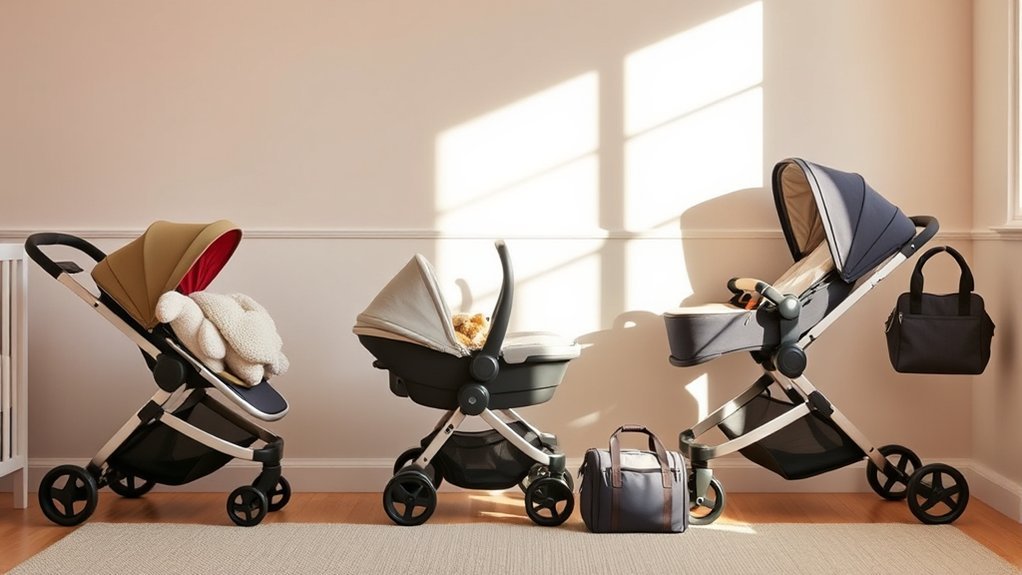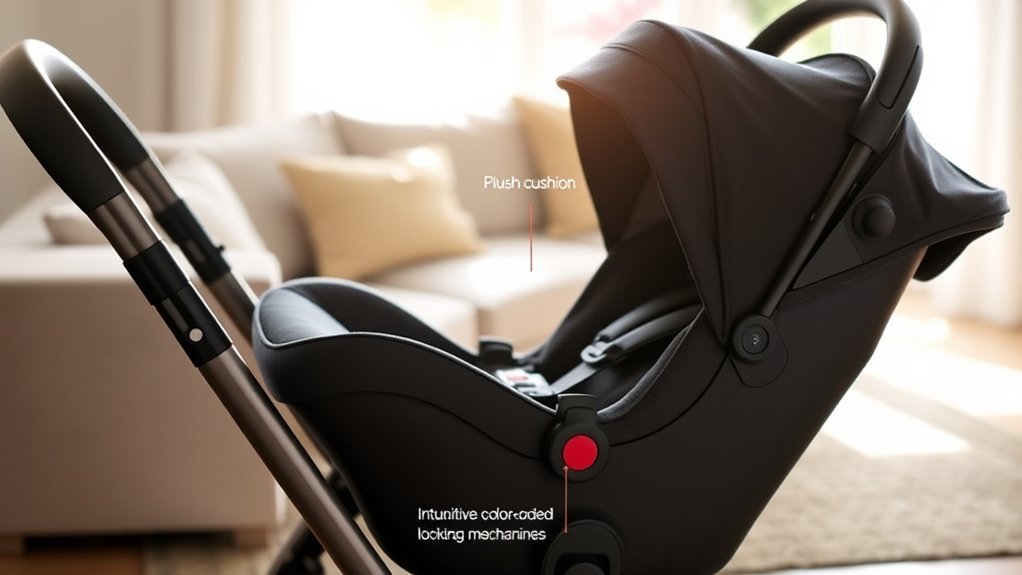
Choosing a stroller and infant car seat that work together can save time, but a connection that merely looks secure is not enough. You need an approved match between the exact stroller, infant car seat, and adapter, plus a correct vehicle installation. This guide shows you how to verify the pairing, attach it safely, and avoid common compatibility mistakes.
Quick Answer
An infant car seat fits a stroller only when the exact seat, stroller, and any required adapter are approved to work together. Check the current manufacturer chart and both manuals, then attach the seat exactly as directed. Do not place a convertible, all-in-one, combination, or booster seat on a stroller unless its manufacturer explicitly approves that use.
Key Takeaways
- Compatibility is model-specific. A shared brand name does not prove that two products connect safely.
- Most stroller travel systems use a removable rear-facing infant carrier, not a convertible or booster seat.
- Use only the adapter named by the stroller manufacturer for your exact car seat and stroller models.
- Check recalls before using an adapter, especially when buying used or using an older setup.
- Stroller compatibility does not confirm safe vehicle installation or make a car seat a safe routine sleep space.
Reviewed by: SellySell Editorial Team · Last updated: July 14, 2026. This guide uses current U.S. safety guidance; always follow the manuals and rules supplied for products sold in your country.
At a Glance
| Time Required | About 10–20 minutes for the first model and manual check (practical estimate) |
| Difficulty | Easy, but the model match must be exact |
| Tools Needed | Stroller manual, car seat manual, product labels, and the official compatibility chart |
| Cost | Free to verify; an approved adapter may cost extra |
Stroller Car Seat Compatibility: What Usually Fits?

Stroller car seat compatibility usually refers to a removable, rear-facing infant car seat with a carry handle. The carrier attaches to a stroller through built-in connection points or a manufacturer-approved adapter. The word rear-facing alone is not enough because many convertible and all-in-one seats also face the rear in a vehicle but are not designed to attach to a stroller.
| Car Seat Type | Usually Attaches to a Stroller? | What to Confirm |
|---|---|---|
| Rear-facing infant carrier | Yes, when approved for that stroller | Exact models, required adapter, orientation, connection indicators, and limits |
| Convertible car seat | Normally no | Install in the vehicle and keep the child rear-facing until the seat’s rear-facing limit is reached |
| All-in-one or combination seat | Normally no | Vehicle fit, correct mode, recline, belt path, and child limits |
| Booster seat | No | Use only in the vehicle when the child meets the booster requirements |
Note: Product names can be confusing. Confirm that you have a detachable infant carrier, not simply a car seat that can be installed rear-facing.
How Stroller and Car Seat Compatibility Works
A stroller and car seat are compatible only when the manufacturer designed and approved the connection. The setup may use a direct click-in interface, an included adapter, or a separately sold adapter. Brand names alone do not prove compatibility because frames, connection points, adapters, and model generations can change.
Start with the full stroller model, the full infant car seat model, and the adapter name or part number. Compare all three against the stroller manufacturer’s current compatibility chart and instructions. A retailer page, marketplace listing, forum post, or description such as “universal” should not override the manufacturer.
Where to Find the Exact Model Information
- Stroller: Check the frame label, underside of the seat, rear axle area, or manual cover.
- Infant car seat: Check the label on the shell or underside of the carrier, not only the base.
- Adapter: Check molded markings, a product label, the box, or the manual for a part number.
- Version or manufacture date: Record it when the manufacturer separates compatibility by generation or production period.
Take clear photos of the labels before shopping. That small step helps prevent mistakes caused by similar model names or updated product versions.
How to Check Compatibility Before Buying
- Identify all exact products: Write down the stroller, infant carrier, base, and adapter models.
- Open the stroller maker’s official chart: Search its support or manuals section rather than relying only on a store listing.
- Confirm the exact car seat entry: Look for the complete model name and any notes about generations or regions.
- Confirm the adapter: Match the adapter’s name or part number, not just its appearance.
- Read both manuals: Check attachment direction, handle position, stroller-seat position, weight limits, and required lock checks.
- Check recalls: Search the adapter, stroller, and car seat before first use and when using second-hand gear.
- Test before the return window closes: Assemble the setup without your baby and follow the manual’s connection check.
Warning: A connection can appear secure and still be defective. On June 18, 2026, the CPSC recalled Joolz Aer2 car seat adapters because they could fail to attach properly and allow the car seat to fall. Check the CPSC recall notice and search your own products before use.
Why Travel Systems Can Be Useful

A travel system pairs an infant car seat with a stroller that accepts it. The main benefit is convenience. You can move a properly harnessed baby from the vehicle to the stroller without removing the child from the carrier during a short transfer.
A travel system does not increase the car seat’s crash protection. Protection in a vehicle depends on choosing the correct seat, installing it correctly, and using the harness correctly. A matched system mainly reduces compatibility guesswork and keeps manuals, replacement parts, and support within a clearer product system.
Compare a bundle with separate items by checking current prices, adapter cost, return policies, stroller features, and how long the infant seat will fit your child. Avoid buying a bundle only because the pieces share a brand name; confirm the exact pairing first.
Travel System Benefits at a Glance
| Feature | Why It Matters |
|---|---|
| Matched stroller and infant seat | Reduces cross-brand and wrong-adapter mistakes |
| Quick transfer | Makes short errands easier without unbuckling the harness |
| Defined connection indicators | Gives you the manual’s specified way to confirm attachment |
| Clear support path | Simplifies manuals, parts, recalls, and customer service |
Brand and Adapter Compatibility Checks
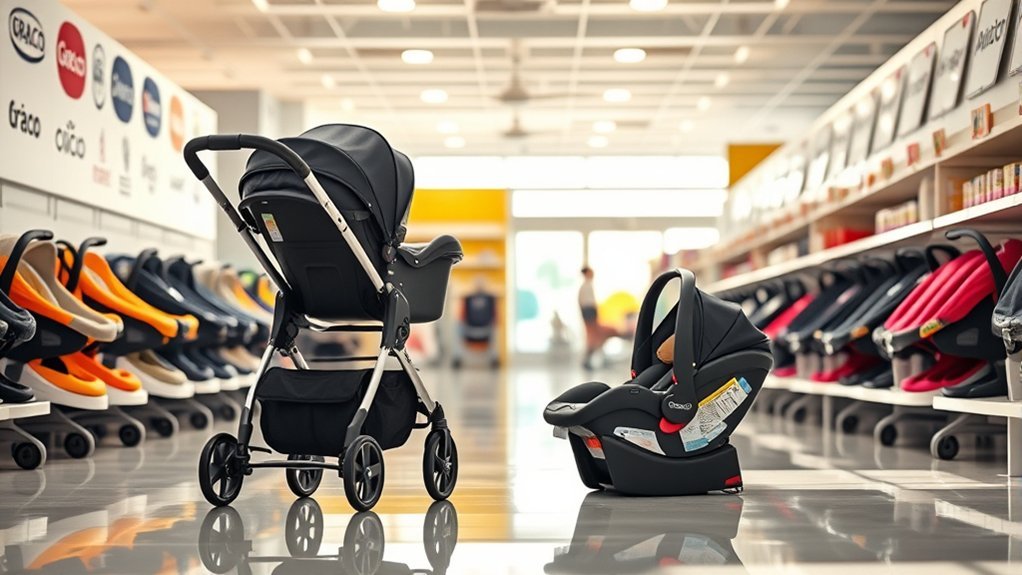
Britax, Chicco, UPPAbaby, Graco, Nuna, Cybex, Maxi-Cosi, Peg Perego, Baby Jogger, Doona, and other manufacturers use different connection systems. Some infant seats attach directly to selected same-brand strollers. Other combinations need a specific adapter, and some pairings are not approved.
For example, UPPAbaby’s current support guidance says its Mesa and Aria infant seats attach directly to Vista and Cruz strollers, while Ridge, Minu, and Minu Duo models require adapters. The same page lists adapters for selected third-party brands, which shows why you must check both the stroller model and connection method rather than assuming all same-brand products work alike. See the manufacturer’s compatibility guidance.
| Compatibility Question | Safe Answer to Confirm |
|---|---|
| Does the car seat fit the stroller? | The exact pairing appears in current manufacturer instructions. |
| Do I need an adapter? | The chart names the required adapter, and its model or part number matches yours. |
| Can I use a “universal” adapter? | Only when the stroller manufacturer approves it for your exact infant seat. |
| Is a used adapter acceptable? | Only when you can verify compatibility, complete parts, condition, instructions, and recall status. |
Adapters and Their Role in Compatibility
Car seat adapters bridge the stroller frame and the infant carrier. Depending on the design, an adapter may use side posts, a bar, a ring, or a frame. It must hold the carrier at the approved connection points and in the orientation stated in the stroller manual.
Never modify an adapter, force a connection, substitute hardware, tape a loose point, or add padding. If the carrier does not attach smoothly, remove it and verify the adapter’s model, left-right orientation, installation, and compatibility. Contact the stroller manufacturer when the instructions and product behavior do not match.
Using a Second-Hand Adapter
A used adapter needs more than a visual check. Confirm that it is the exact approved model, includes every required piece, has readable identifying marks, has no cracks or distortion, and is not recalled. Avoid it when you cannot confirm its identity or when the manufacturer no longer supports that pairing.
How to Attach and Check the Car Seat Before Every Walk
- Park on a level surface: Fully open the stroller and engage its parking brake.
- Install the adapter: Confirm that each side is in the correct position and locked as the manual describes.
- Prepare the stroller: Remove or reposition the stroller seat, canopy, bumper bar, or fabric only when the instructions require it.
- Set the carrier orientation: Face the infant seat in the direction approved by the stroller manual.
- Lower the carrier into place: Do not force it or use the child’s weight to make it engage.
- Check every indicator: Listen for any required click and inspect color indicators, buttons, latches, or both sides of the adapter.
- Perform the manual’s security test: Some systems call for a light upward pull near the carrier or handle; others use a different check. Follow the exact instructions.
- Position the handle correctly: Use the handle position required for stroller mode, which may differ from vehicle mode.
- Harness the child: Keep the harness snug and properly positioned whenever the child is in the infant seat.
- Release the brake only when ready: Recheck the connection if anyone removes or adjusts the carrier.
Pro Tip: Practice attaching and removing the empty carrier several times at home. You will learn how a correct lock looks and feels before you need to manage the stroller, baby, and bags in a parking area.
Troubleshooting a Car Seat That Will Not Lock
Stop using the stroller-car-seat setup when the carrier does not engage fully, one side remains loose, or the connection changes after a normal check. Do not treat wobble, resistance, or a partial lock as harmless.
| Problem | What to Check | Safe Next Step |
|---|---|---|
| Only one side locks | Adapter orientation, stroller fully open, fabric blocking the latch | Remove the carrier, reset the stroller and adapter, then retry exactly as directed |
| Carrier rocks or lifts | Wrong adapter, incomplete engagement, damaged connection point | Stop use and contact the stroller manufacturer |
| Connection suddenly feels different | Cracks, distortion, missing hardware, debris, or a recall | Remove the adapter from service until the manufacturer clears it |
| Manual and chart disagree | Document dates, regional versions, and model generation | Ask the stroller manufacturer for written confirmation before use |
Common Mistakes When Choosing a Car Seat and Stroller
A carrier may appear attached even when it has not reached the intended lock points. Avoid these common errors:
- Assuming every infant seat fits every stroller: Most combinations are model-specific.
- Assuming same-brand means compatible: Different product generations may use different connections.
- Using the wrong adapter: Similar-looking adapters can use different lock points or dimensions.
- Trying to attach a convertible or booster seat: These seats normally remain installed in the vehicle.
- Forcing a partial connection: Resistance can signal the wrong part, wrong direction, or blocked latch.
- Skipping the manuals: The manuals control orientation, handle position, limits, and the correct lock check.
- Ignoring recalls or damage: Stop using cracked, loose, distorted, incomplete, or recalled parts.
- Hanging heavy bags from the handle: Extra weight can affect stroller stability; use the approved storage basket and limits.
How to Install Your Car Seat Correctly in the Vehicle
Stroller compatibility and vehicle compatibility are separate checks. A carrier that fits a stroller may still fit poorly in a certain vehicle seating position. For vehicle use, follow both the car seat manual and the vehicle owner’s manual.
NHTSA’s rear-facing installation guidance says to keep a child rear-facing until the child reaches the top height or weight limit allowed by the car seat manufacturer. It also says an installed seat should not move more than one inch side to side or front to back when tested at the belt path.
- Read both manuals: Check approved seating positions, belt locking instructions, lower anchors, and recline guidance.
- Use the approved installation method: Secure the seat with the locked seat belt or lower anchors as directed. Do not combine methods unless the car seat and vehicle instructions explicitly permit it.
- Set the recline angle: Use the indicator or adjuster specified for your child’s size.
- Test at the belt path: Check movement where the seat belt or lower-anchor strap passes through the base or seat.
- Fit the harness: Keep straps flat, use the correct slots, place the chest clip as directed, and tighten until you cannot pinch excess webbing at the shoulder.
- Get hands-on help when needed: A certified Child Passenger Safety Technician can teach you how to install and use the seat. Find a car seat check or technician.
Warning: Never use a successful stroller connection as proof that the car seat is installed correctly in a vehicle. The stroller adapter does not test the base, seat belt, lower anchors, recline angle, or vehicle fit.
Safe Sleep and Time in the Infant Car Seat
An infant car seat is designed for travel and short transfers, not routine sleep outside transportation. The American Academy of Pediatrics advises moving a baby who falls asleep in a car seat, stroller, swing, carrier, or sling to a firm, flat sleep surface on the baby’s back as soon as possible. Read the AAP safe-sleep guidance.
Keep the child properly harnessed while the carrier is attached to the stroller. Do not loosen the harness for comfort, add unapproved inserts, or leave the child unattended. For longer outings, use an approved bassinet or stroller mode that suits your child’s developmental stage and follow its instructions.
A compatible click-in system is a transport convenience, not a replacement for correct vehicle installation or a safe infant sleep surface.
What Stroller Features Matter With an Infant Car Seat?
Choose the stroller around your routine as well as the connection. A safe pairing that is awkward to fold, lift, steer, or store may be difficult to use correctly every day.
- Fold size: Confirm the stroller fits your trunk and whether the adapter must be removed before folding.
- Weight: Consider the combined effort of lifting the stroller, adapter, and infant carrier.
- Terrain: Larger wheels and suspension can help on uneven sidewalks, gravel, and park paths.
- Parking brake: Make sure you can engage it easily before attaching or removing the carrier.
- Canopy clearance: Check that the stroller and car seat canopies move without blocking the connection.
- Storage access: Confirm that the basket remains usable and follow its weight limit.
- Stability: Avoid unapproved handlebar bags or accessories that may change the stroller’s balance.
- Newborn options: Check whether the stroller also offers an approved bassinet, lie-flat mode, or other infant-ready configuration.
Final Checklist Before You Buy or Walk
Use this checklist before purchasing a stroller-car-seat combination, before the first outing, and whenever you change an adapter or product:
- Record the exact stroller, infant car seat, base, and adapter models.
- Confirm the pairing on the stroller manufacturer’s current compatibility chart.
- Read the stroller, adapter, car seat, and vehicle instructions that apply to your setup.
- Check car seat, stroller, and adapter recalls.
- Confirm every required part is present, undamaged, and installed in the correct position.
- Check the stroller’s infant-car-seat mode limit and the car seat’s child height and weight limits.
- Install the car seat correctly in the vehicle and test movement at the belt path.
- Engage the stroller brake before attaching the carrier.
- Use every lock indicator and security check specified in the manual.
- Keep the child harnessed and place the carrier handle in the approved stroller position.
- Stop using the setup if a part cracks, loosens, deforms, is recalled, or no longer locks as expected.
The best choice is not the most expensive stroller or the longest feature list. It is the combination that fits your child and vehicle, connects exactly as approved, passes every required check, and feels simple enough to use correctly each time.
Frequently Asked Questions
Can any infant car seat fit any stroller?
No. Compatibility is model-specific. Some infant seats attach directly to selected strollers, some need a named adapter, and some pairings are not approved. Check the current stroller manufacturer chart and both manuals.
Can I use a convertible car seat with a stroller?
Normally no. Convertible and all-in-one car seats are designed to remain installed in a vehicle. A typical stroller travel system accepts a detachable rear-facing infant carrier, but the manufacturer instructions control the final answer.
How do I know whether my car seat is locked into the stroller?
Use the exact checks in the stroller and adapter manuals. These may include clicks, color indicators, locked buttons, engagement on both sides, or a light pull test. Do not use the setup when the carrier lifts, rocks abnormally, or engages on only one side.
Are car seat adapters safe?
They can be safe when the stroller manufacturer approves the exact adapter and infant seat, every part is installed correctly, and the adapter is undamaged and not recalled. A part that happens to fit is not automatically approved.
Can I use a universal or second-hand adapter?
Use a “universal” adapter only when the stroller manufacturer lists it for your exact infant seat. For a used adapter, verify its model, complete hardware, instructions, condition, and recall status. Skip it when its identity or history is unclear.
Do I need a travel system?
No. A travel system is convenient for short transfers, but it is not required. You can use a separate infant car seat in the vehicle and a stroller with an approved newborn bassinet, lie-flat seat, or other infant mode.
Is it safe to let my baby keep sleeping in the car seat on the stroller?
A car seat is not recommended for routine sleep outside transportation. If your baby falls asleep, the AAP advises moving the baby to a firm, flat sleep surface on their back as soon as possible.
When should my child stop using the infant car seat on the stroller?
Stop when your child reaches the infant seat’s height or weight limit, reaches the stroller’s limit for car-seat mode, or no longer meets another condition in the manuals. Many families then use a rear-facing convertible seat in the vehicle and the regular stroller seat for walks.
Sources
- National Highway Traffic Safety Administration: Car Seats and Booster Seats — choosing, installing, registering, and using child restraints.
- NHTSA: How to Install Rear-Facing Car Seats — rear-facing limits, belt-path movement, recline, and harness guidance.
- American Academy of Pediatrics: How to Keep Your Sleeping Baby Safe — moving a sleeping baby from sitting devices to a firm, flat sleep surface.
- U.S. Consumer Product Safety Commission: Joolz Aer2 Adapter Recall — a current example of an adapter attachment failure and fall hazard.
- UPPAbaby: Car Seat and Stroller Compatibility — a manufacturer example showing direct connections and model-specific adapters.
- National CPS Certification: Get a Car Seat Checked — finding certified technicians and inspection support.