Jogging with a stroller lets you stay active while spending time with your child, but it takes more planning than a solo run. You’ll need the right stroller, safe running form, and realistic expectations about your pace. These practical tips will help you build a routine that keeps your child comfortable and makes running enjoyable for both of you.
Quick Answer
To jog safely with a stroller, use a running-approved model, follow its minimum-age guidance, secure your child, lock the front wheel, and wear the wrist strap. Start with short, easy runs, maintain an upright posture, and take breaks when needed. Include games and conversation to make the outing enjoyable for your child.
Key Takeaways
- A child’s readiness for stroller jogging depends on head control, development, and the stroller manufacturer’s age restrictions.
- Use stroller-specific pace and distance goals instead of comparing every run with your solo performance.
- Keep bags in the approved storage basket rather than hanging them from the handlebar.
- Choose smooth routes, avoid dangerous weather, and allow extra time for your child’s needs.
Jogging With a Stroller: Safety Checks Before Your First Run
Safe stroller jogging starts before you leave home. Both your child and your stroller must be ready for the faster movement, turns, and bumps involved in running.
Age recommendations vary by manufacturer. Some running stroller guidance recommends waiting until at least 6 months, while other manufacturer safety instructions recommend 8 months. Your child also needs sufficient head and neck control, and your pediatrician should confirm readiness.
Before each run, complete these safety checks:
- Confirm your stroller is approved for running. A standard walking stroller may not provide enough stability at jogging speeds.
- Secure your child. Buckle the five-point harness, adjust the straps for a snug fit, and make sure your child is seated correctly.
- Lock the front wheel. If your jogging stroller has a swiveling front wheel, switch it to the manufacturer’s running position.
- Attach the wrist strap. Wear the supplied tether so the stroller stays connected to you if your grip slips.
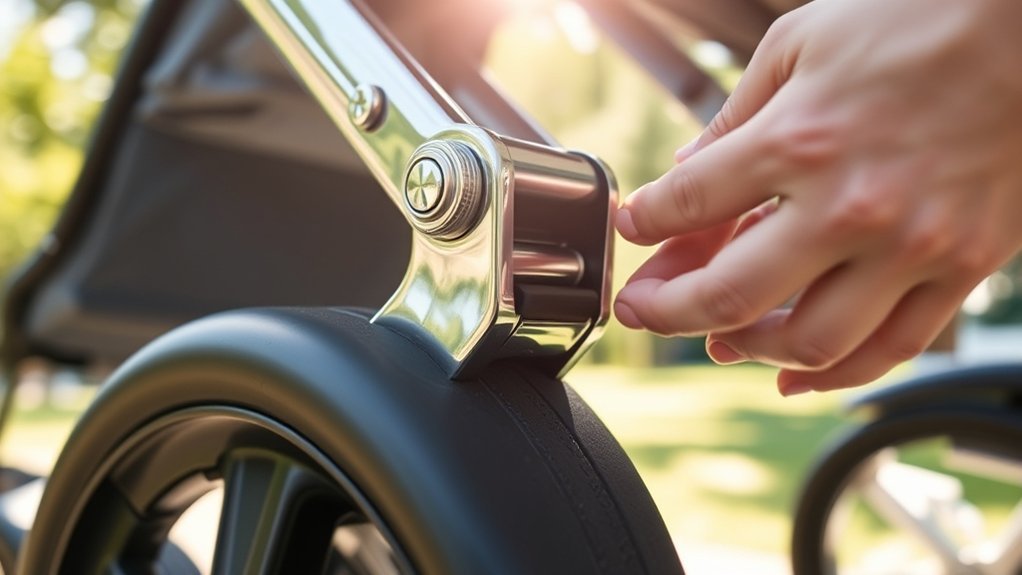
- Inspect the equipment. Check tire pressure, wheel attachments, brakes, and the stroller’s frame for damage or loose parts.
- Choose a suitable route. Start on smooth, level paths away from busy traffic, steep slopes, and slippery ground.
Always engage the parking brake when stopped. The American Academy of Pediatrics’ stroller safety guidance also recommends using the harness and keeping heavy bags off the stroller handles.
Warning: Do not jog with a child who has not reached the stroller manufacturer’s running age or lacks adequate head and neck control. An infant car seat or adapter does not make a stroller safe for running. Never leave your child unattended.
If you’ve recently given birth, your own recovery matters too. Running puts stress on your pelvic floor, core, and joints. A Royal Berkshire NHS guide to returning to running explains that recovery for high-impact exercise can take at least three months and sometimes longer.
Note: Ask your pediatrician about your child’s readiness for stroller jogging. If you’re recovering from childbirth, seek guidance from your healthcare professional or pelvic health physiotherapist, especially if you experience pain, urine leakage, or pelvic heaviness.
Embrace Flexibility in Your Running Mindset
)
The best mindset for stroller running is flexible rather than focused on strict targets. Your child may need a snack, a diaper change, or a break long before your planned route ends.
If you’re already a regular runner, you might aim for 2 to 4 miles on a comfortable day. However, there’s no need to force that distance if your child becomes uncomfortable or you’re still building fitness.
Celebrate every completed run, even when it turns into a walk or ends earlier than expected.
Consider tracking stroller runs separately from solo runs. Record your distance, pace, and how you felt afterward. Over time, these notes can help you recognize progress without making every outing a competition.
Remember that this stage of family life won’t last forever. Your child will grow, and your running routine will change. Enjoy the opportunity to share outdoor time while you can.
Engage Your Kids and Include Them in the Journey
)
Stroller jogging becomes more enjoyable when your child feels included instead of simply riding along. Simple conversations, games, and familiar destinations can turn your workout into a shared adventure.
With older children, ask whether they’d like to join you and let them help choose a destination. A nearby park, playground, or favorite landmark can make the trip more exciting.
For younger children, use your voice to point out interesting things along the route. Describe passing trees, birds, and colorful objects to keep them engaged.
| Activity Ideas | Engagement Techniques | Benefits |
|---|---|---|
| Let your child help choose the outing | Play I Spy along the route | Encourages participation and curiosity |
| Talk about everyday experiences | Notice familiar landmarks | Strengthens family connections |
| Share stories and songs | Finish at a favorite park | Creates positive outdoor memories |
Pay attention to your child’s reactions throughout the run. If they’re upset, uncomfortable, or ready to stop, adjust your plans rather than pushing through.
When your child associates stroller outings with enjoyable experiences, they’re more likely to look forward to joining you again.
Adjust Your Running Norms and Expectations
)
Expect your stroller-running pace to differ from your usual pace. You’re pushing extra weight, steering a stroller, and responding to your child’s needs, so your normal speed may not feel comfortable.
Instead of chasing a personal record, use a pace that allows you to maintain good form and control.
Start With an Easy Run-Walk Workout
A run-walk routine is a practical way to build stroller-running confidence. For example, REI’s stroller running guidance suggests alternating two minutes of walking with two minutes of running.
Try this simple approach once you and your child are ready:
- Begin with an easy walk to warm up.
- Jog gently on a smooth, level section.
- Return to walking before your form becomes strained.
- Repeat comfortable run-walk intervals while your child is content.
- Finish with an easy walk to cool down.
Increase your running time gradually as your fitness and confidence improve.
Walking uphill or slowing down on difficult sections is sensible, not a failure. Pushing additional weight adds resistance, which can challenge your legs and core, but it doesn’t guarantee greater strength or endurance.
Use comfort, control, and consistency as your main measures of a successful workout.
Maintain Proper Form While Pushing the Stroller
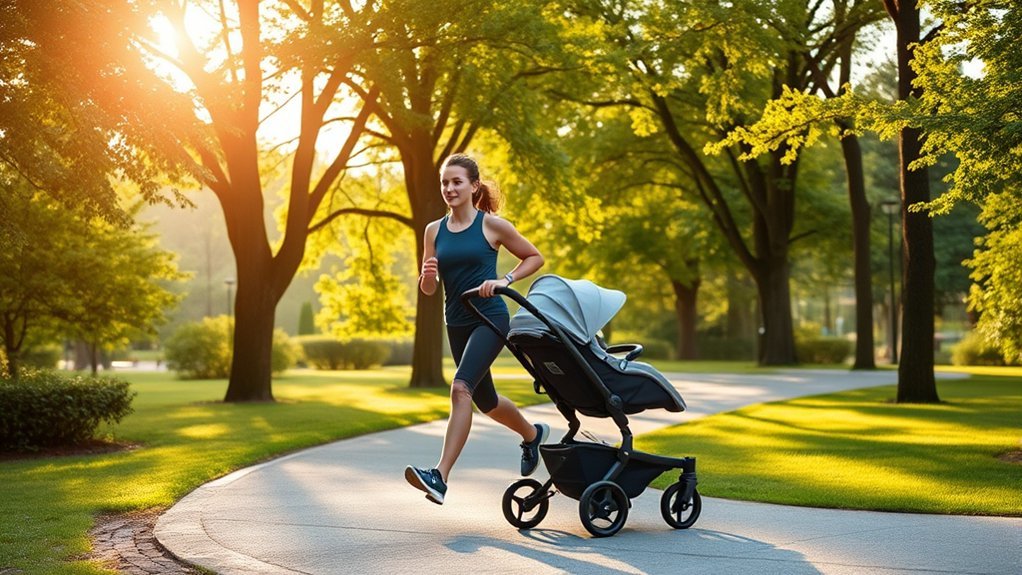
Good stroller-running form helps you maintain control and avoid unnecessary strain. Keep your body upright, relax your shoulders, and push the stroller without leaning heavily on its handlebar.
Set the handlebar at a comfortable height if your model allows adjustment. Your arms should stay naturally bent rather than stretched forward.
You can alternate between pushing with one hand and swinging your free arm when conditions are safe. Keep the other hand ready to help, and use both hands whenever extra control is needed.
| Tips | Benefits | Action Item |
|---|---|---|
| Relaxed grip | Helps reduce upper-body tension | Hold the handle securely without squeezing excessively |
| Alternate hands | Allows more natural arm movement | Switch hands only when conditions are safe |
| Upright posture | Supports comfortable running mechanics | Engage your core and avoid hunching |
| Locked front wheel | Improves stability during running | Secure the wheel in the approved running position |
If your feet strike the back of the stroller, shorten your stride slightly and make sure you’re not crowding the handlebar.
Take wider, slower turns when the front wheel is locked. Never rely on a sharp turn to avoid an obstacle at running speed.
Use both hands on hills or whenever steering becomes difficult. Keep the safety tether attached throughout the run.
If you notice shoulder tension, back discomfort, or poor control, slow to a walk and reset your posture before continuing.
Be Prepared and Well-Stocked for Runs
A well-packed jogging stroller makes unexpected stops easier to handle. Carry the essentials your child regularly needs, but avoid adding unnecessary weight or overloading the storage basket.
Use this checklist before leaving home:
- Hydration: Bring water for yourself and age-appropriate drinks for your child.
- Snacks: Pack suitable snacks for an older child, and stop safely before offering food.
- Sun protection: Use the stroller canopy, protective clothing, and suitable sunscreen.
- Extra clothing: Pack a layer or change of clothes for changing conditions.
- Diaper supplies: Carry diapers, wipes, and other essentials if needed.
- Entertainment: Bring a safe, age-appropriate toy or plan simple games.
- Phone: Carry a charged phone in case you need assistance.
Protect Your Child From Heat, Cold, and Sun
Your child isn’t generating the same body heat as you while running, so dress them for their own comfort rather than copying your outfit.
In warm weather, prioritize shade, ventilation, and regular checks for overheating. The NHS recommends SPF 30 or higher sunscreen for babies over 6 months and warns against covering a stroller with a blanket because heat can build up inside.
Avoid jogging during extreme heat, severe cold, storms, or icy conditions. Shorten or cancel the outing if conditions could make your child uncomfortable or unsafe.
Keep the canopy positioned appropriately, but make sure you can monitor your child during the run.
Keep Your Stroller Ready for the Next Outing
After each run, inspect the wheels for damage and remove dirt from the frame and fabric as directed by the manufacturer.
Allow wet materials to dry before storage. Keep the stroller in a dry location to help prevent rust and mildew.
If a wheel wobbles, a brake stops working correctly, or the stroller pulls sharply to one side, address the problem before running again.
Celebrate Achievements and Prioritize Fun
Stroller jogging should support your fitness without turning family time into another demanding task. Small achievements, shared experiences, and a supportive community can help you stay motivated.
Acknowledge Small Milestones
Progress isn’t always about running faster or farther. Sometimes the biggest achievement is completing an outing while keeping your child comfortable and happy.
Look for meaningful milestones such as:
- Completing your first comfortable stroller run.
- Improving your pace while maintaining good form.
- Running a familiar route with fewer walking breaks.
- Building a regular weekly routine.
- Noticing that your child looks forward to outdoor outings.
Track these moments in a running journal or fitness app if you enjoy recording progress. On difficult days, those notes can remind you how far you’ve come.
Share Joyful Moments
Sharing your stroller-running experiences with other parents or running groups can help you stay encouraged.
Consider joining a parent-friendly running group or inviting another caregiver for a relaxed outing. Shared runs give you someone to talk with and can make a routine feel more social.
Don’t worry if your child needs more stops than another family’s child. Every child has different needs, and your routine should reflect those differences.
Take time to appreciate the moments that happen outside your workout goals, such as spotting an animal or hearing your child laugh during a game.
Encourage Playful Engagement
Simple games can keep stroller rides interesting without requiring extra equipment. Choose activities that allow you to watch the path and maintain full control of the stroller.
Here are five ideas to try:
- Play I Spy: Ask your child to spot objects of different colors.
- Count trees: See how many you pass along a familiar route.
- Try a scavenger hunt: Look for birds, flowers, signs, or other safe sights.
- Sing songs: Take turns choosing favorite songs or making up rhymes.
- Find a landmark: Pick something ahead and celebrate when you reach it.
Adapt the activities to your child’s age. Younger children may enjoy your voice and simple descriptions, while older children can take part in more detailed games.
End the outing on a positive note whenever possible. A pleasant experience can make the next stroller run easier for both of you.
Frequently Asked Questions
What Age Is Appropriate to Start Using a Jogging Stroller?
Most babies should not ride in a stroller during a run until they have strong head and neck control and meet the minimum age in the stroller manual. Some manufacturers recommend at least 6 months and others at least 8 months. Ask your pediatrician before beginning stroller jogging.
How Do I Choose the Right Jogging Stroller for My Needs?
Choose a stroller designed for running, with a secure harness, stable wheels, reliable brakes, and a safety tether. Consider its weight and height limits, suspension, storage, and handlebar comfort. Match the stroller to your usual terrain and confirm that it meets your child’s needs and your budget.
Can I Jog With My Baby in a Standard Stroller?
No, you should not jog with a baby in a standard stroller unless its manufacturer specifically approves it for running. Ordinary strollers may lack the wheel stability and control needed at jogging speeds. Use a purpose-built jogging stroller and follow its age and safety instructions.
What Safety Precautions Should I Take While Jogging With a Stroller?
Secure your child with the harness, lock the front wheel in running mode, and use the wrist strap. Check the brakes and wheels before leaving, avoid dangerous terrain, and monitor your child throughout the outing. Stop immediately if the stroller becomes difficult to control or your child seems uncomfortable.
How Can I Motivate Myself to Stick to a Jogging Routine?
Set manageable goals, record your progress, and celebrate consistent effort rather than speed alone. An accountability partner or parent-friendly running group can provide encouragement. Choose routes you enjoy and allow your schedule to change when your child’s needs come first.
Can I Run With a Jogging Stroller on Uneven Trails?
You can use suitable trails only if your stroller is approved for that terrain and your child is developmentally ready. Start with smooth, firm surfaces and avoid steep, rocky, or slippery sections. Slow to a walk whenever the ground makes steering difficult or creates excessive bouncing.
Conclusion
Jogging with a stroller can help you maintain your fitness while sharing valuable time with your child. Focus on safety, comfortable running form, and realistic goals rather than trying to match your solo pace. Start with an easy route, prepare for unexpected breaks, and find simple ways to make each outing enjoyable. Every comfortable, successful run is progress worth celebrating.
Sources
- Thule: Jogging and All-Terrain Strollers: Manufacturer guidance on minimum running age and stroller safety features.
- BOB Gear: Safety Standards: Age recommendations, front-wheel locking, and wrist-strap safety.
- American Academy of Pediatrics: How to Choose a Safe Baby Stroller: Harness use, stroller brakes, and tip-over prevention.
- Royal Berkshire NHS Foundation Trust: Returning to Running After Childbirth: Postpartum recovery and guidance for returning to high-impact exercise.
- REI Expert Advice: How to Run With a Jogging Stroller: Running posture, pacing, and beginner run-walk intervals.
- NHS: Keeping Your Baby Safe in the Sun: Heat prevention, sunscreen, and safe stroller ventilation.
- Nationwide Children’s Hospital: Stroller and Carrier Injury Research: Historical research on falls and other stroller-related injuries.