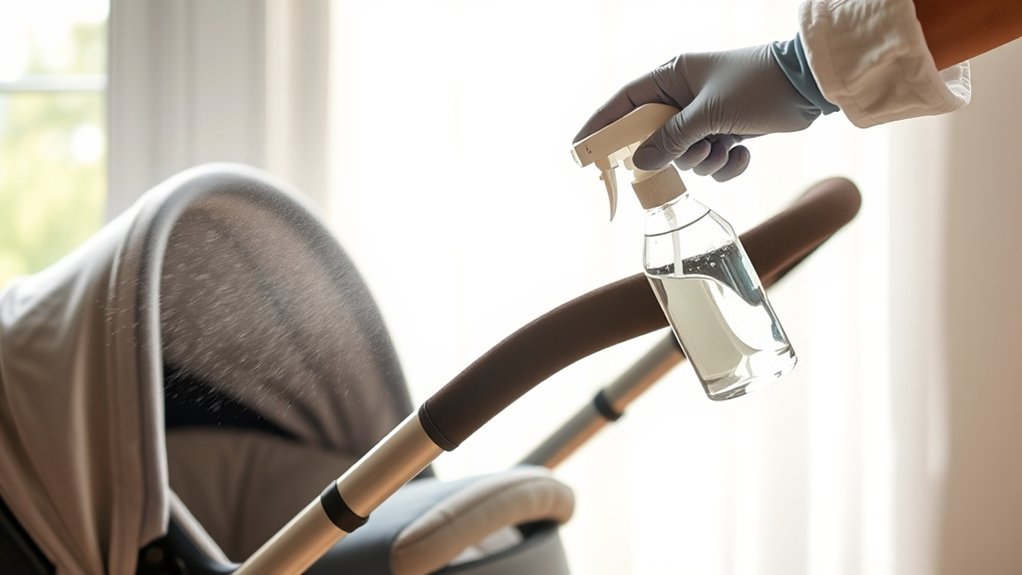
How to Fix a Stuck Stroller Buckle
A stuck stroller buckle can turn a simple outing into a stressful pause. Dirt, crumbs, small debris, or a dry button mechanism often cause the jam. This guide shows you how to inspect, clean, lubricate, and test the buckle before you replace it.
Quick Answer
If your stroller buckle is stuck, check it for dirt, crumbs, or small objects first. Clean the buckle, apply a small amount of silicone spray around the button, and press the button several times. If the buckle still sticks, inspect the inside for hidden debris or replace the buckle with a compatible part.
Key Takeaways
- Check the buckle for dirt and debris before you use lubricant.
- Use silicone spray in small amounts around the button area.
- Test the buckle several times before you place your child in the stroller.
- Stop using the stroller if the buckle cracks, breaks, or fails to lock.
- Choose replacement parts that match your stroller brand and model.
What You’ll Need Before You Start
Gather a few simple items before you work on the buckle. You’ll clean more safely and avoid forcing the mechanism.
- A soft cloth
- A small brush or cotton swab
- A flashlight
- Silicone spray with a straw nozzle
- Your stroller manual, if you have it
Warning: Stop using the stroller until you fix or replace any buckle that will not lock securely.
How to Spot What Is Wrong With Your Stroller Buckle
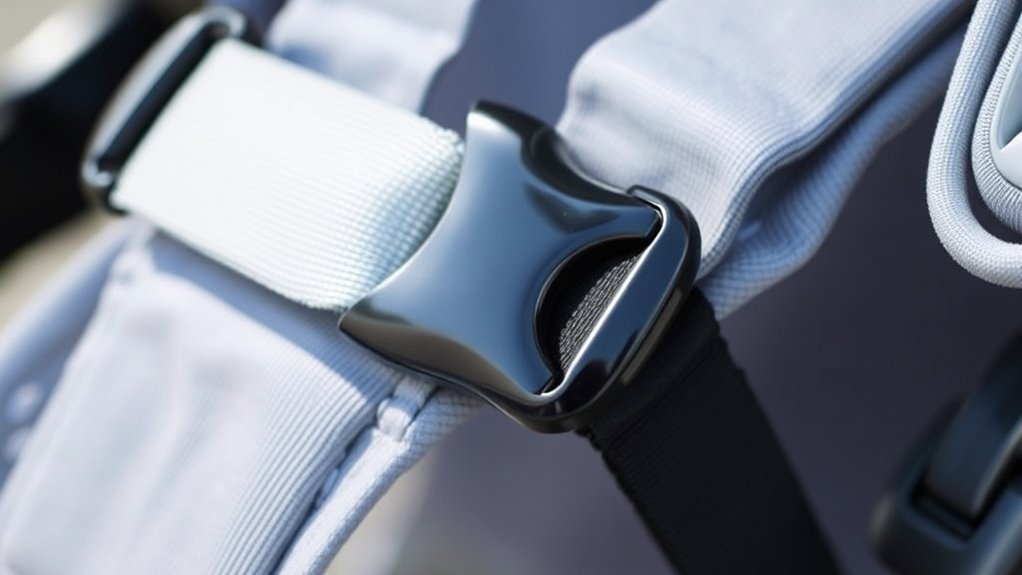
Your stroller buckle may stick, resist pressure, or fail to snap into place. These signs often point to dirt, worn parts, or a small object inside the buckle.
Start with a close visual check. Look around the button, strap slots, and latch area for crumbs, sand, fabric threads, or tiny pebbles.
- Press the button and notice if it feels stiff.
- Insert the buckle tongue and check if it clicks.
- Pull the strap gently to see if it releases cleanly.
- Look for cracks, bent pieces, or loose parts.
If the buckle looks clean but still feels stuck, the inside may need lubrication or a deeper inspection.
How to Clean and Lubricate the Buckle Mechanism
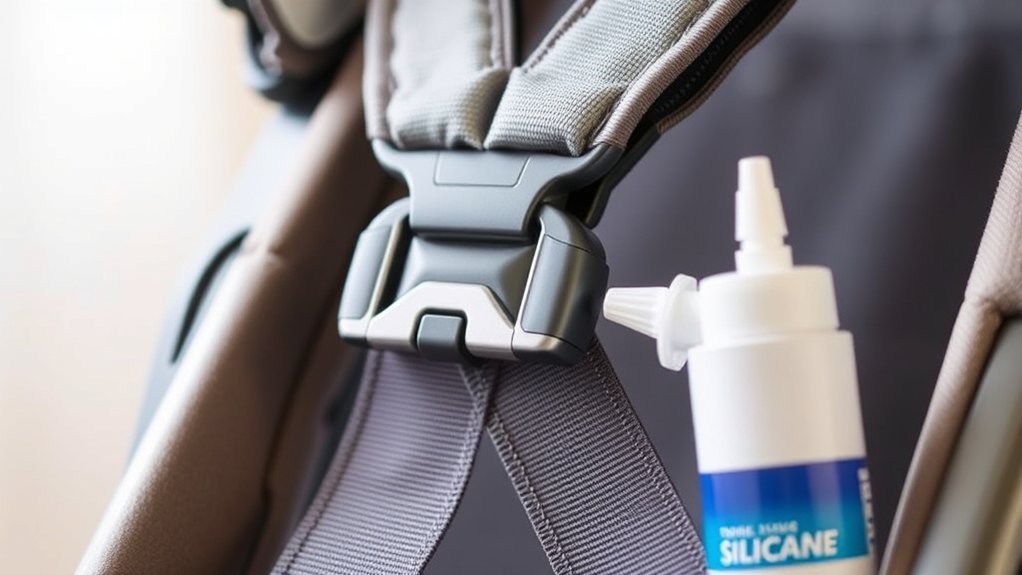
Clean the outside of the buckle before you spray anything into it. A soft cloth, small brush, or cotton swab can remove loose dirt from the button and latch area.
After cleaning, apply a small amount of silicone spray around the button. Use the straw nozzle so the spray reaches the moving parts without soaking the straps.
| Step | Action |
|---|---|
| 1. Spray | Apply silicone spray to the button area. |
| 2. Press | Depress the button to reach internal parts. |
| 3. Lubricate | Allow lubricant to penetrate the mechanism. |
| 4. Repeat if needed | If it’s still stuck, repeat the process. |
Use only a light spray. Too much lubricant can attract grime and make the buckle harder to keep clean.
How to Test the Buckle After Lubrication
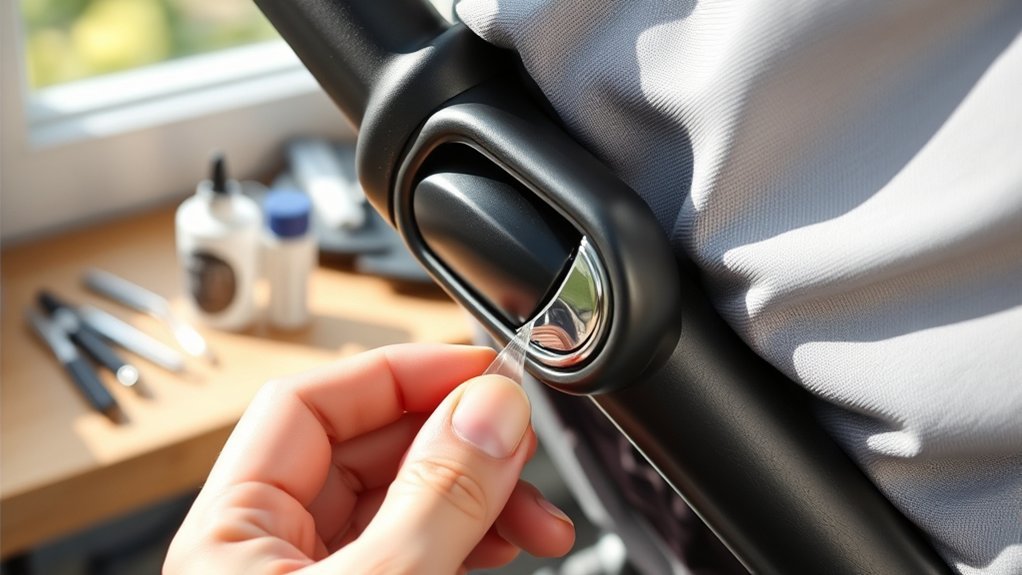
After you apply lubricant, test the buckle before you use the stroller again. Press the button several times so the lubricant moves through the mechanism.
Snap the buckle together and release it several times. The buckle should click firmly, hold the strap, and release without force.
Listen for grinding, scraping, or uneven clicks. Those sounds may mean dirt remains inside the buckle or a part has worn down.
If the buckle still feels stiff, repeat the cleaning and lubrication steps once. If it still fails, move on to a deeper obstruction check.
How to Check for Hidden Obstructions
A small blockage can stop the buckle from moving even after you clean the outside. Use a flashlight to inspect the button gap, latch slot, and strap opening.
If your stroller manual allows it, gently remove the button cover or accessible buckle piece. Do not pry the buckle apart if the manual does not show that step.
Remove visible debris with a cotton swab or small brush. Avoid sharp tools, since they can scratch the plastic or damage the spring inside.
After you clear the area, reassemble the buckle and test it again. A clean click and smooth release mean the obstruction likely caused the problem.
When to Replace the Buckle or Contact Support
If the buckle cracks, bends, or fails to lock, replacement offers the safest fix. Do not rely on lubricant when the latch or release button looks damaged.
Check your stroller manual for the exact part name, model number, and replacement process. Stroller buckles vary by brand and model, so a random buckle may not fit or hold correctly.
You can also contact the stroller manufacturer for support. Share your stroller model, serial number, and clear photos of the buckle so they can guide you to the right part.
Frequently Asked Questions
How Often Should I Clean My Stroller Buckle?
Clean your stroller buckle every few weeks, or sooner if sand, snacks, or mud get near it. Regular cleaning helps the button move smoothly and lowers the chance of a stuck latch.
Can I Use WD-40 Instead of Silicone Spray?
WD-40 may loosen some stuck parts, but it can leave residue that attracts more grime. Silicone spray usually works better for plastic buckle mechanisms because it dries cleaner. Check your stroller manual before you use any lubricant.
What if My Buckle Is Completely Broken?
Replace a broken buckle instead of trying to force it back into use. Look for a part that matches your stroller brand, model, and harness style.
Are Stroller Buckles Universal for All Brands?
No, stroller buckles do not fit every brand. Each stroller may use a different buckle shape, strap width, or harness design, so check compatibility before buying a replacement.
Is There a Warranty for Stroller Buckle Issues?
Your stroller warranty may cover buckle issues, especially if the buckle failed during normal use. Review your warranty terms and contact the manufacturer with your model details.
Conclusion
A stuck stroller buckle usually needs a careful clean, light lubrication, and a simple function test. Start with debris checks before you spray the mechanism or look for replacement parts.
If the buckle still sticks or will not lock, stop using the stroller until you fix the issue. A smooth, secure buckle helps make each outing safer and less stressful.