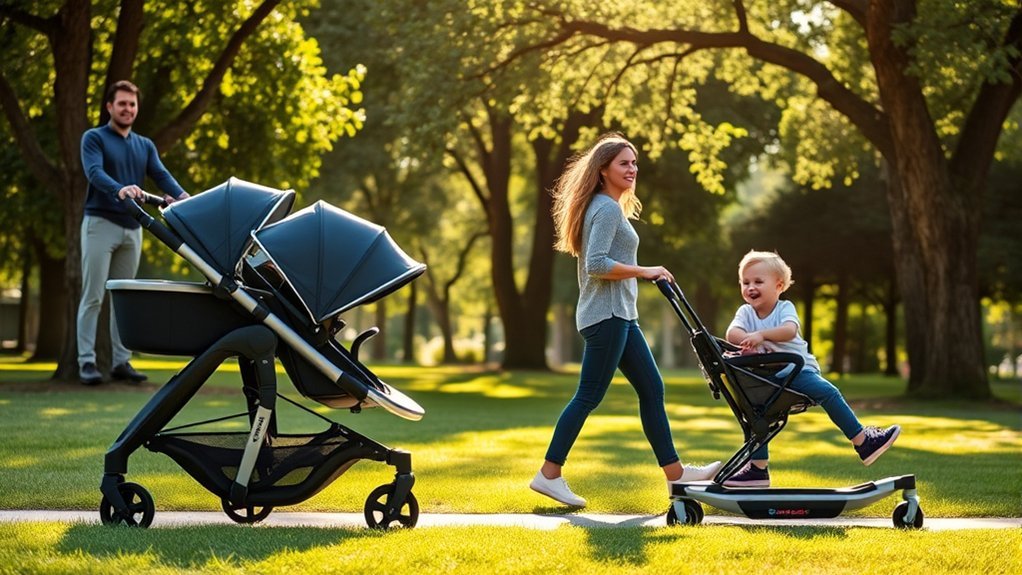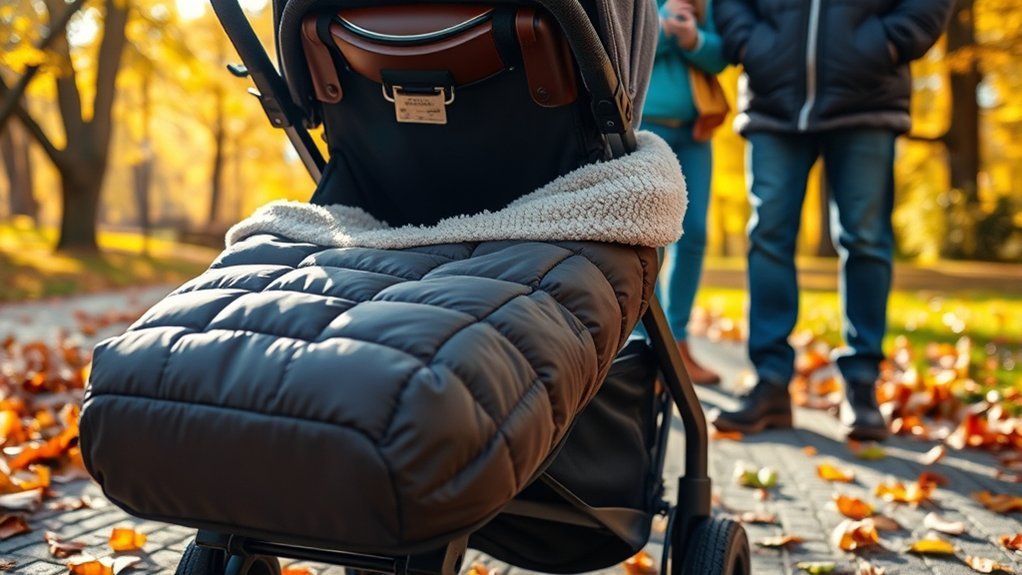
Stroller footmuff safety starts with choosing a cover that fits your stroller, keeps the harness working correctly, and protects your child without trapping too much heat. A footmuff can make cold-weather walks more comfortable, but poor installation or excessive insulation can create avoidable risks. This guide explains how to fit, secure, clean, and adjust a stroller footmuff safely.
Quick Answer
For stroller footmuff safety, use a model compatible with your stroller and route every harness strap through its intended opening. Buckle the stroller harness snugly against your child, keep their face uncovered, and secure the footmuff against slipping. During walks, check your child’s chest or neck for signs of overheating.
Understanding Stroller Footmuff Safety Features
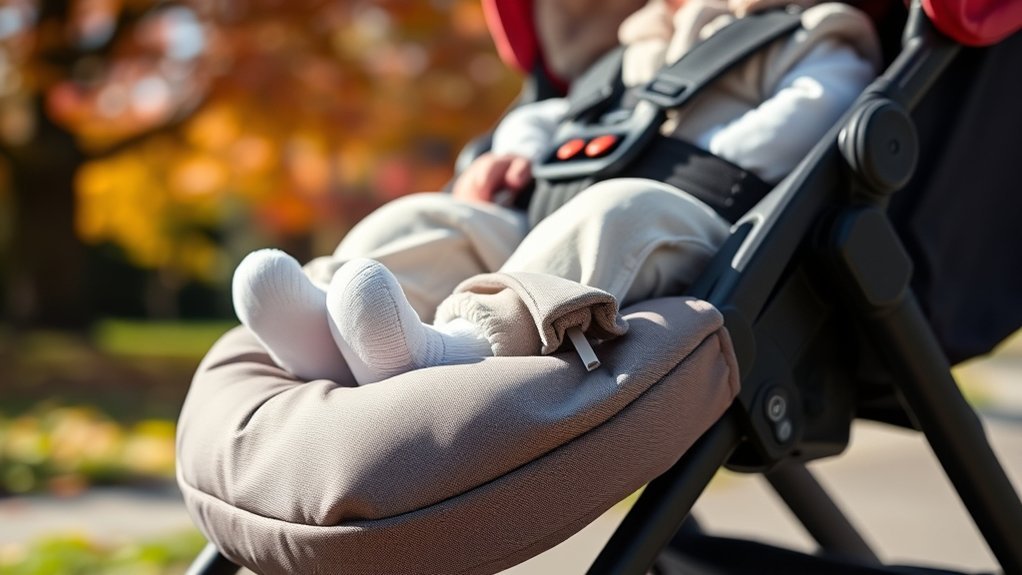
A safe stroller footmuff should work with your stroller’s restraint system without changing how the harness fits your child. It should also stay in position, allow airflow, and provide enough room for comfortable movement.
Pay attention to these features before choosing a footmuff:
- Compatible harness openings: Look for slots that align with your stroller’s shoulder, waist, and crotch straps. Some footmuffs accommodate both 3-point and 5-point harnesses, but compatibility depends on the specific products.
- Secure attachments: Hook-and-loop fasteners, attachment straps, and anti-slip backing help prevent the cover from sliding down the seat.
- Weather-resistant materials: Wind-resistant shells reduce exposure to cold air, while water-resistant fabrics protect against light rain and snow.
- Adjustable ventilation: Two-way zippers and removable sections let you release heat without removing the entire cover.
- Face clearance: Adjustable hoods should stay away from your child’s nose and mouth.
- Reflective details: Reflective tabs or piping can make the stroller more noticeable in low-light conditions.
The American Academy of Pediatrics recommends a five-point stroller harness, with straps over both shoulders, around the hips, and between the legs. A footmuff must not interfere with these restraints.
What Do Footmuff Safety Certifications Mean?
Material certifications can help you assess textile quality, but they do not replace stroller compatibility checks.
For example, OEKO-TEX STANDARD 100 identifies textiles tested for harmful substances. Its Product Class I has the strictest requirements and covers products intended for babies and young children up to three years old.
However, this certification does not establish that a footmuff fits a particular stroller or keeps its harness working correctly. Check the product’s certification label and compatibility instructions separately.
Proper Installation Techniques for Maximum Security
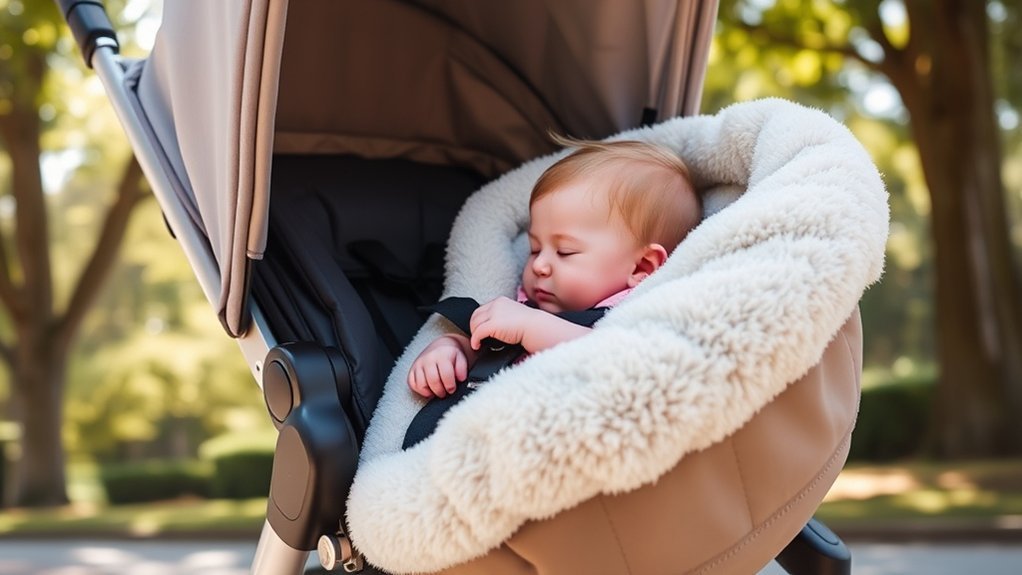
Proper installation keeps your footmuff from sliding and allows the stroller harness to restrain your child. Start with an empty stroller, follow the footmuff manufacturer’s fitting instructions, and check the finished setup before every outing.
Warning: Never use the footmuff as a substitute for the stroller’s safety harness. Keep fabric, hoods, cords, and fasteners away from your child’s face and neck. If the cover prevents proper harness adjustment, remove it and use a compatible alternative.
How to Install a Stroller Footmuff
- Open and secure the stroller. Fully unfold the stroller, confirm its frame has locked, and engage the parking brake before installation.
- Position the footmuff. Lay it flat against the stroller seat, aligning its back with the seat and its lower section with the footrest.
- Route the harness straps. Pass the shoulder, waist, and crotch straps through the designated openings according to the manufacturer’s instructions.
- Seat and buckle your child. Fasten every required harness connection and adjust the straps so they fit snugly without twisting or pressing uncomfortably.
- Secure the footmuff attachments. Fasten the designated straps, hook-and-loop closures, or other attachments. Make sure loose material cannot enter the wheels or folding mechanisms.
- Check the final fit. Gently check that the footmuff stays in place, the harness remains secure, and your child’s face is completely uncovered.
Attachment methods differ between products. For example, the manufacturer’s footmuff installation guidance describes securing the cover around the seat and footrest before threading the harness through its openings.
How Do You Know the Footmuff Is Installed Correctly?
Your child should remain securely restrained by the stroller harness, not by the footmuff’s zippers or attachments.
Check that the shoulder and waist straps lie correctly, the crotch strap stays in position, and the buckle is accessible. The cover should not pull the harness out of alignment or slide upward toward your child’s face.
If the straps cannot reach their proper positions, do not cut new openings or modify the harness. Choose a footmuff designed for your stroller instead.
Ensuring a Comfortable Fit for Your Child
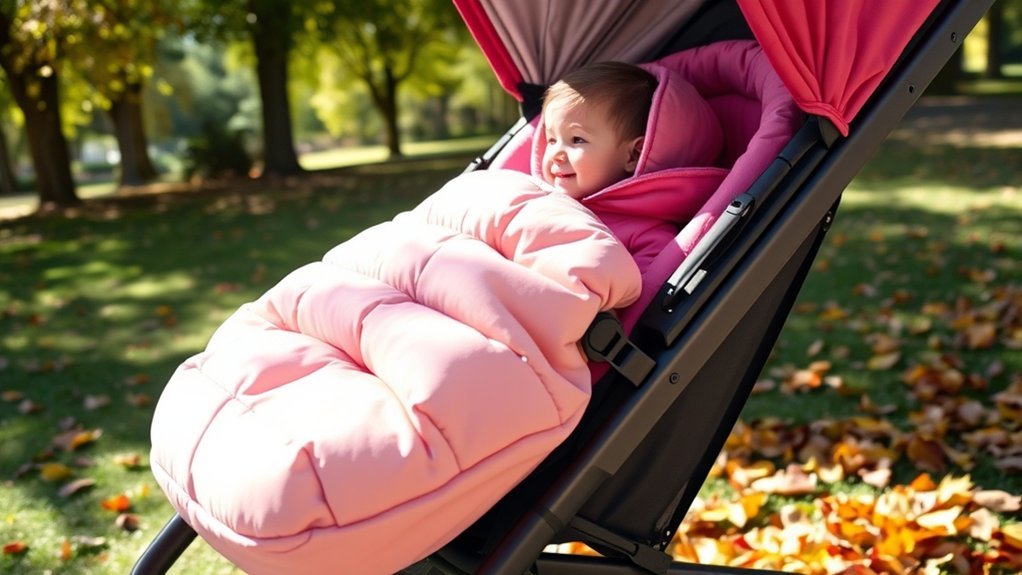
A well-fitting footmuff gives your child room to move while staying close enough to provide warmth. It should not force their legs into a cramped position or bunch up around their shoulders.
Compare the footmuff’s dimensions with your stroller seat and your child’s size. Consider the available length, width, harness opening positions, and room for clothing.
Useful adjustable features include:
- Expandable foot sections: Provide additional legroom as your child grows.
- Adjustable hoods: Help block wind without covering the face.
- Removable front panels: Allow more space and easier temperature adjustment.
- Anti-slip backing: Helps reduce unwanted movement against the stroller seat.
An expandable foot section can provide more legroom, but it cannot correct harness openings that do not align with your stroller.
Make sure your child can sit naturally with their back supported. Avoid pulling drawstrings or adjustable hoods tightly around the head or neck.
As your child grows, reassess the fit. A footmuff that worked comfortably during infancy may become too short or narrow for an older toddler.
Regular Maintenance and Safety Checks
Regular inspection helps you catch damage that could affect footmuff performance or interfere with stroller safety. Check the fabric, fasteners, harness openings, and attachment points before use.
What Should You Inspect?
- Harness openings: Look for torn seams, stretching, or fabric that could obstruct the straps.
- Attachment mechanisms: Check hook-and-loop fasteners, snaps, clips, and other securing points for damage or poor grip.
- Zippers: Make sure they move smoothly and remain closed when required.
- Fabric and insulation: Look for holes, exposed filling, loose threads, or heavily worn areas.
- Anti-slip backing: Confirm it still helps keep the cover positioned correctly.
Stop using a damaged footmuff if the damage affects attachment, restraint compatibility, or your child’s safety.
How Should You Clean a Stroller Footmuff?
Cleaning instructions depend on the fabric, filling, and construction. Follow the care label rather than assuming every footmuff can be hand-washed, machine-washed, or tumble-dried.
For example, the manufacturer’s Gold Footmuff care instructions permit machine washing at 30°C on a delicate cycle but specify no tumble drying.
For routine care, remove crumbs and loose dirt, spot-clean suitable fabrics with a mild cleaner, and allow the footmuff to dry according to its label. Do not reinstall it while the filling remains damp.
Store the clean, dry footmuff in a ventilated area when it is not in use.
Temperature Monitoring and Regulation
A stroller footmuff adds insulation, so your child’s clothing and the weather both affect their comfort. Check your child regularly and adjust the cover before they become too hot or cold.
Temperature checks are especially useful when moving between cold outdoor air and heated indoor spaces.
Neck Temperature Checks
Feeling your baby’s chest or the back of their neck is a practical way to assess warmth. The skin should feel comfortably warm rather than hot or sweaty.
The NHS guidance on preventing overheating recommends checking these areas rather than relying on the temperature of a baby’s hands or feet.
- Warm and dry: Your baby is likely comfortable, provided they otherwise appear well.
- Hot, sweaty, or clammy: Open the footmuff, remove an extra layer, and move to a cooler place if needed.
- Cool chest or neck: Consider adding suitable clothing or adjusting the footmuff for additional warmth.
Cool hands and feet alone do not necessarily mean your baby is cold.
Remember that touching your child’s neck is a comfort check, not an accurate way to measure body temperature. If you suspect a fever or illness, use an appropriate thermometer and seek medical advice when necessary.
Adjusting Footmuff Features
Adjustable footmuffs make it easier to respond to changing conditions. Two-way zippers, removable insulation, and adjustable hoods can help you maintain a comfortable environment without excessive layering.
| Feature | Benefits |
|---|---|
| Two-way zippers | Allow ventilation and easier access without removing the entire footmuff. |
| Adjustable hoods | Help reduce exposure to wind while keeping the face uncovered. |
| Breathable materials | Help moisture and heat escape but do not eliminate overheating risks. |
In colder conditions, dress your child in comfortable layers and use the footmuff as part of their overall insulation. Heavy clothing combined with a thick footmuff may provide more warmth than necessary.
When entering a warm building, open or remove the footmuff and take off extra outdoor layers as appropriate.
Note: Babies born prematurely and children with medical conditions affecting temperature regulation may need individual guidance. Ask your pediatrician about suitable clothing and outdoor exposure in very cold weather.
Best Practices for Outdoor Adventures
Safe outdoor walks involve more than selecting a warm footmuff. You also need to consider weather protection, stroller stability, supervision, and the difference between a stroller seat and a safe sleeping space.
Before leaving, use this practical checklist:
- Check the weather: Choose clothing and footmuff insulation suited to the conditions, including wind, rain, and snow.
- Use the stroller brake: Engage the parking brake whenever the stroller is stationary.
- Keep the face visible: Never pull the footmuff or hood over your baby’s nose or mouth.
- Check attachments: Confirm the footmuff has not shifted during the previous outing.
- Improve low-light visibility: Use reflective stroller or footmuff details where available.
- Avoid overloading the stroller: Do not hang heavy bags from the handles, as they can affect stability.
- Stay attentive: Never leave your child unattended in the stroller.
Should You Cover the Entire Stroller in Cold Weather?
No. Covering the entire stroller opening with a blanket or other fabric can restrict airflow and trap heat.
The NHS warns against covering a pram with a blanket because of overheating risks.
Use the stroller’s compatible canopy and appropriate weather accessories instead, following the manufacturer’s instructions. Your child should remain visible and have access to fresh air.
What if Your Baby Falls Asleep During a Walk?
A stroller footmuff is designed to provide warmth during stroller use, not to turn a stroller seat into a dedicated infant sleeping space.
The American Academy of Pediatrics’ safe-sleep guidance recommends moving a baby who falls asleep in a stroller to a firm, flat, safe sleeping surface on their back as soon as possible.
Keep your baby supervised until you can transfer them. A footmuff does not replace appropriate sleep arrangements.
Frequently Asked Questions
Can I Use a Footmuff With Any Stroller Model?
No. Footmuff compatibility depends on the stroller’s seat shape, harness layout, and attachment design. Even products marketed as universal may not fit every stroller correctly. Choose a footmuff whose harness openings align properly and whose attachments prevent unwanted movement.
What Materials Are Safest for Stroller Footmuffs?
Breathable linings and weather-resistant outer fabrics are practical choices for stroller footmuffs. Select insulation appropriate for the climate and look for durable seams and easy-to-clean materials. A textile certification can provide information about chemical testing, but correct fit and ventilation remain essential.
How Can I Clean My Stroller Footmuff Safely?
Follow the footmuff’s care label. Some models allow machine washing on a gentle cycle, while others require hand washing or spot cleaning. Use a suitable mild detergent, avoid damaging the insulation, and follow the manufacturer’s drying instructions before using the footmuff again.
Are There Any Age Restrictions for Using a Footmuff?
There is no single age limit for every stroller footmuff. For example, the CYBEX Gold Footmuff specifies an age range of 6 months to 3 years. Follow your particular model’s age and size requirements, and stop using it when your child no longer fits comfortably.
How Do I Know if My Footmuff Is Too Warm for My Child?
A hot, sweaty, or clammy chest or neck can indicate overheating. Your child may also appear flushed or uncomfortable. Open the footmuff, remove excess layers, and reassess their comfort. Do not rely on cool hands or feet alone to decide whether additional warmth is needed.
Can I Use a Stroller Footmuff in a Car Seat?
No. A stroller footmuff should not be used as a car-seat accessory. The American Academy of Pediatrics warns against stroller inserts in car seats because added padding can interfere with crash protection. Use only accessories permitted by your car-seat manufacturer.
Can My Baby Sleep in a Stroller Footmuff?
A stroller footmuff is not a replacement for safe infant sleep equipment. If your baby falls asleep in the stroller, move them to a firm, flat, separate sleep surface on their back as soon as possible. Keep them supervised until you can transfer them, and never cover their face.
Conclusion
Safe stroller footmuff use depends on proper harness alignment, secure installation, comfortable sizing, and temperature monitoring. Choose a compatible cover, keep your child’s face uncovered, and inspect the footmuff regularly for wear.
Before each cold-weather walk, check the harness, attachment points, and clothing layers. These simple precautions help keep your child comfortable while reducing avoidable safety risks.
Sources
- American Academy of Pediatrics — How to Choose a Safe Baby Stroller: Five-point harness recommendations, brakes, folding mechanisms, and supervision.
- OEKO-TEX — STANDARD 100: Textile testing, certification scope, and Product Class I.
- Bugaboo — Performance Footmuff Guide: Harness routing, installation, ventilation, and fit.
- CYBEX — Gold Footmuff: Product-specific age range, materials, compatibility, and care instructions.
- NHS — Sudden Infant Death Syndrome: Recognizing overheating and checking a baby’s chest or neck.
- NHS — Keeping Your Baby Safe in the Sun: Stroller airflow and risks associated with covering a pram.
- American Academy of Pediatrics — A Parent’s Guide to Safe Sleep: Safe infant sleep surfaces and moving sleeping babies from strollers.
- American Academy of Pediatrics — Winter Car Seat Safety Tips: Harness fit, bulky clothing, and restrictions on stroller accessories in car seats.