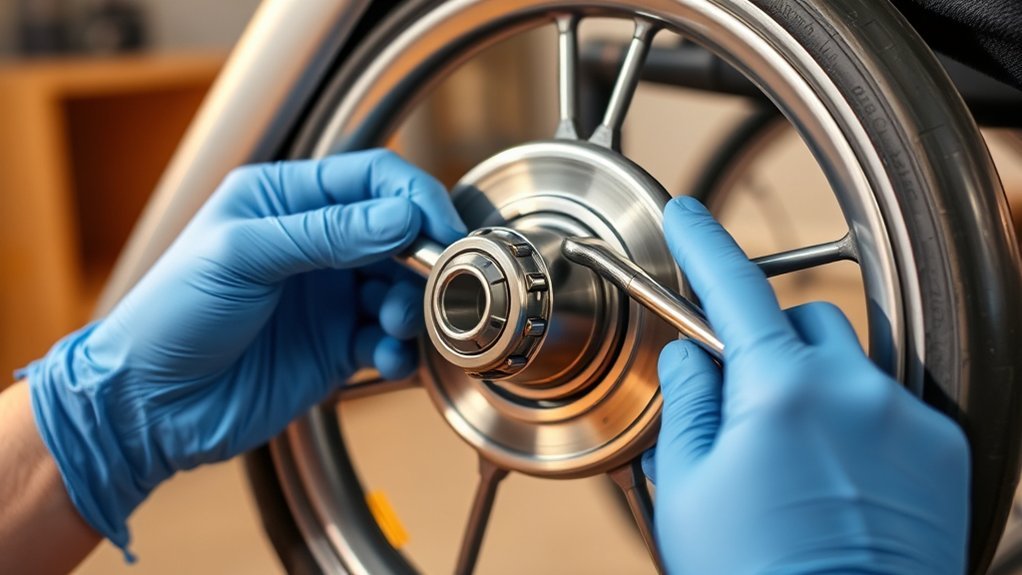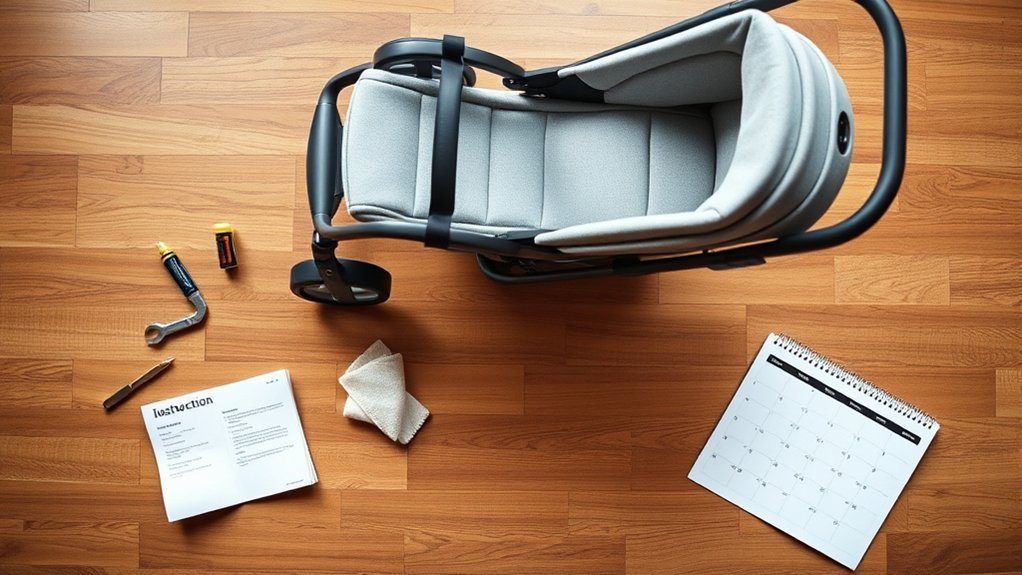
To keep your stroller safe and functional, establish a maintenance routine. Daily tasks include checking wheels, brakes, and surfaces for dirt and wear. Weekly, inspect straps and clean the seat and canopy. Monthly, wash fabric components and vacuum to remove allergens. Every three months, perform a deep clean and lubricate moving parts. Don’t forget to replace worn components promptly. If you want to guarantee your stroller lasts, discover more tips and tricks for effective maintenance.
The Importance of Stroller Maintenance
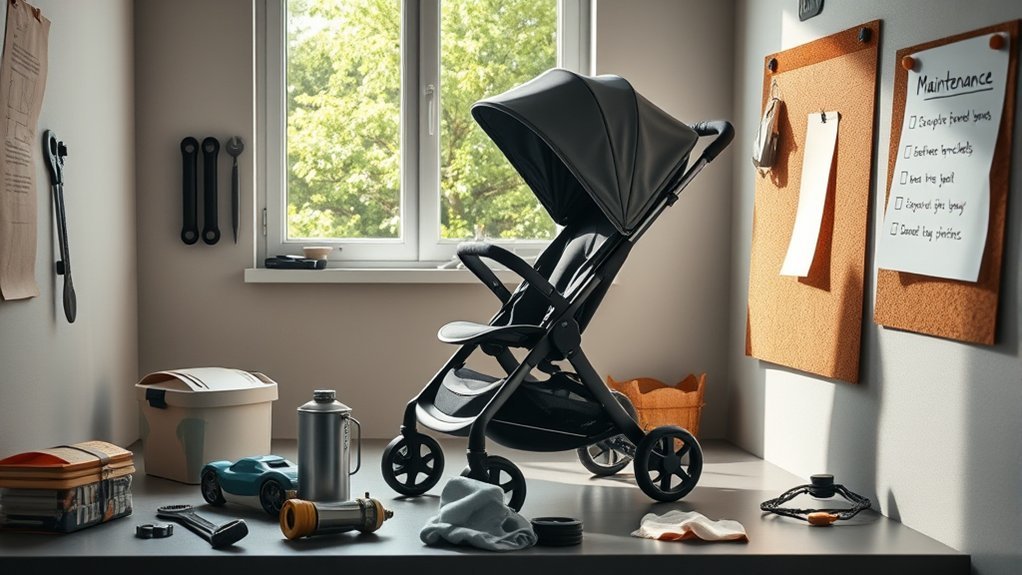
When you prioritize stroller maintenance, you’re not just ensuring a smoother ride; you’re also extending the lifespan of your investment.
Regular upkeep is essential for stroller longevity, as it helps prevent wear and tear that could lead to costly repairs. By keeping your stroller clean, you eliminate dirt, germs, and allergens, creating a healthier environment for your child.
Regular maintenance preserves your stroller’s lifespan, ensuring a safe, clean, and healthy experience for your child.
Routine inspections of wheels, brakes, and harness systems enhance safety, ensuring your stroller remains reliable for daily use. A well-maintained stroller not only provides comfort during outings but also empowers you to navigate life’s adventures without worry.
Investing time in maintenance is a wise choice, ultimately safeguarding your family’s safety and enhancing your stroller experience.
Daily Maintenance Tasks
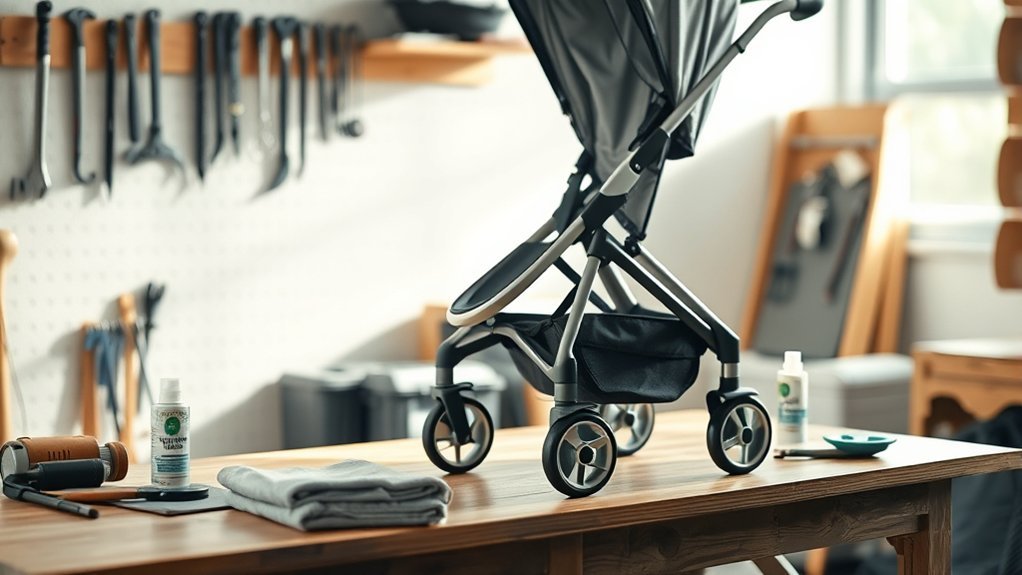
To keep your stroller in top shape, you should perform a few essential daily maintenance tasks.
Start by inspecting the wheels and brakes to guarantee they function properly, then wipe down surfaces to maintain cleanliness.
Finally, check the straps and buckles for wear, adjusting them as needed for your growing child.
Inspect Wheels and Brakes
Regularly inspecting the wheels and brakes of your stroller is essential for safe and smooth outings. Make it a daily habit to check for any issues that could compromise your stroll.
- Look for dirt, debris, or obstructions affecting wheel alignment.
- Test brake functionality to guarantee it locks securely and operates effectively.
- Inspect for signs of wear, such as cracks or wobbling, indicating potential repairs or replacements.
Keeping wheels clean and well-lubricated enhances maneuverability, so don’t let mud or grime hinder your experience.
By maintaining your stroller’s wheels and brakes, you guarantee a safe and enjoyable journey for both you and your child.
Prioritize these checks for peace of mind during every outing.
Wipe Down Surfaces
After ensuring your stroller’s wheels and brakes are in top condition, it’s time to focus on the surfaces your child interacts with most. Daily wiping down helps remove dirt, crumbs, and germs, ensuring a clean environment. Use a soft damp cloth with mild, baby-safe cleaning products for effective cleaning.
| Surface | Cleaning Technique |
|---|---|
| Handles | Wipe with damp cloth and cleaner |
| Seating Areas | Clean thoroughly; focus on seams |
| Canopy and Frame | Dust and wipe to prevent residues |
Pay special attention to high-touch areas, such as handles, for ideal sanitation. These quick sanitation tips contribute greatly to your child’s safety and comfort during outings.
Check Straps and Buckles
While you maintain your stroller, checking the straps and buckles is essential for guaranteeing your child’s safety.
Start by inspecting the harness straps daily for any frays, tears, or signs of wear that could jeopardize harness safety. Next, verify the buckles function correctly, latching and releasing smoothly without sticking.
- Adjust the harness system as your child grows to maintain a snug fit.
- Regularly clean straps and buckles with a damp cloth and mild soap to prevent dirt buildup.
- Test the harness’s overall integrity by pulling on the straps to verify they remain securely fastened during use.
Following these steps will enhance buckle functionality and keep your child secure on every outing.
Weekly Inspection Checklist
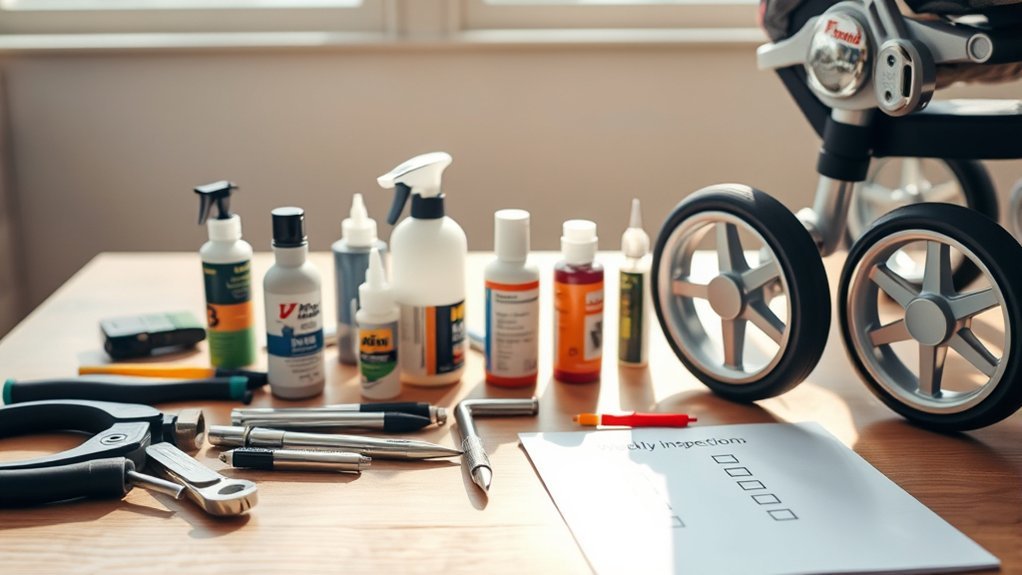
A weekly inspection checklist is essential for keeping your stroller in ideal condition and ensuring your child’s safety.
Start by inspecting the wheels for dirt, pebbles, or debris to guarantee smooth rotation and prevent wear. Test the brake system for secure locking and clean the mechanisms to maintain functionality.
Inspect wheels weekly for debris and test the brake system to ensure safety and smooth functionality.
Each week, check the straps and buckles for integrity, adjusting the harness as your baby grows. Wipe down the seat and canopy with a damp cloth and baby-safe cleaning products after each use for hygiene.
Finally, fold the stroller per the manufacturer’s instructions and store it in a dry place weekly to prevent rust and mold. Use the right maintenance tools to simplify these tasks and prolong the life of your stroller accessories.
Monthly Cleaning Routine
To keep your stroller in top shape, a monthly cleaning routine is essential.
Start by removing and washing the fabric components according to the manufacturer’s guidelines for ideal cleanliness.
Don’t forget to inspect the wheels and brakes, ensuring they operate smoothly and safely.
Deep Fabric Cleaning
Regular deep fabric cleaning is essential for maintaining your stroller’s hygiene and longevity, ensuring a safe environment for your child.
To achieve ideal fabric care, follow these deep cleaning techniques each month:
- Detach and wash removable fabric components according to the manufacturer’s care labels, using cold water to prevent shrinking.
- For non-removable areas, spot clean with a mild soap and warm water solution, avoiding harsh chemicals that could irritate your child’s skin.
- Vacuum fabric surfaces regularly to eliminate crumbs, dust, and allergens.
Remember to air dry all components thoroughly to prevent mildew and maintain their shape.
During cleaning, inspect for any signs of wear and tear, replacing parts as necessary for your child’s safety and comfort.
Wheel and Brake Inspection
Maintaining your stroller’s wheels and brakes is vital for guaranteeing safe and smooth rides. Inspect the wheels monthly for dirt, debris, and signs of wear such as cracks or wobbling. Proper wheel alignment is important for ideal performance; make adjustments if necessary. Lubricate wheel bearings and moving parts with silicone spray or light oil every few months.
Regularly check the brake system by testing the locking mechanism to verify it engages securely and releases smoothly. Clean brake components to remove dust or debris that can hinder performance. Don’t forget to monitor brake fluid levels as well.
Finally, confirm all screws and fasteners related to the wheels and brakes are tightened to prevent malfunctions during your outings.
Seasonal Deep Cleaning
As you shift from one season to the next, conducting a thorough deep cleaning of your stroller becomes essential for ensuring both hygiene and functionality.
Aim for a deep clean every three months or as needed, capitalizing on the deep cleaning benefits to protect your child’s health.
- Detach and wash fabric components according to manufacturer guidelines.
- Use a baby-safe disinfectant to clean the stroller frame and handlebar.
- Lubricate moving parts, like hinges and wheel axles, for smooth operation.
Always inspect components for wear and tear, especially wheels and brakes, to maintain safety.
Regularly check your stroller’s wheels and brakes for wear and tear to ensure your child’s safety during outings.
After cleaning, store your stroller in a cool, dry place to prevent mold and mildew growth, allowing you to enjoy worry-free outings.
Brand-Specific Care Tips
When it comes to stroller care, following brand-specific guidelines guarantees peak performance and longevity.
For UPPAbaby strollers, remember to keep fabric components clean by machine washing without fabric softeners, and regularly inspect wheels for debris and lubrication.
In brand comparisons, Bugaboo stands out by recommending disassembly for thorough cleaning; its fabrics are also machine washable. After washing, wipe down the chassis with a damp cloth and apply silicone spray for smooth operation.
Nuna strollers require their removable fabrics to be washed in cold water and air-dried completely to prevent mildew.
Finally, store your stroller in a cool, dry place away from direct sunlight to protect the fabrics and finishes.
Prioritize these tips for ideal fabric care and functionality.
Common Cleaning Challenges
Cleaning a stroller can pose several challenges, especially when it comes to tackling tough stains from food and beverages that often require specialized solutions.
You might find it difficult to effectively clean your stroller at home due to a lack of proper cleaning tools and techniques. Additionally, dirt and debris can accumulate in hard-to-reach areas, necessitating disassembly for thorough cleaning.
Here are some common cleaning challenges:
- Stains that resist removal without damaging the fabric
- Accumulation of debris in tight spaces
- Sensitivity of stroller materials to harsh chemicals
Using gentle, baby-safe alternatives is essential for maintaining your stroller accessories.
If you struggle, consider professional cleaning services for deep cleaning and sanitization that targets hidden allergens and debris.
When to Replace Stroller Components
Maintaining a stroller goes beyond just cleaning; it’s also about ensuring all components function safely and effectively. Knowing the component lifespan can help you identify replacement indicators.
Replace stroller tires if you see cracks, splits, or worn treads, as these issues can compromise safety. Fabric components should be swapped out if they’re fraying, tearing, or discolored beyond cleaning.
Replace worn stroller tires with cracks or splits, and swap out frayed or discolored fabric components for safety.
Harness systems need attention too; any damaged straps, buckles, or adjusters must be replaced to secure your child properly. Regularly check wheels for wobbling or resistance—persistent issues here signal a need for replacement.
Finally, if the stroller frame shows rust, bending, or weakness, it’s essential to replace it to guarantee your child’s safety during use.
Proper Storage Techniques
To guarantee your stroller remains in ideal condition, proper storage is essential. Choosing the right storage location is vital; a cool, dry place prevents rust and mildew.
Always confirm the stroller is completely dry before folding it, as trapped moisture can lead to mold and odors.
Consider these tips for peak storage:
- Use protective covers to keep dust and debris away, preserving cleanliness.
- Inspect your storage area regularly for pests or moisture to maintain a hygienic environment.
- Avoid direct sunlight to prevent fading and damage to fabrics and components.
Frequently Asked Questions
How Often Should I Replace My Stroller’s Tires?
You should replace your stroller’s tires every 6-12 months, depending on tire wear. Watch for replacement indicators like cracks, bald spots, or diminished traction. Regular checks keep your stroller safe and enjoyable for you and your child.
Can I Use Bleach to Clean Stroller Fabric?
No, you shouldn’t use bleach on stroller fabric. About 75% of parents prefer bleach alternatives like vinegar or mild soap for fabric care. These options are gentler, ensuring your stroller stays vibrant and safe for your child.
What Tools Do I Need for Stroller Maintenance?
You’ll need a soft brush, mild soap, and water for stroller cleaning, plus a tire pump and wrench for tire maintenance. These tools guarantee your stroller remains in top shape, making outings enjoyable and stress-free.
Is It Safe to Use a Power Washer on My Stroller?
Using a power washer on your stroller’s like wielding a mighty storm—impressive but risky. It’s not safe; high pressure can damage fabrics and components. Stick to gentle cleaning methods for a longer-lasting, happy stroller.
Where Can I Find Replacement Parts for My Stroller?
You can find replacement parts for your stroller at manufacturer websites, local baby stores, or online marketplaces. Always check for stroller part compatibility to guarantee you’re buying the correct replacement for your specific model.
Conclusion
By staying on top of your stroller maintenance, you’re not just ensuring a smooth ride for your little one; you’re safeguarding their safety and comfort. Regular checks and cleanings can reveal hidden issues that, if ignored, might lead to unexpected problems down the road. Don’t wait for a breakdown to remind you of the importance of care. With a proactive approach, you can keep your stroller in top shape and enjoy worry-free outings every time.