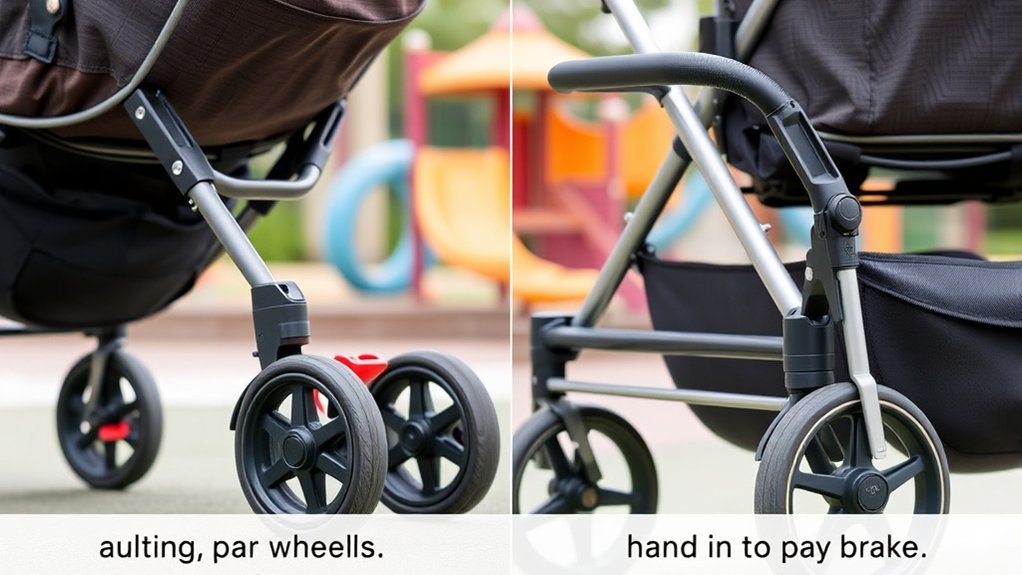
When choosing between a stroller’s parking brake and hand brake, you need to understand their key differences. A parking brake locks the rear wheels to prevent rolling, especially on slopes, while a hand brake allows controlled stopping or slowing down while pushing. Both are essential for safety, but hand brakes are especially recommended for joggers. Understanding these features will help you choose the right stroller for your lifestyle. There’s more to explore about safety and maintenance that can enhance your experience.
Understanding the Importance of Brakes in Strollers
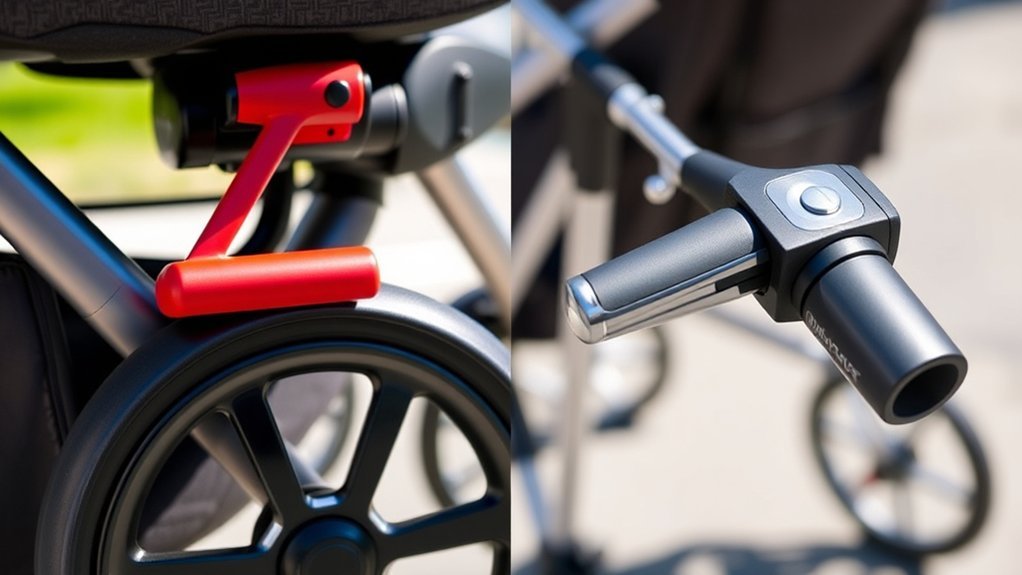
Brakes are an essential safety feature in strollers, guaranteeing both stability and control during use. Understanding different brake designs is important for your child’s safety.
Effective parking brakes lock both rear wheels with a firm click, preventing unintended movement, especially on slopes. This greatly enhances stroller stability, reducing accident risks.
On the other hand, hand brakes offer you the ability to control speed while maneuvering downhill or uneven terrain, allowing for instant adjustments.
It’s critical to verify that your stroller’s braking systems comply with federal safety standards (16 CFR 1227) for reliability.
Regular maintenance and testing of both types of brakes are necessary to keep them functional and free from debris interference, assuring a safe experience for you and your child.
What Is a Parking Brake?

A parking brake serves as an essential safety feature in strollers, designed to lock the rear wheels and prevent any unintended rolling when the stroller is stationary.
Its parking brake mechanics engage with a firm click, allowing you to easily secure the stroller on various surfaces, especially slopes. This functionality is critical for avoiding accidents by maintaining the stroller’s position on inclines.
Compliance with safety regulations, such as the U.S. Consumer Product Safety Commission standards (16 CFR 1227), guarantees that these brakes effectively lock both rear wheels for enhanced stability.
This design minimizes the risk of pivoting or rolling away, giving you peace of mind while you navigate your environment with liberation and confidence.
What Is a Hand Brake?
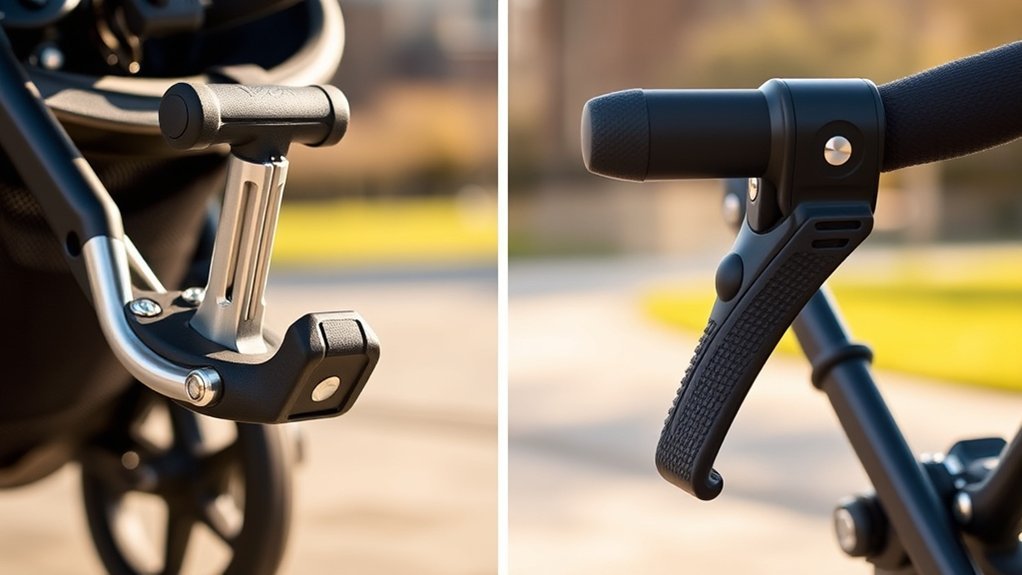
A hand brake is an important feature on strollers that gives you the ability to slow down or stop while pushing, enhancing safety during activities like jogging or maneuvering slopes.
Operated with a lever on the handlebars, it allows for one-handed control, making it easier to manage your tasks.
Understanding its functionality, benefits, and safety features is vital for any parent looking to guarantee a secure stroller experience.
Hand Brake Functionality Explained
Hand brakes on strollers provide essential control during movement, especially on downhill slopes or when quick stops are necessary. Unlike parking brakes, hand brakes engage while you’re pushing, allowing for immediate adjustments. Typically requiring a squeeze or pull action on the handlebar, the hand brake design is intuitive, ensuring you can manage speed effectively. This is particularly important for jogging strollers on uneven terrain. Regular hand brake adjustments and maintenance are critical for reliable performance.
| Feature | Benefit | Importance |
|---|---|---|
| Speed Control | Manage downhill slopes | Enhance safety |
| Quick Engagement | Immediate response | Prevent accidents |
| Accessible Design | Easy to operate | Empower caregivers |
Benefits of Hand Brakes
One key advantage of utilizing a hand brake on your stroller is the enhanced control it offers while guiding through various terrains. This feature is particularly beneficial on downhill slopes, allowing you to manage speed effectively and guarantee stroller safety.
Hand brakes enable dynamic control, letting you adjust quickly without needing to stop completely.
- They provide immediate access for quick adjustments while pushing.
- Hand brakes are essential for maneuvering crowded areas and steep inclines, helping prevent accidents.
- Many modern strollers come equipped with hand brakes, catering to parents who prioritize safety and convenience.
Hand Brake Safety Features
While traversing various terrains, having a reliable hand brake can greatly enhance your stroller’s safety features. This essential tool allows you to control your stroller’s speed effectively, especially when maneuvering downhill slopes.
Unlike parking brakes that secure your stroller in place, hand brakes offer immediate speed regulation through a lever or grip on the handlebar. This added control is vital for safety considerations, particularly in hilly or uneven areas where traditional brakes may fall short.
Many jogging and all-terrain strollers come equipped with hand brakes, providing you with confidence while exercising with your child. To maximize hand brake benefits, guarantee you perform regular maintenance, so they engage easily and deliver dependable stopping power when you need it most.
Key Differences Between Parking and Hand Brakes
Understanding the key differences between parking and hand brakes is essential for safe stroller use. Both brake types serve distinct purposes that enhance your control and safety while maneuvering various terrains.
Understanding the differences between parking and hand brakes is vital for ensuring safety and control while using a stroller.
- Parking brakes lock the rear wheels to prevent rolling, especially on slopes.
- Hand brakes allow for speed control, offering gradual deceleration or immediate stopping power.
Modern safety features highlight the importance of effective parking brakes to mitigate rolling risks.
While parking brakes are a standard feature for all strollers, hand brakes are particularly recommended for joggers or those in hilly areas, providing added safety and control.
Knowing these differences empowers you to make informed choices for a safer stroller experience.
Evaluating Stroller Safety Standards
When evaluating stroller safety standards, it’s crucial to contemplate how well they address braking systems, which are necessary for preventing accidents.
Stroller regulations, updated by the U.S. Consumer Product Safety Commission in 2015, emphasize the importance of effective braking mechanisms. Compliance with federal standards like 16 CFR 1227 and ASTM F833 guarantees that strollers provide important safety features.
Look for JPMA certification, which signifies rigorous testing, especially of braking systems for reliability. Effective parking brakes should engage with an audible or tactile click, making them easy for adults to operate but difficult for children to disengage.
Regular maintenance checks for wear and debris are important to maintain safety compliance and guarantee your stroller operates safely.
How to Choose the Right Brake for Your Lifestyle
How do you choose the right brake for your stroller based on your lifestyle? Start by evaluating your typical environment and activities.
- If you live in hilly areas, opt for a stroller with both a hand brake and a robust parking brake for safety.
- In urban settings, prioritize responsive hand brakes for quick stops, alongside a strong parking brake.
- For jogging or all-terrain use, look for strollers that emphasize hand brakes for better control.
Always remember to check that your chosen stroller’s brake types meet safety standards (16 CFR 1227) and have JPMA certification.
Ensure your stroller’s brakes comply with safety standards (16 CFR 1227) and hold JPMA certification for peace of mind.
These lifestyle considerations will guarantee you’re making a well-informed choice that aligns with your daily adventures and keeps your little one secure.
Testing the Effectiveness of Stroller Brakes
To guarantee your stroller brakes are effective, start with brake engagement testing; listen for that reassuring click when you activate the parking brake.
Next, evaluate performance in real-world scenarios by checking stability on inclines and uneven surfaces.
This practical approach helps you assess how well the brakes will perform in your daily routine.
Brake Engagement Testing
Testing the effectiveness of a stroller’s brakes is essential for guaranteeing safety, especially on slopes where reliable stopping power is important.
You can utilize various brake testing methods to assess both parking and hand brake engagement mechanisms.
- Load the stroller seat with weight and engage the parking brake, listening for an audible click to confirm solid engagement.
- Observe if the brake holds its position under load without slipping, indicating reliability.
- For hand brakes, test their responsiveness while moving downhill to verify they effectively control speed without excessive force.
Regular maintenance checks for debris or wear are important to maintain safety and performance in stroller brakes, helping you enjoy the freedom of movement with peace of mind.
Real-World Performance Evaluation
Evaluating stroller brake performance in real-world scenarios goes beyond basic testing methods. You should assess both the parking brake and hand brake under realistic conditions, like loading the seat with weight and testing brake responsiveness on various slopes.
Effective parking brakes must engage with a firm audible click and maintain slope stability, guaranteeing they don’t slowly release under load. Meanwhile, hand brakes are vital for controlling speed on downhill slopes, allowing you to manage your pace effortlessly.
It’s important to check the engagement and disengagement of these systems for predictability, especially in emergencies. Regular maintenance, including debris removal, guarantees reliability and safety, empowering you to navigate your environment confidently with your stroller.
Tips for Safe Use of Stroller Brakes
While strolling with your little one, it’s crucial to prioritize safety by properly utilizing the stroller’s brakes. Follow these tips to guarantee safe use:
- Always engage the parking brake when stopped, especially on slopes, to prevent accidental rolling.
- Regularly check for debris, wear, or damage during brake maintenance to guarantee smooth operation.
- Test the brakes in-store by adding weight to the seat, evaluating responsiveness before purchase.
Utilize the hand brake on downhill slopes for better control and gradual stopping.
Remember to consult your stroller manual for safety precautions and maintenance guidelines.
Maintenance and Care for Stroller Braking Systems
Regular maintenance of your stroller’s braking systems is vital for guaranteeing safety and ideal performance.
Start with routine brake inspections to check for debris, wear, and any signs of damage. Keeping your tires properly inflated is important, as it directly impacts the effectiveness of the braking systems, especially in hand brake models.
Routine brake inspections and proper tire inflation are essential for optimal stroller braking performance.
Refer to your stroller manual for specific brake maintenance guidelines, including cleaning procedures to prevent buildup that could impair functionality.
Periodically test the parking brake’s engagement and disengagement, making sure it locks securely and doesn’t release under load.
If you notice unusual sounds or operational difficulties, address these issues immediately by consulting a professional or replacing parts as needed.
Your diligence guarantees a safer, more enjoyable outing.
Frequently Asked Questions
Can I Install a Hand Brake on Any Stroller Model?
You can’t install a hand brake on every stroller model. Always check brake installation options specific to your stroller. Ensuring stroller safety features are compatible is essential for safe and effective use.
Are Parking Brakes More Reliable Than Hand Brakes for Everyday Use?
Yes, parking brakes are generally more reliable for everyday use. They enhance brake safety and stroller stability, ensuring your stroller remains secure, even on inclines or uneven surfaces, giving you peace of mind during outings.
How Do Weather Conditions Affect Stroller Brake Performance?
Weather can dramatically impact stroller brake performance. Rain, snow, or extreme heat might cause brake components to wear faster, so regular brake maintenance is essential. Make certain you check and adjust them frequently for ideal safety and reliability.
Can I Use a Stroller With a Broken Brake System?
You shouldn’t use a stroller with a broken brake system. Prioritizing stroller safety is vital, and regular brake maintenance guarantees your child’s security. Always inspect the brakes before use to prevent accidents and secure peace of mind.
What Should I Do if My Stroller Rolls Despite the Brake Being Engaged?
If your stroller rolls despite the brake being engaged, check for debris obstructing the brake system. Regular brake maintenance tips and understanding stroller safety features can prevent future issues and guarantee a secure experience for you and your child.
Conclusion
In choosing between a parking brake and a hand brake for your stroller, consider your lifestyle and safety needs. While some might worry about complexity, both options can enhance your stroller’s security with proper use. Remember, understanding the differences and maintaining your braking system will guarantee a smooth and safe experience. Ultimately, the right brake can make outings with your little one easier and more enjoyable, so take the time to choose what fits best for you.