To sanitize your stroller after illness, start by disassembling it and inspecting all parts. Vacuum any loose debris and clean fabric components according to the manual. Disinfect hard surfaces, focusing on high-touch areas with baby-safe wipes or spray. For extra germ removal, consider steam cleaning. Once everything’s clean and dry, reassemble carefully, ensuring all parts are secure. Regular maintenance keeps your stroller safe and fresh, and there are more tips to enhance your cleaning routine.
Preparing for Stroller Sanitization
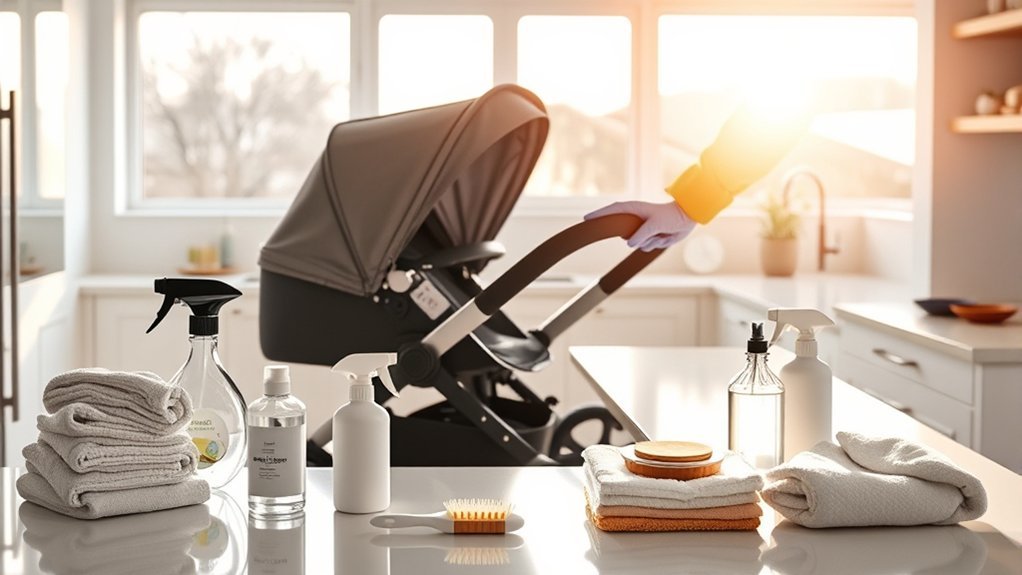
Before you start sanitizing your stroller after illness, gather the essential supplies to make the process efficient and effective. This supply gathering is vital for a thorough clean. You’ll need disinfectant wipes, an all-purpose cleaner, and baby-safe sanitizing products. These cleaning products guarantee that all surfaces your child touches are germ-free.
Once you’ve collected everything, remove detachable fabric components and wash them according to the manufacturer’s instructions.
Don’t forget to vacuum the stroller, paying special attention to crevices where crumbs and germs hide. When applying disinfectant spray, use it evenly on high-contact areas like the seat and handlebar.
Finally, let all cleaned components air dry completely before putting everything back together to avoid any moisture issues.
Disassemble and Inspect the Stroller
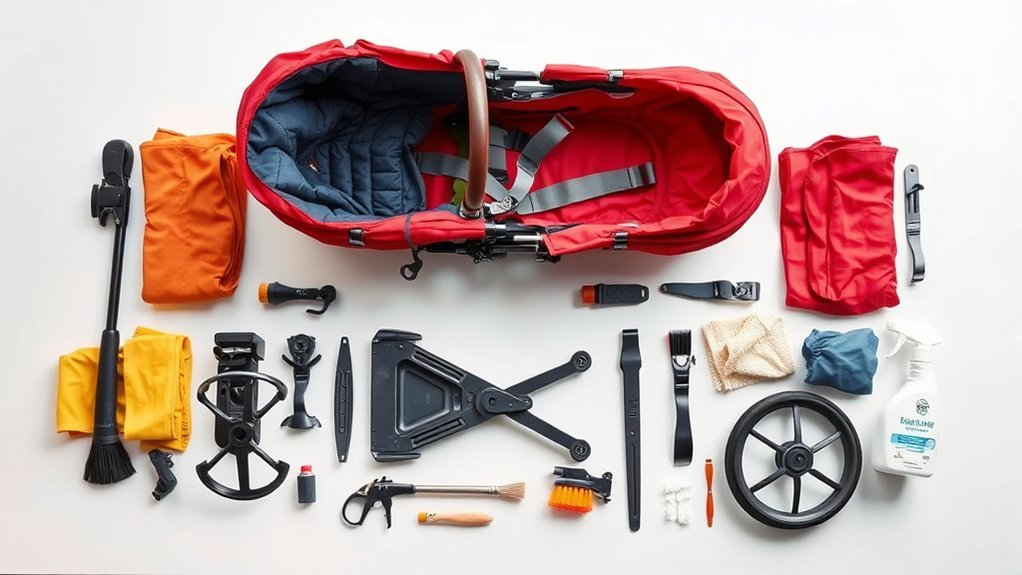
Start by detaching the fabric components of your stroller, as this allows for more thorough cleaning.
Next, inspect the frame for any signs of wear or damage, ensuring it’s still safe to use.
Don’t forget to check the wheels for any debris or issues that could affect their performance.
Detach Fabric Components
To effectively sanitize your stroller, it’s essential to detach the fabric components carefully. Follow these steps for effective fabric care and to guarantee a thorough clean:
- Consult the Manual: Refer to your stroller’s manual for safe detachment instructions.
- Inspect for Damage: Check all fabric parts for wear or damage that could affect cleanliness or safety.
- Document Assembly: Take photos of the stroller’s assembly to guide reassembly, particularly for complex models.
- Organize Components: Label or organize removable fabric parts for an easier cleaning and reassembly process.
Once you’ve detached the fabric, don’t forget to check for hidden debris or crumbs in hard-to-reach areas of the frame that may need cleaning solutions.
This guarantees a healthier environment for your little one.
Examine Frame Integrity
Examining the frame integrity of your stroller is essential for ensuring safety and functionality.
Start by carefully disassembling the stroller according to the manufacturer’s instructions. This allows you to conduct a thorough structural assessment.
Look for any signs of damage, like cracks or bends, especially at joints and folding mechanisms, which can affect frame safety. Make sure these areas are clean and functioning properly.
During your inspection, check for loose screws or connections, tightening them as needed to maintain structural integrity.
If necessary, document the process with photos to help with reassembly, ensuring all parts are correctly placed and secure.
Taking these steps not only enhances safety but also prolongs the life of your stroller.
Check Wheel Condition
Checking the condition of your stroller’s wheels is essential for maintaining safety and performance. To guarantee top-notch functionality, follow these steps:
- Disassemble the stroller according to the manufacturer’s instructions to access the wheels.
- Inspect for signs of wear, like cracks, flat spots, or loss of tread, as these can impact wheel alignment and stability.
- Examine wheel axles and bearings for dirt or corrosion, which can hinder movement and create friction.
- Test each wheel to guarantee it rotates freely and doesn’t wobble; replace any damaged wheels for peak performance.
Regular maintenance, including cleaning and lubricating wheel components, won’t only enhance the lifespan of your wheels but also keep your stroller rolling smoothly and safely.
Vacuuming Loose Debris
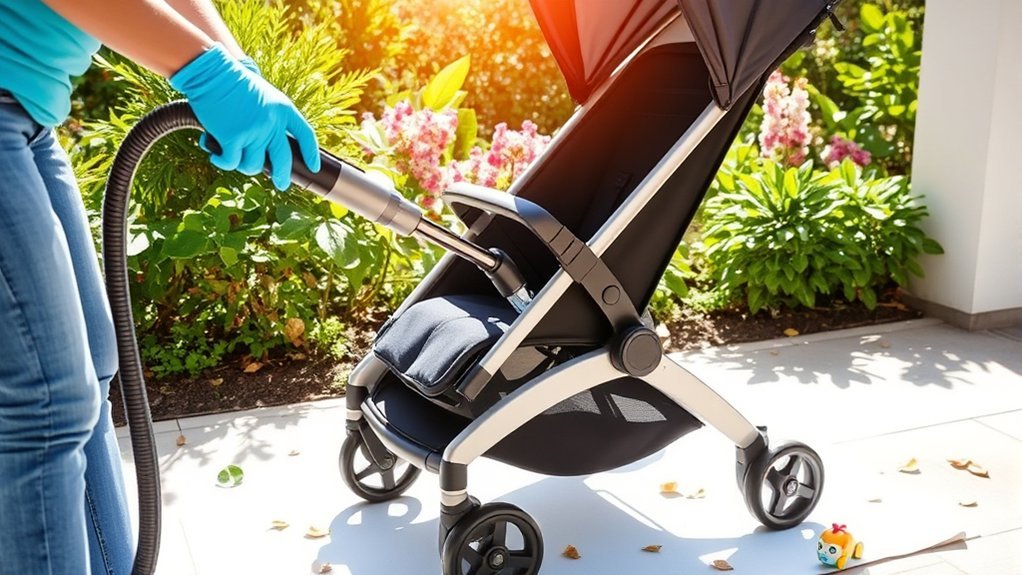
To keep your stroller clean, start by using a vacuum with a crevice attachment to target loose dirt and crumbs.
Focus on high-traffic areas like the seat and storage basket, and don’t forget to shake out removable fabric components first.
Regular vacuuming is key to maintaining hygiene and setting the stage for deeper cleaning.
Tools for Effective Vacuuming
When you’re ready to tackle loose debris in your stroller, having the right vacuuming tools makes all the difference.
Here are four essential tools to take into account:
- Crevice Attachment: This lets you reach tight corners and eliminate debris from the seat and basket effectively.
- Handheld Vacuum: Perfect for quick clean-ups, offering easy maneuverability for targeted cleaning.
- HEPA Filter Vacuum: This traps allergens and fine particles, enhancing the cleanliness of your stroller.
- Regular Maintenance: Clean the vacuum filter and empty the dust container to maintain peak suction power.
Using these tools guarantees a thorough cleaning process, freeing your stroller from loose debris and creating a safer environment for your child.
Target High-Traffic Areas
After effectively vacuuming your stroller with the right tools, it’s time to focus on the high-traffic areas where debris accumulates most. Use a vacuum with a crevice attachment to tackle the seat, canopy, and storage compartments. Pay special attention to the fabric basket and seating area as these spots often collect food particles and germs. Shake out removable fabric parts to dislodge dirt before vacuuming. For those hard-to-reach crevices, a handheld vacuum can really enhance your vacuum techniques.
| High Traffic Zones | Common Debris | Recommended Vacuum Techniques |
|---|---|---|
| Seat Area | Food Crumbs | Crevice attachment |
| Canopy | Dust | Handheld vacuum |
| Storage Compartment | Loose Items | Standard vacuum |
Regularly vacuuming helps maintain a hygienic environment for your child.
Regular Maintenance Importance
Maintaining a clean stroller is essential, especially since loose debris can accumulate quickly and create an unhygienic environment for your child.
Regular vacuuming not only enhances hygiene practices but also extends your stroller’s lifespan. Here are some tips to keep in mind:
- Vacuum high-traffic areas like the seat and storage basket.
- Focus on crevices where crumbs and allergens hide.
- Use a handheld vacuum with attachments for tight spots.
- Make vacuuming a weekly routine or do it after each outing to prevent odors and pests.
Cleaning Fabric Components
Cleaning the fabric components of your stroller is essential for maintaining hygiene, especially after an illness.
First, check your stroller’s manual to see if the fabric is machine washable. If it is, follow the recommended washing instructions for ideal fabric care.
For non-machine washable fabrics, mix mild dish soap with water to create a gentle cleaning solution. Use a soft brush or cloth for effective stain removal.
After cleaning, apply a baby-safe disinfectant spray or wipes to sanitize the fabric thoroughly.
Always allow the fabric components to air dry on the stroller frame to prevent shrinkage or warping.
Regularly inspect for stains or wear and address them promptly to keep your stroller in top shape.
Disinfecting Hard Surfaces
When it comes to keeping your stroller safe for your child, disinfecting hard surfaces is essential, especially after an illness. Here’s how to do it effectively:
- Choose the Right Disinfectant: Select child-safe disinfectant wipes or an all-purpose cleaner with disinfectant properties.
- Focus on High-Touch Areas: Pay extra attention to handles and safety harness buckles.
- Disinfect Regularly: Increase your cleaning frequency after any illness to maintain hygiene.
- Allow to Air Dry: Let disinfected surfaces air dry completely to guarantee maximum germ-killing effectiveness.
Utilizing Steam Cleaning for Sanitization
Steam cleaning offers an effective way to sanitize your stroller surfaces, harnessing high-temperature steam to eradicate up to 99.9% of germs and bacteria without harsh chemicals.
Set your steam cleaner to around 200°F (93°C) to guarantee it effectively eliminates pathogens while remaining safe for stroller materials.
Focus on high-touch areas like the handles, seat, and storage compartments, as these spots are more likely to harbor germs, especially after illness.
Use a steam cleaner with various attachment types to reach crevices and fabric surfaces, allowing for thorough sanitization of all stroller components.
Finally, remember to let your stroller air dry completely after steam cleaning to prevent moisture buildup, which can lead to mildew or mold growth.
Reassembling the Stroller
After verifying that all fabric and plastic components are completely dry, you can begin reassembling your stroller.
Follow these reassembly tips to guarantee stroller safety:
- Refer to any pictures you took during disassembly to guide you.
- Securely reattach the seat fabric to the stroller frame, confirming all clips and fasteners are aligned.
- Double-check that wheels, brakes, and harness systems are reassembled and functioning properly.
- Inspect the stroller for any loose parts to validate safety and stability.
Taking these steps won’t only help you reassemble your stroller efficiently but also assure that it’s safe for your little one.
Enjoy your newfound freedom with a clean and safe stroller!
Regular Maintenance Tips for Stroller Care
To keep your stroller in top shape, it’s essential to implement a regular maintenance routine.
Start by vacuuming regularly to remove crumbs and dirt, paying special attention to crevices and fabric areas.
Follow manufacturer guidelines for cleaning fabric components, typically using mild detergent on a cold cycle and air drying.
Wipe down hard surfaces like the frame and wheels with disinfectant wipes or all-purpose cleaner to eliminate germs.
Store your stroller in a cool, dry place to prevent rust and mildew, while checking for wear and tear.
Establish a cleaning schedule based on usage; aim for a light clean every few weeks and a deep clean every few months.
Don’t forget to keep your stroller accessories clean too!
Frequently Asked Questions
How Often Should I Sanitize My Stroller After Illness?
You should sanitize your stroller after any illness exposure to guarantee effective stroller maintenance and illness prevention. Regular cleaning, especially during flu seasons or after illness, keeps your child safe and healthy.
Can I Use Bleach for Cleaning Stroller Components?
You can’t put all your eggs in one basket, so avoid bleach on stroller materials. Instead, choose bleach alternatives like vinegar or mild soap. They’ll clean effectively without damaging your stroller’s fabric or components.
What Are the Best Sanitizing Solutions for Strollers?
The best sanitizing solutions for strollers include natural cleaners like vinegar and baking soda, or using disinfectant wipes. Both options effectively eliminate germs while being safe for your child and the stroller’s materials.
Is It Safe to Use Essential Oils for Sanitization?
It’s not always safe to use essential oils for sanitization. While they’re natural alternatives, their effectiveness varies. You should consider proper dilution and consult guidelines to guarantee safety and avoid potential allergic reactions.
How Can I Remove Stubborn Stains From Stroller Fabric?
To remove stubborn stains from stroller fabric, use a gentle detergent mixed with water. Apply it directly to the stain, gently scrub, then rinse. Always check fabric care instructions to prevent damage while ensuring effective stain removal.
Conclusion
By following these steps, you’ll guarantee your stroller is clean, safe, and ready for your little one. Disassemble for thorough cleaning, vacuum to remove debris, and disinfect surfaces to eliminate germs. Regular maintenance not only keeps your stroller looking great but also extends its life. So, sanitize after illness, maintain consistently, and enjoy peace of mind knowing your stroller is a healthy space for your child. Keep it clean, keep it safe, and keep it ready for adventure!