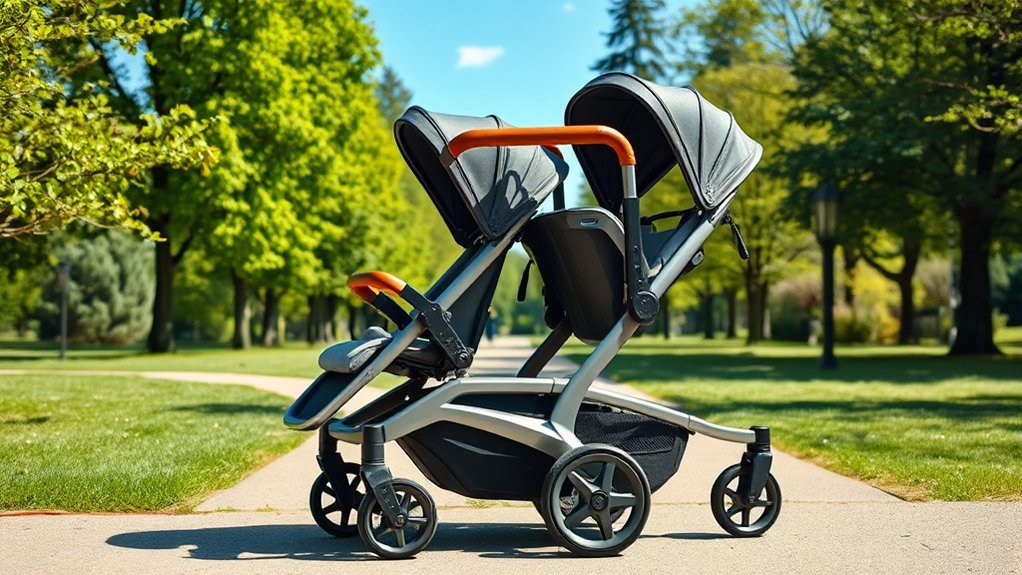
When you’re out with your baby in a stroller, sun safety is key. Dress your little one in lightweight, tightly woven clothing with a UPF rating of at least 30, and always use a wide-brimmed sun hat. Apply a mineral sunscreen (SPF 30+) 15 minutes before heading out, and reapply every two hours, especially after sweating or being in water. Don’t forget to create shade with canopies or umbrellas. There’s more to explore on keeping your baby sun-safe!
Sunscreen Alternatives for Babies Under 6 Months

When it comes to protecting your little one from the sun, especially if they’re under 6 months, it’s crucial to understand that sunscreen isn’t the best option. Many sunscreen myths suggest slathering babies in chemical products, but these can irritate delicate skin.
Instead, rely on natural alternatives. Dress your baby in loose-fitting, tightly woven clothing with a UPF rating of at least 30. Utilize shade from trees or buildings and plan outings during the early morning or late afternoon to limit sun exposure.
If you must apply sunscreen, use a minimal amount of mineral sunscreen with zinc oxide or titanium dioxide on small areas like the face. Prioritizing clothing and shade keeps your baby safe and comfortable.
Importance of Sun Hats
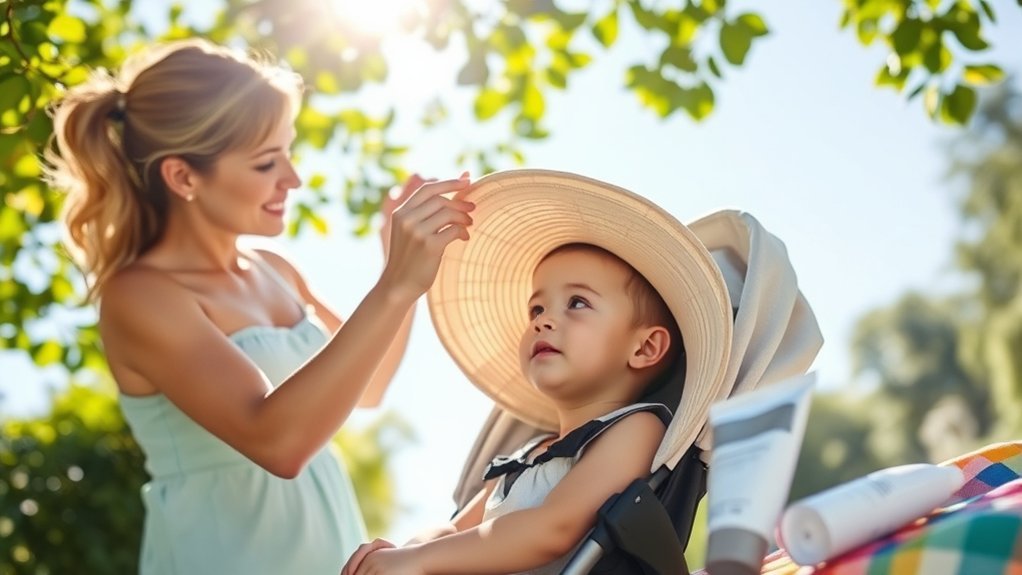
When it comes to protecting your child from the sun, a good sun hat is essential.
Choose one with a wide brim to shield their face, ears, and neck, and opt for tightly woven fabric in darker colors for better UV protection.
Make sure the hat fits snugly to keep it in place, and avoid hats with chin cords unless they’ve safety clasps to prevent choking hazards.
Wide Brim Benefits
A wide-brim sun hat is essential for protecting your child’s sensitive skin from harmful UV rays. The wide brim advantages are clear, as it shields their face, ears, and neck.
Here’s how to guarantee ideal UV protection effectiveness:
- Choose a 3-inch brim: This size provides ample coverage from direct sunlight.
- Opt for darker, tightly woven fabric: This boosts the hat’s ability to block UV radiation.
- Guarantee a proper fit: Measure your child’s head to keep the hat secure without slipping.
- Consider ponytail compatibility: Look for hats that accommodate longer hair for added comfort.
Fabric and Color Choice
Choosing the right fabric and color for your child’s sun hat is essential for effective sun protection.
Opt for hats made from tightly woven fabric types, as they block harmful UV rays more effectively. Darker colors enhance this protection compared to lighter shades, so don’t shy away from bold hues.
A wide brim of about 3 inches is your best friend, shielding the face, ears, and neck from sun exposure. Remember, proper fit is key; measure your child’s head to avoid slipping, which can lessen protection.
If your little one has a ponytail, look for styles that accommodate it for added comfort.
Prioritize safety by choosing hats without chin cords or those with breakaway clasps.
Safe Fit Considerations
Finding the right sun hat for your child is just as important as selecting the right fabric and color. A secure fit guarantees comfort and protection from harmful UV rays.
Here are some tips for hat sizing:
- Measure your child’s head to find the correct size—this prevents slipping and discomfort.
- Choose a wide brim of at least 3 inches to shield their face, ears, and neck.
- Opt for tightly woven fabric in darker colors for better UV protection.
- Avoid chin cords or select hats with breakaway safety clasps to minimize choking risks.
Choosing the Right Mineral Sunscreens
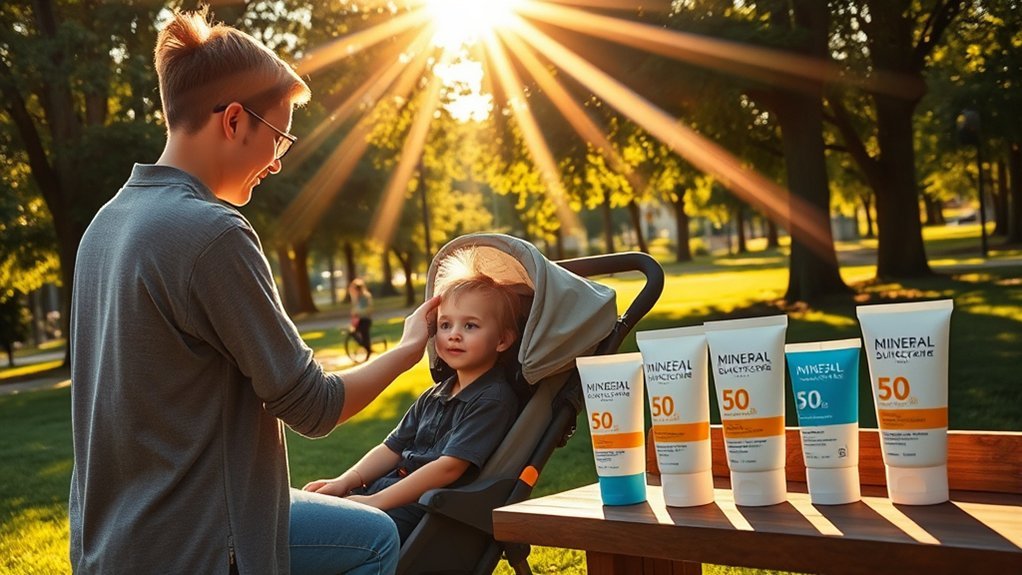
When choosing mineral sunscreens for your baby, focus on products with safe ingredients like zinc oxide and titanium dioxide.
Look for a minimum SPF of 30 and make certain it offers broad-spectrum protection.
Always check for baby-specific formulations to guarantee your little one’s sensitive skin stays protected without any harmful additives.
Safe Ingredients to Consider
Since your baby’s delicate skin deserves the best protection, it’s important to select mineral sunscreens that contain only safe ingredients.
Opting for natural ingredients guarantees you’re using hypoallergenic options, which are gentle on sensitive skin. Here are some key ingredients to look for:
- Zinc Oxide – This provides broad-spectrum protection and is FDA-approved for safety.
- Titanium Dioxide – Another mineral that reflects UV rays effectively.
- Free from Oxybenzone – Avoid chemical sunscreens that can absorb into the skin and disrupt hormones.
- Environmental Working Group Approved – Check their Sunscreen Guide for vetted options that meet safety standards.
Application Tips for Effectiveness
Choosing the right mineral sunscreen is just as important as selecting products with safe ingredients. Look for sunscreens containing zinc oxide or titanium dioxide, as these are the only FDA-approved options for delicate skin.
Make certain the product offers broad-spectrum protection with an SPF of at least 30. For application, use lotions or creams for the body and sticks for sensitive areas like the face; these methods enhance coverage and minimize inhalation risks.
Remember to apply sunscreen generously and frequently, especially after swimming or sweating. Always perform a patch test before full application to avoid irritation.
Finally, check expiration dates regularly; discard any sunscreen over three years old to guarantee effective protection. Enjoy the sun safely!
Choosing Baby-Specific Formulations
Finding the right mineral sunscreen for your baby is crucial for their skin’s safety and protection. When choosing a baby-specific formulation, consider these tips:
- Sunscreen Ingredients: Look for products containing only zinc oxide or titanium dioxide, both FDA-approved for infant use.
- Gentle Formulations: Select sunscreens that are free from harsh chemicals to avoid irritation on delicate baby skin.
- SPF Level: Opt for a mineral sunscreen with an SPF of at least 30 to guarantee adequate UV protection.
- Application Form: Choose lotion or stick forms for easier application on your baby’s face and small areas, steering clear of sprays due to inhalation risks.
These steps will help you keep your little one’s skin safe and protected while enjoying the outdoors.
Sunscreen Application Tips for Stroller Outings
When you’re gearing up for a stroller outing, applying sunscreen to your baby’s exposed skin is essential for keeping them protected from harmful UV rays. To guarantee effective protection, follow these sunscreen timing strategies:
| Step | Timing | Tips |
|---|---|---|
| Apply Sunscreen | 15 minutes before | Choose a mineral-based formula for safety. |
| Reapply | Every 2 hours | More frequently if sweating or in water. |
| Use Protective Gear | Throughout the outing | Dress in UPF clothing and a wide-brimmed hat. |
Reapplication and Additional Protection Strategies
To keep your baby well-protected during stroller outings, regular sunscreen reapplication and additional sun protection strategies are key.
Regular sunscreen application and sun protection strategies are essential for keeping your baby safe during stroller outings.
Set up your routine with these practical tips:
- Reapplication Reminders: Apply sunscreen 30 minutes before heading out and reapply every two hours.
- Post-Activity Care: After swimming or towel drying, don’t forget to reapply—these activities can wash away protection.
- Shade Options: Utilize stroller canopies, mesh sun shields, or portable umbrellas to create shade while you stroll.
- Protective Clothing: Dress your baby in UPF-rated clothing and wide-brimmed hats for extra defense against UV rays.
Common Sun Protection Mistakes to Avoid
Even with a solid routine for sunscreen application and additional protection strategies, it’s easy to overlook common mistakes that can compromise your baby’s sun safety.
Many parents fall for cloud cover misconceptions, thinking they’re shielded when up to 80% of UV rays can still penetrate through clouds.
Don’t just focus on sun safety during beach outings; everyday activities can also expose your child to harmful UV rays.
Remember that car window exposure allows UV radiation to enter, so consider using sun shades for added protection.
Additionally, avoid using adult sunscreen on baby skin, as harsh chemicals can be harmful.
Finally, be aware that reflective surfaces like sand and concrete can amplify UV exposure, putting your little one at risk.
Establishing Early Sun Protection Habits
While it may seem early, establishing sun protection habits for your baby can set the stage for a lifetime of healthy skin.
By prioritizing these practices now, you can greatly reduce their risk of skin cancer later on.
Here are four practical steps to get started:
- Seek Shade: Whenever possible, keep your baby out of direct sunlight.
- Dress Appropriately: Use protective clothing with a UPF rating of 30 or higher to block harmful UV rays.
- Create Consistent Routines: Incorporate sun safety into your daily life, reinforcing healthy habits.
- Model Behavior: Show your child how to protect their skin, instilling lifelong awareness about sun exposure.
Frequently Asked Questions
Can I Use My Regular Sunscreen on My Baby?
You shouldn’t use regular sunscreen on your baby. Their skin’s delicate, needing specific formulations designed for infants. Always choose baby-safe sunscreen to guarantee protection without irritation, and consult your pediatrician for the best options.
How Do I Know if Sunscreen Is Safe for My Child?
How can you guarantee sunscreen’s safe for your child? Check labels for gentle ingredients, choose baby-specific products, and always test a small area on their skin before full application. Protect that delicate baby skin wisely!
What Ingredients Should I Avoid in Baby Sunscreen?
You should avoid chemical filters like oxybenzone and octinoxate in baby sunscreen. Instead, opt for natural alternatives such as zinc oxide or titanium dioxide to guarantee your child’s skin stays safe and protected from harmful ingredients.
How Can I Tell if My Baby Is Sunburned?
If your baby’s soft skin turns red, feels warm, or shows blisters, they’re likely sunburned. Watch for fussiness or peeling, too. Keep them cool, hydrate, and seek shade to soothe their delicate skin.
Should I Apply Sunscreen on Cloudy Days?
Yes, you should apply sunscreen on cloudy days. Even with cloud cover, UV exposure can still harm your baby’s skin. Protect them consistently to guarantee their safety and enjoy your time outdoors without worry.
Conclusion
As you venture out with your little one, remember that shielding them from the sun isn’t just a good idea; it’s essential. By embracing these sun-smart strategies, you’ll create a cozy haven for your baby while enjoying those precious stroller strolls. So, don’t hesitate to don that adorable sun hat, lather on the mineral sunscreen, and make sun protection a delightful routine. With a little preparation, you can bask in the joy of outdoor adventures, worry-free!