🔹 Quick take
The Trailhunter is Toyota’s overlanding-focused 4Runner that aims to be both a comfortable daily driver and a capable off-roader. It arrives with a single powertrain choice: a hybrid turbo 2.4-liter 4-cylinder mated to an 8-speed, rated at 326 hp and 465 lb-ft of torque. In real-world use I’ve averaged about 20 mpg. For roughly $69,600 sticker price this model comes loaded from the factory with serious hardware — and a few packaging compromises.
🚙 What’s on the outside
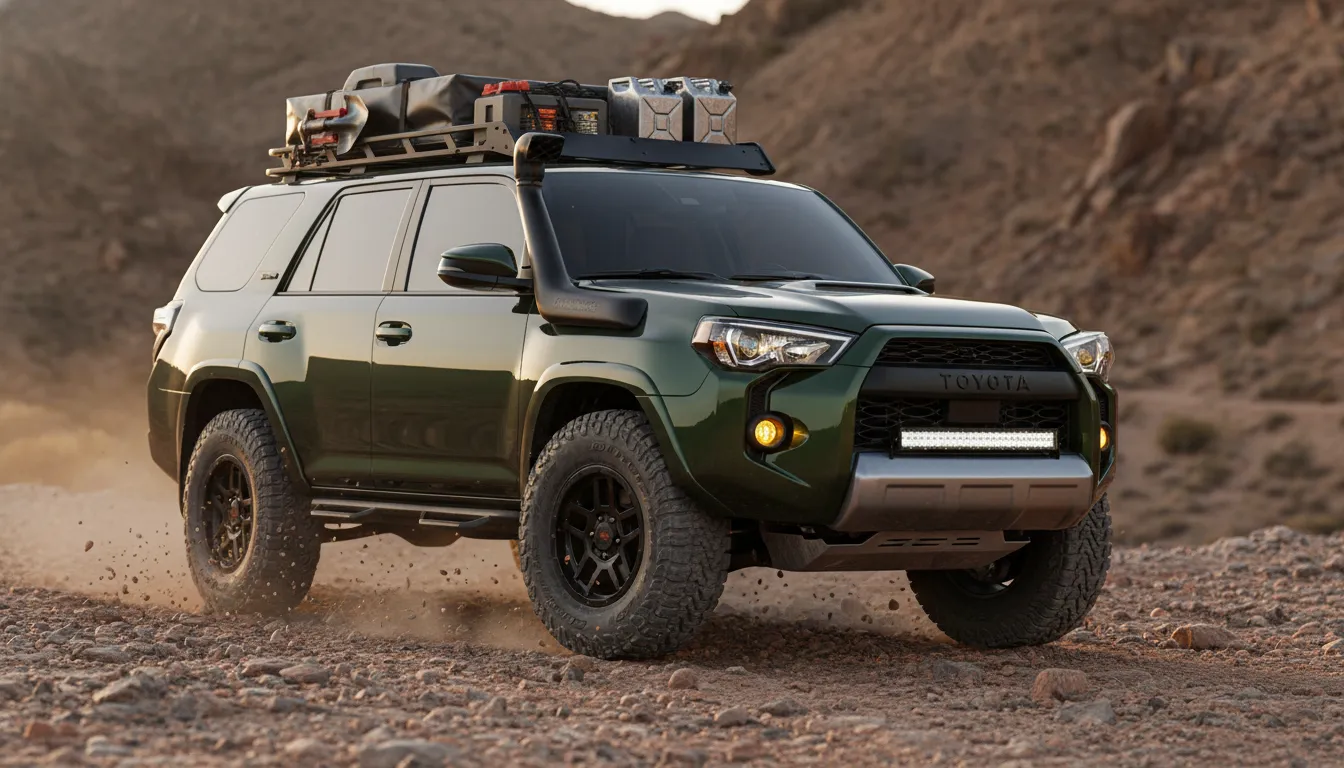
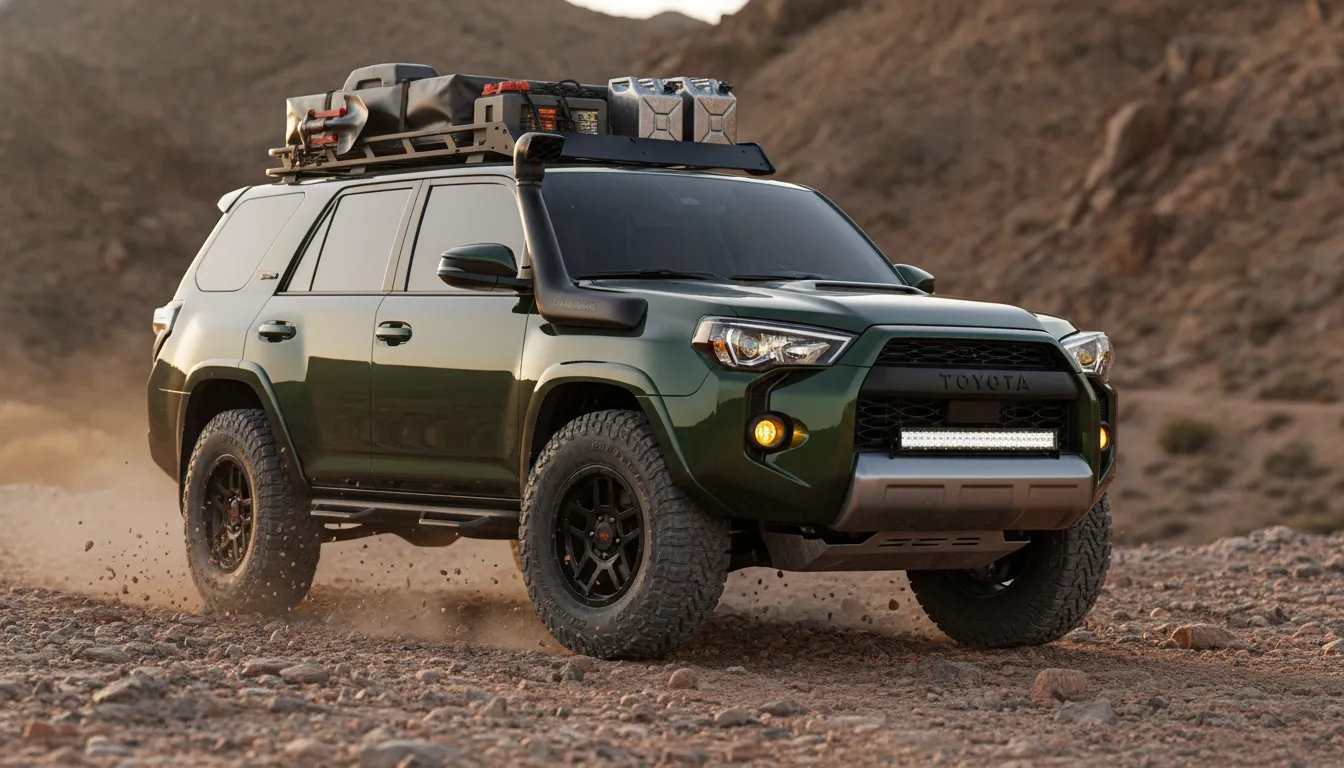
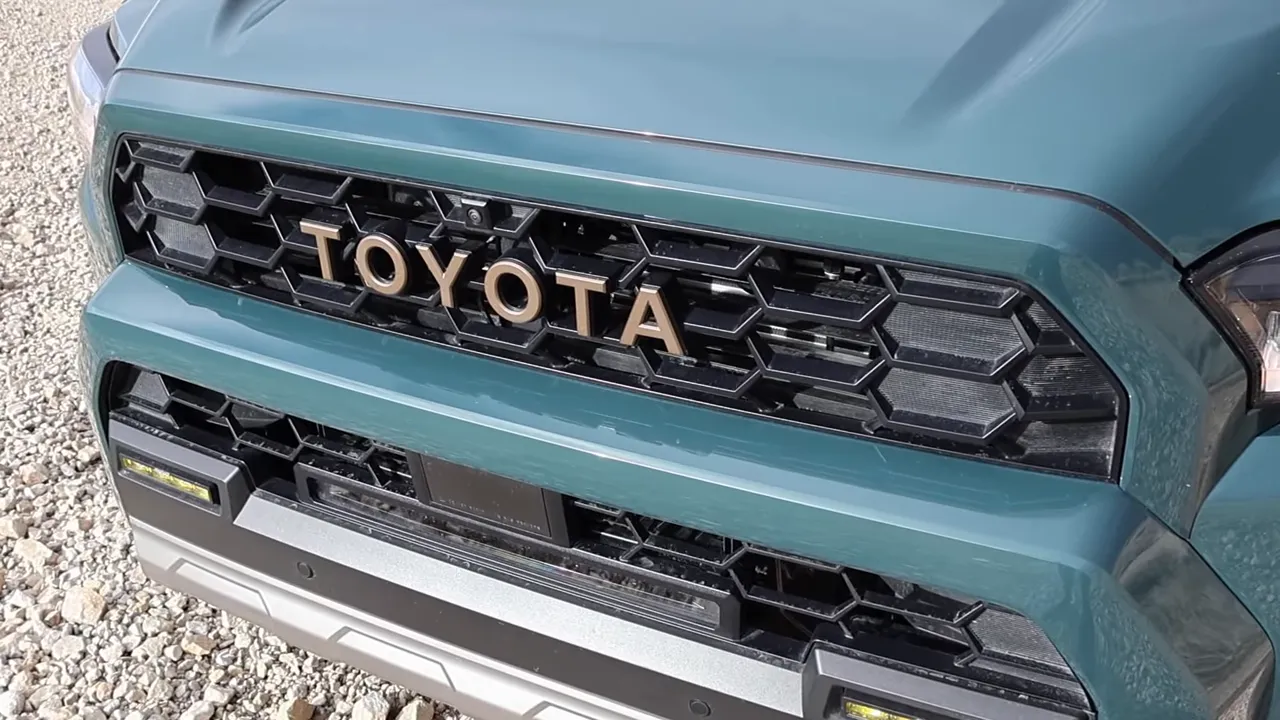
The Trailhunter gets rugged styling cues and purpose-built bits straight from the factory. Highlights include a raised air intake, amber daytime running lights and fogs, a front light bar, rock sliders, skid plates, factory recovery points, and a roof rack. Ground clearance is about 10.1 inches with a claimed 33-degree approach angle.
Tires are a mixed bag. The stock setup is listed as 265/70R18 (Toyota markets them as 33-inch), but they come with a half-tread pattern from the factory. The traction systems are very capable, but swapping the tires is one of the simplest upgrades that instantly improves off-road performance.
🛠 Under the skin and gear you’ll actually use
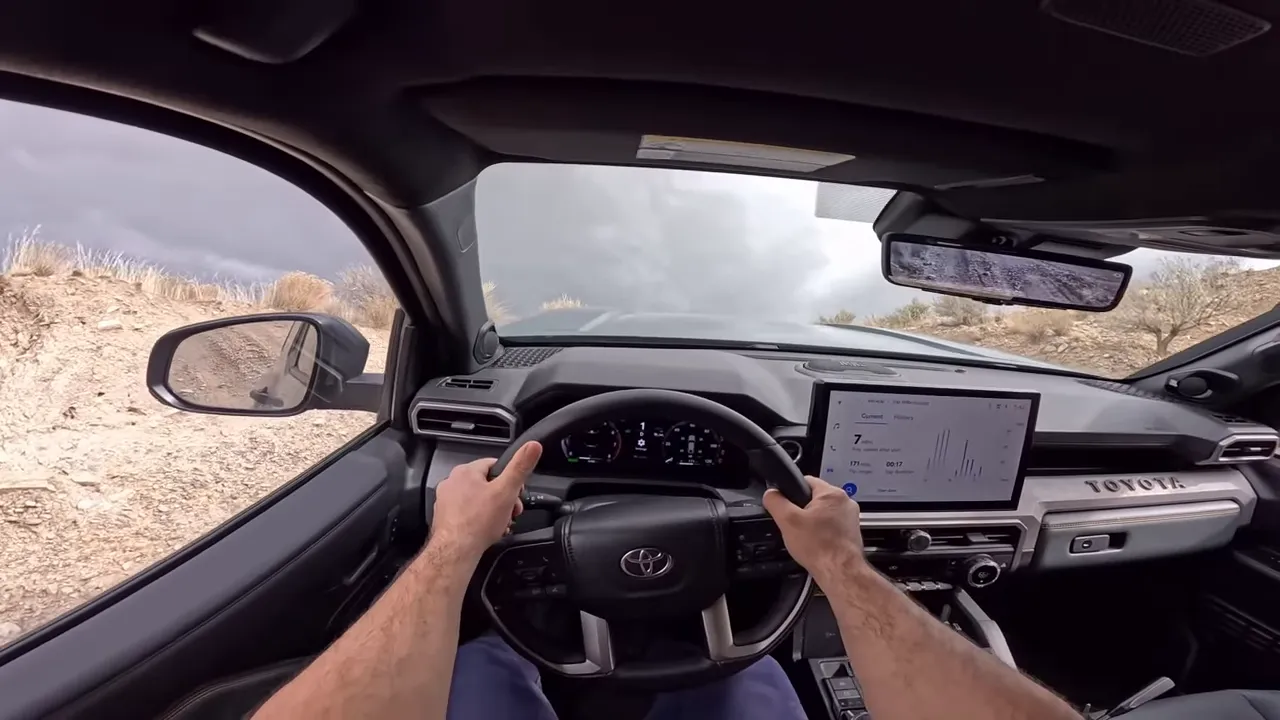
This 4Runner includes several real-world overlanding features that matter on long trips:
- Part-time 4WD with 2-speed transfer case — shifts into low range quickly.
- Rear differential locker that’s easy to use (stationary button hold to engage/disengage).
- MTS (Multi-Terrain Select) and crawl control for tricky technical sections.
- Stabilizer bar disconnect for more articulation and a noticeably more comfortable ride off-road.
- Factory air compressor and a built-in 2400-watt inverter in the cargo area on select trims.
🪑 Interior and daily comfort
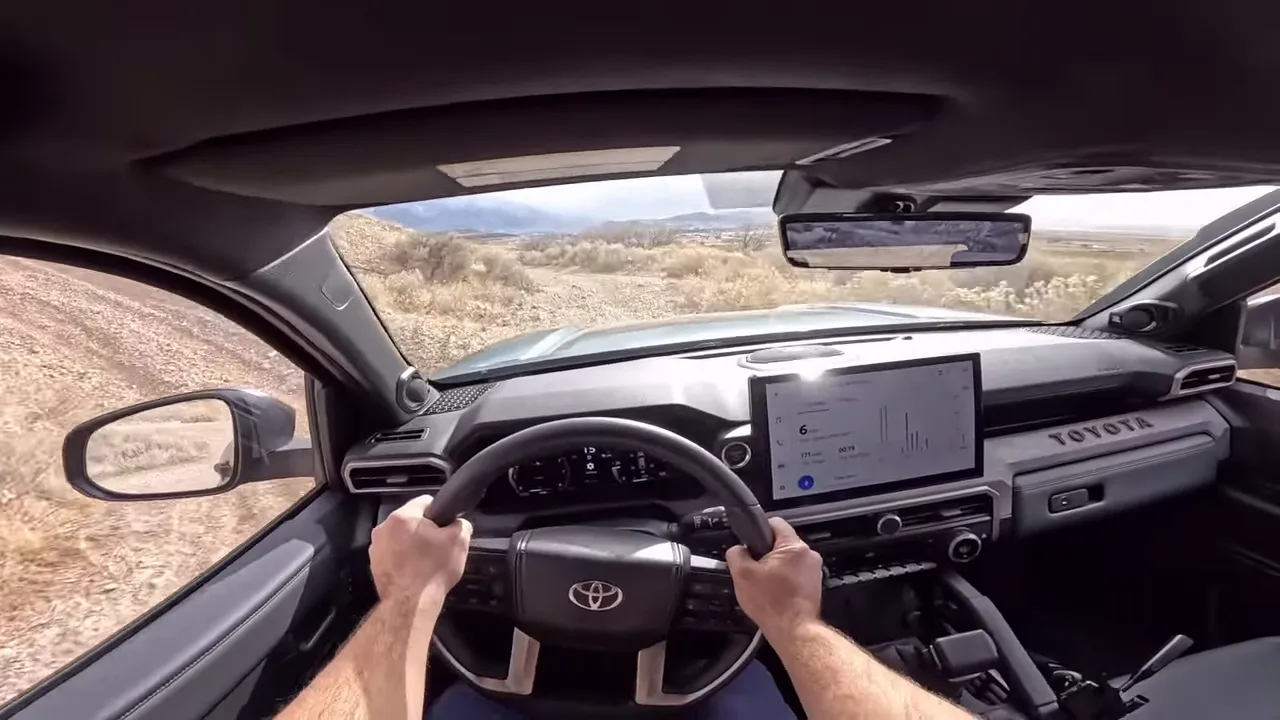
Inside, the Trailhunter blends truck-like ruggedness with refined touches. You get double-pane front windows, soft-touch panels, yellow contrast stitching on gray trim, heated and ventilated seats, memory seating, a heated steering wheel, and dual-zone climate control. A large digital gauge cluster and a fast, responsive central screen round out the tech.
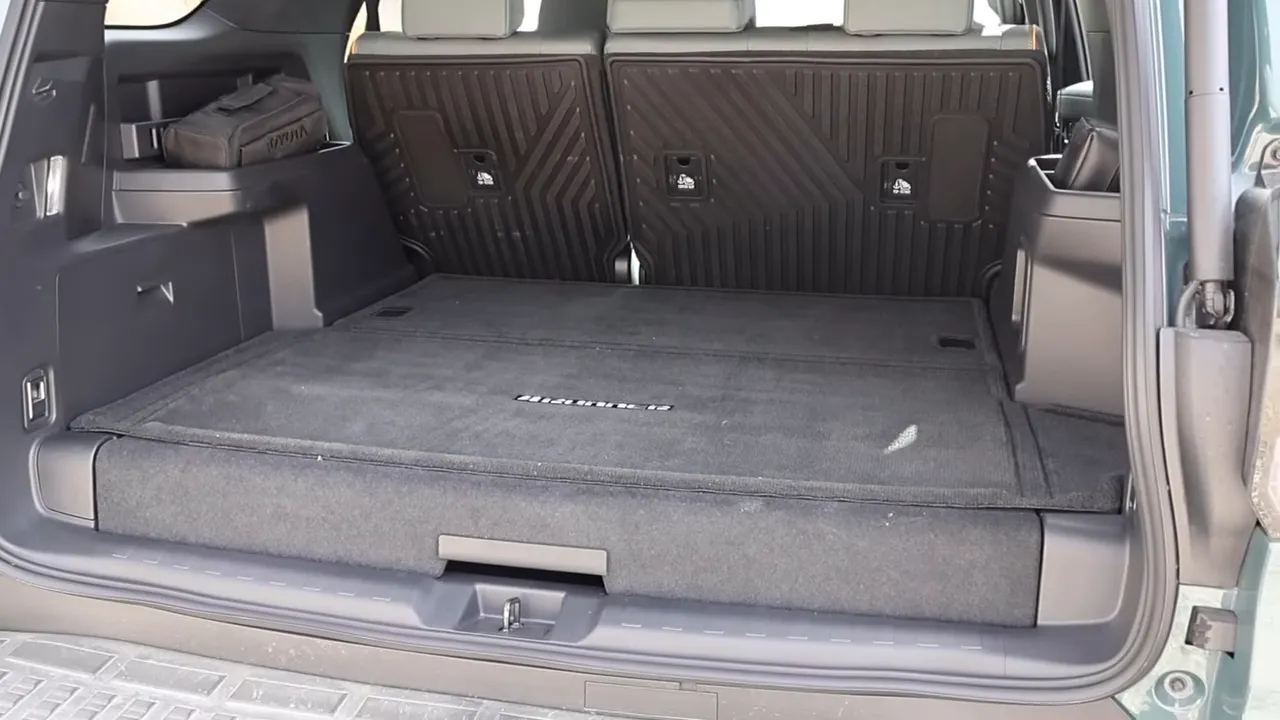
Cargo packaging is where the hybrid layout shows its teeth. The floor is higher due to the battery, rear seats don’t fold completely flat, and usable cargo volume is reduced compared with non-hybrid rivals. For some buyers that tradeoff will be negligible; for others it’s an important consideration.
📷 Tech that helps off-road
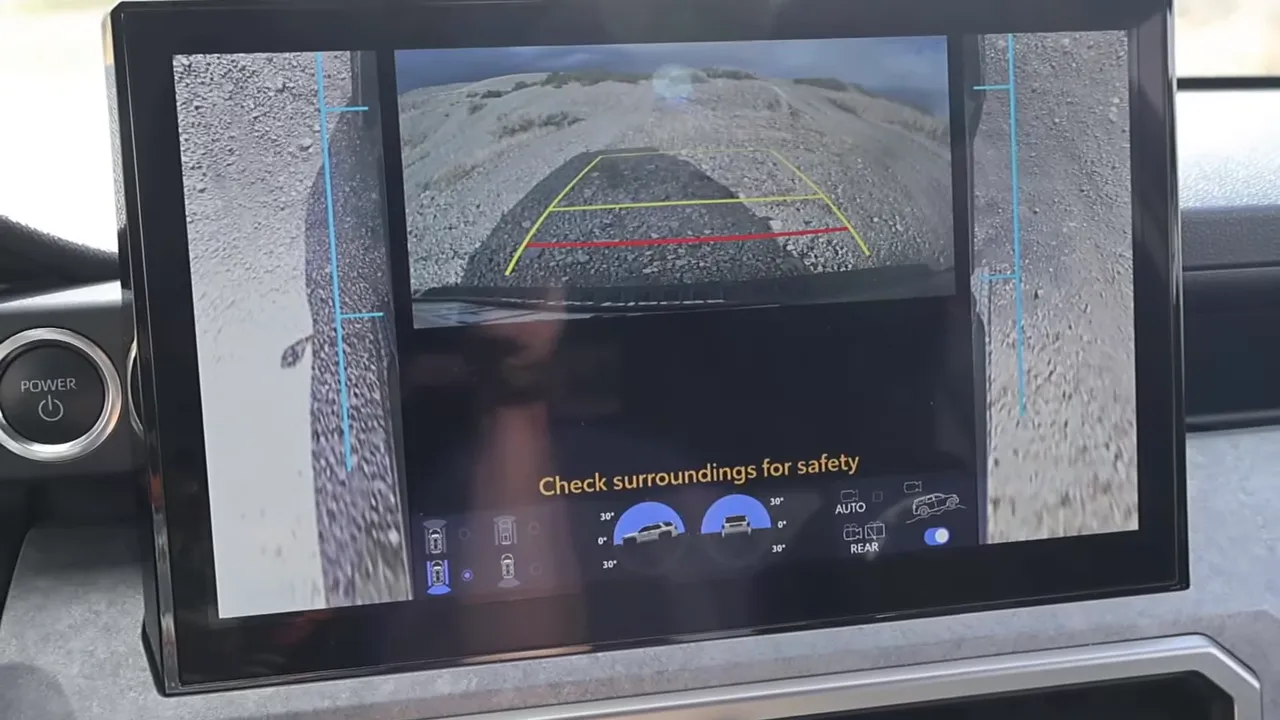
The Trailhunter comes with a very usable 360-degree camera and an off-road camera view that offers excellent resolution for spotting obstacles. Controls are logical and easy to access: dedicated knobs and switches for the light bar and fog lights, four auxiliary switches for accessories, and convenient drive-mode controls.
🪨 Off-road behavior: systems versus driver
This is where the Trailhunter shines. Between the well-tuned Old Man Emu suspension, stabilizer bar disconnect, MTS, crawl control, and a rear locker, it handles rocky, sandy, and technical terrain with surprising ease. The suspension offers a comfortable on-road ride while providing useful articulation off-road — even with the tires at street pressure.
I ran a few head-to-head tests across a tricky section: MTS alone, rear diff lock, crawl control, and a combination of diff lock plus crawl control. Crawl control made the climb feel effortless, though it produced a slightly bumpier ride because it holds speed consistently rather than modulating descent smoothness.
🏁 On-road driving impressions
The hybrid turbo 2.4 delivers a lot of low-end torque — it almost drives like a diesel if you short-shift into the 3,000 to 4,000 rpm range. The result is strong hill-climb performance and relaxed cruising with fewer downshifts. Highway manners are solid and steering/handling are surprisingly competent for a body-on-frame SUV.
Noise is the tradeoff when you load a vehicle with overlanding gear. The roof rack and raised intake create noticeable wind noise at speed. The cabin remains comfortable, but if you’re sensitive to top-end wind howl a quieter roof setup will help.
✅ Key specs and numbers
- Powertrain: Hybrid turbo 2.4L I4 + 8-speed
- Output: 326 hp / 465 lb-ft torque
- Ground clearance: 10.1 inches
- Approach angle: ~33 degrees
- Real-world fuel economy: ~20 mpg
- Sticker price: ~ $69,598 (as-tested)
⚠️ Biggest downsides
- Tire choice from the factory — half-tread street tires reduce grip; swapping tires helps dramatically.
- Hybrid cargo packaging — higher load floor and non-flat rear seats limit usable cargo space.
- Body-on-frame shimmy — certain Toyota models show a rear-end shudder over bumps. It’s noticeable on the 4Runner lineup and seems tied to shock tuning.
🔍 Final verdict
This Trailhunter is a seriously capable overlander straight from the factory. It strikes a practical middle ground: not the most extreme on-road performer nor the most extreme rock-crawler, but a very effective and effortless package for long-distance, off-grid travel. If your use case is real overlanding and you value comfortable daily driving as well, the value is there — provided you accept the hybrid cargo tradeoffs and consider a tire upgrade.
“The new 4Runner: capable and effortless.”
❓ Frequently asked questions
What engine is in the Trailhunter and how does it perform?
Does the Trailhunter come ready to go off-road from the factory?
How easy are the off-road systems to use?
Is the hybrid battery a packaging problem?
Is the Trailhunter worth roughly $70,000?
🔧 Practical upgrades to consider
- Swap the stock tires for aggressive all-terrain or mud-terrain rubber.
- Address wind noise by optimizing roof rack accessories or replacing crossbars with aerodynamic options.
- Consider shock tuning adjustments if rear-end shimmy is a concern.
🏕 Final thought
The Trailhunter is a modern overlander that balances comfort and capability. It’s not flawless, but it is ready to be used hard and live with every day. If your priorities are long off-road miles, reliability, and a usable set of factory features, this is one of the most sensible packages on the market.