Affordable heavy-duty work trucks are rarer than they used to be, but they still exist if you know what to look for. The 2026 Ford F-250 XL with the 6.8 liter gas V8 is one of those honest, no-nonsense workhorses: big engine, simple interior, and capability where it counts. This is a practical tool first and a luxury pickup second. If your job is hauling, towing on occasion, and needing a rugged daily driver that won’t make you sweat every time a building material order comes in, this truck deserves a close look.
🚚 Key Specs at a Glance
Here are the headline numbers that matter for work: the heart of this truck is a 6.8 liter gas V8 mated to a 10-speed automatic. It produces 405 horsepower and 445 lb-ft of torque, and ships with a 34 gallon fuel tank. The tested configuration lists at $58,245.
- Engine: 6.8L gas V8
- Transmission: 10-speed automatic
- Horsepower: 405 hp
- Torque: 445 lb-ft
- Fuel tank: 34 gallons
- Payload: 3,052 pounds (as equipped)
- GVWR: 10,000 pounds
- Towing: mid to high teens of thousands of pounds depending on configuration
✨ Exterior: Big, Brutal, and Built for Work
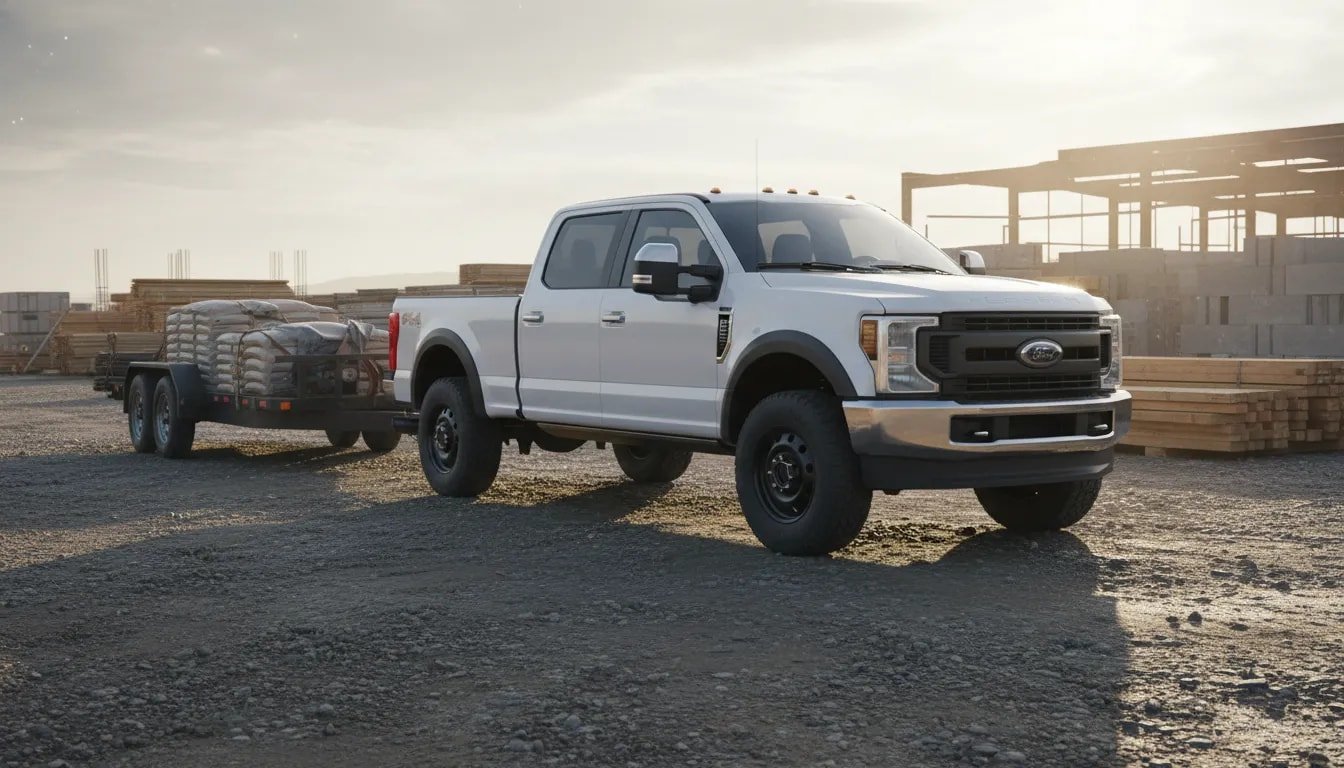
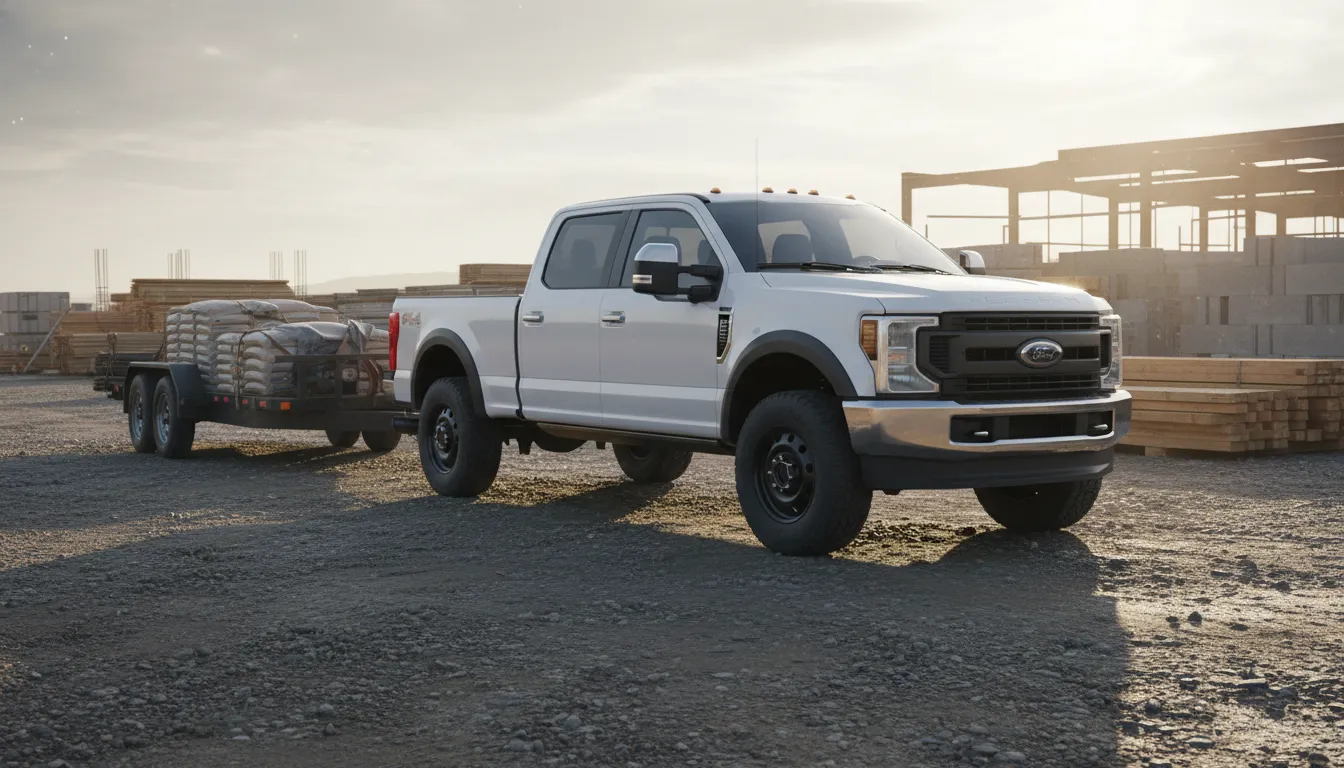
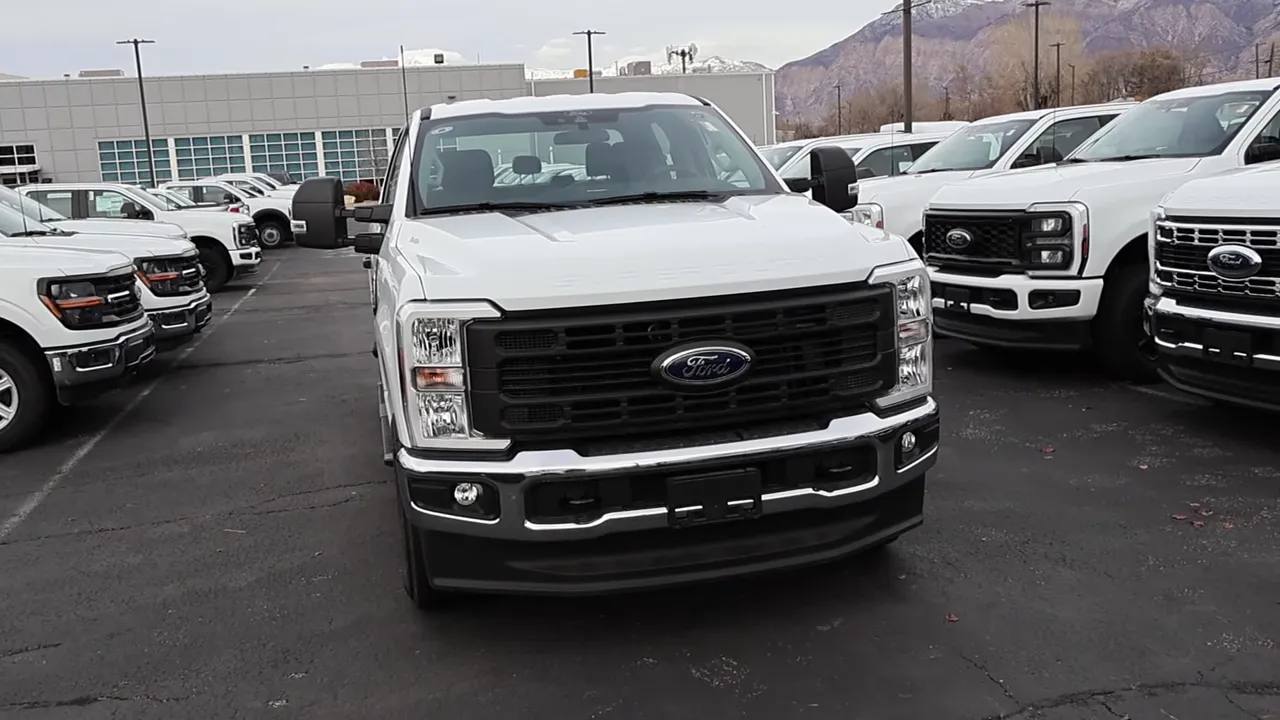
The Super Duty look is unmistakable. The hood wears the Super Duty name stamped in heavy letters, and the front end leans into function over flash. The headlamps are huge, though on this XL they’re halogen rather than LED. That’s not a problem for a work truck — replaceable, simple, and cheaper to fix.
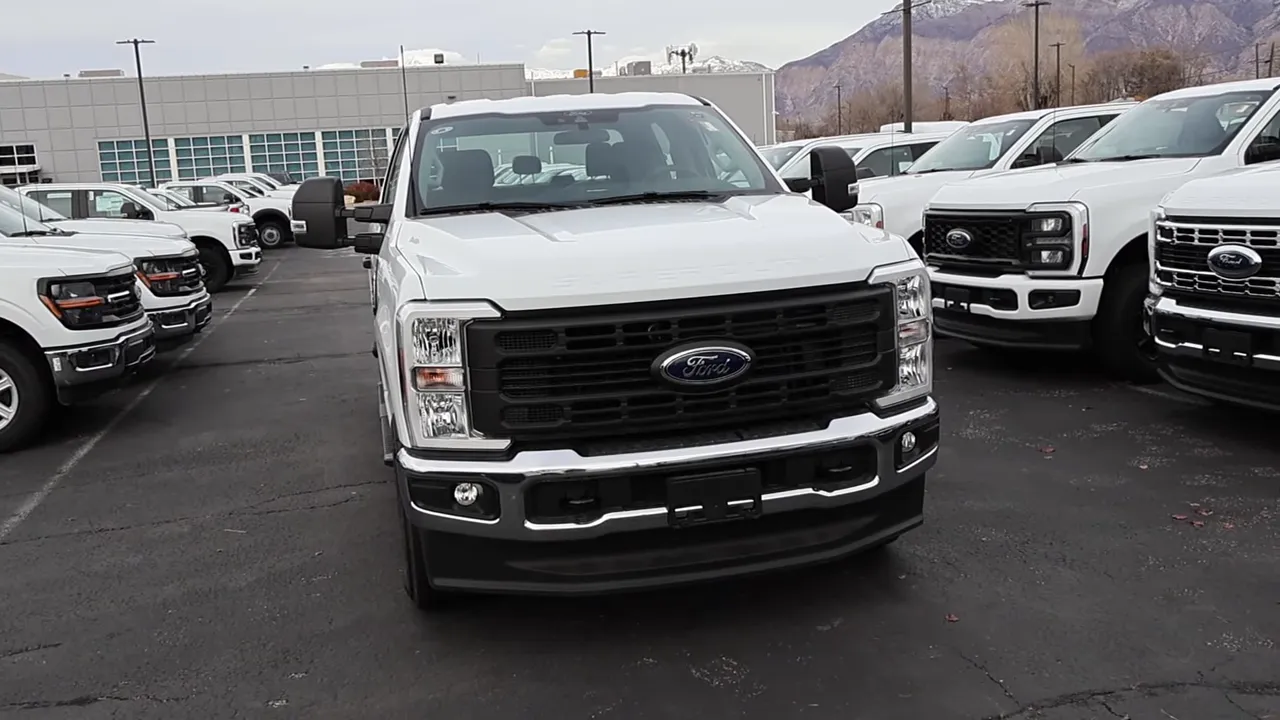
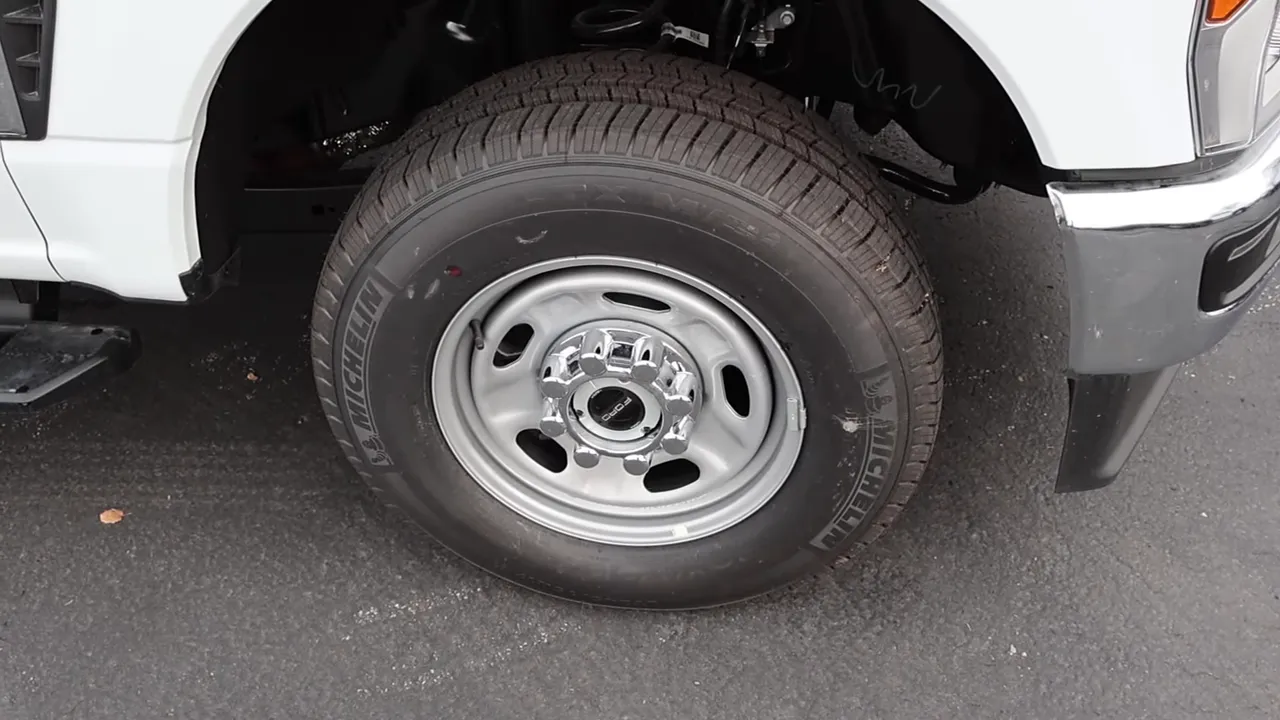
You get practical features you actually use: fog lights, recovery points built into the bumper, a beefy air dam, and conventional 245/75R17 tires on straightforward wheels. This F-250 is a 250-series model, meaning fixed solid front axle and heavy-duty suspension components. Those leaf springs out back might look “itty bitty” compared with the long-arm setups you see on some lifted rigs, but they are robust and ideal for predictable load carrying.
🧰 Bed and Towing: Simple, Strong, Useful
This truck tested was a crew cab with an eight-foot bed — the classic work configuration for contractors and tradespeople who need both passenger space and a full-length cargo floor. The tailgate includes a practical ruler stamped into it and the bed comes with a factory bed liner and fifth-wheel prep. Cargo tie-down points are generous and bumper steps are integrated for easy access.
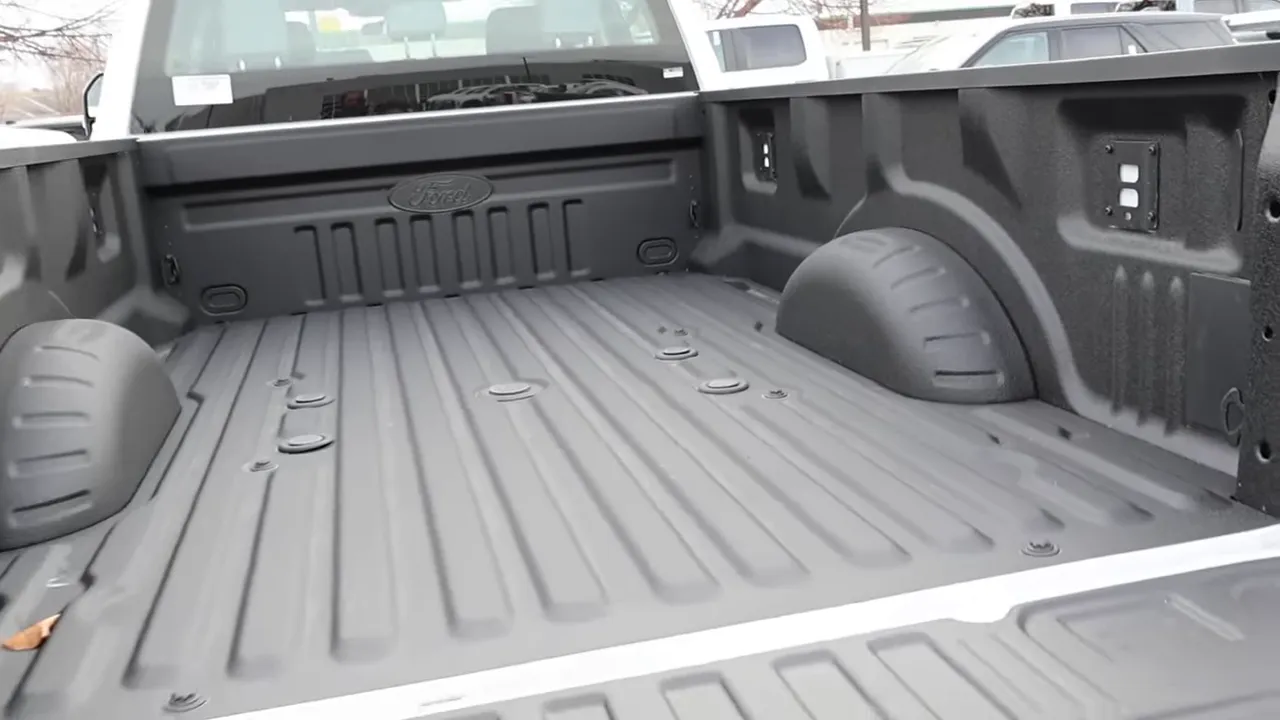
Towing depends on equipment and axle ratios, but expect the 6.8 V8 in the mid to high teens (thousand pounds). If you tow heavy frequently, diesel might still be the better long-term choice, but for a huge chunk of users the gas V8 is more than sufficient and much less expensive up front.
🪑 Interior: No-Frills, Practical, and Built to Take Abuse
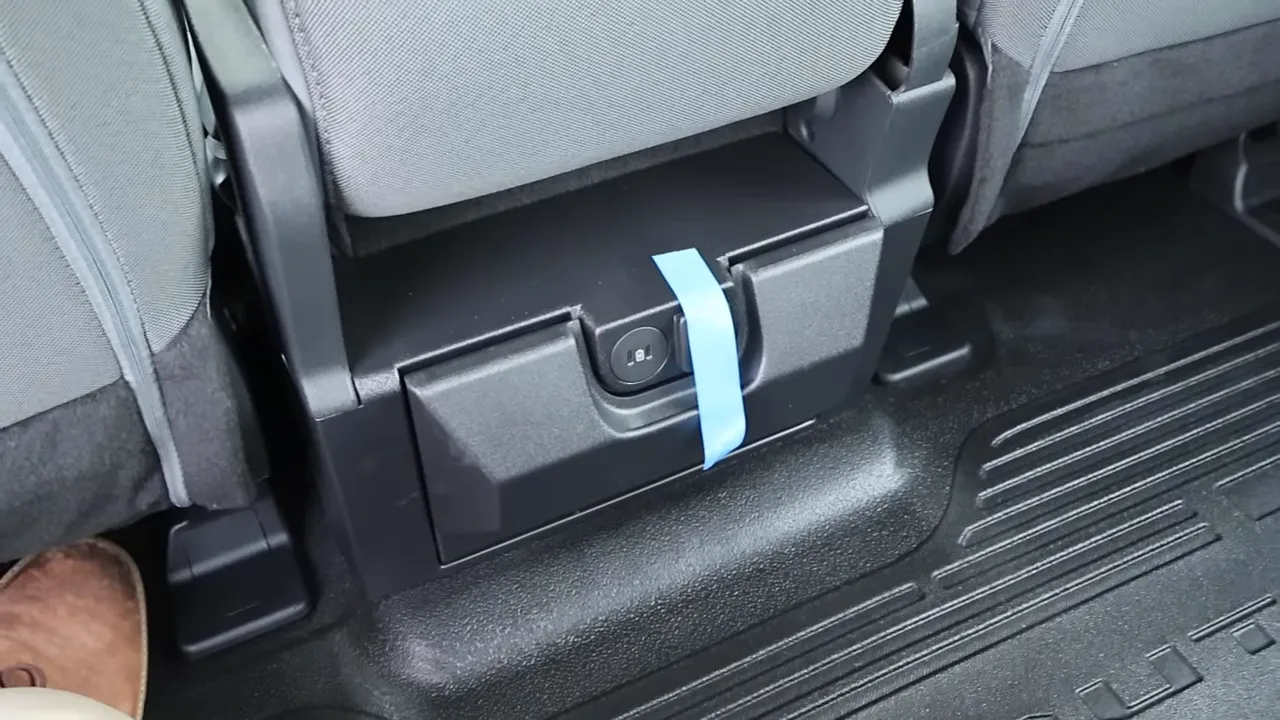
Walk inside and you’ll find the kind of interior that ages well. Cloth seats, manual adjustments, and durable flooring make this an easy-to-live-with truck for work life. The rear seats are a 60/40 split with underseat storage, and the center bench up front includes hidden storage as well. There are USB ports and a 12-volt outlet in the rear for convenience.
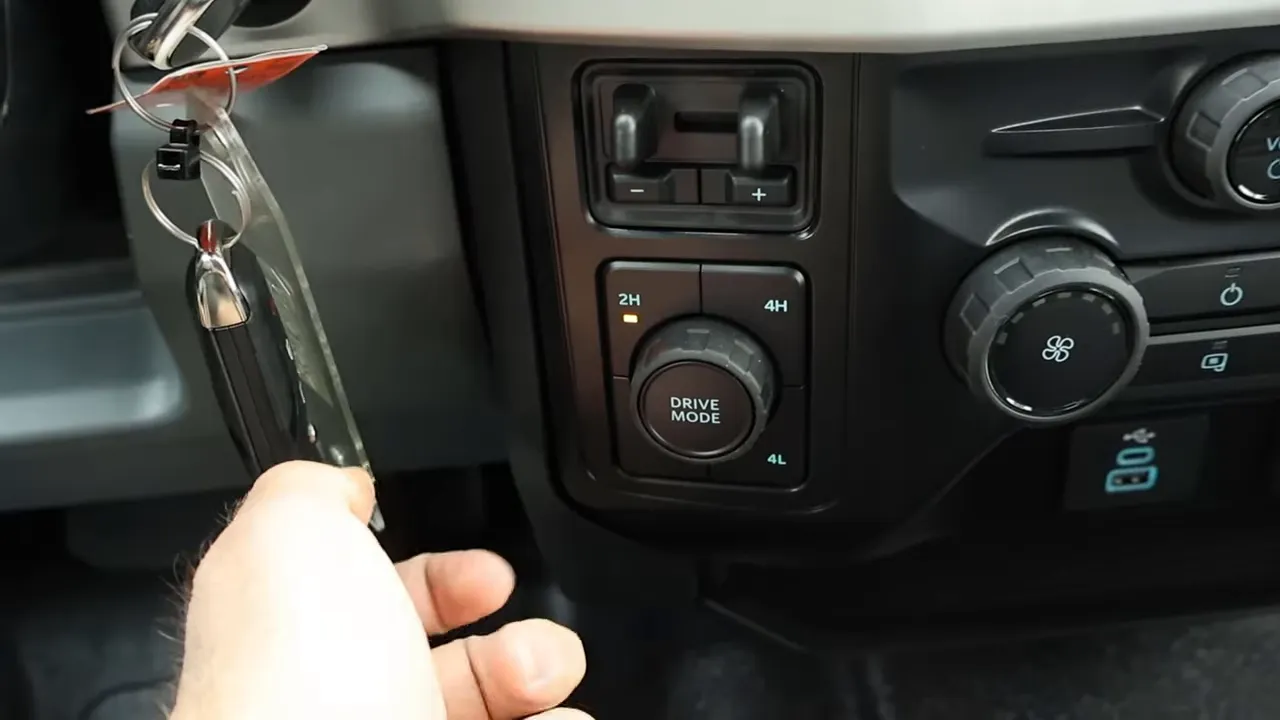
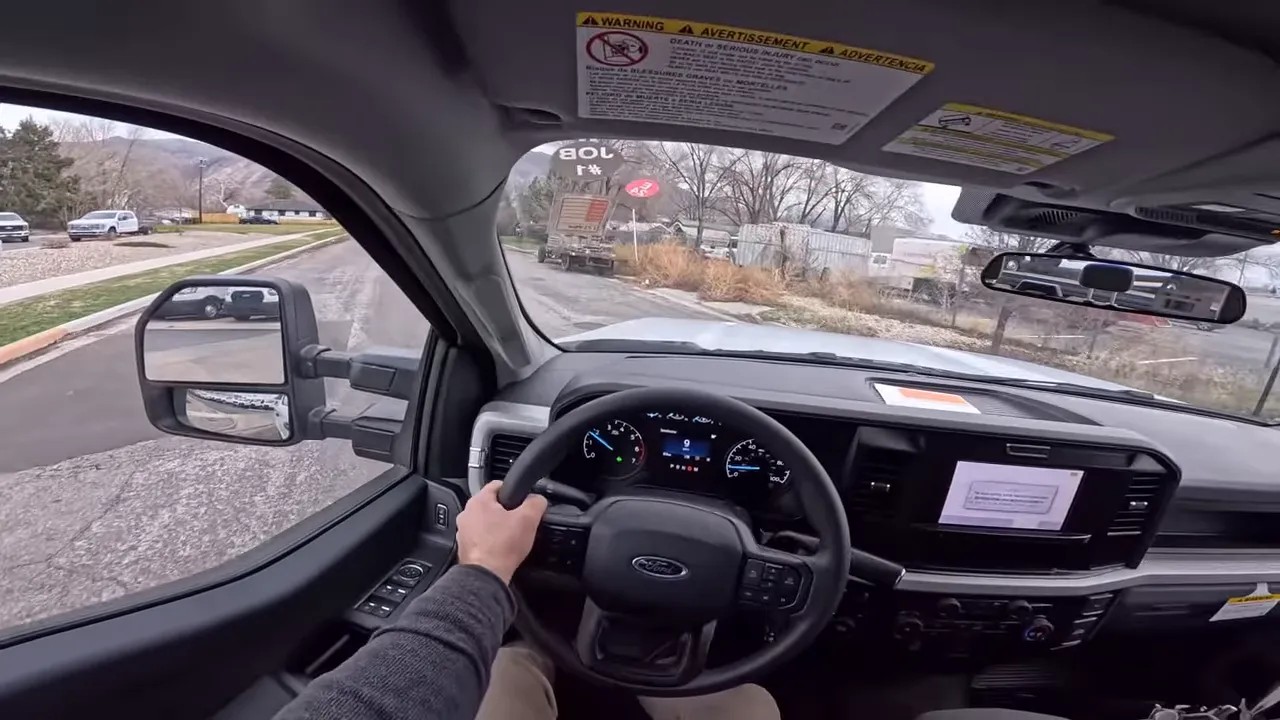
Up front the dash keeps things straightforward: mostly analog gauges with a center information screen, practical physical buttons for HVAC and radio, and a column-mounted shifter with an integrated manual function. You get six auxiliary switches from the factory for adding lights, compressors, or other gear. Drive mode select and a part-time four-wheel-drive system with a two-speed transfer case are present for real-world use.
🔊 On the Road: Torque Where It Counts
The 6.8 V8’s character is immediate: it makes its torque at low rpm, so you get that “boom” feeling off the line and when merging. It’s torquey enough for everyday hauling and occasional towing without the complexity and expense of diesel. The sound is a satisfying low V8 rumble — raw and mechanical in a way that many enthusiasts still appreciate.
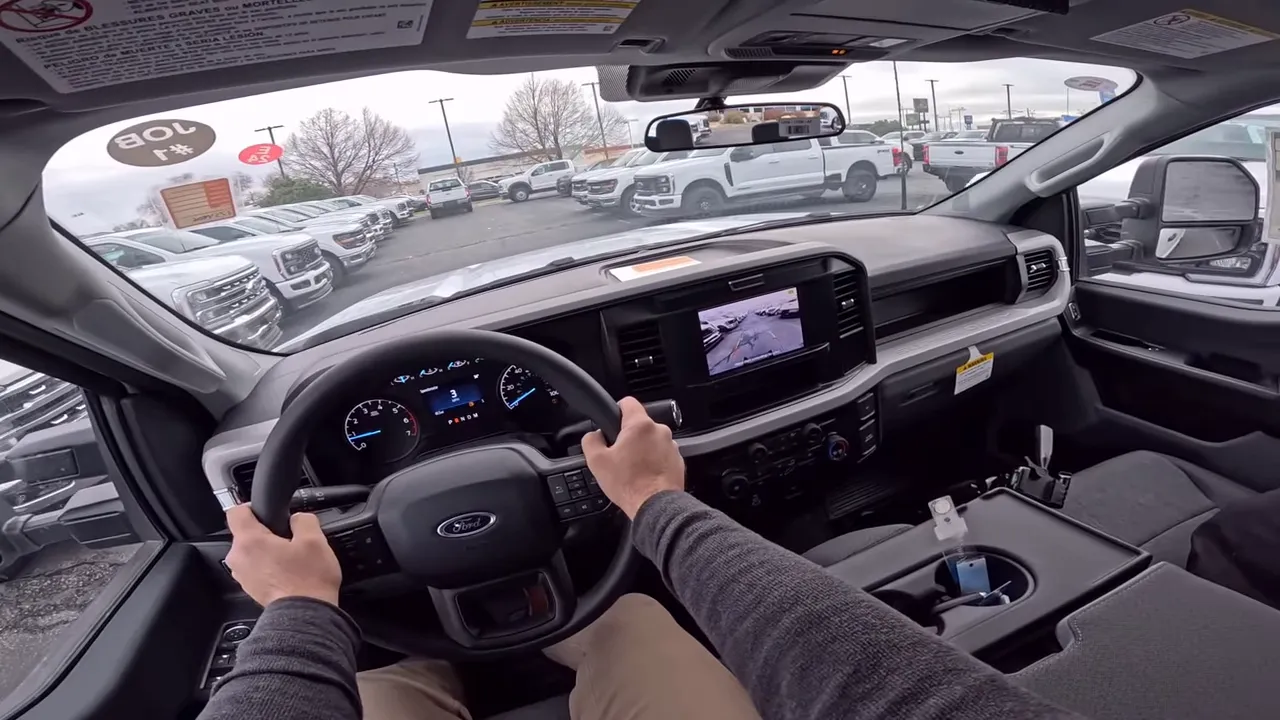
Maneuverability is the trade-off. With a crew cab and an eight-foot bed, combined with solid axles front and rear, this truck is big. Tight parking lots reveal that very quickly. If you spend most of your day in urban back-and-forths and tight jobsites, consider whether a shorter-wheelbase or single-cab configuration might suit you better.
⚖️ Gas vs Diesel: Why Choose the 6.8 Gas V8?
There are three main reasons to pick a gas heavy-duty truck like this one:
- Lower purchase cost — Diesel upgrades often add $10,000 or more to the sticker. The 6.8L gives you heavy-duty capability without the diesel premium.
- Everyday use and short trips — Gas engines tolerate short runs and extended idling better than modern diesels, which can suffer from emission-system clogging and need regeneration cycles that don’t play well with stop-and-go use.
- Lower maintenance complexity — No diesel particulate filters, no DEF systems to manage, fewer expensive emission-system repairs down the road.
If your work routinely involves towing the heaviest trailers, long-distance heavy towing, or you prioritize fuel economy while towing at highway speeds, diesel remains attractive. For many tradespeople and fleet users who haul supplies, make short hops, and need a durable, cheaper-to-own truck, the gas 6.8L is an excellent compromise.
🔧 Practical Ownership Notes
The XL trim is intentionally basic. That’s a feature, not a flaw. The simpler the interior and electronics package, the less there is to fail on a job site. Here are a few practical points to remember:
- Durable materials — Easy-to-clean flooring and cloth seats make the truck forgiving after a day at the jobsite.
- Real-world outlets — The presence of a proper 120-volt outlet up front is useful for charging tools or running small equipment without a generator.
- Auxiliary switches — Six pre-wired switches save installation time and money for lights, controllers, and add-ons.
- Payload and GVWR — With a 10,000 lb GVWR and over 3,000 lb payload in this configuration, it handles a serious load comfortably.
🔍 Buying Advice: How to Get the Most Value
If you’re shopping for a work truck, keep these tactics in mind:
- Pick the configuration to match daily use — Crew cab plus eight-foot bed is perfect for mixed crew-and-cargo work. If you rarely carry more than two people, consider a smaller cab to improve maneuverability and lower cost.
- Think about accessory prep — Look for trucks with auxiliary switches, pre-wired outlets, and fifth-wheel prep if you anticipate adding equipment later.
- Consider total cost of ownership — Factor in purchase price, fuel cost for your duty cycle, maintenance, and expected longevity. Gas-heavy use often beats diesel for short-run, idling-heavy jobs.
- Inspect suspension and axle specs — Make sure the suspension and axle ratios are matched to your payload/towing needs rather than dealer-added options that sound nice but don’t deliver real capability.
⚠️ Common Concerns and Real-World Quirks
A few real-world things to be aware of that can come up with trucks like this:
- Range displays can be optimistic — Like many vehicles, range estimates can sometimes read one mile or zero prematurely. It’s smart to keep a habit of refueling before you hit reserve on a work truck that gets used heavily.
- Maneuverability — Crew cab with eight-foot bed and solid axles makes tight parking a challenge. Practice and planning help, but it’s part of the package for true cargo capacity.
- Halogen lights — Halogen headlamps are cheap and simple; if you want better night visibility, plan for an upgrade to LED or add auxiliary lighting.
✅ Who Should Buy This Truck?
The 2026 F-250 XL 6.8L is ideal for:
- Contractors and tradespeople who need a durable, capable truck without paying diesel premiums
- Fleet buyers wanting predictable maintenance and lower upfront cost
- Owners who haul materials and occasionally tow trailers in the mid to high teens thousand pound range
- Anyone who prefers a simple, easy-to-service truck that can take daily abuse
🔁 Pros and Cons
Pros
- Lower sticker price compared with diesel equivalents
- Strong low-end torque and great driveability for hauling
- Simple, robust interior designed for work life
- Factory prep features like auxiliary switches and fifth-wheel prep
Cons
- Bigger and harder to maneuver with crew cab + long bed
- Halogen headlights instead of LEDs in base trim
- Fuel economy won’t match diesel on long highway towing
📸 Visual Highlights
Below are key visual moments that show what matters: oversized headlights, simple wheels and tires, the bed ruler and tailgate, the practical rear cabin, and the utilitarian center stack.
❓FAQ
What is the towing capacity of the 2026 F-250 with the 6.8L V8?
Why choose a gas V8 over a diesel in a heavy-duty truck?
How practical is the XL trim for daily work use?
Are there factory-prepped features for adding aftermarket gear?
Is the 6.8L engine loud or rough compared to diesel?
🏁 Final Thoughts
The 2026 Ford F-250 XL with the 6.8 liter V8 is a reminder that practical, capable work trucks still exist without breaking the bank. It prioritizes function: strong low-end torque, sensible factory prep for tools and towing, and a durable interior built for job-site life.
If your work is all about hauling, carrying crews, and occasional towing without the need for the ultimate diesel towing range and economy, the gas-powered Super Duty brings a lot of real-world value. It is straightforward, repair-friendly, and focused on doing the hard work without fuss.
For questions about specific configurations, payload ratings for a particular model, or options that matter for your trade, check with your local dealer and ask for the truck’s build sheet so you can match specs to tasks.