🚗 Why the 2026 Hyundai Venue Matters
The 2026 Hyundai Venue is one of those rare new cars that still hits a sweet spot: fresh, practical, and surprisingly affordable. At a starting point of $24,200 for the SEL trim, it answers a question most car buyers are asking right now—how do you get a reliable, comfortable new vehicle without paying the kind of money that used to buy a whole house?
This isn’t a luxury compact crossover pretending to be something it isn’t. It embraces its role: efficient transportation with a few thoughtful touches that make daily driving less of a chore. If you want a straightforward, well-built city car that respects your budget, the Venue deserves serious consideration.
🔧 The essentials: powertrain, fuel economy, and numbers
Under the hood the Venue keeps things simple: a 1.6-liter four-cylinder mated to a continuously variable transmission. The claimed fuel economy is sensible for an urban-focused crossover: about 29 mpg city and 33 mpg highway. That modest engine produces 121 horsepower and 113 lb-ft of torque, which is enough for everyday driving—commutes, errands, and long highway pulls if you don’t expect sports-car performance.
Wheels and tires are sized for a balance of ride comfort and crisp handling: 205/55 R17. The Venue’s compact dimensions and relatively light curb weight make the most of that small engine, delivering a peppy-enough feel in everyday scenarios while keeping running costs down.
🧭 Exterior: boxy, purposeful, and practical
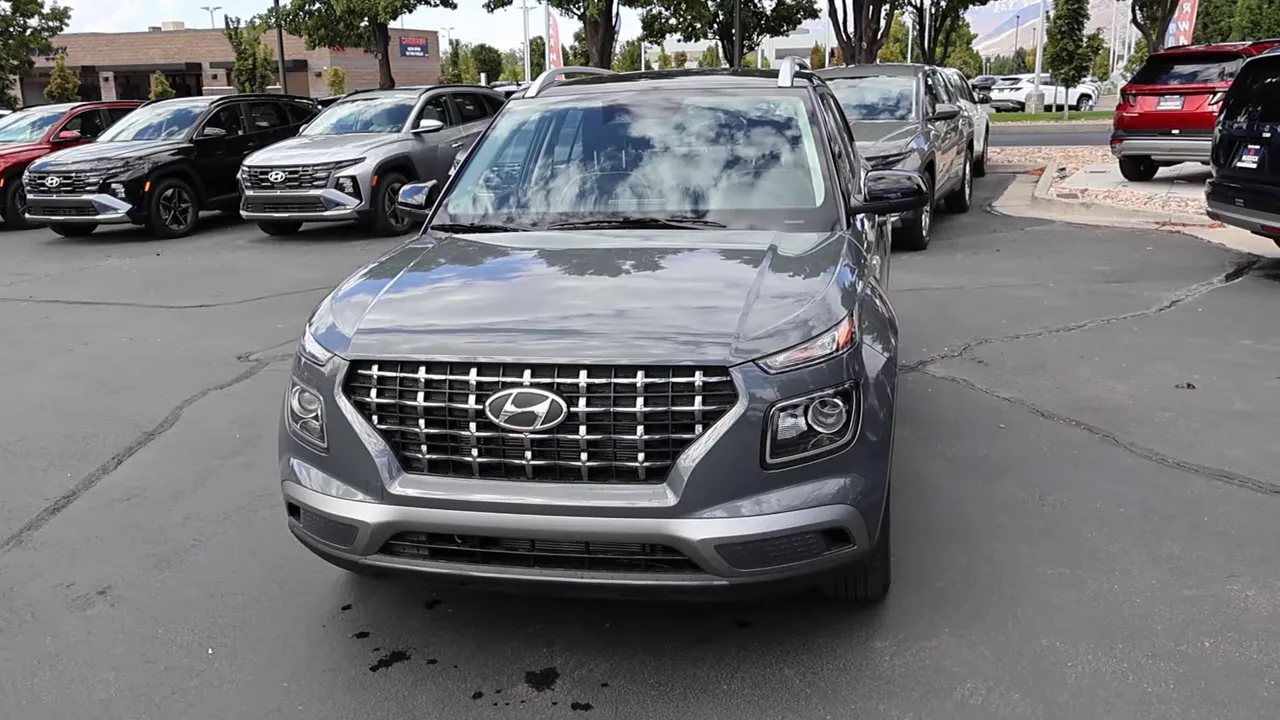
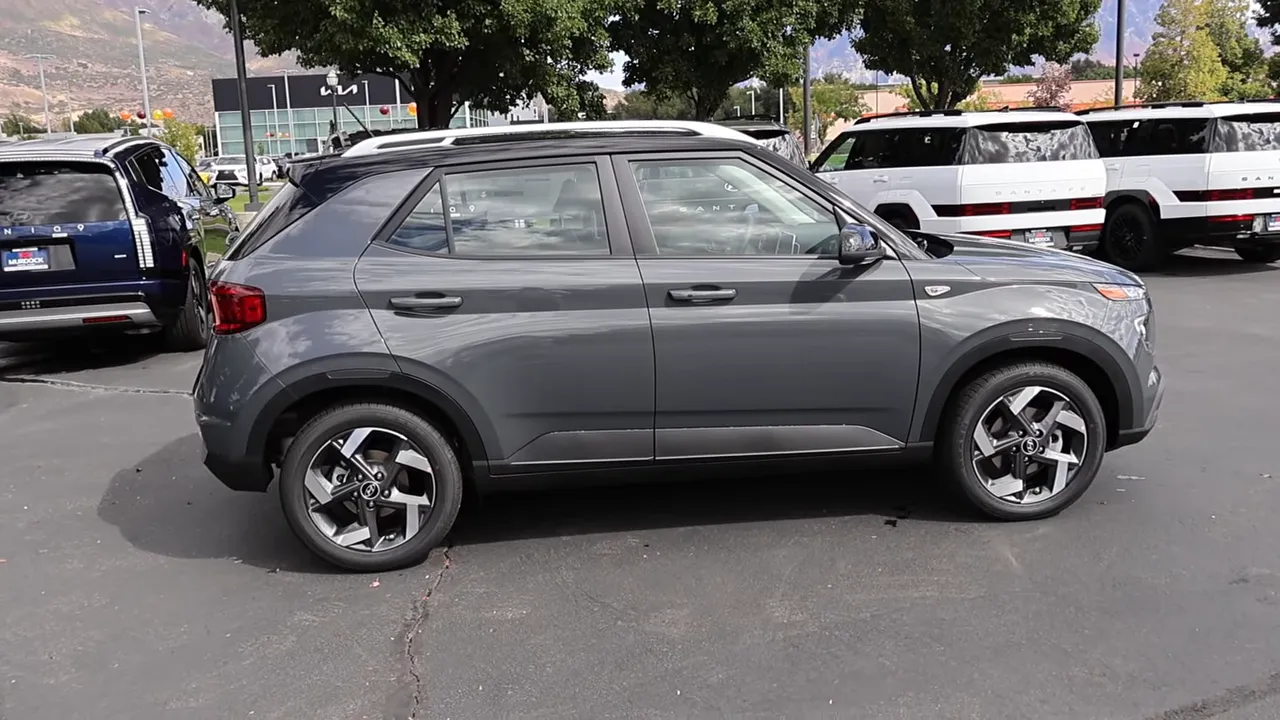
Styling is intentionally boxy, especially up front where the hood and grille create a squared-off silhouette. The split headlight design—turn signals perched above the main lights—gives the Venue a distinctive face without going overboard. Chrome-effect grille trim and unpainted fender flares add texture to what could otherwise be a bland exterior.
Small details matter here. The Venue comes with blacked-out mirror caps and pillars, body-colored door handles, and roof rails for added versatility. Those unpainted fender flares hint at a rugged persona without committing to an off-road pretension. It looks modern, useful, and coherent—a boxy design that maximizes interior room and cargo flexibility.
📦 Cargo and practicality: smart use of space
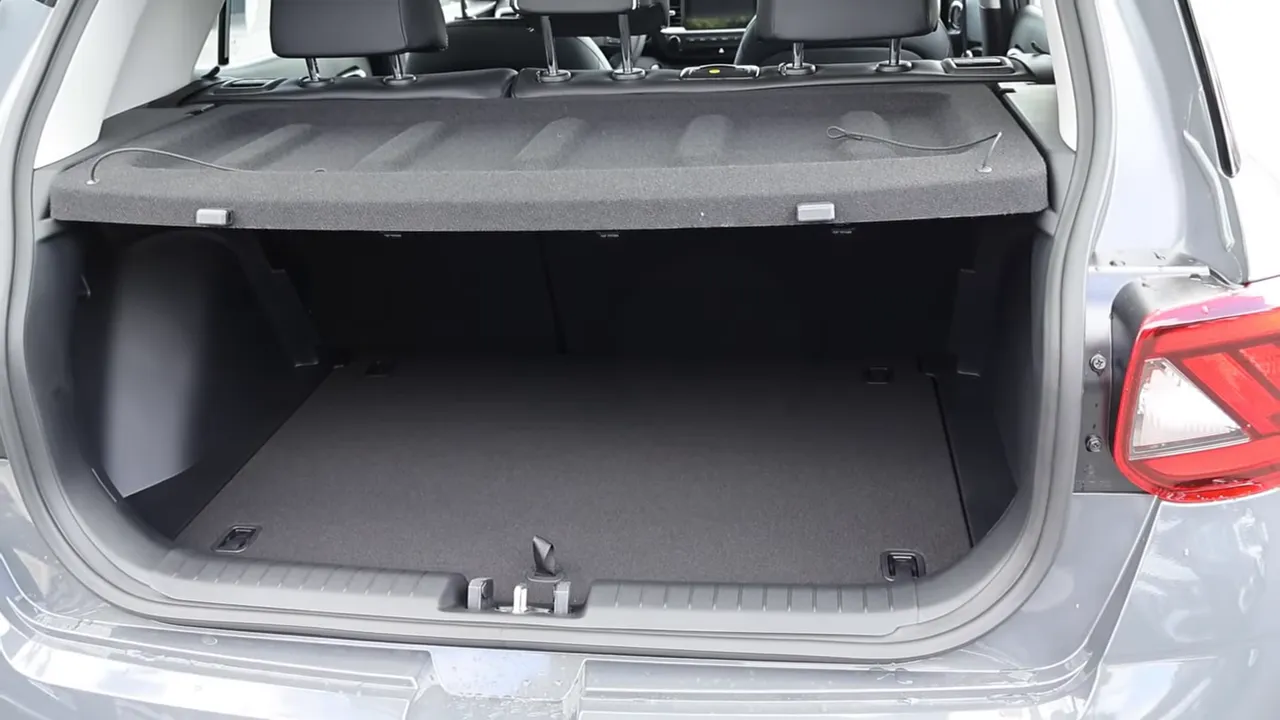
Despite its compact footprint, the Venue offers surprisingly useful cargo capacity. The rear hatch opens with a simple popper button and comes equipped from the factory with a cargo cover. Under the load floor sits a space-saver spare tire—something many manufacturers skip these days in favor of inflators or run-flats.
For weekend trips or regular grocery runs, the Venue’s cargo area will handle the job. The boxy design pays dividends here: vertical walls and a flat floor make stacking and organizing easier than in tapered-trunk competitors.
🪑 Interior: unexpected refinement in an economy package
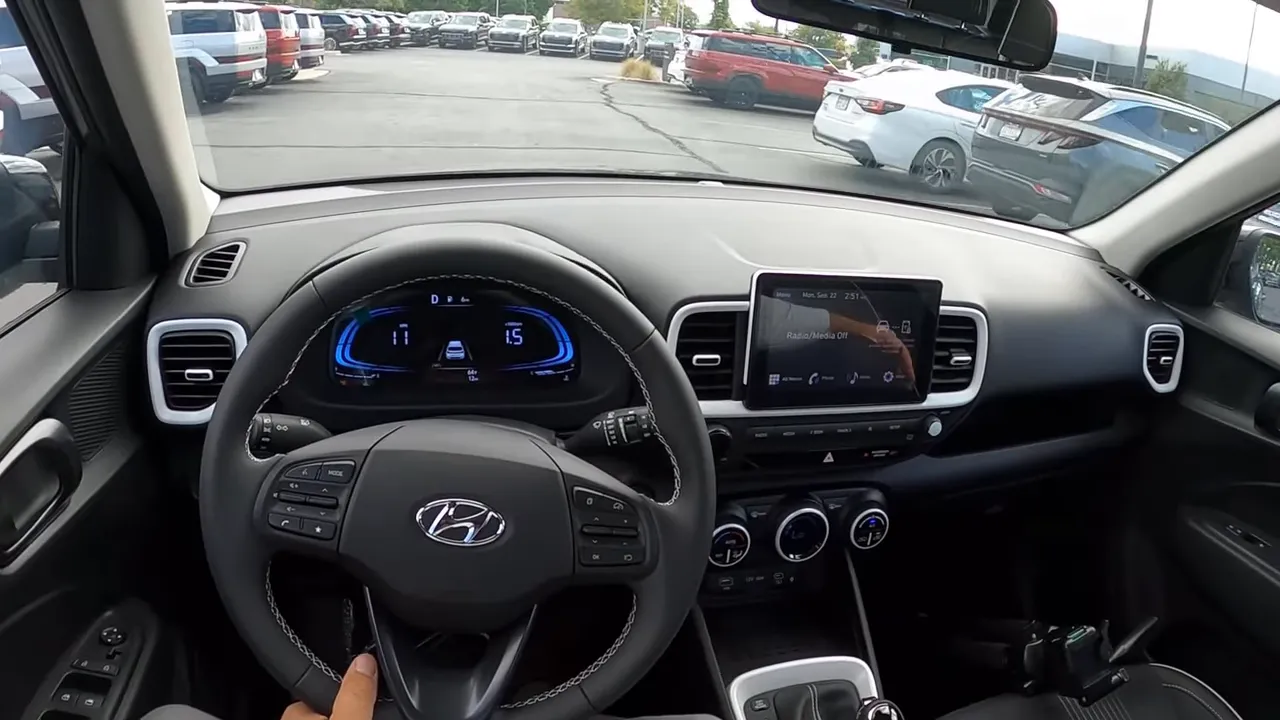
One of the Venue’s biggest strengths is how it balances low price with pleasing tactile quality. Soft-touch materials on the armrests, stitching details on the door panels and seats, and a steering wheel with padding and stitching feel like features that should be reserved for higher trims. That’s not marketing—those small comforts make a real difference in daily life.
The seats use a mix of cloth and vinyl on the sides, and while the front seats are manually adjusted, the controls are logical and durable. Headroom benefits from the Venue’s upright silhouette. If you’re tall or like to sit up high, this layout feels welcoming.

🖥️ Infotainment and tech: straightforward, responsive, and practical
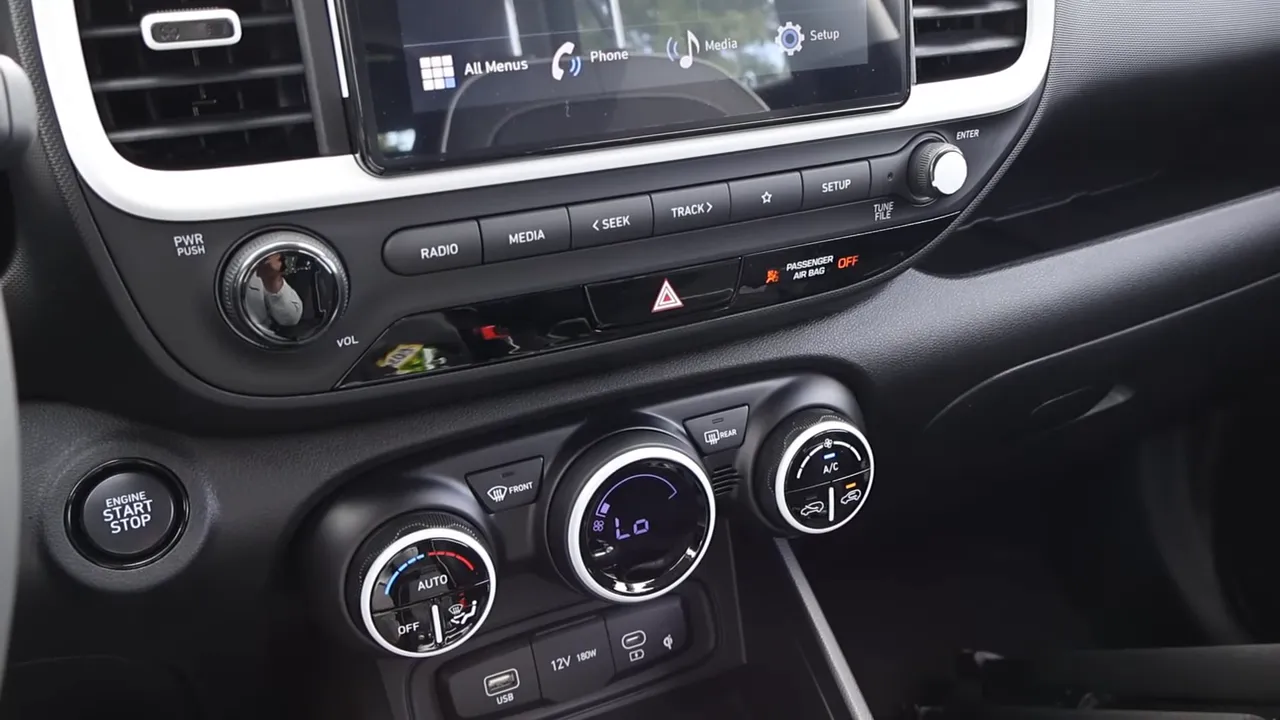
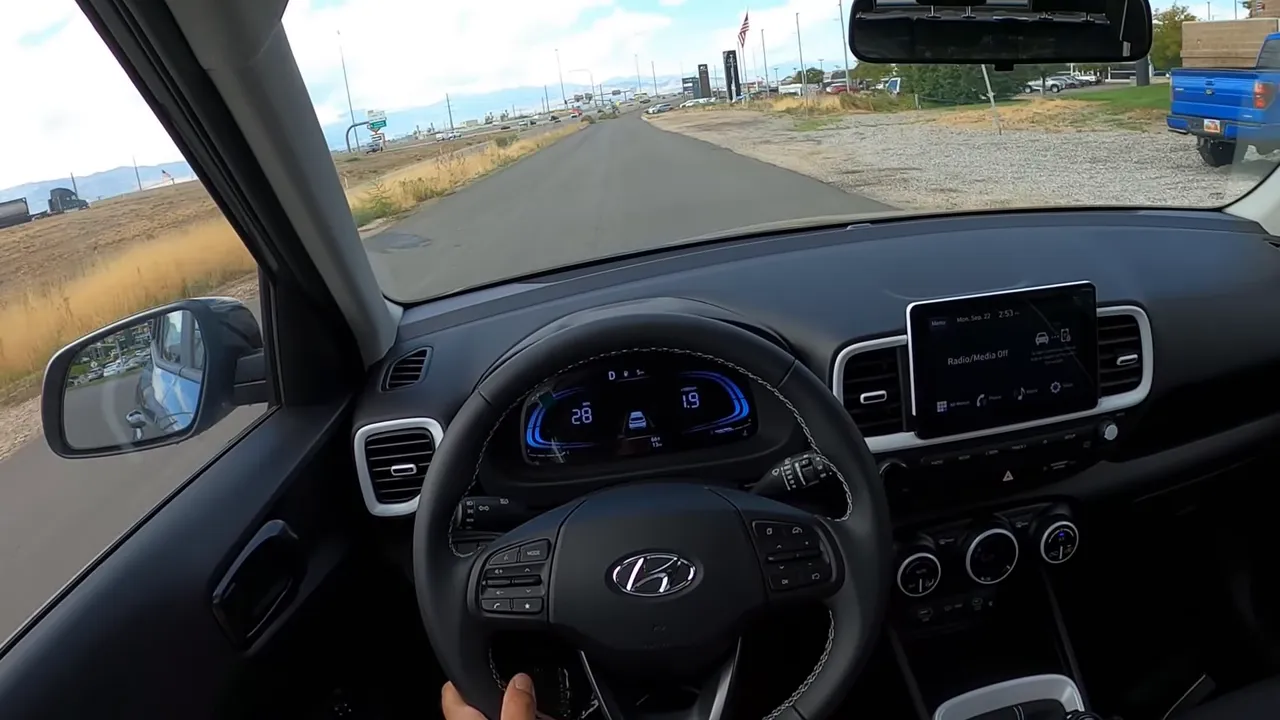
The Venue’s infotainment isn’t the flashiest system Hyundai offers, but it gets the job done. The touchscreen has a helpful shortcut bar and responsive performance for routine tasks. Physical controls for radio and climate are a welcome touch—easy to use while driving and preferable to reaching through multiple screen menus.
Other tech highlights include automatic climate control, a wireless phone charging pad, multiple USB ports, and a backup camera with decent resolution. Blind-spot monitoring is integrated with the mirrors, adding confidence on busy roads. Heated seats are included on the SEL, which is a big plus during colder months.
🔁 Drive modes and everyday usability
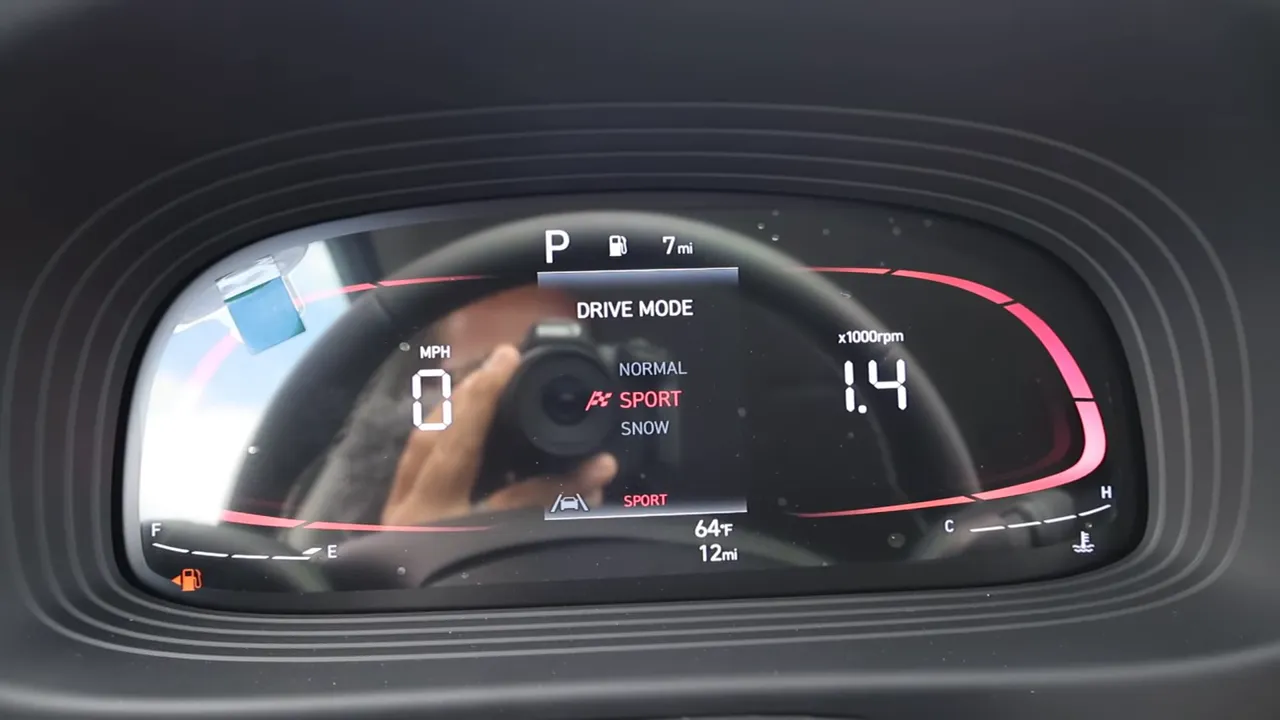
The Venue includes selectable drive modes, letting you tweak throttle response and transmission behavior depending on your needs. It’s not a performance trick—more a practical way to optimize comfort versus slight efficiency or responsiveness changes when you need them.
In town the Venue is smooth and composed. Steering feels weighty enough for predictable handling without being fatiguing, while suspension tuning favors comfort over immersion on rougher roads. It handles corners better than you might expect from a car in this segment, largely because the compact size and relatively low center of gravity keep it planted through turns.
🏁 On the road: what to expect from the 1.6 and CVT combo
Don’t expect sports-car acceleration. The Venue’s 1.6-liter and CVT are tuned for throttle efficiency and smoothness rather than explosive launches. Passing maneuvers require a bit of planning; the engine will protest when pushed hard, but for everyday driving it stays composed and predictable.
CVTs historically had a reputation for unpleasant drone. Hyundai’s tuning here keeps an acceptable balance—there’s a mechanical sound when you floor it, but it’s not grating. The package is designed to be affordable and efficient, and it succeeds at that mission without feeling cheap.

💰 Value proposition: price, warranty, and real-world ownership
The Venue SEL at $24,200 lands in an increasingly rare price bracket for new cars. With manufacturers pushing base model prices into the high 20s and 30s, a sub-25k new vehicle becomes meaningful for many buyers who want reliability without financing a car payment that dominates their monthly budget.
Hyundai’s industry-leading warranty is a major ownership advantage. The Venue is covered by a 10-year powertrain warranty, offering peace of mind that matters if you plan to keep a vehicle long-term. If you can keep this car for a decade and avoid major non-powertrain issues, the cost per year compares very favorably to alternatives.
But remember total cost of ownership is about more than sticker price and drivetrain coverage. Insurance, maintenance, fuel, and depreciation all matter. If you drive a lot—say 20,000 miles per year—you’ll hit the 100,000-mile mark in five years and exceed the powertrain warranty sooner. Still, the Venue’s efficient engine and modest maintenance needs should keep long-term costs reasonable.
👥 Who should seriously consider the Venue?
- First-time buyers who need a new car and want a reliable, fully warranted option.
- Urban commuters who prioritize fuel economy and easy parking over performance.
- Small families or couples who want practicality and cargo versatility without a large SUV footprint.
- Budget-minded buyers who value warranty and low starting price over premium performance upgrades.
If you want a compact crossover with a few creature comforts, easy-to-use tech, and the reassurance of a long powertrain warranty, the Venue is an excellent pick. If you need raw acceleration, all-wheel drive, or a turbocharged drivetrain, there are other models to consider—but they will cost more.
🔭 Could Hyundai add a sportier or AWD Venue?
There’s obvious room in the lineup for a turbocharged or all-wheel-drive variant, which would increase appeal to buyers in colder climates and those who want more passing power. However, adding a turbo or AWD will push the price higher—likely beyond the Venue’s core value proposition. A turbo Venue priced in the mid-to-high 20s might be compelling, but it would change the essence of this model from budget-focused to premium-leaning.
🧾 Ownership math: is half a salary on a car reasonable?
Talk of affordability often comes back to personal finances. If the average household income is roughly $50,000 per year, a $24,200 new car is about half that amount. That feels like a lot until you factor in how long you plan to keep the vehicle and how the cost spreads out over time.
Keeping the Venue for ten years with the security of a long powertrain warranty changes this math dramatically. Instead of buying a new car every five years, stretching ownership and caring for routine maintenance reduces the effective annual cost. For many buyers, that long-term durability and lower stress around major engine components is more valuable than a flashier, more expensive option.
🔁 Practical tips before buying
- Test-drive with the cargo you normally carry to evaluate real-world space and comfort.
- Check local trim availability and optional packages—the base features vary by market.
- Ask the dealer to explain the warranty coverage in detail and what maintenance steps are recommended to keep warranty benefits intact.
- Compare insurance quotes with other vehicles in the class; compact crossovers often have reasonable premiums, but trim level, safety options, and theft risk can change rates.
❓FAQ
What engine and transmission does the 2026 Hyundai Venue use?
What is the fuel economy of the Venue?
How much does the 2026 Venue SEL cost?
Does the Venue have advanced driver assistance features?
What warranty coverage does Hyundai provide for the Venue?
Is an AWD or turbocharged Venue available?
🧾 Final thoughts
The 2026 Hyundai Venue stands out by doing simple things really well. It packages sensible power, solid fuel economy, and surprising interior comfort into a price point that still makes sense for many buyers. The 10-year powertrain warranty is a serious leg up in ownership peace of mind.
This is not a car for speed demons or those demanding advanced off-road capabilities. It is a practical, honest compact crossover for people who want a new vehicle without breaking the bank. For anyone balancing real-world budgets, dependable warranty coverage, and everyday usability, the Venue is worth a long look.