“Not only is this the most reliable Land Rover, but it’s actually just reliable, period.”
The 2026 Land Rover Defender 110 with the turbo 3.0 liter inline-six is one of those rare vehicles that manages to balance character, capability, and everyday usability. It shows up as a boxy, purposeful SUV but drives with surprising refinement. Under the skin you get modern unibody engineering with independent suspension, a smooth eight-speed automatic, and packaging that makes the interior feel far larger than its footprint suggests.
Exterior: purposeful, modern, and a little stealthy 🛡️
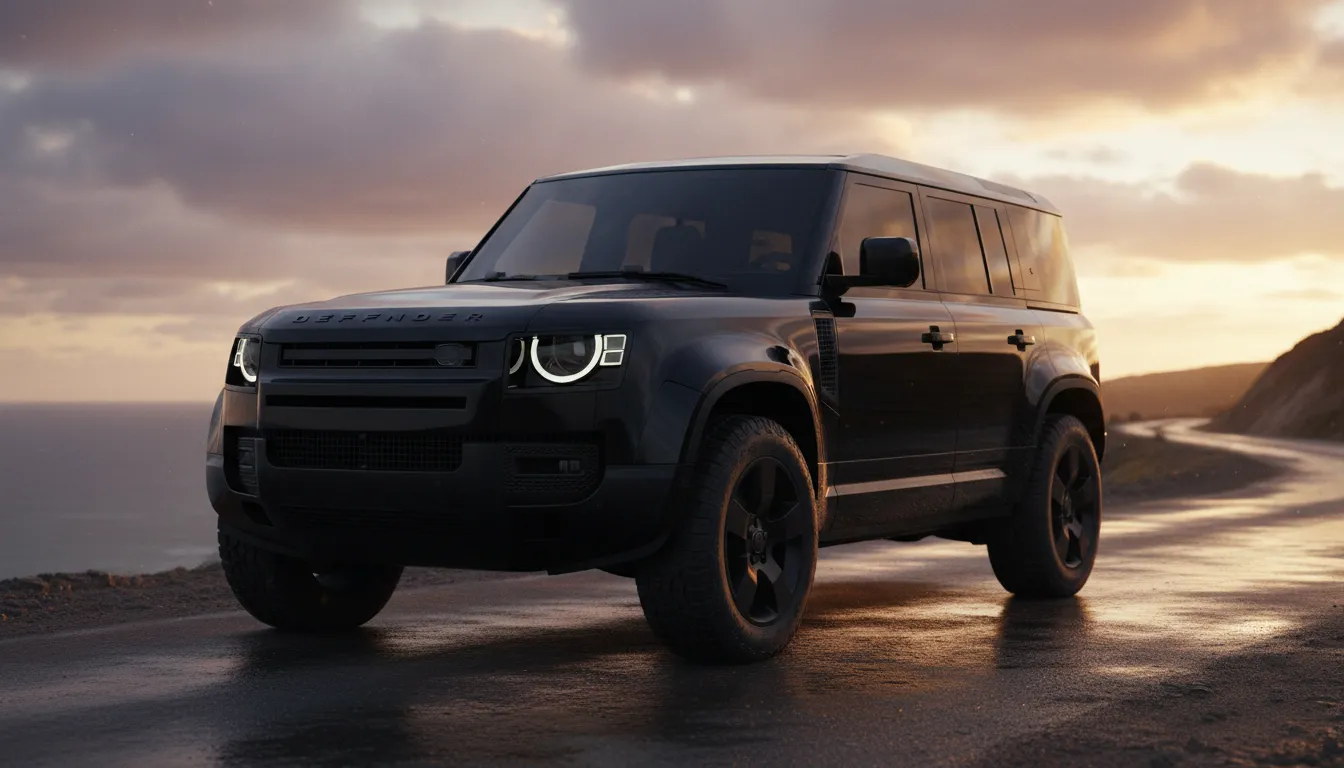
The Defender’s styling leans into its heritage while staying contemporary. The example discussed here is blacked out—headlight bezels, Land Rover badges, and even tail light surrounds take on a stealthy look that gives the Defender a Batmobile/James Bond vibe if you like that aesthetic.

Key exterior details to note:
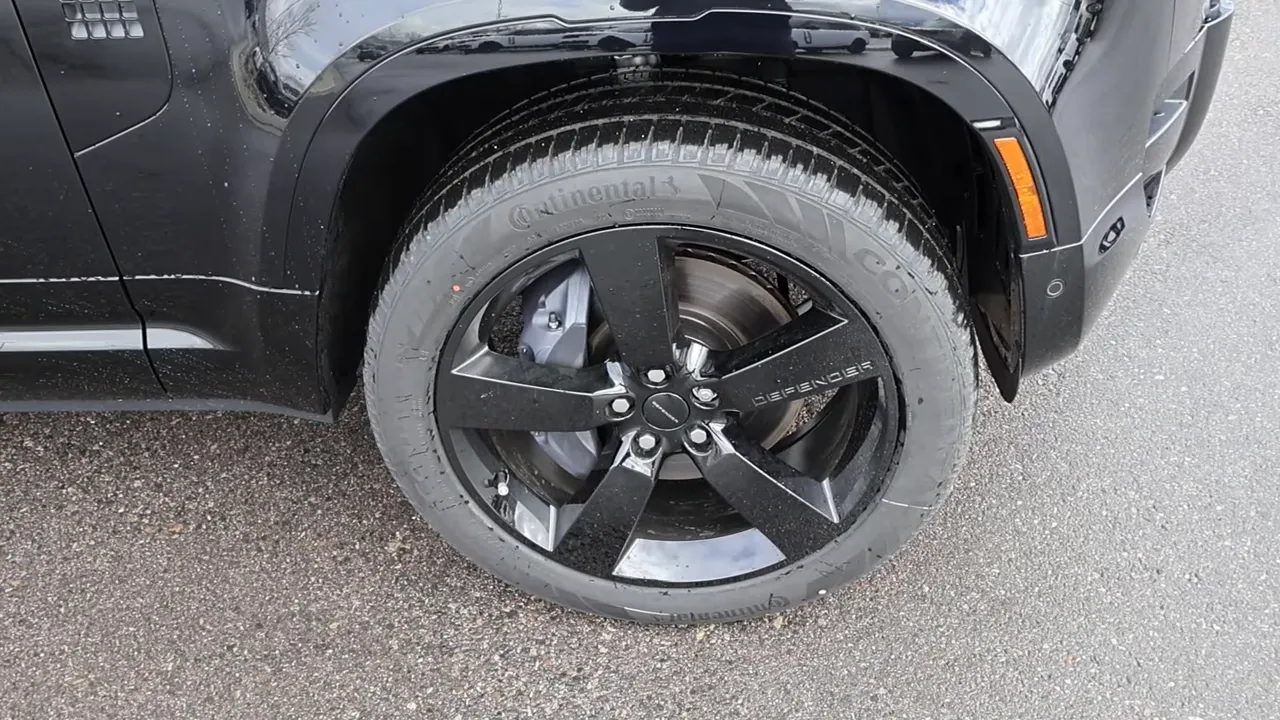
- Tire and wheel setup: 275/45R22 is the stock fitment on this model. It looks aggressive but also hints at the compromise the Defender makes between on-road civility and off-road intent.
- Squared-off design cues: From the mirror caps to the door handles, Defender embraces boxy geometry, which not only looks intentional but also pays dividends for interior space and headroom.
- Practical rear: The swing gate and optional spare tire cover keep things functional while staying crisp visually.
Interior and cargo: smart packaging, roomy feel 🧰
The Defender 110 leverages unibody construction brilliantly. By placing mechanical components lower in the chassis, the cabin opens up. The result is a feeling of spaciousness that belies the Defender’s physical length—comparable to a Jeep Wrangler externally but feeling much larger inside.
Highlights inside:
- Seating and trim: Perforated, power-adjustable seats with quality materials and a rugged aesthetic—accent rivets and practical handles keep the theme coherent.
- Rear comfort: Excellent knee room and headroom thanks to the boxy silhouette and optional alpine windows that bring light into the cabin.
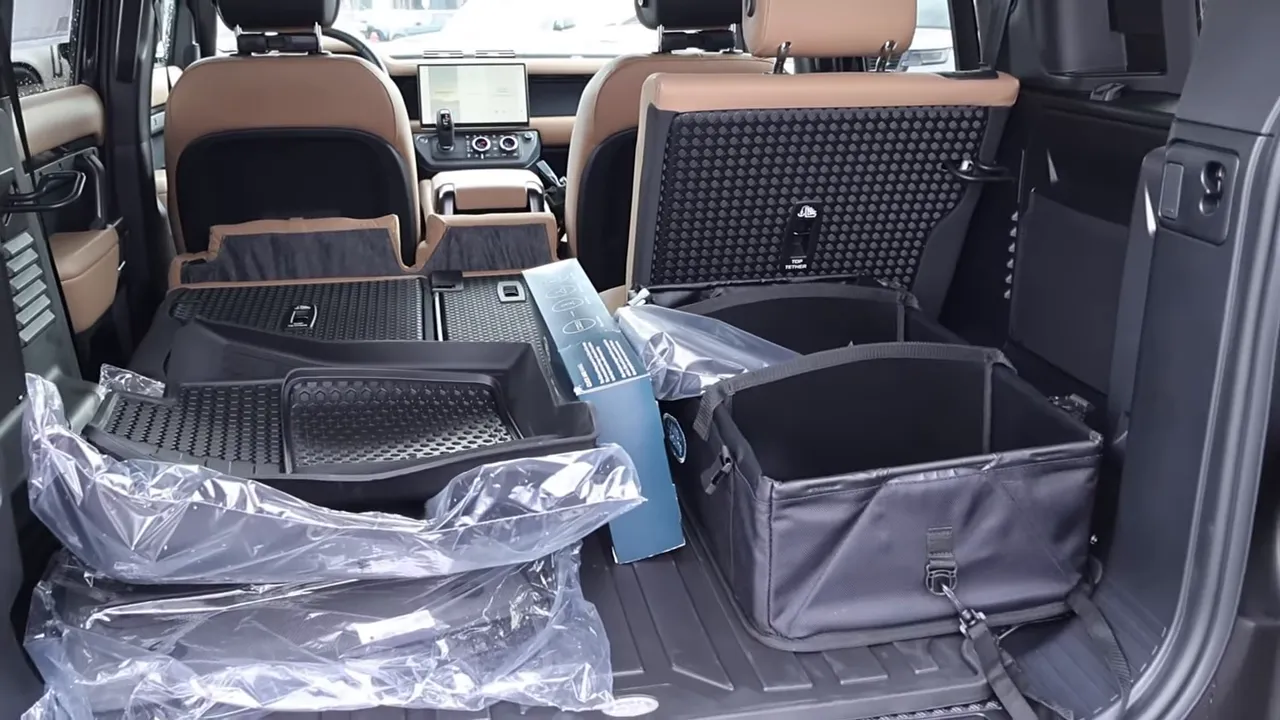
- Practical cargo: Rear seats fold flat and the cargo area includes recovery points and utility hooks that make real-world use straightforward.
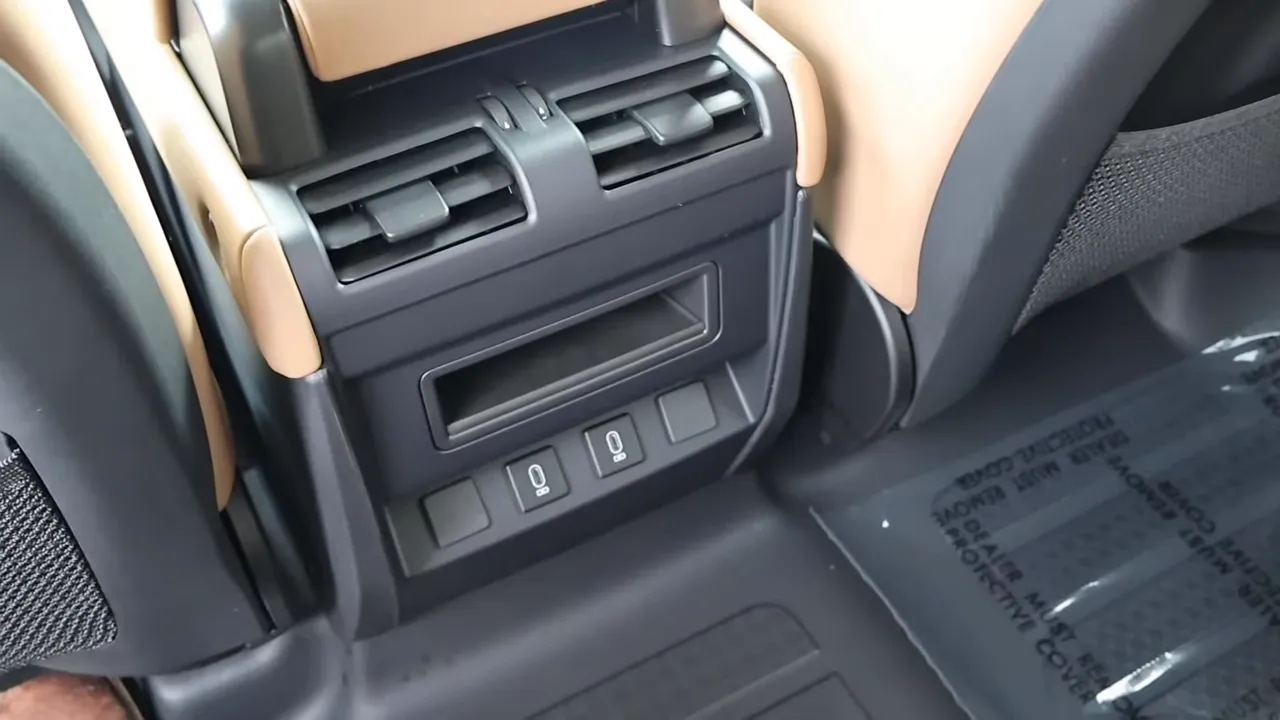
Storage cleverness is one of Land Rover’s strengths here. Thoughtful cubbies, a convertible center console that can open or close depending on needs, and a wireless charging pad give the Defender modern convenience without overcomplicating things.
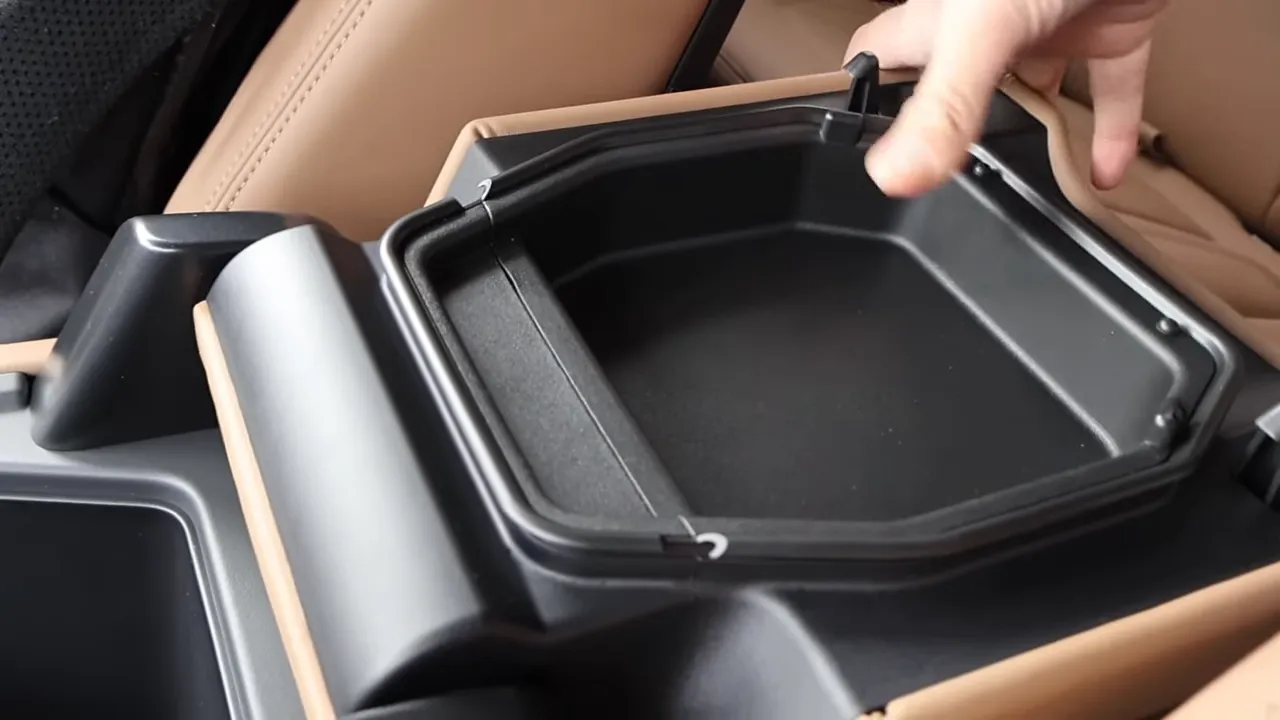
Powertrain and driving impressions: smooth, capable, and composed 🚙
Under the hood sits a turbocharged 3.0-liter inline-six mated to an eight-speed automatic. Officially rated at 395 horsepower and 406 pound-feet of torque, the powertrain delivers effortless, linear thrust. Torque is plentiful in everyday conditions, so the Defender never feels underpowered for typical passenger-carrying duties or light towing.
Fuel economy is sensible for the class: around 18 mpg city and 22 mpg highway.
What stands out while driving:
- Refined power delivery: The inline-six is exceptionally smooth—smoother than many V6 engines—and pairs seamlessly with the automatic transmission for calm, predictable acceleration.
- Comfortable ride: Air suspension (present on most configurations) soaks up bumps, and independent suspension front and rear gives the Defender handling that feels precise for such a large vehicle.
- Driving footprint: Despite carrying substantial curb weight, the unibody layout and independent suspension make parking and maneuvering surprisingly precise compared with body-on-frame SUVs.
Tech and off-road systems: intuitive and built for purpose 🧭
The Defender’s digital life feels modern and practical rather than gadget-first. A large, responsive central screen and a fully digital instrument cluster can be customized to show a single dial or a split layout depending on preference. Controls are logically grouped and the shift lever keeps a physical presence rather than disappearing into a knob.
Off-road and control features to pay attention to:
- 360-degree camera system: Multiple viewpoints, including off-road perspectives, make tricky maneuvers easier and are especially helpful when parking in tight spots or navigating trail obstacles.
- Center differential lock: This example includes a center diff lock but not the optional rear diff lock that comes with a fuller off-road package. Even with center lock alone, capability is strong on loose surfaces.
- Physical multi-function controls: Air suspension raise and lower, low range selection, hill descent control, fan speed and drive modes are all accessible quickly through tactile switches.
Reliability and ownership: inline-six tips and real-world context 🛠️
Reputation matters. Among modern Land Rovers, the inline-six Defender has earned a reputation for being the most reliable option. Owners report long-term durability and fewer chronic issues than some of Land Rover’s earlier generations. The construction is beefy, and examples have held up well beyond 100,000 miles in many owners’ hands.
Practical ownership notes:
- Keep major mods modest: The Defender’s systems—especially air suspension—work best when used as designed. Specifying Land Rover accessories or avoiding extreme lifts and oversized tires reduces the risk of wear and electronic complications.
- Expect occasional software quirks: Like many modern vehicles, electronic oddities can occur. They are usually fixable with dealer updates but are worth factoring into ownership expectations.
- Payload and weight: This model has a payload of about 825 pounds and a gross vehicle weight rating above 6,000 pounds. These figures underline the Defender’s substantial curb weight and how equipment levels affect usable load.
Practical downsides and things to consider ⚠️
No vehicle is perfect. The Defender excels in many areas but also has a few trade-offs to be aware of before buying.
- Wheel and tire fitment limitations: Stock wheel wells and brake packaging make running very large tires difficult without rubbing or requiring modifications. The practical sweet spot is about a 32 to 33-inch tire. Many owners wish for a 34-inch fitment that works without trimming.
- Brake and wheel sizing: Brake rotor and caliper sizing restrict the ability to run smaller wheel diameters such as 17 or 18 inches without re-engineering fitments. That limits certain aftermarket options that off-roaders often want.
- Weight equals cost on consumables: Heavier vehicles put more stress on brakes and tires, so expect slightly higher wear and maintenance costs than a smaller crossover.
Who should buy a Defender 110 inline-six? 🎯
The Defender 110 with the inline-six suits several buyer profiles:
- Someone who wants a classy, rugged, full-size SUV that is actually comfortable and refined every day.
- Buyers who value off-road capability but will mostly use the vehicle on paved roads and in varied weather.
- Owners who prefer to keep the vehicle mostly stock or fitted with manufacturer-approved accessories to avoid reliability trade-offs.
If your priority is a full-on rock crawler with enormous tires and an extreme lift, this is not the Defender for that. If you want a capable, luxurious, and practical SUV that can do a weekend trail and the daily commute equally well, it is one of the best packages on the market.
Pricing and trims: what to expect 💸
The example evaluated is an X-Dynamic SE with a fairly loaded option list. With options it reached around $89,000. That price point reflects the Defender’s positioning: premium materials, advanced tech, and very capable mechanicals.
For buyers on a tighter budget, less loaded trims and fewer cosmetic packages can reduce sticker shock while retaining the core inline-six engine and unibody benefits. Consider the full configuration carefully: adding off-road packages, heavy-duty wheels, and certain luxury options can push weight and affect payload.
Practical buying and ownership tips ✅
- Test the specific configuration: Try the vehicle with and without optional off-road packages. The presence or absence of a rear diff lock can change trail capability.
- Ask about service history and software updates: Ensure the dealer has performed the latest software updates to reduce the likelihood of minor electronic quirks.
- Stick to approved accessories: Land Rover accessories generally integrate better with the vehicle’s electronics and suspension systems than aftermarket lift kits.
- Plan for braking and tire replacements: Budget for slightly higher-than-average replacement costs due to vehicle weight.
Quick spec summary 🔎
- Engine: 3.0L turbo inline-six
- Transmission: 8-speed automatic
- Power: 395 hp, 406 lb-ft torque
- Fuel economy: ~18 mpg city / 22 mpg highway
- Payload: ~825 lbs
- Common wheel/tire: 275/45R22
Final take: why the inline-six Defender matters 🏁
The inline-six Defender stands out because it blends rugged capability with modern refinement. It is spacious without feeling bloated, surprisingly easy to park for its size, and comfortable for daily driving. Where some heavy SUVs feel lumbering, the Defender’s independent suspension and unibody construction allow it to feel precise and planted.
Reliability in this configuration has a positive reputation, and many owners report trouble-free ownership as long as they avoid heavy-handed aftermarket modifications. For people who want a confident, capable, and well-packaged off-road-capable SUV that is also enjoyable every day, the Defender 110 inline-six is very difficult to beat.
FAQ ✨
Is the inline-six Defender more reliable than other recent Land Rovers?
Does this Defender have air suspension?
What is the real-world fuel economy?
Can I fit large off-road tires like 34 or 35 inches?
What should I avoid to keep the Defender reliable?
How much does a loaded Defender 110 cost?
Selected visuals
Exterior blackout and styling cues.
Wheel and tire close-up.
Cargo area with air suspension confirmation.
Interior seating and materials.
Center touchscreen and camera views.
Controls for air suspension and drive modes.
Parking camera help makes tight maneuvers easy.