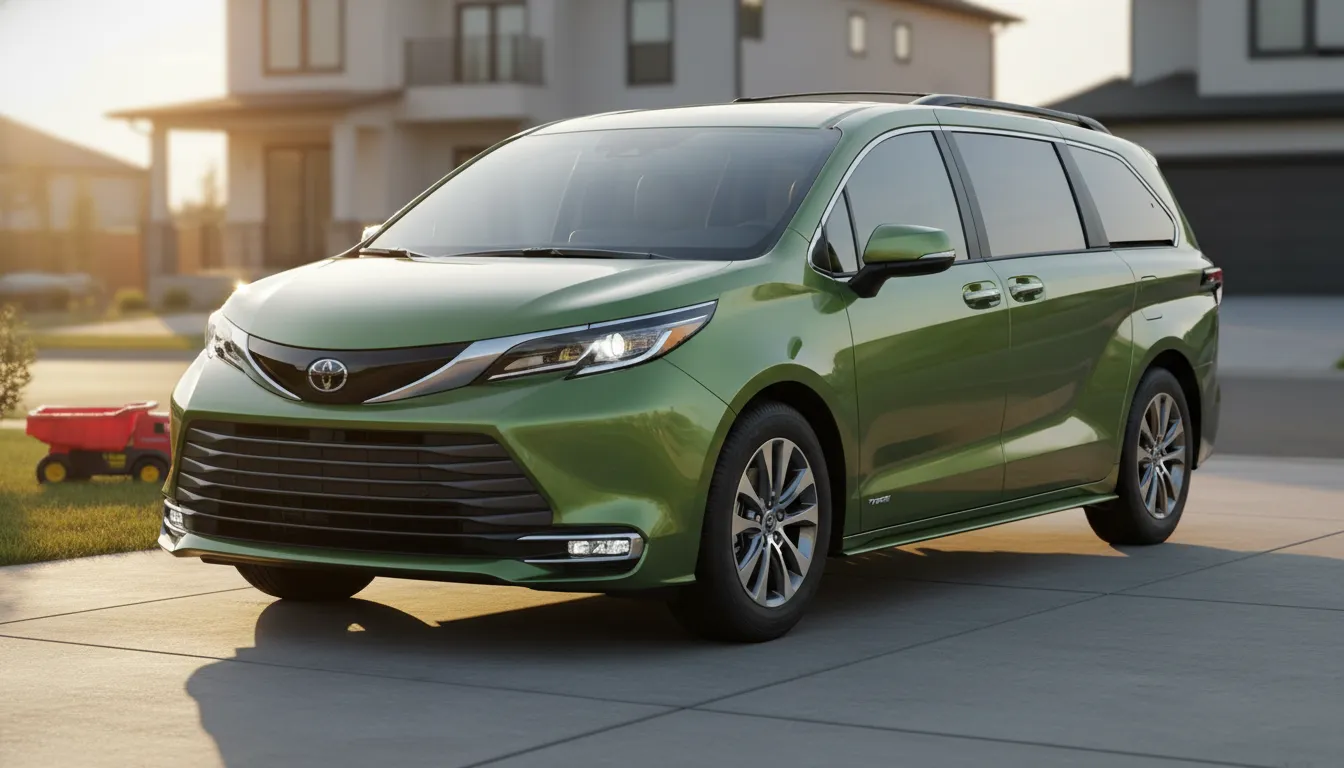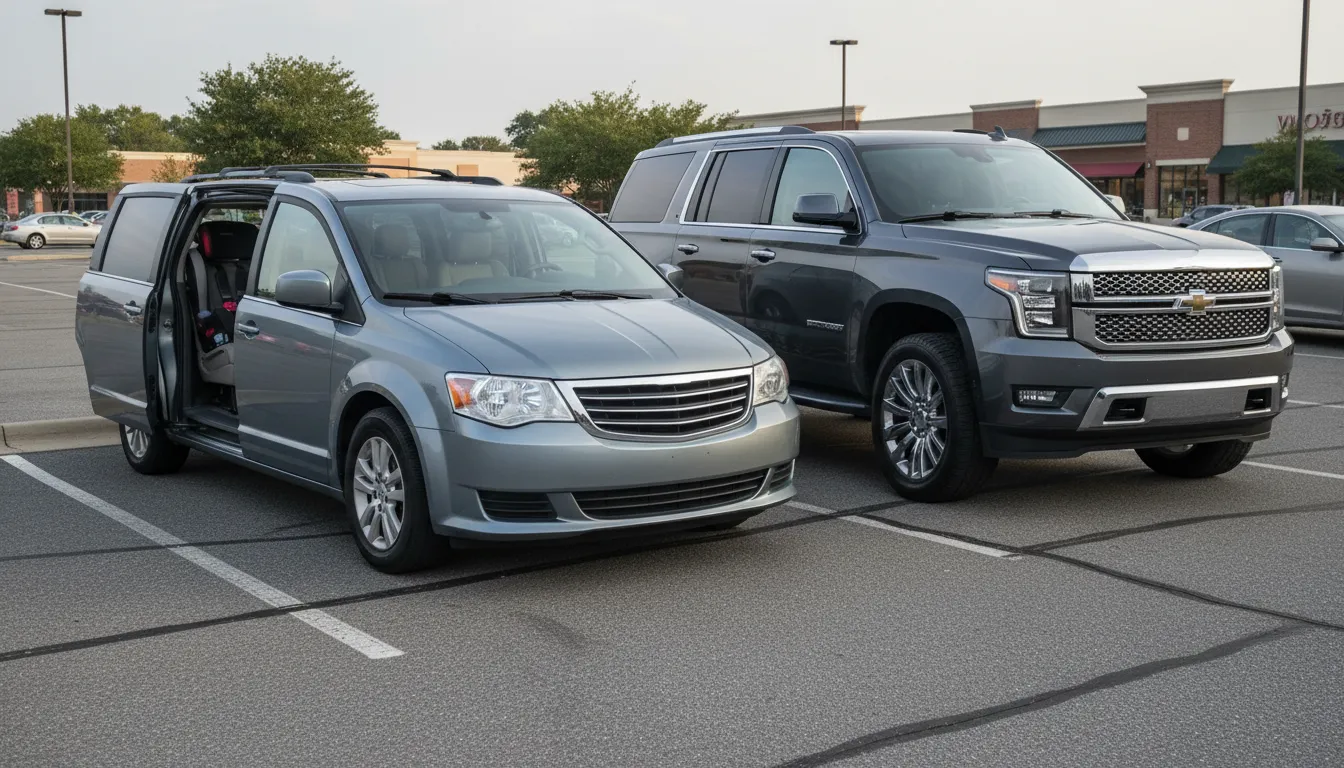
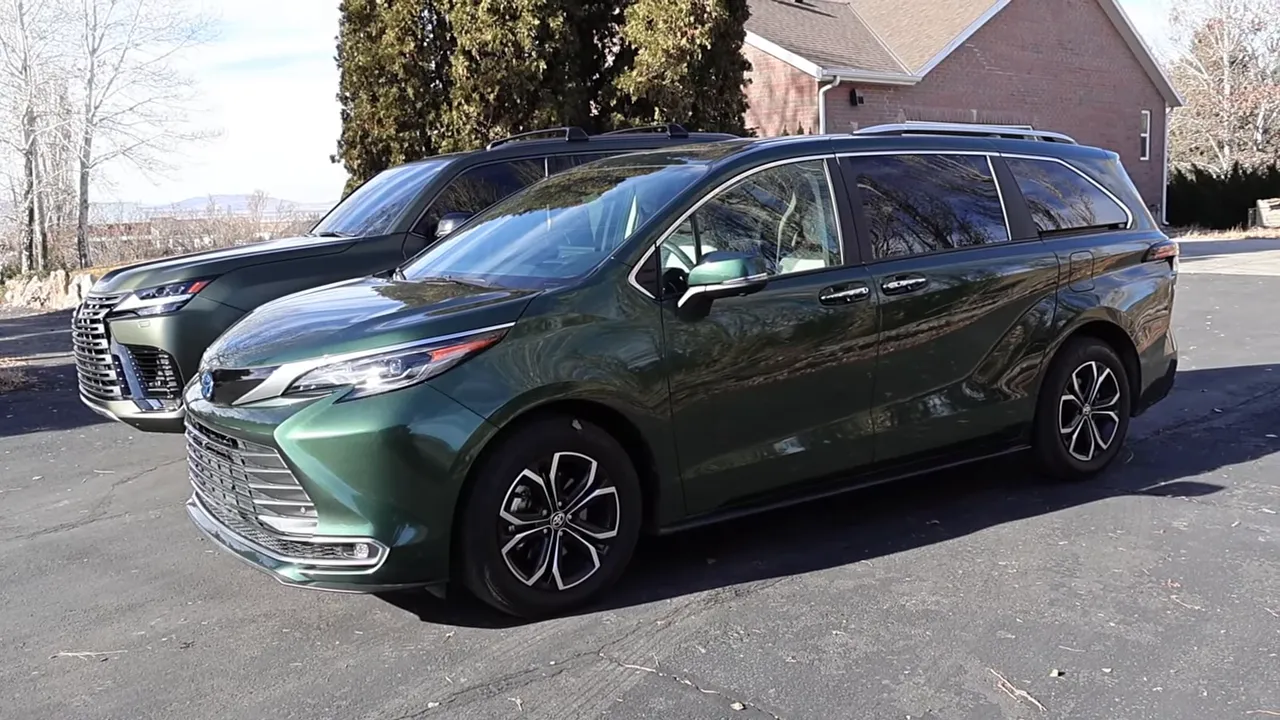
The gap between design thinking and engineering execution is clearer than ever when you park a modern Sienna next to a modern Lexus LX. One feels like thoughtful progress: efficient, roomy, and practical. The other feels like a style-first exercise that sacrificed several core functions along the way. This is not just about taste. It is about packaging, hybrid layout, real-world fuel range, interior comfort, and what Toyota chose to optimize—and what it did not.
🚗 Styling: Bold choices, but are they honest?
The Sienna’s styling toes the line between modern and restrained. In the minivan world, it stands out without becoming offensive. It has enough sculpting to make it feel contemporary while remaining functional.
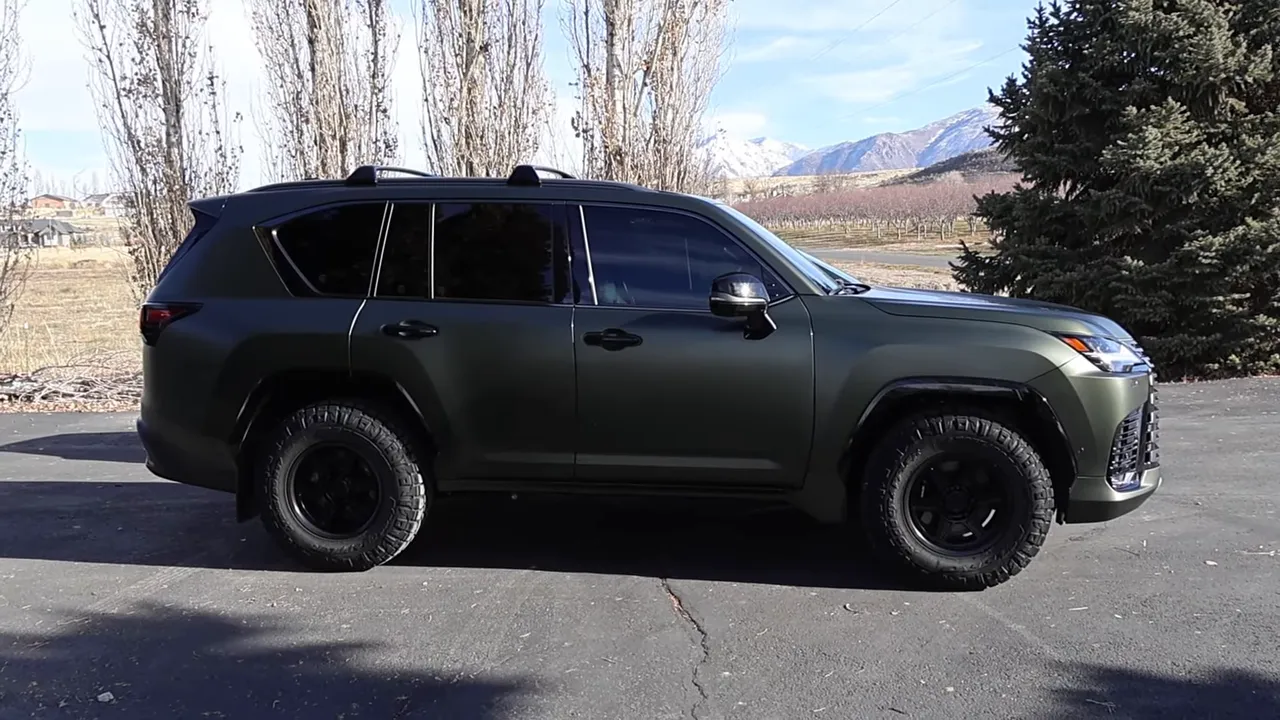
The LX, however, opts for theatricality. The grille is enormous—big enough to dominate the vehicle’s face in a way that few production cars attempt. The rear treatment follows suit with a light bar and busy surfaces. These choices are polarizing, but the real problem is when styling decisions clash with the vehicle’s stated purpose.
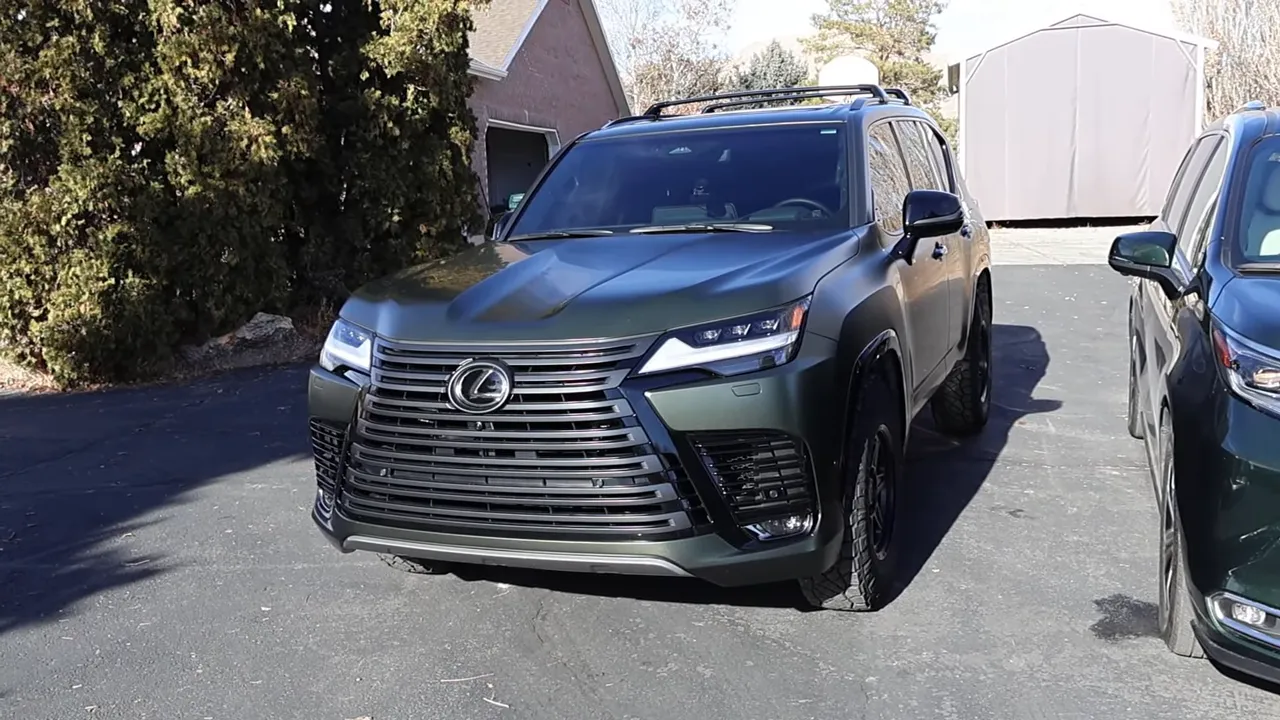
For an SUV positioned as a serious off-roader, a long front overhang and heavy, style-driven bumpers aren’t just aesthetic decisions—they undermine approach angles, ground clearance leverage, and real off-road capability. It looks aggressive, but functionally it’s a step backwards.
🧩 Packaging: How unibody wins the interior space battle
Packaging is where the Sienna shines. Fold-flat seats, cleverly routed hybrid components, and an interior designed around the occupants make it feel far larger inside than its exterior dimensions suggest. The third row folds flat and creates a nearly continuous cargo floor—exactly what a family vehicle needs.
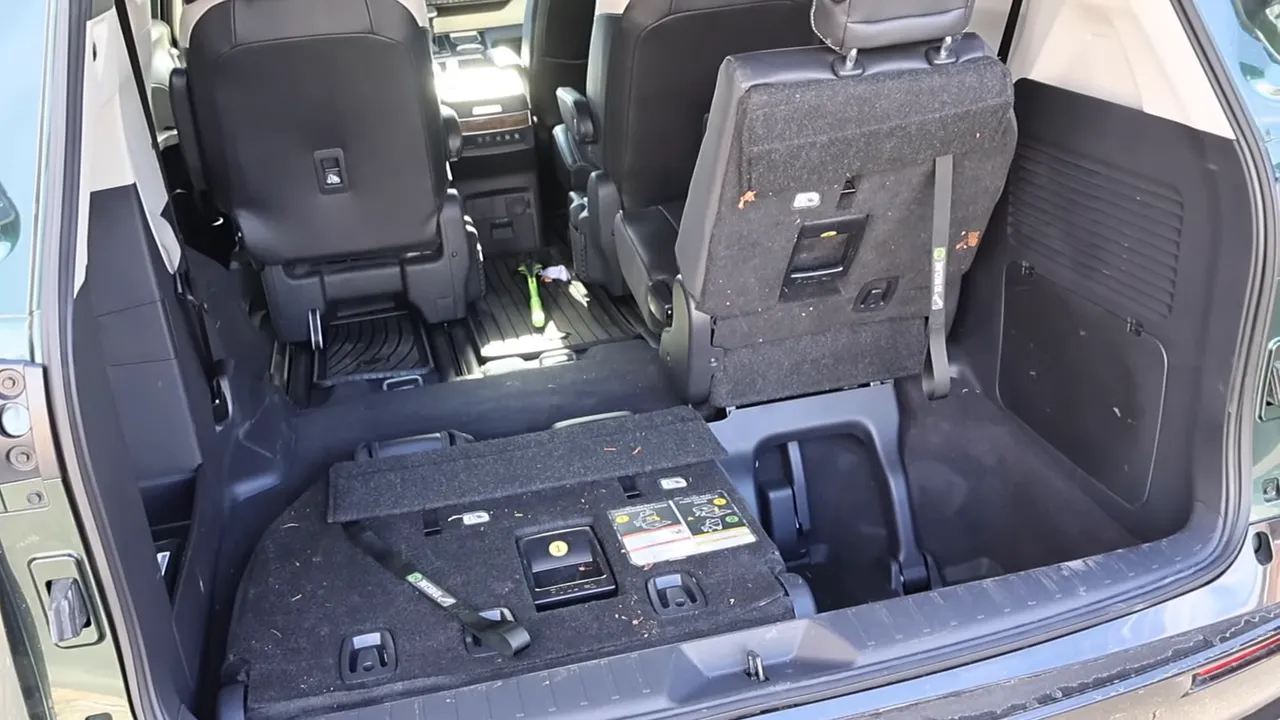
Compare that with the LX and newer body-on-frame Toyotas. These vehicles often force a choice between seats or cargo because hybrid battery placement and frame geometry chew up vertical space. The LX’s third row starts at a higher floor height and, in many configurations, reduces vertical cargo capacity to the point where you can barely fit anything with the seats up.
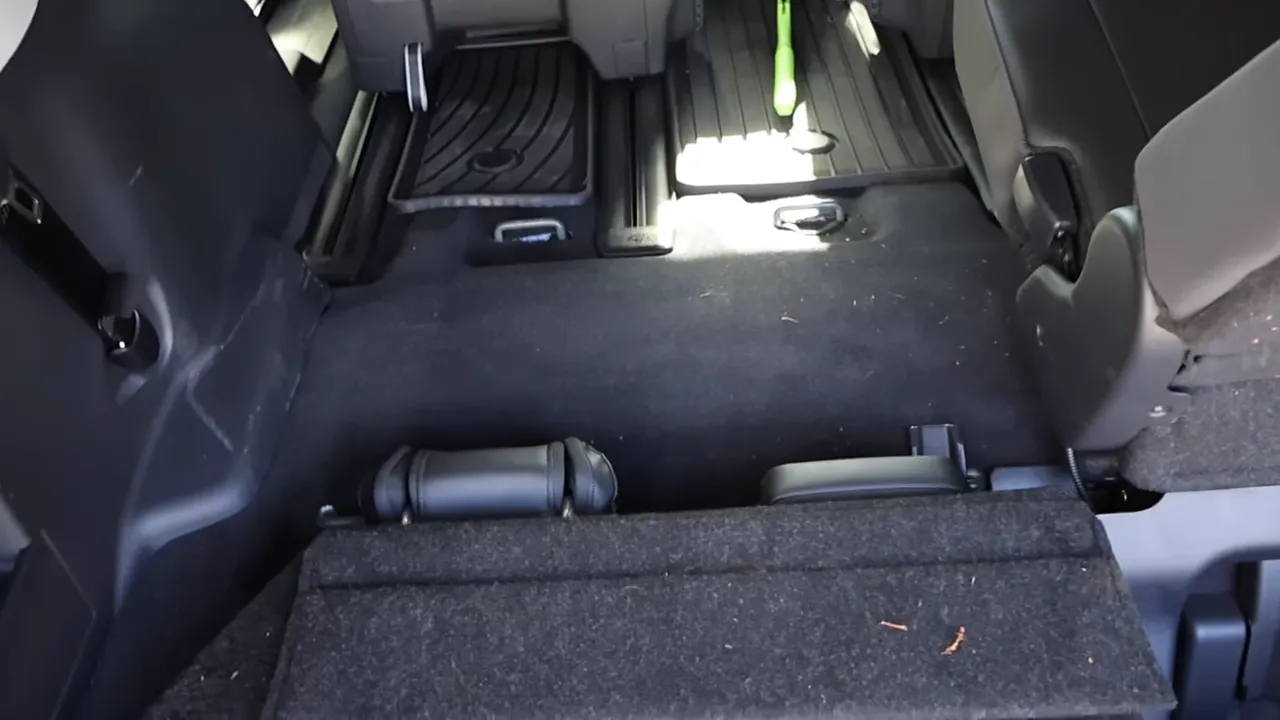
It comes down to architecture. Unibody platforms with independent suspension allow engineers to tuck hybrid batteries and other components into low, unobtrusive locations. Body-on-frame designs and solid rear axles require higher ride heights and space for frame rails and axle housings, which push the floor upward. The result is less usable interior volume despite similar exterior size.
🔋 Hybrid layout: Great for cars, awkward for trucks
Toyota’s unibody hybrids are a lesson in packaging efficiency. Cars like the Prius or Camry and minivans like the Sienna use hybrid systems that sit low and out of the way, delivering excellent MPG without eating into cabin or cargo space.
But that success has not translated cleanly to the truck and SUV side. When the hybrid battery ends up under the load floor or in awkward places to accommodate frame rails and axles, the truck loses rear seat comfort or cargo capacity. In practice, owners of hybrid trucks often sacrifice one of two things: usable third-row seating or meaningful cargo volume.
That tradeoff might be acceptable if the fuel savings were dramatic, but the numbers complicate the equation.
⛽ Fuel economy and real-world range: The uncomfortable math
Unibody hybrids deliver predictable and often impressive fuel economy. Many people consistently see high 20s to the mid-30s MPG in crossovers and minivans, and cars like the Prius and Camry still hit 40-plus MPG in conservative driving. That efficiency paired with adequate fuel tank sizes yields practical driving range—often 400 miles or more.
Trucks tell a different story. Hybrid versions of body-on-frame trucks and SUVs frequently return high teens to low 20s MPG in real-world driving. Put on aggressive off-road tires, and those numbers can drop below 20 MPG. Yet Toyota’s fuel tank sizes on many trucks (excluding the Tundra) don’t compensate for this consumption—resulting in sub-300-mile real-world range on a full tank.
Range matters. Long stretches without gas stations, towing, or heavy weekend use make 500 miles a reasonable target for modern full-size vehicles. When a large truck barely makes 300 miles, that’s a packaging and usability failure, not just a fuel economy stat.
🪑 Seating and driver comfort: Why the Sienna feels so spacious
The Sienna’s cabin was designed for families. Driver reach, knee room, and passenger legroom all reflect thoughtful ergonomic priorities. Even with car seats installed, front passengers retain usable space. The third row is adult-friendly in a way many SUVs can only dream of: enough knee room, acceptable headroom, and a genuinely flat load floor when needed.
Newer Toyota trucks and truck-based SUVs are tighter. A higher floor, intruding battery and frame structures, and aggressively shaped door panels can produce cramping for back-seat passengers and even for front-seat occupants when child seats are in use. This wasn’t always the case—older trucks like the 200-series Land Cruiser can feel roomier inside despite being shorter on the outside.
That contrast highlights a key point: bigger exterior dimensions do not automatically translate to better interior livability. How the space is used matters far more than raw measurements.
🛠️ Off-road capability and technical improvements
The truck side isn’t all downside. Modern Toyota trucks gained real improvements where it counts for off-roaders:
- Increased ground clearance in certain modes and trims, useful for real off-road terrain.
- Larger wheel wells that accept bigger off-road tires without massive fender mods.
- Improved off-road systems such as faster-reacting terrain management and more accessible locking differentials—some models now offer front, center, and rear diff locks depending on the trim.
- Better cameras and infotainment with high-resolution 360-degree views that actually fill in under-vehicle imagery for confident rock-crawling and tight maneuvering.
These are meaningful upgrades compared to older generations. If off-road bravado and mechanical capability are the priority, some of the newer trucks represent a clear step forward.
🧭 Safety tech and driving aids: Unibody has the edge
Adaptive cruise control and lane-centering systems are more reliable and less intrusive in unibody platforms. A vehicle with less body roll and lighter steering behavior is easier for automated systems to control. In practice, many unibody Toyotas have adaptive systems that track well, accelerate and decelerate smoothly, and rarely demand corrective input on the highway.
Body-on-frame vehicles with heavier mass and more body roll cause more erratic behavior from the same driver assist systems. Even when the software is updated, the physical dynamics make it harder for lane-centering and adaptive cruise to stay calm and precise. Expect more frequent hand-offs and course corrections in large trucks versus crossovers.
What Toyota should fix: A short, practical list
If the goal is to keep the best parts of the current lineup while fixing the glaring issues, here are high-impact moves that would improve usability and customer experience:
- Revisit hybrid packaging for trucks: Prioritize battery placements that minimize intrusion into cargo and passenger volume, even if it means re-engineering frame layouts or more aggressive use of unibody-derived platforms for certain models.
- Increase fuel tank capacity on thirsty trucks: Adjust tank sizes to match real-world MPG, aiming for a practical 400–500 mile range where possible.
- Dial back gratuitous styling that sacrifices approach angles and visibility. Design should serve the vehicle’s mission.
- Invest more in truck R&D: If reliability, packaging, and fuel-efficiency problems live mostly in trucks, double down on engineering resources for those platforms.
- Retain and extend the unibody strategy for passenger-focused vehicles: keep refining hybrid efficiency, interior ergonomics, and driver-assist technology.
🧾 Final verdict: Two Toyotas, two trajectories
Unibody Toyotas are arguably at their best. They offer excellent packaging, impressive hybrid efficiency, refined interiors, and reliable safety tech. For people prioritizing everyday usability, fuel economy, and family comfort, these vehicles are hard to beat.
Trucks and truck-based SUVs are more of a mixed bag. They gained real off-road capability and better tech, but at the cost of interior space, hybrid practicality, and, in some cases, reliability issues concentrated in the truck powertrains. The net result is progress in some dimensions but regression in others.
When choosing between these two philosophies, ask which priorities matter most. If interior space, quiet efficiency, and easy daily usability are key, a unibody hybrid like the Sienna will likely deliver more satisfaction. If off-road capability, heavy-duty mechanical systems, and body-on-frame durability are non-negotiable, a truck or LX-class vehicle may still be the right tool—just be aware of the tradeoffs you are accepting.
❓ Frequently asked questions
Why do unibody Toyotas handle hybrid components better than trucks?
Do hybrid trucks save enough fuel to justify the loss of space?
Are the styling and grille sizes purely cosmetic choices?
Which Toyota vehicles currently offer the best balance of comfort and efficiency?
What should buyers consider if they need both off-road capability and family-friendly space?
Will Toyota likely change course on these truck issues?
🔚 Closing thoughts
Design and engineering are a balancing act. The Sienna demonstrates how thoughtful packaging, modest styling, and efficient hybrids result in a vehicle that serves people well. The LX and similar truck-based models show how prioritizing one axis—visual presence or mechanical capability—can unintentionally sacrifice day-to-day usability.
Ultimately, the smartest cars are the ones that make the lives of their owners easier, not the ones that simply look imposing in a driveway. When engineering choices and design priorities align with purpose, vehicles become genuinely better. Right now, that alignment is more consistent in the unibody Toyota lineup than it is in the trucks. Fixing that imbalance would make a big difference for owners who expect modern Toyota reliability and practicality across every category.