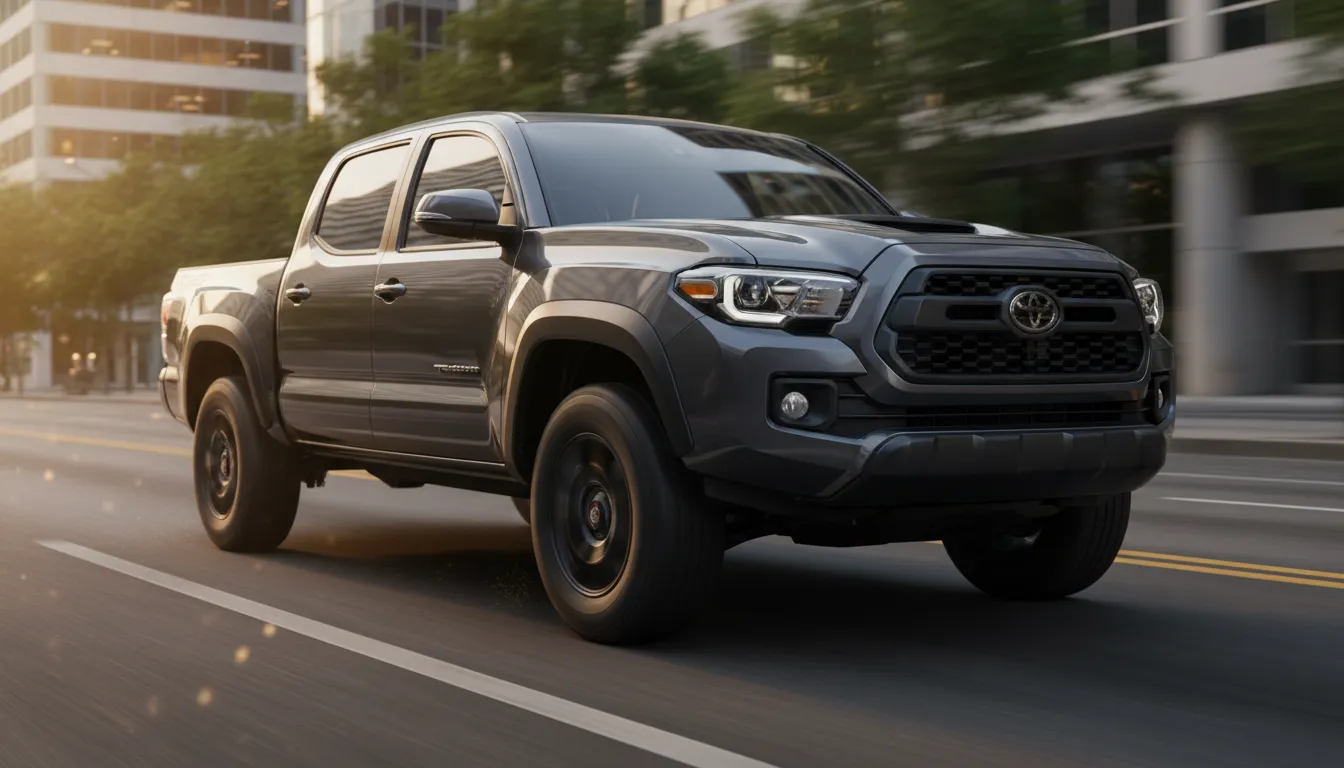
The 2026 Toyota Tacoma TRD Sport Long Bed is one of the most compelling yet elusive configurations in the midsize truck market. Combining a full four-door Double Cab with an extended 6-foot (73.5-inch) cargo box, it bridges the gap between midsize maneuverability and full-size hauling utility. Built on Toyota’s TNGA-F global truck platform, this fourth-generation Tacoma trades the soft, high-articulation trail tuning of its off-road siblings for road-biased composure, sharp steering, and everyday job-site versatility.
Quick Answer
The 2026 Toyota Tacoma TRD Sport Long Bed pairs a 73.5-inch composite cargo box with a 278-hp turbocharged 2.4L engine, 8-speed automatic, and coil-sprung rear suspension. It delivers exceptional low-end torque and full-size bed utility, but trades off a wider 48.2-foot turning radius and a stiff, sport-biased ride.
Key Takeaways
- True 6-Foot Utility: The 73.5-inch Sheet-Molded Composite (SMC) bed holds long cargo that short beds cannot manage without an open tailgate.
- Diesel-Like Powertrain: The standard i-FORCE 2.4L turbo delivers 317 lb-ft of torque at just 1,700 RPM, giving it effortless low-end passing and towing punch.
- Firm On-Road Dynamics: Sport-tuned twin-tube dampers and rear multi-link coil springs reduce body roll on pavement at the expense of rough-road compliance.
- Parking Realities: The extended 145.1-inch wheelbase increases the turning diameter to 48.2 feet, requiring extra planning in tight urban garages.
First Impressions: Styling, Trim Details, and Exterior Presence
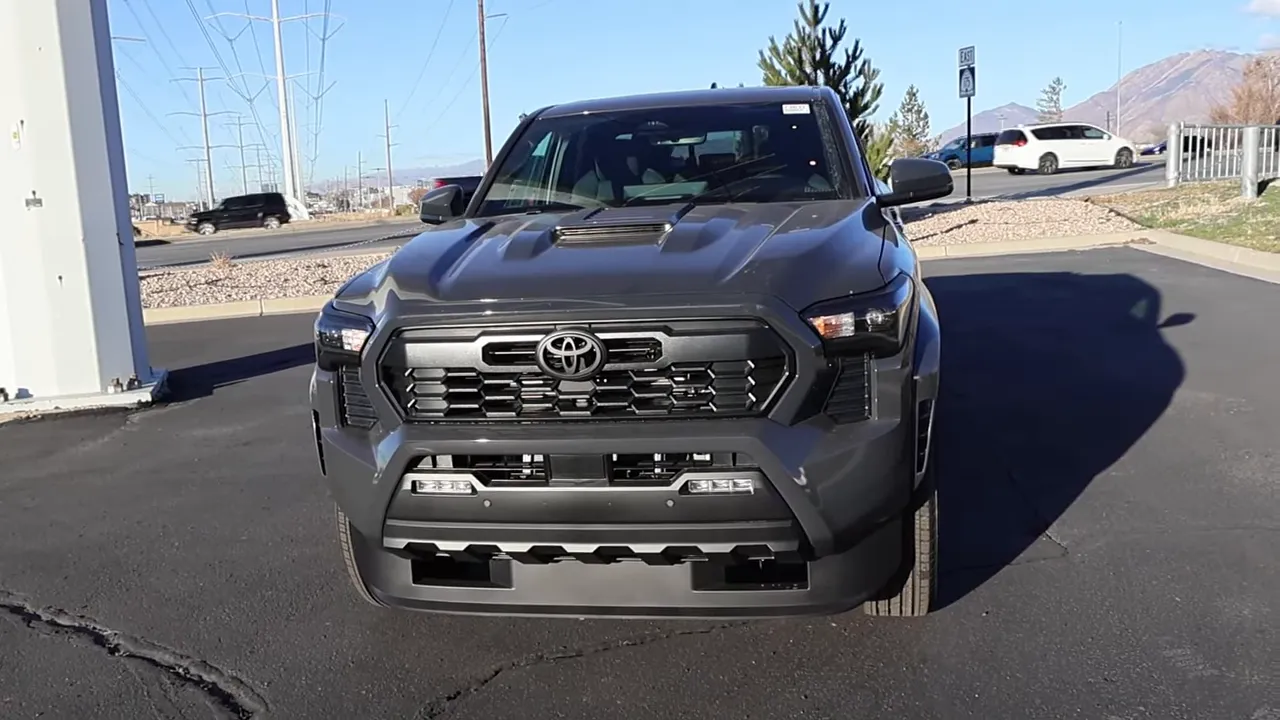
The 2026 Tacoma TRD Sport carries a distinct, asphalt-oriented aesthetic within the Tacoma portfolio. While the TRD Off-Road and Trailhunter feature rugged unpainted cladding and high-clearance bumpers, the TRD Sport opts for a monochrome, chiseled presentation finished here in Toyota’s deep “Underground” gray metallic paint.
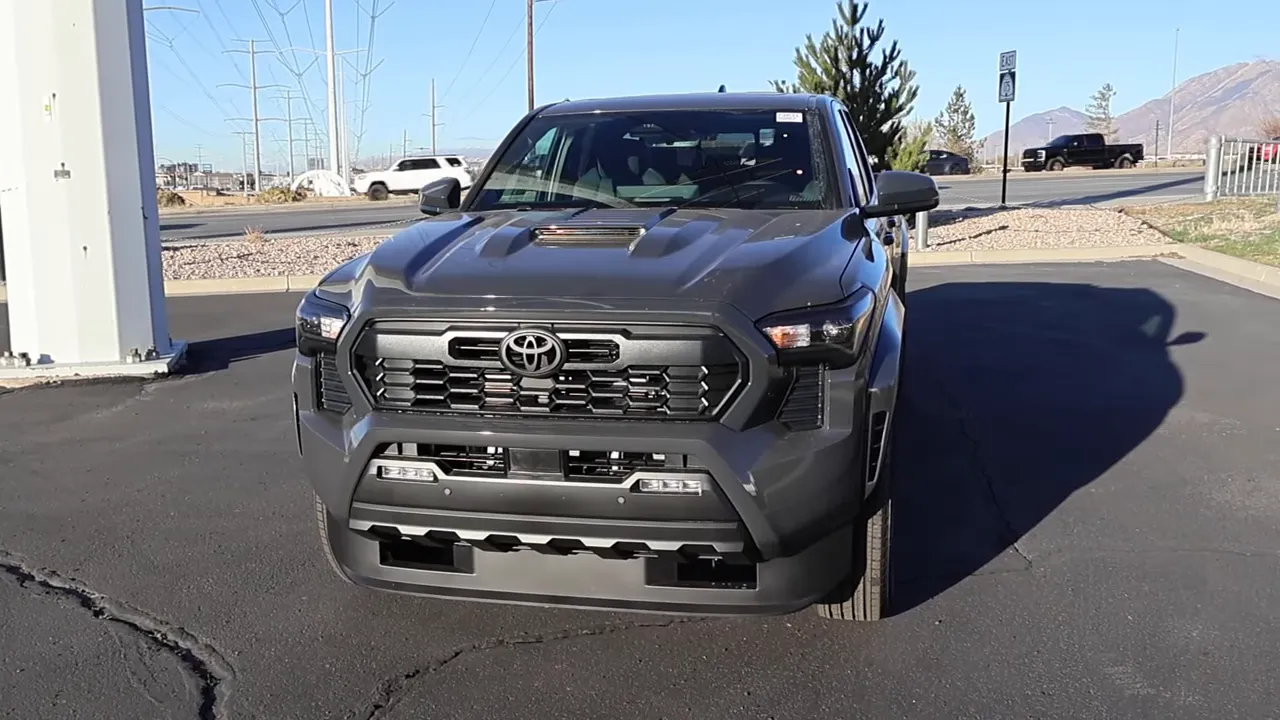
The front fascia integrates dark-accented LED projector headlamps with signature daytime running lights that flow into an angular, dark-finished hexagonal grille. Key exterior differentiators include:
- Signature Non-Functional Hood Scoop: A TRD Sport design hallmark that provides an aggressive profile without adding intake routing complexity.
- Body-Colored Overfenders: Standard painted fender flares replace the raw black composite found on off-road models, visually broadening the truck’s stance.
- 18-Inch Machined-Finish Alloy Wheels: Paired with 265/65R18 all-season highway-terrain tires optimized for road grip, low rolling resistance, and reduced highway noise.
- Removable Front Aerodynamic Air Dam: Toyota installs a deep front chin spoiler to optimize highway aerodynamics and fuel efficiency. Removing it requires only nine Phillips screws, immediately restoring approach clearance for trail driving.
Pro Tip: If you plan to take your TRD Sport onto gravel trails or light fire roads, remove the low-hanging front air dam. It increases front approach angle from 24 degrees to over 30 degrees and prevents front-lip damage over ruts.
The Long Bed: Dimensions, Function, and Real-World Capacity
The primary reason to choose this specific Tacoma is behind the rear glass. While the standard Double Cab comes with a 5-foot (60.3-inch) cargo box, the Long Bed extends total floor length to 73.5 inches. That additional 13.2 inches of bed length transforms the Tacoma from an outdoor gear carrier into a legitimate work truck capable of handling 6-foot construction timber, motorcycles, and sleeping platforms with the tailgate closed.
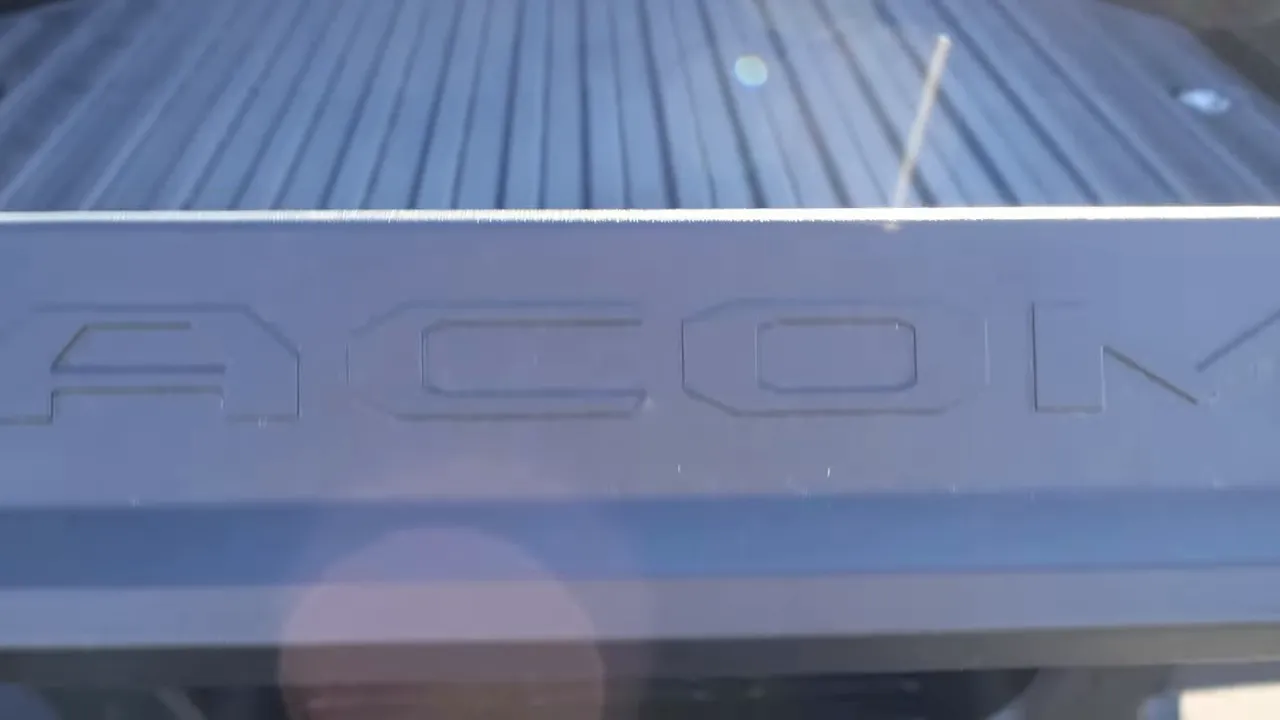
Toyota manufactures the cargo box from high-strength aluminum-reinforced Sheet-Molded Composite (SMC). Unlike traditional steel beds, the composite construction is completely immune to rust, scratches, and dings, eliminating the need for an aftermarket spray-in liner.
Key bed dimensions and capabilities include:
- Bed Length: 73.5 inches (6.1 feet) with tailgate raised; exceeds 90 inches with the tailgate dropped flat.
- Bed Depth: 20.2 inches, providing deep side protection to secure loose cargo below the rail line.
- Bed Floor Width: 53.0 inches at the main floor; 56.4 inches across the deck-rail tops.
- Width Between Wheel Arches: 44.7 inches. Because standard drywall and plywood sheets measure 48 inches wide, they cannot lie completely flat on the floor between the wheel housings.
Note: Toyota engineers molded two-tier structural slots directly into the composite bed sides. Dropping standard 2×6 dimensional lumber into these slots creates an elevated, level platform above the wheel wells to carry 4×8 plywood sheets completely flat.
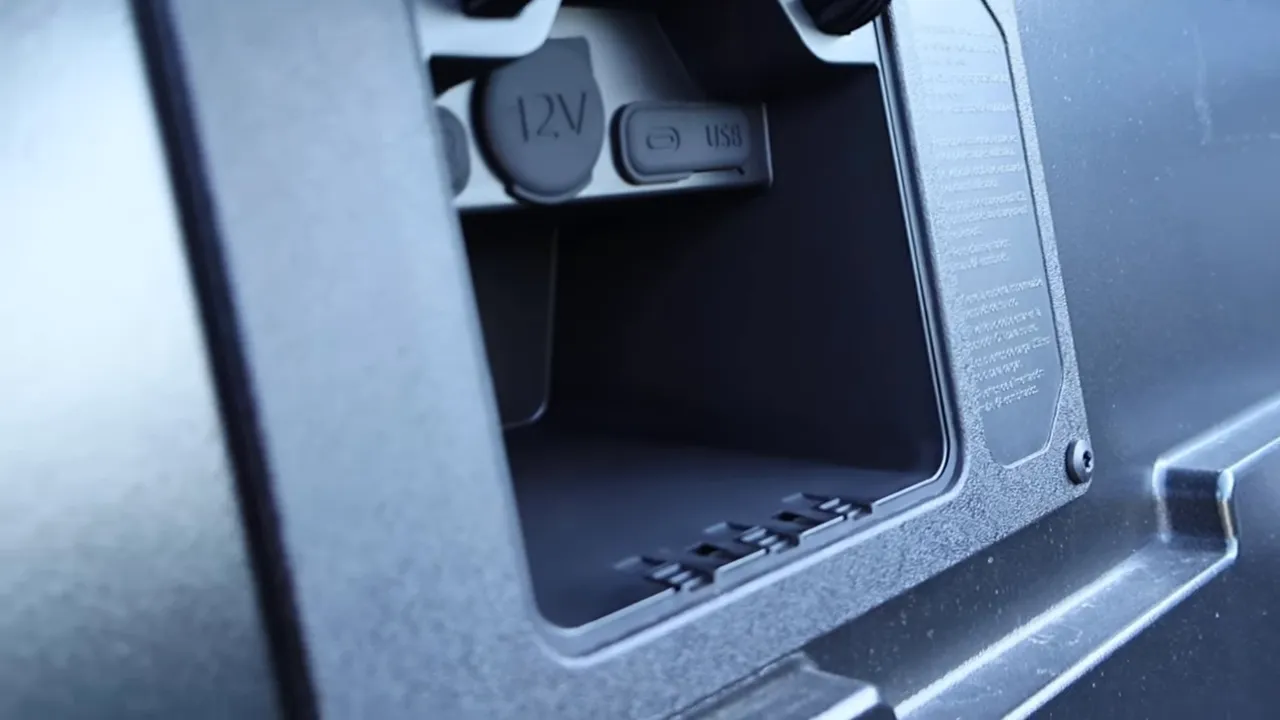
Cargo management features include standard integrated deck rails with four adjustable aluminum tie-down cleats, in-bed LED lighting, and fixed low-mounted tie-down rings. The side cubby incorporates a 12-volt DC outlet alongside an available 400-watt AC household three-prong outlet powered by an onboard inverter—perfect for charging power tool batteries, camping lanterns, or small portable air compressors.
Interior Quality, Ergonomics, and Cab Space
Stepping inside the 2026 Tacoma reveals an interior designed around tactile truck utility rather than delicate luxury. Large, rubberized volume and climate dials can be operated while wearing work gloves, and high-impact contact zones utilize hard-wearing composite textures designed for longevity.
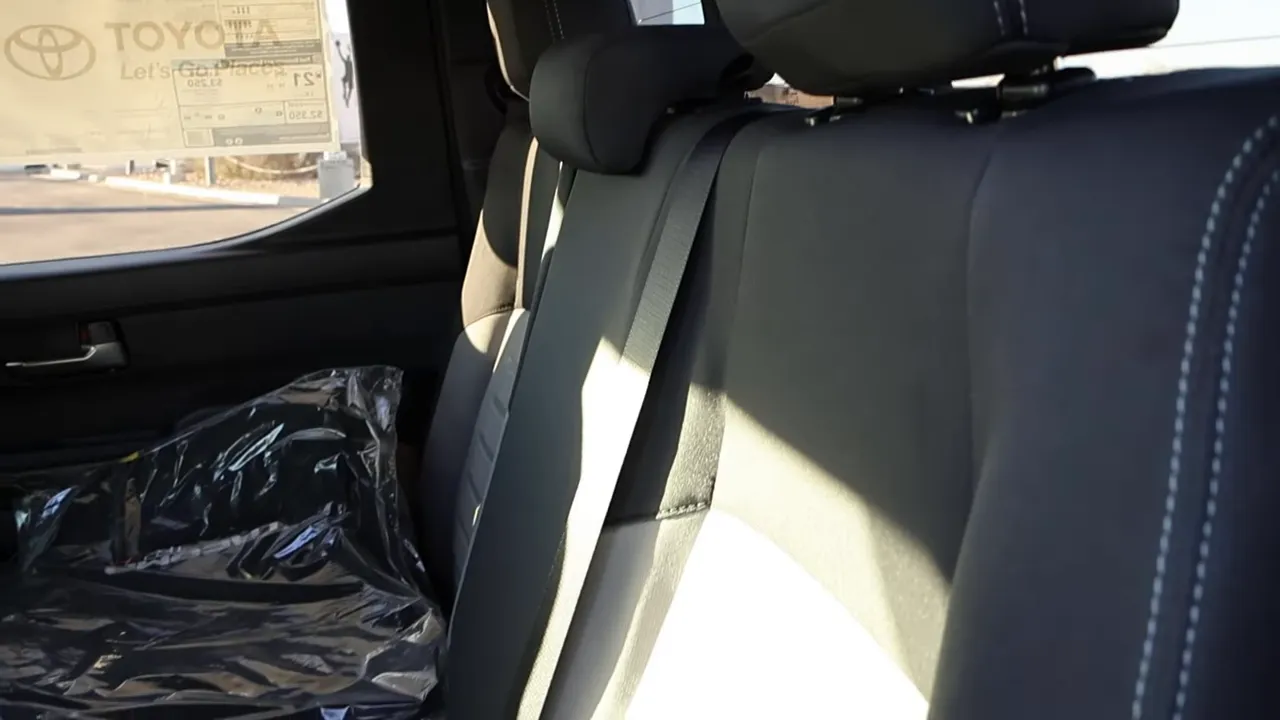
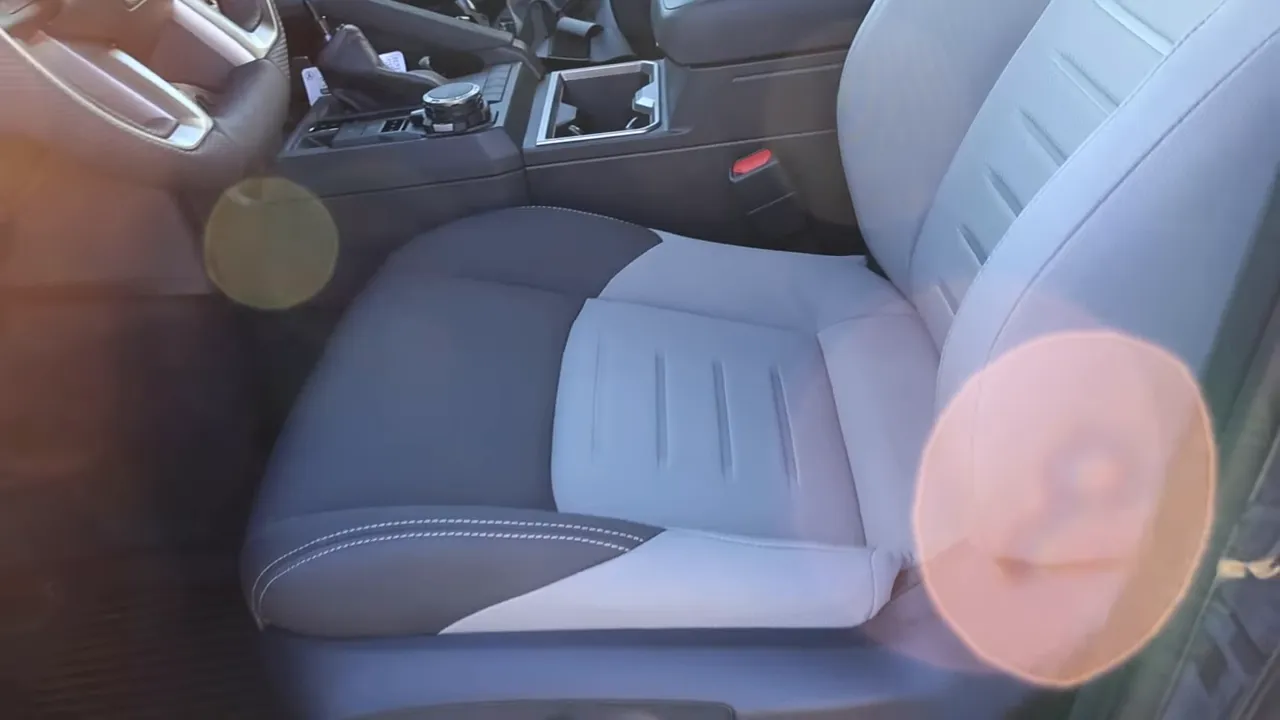
The TRD Sport comes standard with durable two-tone patterned cloth seats featuring reinforced contrast stitching and aggressive lateral bolsters that keep driver and passenger planted through sharp highway corners. Key cabin attributes include:
- Seating Position: Unlike the legacy 3rd-generation Tacoma’s legs-out seating posture, the 4th-gen TNGA-F platform raises the seat height relative to the floor. Multi-way power adjustment with lumbar support delivers an upright, comfortable driving position suitable for cross-country road trips.
- Rear Legroom Realities: The Double Cab offers 33.7 inches of rear legroom. While adult passengers fit comfortably for city commutes, rear kneeroom remains tighter than in full-size alternatives like the Tundra. Under-seat composite storage compartments and rear-panel USB-C fast-charging ports add welcome practicality.
- Control Ergonomics: The thick-rimmed, leather-wrapped TRD steering wheel includes perforated leather grips, intuitive physical buttons for dynamic radar cruise control, and dedicated voice commands.
In-Cabin Technology and Connectivity
The fourth-generation cabin is anchored by Toyota’s Audio Multimedia system, developed domestically by Toyota Connected. Base configurations feature an 8.0-inch touchscreen, while the tested model includes the high-resolution 14.0-inch multimedia display paired with a fully configurable 12.3-inch digital instrument cluster.
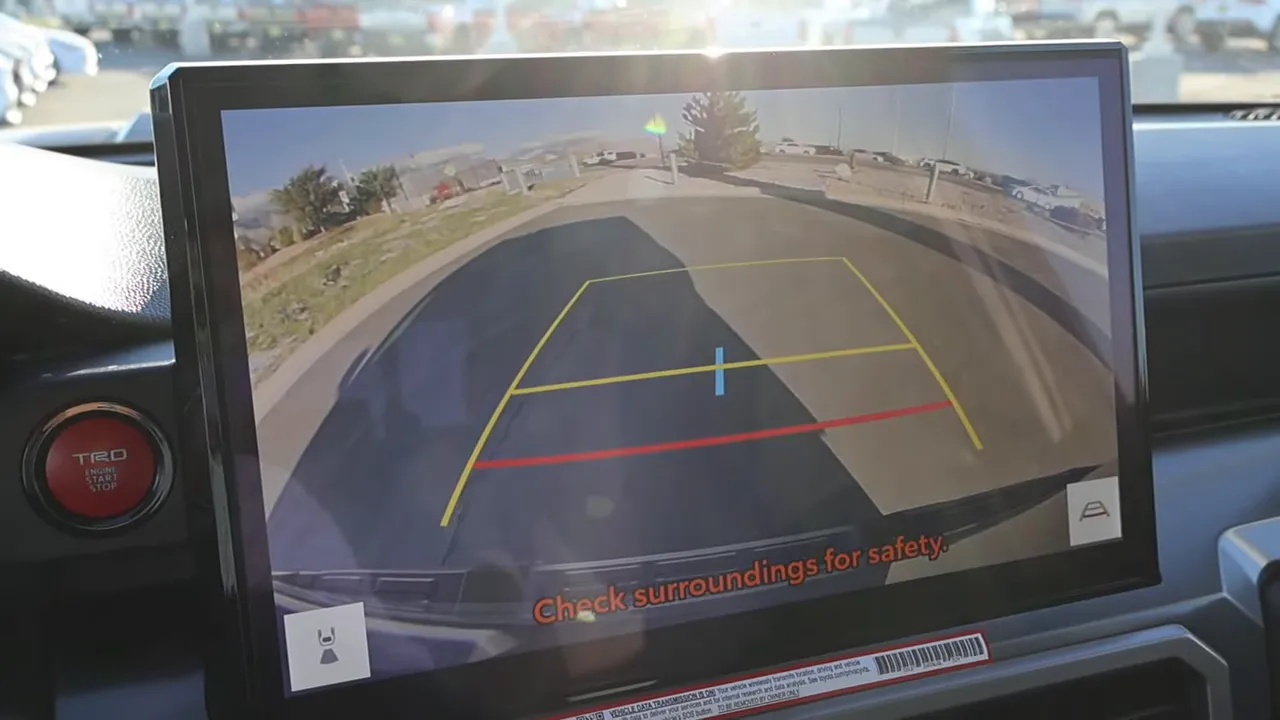
The software interface supports wireless Apple CarPlay and wireless Android Auto, responding instantly with zero input latency. A vertical Qi wireless smartphone charging pad integrated into the center stack holds phones securely during brisk acceleration.
Camera resolution is a dramatic leap forward from previous iterations. The backup camera provides selectable wide-angle and top-down panoramic views with dynamic steering guidelines, making solo trailer hitch alignment effortless.
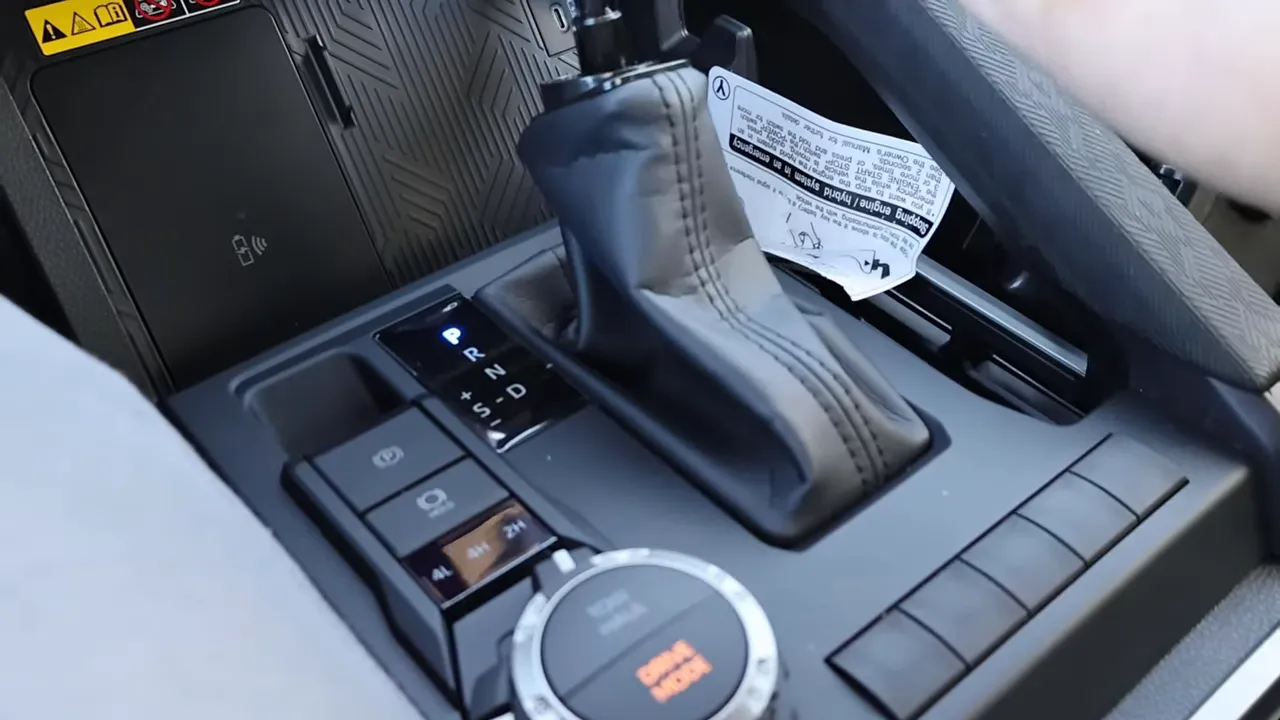
Driver-assist switchgear is grouped logically around the leather-wrapped electronic shifter. A rotary dial allows instant toggling between Eco, Normal, and Sport drive modes, while dedicated buttons engage the Tow/Haul calibration, electronic brake-hold, and 4WD high/low range selector.
Powertrain and Performance: Torque-First Turbo Tuning
Under the hood, Toyota retired the aging naturally aspirated 3.5-liter V6 in favor of the i-FORCE 2.4-liter turbocharged DOHC 16-valve inline-4 cylinder engine (engine code T24A-FTS). Paired with an 8-speed electronically controlled automatic transmission (ECT-i), output is rated at 278 horsepower at 6,000 RPM and 317 lb-ft of torque at 1,700 RPM.
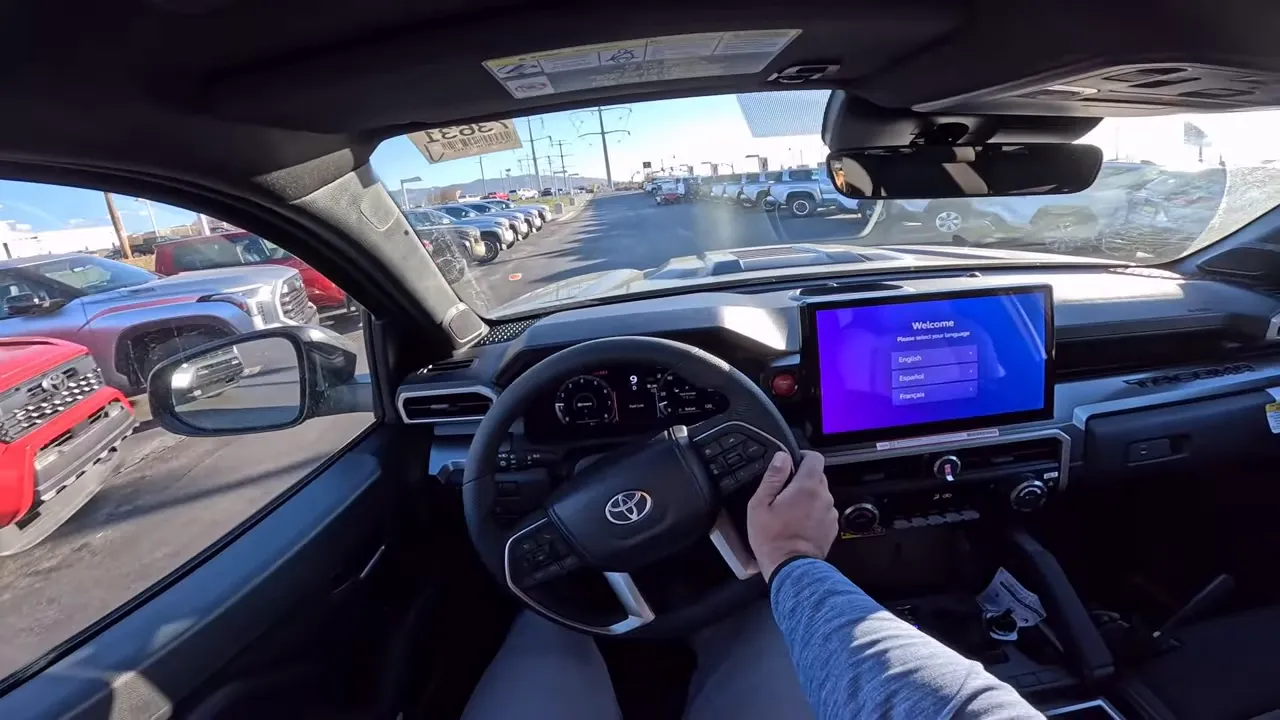
The torque delivery completely transforms how the Tacoma behaves in traffic:
- Instant Low-End Pull: Peak torque arrives at just 1,700 RPM—over 2,500 RPM lower than the previous V6 engine. The truck surges forward from stoplights with immediate authority without requiring high-RPM gear hunting.
- Diesel-Like Power Band: Real-world acceleration rewards short-shifting. The turbo delivers muscular thrust through 4,500 RPM, after which power tapers off. Driving it like a turbodiesel—riding the wave of low-end torque—delivers rapid progress.
- Intuitive 8-Speed Gearing: The 8-speed transmission downshifts cleanly and holds gears tenaciously on mountain ascents, curing the persistent gear-hunting that frustrated third-generation Tacoma owners.
- Fuel Economy: Per official EPA ratings, the 4WD i-FORCE 2.4L automatic achieves 19 MPG city, 23 MPG highway, and 21 MPG combined.
Ride, Handling, and NVH Dynamics
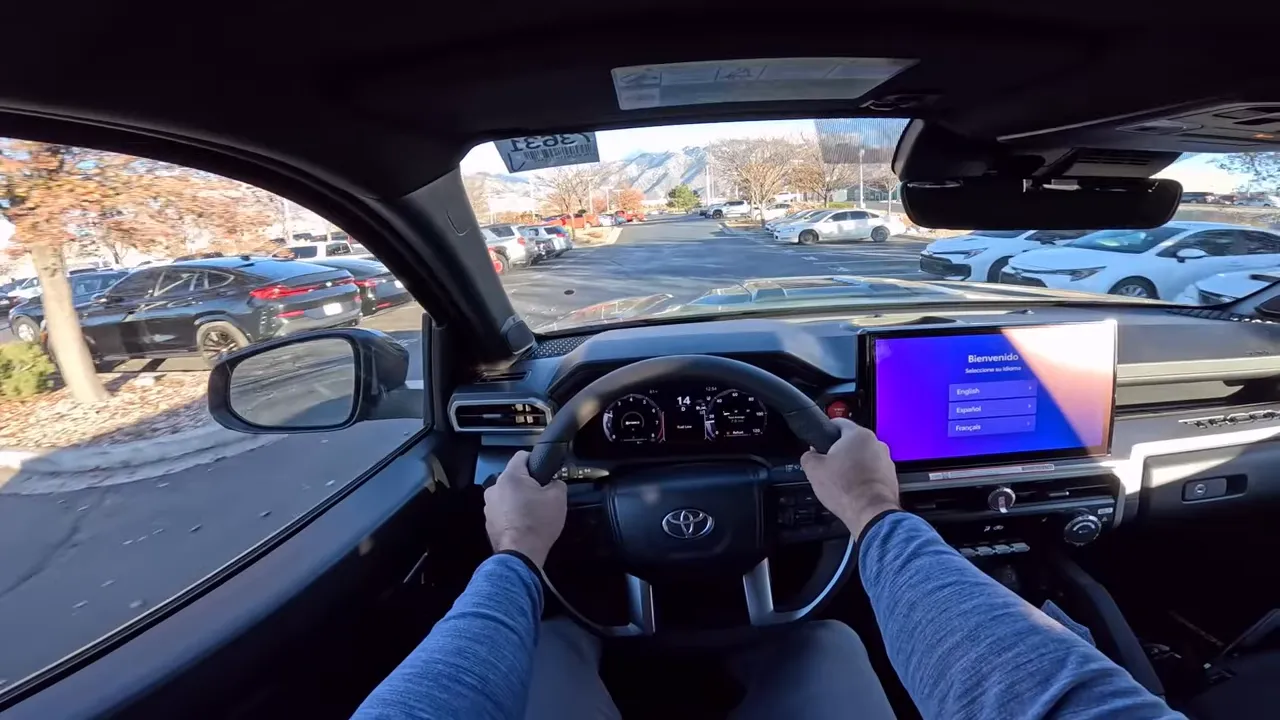
The structural backbone of the fourth-generation Tacoma is a fully boxed high-strength steel ladder frame with hydraulic cab mounts. Double Cab TRD Sport models ditch the traditional rear leaf springs in favor of a modern multi-link rear suspension with coil springs and sport-tuned twin-tube dampers.
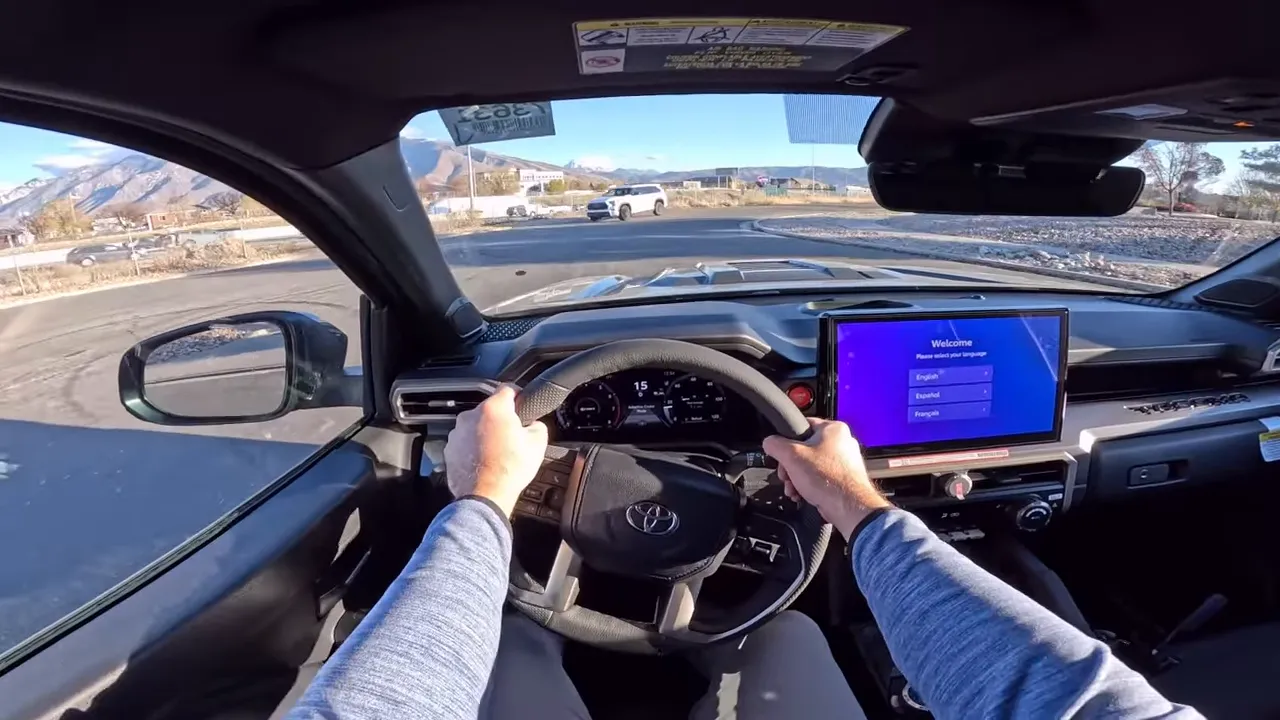
“The TRD Sport suspension is unapologetically firm. While off-road trims float over washboard terrain, the Sport ties the chassis down to the road, dramatically reducing body lean in corners.”
On smooth tarmac, the TRD Sport feels composed and agile. The electric power steering (EPS) rack provides crisp on-center weighting and communicates road surface changes far better than earlier hydraulic setups. However, over expansion joints and frost heaves, the sport-valved suspension transmits noticeable vertical firmness into the cabin when the cargo bed is unladen.
Acoustic Insulation and Road Noise
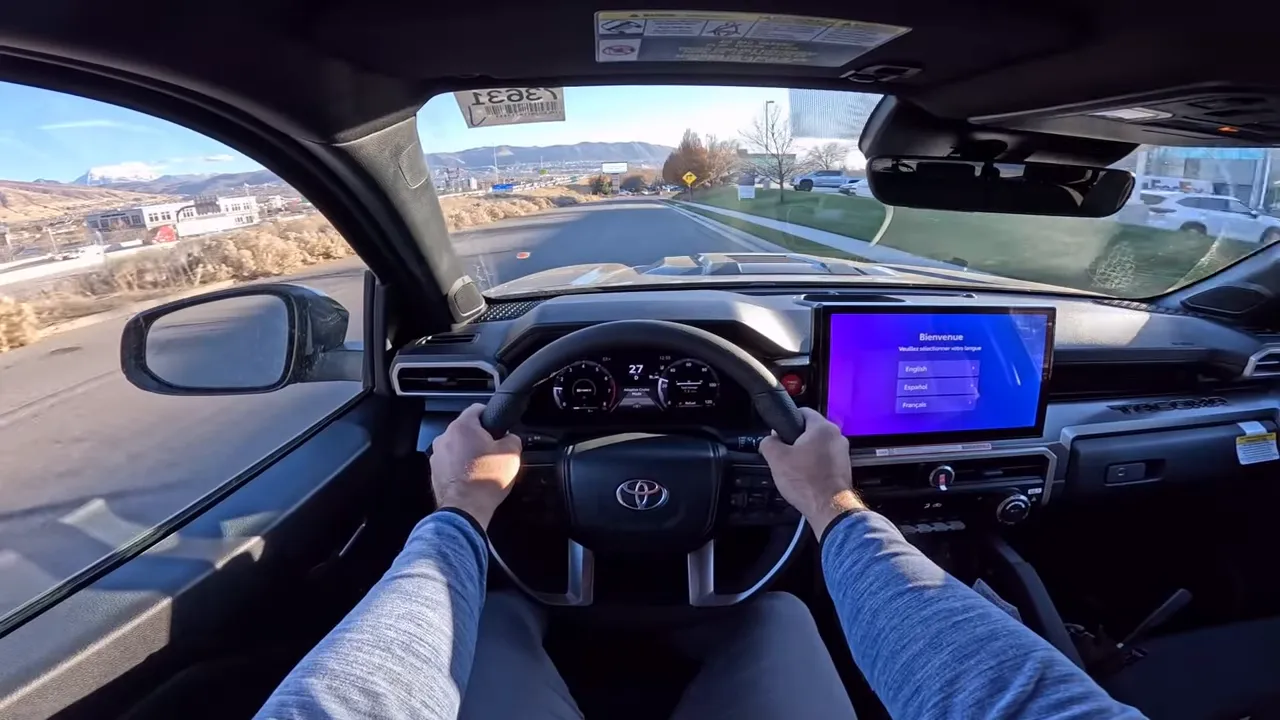
The windshield is acoustic laminated glass, significantly attenuating head-on wind turbulence. However, the side door glass remains standard single-pane tempered glass (acoustic front side glass is reserved for the range-topping Limited trim). At 70 MPH, road texture from coarse chip-seal asphalt and tire splash in wet conditions are perceptible, though speech intelligibility remains strong throughout the cabin.
Warning: The Long Bed configuration extends the Tacoma’s wheelbase to 145.1 inches (compared to 131.9 inches on standard short-bed Double Cabs). This expands the turning diameter to 48.2 feet. Always allow extra swing clearance when executing U-turns or maneuvering through tight multi-level parking ramps.
Payload, Towing, and Real-World Working Specs
When configured as a 4WD Double Cab Long Bed, the Tacoma TRD Sport provides serious capability for outdoor recreation and worksite hauling. However, buyers must pay close attention to how added factory options impact actual cargo limits.
| Specification | TRD Sport 4WD Long Bed (Tested) | TRD Off-Road 4WD Short Bed | Segment Benchmark |
|---|---|---|---|
| Bed Length | 73.5 in (6.1 ft) | 60.3 in (5.0 ft) | 61.7 in (Colorado) |
| Max Towing Capacity | 6,400 lbs | 6,400 lbs | 7,700 lbs (Colorado) |
| Rated Base Payload | Up to 1,700 lbs | Up to 1,705 lbs | 1,610 lbs (Ranger) |
| As-Tested Door-Jamb Payload | 1,270 lbs | ~1,380 lbs | Varies by trim |
| Turning Circle (Curb-to-Curb) | 48.2 ft | 44.4 ft | 43.3 ft (Frontier) |
| Rear Suspension Type | Multi-Link Coil Springs | Multi-Link Coil Springs | Leaf Springs (Colorado) |
While base 4WD Long Bed models carry an official engineering gross payload rating of up to 1,700 pounds, our heavily optioned test model’s yellow Federal Tire and Loading Information placard specifies 1,270 pounds. Premium options—such as the power moonroof, 14-inch multimedia hardware, power tailgate, and 360-degree camera modules—eat into available payload. For buyers planning to install a heavy rooftop tent and bed drawer system, keeping gear weight within that 1,270-pound ceiling is critical.
Pricing and Options: What Explains the $52,349 Window Sticker?
The base manufacturer’s suggested retail price (MSRP) for a 2026 Toyota Tacoma TRD Sport 4WD Double Cab Long Bed starts around $44,000. However, the window sticker on this tested unit totaled $52,349 including destination charges. Understanding this price premium requires examining the factory option packages installed on the vehicle:
- TRD Sport Premium Package ($8,690): The primary driver of the sticker price. This bundle upgrades the cabin with SofTex-trimmed heated and ventilated 8-way power front seats, the 14-inch multimedia screen, a 10-speaker JBL premium audio system featuring a removable dash-mounted JBL FLEX Bluetooth speaker, power sliding rear window, power tailgate with hands-free knee-lift control, digital rearview mirror, and a 360-degree Panoramic View Monitor.
- Integrated Trailer Brake Controller: Standard on higher packages, calibrated seamlessly into the 12.3-inch gauge cluster to manage electric trailer brakes.
- Exterior Port Accessories: Blackout emblem overlays, all-weather floor liners, and door edge guards.
While $52,000 places this midsize truck squarely into entry-level full-size Tundra territory, the Tacoma offers superior garageability, off-road maneuverability, and class-leading resale value that full-size trucks rarely match.
Hybrid Alternative: i-FORCE MAX vs. Standard Turbo Gas
For 2026, Toyota offers the TRD Sport with two distinct powertrain configurations: the standard gas i-FORCE tested here, and the available i-FORCE MAX hybrid.
The hybrid powertrain pairs the 2.4L turbo engine with a 48-horsepower electric motor sandwiched inside the transmission, drawing energy from a 1.87-kWh NiMH battery pack. System output jumps to 326 horsepower and 465 lb-ft of torque. Furthermore, the hybrid upgrades bed power from a 400-watt inverter to a massive 2,400-watt AC power system capable of running high-draw power tools and camping appliances.
However, the hybrid battery sits under the rear passenger seat, eliminating under-seat cabin storage. For buyers who prioritize simple mechanical architecture, lower curb weight, maximum interior storage, and a lower purchase price, the non-hybrid i-FORCE remains the purist choice.
Final Verdict: Who Should Buy the TRD Sport Long Bed?
The 2026 Toyota Tacoma TRD Sport Long Bed serves a specific, demanding niche of truck owners who refuse to compromise on cargo room but want car-like chassis control on paved highways.
You should buy the TRD Sport Long Bed if:
- You regularly carry mountain bikes, paddleboards, dirt bikes, or camping gear that exceed a 5-foot cargo box.
- You drive primarily on paved roads and appreciate firm suspension damping that controls chassis pitch and body roll.
- You want the four-door passenger space of a Double Cab without surrendering cargo length.
- You value Toyota’s composite bed construction and class-leading long-term resale value.
You should pass or choose a different Tacoma trim if:
- You regularly navigate dense downtown parking structures where the 48.2-foot turning circle becomes burdensome.
- You tackle rocky off-road trails where the TRD Off-Road’s softer Bilstein dampers, rear locking differential, and disconnectable front sway bar are essential.
- You prioritize maximum payload capacity above all else and need a stripped-down commercial hauler.
Quick Specs Snapshot
| Engine | i-FORCE 2.4-liter Turbocharged Inline-4 (T24A-FTS) |
| Horsepower / Torque | 278 hp @ 6,000 RPM / 317 lb-ft @ 1,700 RPM |
| Transmission | 8-speed Electronically Controlled Automatic (ECT-i) |
| Drivetrain | Part-Time 4WD with 2-speed electronically shifted transfer case |
| Bed Dimensions (L x W x D) | 73.5 in x 53.0 in x 20.2 in (44.7 in between wheel wells) |
| Maximum Towing Capacity | Up to 6,400 lbs (with factory Class IV hitch) |
| Payload Capacity | 1,270 lbs (As-tested door sticker) / Up to 1,700 lbs (Base rating) |
| EPA Fuel Economy | 19 MPG City / 23 MPG Highway / 21 MPG Combined |
| Suspension (Front / Rear) | Independent Double-Wishbone / Multi-Link Coil-Sprung Solid Axle |
| As-Tested MSRP | $52,349 (Includes TRD Sport Premium Package & Destination) |
Gallery: Key Moments
The visual proportions of the 6-foot bed paired with the aggressive TRD Sport styling give this midsize truck an imposing road presence that sets it apart from standard fleet pickups.
Frequently Asked Questions
What engine powers the 2026 Tacoma TRD Sport, and how does it perform?
The truck is powered by Toyota’s i-FORCE 2.4-liter turbocharged inline-4 cylinder engine paired with an 8-speed automatic transmission. It produces 278 horsepower and 317 lb-ft of torque. The engine is tuned for maximum low-end torque, with all 317 lb-ft available at just 1,700 RPM. This gives it rapid off-the-line responsiveness and effortless towing manners, though power tapers off at higher engine speeds.
How large is the Tacoma long bed compared to full-size truck beds?
The Tacoma Long Bed measures 73.5 inches (6.1 feet) in length. This is actually longer than standard short beds on many full-size crew cab trucks, such as the Ford F-150 (67.1 inches) or Chevrolet Silverado 1500 (69.9 inches). However, with 44.7 inches between the wheel arches, the Tacoma’s bed is narrower than full-size beds.
Can a 4×8 sheet of plywood fit flat inside the Tacoma long bed?
A standard 48-inch-wide sheet of plywood will not lie completely flat on the floor between the wheel arches because the Tacoma’s width between the wheel wells is 44.7 inches. However, Toyota includes molded two-tier structural pockets in the composite bed walls. Inserting 2×6 dimensional lumber into these slots creates a level platform allowing 4×8 plywood or drywall to rest completely flat above the wheel arches.
What is the real-world payload capacity of this Tacoma configuration?
While base Tacoma TRD Sport 4WD Double Cab models feature a factory gross payload rating of up to 1,700 pounds, our heavily optioned test model with the TRD Sport Premium Package lists an actual door-jamb payload capacity of 1,270 pounds. Added equipment like the power moonroof, 14-inch screen, premium audio, and camera electronics reduces overall payload.
Is the TRD Sport better than the TRD Off-Road?
It depends on where you drive. The TRD Sport is tuned for paved roads, utilizing stiffer twin-tube dampers, body-colored trim, and 18-inch wheels with road-oriented tires for sharp cornering and reduced body roll. The TRD Off-Road is engineered for trail compliance, featuring softer Bilstein remote-reservoir shocks, an electronic locking rear differential, Multi-Terrain Select, and 17-inch wheels with aggressive all-terrain rubber.
What are the EPA fuel economy ratings for the 2026 Tacoma TRD Sport 4WD?
According to official EPA testing, the 2026 Tacoma TRD Sport 4WD automatic achieves 19 MPG in the city, 23 MPG on the highway, and 21 MPG combined. Real-world highway mileage can exceed 24 MPG when driven smoothly with the factory front aerodynamic air dam installed.
Does the Tacoma TRD Sport have acoustic double-pane glass?
The front windshield features acoustic laminated glass to minimize highway wind roar. However, the side door windows are standard single-pane tempered glass. If acoustic double-laminated front side glass is a priority, you will need to step up to the Tacoma Limited trim.
How much can the 2026 Tacoma TRD Sport Long Bed tow?
When properly equipped with Toyota’s factory Class IV tow receiver hitch and integrated trailer brake controller, the 2026 Tacoma TRD Sport 4WD Double Cab is rated to tow up to 6,400 pounds. The dedicated Tow/Haul mode recalibrates transmission shift mapping to hold gears longer during ascents and provide engine braking on downhill grades.
Should I choose the standard gas TRD Sport or the i-FORCE MAX Hybrid?
Choose the standard gas i-FORCE if you want open under-seat rear cabin storage, lower overall vehicle weight, simpler long-term mechanical maintenance, and maximum payload capacity. Choose the i-FORCE MAX hybrid if you desire blistering 465 lb-ft torque acceleration and require the high-output 2,400-watt onboard AC electrical system to power job-site or overlanding equipment.
Overall, the 2026 Toyota Tacoma TRD Sport Long Bed captures a rare and advantageous balance in the modern pickup landscape. By marrying genuine 6-foot cargo capability with a torque-dense turbocharged engine, modern multi-link coil rear suspension, and exceptional projected resale value, it stands as a supremely practical alternative for drivers who need full-size cargo space without the cumbersome bulk of a full-size truck.
Sources
- Toyota Motor North America Pressroom — Official fourth-generation Tacoma architecture, i-FORCE horsepower, torque, frame specs, and suspension engineering details.
- U.S. Department of Energy (Fueleconomy.gov) — Official EPA fuel economy ratings for the 2.4L turbocharged 4WD midsize pickup segment.
- Edmunds Automotive — Verified technical specifications, curb weights, payload maximums, and turning diameters for the 2026 Tacoma TRD Sport.
- National Highway Traffic Safety Administration (NHTSA) — Advanced driver-assistance testing data and safety standards documentation for Toyota Safety Sense 3.0.