🚗 First impressions: looks, stance, and presence
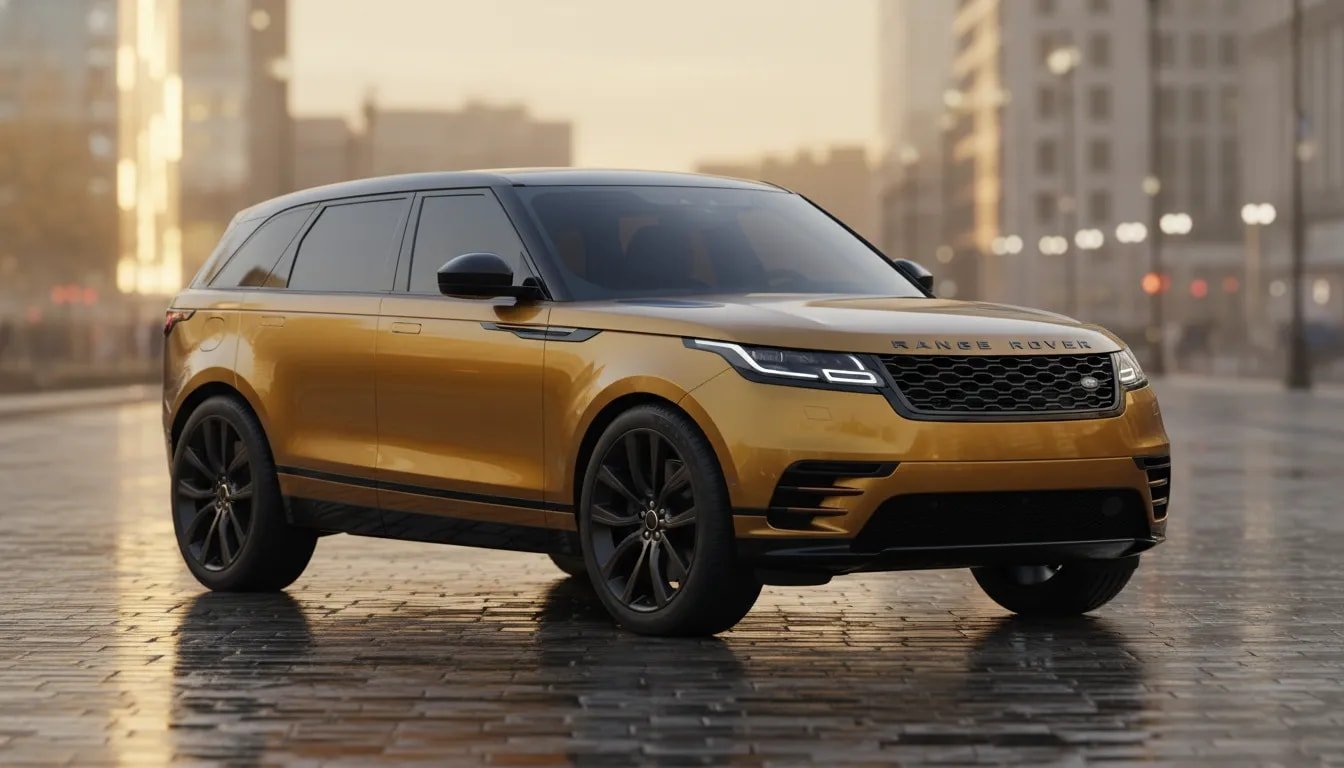
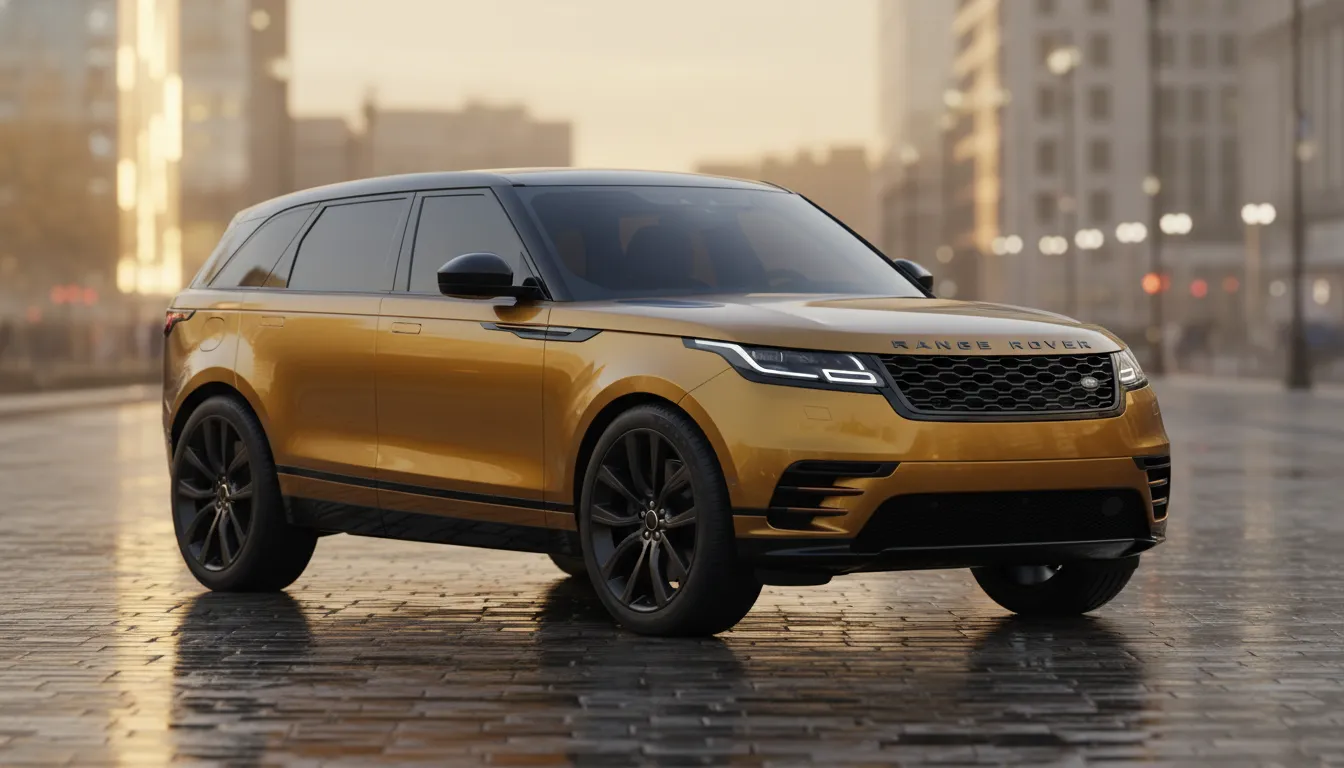
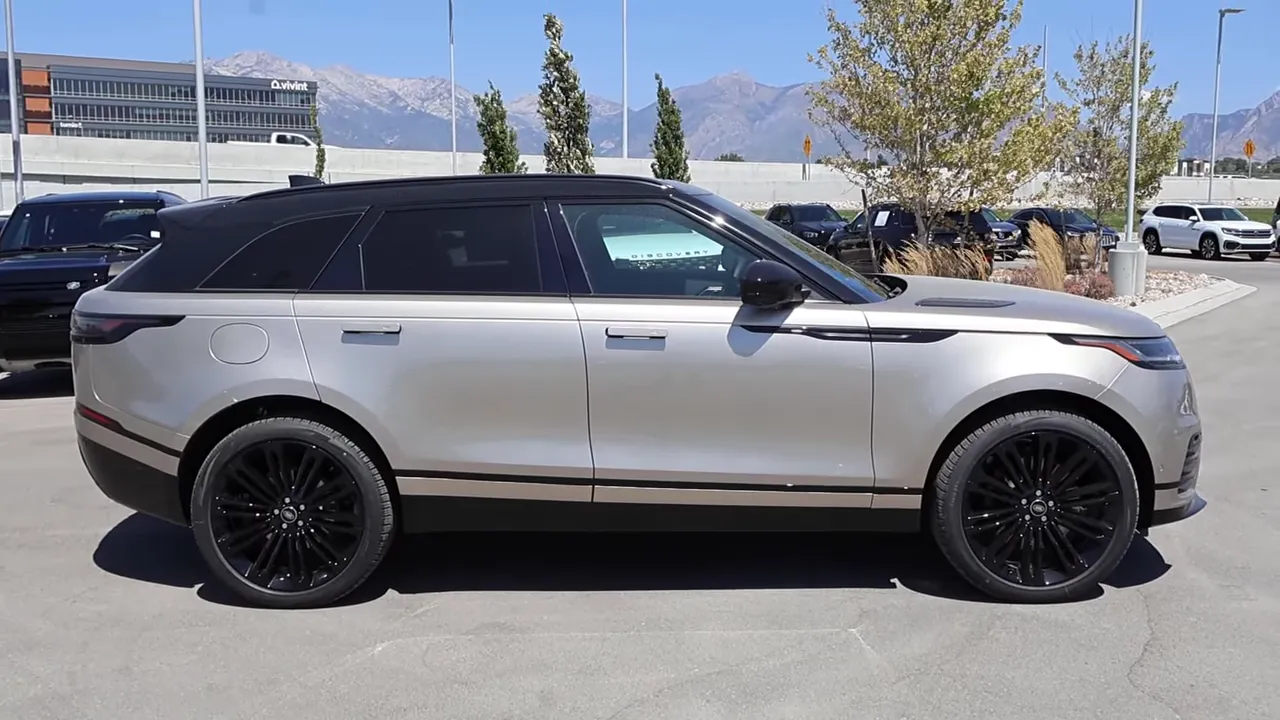
The Velar has always balanced modern minimalism with Range Rover poise, and the 2026 Velar in this configuration leans into that elegantly. The color on this example is unapologetically flashy — a gold tone that picks up light and highlights the Velar’s clean surfaces — but the design language does the heavy lifting. Slim, flush lighting and a grille that integrates into the bodywork give it a refined, contemporary look, while the lower corners add a touch of character with slightly sharper elements.
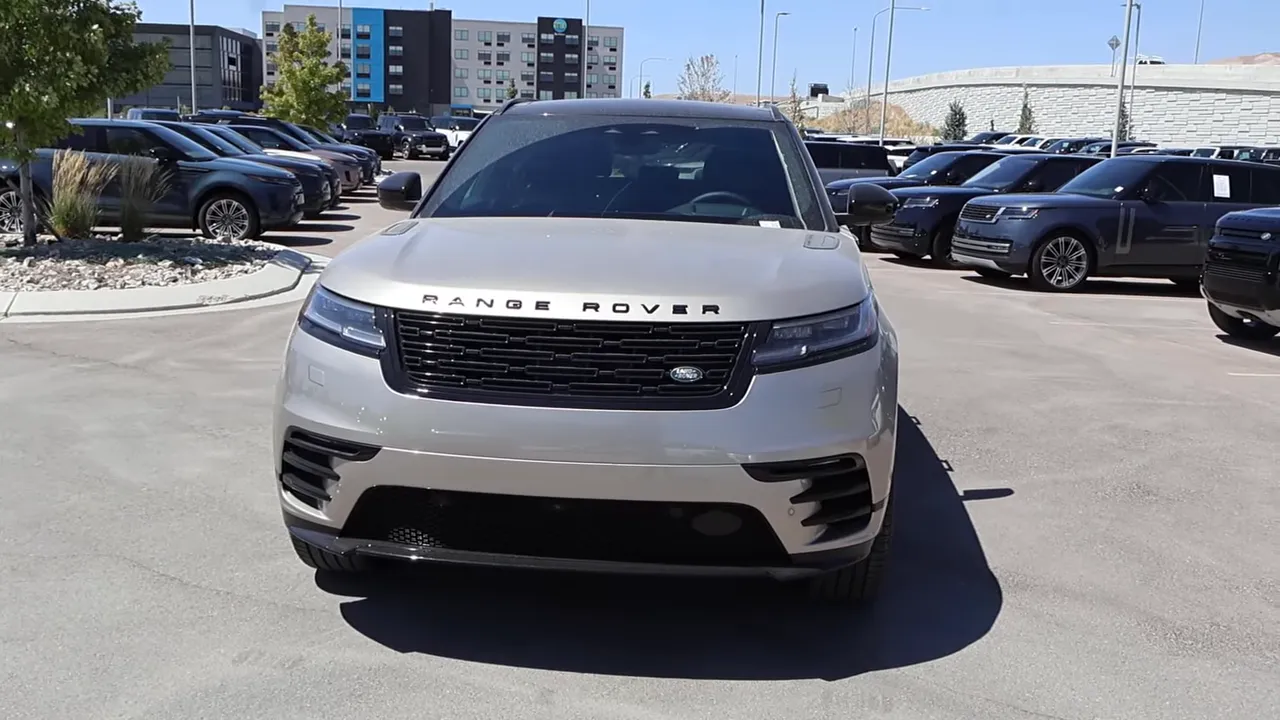
The blackout treatment across the roof, mirror caps, hood trim, and wheels creates a cohesive theme that visually lowers the profile, making a relatively tall SUV read a bit sleeker. Wheels here are 22-inch setups with 265/40 rubber, finished entirely in black — a simple formula that turns a likely polarizing paint job into a composed, purposeful package.
🧳 Practical cargo and exterior details
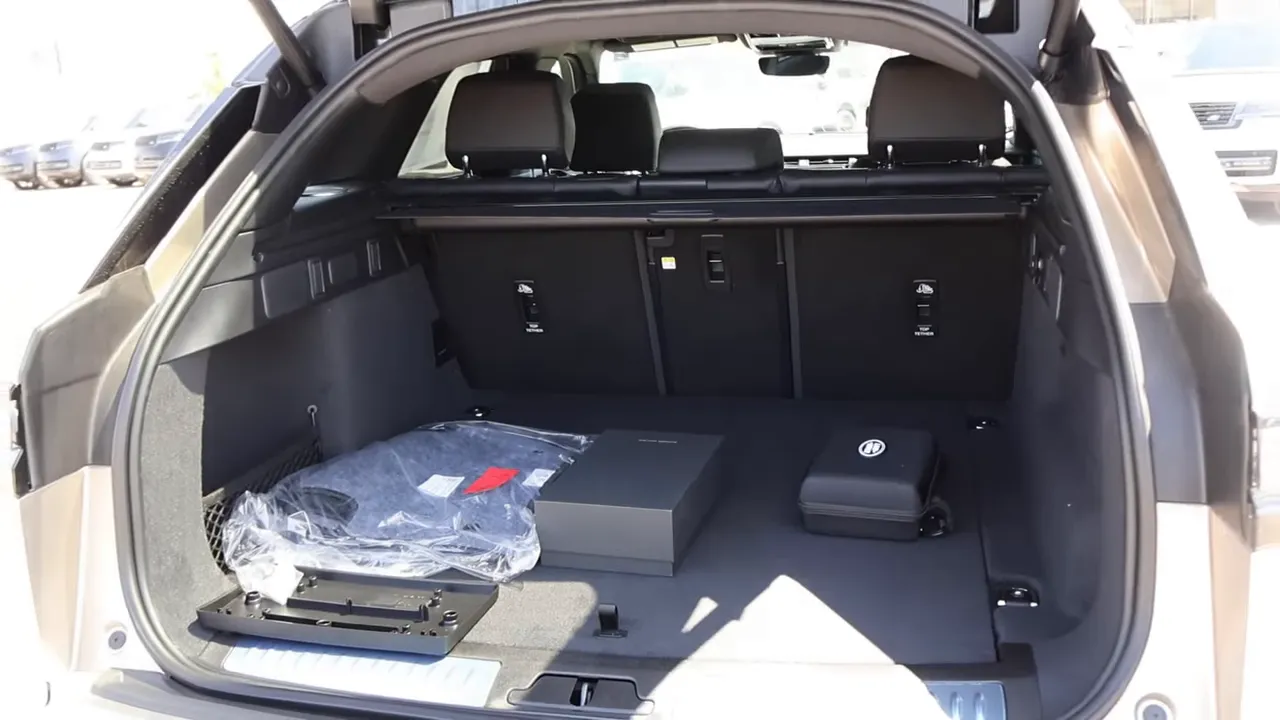
The cargo area is well executed for everyday use. There’s a cargo cover, a 12-volt outlet in the rear, and the cargo floor tapers slightly toward the liftgate so vertical space isn’t massive, but usable volume is solid. Tail lights arc across the rear and the Range Rover script is tastefully blacked out to continue the theme.
🛋️ Interior: material quality, seating, and space
Step inside and the first thing that stands out is how composed the cabin feels. Soft-touch materials dress the door panels and top surfaces, the handles have a nice finish, and the perforated leather seats look both modern and comfortable. The cabin leans toward a minimalist aesthetic: few physical buttons, lots of integrated touch controls, and clean lines.
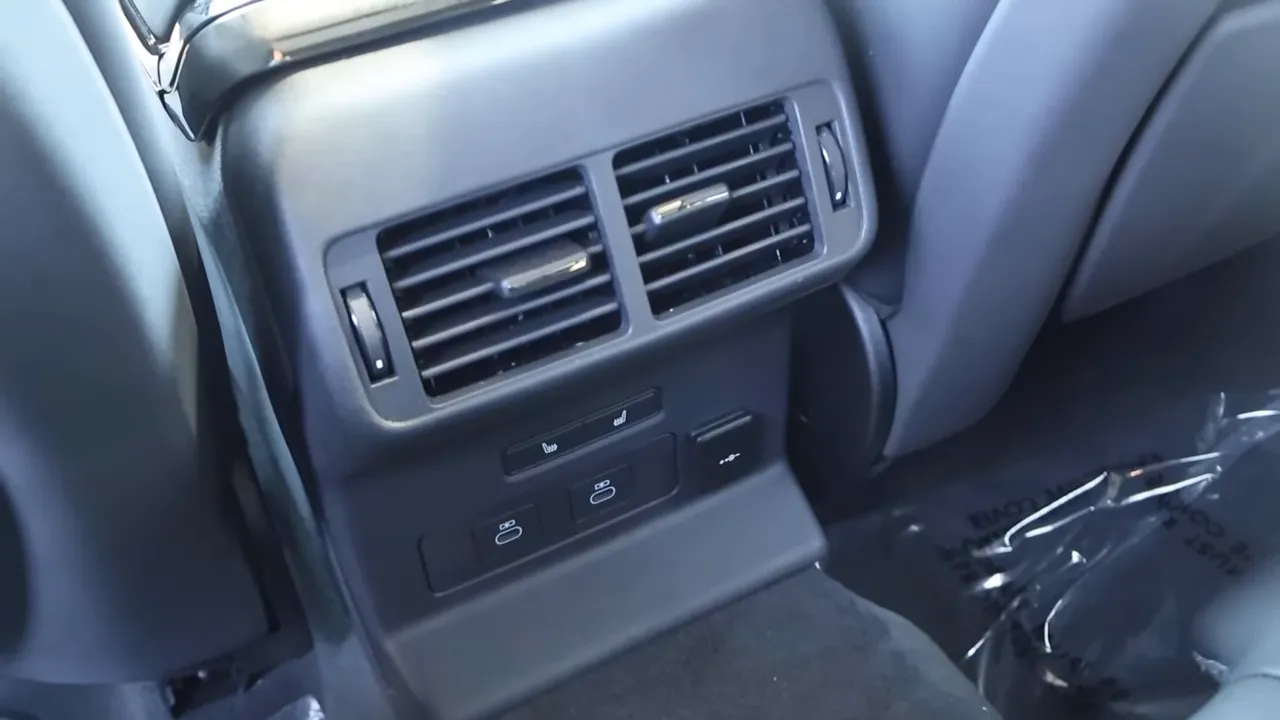
Rear-seat comfort is genuinely one of the Velar’s strengths. Legroom and headroom are generous, rear HVAC vents and heated seats are standard on well-equipped examples, and there are USB ports and small storage pockets for everyday items. For a vehicle that sits below Range Rover’s full-size models, the interior space feels unexpectedly roomy — an attribute that makes it comfortable for recurring long drives or family duty.
🔧 Controls, screens, and the minimalist approach
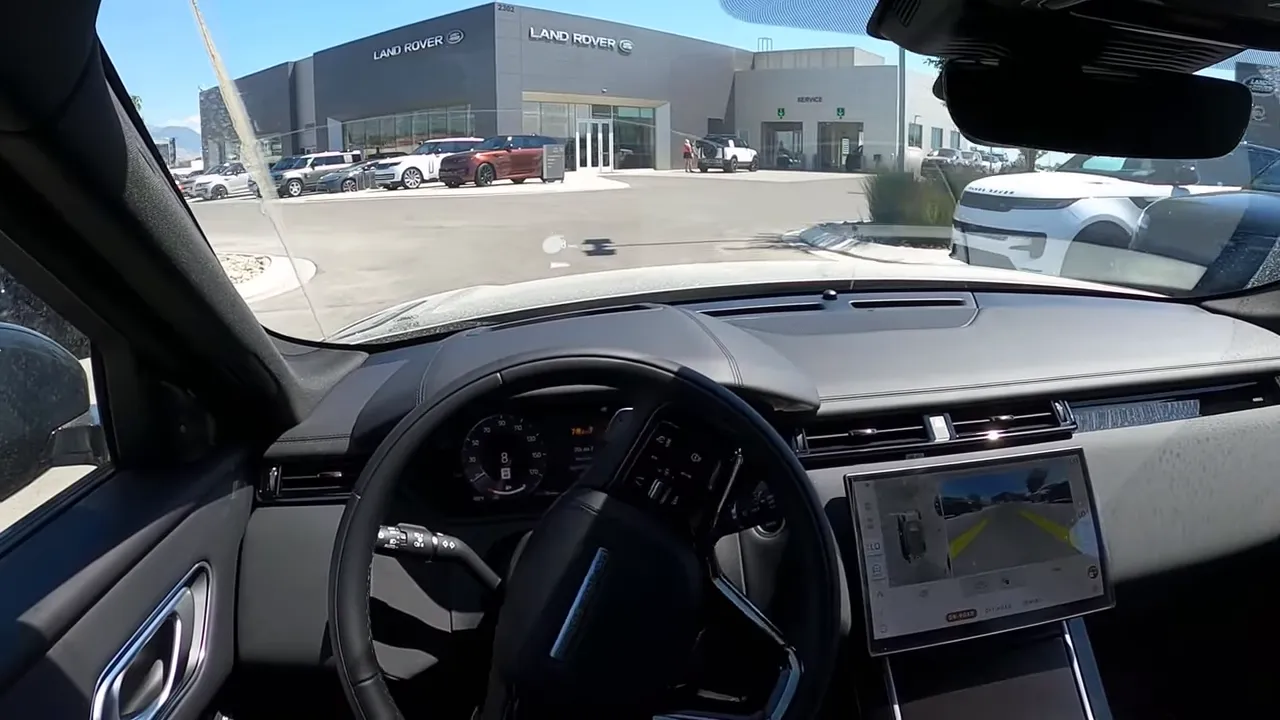
The cockpit continues the brand’s push toward minimalism. A customizable digital gauge cluster lets you toggle dial layouts and displayed information, while the central touchscreen handles climate, drive mode selection, and much of the car’s settings. The system feels quick to respond and the software layout includes useful shortcuts for frequent functions.
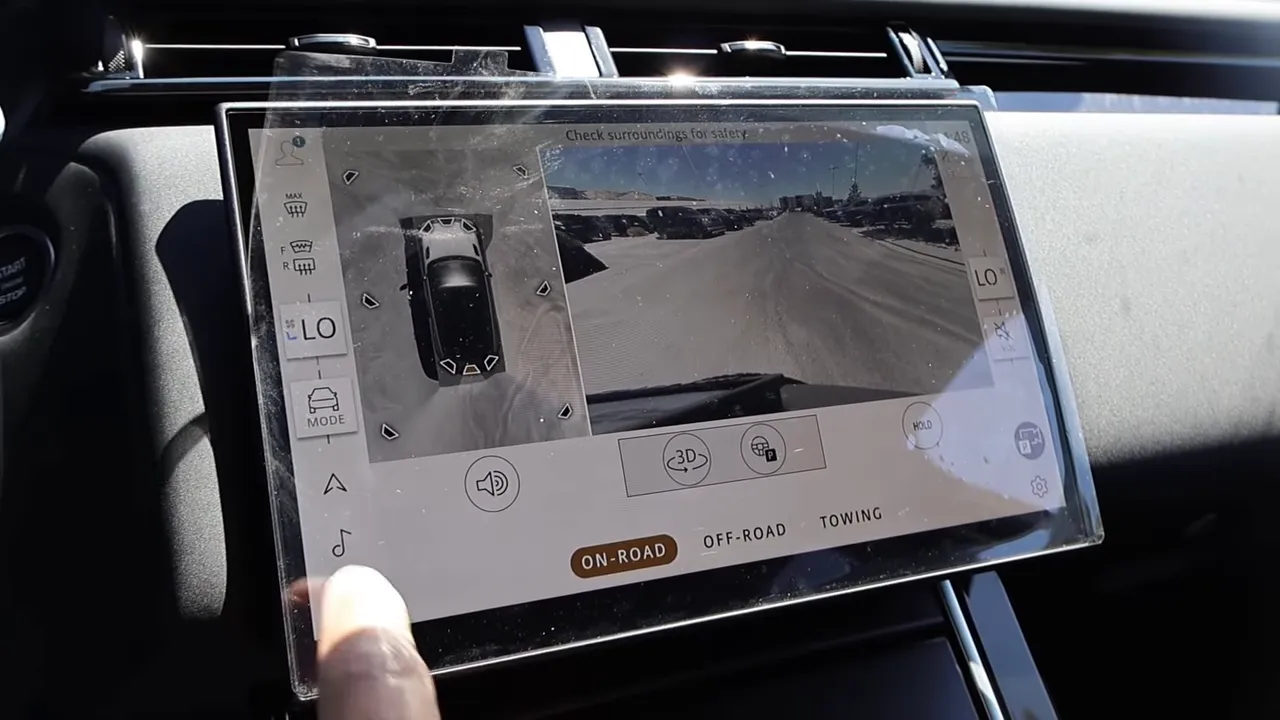
This approach means fewer physical switches — the shifter and a couple of essentials remain, but most interactions are screen-driven. That will please people who prefer a tidy interior; it may frustrate those who prefer tactile controls for quick adjustments while driving. There’s also a heads-up display for when you want key information kept in your line of sight.
⚙️ Powertrain and efficiency: the N96 inline-6
Under the hood sits a 3.0-liter turbocharged inline-six paired with an 8-speed automatic. It’s rated at around 395 horsepower and 405 lb-ft of torque. Fuel economy is competitive for the class: approximately 19 mpg city and 25 mpg highway.
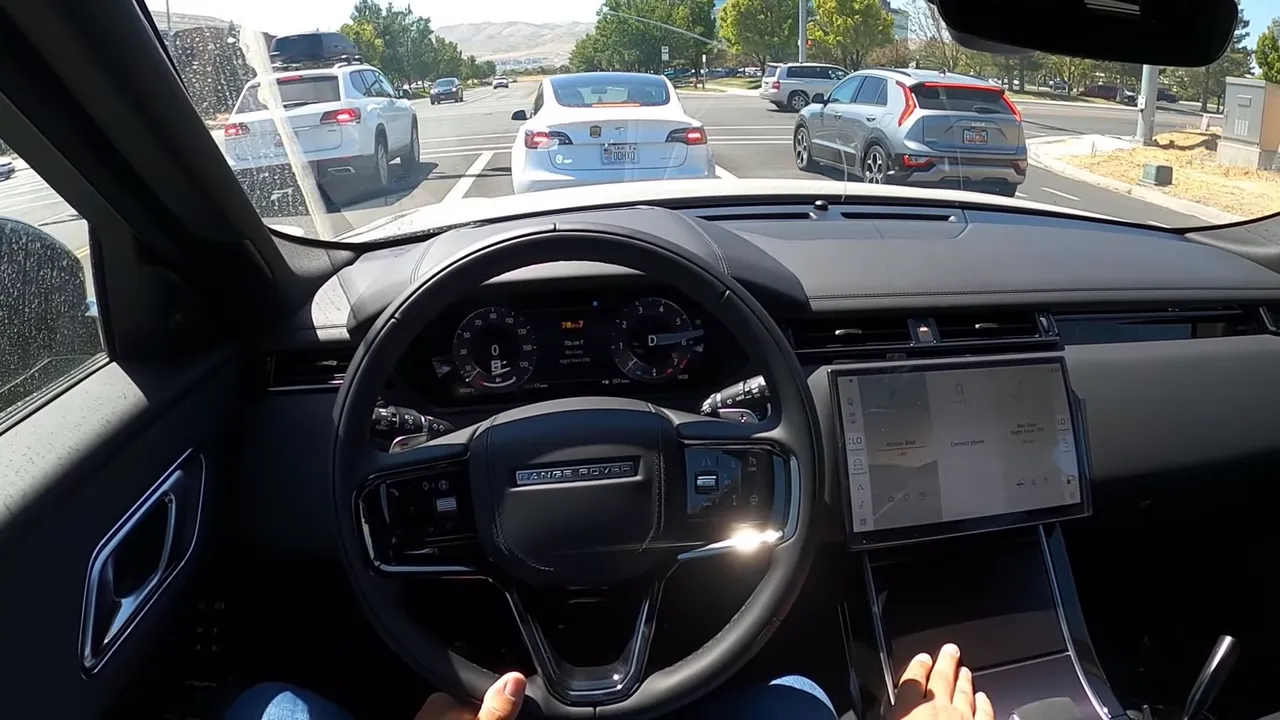
This combination is, in many ways, the best practical choice in the Velar range. The inline-6 is smooth and linear in delivery, providing enough power for confident highway merging and relaxed cruising without the thirst or cost of a higher-displacement V8. For buyers thinking about long-term ownership and resale, this powertrain often checks the right boxes: solid performance, reasonable efficiency, and broad appeal to future buyers.
🛣️ Driving impressions and suspension
The Velar’s ride quality is a standout. Even without the most exotic suspension options, the chassis soaks up bumps and maintains composure through varied road surfaces. Land Rover offers more advanced air suspension and the newer 60-series systems on other models, which trade up the refinement and off-road articulation, but even this chassis configuration is comfortable and confident on the road.
Steering is planted and the overall driving experience is one of understated refinement: power delivery is smooth, the transmission transitions are unobtrusive, and the Velar cruises with a quiet and collected demeanor. If you prioritize a premium highway and city experience over hardcore off-roading, this car delivers.
🧭 Off-road capability: enough for most, not extreme
Range Rover DNA remains across the lineup, but the Velar sits toward the more road-focused end of the spectrum. It includes useful off-road aids such as hill descent control and off-road cruise, but this specific setup does not appear to include a traditional low-range transfer case like the Defender. That limits the Velar’s suitability for extended, technical off-road use.
If your plan includes occasional unpaved adventures and bad-weather driving, the Velar is more than capable. If you expect frequent rock crawling, steep low-speed descents, or deep overlanding, the Defender or a full-size Range Rover with more dedicated off-road hardware would be a better match.
💡 Tech reliability and design philosophy
One interesting lens to view modern interiors through is the shift toward centralizing functionality into a single touchscreen. There’s a practical argument here: fewer separate buttons means fewer discrete electrical components, which could reduce failure points. Whether that approach improves long-term reliability is unresolved, but it’s a defensible strategy from a packaging and cost standpoint.
Historically, Land Rover ownership conversations gravitate toward electronics. The materials and build quality of the cabin have improved and generally hold up well over time, but complex electrical systems remain the part to watch. Choosing configurations that are less reliant on optional, highly complex electronics can be a pragmatic choice if long-term maintenance peace of mind is a priority.
💸 Pricing and value proposition
This Velar example is a loaded Dynamic SE and lands around $82,595. At that price point, you get a blend of premium materials, a comfortable and spacious cabin, and a thoughtful powertrain. It’s more expensive than entry-level Velars, yes, but it also provides a near-full Range Rover experience without stepping into the full-size Range Rover or high-end sport variants.
- Pros: refined inline-6, comfortable ride, great cabin space, stylish design.
- Cons: screen-centric controls may not be for everyone, off-road capability limited compared to Defender, electronics remain the main ownership wildcard.
🎯 Who the Velar 3.0L actually fits
The Velar 3.0L is aimed at buyers who want daily drivability wrapped in distinctive Range Rover styling. It fits if you value:
- Comfort and interior space for passengers and cargo.
- Smooth, powerful, and efficient on-road performance without V8 running costs.
- Design that makes a statement without being ostentatious, especially with blackout trim.
- A premium badge and driving experience rather than hardcore off-road hardware.
If your life includes occasional off-road trails, weekend escapades on dirt roads, or frequent long-distance driving with family, the Velar makes a compelling case. If your priority is extreme off-road capability or the ultimate on-road performance, consider the Defender or higher-performance Range Rover variants respectively.
🔍 Final thoughts: why this might be all the Range Rover you need
The 2026 Velar P400 inline-6 is an excellent example of balance. It marries everyday practicality with unmistakable Range Rover character. The inline-6 is smooth and efficient, the cabin is roomy and nicely finished, and the ride quality is comfortable without feeling floaty. The minimalist cockpit feels modern; the large central screen is quick and responsive, and the heads-up display keeps essential info visible without distraction.
Chances are this is the Velar most owners will be happiest with over time. It isn’t the loudest, fastest, or most off-road capable variant, but that’s precisely the point. For the vast majority of buyers, those extremes aren’t necessary. What matters is a luxurious, capable, and dependable-feeling SUV that wears the Range Rover badge with confidence.
❓ Frequently asked questions
What engine is in the 2026 Range Rover Velar P400?
What fuel economy can I expect?
Is the Velar a good off-road vehicle?
How practical is the Velar for families?
Are there reliability concerns I should be aware of?
📌 Quick spec summary
- Engine: 3.0L turbo inline-six
- Transmission: 8-speed automatic
- Power: ~395 hp, 405 lb-ft
- Fuel economy: ~19 mpg city / 25 mpg highway
- Price (example): ~$82,595 for a loaded Dynamic SE spec
🧾 Final recommendation
If you want a Range Rover that’s luxurious, comfortable, and practical without chasing extreme off-road hardware or the highest-performance engines, the Velar 3.0L is a compelling choice. It captures what most people want from the brand — presence, comfort, and capability — and packages it in a form that’s enjoyable to live with every day.