
Disclosure: This article may contain affiliate links. If you click a qualifying link and make a purchase, we may receive a small commission at no extra cost to you. Vehicle pricing, packages, incentives, and availability can change quickly, so confirm final details with Jeep, Toyota, or your local dealer before buying.
2026 Jeep Wrangler Rubicon vs Toyota 4Runner Trailhunter: Which Off-Road SUV Should You Buy?
Last updated: May 28, 2026. Specs were reviewed against official Jeep and Toyota pages where available. Always verify your exact build, window sticker, and dealer pricing before purchase.
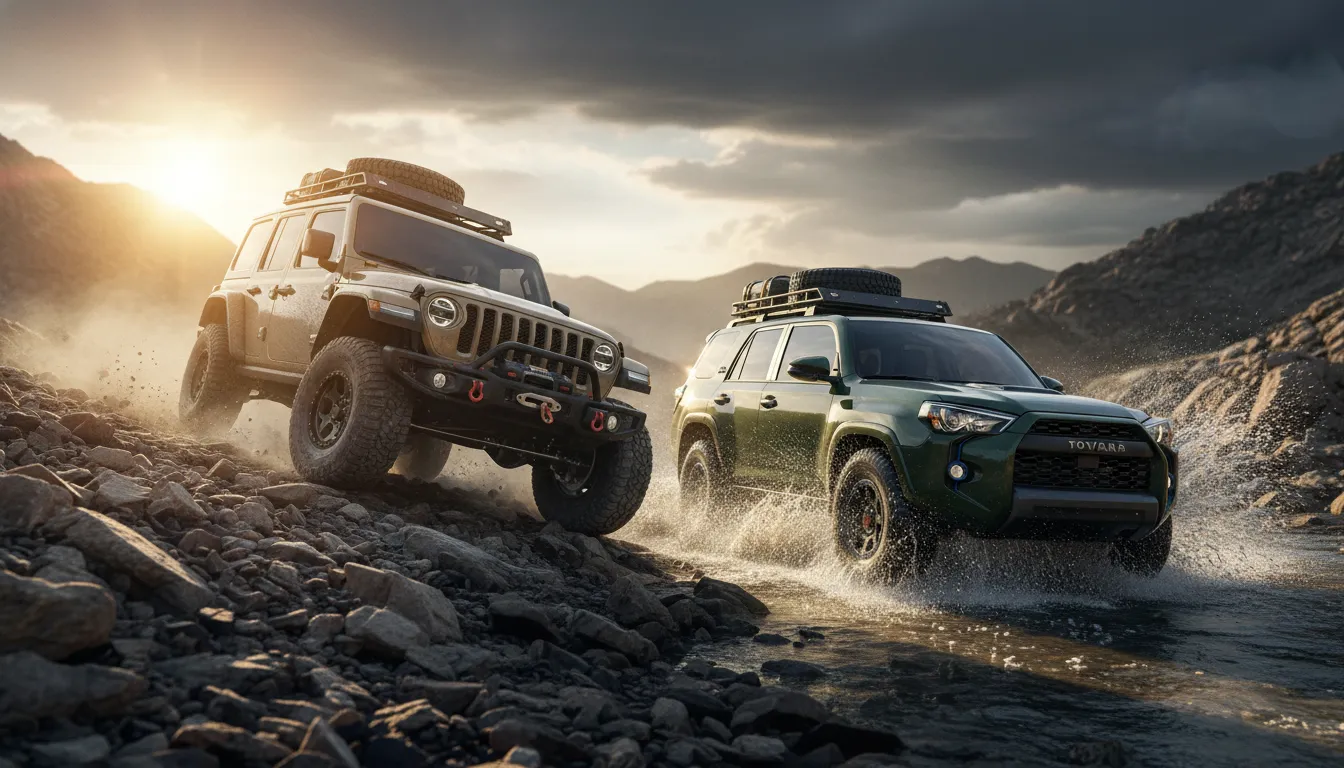
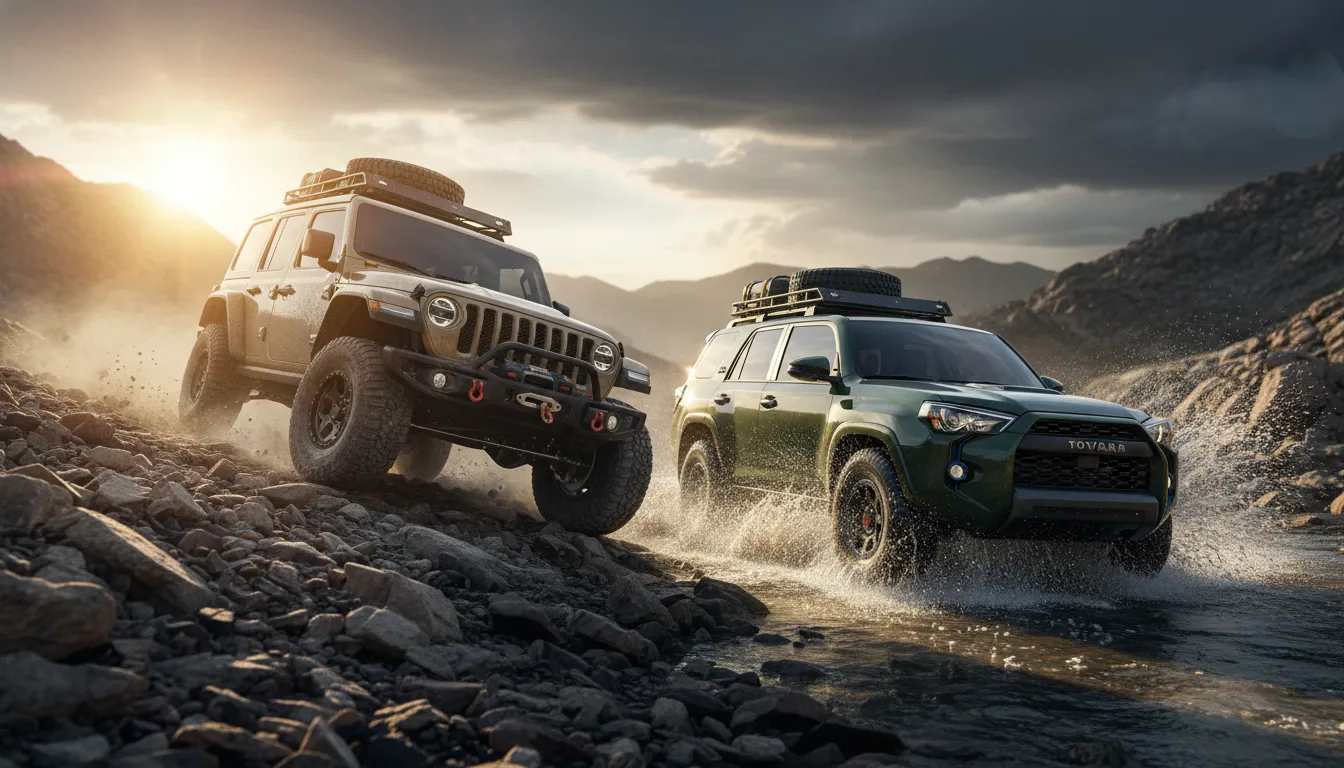
You are comparing two serious off-road SUVs that can cost as much as a small starter home. The 2026 Jeep Wrangler Rubicon and the Toyota 4Runner Trailhunter both bring real trail hardware, tough styling, and strong brand loyalty. But they solve different problems.
The Wrangler Rubicon fits drivers who care most about technical trails, rock crawling, removable-top fun, and classic Jeep character. The 4Runner Trailhunter fits buyers who want overland gear, daily comfort, hybrid torque, and a calmer highway ride. This comparison helps you choose the SUV that matches how you actually drive.
Quick Picks
- Best for technical trails: 2026 Jeep Wrangler Rubicon
- Best for daily driving: 2026 Toyota 4Runner Trailhunter
- Best for overlanding: 2026 Toyota 4Runner Trailhunter
- Best for open-air driving: 2026 Jeep Wrangler Rubicon
- Best for built-in camp utility: 2026 Toyota 4Runner Trailhunter
Check Wrangler Rubicon capability | Check 4Runner Trailhunter details
How This Comparison Was Built
This guide compares both SUVs from a buyer’s point of view: trail use, commute comfort, cargo needs, dealer pricing, and long-trip practicality. It uses official manufacturer information where possible, plus feature checks from the article’s source video and visible vehicle equipment.
This is not an instrumented road test. Before you buy, test drive both vehicles, check the Monroney window sticker, and ask the dealer to confirm final packages, incentives, and installed accessories.
Side-by-Side Comparison
| Feature | 2026 Wrangler Rubicon | 2026 4Runner Trailhunter |
|---|---|---|
| Powertrain | 3.6L V6 shown here, 285 hp / 260 lb-ft. Other Wrangler powertrains may vary by build. | 2.4L turbo i-FORCE MAX hybrid, up to 326 hp / 465 lb-ft |
| Suspension | Solid axles front and rear | Independent front suspension / solid rear axle |
| Fuel Economy | Varies by body style, engine, tires, and transmission. Confirm on the window sticker. | Toyota lists Trailhunter at 23 city / 24 highway mpg |
| Fuel Tank | Varies by two-door or four-door configuration | 19 gallon |
| Key Off-Road Tech | Front and rear lockers, sway-bar disconnect, two-speed transfer case, available steel bumper and winch setup depending on package | Old Man Emu shocks, rear locker, Multi-Terrain Select, Stabilizer Disconnect Mechanism, onboard compressor, 2,400W AC power supply |
| Removable Top | Yes | No |
| Best For | Technical rock crawling, trail purists, open-air driving | Overlanding, daily driving, long highway trips, camp utility |
| Main Trade-Off | More trail-focused, louder, and less refined on the highway | More comfortable, but less extreme in rock articulation |
Specs and MPG can vary by exact configuration, tire package, options, and market. Verify current build data with the dealer before signing.
🛠 Quick Spec Snapshot
Here is the fast version before the detailed comparison.
- 2026 Wrangler Rubicon: 3.6L V6 shown here, 8-speed automatic shown here, 285 hp and 260 lb-ft torque, solid axles front and rear, front and rear lockers, and available heavy-duty recovery equipment depending on package.
- 2026 4Runner Trailhunter: 2.4L turbo four-cylinder i-FORCE MAX hybrid, 8-speed automatic, up to 326 hp and 465 lb-ft torque, 23/24 mpg city/highway rating listed by Toyota, Old Man Emu shocks, 33-inch Toyo all-terrain tires, onboard air compressor, and 2,400W AC power supply.
- Big difference: The Wrangler focuses on technical trail performance. The 4Runner focuses on overlanding, comfort, and useful camping hardware.
Official sources to verify before purchase: Jeep Wrangler specs, Toyota 4Runner specs, and Toyota 4Runner pressroom details.
🚙 Exterior and Off-Road Hardware
Look past the badges. Both SUVs offer real factory trail equipment, but each one puts its budget in a different place.
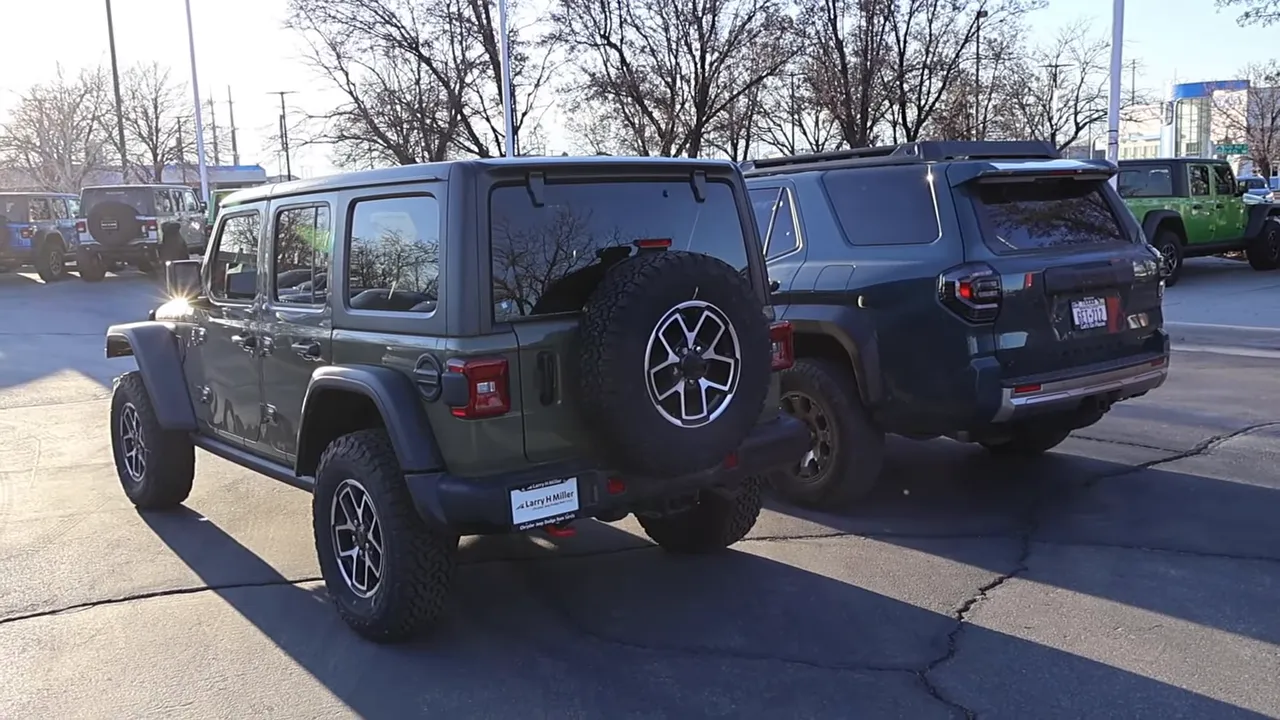
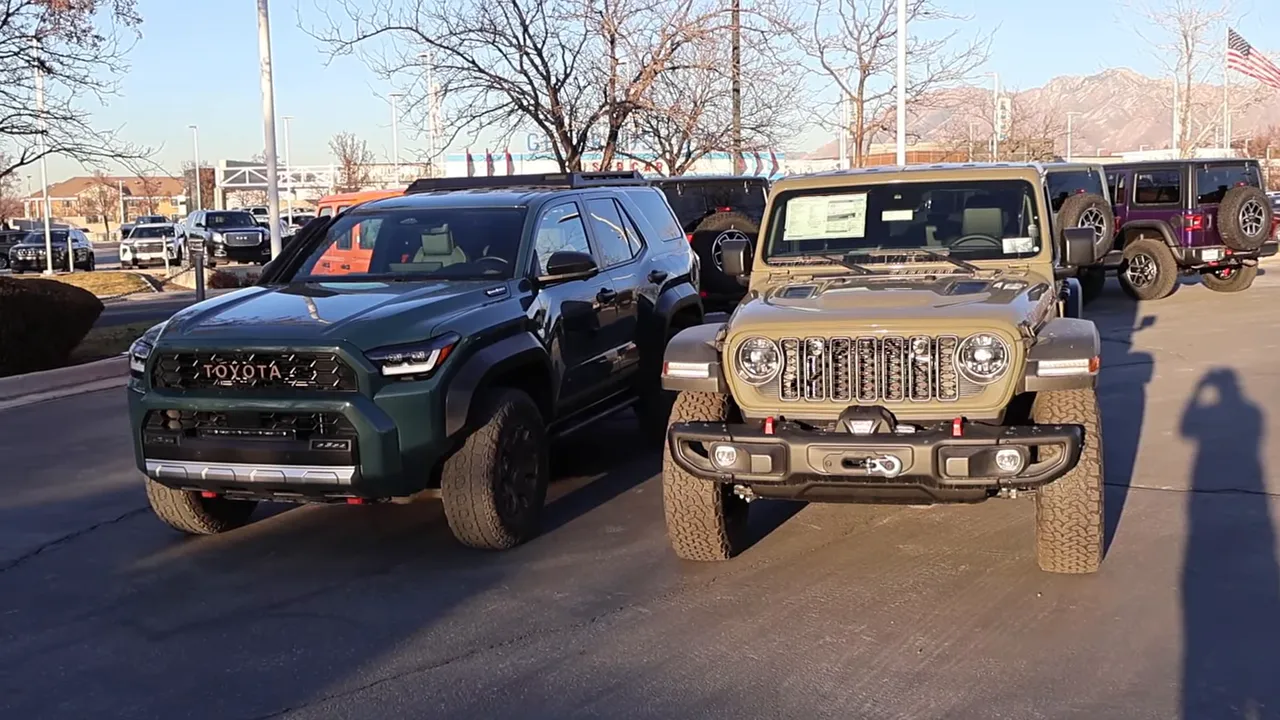
The Wrangler Rubicon keeps the classic Jeep formula: boxy bodywork, exposed recovery points, strong approach angles, solid axles, and simple trail-focused controls. Some builds offer heavier bumper and winch-ready hardware, but you should confirm the exact package on the window sticker. The Wrangler’s shape and hardware make the most sense when trails get narrow, rocky, and uneven.
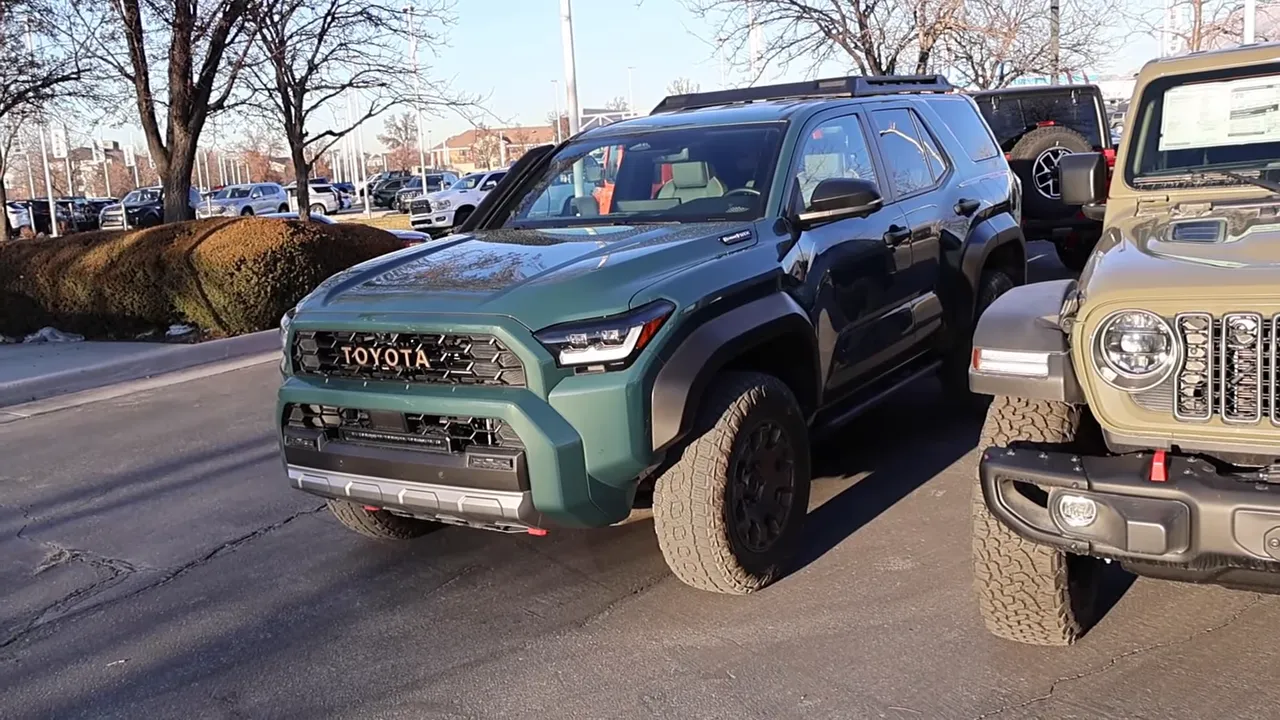
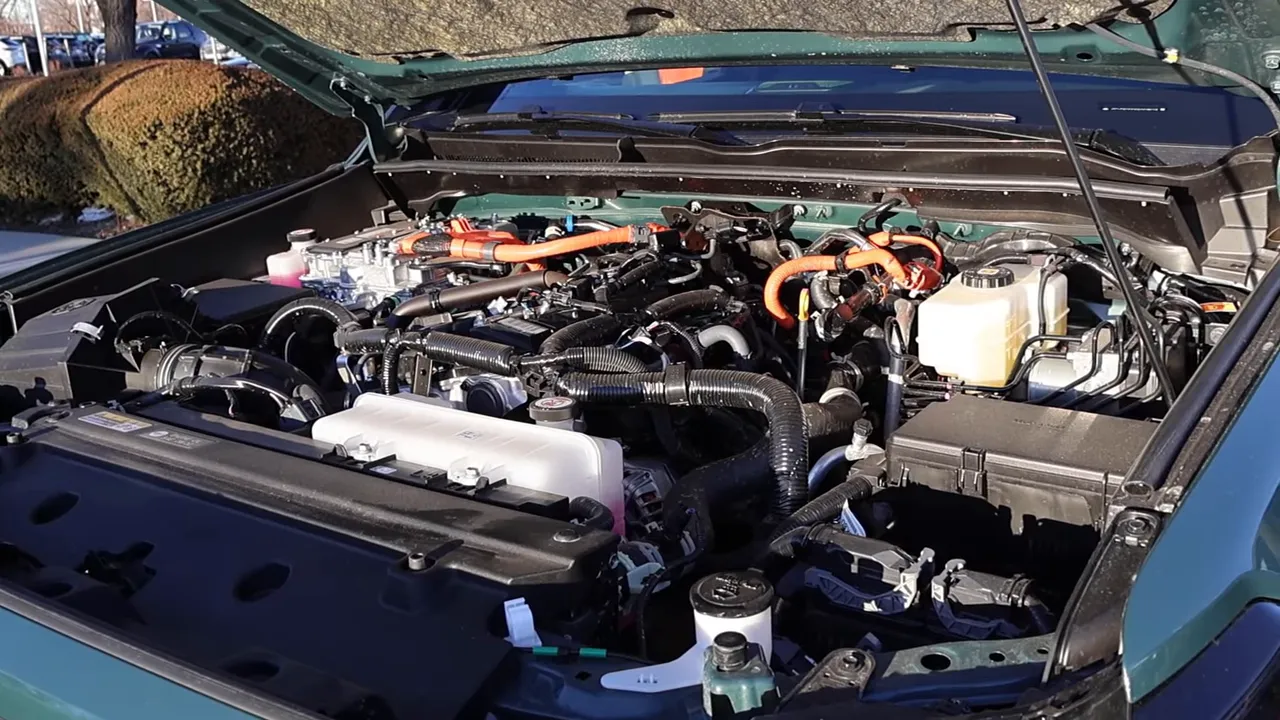
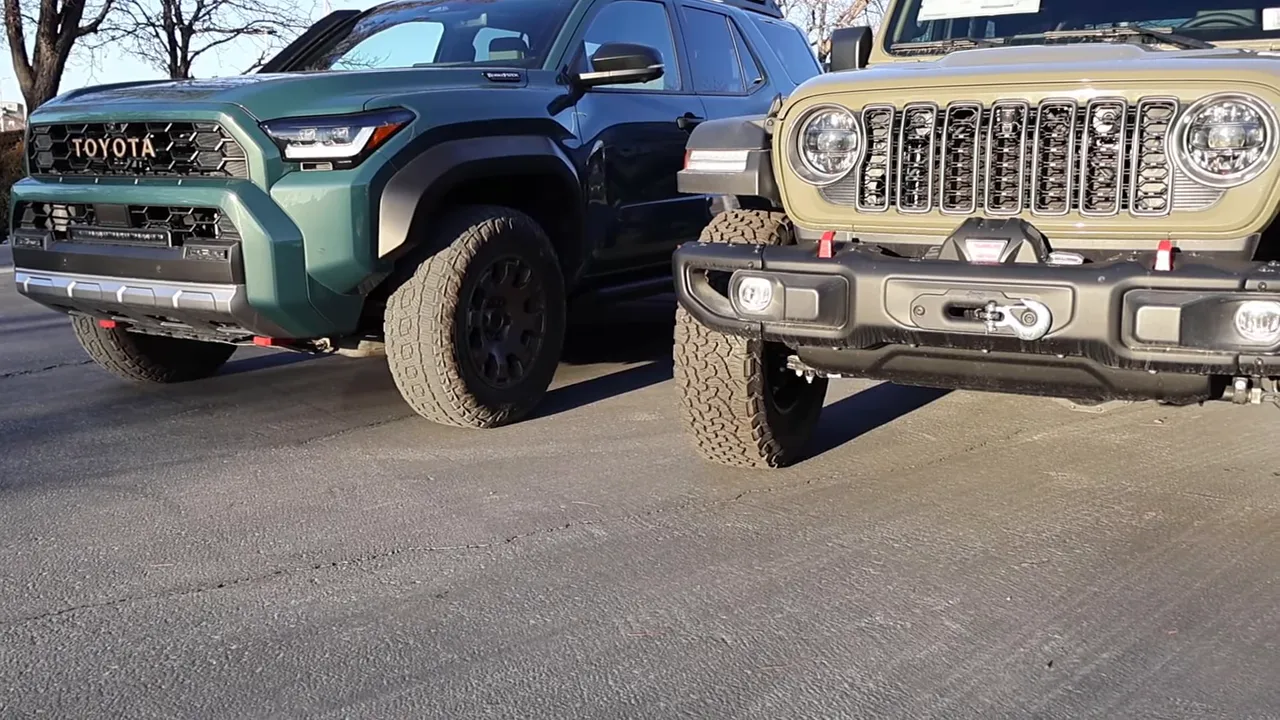
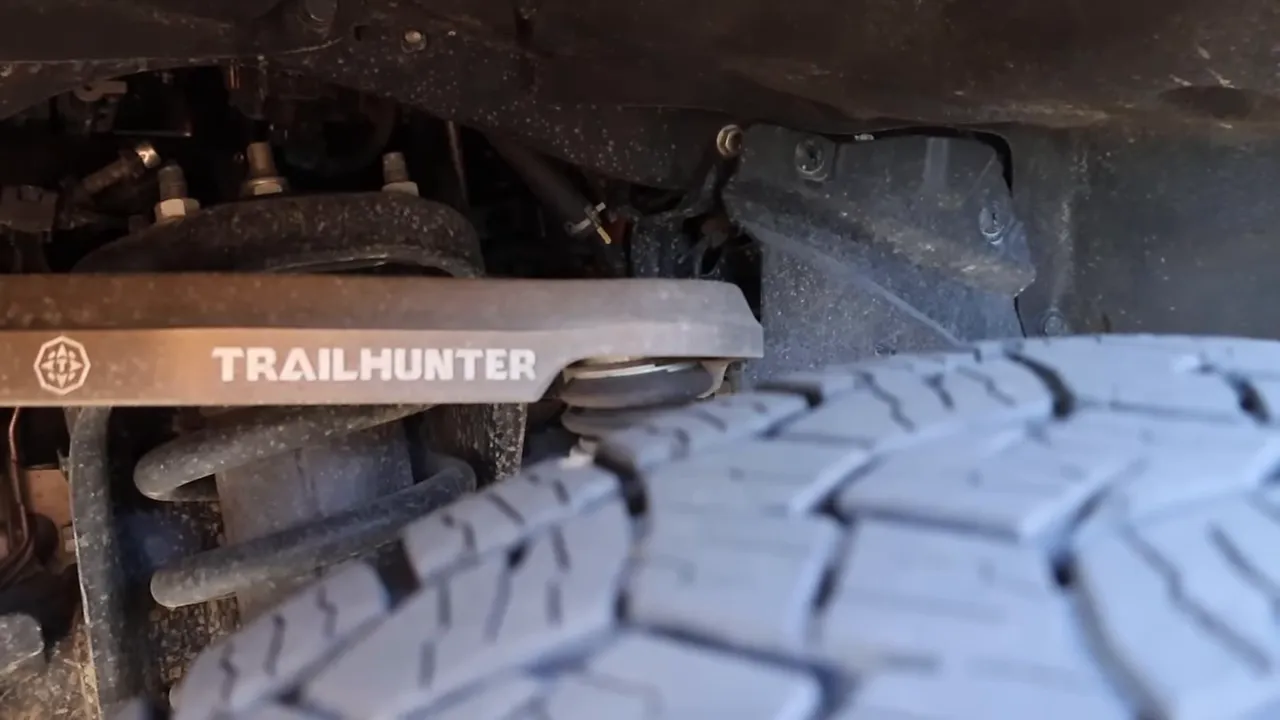
The 4Runner Trailhunter takes a more modern overland approach. Toyota gives it 18-inch bronze alloy wheels with 33-inch Toyo all-terrain tires, Old Man Emu shocks, a low-profile high-mount air intake, RIGID Industries fog lamps, an ARB roof rack, an onboard air compressor, and useful electrical support. The 2,400 watt AC power supply and onboard air compressor matter if you camp, air down tires, run small gear, or travel far from services.
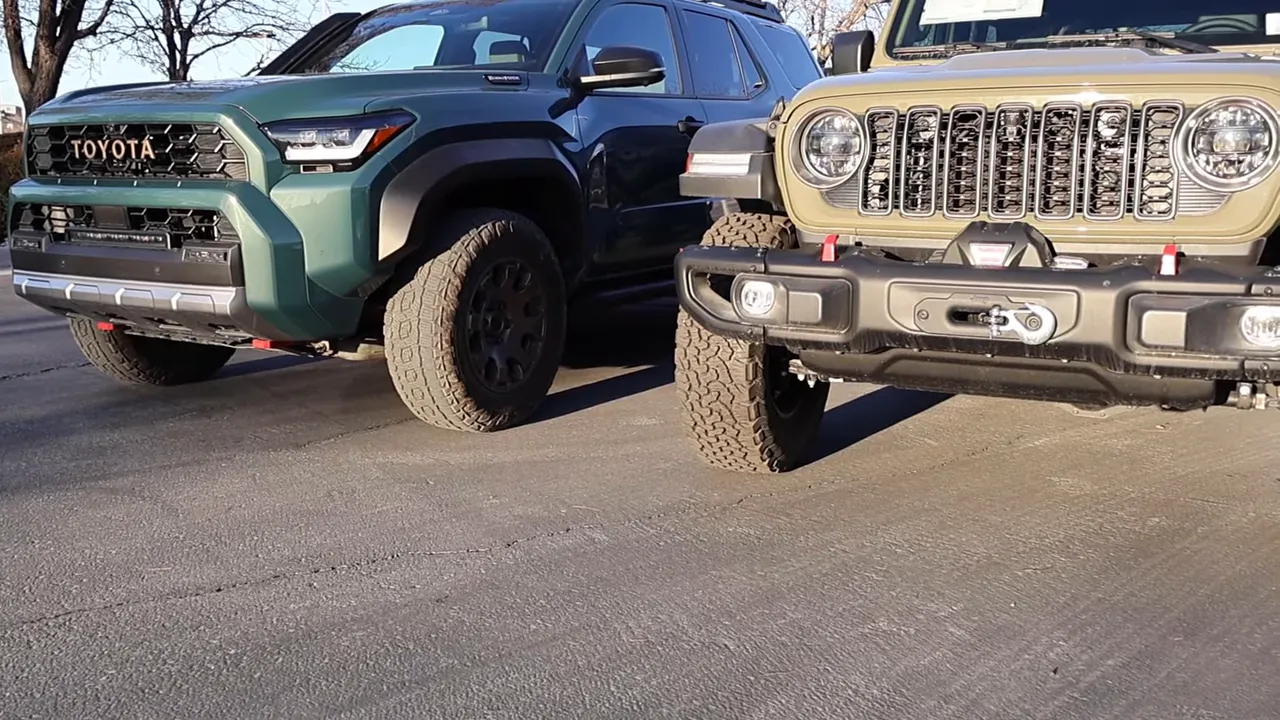
Tire size looks close on both. The Wrangler commonly uses 17-inch wheels on off-road builds, while the Trailhunter uses 18-inch wheels with 33-inch Toyo Open Country A/T III tires. That gives the Jeep more sidewall flexibility in many setups. The Toyota trades some sidewall for a more planted road feel.
🔧 Suspension and Off-Road Capability
Your winner depends on the trail.
The Wrangler’s solid front and rear axles give it the cleaner advantage for articulation. On rocks, ruts, and uneven ledges, that setup helps keep tires on the ground longer. The Rubicon also brings trail tools that Jeep buyers expect: locking differentials, sway-bar disconnect, and a low-range transfer case.
The 4Runner Trailhunter uses independent front suspension. That setup improves road comfort and steering feel, but it usually gives up some extreme articulation compared with a solid front axle. Toyota counters that with Old Man Emu shocks, a rear locker, Multi-Terrain Select, Crawl Control, and Stabilizer Disconnect Mechanism tech. It trails very well, but the Wrangler remains the stronger choice for slow, technical rock work.
🧰 Cargo and Real-World Practicality
Size and packaging matter once you add family gear, a dog crate, recovery tools, camping bins, and food storage.
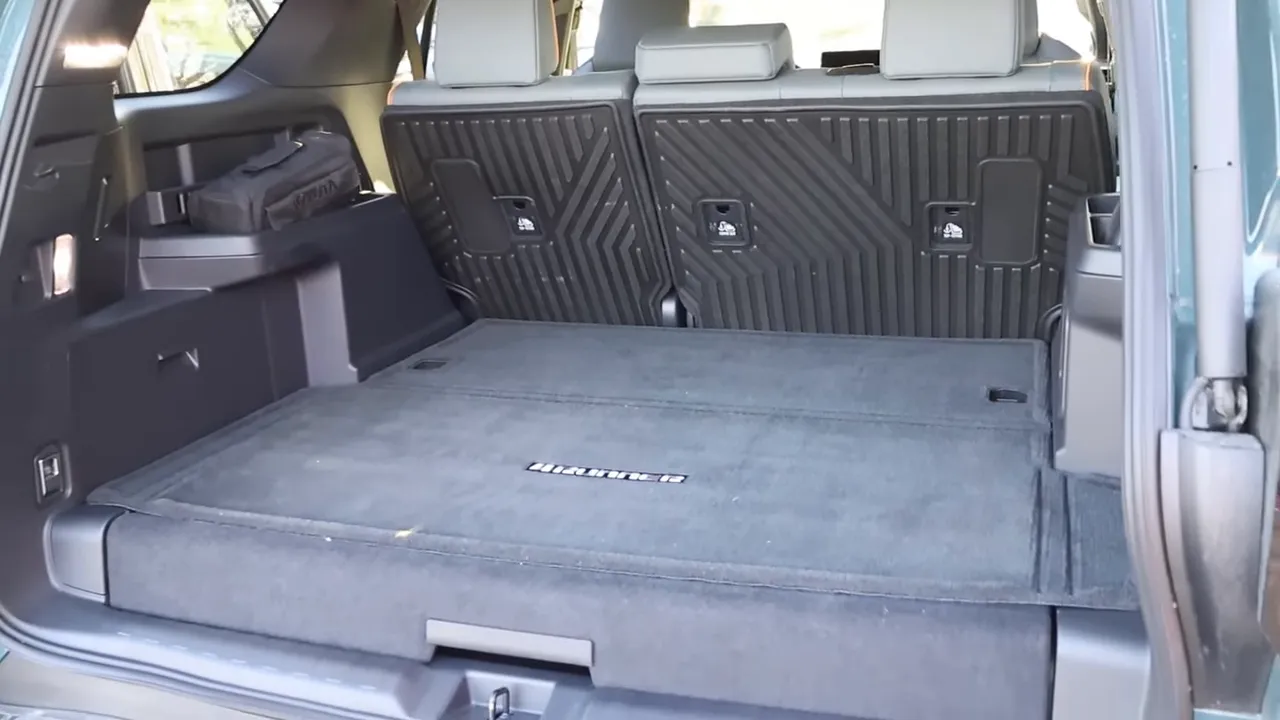
The 4Runner brings more modern SUV practicality. It gives you a power rear window, available hands-free liftgate, useful storage, and a larger-feeling cargo area. The hybrid battery can affect vertical cargo packaging, but Toyota balances that with strong in-vehicle power and a more long-trip-friendly layout. It feels like an adventure rig built to camp and commute.
The Wrangler stays more compact and utilitarian. Its swing-out tailgate and rear-mounted spare work well on trails and make field service simpler. Cargo volume trails the Toyota, but the Jeep’s smaller footprint helps on tight routes. Weekend trail drivers may prefer that simpler package.
🪑 Interior, Comfort, and Tech
The Toyota leads in comfort and daily-use technology.
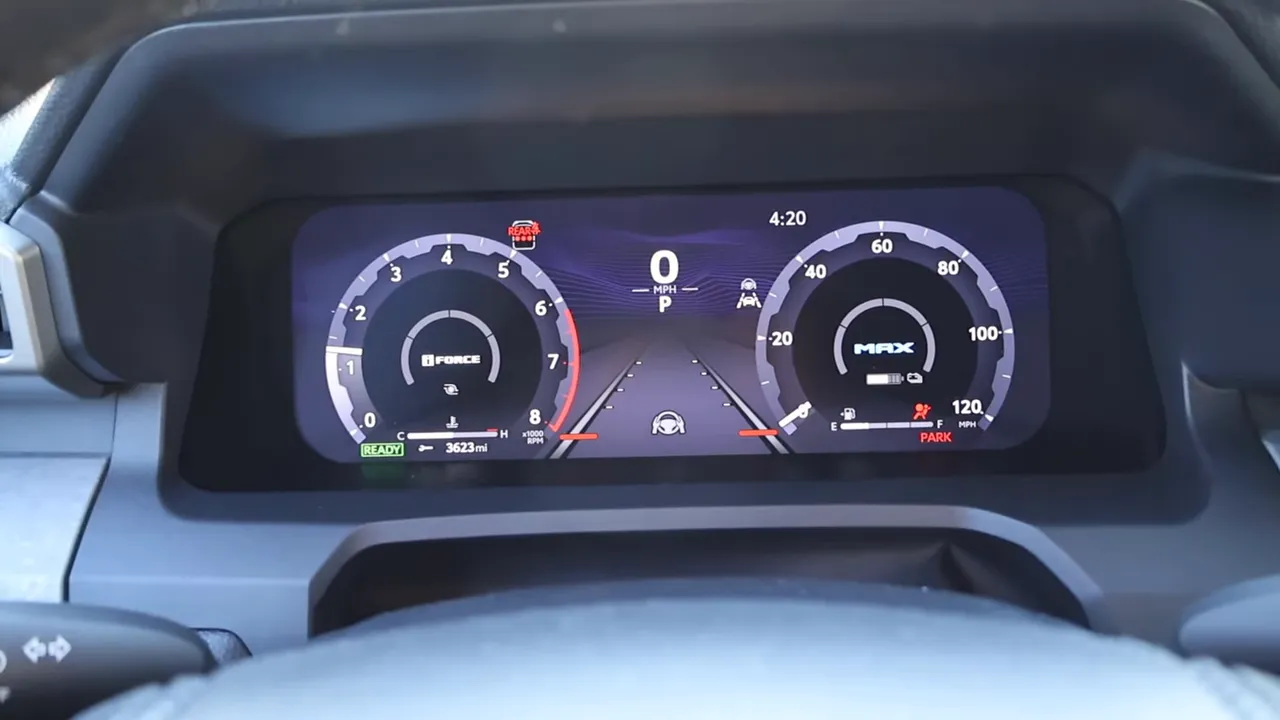
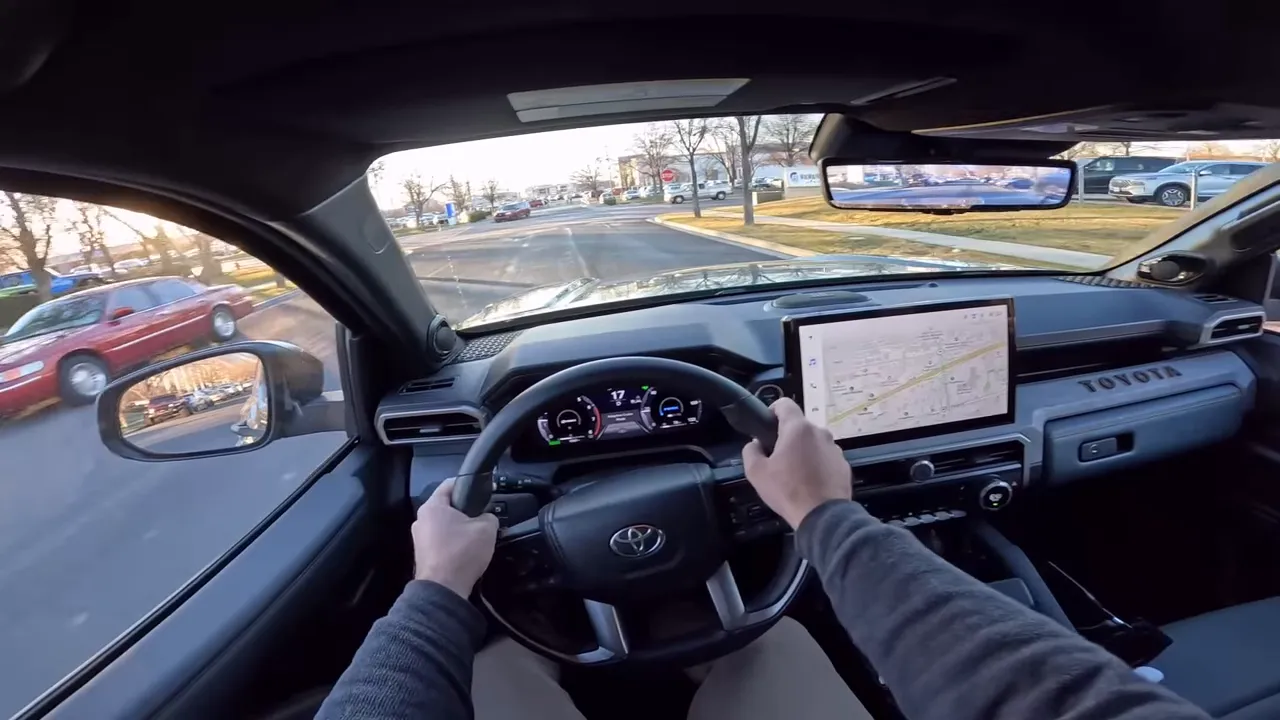
The 4Runner Trailhunter offers a full digital instrument cluster, a large Toyota Audio Multimedia touchscreen, available Multi-Terrain Monitor views, heated and ventilated front seats, a heated steering wheel, and more soft-touch surfaces. These features matter if you drive the SUV every day, sit in traffic, or take long highway trips before reaching the trail.
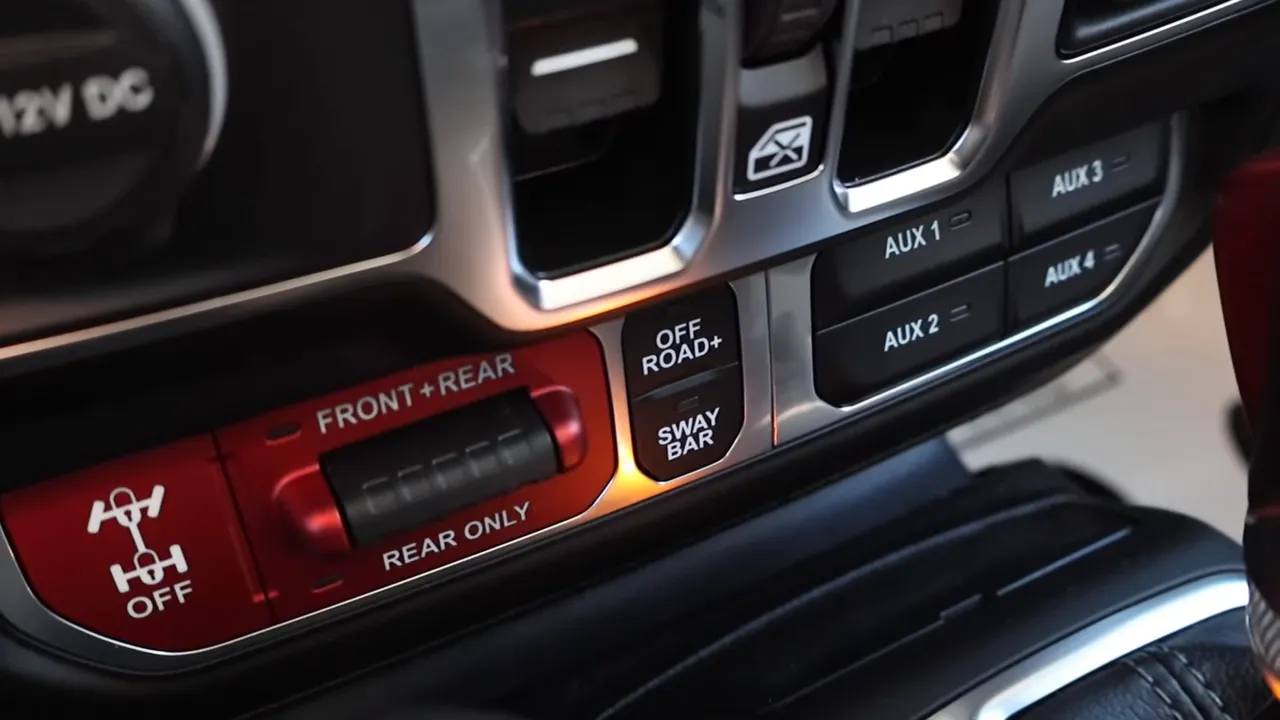
The Wrangler Rubicon keeps a more mechanical feel. You get physical controls for key off-road systems, a more upright cabin, and the option to remove the roof. It feels louder and less polished, but many owners see that as part of the appeal. The Rubicon’s front and rear differential locks, sway-bar disconnect, and two-speed transfer case controls stay simple and trail-ready.
🛣 Driving Impressions: Wrangler Rubicon
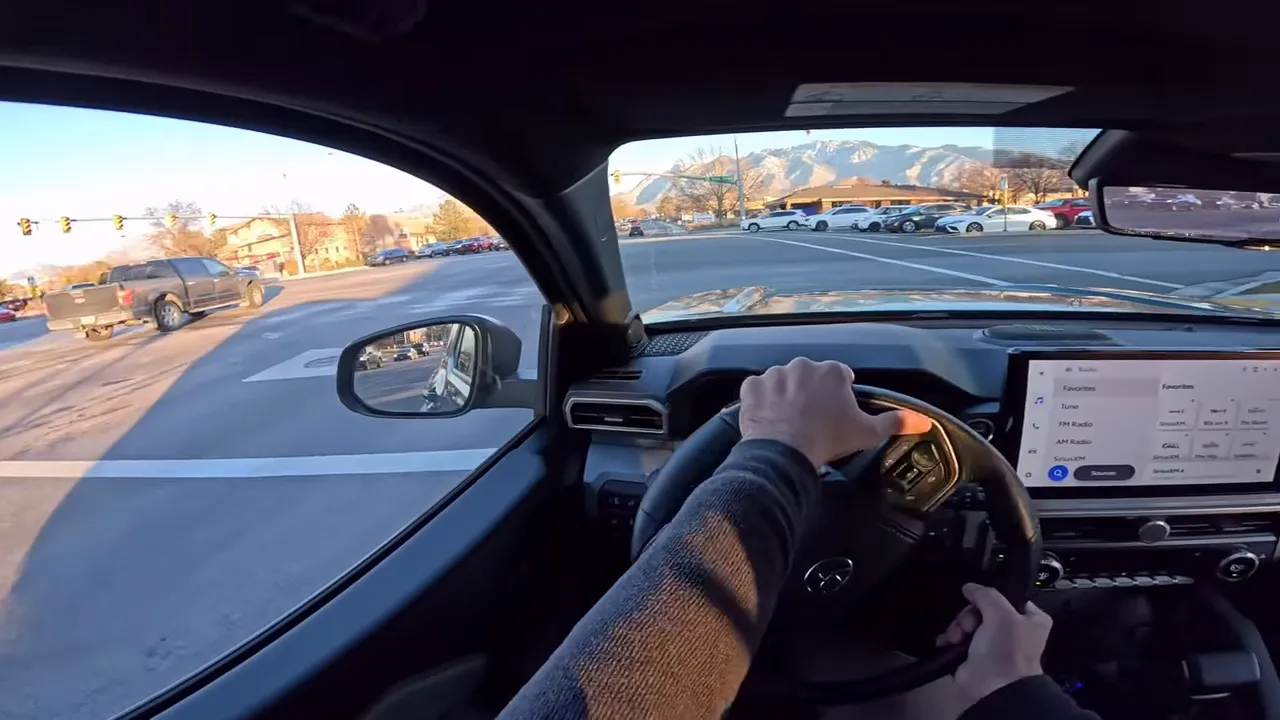
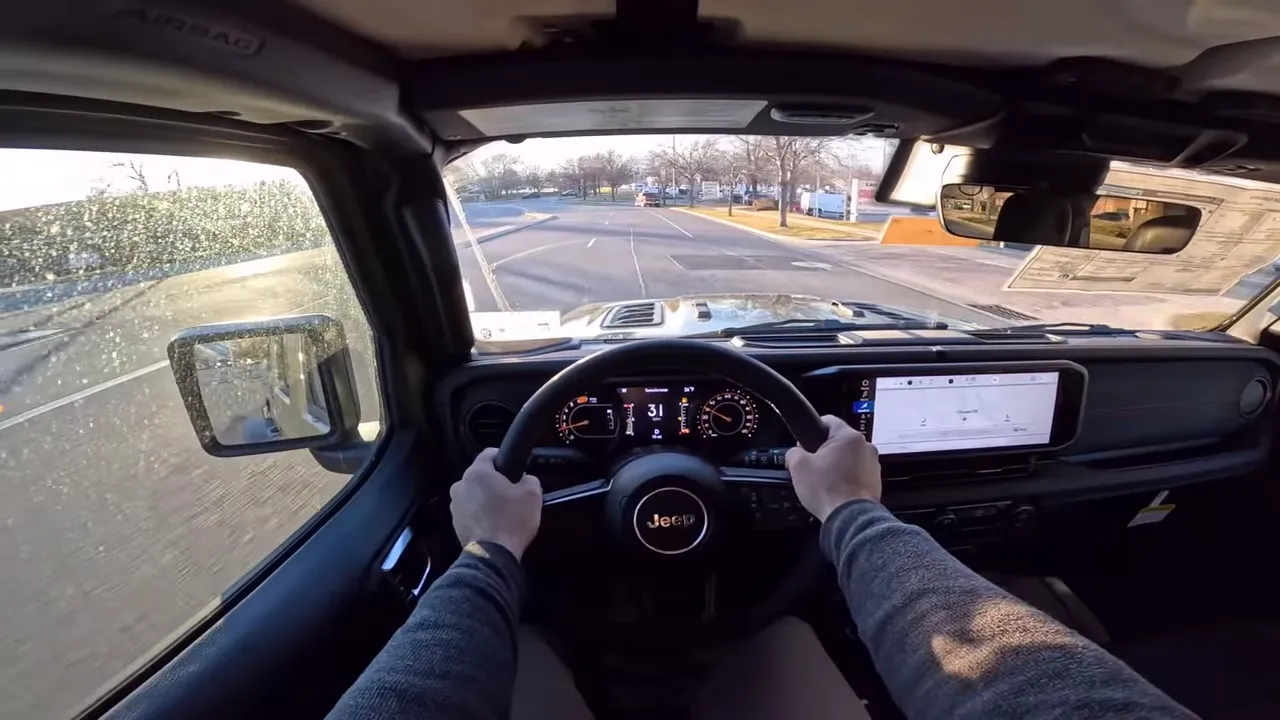
The Wrangler drives better than many people expect, but it still feels like a Wrangler. Solid axles give it trail strength, yet they also add more road texture through the cabin. The 3.6L V6 feels familiar and responsive, and the 8-speed automatic shifts cleanly in normal driving.
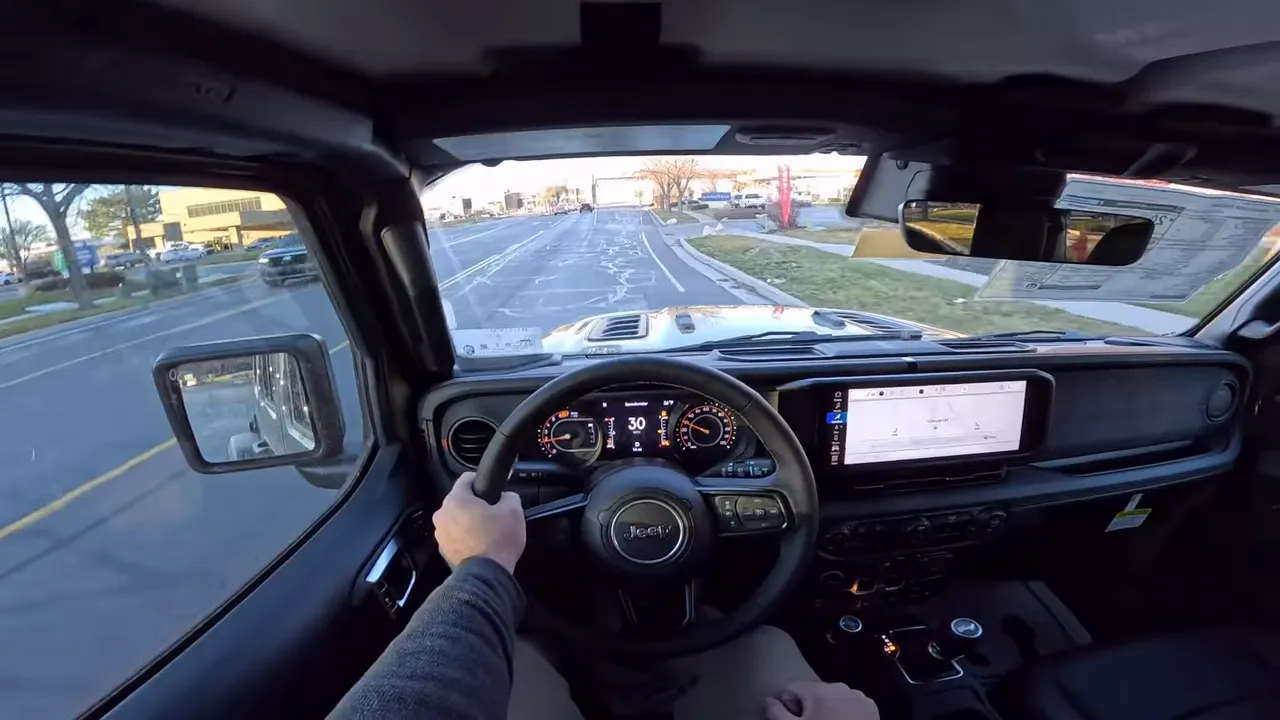
Expect more cabin noise, more wind sound, and a less isolated ride than the Toyota. On the trail, those compromises make more sense. The Wrangler gives you clearance, traction, articulation, and driver confidence when the route turns rough.
- Pros:
- Excellent articulation and rock-crawling ability
- Front and rear lockers, low range, and sway-bar disconnect
- Removable top for open-air driving
- Cons:
- Louder and less refined on the highway than the 4Runner
- Less cargo space and fewer comfort-first features
- Exact bumper and winch equipment depends on package
Pick this if: You spend weekends on technical trails, want pure off-road capability, and do not mind trading cabin refinement for trail dominance.
Skip this if: You mostly commute, carry family gear often, or want a quiet SUV for long highway trips.
Check Wrangler Rubicon capability and current packages
🛣 Driving Impressions: 4Runner Trailhunter
The 4Runner shows the trade-off Toyota chose: calmer road manners, better refinement, and strong hybrid-assisted torque. The turbo-hybrid powertrain feels strong during passing and low-speed trail work. It suits drivers who need one SUV for workdays, family trips, and weekend dirt roads.
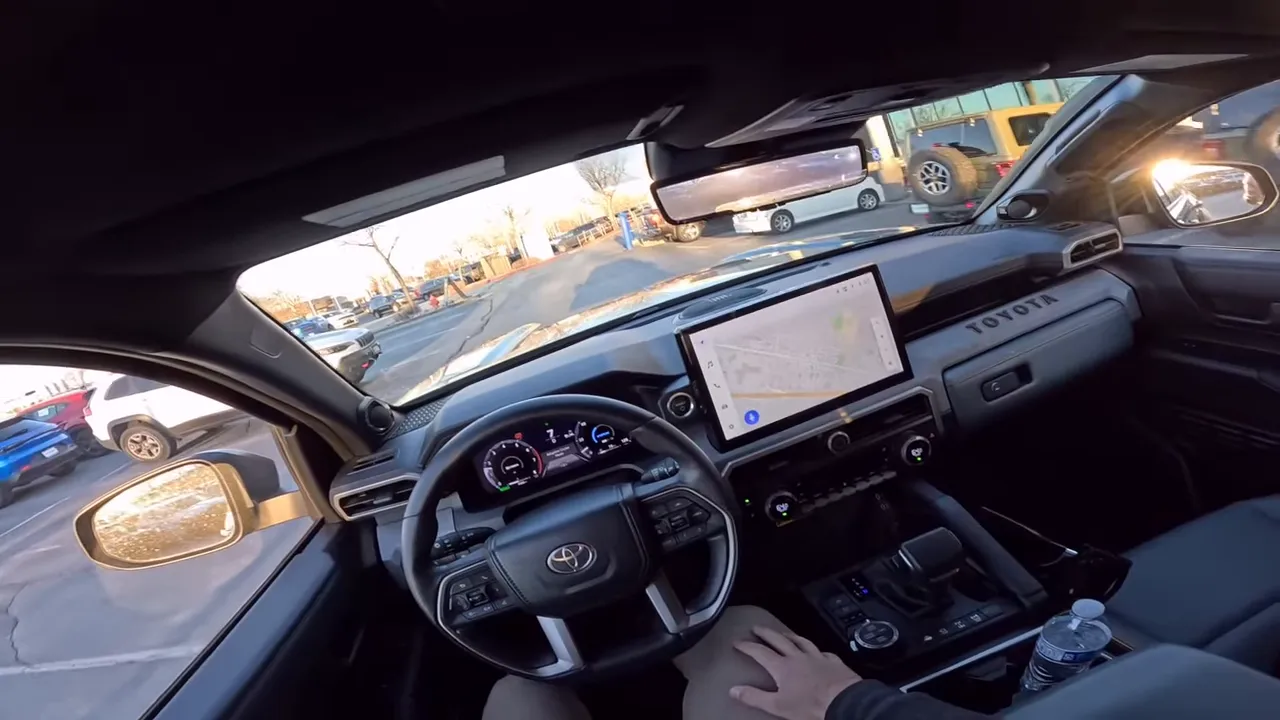
The independent front suspension makes daily driving smoother and steering more predictable. The Trailhunter will not match the Wrangler’s extreme axle articulation, but it feels more comfortable on highways, broken pavement, gravel roads, and long overland routes.
- Pros:
- Strong hybrid torque for passing, towing, and low-speed trail use
- Refined interior with ventilated seats, digital displays, and available terrain camera views
- Built-in 2,400W AC power supply and onboard air compressor for camp use
- Cons:
- Less articulation than the Wrangler on extreme technical terrain
- Hybrid battery can reduce vertical cargo flexibility
- Limited allocation can keep transaction prices high
Pick this if: You want a capable off-roader that also works well as a daily driver, hauls gear on long trips, and feels calmer on the commute home.
Skip this if: You mainly crawl rocks, want a removable top, or prefer a smaller, simpler trail rig.
Check 4Runner Trailhunter features and current availability
💸 Pricing, Availability, and Buying Tips
Comparable Wrangler Rubicon and 4Runner Trailhunter builds can land in similar shopping conversations, but real out-the-door prices depend on trim, options, incentives, dealer fees, and local demand.
Toyota lists the 2026 4Runner Trailhunter with a high base MSRP, and limited allocation can keep prices firm. Wrangler availability often gives shoppers more room to compare dealers, negotiate, or look at used and certified inventory. A Wrangler may cost less out the door if incentives line up and you shop beyond one dealer.
🧭 Which One Should You Buy?
Your intended use decides this choice. Neither SUV is wrong, but one can fit your life much better than the other.
- Buy a Wrangler Rubicon if you prioritize extreme off-road capability, maximum articulation, removable-top driving, and classic Jeep character. You value trail dominance and want a rig that feels purpose-built for hard obstacles.
- Buy a 4Runner Trailhunter if you want modern refinement, higher hybrid torque, better comfort on long trips, and factory overland features that support camping and remote travel.
If price matters most, compare local Wrangler discounts before assuming the Toyota costs the same. If comfort, tech, long-distance travel, and built-in utility matter most, the Trailhunter makes the stronger case.
🔎 Real-World Takeaways
Both SUVs are built for adventure, but their personalities differ sharply. Jeep protects its heritage with a compact, mechanical, trail-first package. Toyota modernizes the adventure SUV with hybrid power, comfort, and electrical utility that appeals to overlanders and long-distance travelers.
Think about the trails you actually drive. If you tackle technical rock crawling often and want the best chance of keeping tires planted, the Wrangler Rubicon is hard to beat. If your trips involve dirt roads, dispersed camping, towing, and long highway miles, the 4Runner Trailhunter is the better fit.
Buyer Objections You Should Check Before Signing
- Warranty and hybrid coverage: Ask Toyota how hybrid battery coverage applies in your state.
- Dealer add-ons: Check whether the dealer added accessories, protection packages, or markup.
- Winch and bumper equipment: Ask Jeep to confirm whether the exact Rubicon build includes factory winch-related equipment or only bumper provisions.
- Tire replacement cost: Both SUVs use larger all-terrain tires, so replacement costs can be higher than a normal family SUV.
- Daily noise level: Test the Wrangler at highway speed before buying. Cabin noise can be a deal-breaker for some commuters.
- Cargo height: Load your real gear into the 4Runner if you carry tall bins, coolers, or dog crates.
❓ FAQ
Which vehicle has better off-road articulation?
Which one is more comfortable for daily driving?
How do fuel economy and power compare?
Which one offers better value?
Do both vehicles come with factory recovery points and a winch?
Is the 4Runner Trailhunter worth it over a TRD Off-Road Premium?
Which SUV is better for families?
Which SUV is easier to modify?
⚙ Final Verdict
Pick the Wrangler Rubicon if you want uncompromised off-road capability, open-air driving, and the classic Jeep experience. Choose the 4Runner Trailhunter if you want modern SUV comfort, hybrid torque, useful camp hardware, and a better long-trip setup.
The better choice comes down to your real use. Rock crawling favors the Wrangler. Overlanding and daily driving favor the 4Runner. Test drive both, compare itemized dealer quotes, then choose the one that matches your trails, commute, and budget.
Check Wrangler Rubicon capability | Check 4Runner Trailhunter availability
📌 Quick Checklist Before You Buy
- Test drive both on your usual roads because highway manners and parking behavior reveal a lot.
- Match the SUV to your actual trails because technical rock crawling favors the Wrangler, while long-distance overlanding favors the 4Runner.
- Ask dealers for itemized out-the-door pricing so you can compare real costs, not just MSRP.
- Check factory option packages because winch hardware, ventilated seats, inverters, compressors, and camera systems can vary by build.
- Confirm warranty and service support especially if you plan to modify the suspension, tires, bumper, or electrical system.


[…] The main selling point is balance rather than extreme capability. You can use it as a normal family vehicle during the week, then carry outdoor gear or drive down a maintained forest road on the weekend. You should still view it as a crossover, not as a substitute for a body-on-frame off-road SUV. […]