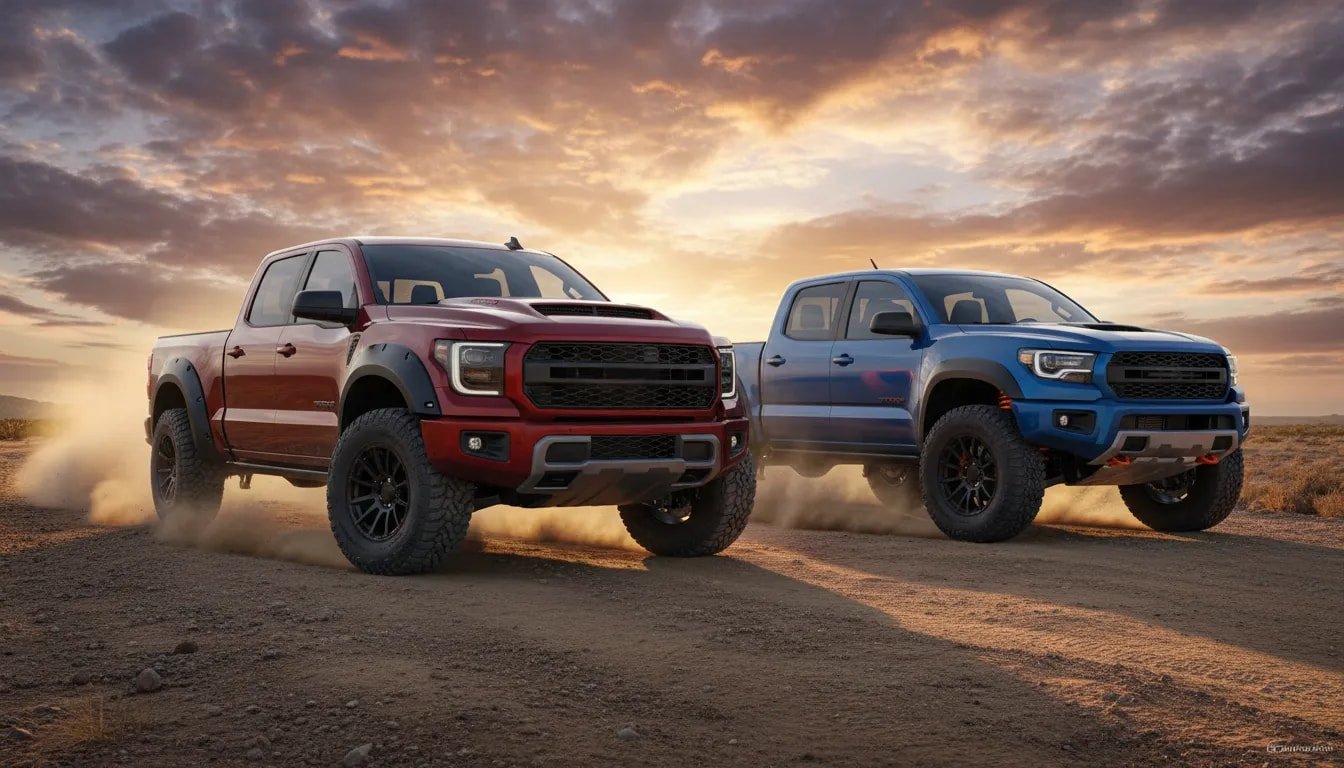
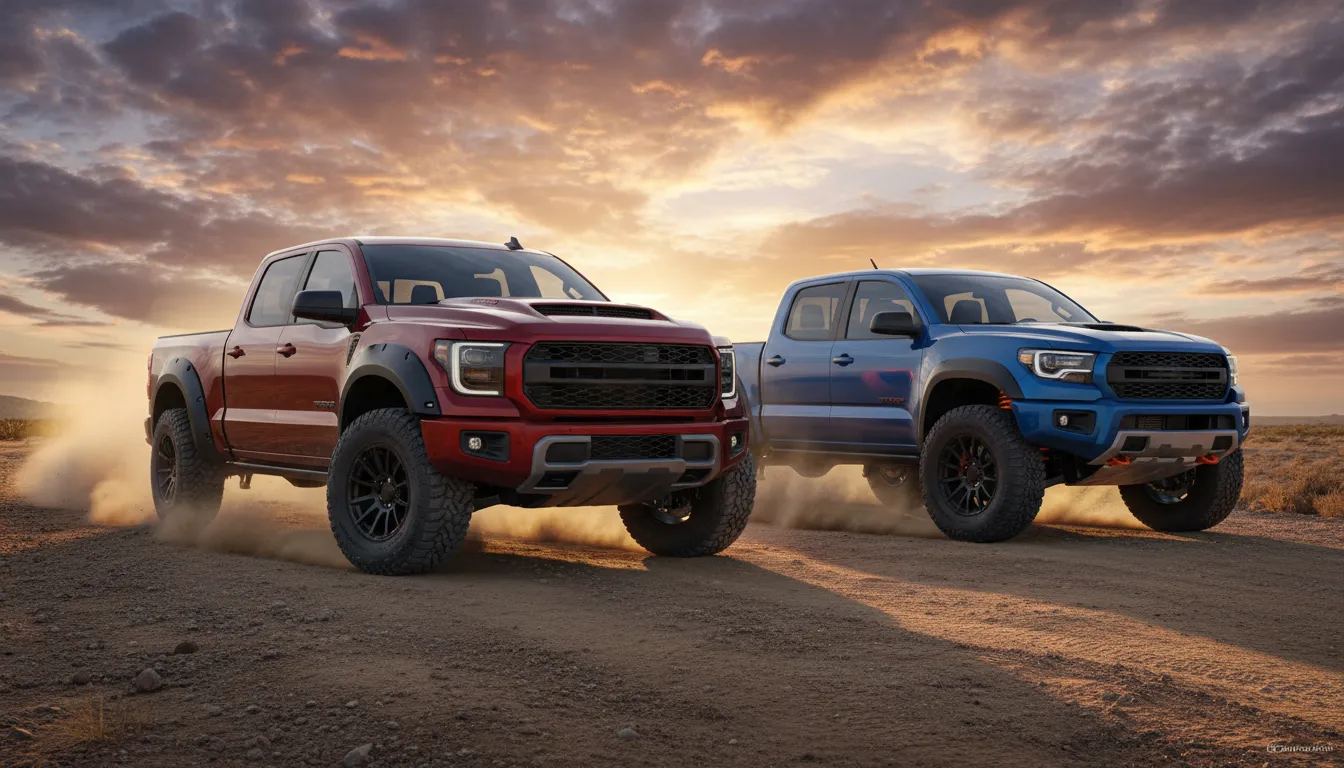
Two very different trucks, the same price tag. For about $60,000 you can either
buy a near-new Ford Ranger Raptor with low miles or a used Ram TRX/T-Rex packing
a supercharged V8 and higher mileage. Both scream capability and personality, but
they deliver that in wildly different ways. This guide breaks down what each truck
actually gives you for the money — styling, hardware, tech, driving feel, ownership
trade-offs, and which buyer each truck makes the most sense for.
🚙 Quick snapshot: numbers that matter
If you want the essentials up front:
- Ram T-Rex / TRX (modified TRX in this comparison): supercharged 6.2L V8, 702 horsepower, 650 lb-ft torque, eight-speed automatic, full-size truck with wide-body kit and 35-inch tires on 18-inch wheels. The example here is higher mileage (roughly 80,000 miles) and listed around $59,000.
- Ford Ranger Raptor: turbo 3.0L V6, 405 horsepower, 430 lb-ft torque, 10-speed automatic, mid-size performance pickup with 33-inch tires on 17-inch wheels, live-valve FOX shocks and diff locks front and rear. The example here is near-new (about 6,000 miles) and also listed near $59,000.
If you only have $60,000 to spend, the choice comes down to priorities: raw V8 drama and full-size utility versus modern mid-size off-road engineering and lower risk of ownership.
🔍 Exterior and presence: size, stance, and practicality
The T-Rex is unmistakeable — a full-size truck wearing a wide-body kit. It looks aggressive from every angle: wide fenders with integrated marker lights, bold hood vents, and a hollowed Ram emblem that emphasizes the aftermarket/modified nature. The extra girth is functional for stability and presence but also brings compromises in tight urban spaces and parking.
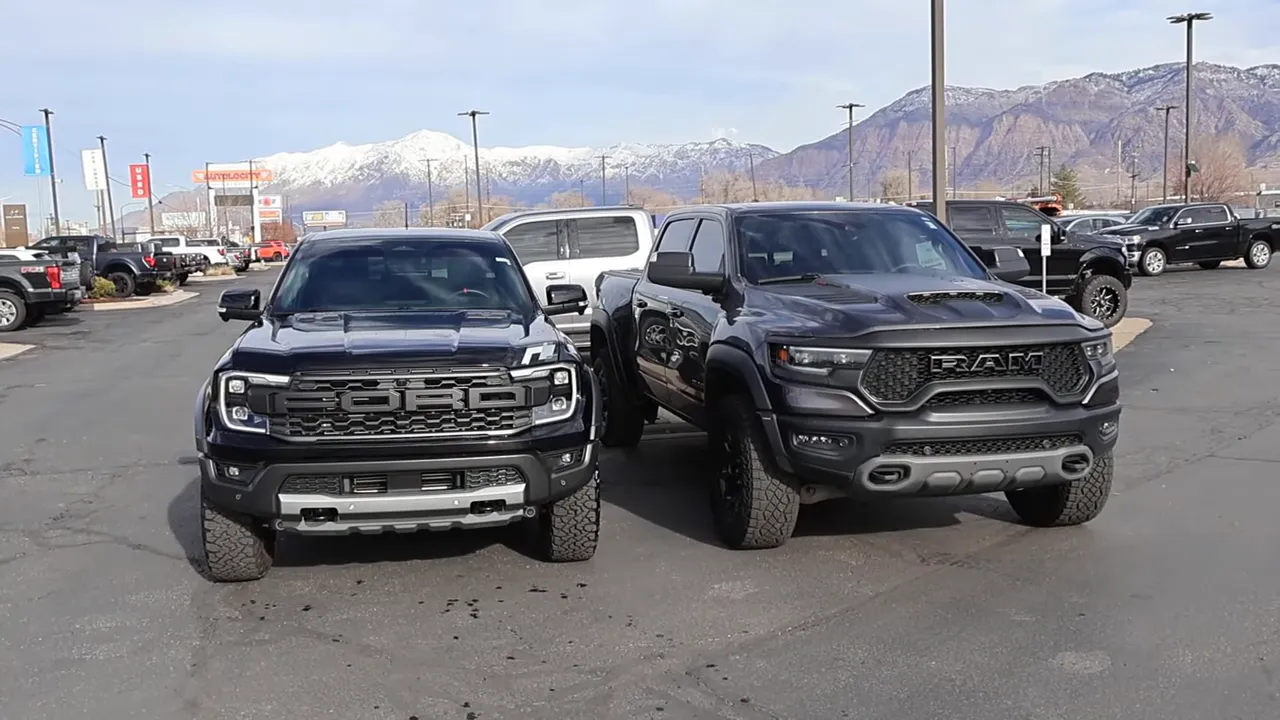
The Ranger Raptor plays a different card: purposeful, chunky, and tight. It’s about two and a half feet shorter than the T-Rex, which makes it more maneuverable off-road and in daily life. The Raptor’s grille is unapologetically Ford — big block-letter branding, visible skid plates, and room to mount marker lights if you want them.
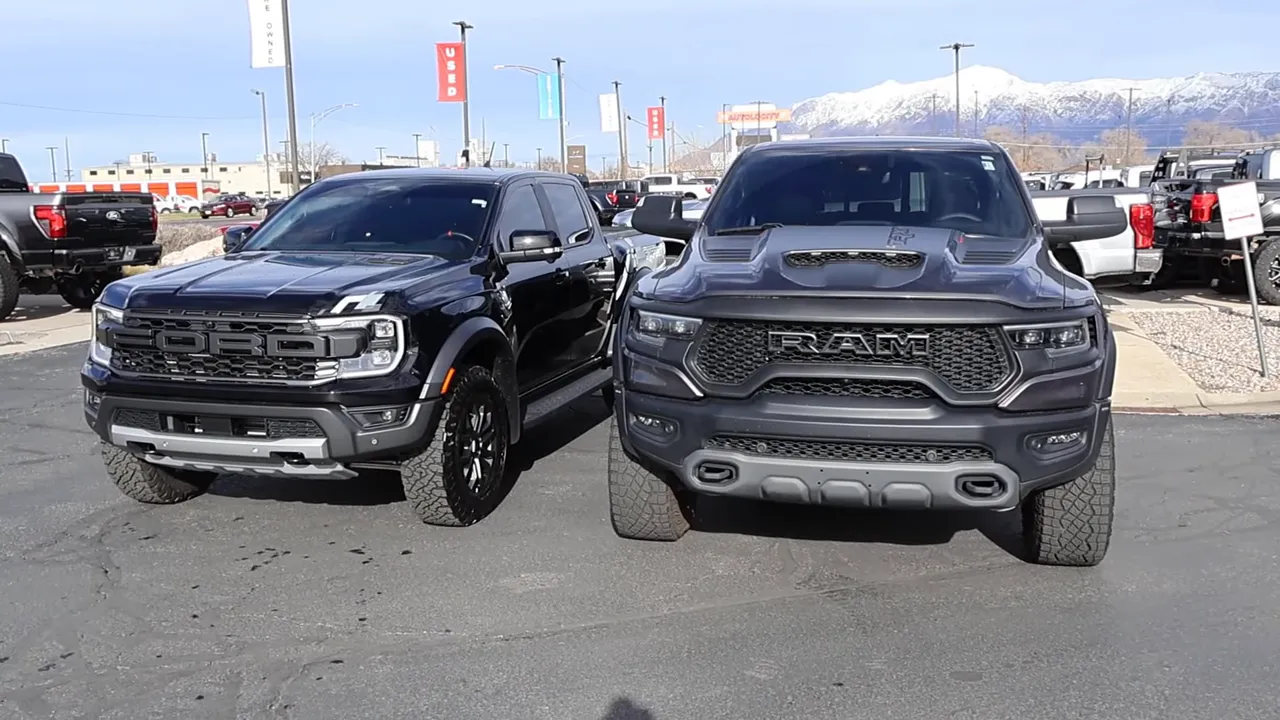
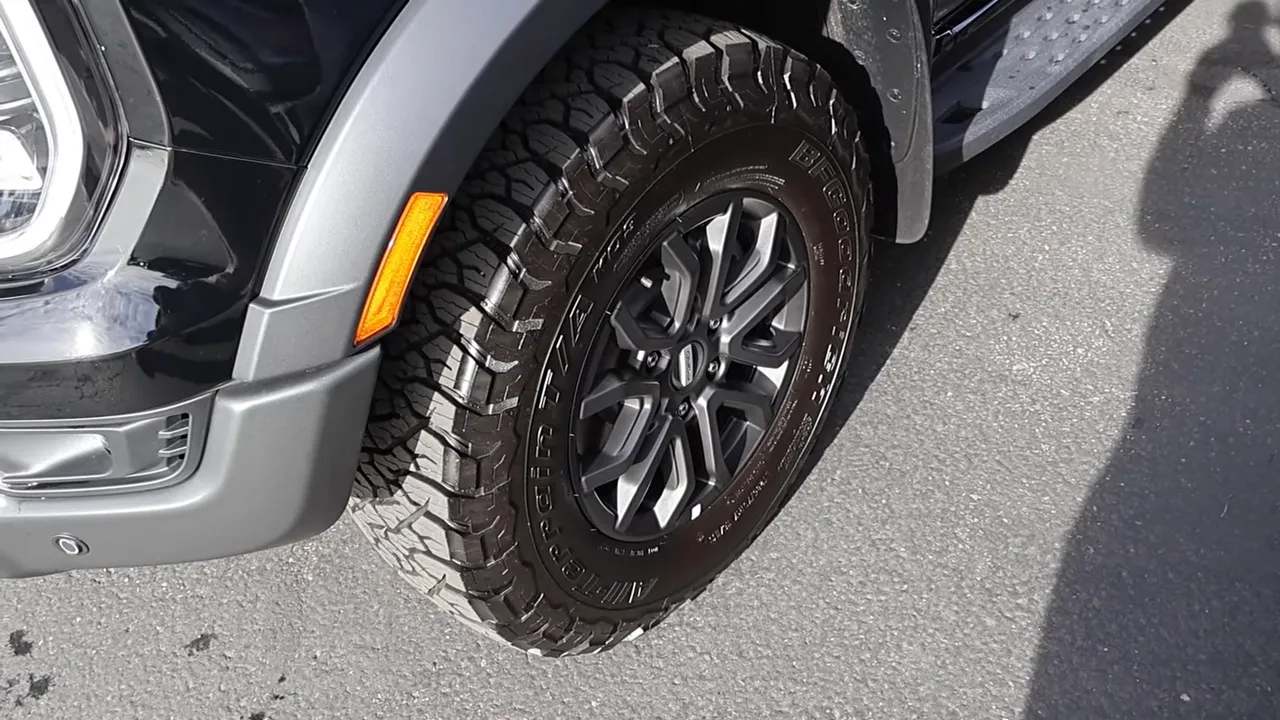
Tire and wheel choices reinforce the identity split. The T-Rex rolls on 35s with 18-inch wheels for a wide footprint and big off-road contact patch. The Ranger Raptor has 33s on 17s, tuned into a balanced mid-size setup that prioritizes agility and suspension travel.
🛠️ Suspension, chassis, and off-road hardware
Under the skin, both trucks are optimized for rough stuff — but with different philosophies.
- Ram T-Rex: coil suspension front and rear with Bilstein Black Hawk dampers and an active adjustable system. The TRX drivetrain is full-time four-wheel drive with a two-speed transfer case and rear differential lock (this specific setup has only a rear locker).
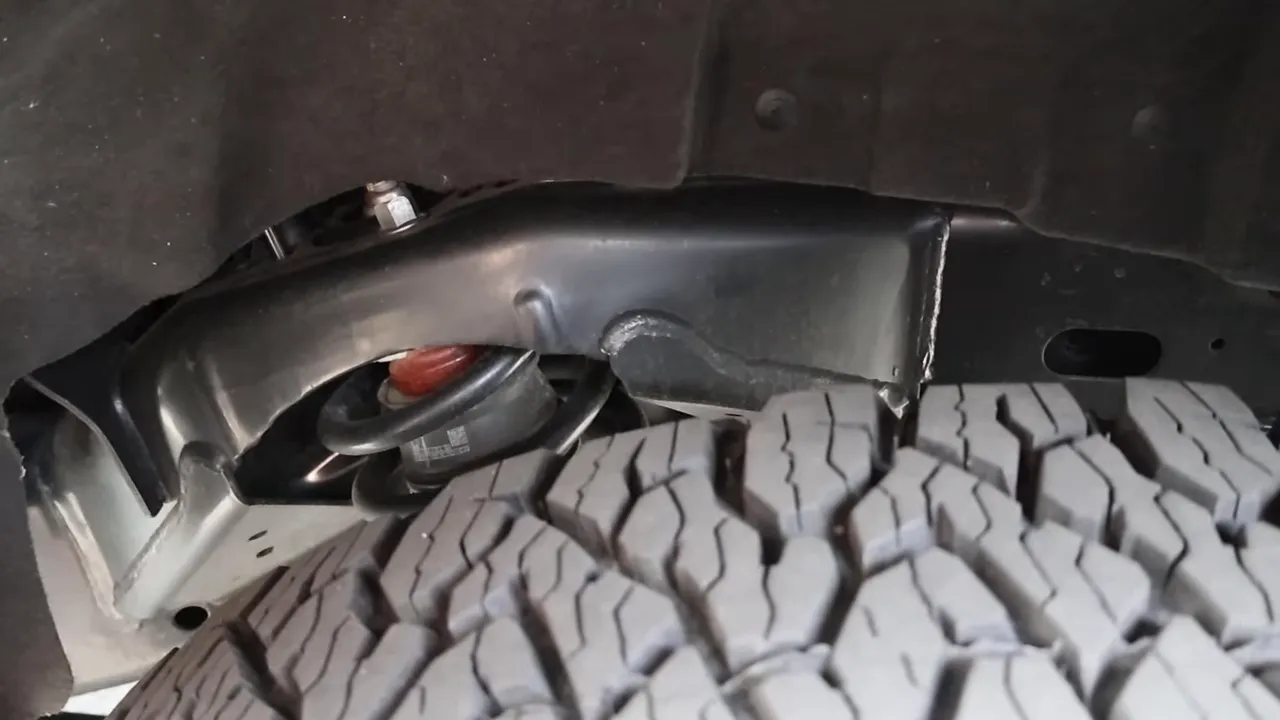
- Ranger Raptor: coil sprung front, solid axle rear with Live Valve FOX shocks and an adjustable suspension system. This Ranger features front and rear diff locks on top of the advanced damping for exceptional low-speed composure and high-speed desert capability.
Both have off-road bumpers, recovery points, and skid plate protection. The Raptor’s tuning and shorter overall length give it an edge in technical trails where wheelbase or width can bite you. The T-Rex uses size and brute force to overpower obstacles, which is thrilling but not always practical.
🧰 Bed, cargo, and practical features
Surprising detail: the Ranger Raptor here actually comes with a factory bed liner and an outlet in the bed — small conveniences that matter for everyday use. Ford even includes a tailgate ruler and an easy-lift tailgate. The T-Rex has the expected wide-body treatment over the bed with a tunnel cover on this example, spare mounted underneath, and sporty dual exhaust tips tucked away.
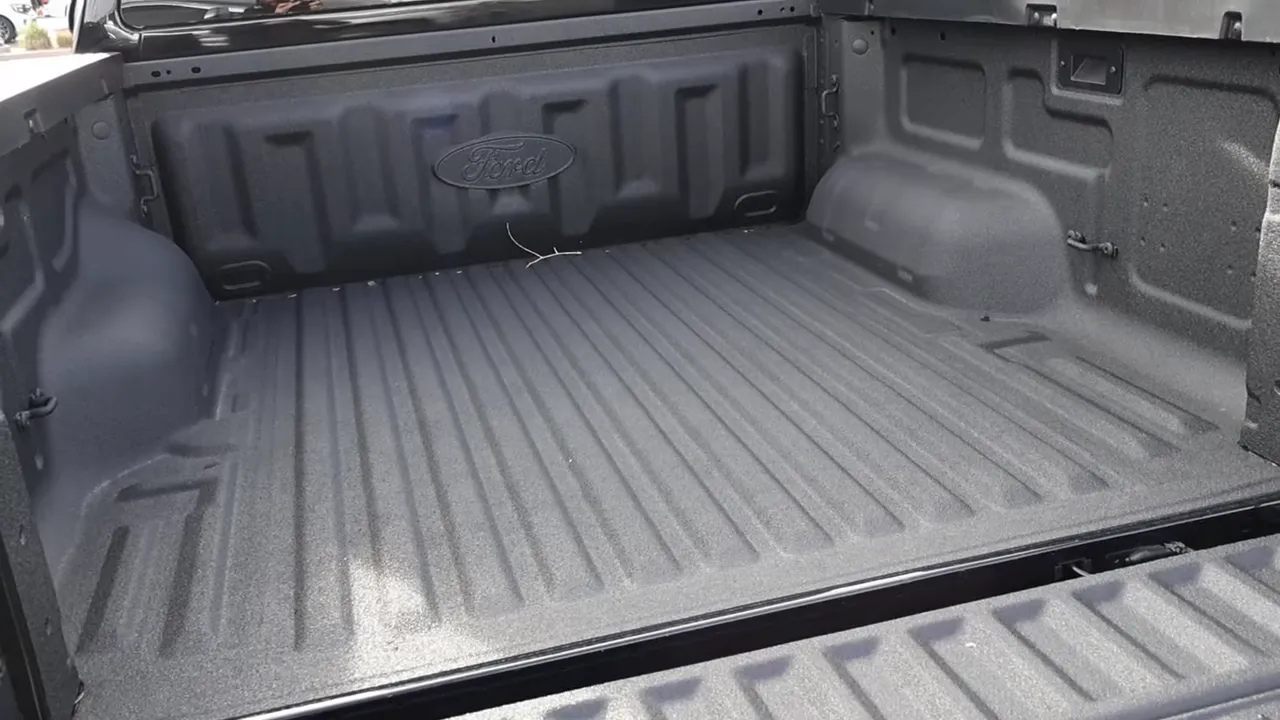
Bottom line: both trucks can carry gear and do proper truck things, but the Ranger’s newer condition and practical bed features give it the edge for day-to-day utility.
🪑 Interior comfort and tech
Interiors highlight the contrast between a pampered, tech-rich full-size truck and a rugged, driver-focused mid-size machine.
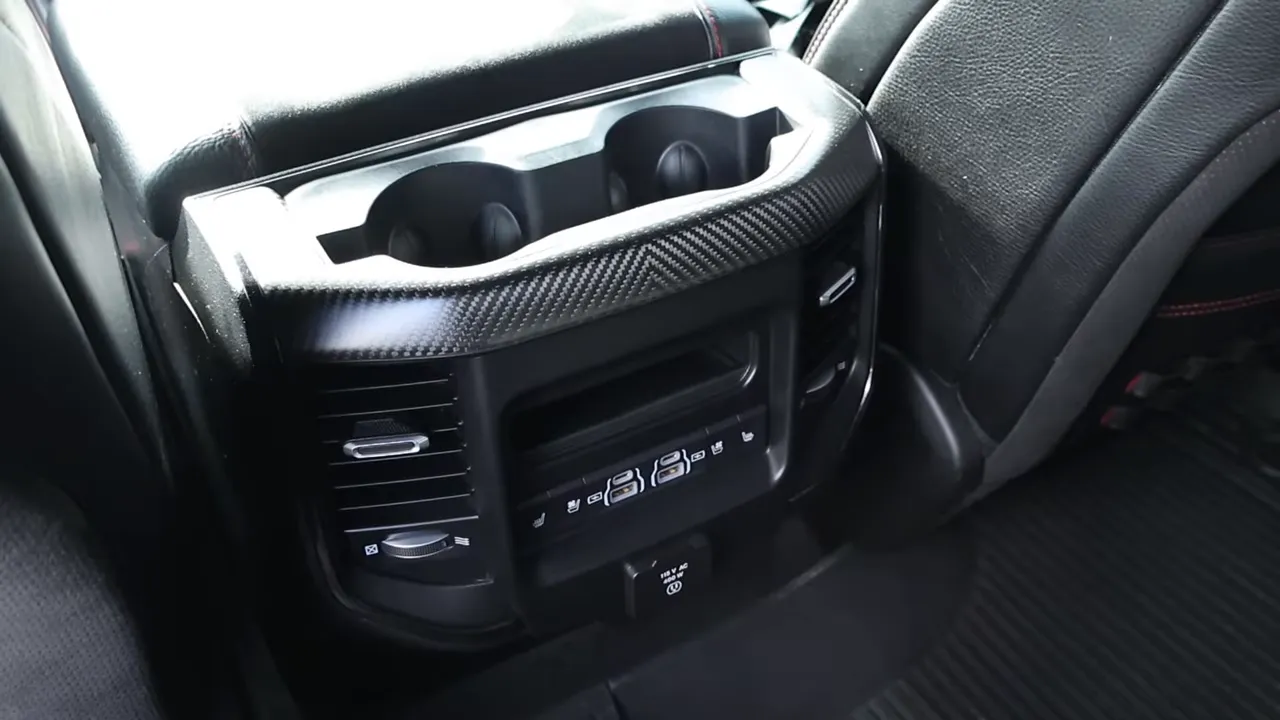
The T-Rex interior shown here is loaded: reclining rear seats, panoramic sunroof, carbon-fiber accents, heated and ventilated seating, a full power outlet, and luxurious trim that has aged well despite the miles. This example has nearly 80,000 miles, but components like seats and trim have held up — although you can spot wear on frequently handled surfaces like the steering wheel.
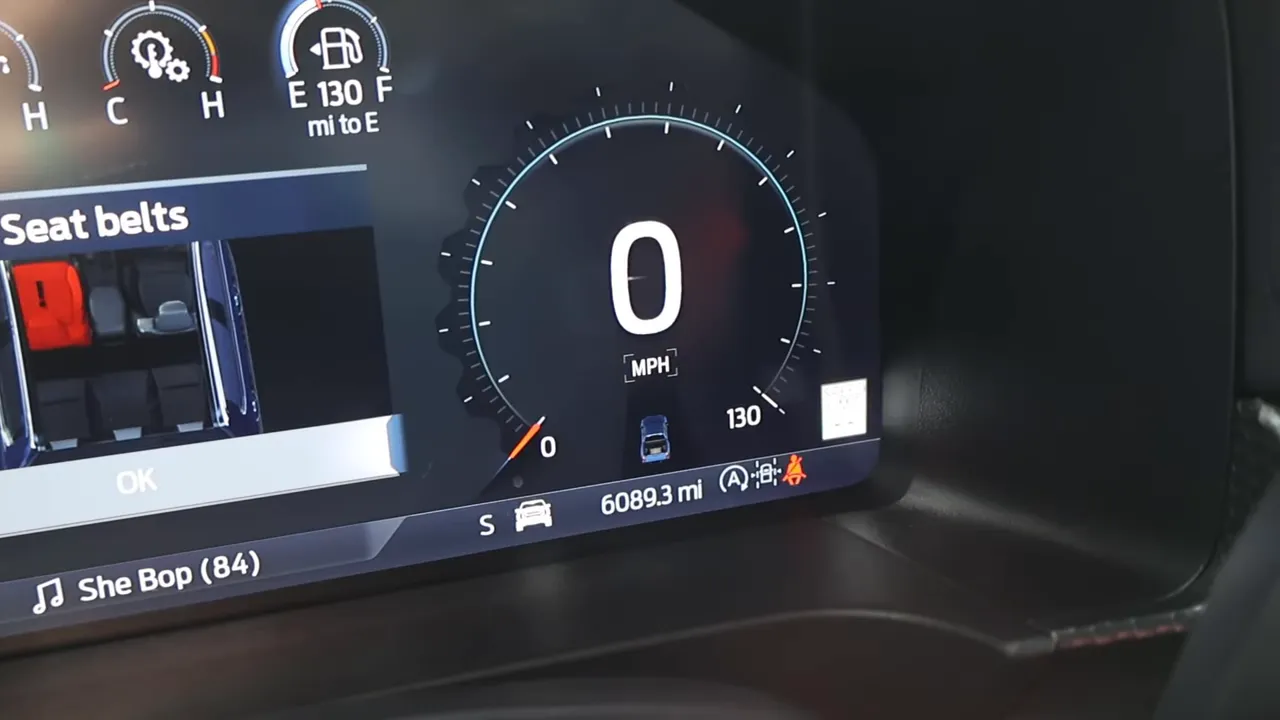
The Ranger Raptor interior is newer and nearly pristine with about 6,000 miles on the example. It’s less ornate but very functional. Raptor-specific touches include bespoke seats, a full digital gauge cluster, and off-road-focused controls. The Raptor also has power folding mirrors, memory seats, and modern connectivity. Tech-wise, both trucks offer 360-degree cameras, off-road modes, and driver assists, but their user interfaces differ: the Ram infotainment is fast and tactile, while the Ranger’s screens consolidate more off-road controls into the digital menu.
🏁 Driving impressions: how they feel on the road
This is where personality wins or loses. These trucks could not be more different to pilot.
Ranger Raptor — composed, purposeful, and surprisingly quick
The Ranger Raptor’s turbo 3.0L V6 and 10-speed auto deliver usable torque across the rev range. It’s quiet when you want it to be and willing to bark under throttle — turbo whoosh and a little blow-off sound add character. The Raptor’s chassis is tuned for handling: tight steering, composed cornering, and balanced weight make it feel tossable for a truck.
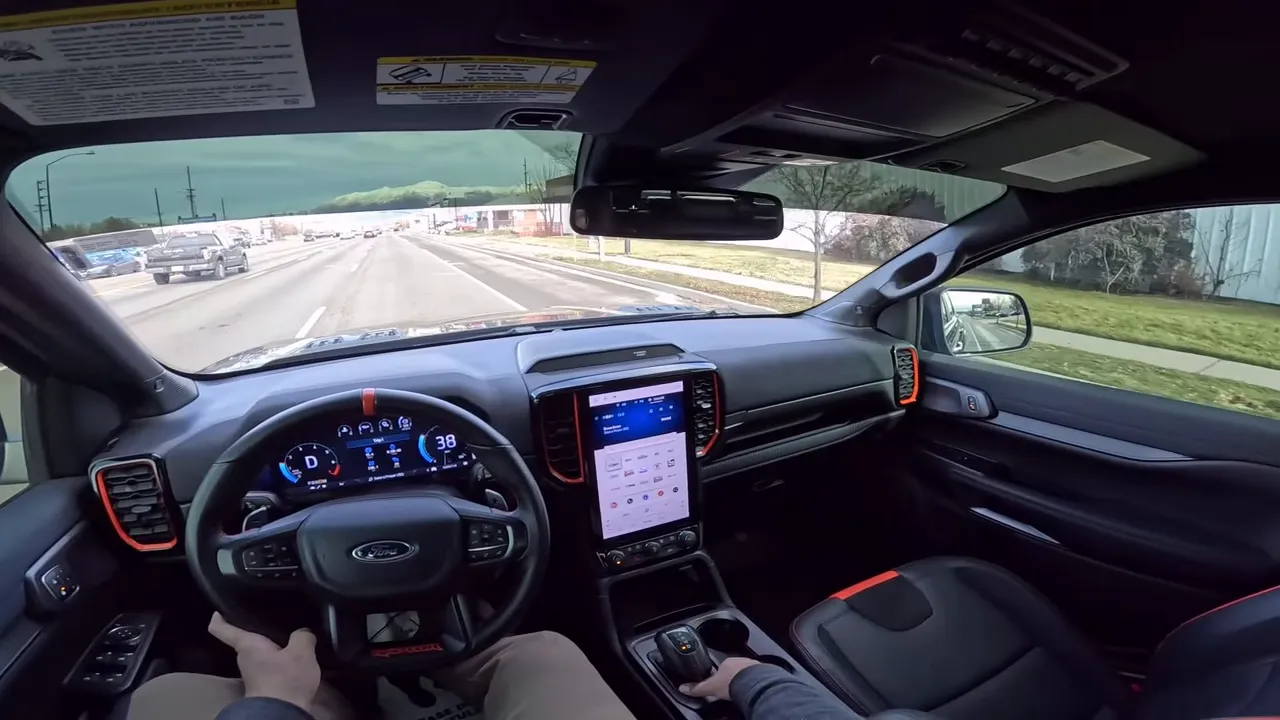
Off-road, the mid-size platform thrives: a long-but-not-gigantic wheelbase helps the truck stretch over obstacles with a good compromise of breakover and approach angles. The Raptor also benefits from diff locks and adjustable FOX dampers, which translate to confidence in technical sections and high-speed desert runs. For daily commute and weekend adventure, the Raptor is one of the most versatile choices in the performance pickup segment.
Ram T-Rex / TRX — V8 theatricality and effortless torque
If you want sensory overload, the T-Rex delivers. The supercharged 6.2L V8 provides instant throttle response and a “wall of torque” sensation that makes driving almost effortless: nudge the pedal and the truck lunges forward with authoritative shove. The sound is part of the package — supercharged V8s have a visceral soundtrack that no turbo six can fully replicate.
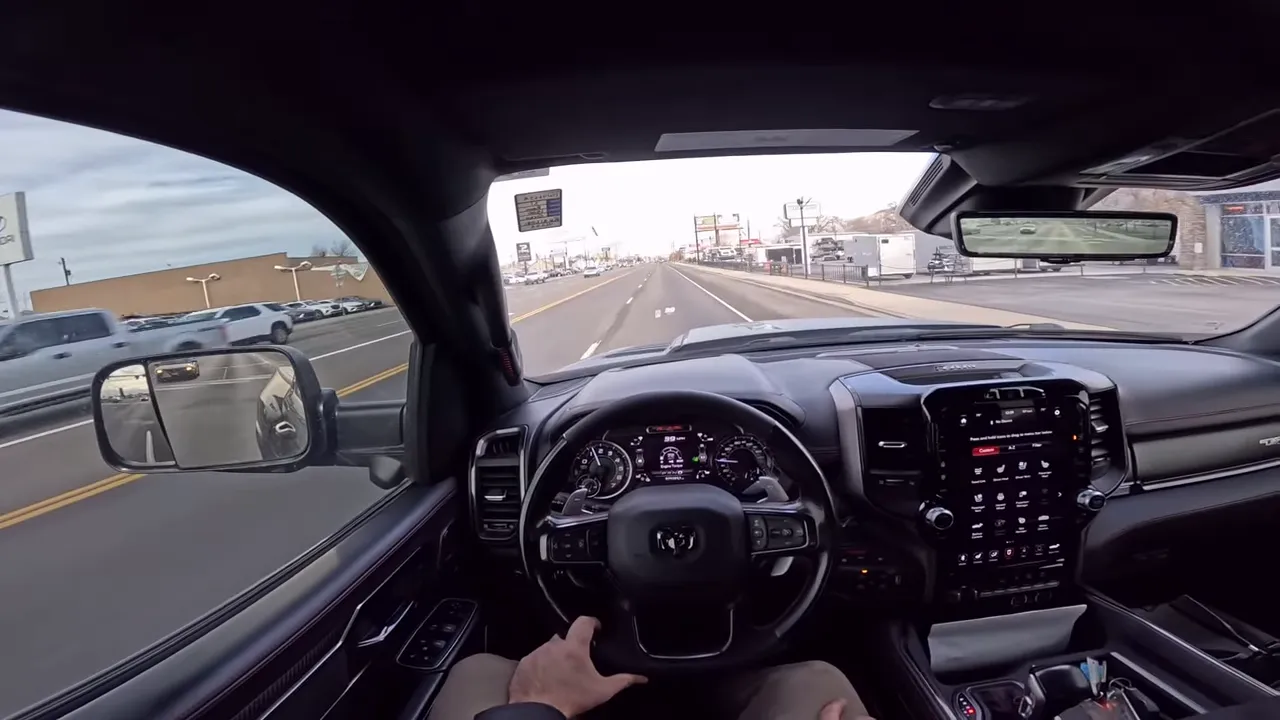
Performance on the road feels heavy but potent. Despite having roughly 300 more horsepower than the Ranger, the full-size TRX’s additional mass means the perceived advantage is less dramatic in real-world driving. It still feels rapid and unmistakably powerful, but it’s a different kind of fun: brute force rather than nimble athleticism.
💸 Ownership realities: cost, mileage, and resale
This is the heart of the decision if both trucks cost the same upfront. Two major factors weigh heavily: running costs and the risk of buying a high-mileage performance vehicle.
- Fuel and daily cost: The Ram TRX’s supercharged V8 is gloriously inefficient compared to the Ranger’s turbo V6. Expect mid-to-high teens fuel economy in the Ranger, whereas the TRX will sip far more juice — if you care about fuel bills, the Ranger wins easily.
- Maintenance and wear: Higher-mileage TRX examples can be a gamble. Even though the 6.2L supercharged V8 has a reputation for durability when treated well, a used performance truck can hide how hard it was driven. Worn trim, loosened switchgear, and potential engine or drivetrain abuse are real concerns.
- Depreciation and value: Performance full-size trucks like the TRX often depreciate quickly from crazy new prices, which creates opportunities at the used price point. Ranger Raptors are in high demand and tend to hold value — a low-mileage 2025 model will likely remain desirable, and used pricing can stay high relative to MSRP.
So the used TRX can be a bargain for raw V8 thrills, but it comes with a higher risk profile. The near-new Ranger Raptor is a safer, lower-risk buy with modern warranty status, fewer unknowns, and better long-term practicality.
⚖️ Which should you buy for $60,000?
This decision comes down to persona, priorities, and tolerance for risk.
- Buy the Ram T-Rex / TRX if you want maximum soundtrack and the visceral satisfaction of a supercharged V8. You accept higher fuel bills and higher maintenance risk in exchange for an unmatched personality. You’re comfortable inspecting a used truck thoroughly or buying from a reputable dealer who can vouch for its service history.
- Buy the Ford Ranger Raptor if you want the most well-rounded package: modern off-road capability, lower running costs, newer condition, and a truck that does both daily driving and weekend exploration extremely well. If you want reliability, lower ownership uncertainty, and a truck that’s equally capable off-road and in town, this is the smarter long-term choice.
If forced to pick one recommendation: for most buyers and most use cases, the Ranger Raptor is the better buy at this price point. It’s versatile, lower risk, and still a true enthusiast machine. The TRX is a spectacular toy, but its rewards are more narrow and its potential downsides larger.
🧾 Final checklist before you sign
Whether you lean Raptor or TRX, run this checklist before you close the deal:
- Get a full-service history and documentation of any performance modifications.
- Have a pre-purchase inspection by a specialist who understands supercharged V8s or high-performance off-road rigs.
- Test the truck in the conditions you’ll use it most: highway comfort, tight city parking, and a short off-road section if possible.
- Confirm diff locks, transfer case, and suspension internals are functioning properly.
- Factor insurance, fuel, and maintenance into your total cost of ownership for at least three years.
❓ Frequently asked questions
Which truck offers better off-road capability out of the box?
Is a used TRX a risky purchase compared to a new-ish Ranger Raptor?
How do running costs compare between the two?
Which truck holds its value better?
Does the TRX feel significantly faster than the Ranger Raptor?
📌 Closing thought
The $60,000 mark forces a real-world choice between show-stopping V8 theater and modern, proven capability. The Ranger Raptor is the practical enthusiast’s pick: modern, nimble, lower risk, and still thrilling. The TRX is the emotional pick: louder, heavier, and unapologetically raw. Both are excellent in their lanes — it comes down to what you want to live with day to day.
Which one would you park in your garage if the price was the same?