
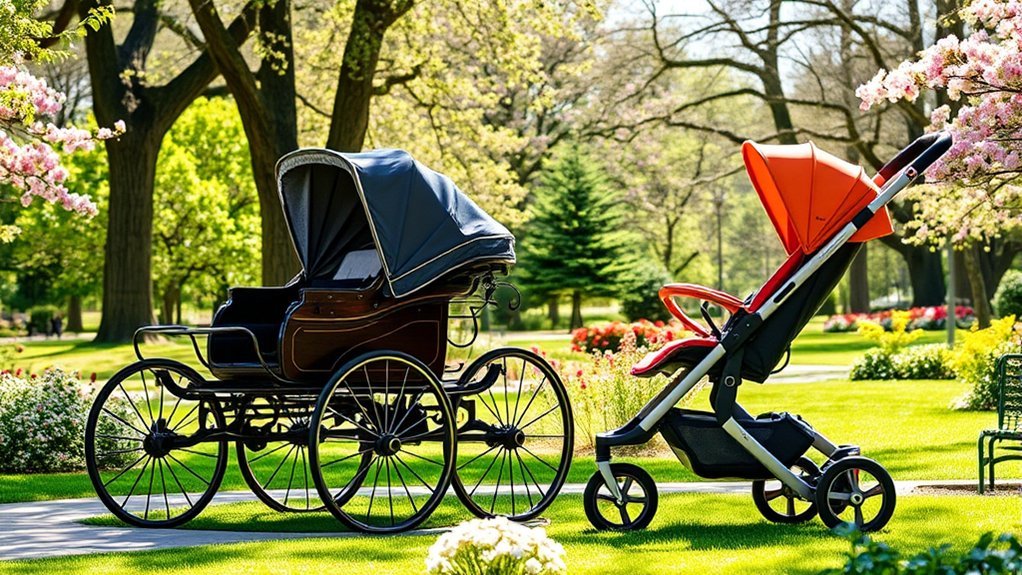
Baby Carriage vs Stroller: Key Differences, Safety, and Best Uses
Last Updated: May 28, 2026
By: SellySell Editorial Team
Carriages and strollers both help you move your baby safely, but they are not the same. A carriage, often called a pram, usually gives a newborn a flat, bassinet-style space. A stroller usually gives an older baby or toddler a supported seat, easier folding, and better portability for daily errands.
If you need a flat space for a newborn, a carriage or stroller bassinet may work best. If your child can sit with strong head and trunk control, a stroller often fits busy family life better. The right choice depends on your baby’s age, your walking routes, your storage space, and the safety features built into the product.
Quick Answer: Should You Choose a Carriage or a Stroller?
Choose a carriage if you mostly need a flat, comfortable space for a newborn during slow walks. Choose a stroller if you need a lighter, foldable option for an older baby or toddler. For many families, a stroller with a bassinet attachment gives the most flexible middle ground.
Understanding Carriages and Strollers

When you’re choosing baby gear, the difference between carriages and strollers can affect comfort, safety, and daily convenience.
A carriage is a traditional infant transport option with a flat carrycot or bassinet-style space. This flat position can help newborns rest more comfortably because they do not yet have strong head and neck control.
A stroller usually has a seated design. Many models include adjustable recline, harness systems, storage baskets, swivel wheels, and compact folding frames. Some strollers can also accept bassinets or infant car seats when the manufacturer approves that setup.
The simplest rule is this: your baby’s age and body control should guide the choice. A newborn needs a safe flat or properly reclined setup. An older baby or toddler usually benefits from a supportive stroller seat, better visibility, and easier movement in busy places.
Carriage vs Stroller Comparison Table
| Feature | Carriage or Pram | Stroller |
|---|---|---|
| Best age range | Newborns and young infants | Older babies and toddlers |
| Baby position | Flat carrycot or bassinet-style space | Seated or reclined position |
| Portability | Usually bulkier | Usually lighter and easier to fold |
| Best setting | Slow walks, parks, quiet neighborhoods | Errands, travel, sidewalks, malls |
| Main limitation | Storage and maneuverability | Not every model suits newborns |
Key Features of Carriages
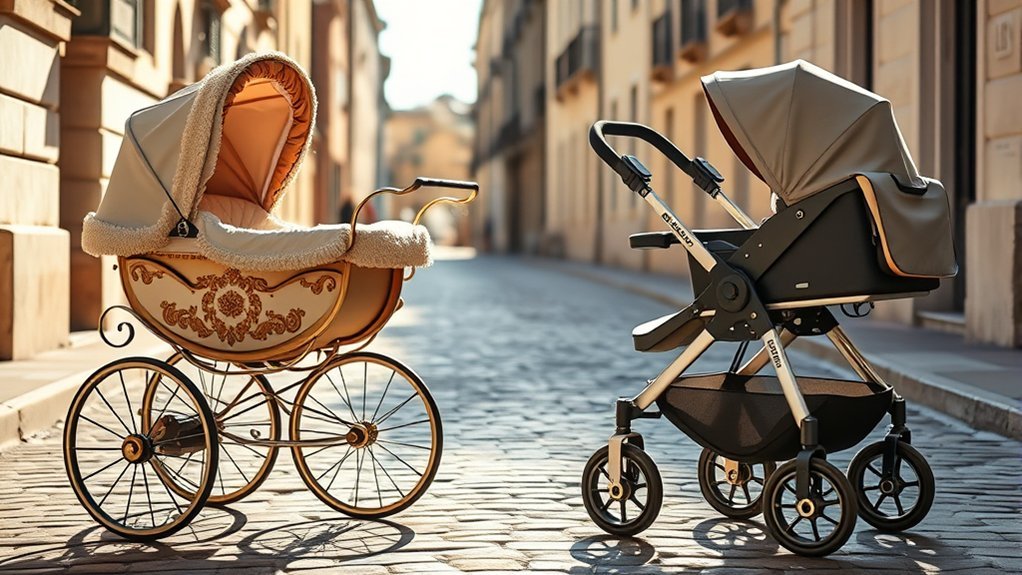
Carriages, often referred to as prams, stand out for their spacious carrycots. They usually suit newborns because the flat surface supports a resting position.
Many carriages use larger wheels, sturdy frames, and roomy bassinets. These features can make slow walks smoother on sidewalks, parks, and quiet neighborhood paths. They also tend to give the baby more enclosed space than a compact stroller seat.
Safety still depends on the specific model. Look for stable construction, a reliable brake, a secure harness or restraint system when provided, and clear manufacturer instructions. In the United States, carriages and strollers must meet federal safety requirements under 16 CFR Part 1227.
The main drawback is size. A traditional carriage can feel bulky in a small apartment, narrow shop aisle, bus, or car trunk. If you live in a dense city, check the folded size and total weight before you buy.
Key Features of Strollers
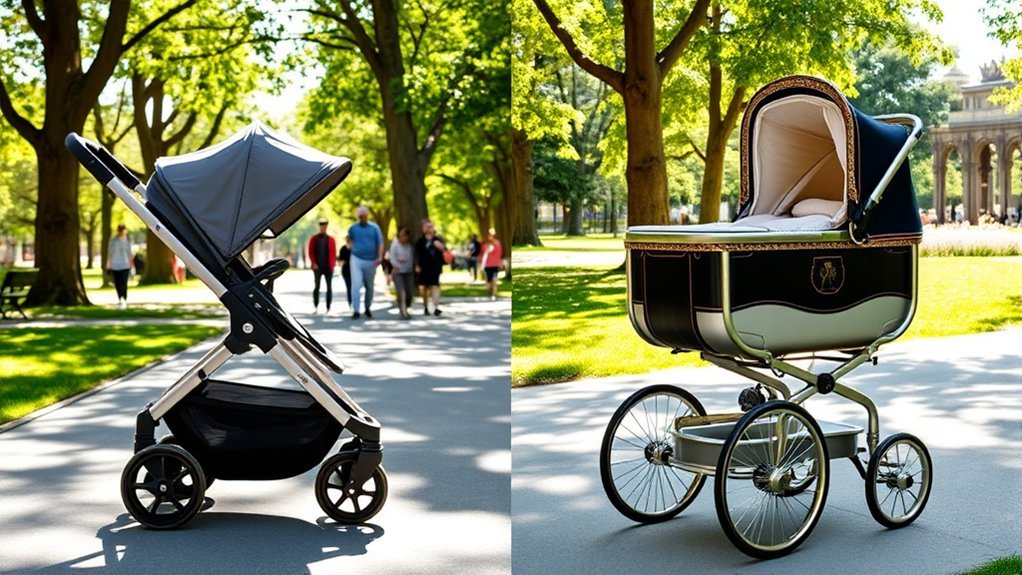
When choosing a stroller, you’ll likely notice three practical benefits first: lighter frames, easier folding, and better movement in tight spaces.
Strollers also give you more choices. You can find full-size strollers, umbrella strollers, travel strollers, jogging strollers, all-terrain strollers, double strollers, and travel systems. The right type depends on how and where you plan to use it.
Lightweight and Portable Design
Strollers are designed with a lightweight and portable frame that helps you handle busy environments.
With the right stroller, you can move through stores, sidewalks, public transport, and parking lots with less effort. Here are the features that matter most:
- Weight: A lighter stroller is easier to lift into a car trunk or carry up stairs.
- Compact Folding: A quick fold helps in small homes, buses, taxis, and tight storage spaces.
- Maneuverability: Swivel front wheels can make turns easier in crowded areas.
- Travel-Friendly Design: Some models include carrying straps, travel bags, or cabin-friendly folding sizes.
Before choosing a lightweight stroller, check the seat recline, harness, brakes, and age rating. A very compact stroller may not support a newborn unless the manual clearly says it does.
Adjustable Seating Options
Adjustable seating options in strollers help you adapt to your child’s changing needs. Recline positions, reversible seats, and padded support can make the stroller more useful as your baby grows.
| Feature | Benefit |
|---|---|
| Multiple Recline | Helps match the seat angle to your child’s stage |
| Reversible Seats | Lets your child face you or face forward |
| Adjustable Handlebar | Improves pushing comfort for different caregivers |
| Padded Seats | Adds comfort during longer outings |
| Safety Harness | Helps secure your child in the seat |
Choose a stroller with adjustable options only if they match your child’s age, weight, and development. Always follow the product manual.
Age Appropriateness for Carriages and Strollers
When choosing between a carriage and a stroller, age appropriateness is one of the most important safety factors.
Carriages often work best for newborns and young infants because they provide a flatter resting space. Strollers work better for older babies and toddlers who can use a supported seat safely.
Do not rely on age alone. Your baby’s head control, trunk control, weight, and the manufacturer’s age limits all matter.
Newborns and Infants
For newborns and young infants, focus on safe positioning. Babies at this stage need support for the head, neck, and airway.
- Choose a flat carriage, bassinet attachment, or stroller approved for newborn use.
- Make sure the setup supports your baby without forcing the chin toward the chest.
- Use only accessories approved by the manufacturer for that exact model.
- Check weight limits, age guidance, and safety instructions before every stage change.
The American Academy of Pediatrics advises parents to use a stroller with a secure harness and to never leave a child unattended in a stroller. You can review stroller safety guidance from HealthyChildren.org.
Older Babies and Toddlers
Many families start using a seated stroller when a baby has better head and trunk control, often around 6 months. Timing varies, so watch your child’s development and follow the stroller manual.
Strollers offer useful features for this stage, including adjustable seats, footrests, canopies, storage, and secure harness systems. These features help as your child becomes more alert and active during outings.
Using a newborn-style carriage for an older baby may feel limiting once your child wants to sit, look around, and interact. At that stage, a stroller can offer better comfort and visibility.
Ask your pediatrician if your baby was born premature, has low muscle tone, has reflux or airway concerns, or needs special support during travel.
Safety Considerations for Both Options
Keeping your child safe in a baby carriage or stroller depends on the product, the fit, and how you use it.
A safe carriage or stroller should match your child’s age and size, include working brakes, and keep your child properly secured.
To reduce common risks, follow these safety steps:
- Use the harness: Buckle your child every time, even for a short walk.
- Lock the brakes: Engage the brakes whenever you stop.
- Match the product to your child: Use newborn-approved setups for newborns and seated strollers only when your child is ready.
- Check for damage: Inspect wheels, brakes, locks, fabric, and frame parts often.
- Avoid handlebar overload: Do not hang heavy bags from the handles because this can increase tip-over risk.
- Stay nearby: Never leave your child unattended in a carriage or stroller.
For U.S. shoppers, the U.S. Consumer Product Safety Commission explains that carriages and strollers are covered by federal safety rules. This does not replace your product manual, but it gives useful safety context.
Terrain and Usage Suitability
When choosing between a carriage and a stroller, think about the surfaces you use most often.
A carriage can feel smooth during slow walks on sidewalks, parks, and quiet paths. A compact stroller often works better on smooth pavement, in shopping areas, and in crowded city spaces.
For gravel paths, bumpy sidewalks, or trails, do not assume every carriage is best. A purpose-built all-terrain stroller with larger wheels and suspension may be a better choice.
Optimal Terrain Compatibility
Choosing the right mode of transport can change how comfortable your outings feel. Match the product to your regular terrain:
- Carriages: Good for slower walks where comfort and flat positioning matter most.
- Standard Strollers: Good for smooth sidewalks, shops, malls, and daily errands.
- All-Terrain Strollers: Better for uneven sidewalks, parks, gravel, and longer outdoor walks.
- Travel Strollers: Best for flights, taxis, buses, and compact storage.
Check wheel size, suspension, brake quality, and frame stability before using any stroller or carriage on uneven ground.
Usage Scenarios Explained
Different outings call for different features. Use this table as a practical starting point:
| Scenario | Best Suited For | Why It Works |
|---|---|---|
| Newborn neighborhood walks | Carriage or bassinet stroller | Flat support and comfort |
| Urban streets | Stroller | Easy steering and folding |
| Crowded areas | Compact stroller | Lightweight and narrow frame |
| Park paths | Carriage or all-terrain stroller | Better comfort on uneven paths |
| Air travel | Travel stroller | Compact fold and easier carrying |
If you mostly walk in the city, a stroller will likely serve you better. If you mainly take slow newborn walks near home, a carriage or bassinet stroller can feel more comfortable.
Safety Considerations for Terrain
Terrain affects safety because slopes, bumps, curbs, and loose surfaces can increase tipping or rolling risks.
Keep these factors in mind:
- Wheel Size: Larger wheels can handle uneven surfaces better than tiny wheels.
- Braking System: Strong brakes matter on slopes, driveways, and uneven ground.
- Weight Distribution: A stable frame helps reduce tipping risk.
- Maneuverability: A lightweight stroller can help in crowded places, but it still needs a stable base.
- Curbs and Stairs: Avoid using strollers on stairs or escalators. Fold and carry the stroller when needed, or use an elevator or ramp.
Lifestyle Factors in Choosing Between Carriages and Strollers
Your lifestyle plays a major role in the decision. The best choice is not the most stylish option or the most expensive one. It is the option that fits your baby’s stage and your daily routine.
| Factor | Carriage | Stroller |
|---|---|---|
| Environment | Spacious areas and calm walks | City streets, stores, and travel |
| Portability | Bulkier and harder to store | Often easier to fold and carry |
| Versatility | Best for early infancy | Useful across more stages |
| Style | Classic and elegant | Practical and modern |
| Storage Need | Needs more home and car space | Better for small spaces |
Before you choose, measure your car trunk, doorway, elevator, and storage area. Also think about who will lift, fold, and push it most often.
Transitioning From Carriage to Stroller
As your baby grows and gains stronger head and trunk control, you can start thinking about the switch from a carriage to a stroller.
Use these checkpoints before making the change:
- Development: Your baby can hold the head steady and sit with enough support for the stroller seat.
- Product Limits: The stroller supports your baby’s weight, height, and age range.
- Seat Support: The stroller includes a safe recline and harness for your child’s stage.
- Manual Check: The manufacturer’s instructions approve the setup you plan to use.
- Medical Advice: Your pediatrician agrees if your child has special health or development needs.
This change can help your child see more of the world while staying supported and secure.
Cultural Influences on Usage
Culture can shape how families choose infant transportation. Some families prefer a traditional carriage because it feels classic, comfortable, and familiar. Others prefer a modern stroller because it fits travel, work schedules, and city routines.
Many families also use baby wraps, slings, or carriers because they allow close physical contact. These can be useful, but they require correct positioning and safe use.
In busy urban areas, practicality often drives the decision. A parent who uses public transport may value a compact fold more than a large carrycot. A parent who takes slow walks near home may value a roomy carriage more.
The best choice should match your child’s safety needs first, then your family’s habits, values, and space.
Tips for Safe Use of Carriages and Strollers
Safe use matters every time you leave the house. A good product can still become unsafe when it is overloaded, damaged, or used outside its instructions.
Follow these practical guidelines:
- Always lock the brakes when the carriage or stroller is stopped.
- Use the harness every time your child rides.
- Check wheels, brakes, folding locks, and loose parts often.
- Do not hang heavy bags from the handlebar.
- Keep your child within sight and never leave them unattended.
- Use only manufacturer-approved accessories, adapters, bassinets, and car seats.
- Stop using the product if you see frame damage, brake failure, or missing parts.
Key Takeaway
A carriage is usually best for flat newborn comfort. A stroller is usually best for portability and older babies. For safety, choose by your child’s development, not just by age or style.
Frequently Asked Questions
Which Is More Affordable, a Carriage or a Stroller?
Strollers are often more affordable because you can find more styles at more price points. Carriages can cost more when they use larger frames, premium fabrics, or bassinet-style designs. Compare total value, not just price. A stroller that works through more stages may save money over time.
Can I Use a Car Seat With a Carriage?
You should only use a car seat with a carriage or stroller if the manufacturer confirms compatibility. Use the correct adapter and follow the manual. Never place a car seat on a frame, seat, or carriage base that was not designed to hold it.
How Do I Clean a Carriage or Stroller?
Start with the manufacturer’s cleaning instructions. In general, wipe the frame with a damp cloth, clean fabric with mild soap if allowed, and remove crumbs from folds and buckles. Let fabric dry fully before storage to reduce odor and mildew risk.
Are There Travel-Friendly Options for Carriages and Strollers?
Yes. Travel strollers offer compact folds, lighter frames, and easier carrying. Some stroller systems also include a bassinet or infant car seat option for younger babies. Check airline rules, folded size, and weight before travel.
What Accessories Can Enhance My Carriage or Stroller Experience?
Useful accessories include a rain cover, sunshade, cup holder, snack tray, mosquito net, stroller organizer, and approved winter cover. Use only accessories that fit your model. Avoid heavy handlebar bags because they can affect balance.
What Is the Main Difference Between a Carriage and a Stroller?
A carriage usually gives a newborn a flat carrycot or bassinet-style space. A stroller usually gives an older baby or toddler a seated space with a harness. Some modern stroller systems combine both features with approved attachments.
Can a Newborn Use a Stroller?
A newborn can use a stroller only when the stroller supports newborn use. Look for a full recline, bassinet attachment, or approved infant car seat connection. If the stroller seat stays too upright, wait until your baby has stronger head and trunk control.
Is a Carriage Safer Than a Stroller?
A carriage is not automatically safer. Safety depends on fit, condition, brakes, harness, stability, and correct use. A safe stroller used correctly can be better than a carriage used outside its instructions.
Which Option Is Best for Small Apartments?
A compact stroller usually works better in a small apartment because it folds and stores more easily. If you want newborn support, look for a stroller with a bassinet attachment that can be removed and stored separately.
What Should I Check Before Buying Used?
Check the model number, recall status, brakes, wheels, harness, folding lock, frame, missing parts, and manual. Avoid used products with unknown history, crash damage, broken locks, or missing safety labels.
Conclusion
Choosing between a carriage and a stroller comes down to your baby’s stage and your daily life. A carriage works well for newborn comfort during slow walks. A stroller works better when you need folding, portability, and easier movement with an older baby or toddler.
Before you buy, check the age and weight limits, harness, brakes, folded size, terrain suitability, and manufacturer instructions. If your baby has special health or development needs, ask your pediatrician before changing travel setups.
Your next step is simple: list where you walk most, how much space you have, and whether your baby needs a flat newborn setup or a supported stroller seat. That checklist will point you toward the safer and more practical choice.


