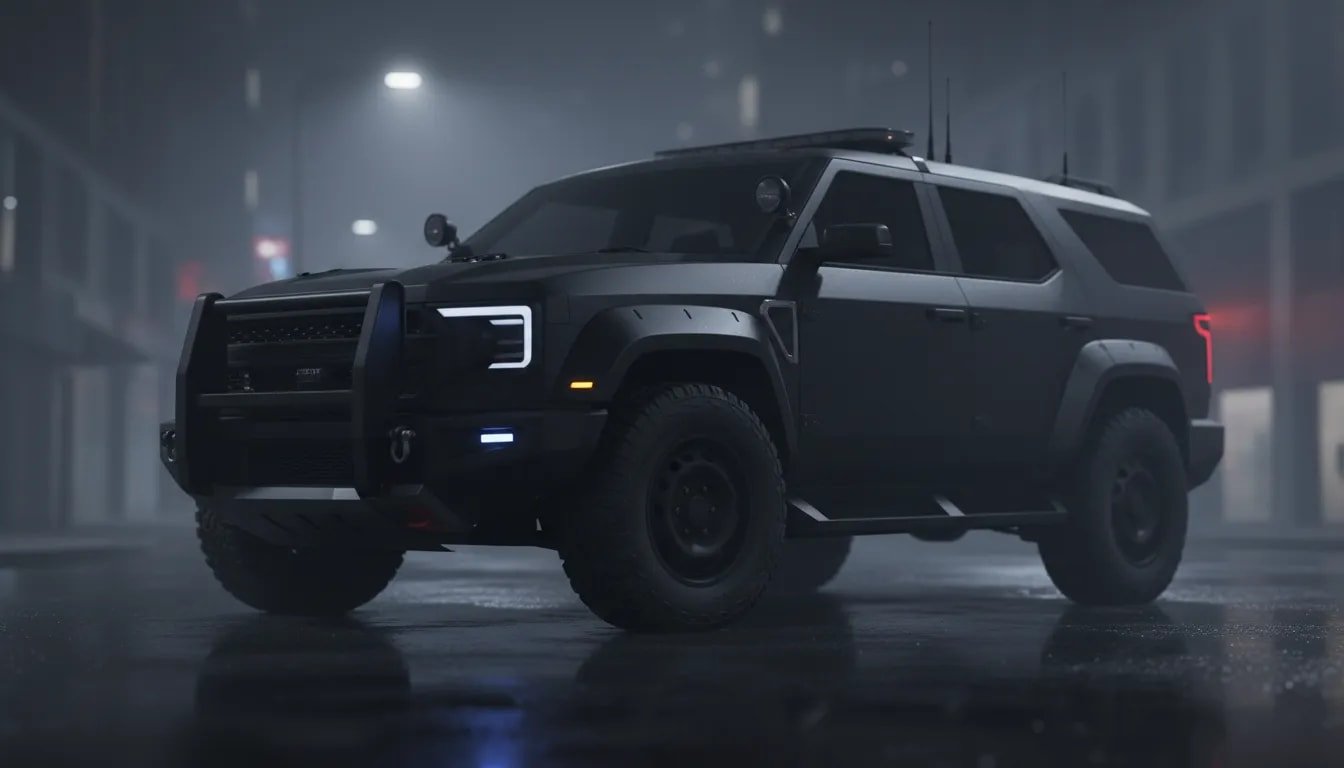
The 2026 Ford Police Interceptor Utility takes the basic proportions of Ford’s Explorer-based SUV architecture and turns them into a purpose-built law-enforcement platform. Instead of luxury-focused trim, the emphasis is on pursuit-rated performance, secure idling, situational awareness, durability, officer ergonomics, and easy integration of lights, radios, computers, and other fleet equipment.
Quick Answer
The 2026 Ford Police Interceptor Utility is an AWD police SUV with three V6 powertrain choices, a police-calibrated 10-speed automatic, Manual Police Pursuit Mode, Police Engine Idle, Police Perimeter Alert, Dark Car mode, heavy-duty chassis hardware, advanced driver-assistance systems, and extensive factory support for police upfits.
Key Takeaways
- Ford’s official name is Police Interceptor Utility; the 2026 model comes standard with full-time AWD and a police-calibrated 10-speed automatic.
- Powertrain choices include a 3.3L hybrid, a naturally aspirated 3.3L V6, and a 400-hp 3.0L EcoBoost V6.
- Michigan State Police MY2026 testing recorded a 148-mph top speed and 5.95-second 0–60 mph average for the 3.0L EcoBoost version.
- Police Engine Idle, Police Dark Car, Police Perimeter Alert, Manual Police Pursuit Mode, BLIS, automatic emergency braking, and a 12.3-inch police instrument cluster are standard.
- Rear-door containment hardware, ballistic door panels, lighting packages, computer displays, and many other mission-specific items are configurable rather than universal on every vehicle.
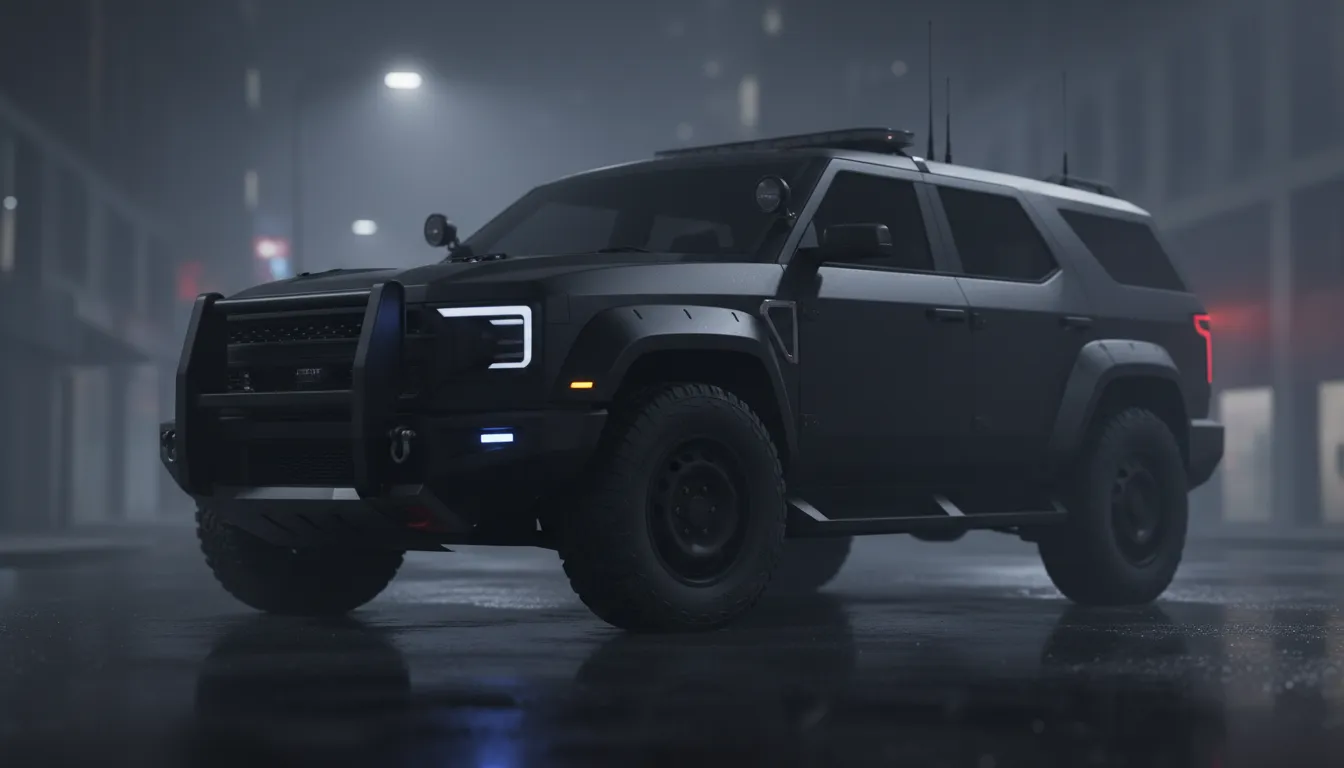
Note: People often call this an “Explorer Interceptor,” but Ford’s official vehicle name is the Police Interceptor Utility. Individual police vehicles can look very different because agencies choose different factory options and aftermarket upfits.
Exterior and stealth features 🛡️
The Police Interceptor Utility keeps the general proportions of the civilian Explorer family, but Ford equips it for fleet duty with heavy-duty 18-inch steel wheels, police-specific lighting provisions, recovery hardware, a full-size spare, and body features intended to support agency upfits.
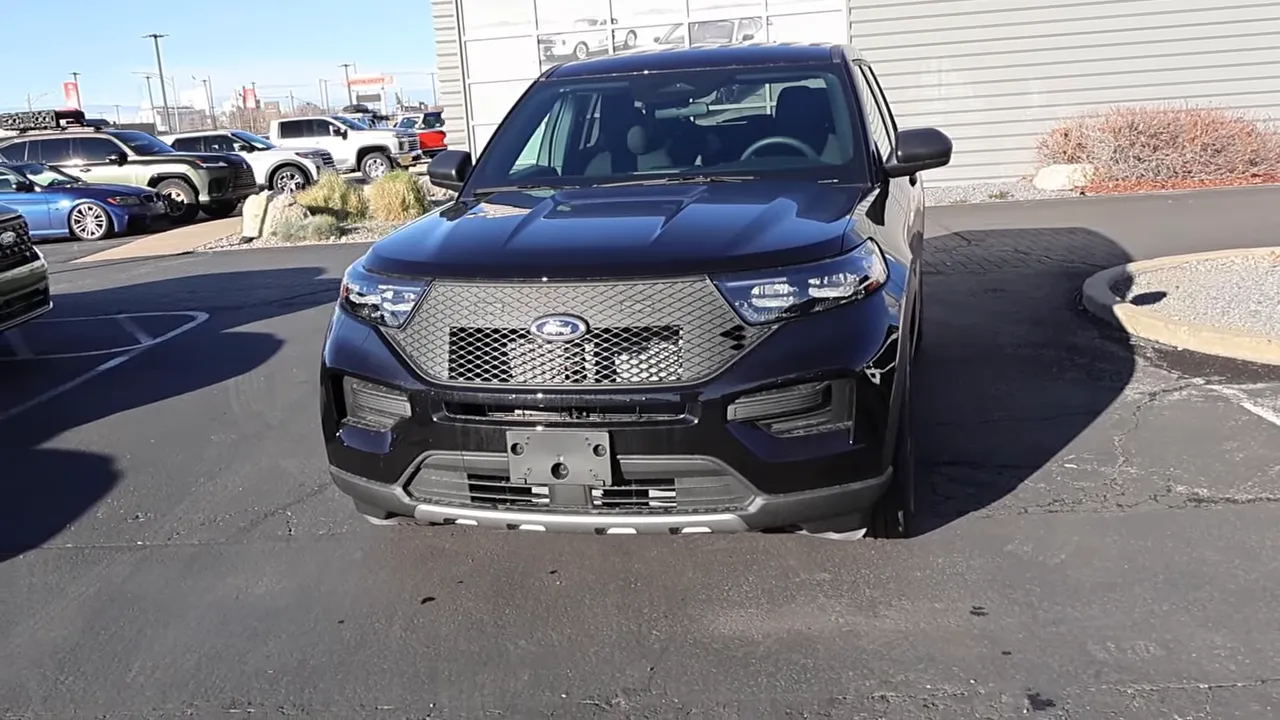
Important exterior and stealth-related features include:
- Police Dark Car: Ford lists this as standard for 2026. It is designed to suppress interior lighting and reduce instrument-panel illumination when discreet operation is required rather than relying on the normal lighting behavior of a civilian SUV.
- Police-oriented lighting provisions: The LED headlamp housings include provisions for user-installed warning lights, while additional headlamp, taillamp, rear and side-marker lighting solutions are available.
- 18-inch wheels and all-season tires: Ford specifies heavy-duty 18-inch five-spoke steel wheels with 255/60R18 all-season tires and a full-size spare. Optional painted-aluminum wheels are also available.
- Ballistic door protection: Available Level III+ and Level IV+ ballistic door-panel configurations can add protection to the driver or both front doors. Because protective equipment adds mass, agencies must account for payload and vehicle configuration.
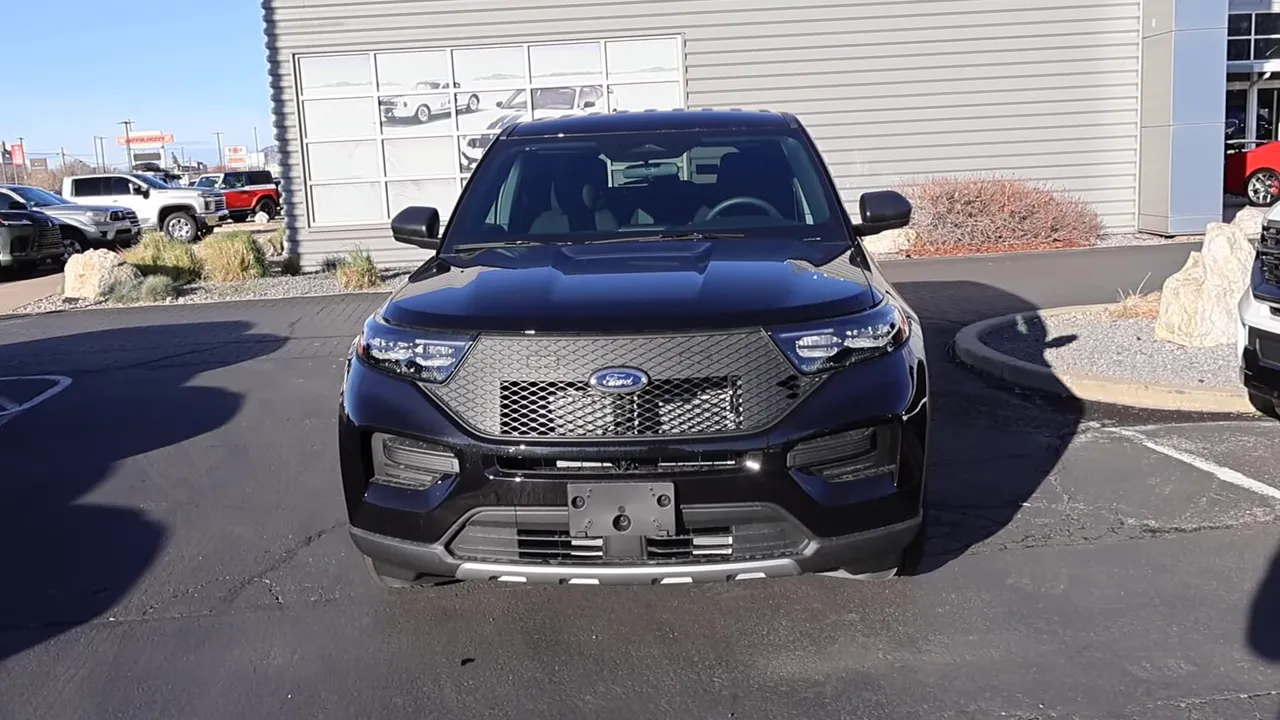
The photographed vehicle does not show the same decorative trim or fog-lamp treatment you might expect on a civilian Explorer, but those visual differences should not automatically be assigned an engineering reason unless Ford documents one. Police builds vary substantially according to agency requirements.
Rear compartment and detainee area 🚨
The rear of the Police Interceptor Utility is designed to be configurable. Ford’s standard 2026 specification includes a heavy-duty vinyl 35/30/35 split-fold rear bench, heavy-duty vinyl flooring, power windows with a disable feature, and seating for five. An agency can then change that configuration with factory options or aftermarket prisoner-transport equipment.
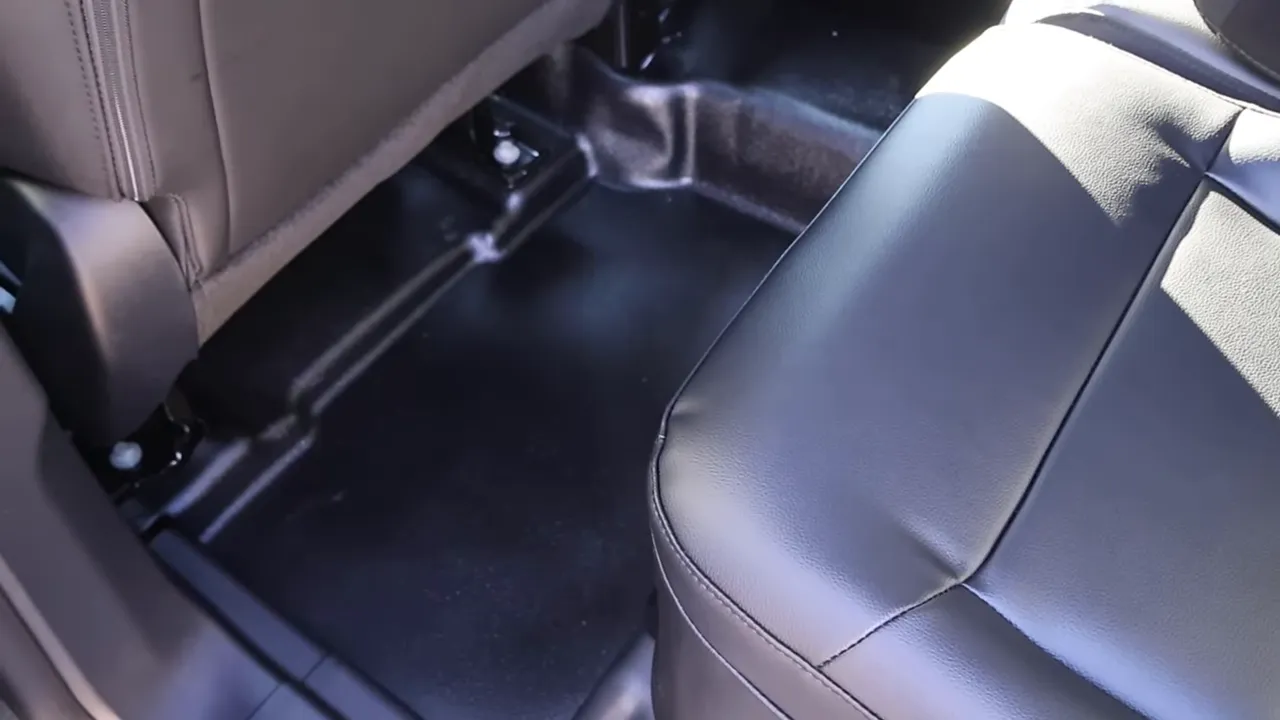
Rear-compartment details can include:
- Optional inoperable rear controls: Ford offers configurations with hidden door-lock plungers and rear-door controls made inoperable, including locks, handles and windows. That means unusable rear handles are available for prisoner containment but are not a universal feature of every PI Utility.
- Durable vinyl materials: The standard vinyl rear bench and heavy-duty vinyl floor are easier to clean than typical civilian carpeting and upholstery.
- Flexible seating: The standard 35/30/35 rear bench supports multiple seating positions, although departments can replace or modify the factory seating when installing a dedicated prisoner compartment.
- Partitions and prisoner barriers: Agencies often add aftermarket partitions between the front and rear cabins. The design and installation should follow Ford’s police modifier guidance because non-original equipment can alter occupant protection.
- Cargo security: Ford offers a lockable cargo-area storage vault, and the vehicle includes Police Accessory Independent Timed-Release Output functionality tied to the liftgate-release system.
Warning: Ford cautions that non-original equipment such as push bars and prisoner barriers can affect crash performance. Fleet managers and upfitters should follow Ford’s police modifier guidance rather than assuming any aftermarket partition, bumper or rack is crash-neutral.
Key fob and the “engine stay-on” trick 🔑
One of the most useful police-specific functions is Police Engine Idle. It allows an officer to leave the engine running so climate control, radios, lights, computers and other equipment can remain powered while helping prevent unauthorized operation when the authorized key is not present.
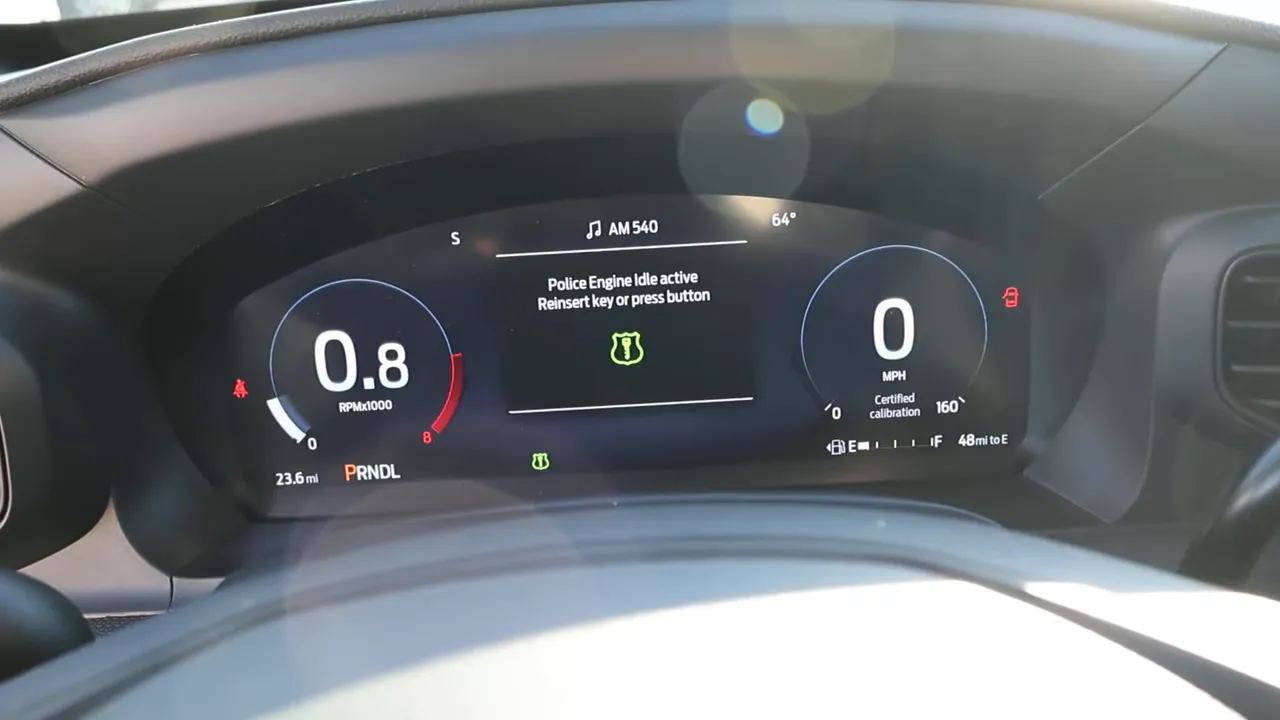
“You can completely pull the key out of the ignition, and the car’s still running.”
That capability matters during calls where an officer has to leave quickly but still needs the vehicle’s electrical systems operating. Rather than describing it as protection against a particular theft method, the more accurate explanation is that Ford designed Police Engine Idle to help prevent unauthorized vehicle use while the engine continues running.
The hybrid version adds another advantage during long stationary periods: its high-voltage battery can operate electrical accessories and climate-control loads for portions of the idle cycle, allowing the gasoline engine to shut off and restart as required to maintain the battery.
Front cabin and officer controls 🕹️
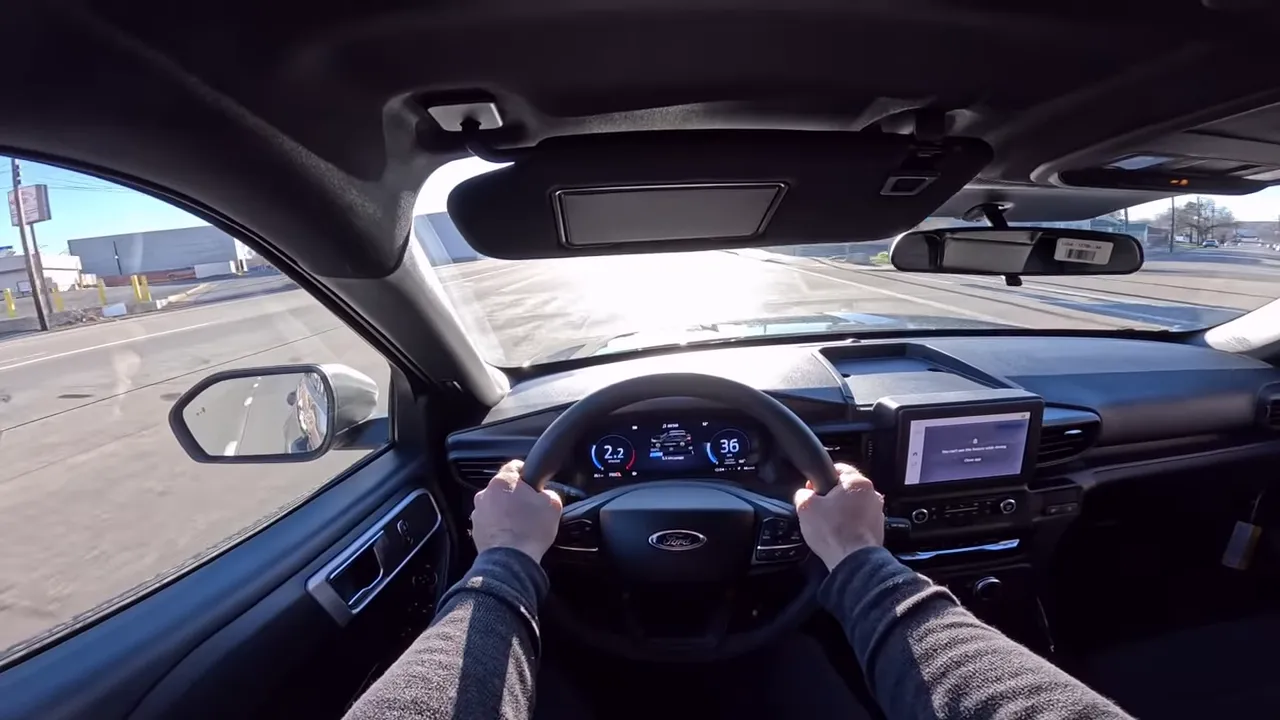
The 2026 front cabin combines familiar Ford controls with police-specific hardware. Standard equipment includes an 8-inch center-stack display, a 12.3-inch police instrument-cluster display with a calibrated digital speedometer, Ford Pro Vehicle Integration System 2.0, and a column-mounted shifter.
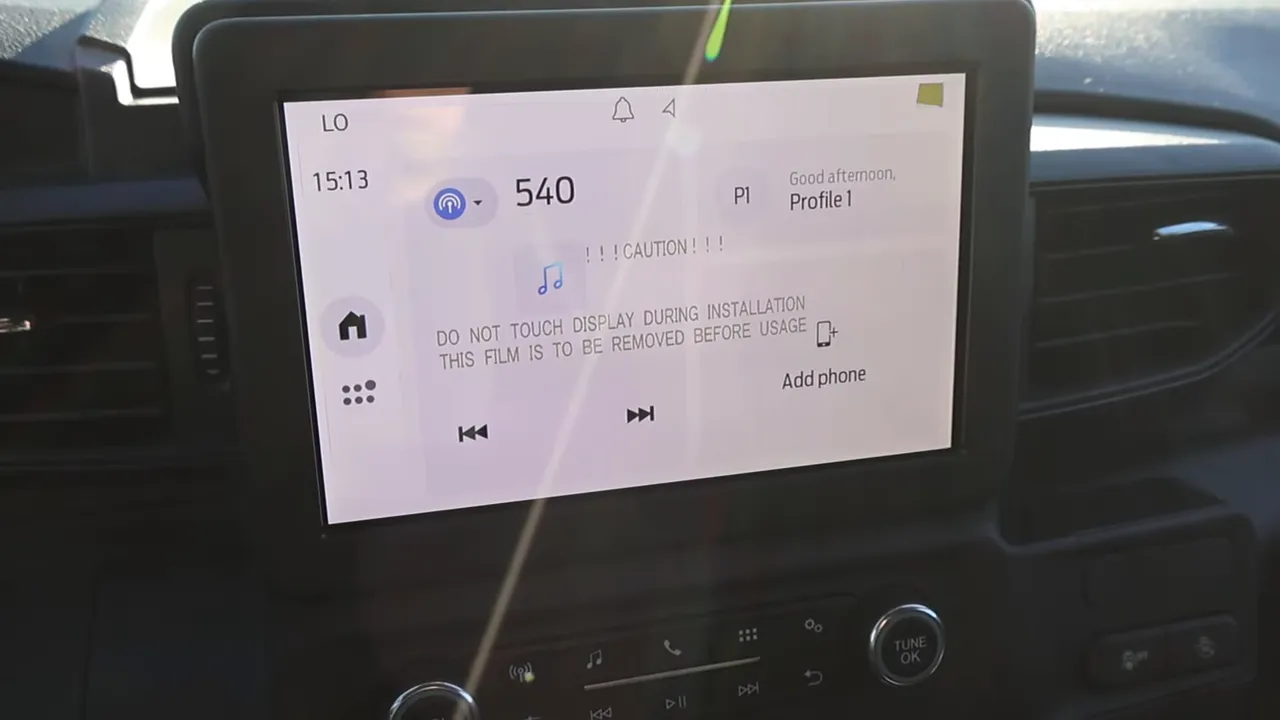
Notable features include:
- Column-mounted shifter: Ford specifically uses the column shifter to free valuable center-console space for radios, light controls, computer hardware and other police equipment.
- 12.3-inch digital police cluster: The standard display includes a calibrated digital speedometer and provides the driver with vehicle and police-system information.
- Upfit-ready electronics: Vehicle Integration System 2.0 and programmable steering-wheel switches make it easier for upfitters to integrate sirens, lights, speakers and other equipment without filling the cabin with additional controls.
- Available 12.1-inch Integrated Computer Screen: Departments that want to reduce front-cabin laptop clutter can specify Ford’s larger integrated display.
- BLIS and cross-traffic monitoring: BLIS with Cross-Traffic Alert is standard for 2026.
- Rear-window management: Standard power windows include a disable function, while Ford also offers rear-control-delete configurations for agencies that require stricter occupant containment.
Pursuit mode and driving dynamics ⚡
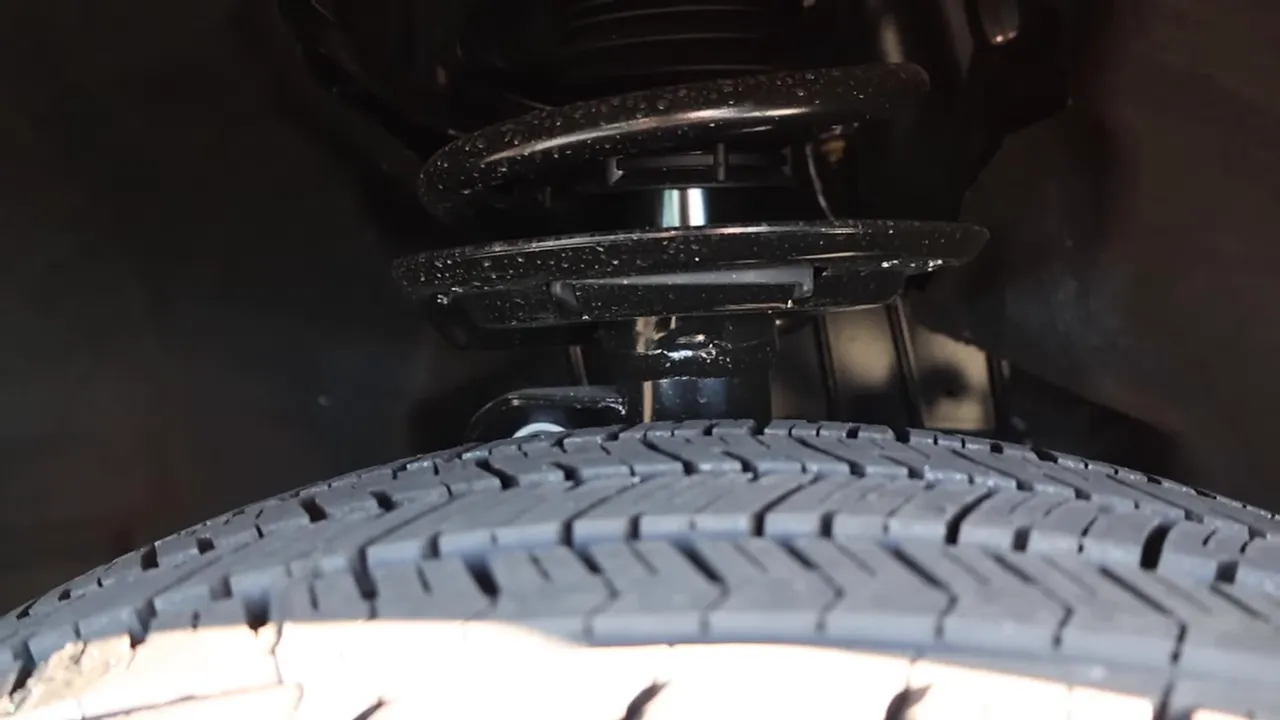
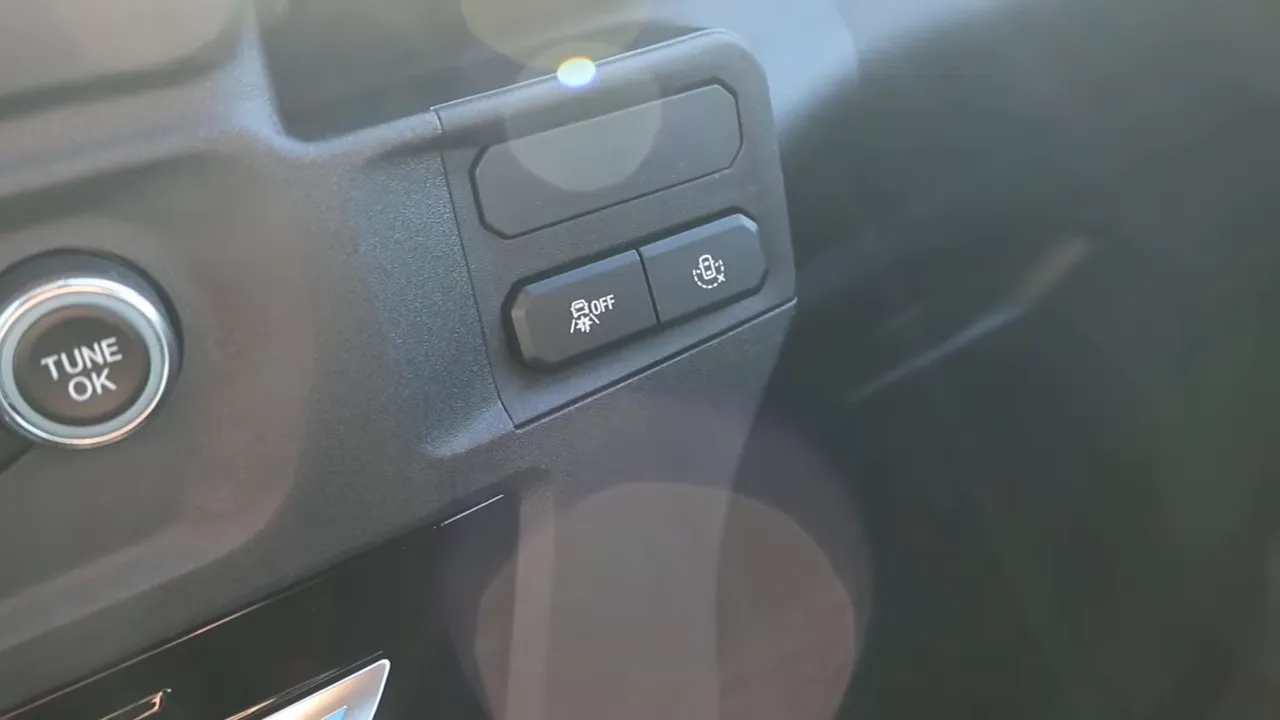
Pursuit capability is more than horsepower. Ford combines standard full-time Intelligent AWD, a police-calibrated 10-speed automatic, heavy-duty braking hardware, police-tuned chassis components and Manual Police Pursuit Mode. For 2026, the pursuit mode can be activated from a steering-wheel switch so the driver can call up the high-performance calibration without reaching for a console control.
The 2026 lineup includes three powertrains. All use AWD and a 10-speed automatic:
| Powertrain | Output | 2026 MSP 0–60 mph | Top speed |
|---|---|---|---|
| 3.3L V6 Hybrid | 318 hp combined | 7.52 sec. | 136 mph |
| 3.3L Ti-VCT V6 | 285 hp | 8.19 sec. | 136 mph |
| 3.0L EcoBoost V6 | 400 hp | 5.95 sec. | 148 mph |
Michigan State Police MY2026 testing recorded the 3.0L EcoBoost Police Interceptor Utility at 5.95 seconds from 0–60 mph and a 148-mph top speed.
The naturally aspirated 3.3L V6 is the lowest-output option at 285 horsepower. The standard hybrid combines its 3.3L V6 with an electric motor for 318 total horsepower, while the available 3.0L EcoBoost V6 produces 400 horsepower.
Ford’s documentation supports police-specific powertrain and suspension calibration, but it does not describe the 2026 Pursuit Mode button as electronically stiffening an adaptive suspension. The important distinction is that the button puts the vehicle into its pursuit-oriented performance calibration while the underlying chassis is already built and tuned for police work.
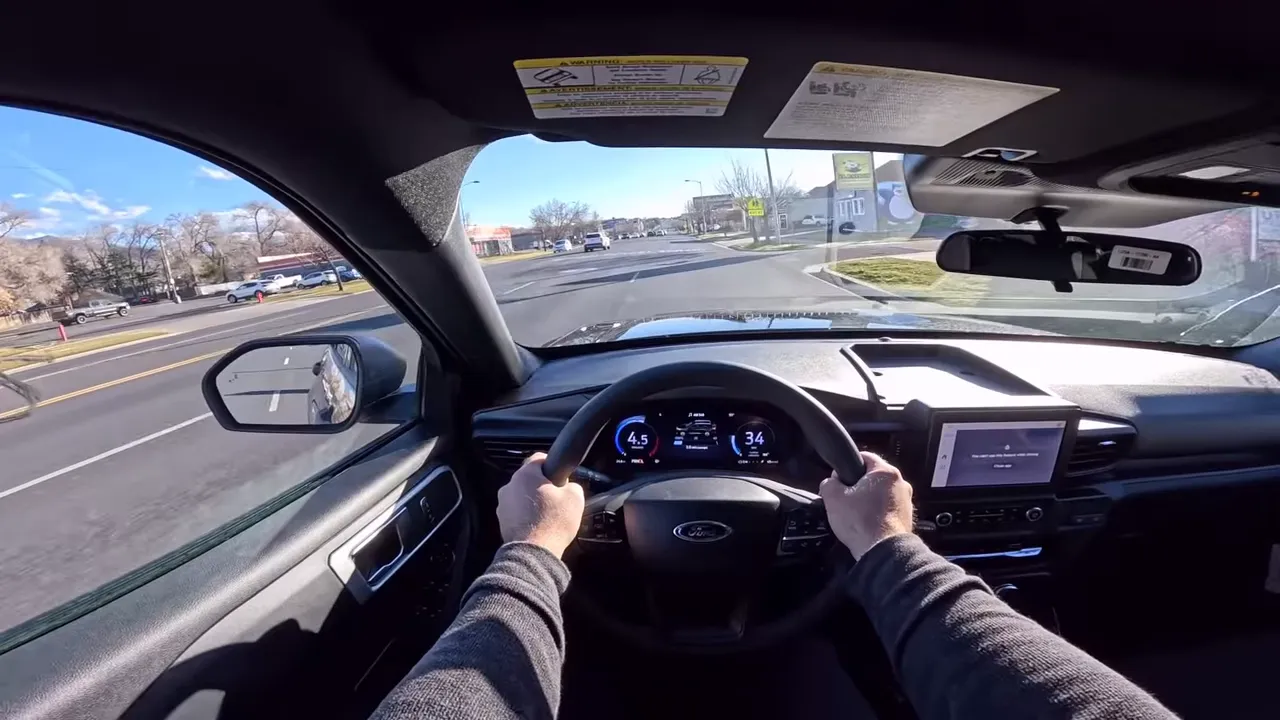
Real-world pursuit capability also depends on configuration:
- Ballistic protection, cargo, electronics and other added equipment consume payload and can change acceleration, braking and handling.
- Ford offers optional 121-mph and 131-mph speed limiters for agencies that do not need the maximum factory top speed.
- The 3.0L EcoBoost provides substantially stronger acceleration and closing speed than the naturally aspirated 3.3L V6.
- Michigan State Police tests vehicles in controlled conditions; installed light bars, push bars, antennas and mission equipment can affect real-world performance.
Perimeter alert and safety systems 🛎️
Speed is only part of the Interceptor’s job. Police Perimeter Alert is standard for 2026 and uses the vehicle’s BLIS sensors to monitor roughly 270 degrees around the vehicle. The system analyzes moving objects and their paths to help identify potentially threatening activity.
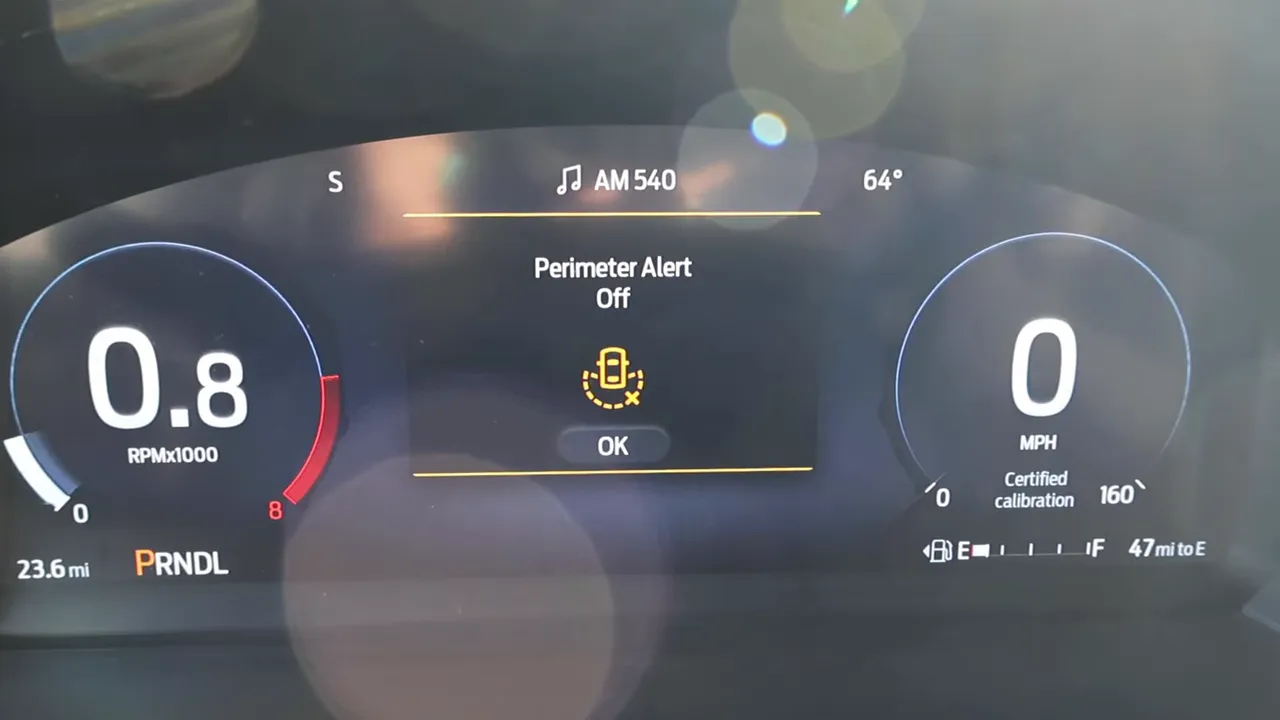
If the system identifies potentially threatening movement, it can sound a warning, activate the rear camera, roll up the windows and lock the doors. Ford also describes selectable sensitivity levels so officers can adapt the system to their surroundings.
Other standard 2026 driver-assistance and safety features include:
- Pre-Collision Assist with Automatic Emergency Braking and a disable button
- BLIS with Cross-Traffic Alert
- Rear Cross-Traffic Braking
- Rear Parking Sensors
- Rear View Camera with on-demand viewing
- AdvanceTrac with Roll Stability Control
- Traction control
- Police-calibrated four-wheel heavy-duty disc brakes with ABS
- Auxiliary rear air conditioning
The Police Interceptor Utility is also designed and tested to meet Ford’s internal 75-mph rear-impact crash-test goals for fuel- and battery-system integrity. Ford notes that the factory-positioned full-size spare is part of achieving those rear-impact performance attributes.
Why some choices look counterintuitive 🔧
Several details can look unusual if you compare a Police Interceptor Utility with a luxury-trim civilian SUV. Most make more sense when viewed as fleet equipment rather than consumer features.
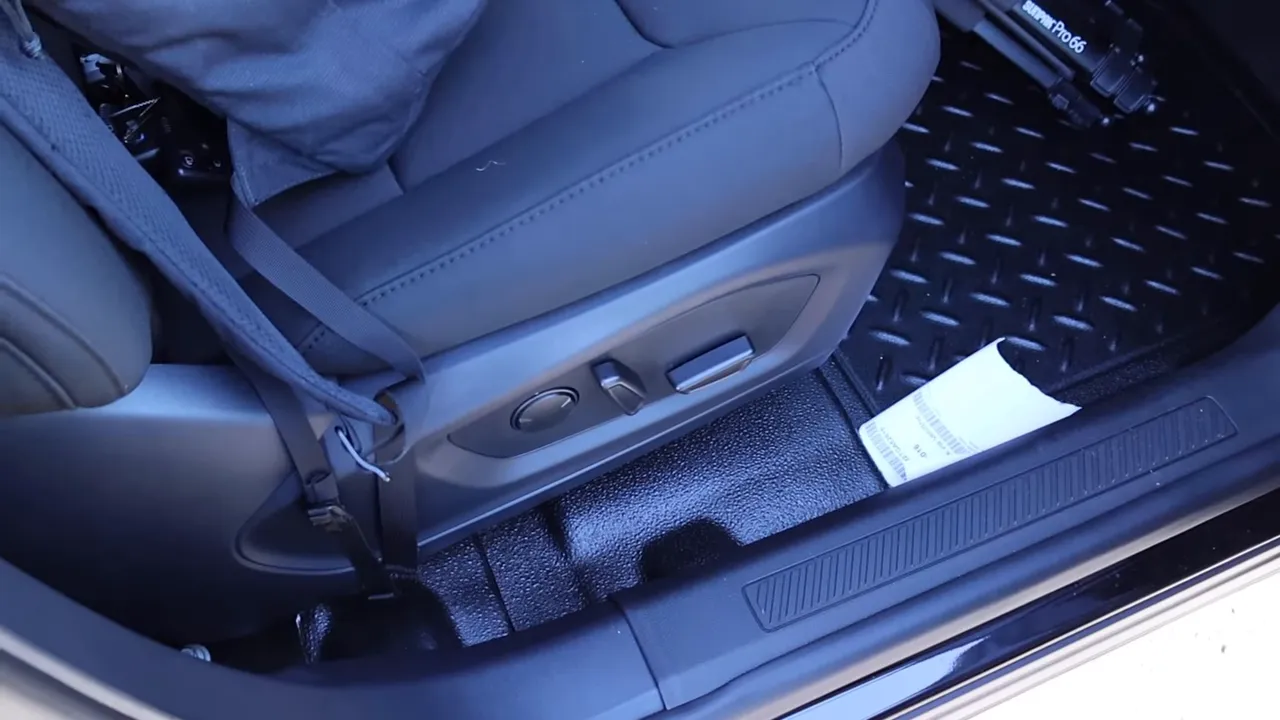
- Power driver seat, not a standard manual driver seat: Ford’s 2026 specification lists a 6-way power driver seat with manual lumbar adjustment. A manual 4-way front-passenger seat is available as an option. A different seat seen in one individual vehicle should therefore be treated as configuration-specific rather than a universal police feature.
- No factory sunroof emphasis: The 2026 police equipment lists focus on lighting, electronics, cooling, protective equipment and upfit provisions rather than consumer luxury features such as a panoramic roof.
- Heavy-duty vinyl and steel wheels: These materials favor durability, cleanability and fleet practicality. Carpet, cloth rear seating and aluminum wheels are available for agencies that want them.
- Physical, dedicated controls: Police Engine Idle, Pursuit Mode and programmable steering-wheel switches give officers direct access to critical functions without depending entirely on touchscreen menus.
- Column shifter: Its biggest documented benefit is freeing the center area for police consoles, radios and computers.
Fleet pricing and practical purchasing 💸
Police-vehicle pricing requires more context than a normal consumer MSRP. Current 2026 listings and public fleet quotations show that a Police Interceptor Utility can carry an MSRP around the low-$50,000 range or higher depending on engine and factory options, so a sticker north of $50,000 is realistic. However, that should not be confused with the final cost of a fully equipped patrol vehicle.
Agency contract pricing can be lower than retail-style MSRP, while the final in-service cost can climb after emergency lighting, radios, sirens, computers, prisoner barriers, graphics, ballistic panels, storage, labor and other equipment are installed.
Departments therefore tend to evaluate more than the initial purchase price:
- Total cost of ownership: Fuel use, idle time, maintenance, downtime and replacement cycles can matter more than the initial invoice over a vehicle’s service life.
- Mission equipment: Ballistic panels, prisoner-transport equipment, emergency lighting, communications hardware and cargo systems can materially change both price and vehicle weight.
- Powertrain choice: The hybrid targets agencies with significant idle time, while the 3.0L EcoBoost emphasizes maximum acceleration and closing speed.
- Local terrain and climate: Tires, lighting, underbody protection and other equipment should match the agency’s patrol environment.
- Government purchasing contracts: Municipal and fleet contracts can produce pricing that differs substantially from a dealer’s advertised MSRP.
Pro Tip: For fleet comparisons, price the vehicle twice: first in factory configuration and then at its actual in-service specification with lights, communications equipment, prisoner hardware, protection packages and installation labor. That gives a much more useful total-cost comparison.
Driving impressions and human factors 🤔
In the source review, the Interceptor is described as feeling more focused than a typical civilian SUV, with immediate throttle response, predictable steering and a planted chassis. Those impressions fit the vehicle’s mission, although subjective road feel should be kept separate from measurable performance data.
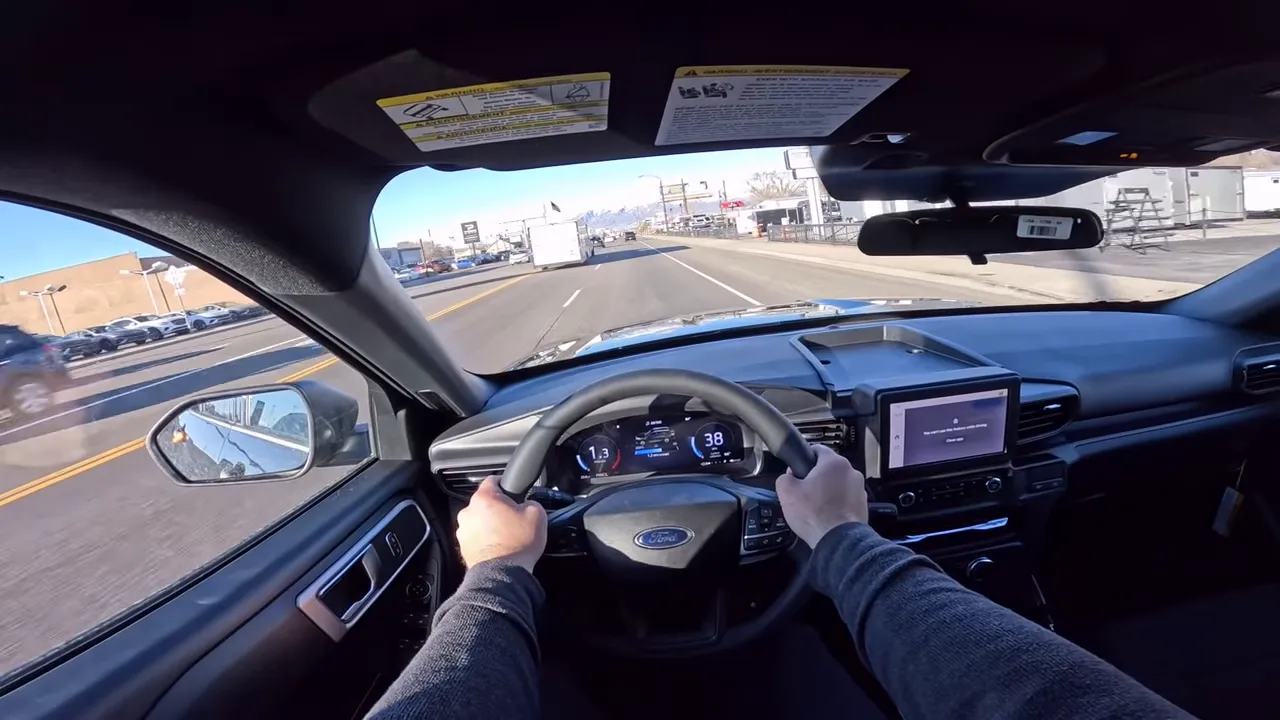
Ford’s hardware also shows attention to human factors. The column shifter leaves room for police consoles, four programmable steering-wheel switches can operate upfit equipment, the front seats use police-oriented heavy-duty cloth, and the driver’s seat is shaped for repeated entry and exit while wearing a duty belt.
The goal is not luxury. It is to reduce unnecessary movement and cabin clutter while keeping frequently used controls accessible during long shifts, extended idle periods and demanding driving.
Upfits and customization: built for mission flexibility 🔩
One of the Police Interceptor Utility’s biggest strengths is its factory support for upfitting. Ford’s upfit-oriented design includes a front console mounting area, dash pass-throughs for wiring, programmable switches and Vehicle Integration System 2.0.
- Siren and emergency-light controls
- Police radios and mobile-data equipment
- Factory and aftermarket lighting systems
- Lockable cargo and evidence storage
- Prisoner partitions and rear-compartment modifications
- Available Level III+ and Level IV+ ballistic door panels
- Available 12.1-inch Integrated Computer Screen
- Additional wiring and power-distribution equipment
- 250-amp alternator support on the non-hybrid engines
- High-output DC/DC electrical support on the hybrid
That modular approach explains why two Police Interceptor Utilities can look very different even though they began as the same basic vehicle. A highway-patrol unit may emphasize performance, lighting and communications, while another vehicle may devote more payload and cabin space to prisoner transport, protective equipment or specialized electronics.
Useful 2026 capacity figures
- Maximum payload: 1,500 lb, depending on configuration
- Maximum towing: 5,000 lb when properly equipped
- Cargo volume behind second row: 52.3 cu. ft.
- Cargo volume behind first row: 90.6 cu. ft.
- Seating capacity: 5 in the factory configuration
- Fuel tank: 19.0 gallons for the hybrid; 21.4 gallons for the 3.3L gas and 3.0L EcoBoost versions
Those numbers matter during upfitting because equipment, passengers and cargo all consume the available payload. A heavily equipped vehicle should be planned as a complete system rather than by choosing accessories independently.
Final thoughts: why purpose-built matters
Turning a civilian SUV into a dependable police vehicle requires much more than adding emergency lights and a radio. Ford changes the powertrain calibration, electrical support, braking, controls, seating materials, safety systems and upfit provisions to create a vehicle designed around law-enforcement duty cycles.
Features such as Police Dark Car, Police Engine Idle, Police Perimeter Alert, Manual Police Pursuit Mode and Vehicle Integration System 2.0 show where the Police Interceptor Utility differs most from a normal Explorer. Just as important, Ford gives agencies multiple powertrains and a large menu of factory options so the same platform can be configured for very different missions.
Frequently Asked Questions
What engines are available in the 2026 Ford Police Interceptor Utility?
Ford offers three V6-based powertrains: a 3.3L hybrid producing 318 combined horsepower, a naturally aspirated 3.3L V6 producing 285 horsepower, and an available 3.0L EcoBoost V6 producing 400 horsepower. All are paired with AWD and a police-calibrated 10-speed automatic.
How fast is the 2026 Police Interceptor Utility?
Ford specifies 136-mph top speeds for the 3.3L hybrid and naturally aspirated 3.3L V6, and 148 mph for the 3.0L EcoBoost. Michigan State Police MY2026 testing recorded the same maximum speeds.
How does Manual Police Pursuit Mode work?
The 2026 model includes a steering-wheel switch for Manual Police Pursuit Mode. It allows the driver to activate the vehicle’s pursuit-oriented high-performance calibration without taking a hand away from the steering-wheel area. It should not be described as an adaptive-suspension mode unless a specific Ford document supports that claim.
Can the engine stay running after the officer removes the key?
Yes. Police Engine Idle is designed to let the engine remain running so vehicle systems and police equipment can stay powered while helping prevent unauthorized use when the authorized key is not present.
Are the rear doors and windows disabled?
Not on every vehicle. The factory specification includes power windows with a disable feature, while Ford offers configurations with hidden rear lock plungers and inoperable rear locks, handles and windows for agencies that need prisoner-containment capability.
What is Police Perimeter Alert?
Police Perimeter Alert uses BLIS sensors to monitor roughly 270 degrees around the vehicle and analyze moving objects. When potentially threatening activity is detected, the system can warn the officer, activate the rear camera, raise the windows and lock the doors.
How does ballistic protection affect the vehicle?
Ford offers Level III+ and Level IV+ front-door ballistic protection. The added mass consumes some of the vehicle’s available payload and can influence acceleration, braking, fuel consumption and handling. The exact effect depends on the selected panels and the rest of the upfit.
How much can the 2026 Police Interceptor Utility tow?
Ford lists a maximum towing capacity of 5,000 pounds when properly equipped. Actual towing capability depends on passengers, cargo, accessories and the vehicle’s final configuration.
What does a 2026 Police Interceptor Utility cost?
Pricing varies by engine, factory options, government contracts and aftermarket equipment. Current 2026 examples can carry MSRP figures around or above $50,000, but government contract pricing may be lower and a fully upfitted patrol vehicle can cost substantially more after police equipment and installation are added.
Further reading and next steps 📚
If you are involved in fleet purchasing or simply want to understand why police vehicles differ from civilian SUVs, focus on the entire configuration rather than horsepower alone. Powertrain choice, payload, electrical demand, protective equipment, prisoner hardware, climate requirements and expected patrol environment all influence the final vehicle.
For departments, Ford’s factory specifications and modifier guidance should be reviewed alongside independent police-vehicle testing before an upfit is finalized. For enthusiasts, those same documents make it easier to separate genuine Police Interceptor engineering from equipment added later by an individual department or upfitter.
Sources
- Ford Pro — 2026 Police Interceptor Utility brochure — factory powertrains, top speeds, standard and optional equipment, dimensions, payload, towing and capacities.
- Ford — Police Interceptor Utility — Police Perimeter Alert, Police Engine Idle, Dark Car, powertrains and Manual Pursuit Mode.
- Ford Police Vehicles — Performance — police-calibrated powertrain, AWD, suspension and engine-output information.
- Ford Police Vehicles — Safety — rear-impact testing and available ballistic-door protection.
- Michigan State Police — Police Vehicle Test Results — independent MY2026 acceleration, top-speed and vehicle-performance testing.
- Ford Police Vehicles — Upfit-Friendly Features — column-shifter purpose, programmable controls, wiring and equipment integration.