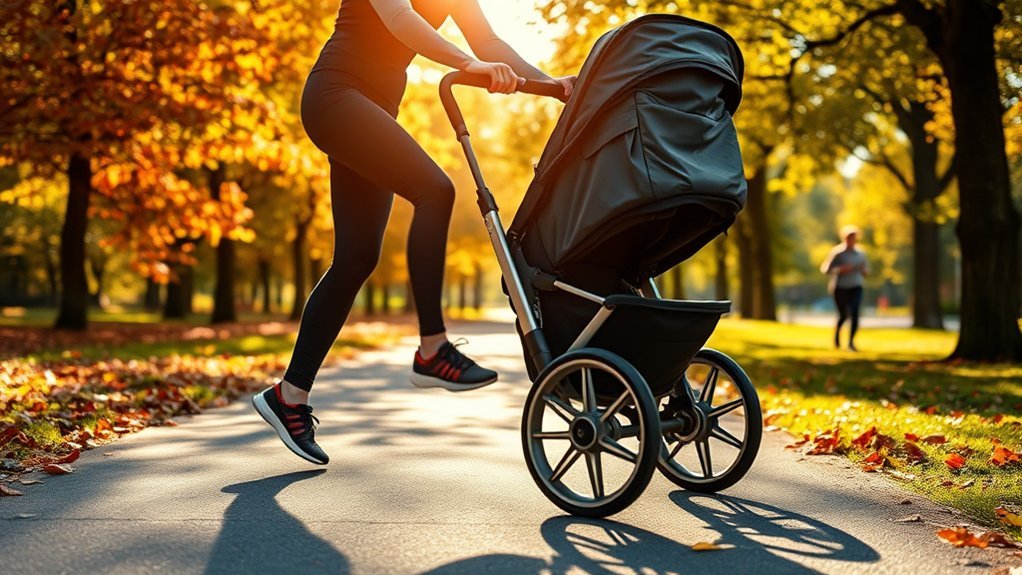
To guarantee proper alignment when jogging with a stroller, keep your feet straight and engage your glutes. Maintain a straight back with a slight lean from your ankles, and hold the handlebars at a comfortable height with your elbows bent at 90 degrees. Focus on short strides with a quick cadence to improve your balance and reduce upper body fatigue. Always check your stroller’s alignment and stability to keep your child safe. There’s more vital advice ahead.
Importance of Proper Form When Jogging With a Stroller
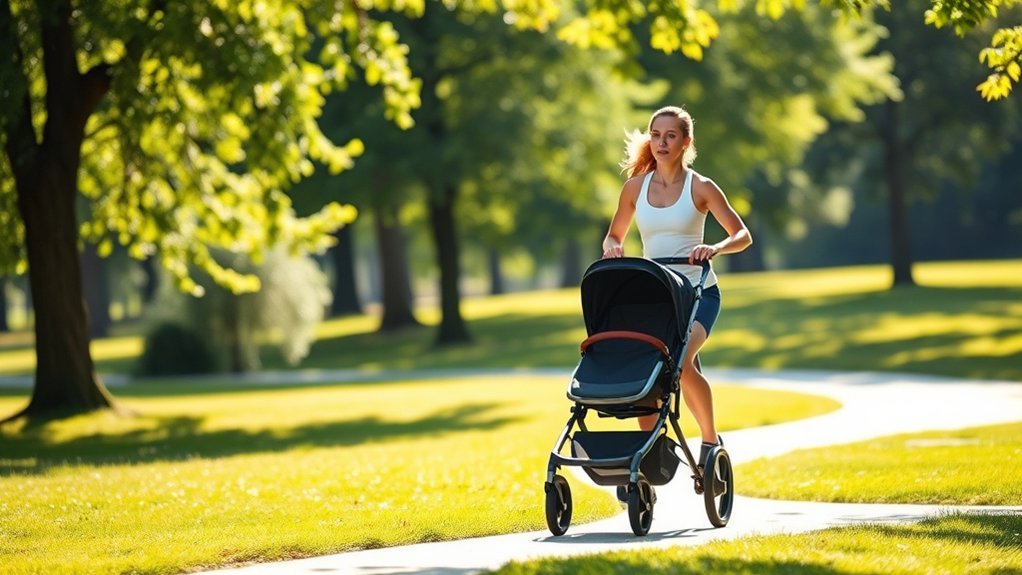
When you jog with a stroller, maintaining proper form is essential to avoid injuries and guarantee an efficient workout. Poor technique can lead to overstriding, increasing your risk of injury due to the stroller’s added weight.
Focus on small adjustments: verify your feet point straight ahead and keep your shoulders relaxed. Engaging your glutes while maintaining a straight body with a slight lean from your ankles helps drive momentum from your hips, enhancing your running efficiency.
Regularly check your form and cadence to prevent fatigue and soreness in your upper body. Prioritizing alignment over speed not only improves your overall performance but also greatly aids in injury prevention, allowing you to enjoy your runs with peace of mind.
Grip, Hand Positioning, and Body Alignment
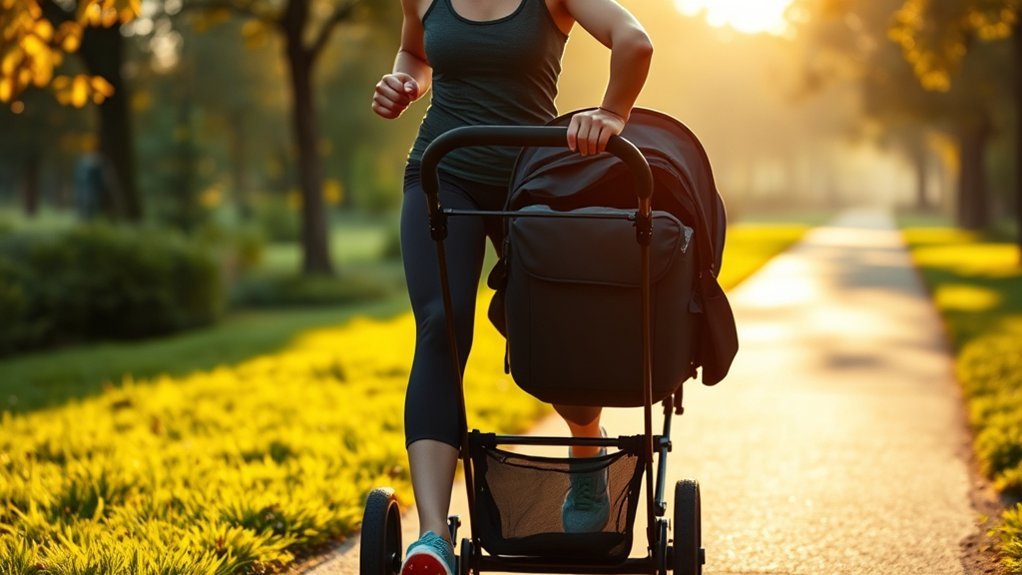
When adjusting your stroller’s handlebars, make sure they’re at a comfortable height to promote a natural arm position while running.
Keep your arms bent at a 90-degree angle, allowing for efficient movement and better control of the stroller.
With your hands positioned properly, you’ll enhance your stability and create a more enjoyable jogging experience.
Handlebars Height Adjustment
Adjusting your jogging stroller’s handlebars to the right height is crucial for maintaining an efficient running form and preventing strain. Aim for handlebar adjustments that allow your arms to stay at a natural angle, similar to a sled push. This position promotes stroller ergonomics and keeps your shoulders relaxed.
If your feet hit the stroller while running, it’s likely due to over-striding, not handlebar height. Regularly switch hands when pushing to prevent fatigue, especially if the height is ideal for your arm length.
When tackling steep inclines, keep both hands on the handlebars and lock the stroller for stability. Proper height guarantees straight body alignment, enhancing your overall running experience and supporting your freedom on the move.
Arm Positioning Techniques
Maintaining proper arm positioning while pushing your jogging stroller can greatly enhance your running efficiency and overall comfort.
Keep a light grip on the handlebars to allow for natural movement, and don’t forget to hand switch regularly to prevent fatigue and encourage a full arm swing. Use the wrist strap for safety, ensuring the stroller stays close during your run.
When maneuvering flat terrain, push with one hand to optimize your arm swing; however, use both hands for stability on hills or tight turns.
Remember to keep your shoulders relaxed and aligned with your body. Maintain a straight posture with a slight forward lean, and keep your elbows bent, bringing the stroller closer for better control and efficiency.
Driving Force, Cadence, and Form Maintenance
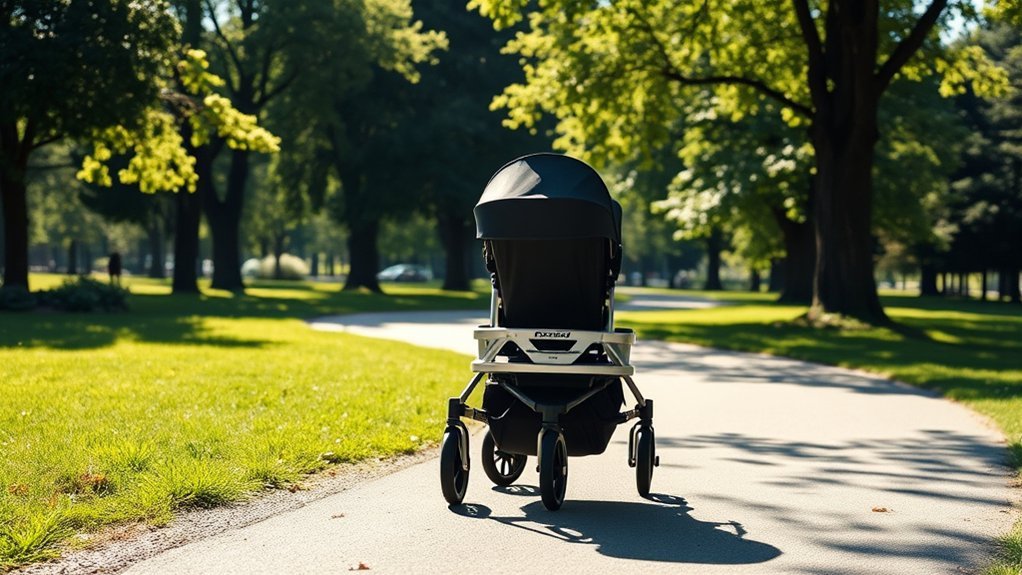
To maximize your efficiency while running with a stroller, focus on driving momentum from your hips and glutes instead of relying on your upper body.
Utilize hip drive to propel yourself forward, ensuring that your lower body takes the lead. Aim for a quick cadence of 90 steps per minute or more; this helps prevent overstriding and enhances control, reducing the risk of kicking the stroller.
Short, quick strides are essential for maintaining proper form and balance. Regularly check your alignment, keeping a straight posture with engaged glutes to boost your overall running performance.
Incorporating glute-strengthening exercises into your routine can further enhance your driving force, empowering you to glide smoothly through your runs.
Physical Challenges of Stroller Running
When you start stroller running, you might notice upper body fatigue more than usual, as it demands extra strength to keep control of the stroller.
Adjusting your stride to shorter lengths can help protect your knees and reduce the risk of tripping.
Upper Body Fatigue
Although jogging with a stroller can be a rewarding experience, many runners quickly discover that upper body fatigue often becomes a significant hurdle. The added stroller weight demands more strength for control and stability, leading to discomfort if not managed properly.
To combat this, focus on maintaining a proper grip and switch hands regularly, which can help alleviate arm fatigue. Engaging your core while running also supports better posture, reducing strain on your upper body.
Gradually adapt to stroller running; consistent practice builds strength and endurance. Incorporate targeted arm exercises like push-ups and rows into your routine to enhance stamina.
With dedication, you’ll find that you can enjoy stroller runs without the overwhelming fatigue.
Stride Adjustment Benefits
Adjusting your stride while jogging with a stroller can make a significant difference in your running experience. By opting for shorter, quicker steps, you’ll reduce knee strain and enhance your running efficiency.
Overstriding is common, but aiming for a cadence of 90 foot strikes per minute can help you maintain control and avoid fatigue. Focus on engaging your glutes and keeping a neutral spine to prevent upper body tiredness while pushing the stroller.
As you gradually shift to a shorter stride, pay attention to your foot placement; guarantee your feet point straight ahead to enhance stability and reduce the risk of accidents.
These adjustments will empower you to enjoy a safer, more liberating stroller running experience.
Strength Development Necessity
Strength is essential for mastering the physical challenges of stroller running. Pushing a stroller adds resistance, demanding you develop upper body and core strength.
To enhance your endurance and reduce fatigue, consider these key strength training strategies:
- Upper Body Workouts: Focus on exercises like push-ups and rows to combat soreness.
- Glute Engagement: Include squats and step-ups to improve hip strength and maintain good posture.
- Knee Stability: Strengthen your knees with targeted movements to prevent injuries.
- Consistent Training: Aim for regular strength sessions to convert stroller running efforts into improved performance.
Posture and Body Mechanics for Effective Running
When you’re pushing a jogging stroller, maintaining proper posture is essential for both your comfort and running efficiency. Focus on posture correction by keeping a straight back and engaged core, which helps prevent discomfort and enhances body mechanics.
Relax your shoulders, aligning them with your body to allow for natural arm movement that supports forward momentum. Regularly check your posture during runs; this awareness can reduce injury risk and improve efficiency.
Engage your glutes by slightly tucking your pelvis, avoiding an overextended lower back for ideal alignment and power.
Finally, pay attention to your foot placement to prevent tangling or stumbles, ensuring a smooth running experience while managing the added complexity of your stroller.
Stroller Setup and Safety Tips
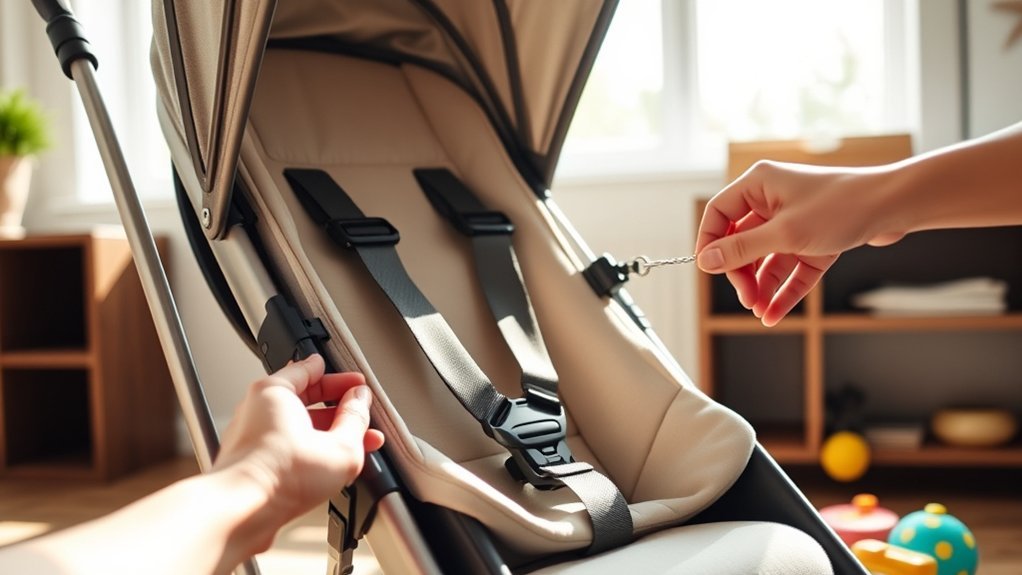
To guarantee a safe and enjoyable experience while jogging with a stroller, it’s crucial to set it up correctly before hitting the trails.
Ensure a safe and enjoyable jog with your stroller by properly setting it up before you hit the trails.
Here are some key stroller safety and terrain awareness tips:
- Adjust handlebars to a comfortable height, keeping your arms in a natural angle.
- Use the swivel function for flat surfaces, and lock it for uphill climbs or curbs.
- Approach sidewalks cautiously; lift the front if needed, and maintain two hands on the stroller when facing steep inclines.
- Monitor your foot placement to avoid tangling, which can affect your running form.
Frequently Asked Questions
What Age Can My Child Start Using a Jogging Stroller?
Your child can start using a jogging stroller around six to eight months, following safety guidelines and age recommendations. Always guarantee they have good head and neck control before heading out for a run.
How Do I Choose the Right Jogging Stroller Model?
To choose the right jogging stroller, prioritize safety standards and essential stroller features like a secure harness, sturdy frame, and adjustable handlebars. Test models for comfort and ease of use, ensuring you feel liberated while jogging.
Can I Run on Trails With a Jogging Stroller?
Yes, you can run on trails with a jogging stroller, but prioritize safety. Choose a stroller designed for trail running, maintain a firm grip, and be cautious of uneven terrain to guarantee a smooth experience.
What Should I Wear When Jogging With a Stroller?
Think of your outfit like armor for a knight. Wear breathable layers, jogging shoes suited for the terrain, and consider the weather—lightweight for sun, waterproof for rain. Comfort and protection are key for a successful run.
How Can I Keep My Child Entertained While Jogging?
To keep your child entertained while jogging, use interactive toys and plan stroller activities. Choose toys that stimulate their senses and rotate them regularly, ensuring your little one stays engaged and enjoys the ride with you.
Conclusion
In summary, mastering the art of jogging with a stroller requires careful attention to your form and setup. As you hit the pavement, remember that every detail—your grip, posture, and cadence—plays an essential role in your performance and safety. With the right adjustments, you can tackle those physical challenges confidently. So, before you take that first step, pause and ask yourself: are you truly ready to embrace the thrill of the run? Your journey awaits.