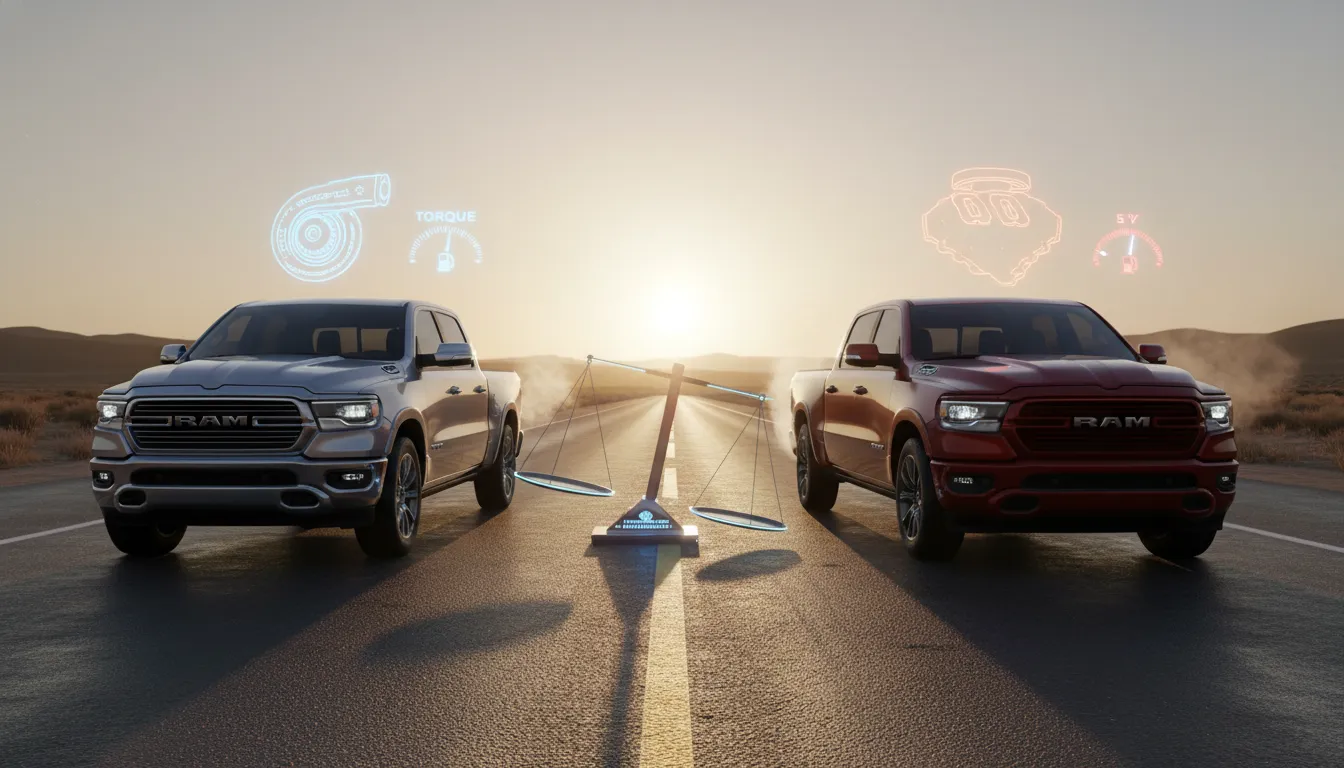
Choosing between the Hurricane and HEMI in a 2026 Ram 1500 is not as simple as saying six cylinders always beat eight, or that a V8 is automatically better. The standard-output Hurricane leads on measurable performance, while the HEMI answers a different need: familiar V8 sound, linear response, and character. This comparison separates verified specifications from personal preference.
Quick Answer
For most 2026 Ram 1500 buyers, the 420-hp standard-output Hurricane is the stronger objective choice because it makes more power and torque, accelerates quicker, and earns slightly better EPA ratings than the 5.7L HEMI. Choose the HEMI when V8 sound, linear throttle response, and a long service history matter more.
Key Takeaways
- The 3.0L Hurricane is a twin-turbo gasoline inline-six, not a diesel.
- The standard-output Hurricane makes 420 horsepower and 469 lb-ft, compared with 395 horsepower and 410 lb-ft from the 5.7L HEMI.
- The fuel-economy gap can be small. Comparable 4WD EPA ratings differ by about one combined mpg between the standard Hurricane and HEMI.
- Towing and payload depend on the complete truck configuration, not engine torque alone.
- Long-term Hurricane reliability is still developing, so no evidence-based source can promise it will outlast the HEMI.
Last reviewed: July 14, 2026. This article focuses on U.S.-market 2026 Ram 1500 models and compares the standard-output Hurricane, high-output Hurricane, and returning 5.7L HEMI V8.
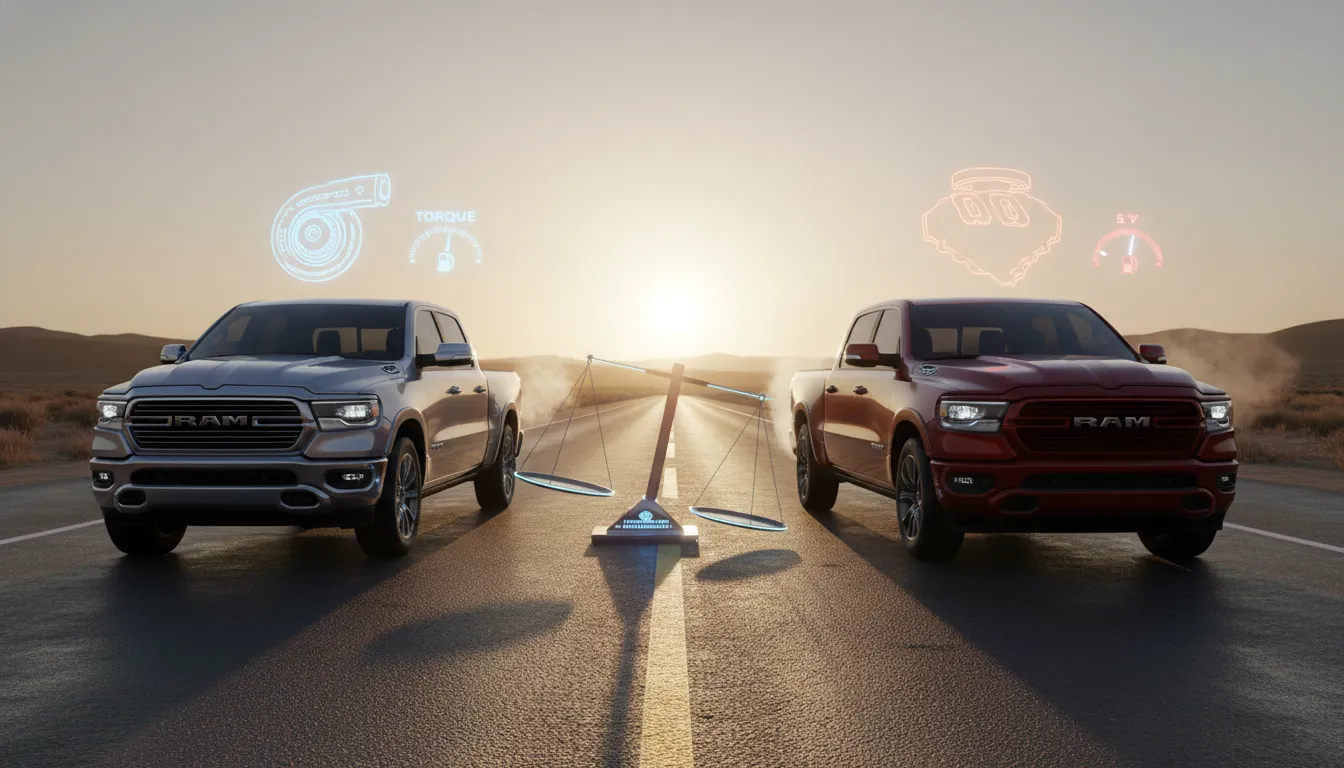
Calling every new HEMI Ram purchase “low IQ” misses the point. The Hurricane wins more objective comparisons, but the HEMI remains a reasonable choice for buyers who value V8 sound, response, and familiarity.
Ram 1500 Hurricane vs HEMI Specs at a Glance
Ram currently offers four engines in the 2026 Ram 1500: a 3.6L Pentastar V6, standard-output and high-output versions of the 3.0L Hurricane, and the returning 5.7L HEMI V8. The figures below compare the three engines most relevant to this debate. Ram confirms the engine lineup and output figures on its official 2026 Ram 1500 page.
| Comparison | Standard-Output Hurricane | High-Output Hurricane | 5.7L HEMI V8 |
| Design | 3.0L twin-turbo gasoline inline-six | 3.0L twin-turbo gasoline inline-six | 5.7L gasoline V8 with eTorque |
| Output | 420 hp; 469 lb-ft | 540 hp; 521 lb-ft | 395 hp; 410 lb-ft |
| Comparable 4WD EPA rating | 17 city / 24 highway / 19 combined mpg | 15 city / 21 highway / 17 combined mpg | 16 city / 20 highway / 18 combined mpg |
| Published towing context | Configuration-specific; Hurricane-equipped trucks can reach the lineup maximum of 11,610 pounds | Trim-specific; performance and luxury configurations may tow less despite higher output | Up to 11,320 pounds when properly equipped |
| Best fit | Most buyers seeking strong performance and reasonable economy | Buyers prioritizing maximum acceleration and output | Buyers prioritizing V8 sound, response, and familiarity |
Note: Cab style, bed length, trim, axle ratio, drivetrain, wheels, and options can change curb weight, EPA ratings, payload, and towing capacity. Compare two actual window stickers and certification labels, not just engine brochures.
Power, Torque, and Acceleration
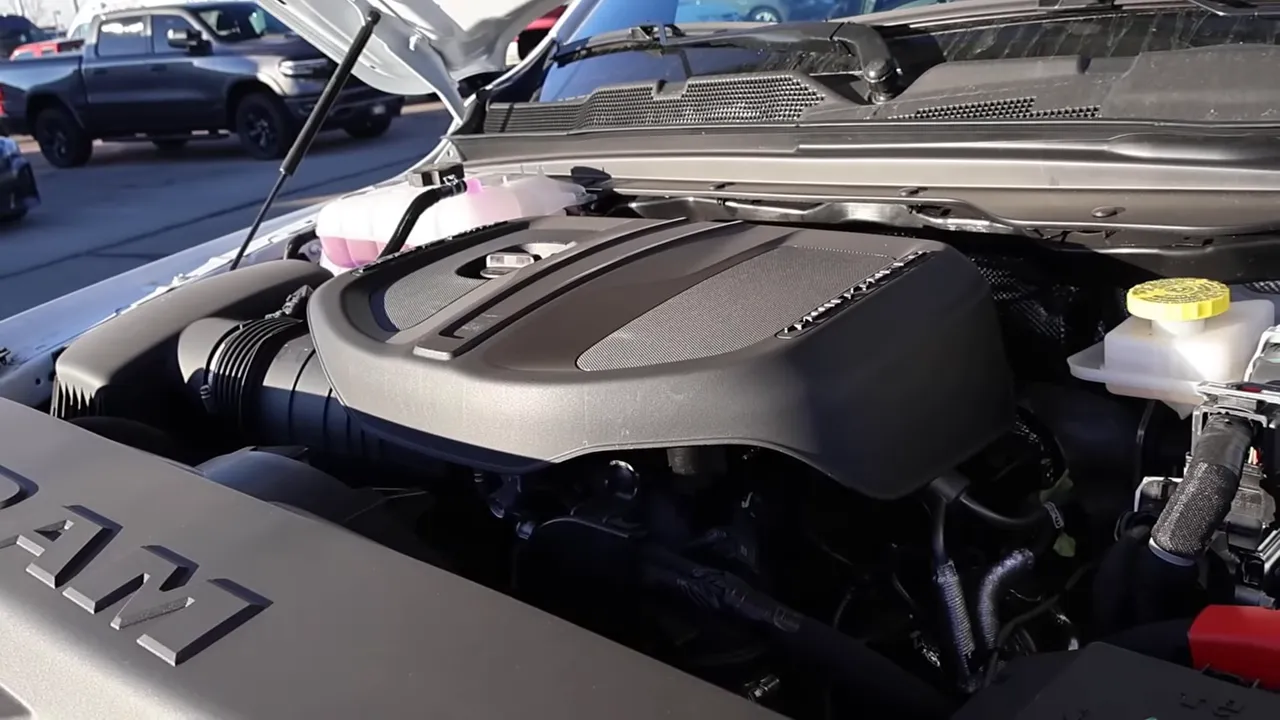
The standard-output Hurricane already produces 25 more horsepower and 59 more lb-ft than the HEMI. The high-output Hurricane extends that lead to 145 horsepower and 111 lb-ft. Peak numbers do not tell the entire story, but they explain why the turbocharged six feels stronger during merging and passing.
Instrumented testing also supports that advantage. In comparable 4WD trucks, Car and Driver recorded 0–60 mph in 4.8 seconds with the standard Hurricane, 4.2 seconds with the high-output version, and 6.0 seconds with the HEMI. Those results apply to the tested configurations, not every possible Ram 1500.
The HEMI still offers a more naturally progressive response as engine speed rises. Some drivers prefer that predictable feel during low-speed trail driving, parking, or light towing. The Hurricane delivers stronger low- and midrange thrust, but its boost response can feel different from a naturally aspirated V8.
Real-World Fuel Economy and Range
The original comparison between 20 mpg for the Hurricane and 15 mpg for the HEMI makes the advantage look larger than current like-for-like ratings support. In comparable 4WD configurations, the standard Hurricane is rated at 19 mpg combined and the HEMI at 18 mpg combined. The high-output Hurricane is rated lower, at 17 mpg combined.
At 12,000 miles per year, the difference between 19 and 18 mpg is about 35 gallons. That still matters, but it is not a dramatic fuel-cost gap. Your result can change with speed, temperature, tires, axle ratio, idling, payload, trailer weight, and driving style.
Do not calculate range from a universal 33-gallon tank assumption. Tank capacity varies by configuration, and usable range changes with reserve strategy and operating conditions. Use the Monroney label, build sheet, and actual tank specification for the truck you are considering.
Pro Tip: Reset the trip computer before a meaningful test drive, then compare similar city and highway loops. A short dealer route cannot prove long-term economy, but it can reveal how each engine responds to your normal traffic and speed.
Price, Warranty, and Overall Value
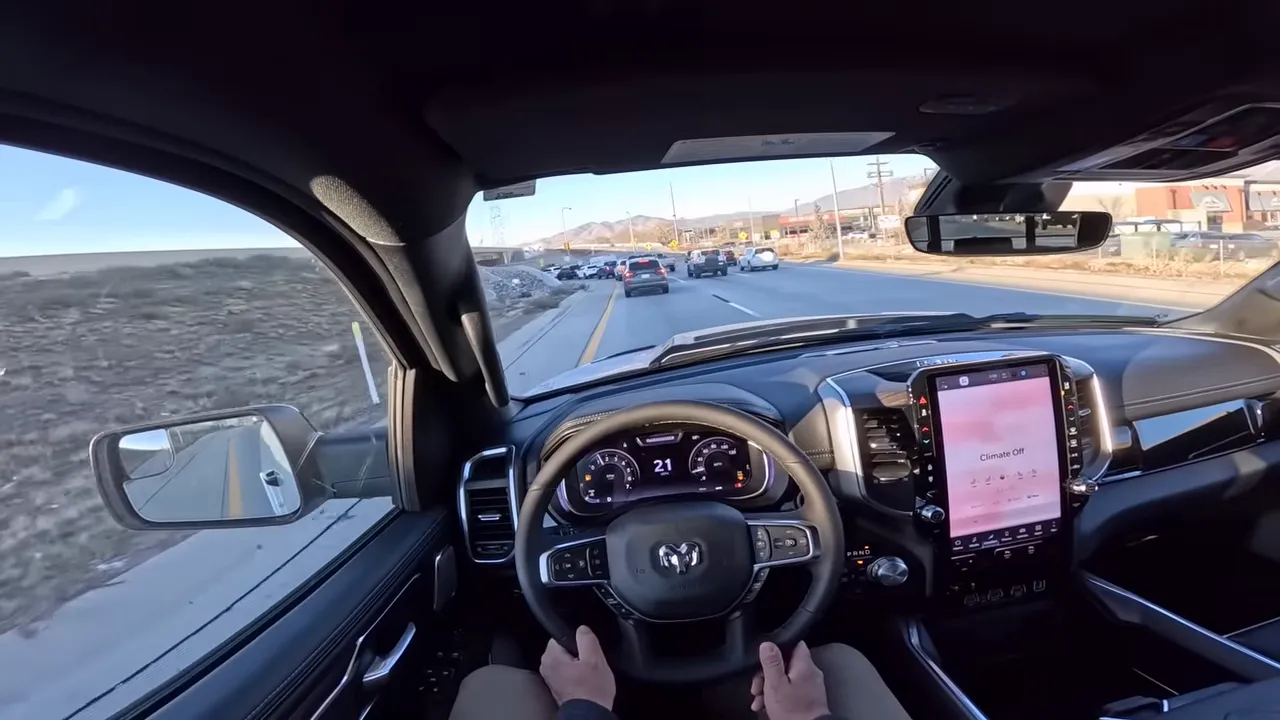
Engine pricing is not universal across the 2026 lineup. The HEMI costs more than the standard Hurricane in some trims and configurations, while replacing a high-output Hurricane with the HEMI may not create the same price difference. Incentives and packages also change. Compare complete build sheets rather than treating either engine as a free upgrade.
The engine choice does not create a separate factory warranty. Ram advertises a 10-year/100,000-mile limited powertrain warranty on select 2026 trucks and vans, with important eligibility and transfer restrictions. Review the official terms for the exact vehicle and buyer type.
Total ownership cost includes more than fuel. Consider the purchase price, required fuel grade, insurance, tires, scheduled service, repair access, resale demand, and how long you plan to keep the truck. A buyer who trades every three years faces a different risk profile from someone planning 12 years of ownership.
Sound, Personality, and Daily Comfort
The HEMI wins the sound comparison for most V8 fans. Its idle, exhaust note, and rising engine speed create a mechanical character the Hurricane does not copy. That emotional value is real, even though it does not improve horsepower, payload, or fuel economy.
The Hurricane is quieter and more subdued. That can be a benefit during commuting, phone calls, and long family trips. It also reaches speed with less drama because the torque arrives strongly without needing the same soundtrack.
Your preference depends on how you use the truck. A weekend vehicle can make sound and personality central to the purchase. A daily driver may benefit more from quiet operation, quicker passing response, and slightly lower fuel use.

Reliability and Long-Term Ownership
No credible evidence currently proves that the Hurricane will be more reliable than the HEMI over a full ownership cycle. The Hurricane entered the Ram 1500 for the 2025 model year, so its long-term field history is much shorter. The HEMI has a far longer service record, but age, maintenance, operating hours, and model-year changes make broad failure claims unreliable.
The designs create different ownership considerations. The Hurricane uses twin turbochargers and direct injection, which add boost and heat-management systems. The HEMI uses eTorque and cylinder deactivation, so it is not a purely simple old-school V8. Both rely on modern electronics, cooling, emissions controls, and an eight-speed automatic.
For a used truck, prioritize documented maintenance, a cold start, a full diagnostic scan, fluid condition, cooling-system health, and an independent inspection. For any new or used truck, enter the VIN in the NHTSA recall lookup and confirm that open campaigns have been completed.
Warning: Do not treat a social-media post, isolated thermostat complaint, or familiar “HEMI tick” description as a diagnosis. Similar noises and warning symptoms can have different causes. A qualified technician should inspect the exact truck.

How the Hurricane Drives
The Hurricane does not drive like a small four-cylinder engine. Its inline-six layout is naturally smooth, and the turbochargers produce a broad wave of torque. In normal traffic, the standard-output version already feels more urgent than the HEMI when you ask for quick acceleration.
Compared with the HEMI, the Hurricane generally feels:
- Quicker: Tested acceleration favors both Hurricane versions.
- Stronger in the midrange: Passing power arrives without waiting for high engine speed.
- Quieter: The cabin receives less engine and exhaust sound under load.
- Less theatrical: Drivers who enjoy a rising V8 soundtrack may find it less engaging.
- More boost-dependent: Throttle response can feel different from the HEMI during small, low-speed inputs.

Towing, Payload, and Real-World Capability
Higher engine torque can improve acceleration with a trailer, but it does not determine the truck’s legal or published rating by itself. Ram lists up to 11,610 pounds of towing for the 2026 Ram 1500 lineup and up to 11,320 pounds for a properly equipped HEMI model. The official capability page also lists a maximum payload of 2,360 pounds for the lineup.
Before choosing either engine, verify:
- The exact tow rating for the VIN or configuration.
- The payload number on the driver’s door-jamb certification label.
- Cab, bed, drivetrain, axle ratio, hitch, and towing-package requirements.
- Passenger, cargo, accessory, and trailer tongue weight.
- Trailer-brake, cooling, tire, and weight-distribution requirements.
Payload can become the limiting number before the advertised tow rating, especially in a heavily optioned crew cab. A more powerful engine cannot recover payload lost to passengers, cargo, a heavy hitch, or luxury equipment.
What to Test During a Drive
Do not make the choice from a stationary showroom comparison. Drive both engines on the same route and pay attention to the situations you face every week.
- Cold start: Compare vibration, idle quality, warning lights, and sound before the engines warm up.
- Low-speed response: Test parking-lot control and gentle throttle inputs.
- Acceleration: Compare merging and 30–60 mph passing response.
- Transmission behavior: Note shift timing, gear hunting, and downshifts on grades.
- Cabin noise: Decide whether the HEMI’s sound is enjoyable or tiring.
- Highway cruising: Compare engine speed, wind noise, and trip-computer economy.
- Tow mode: When practical and permitted, ask the dealer to demonstrate the controls and trailer-assistance features.
Maintenance and Issues to Watch
Both engines require correct fluids, timely service, and attention to changing symptoms. Follow the oil-life monitor and the maintenance schedule for your VIN, especially if you tow, idle for long periods, drive in dust, or operate in extreme temperatures.
- Hurricane: Watch oil and coolant levels, address warning lights quickly, and use the fuel grade specified for the exact output version.
- HEMI: Maintain the eTorque system and cylinder-deactivation engine according to the manual, and have persistent ticking or misfire symptoms diagnosed instead of guessing.
- Both: Check software updates, recall completion, cooling performance, transmission behavior, and service records.
- Used trucks: Avoid modified examples with unclear tuning, poor documentation, or evidence of repeated overheating.
Which Ram 1500 Engine Should You Choose?
Choose the Standard-Output Hurricane If
- You want the best balance of acceleration, torque, and fuel economy.
- You use the truck for commuting, family travel, passing, and regular towing.
- You value objective performance more than exhaust sound.
- You are comfortable owning a newer twin-turbo engine design.
Choose the High-Output Hurricane If
- You want maximum factory power and the quickest acceleration.
- Your preferred trim includes it and its lower fuel economy is acceptable.
- You understand that high engine output does not guarantee the highest tow rating.
Choose the 5.7L HEMI If
- V8 sound and character are central to why you want the truck.
- You prefer its linear throttle feel and familiar service history.
- You accept lower output and slightly lower economy than the standard Hurricane.
- The HEMI is available in the cab, bed, trim, and package combination you need.
How Ram’s Current Engine Lineup Fits Together
Ram’s 2026 strategy already gives buyers distinct choices instead of forcing one engine into every role. The Pentastar V6 serves value-focused buyers. The standard Hurricane is the mainstream performance choice. The high-output Hurricane supports premium and performance-oriented models. The returning HEMI gives V8 buyers an emotional alternative on select models.
That approach makes more sense than declaring one engine universally superior. The standard Hurricane has the strongest all-around case, but demand for the HEMI shows that sound and familiarity remain meaningful purchase factors.
Final Verdict
For most buyers, the standard-output 3.0L Hurricane is the better 2026 Ram 1500 engine. It produces more horsepower and torque than the 5.7L HEMI, accelerates quicker in independent testing, and earns a small fuel-economy advantage in comparable 4WD configurations.
The HEMI is not an irrational purchase. It is the better choice when V8 sound, progressive throttle response, and a long service history outweigh the Hurricane’s stronger numbers. The high-output Hurricane is the performance leader, but its lower EPA rating and trim-specific capability make it a separate decision.
Frequently Asked Questions
Is the Hurricane more powerful than the 5.7L HEMI?
Yes. The standard-output Hurricane makes 420 horsepower and 469 lb-ft, while the HEMI makes 395 horsepower and 410 lb-ft. The high-output Hurricane increases those figures to 540 horsepower and 521 lb-ft.
Is the Ram Hurricane a diesel engine?
No. The 3.0L Hurricane is a twin-turbocharged gasoline inline-six. It is separate from the discontinued Ram 1500 EcoDiesel V6.
Will the standard Hurricane save fuel compared with the HEMI?
Usually, but the advantage may be modest. Comparable 4WD ratings are 19 mpg combined for the standard Hurricane and 18 mpg combined for the HEMI. The high-output Hurricane can use more fuel than either one.
Which engine tows more?
The answer depends on the complete truck configuration. Ram lists up to 11,610 pounds for the 2026 Ram 1500 lineup and up to 11,320 pounds for a properly equipped HEMI model. Confirm the rating for the exact cab, bed, axle ratio, drivetrain, and options.
Is the Hurricane more reliable than the HEMI?
It is too early to make a confident long-term claim. The Hurricane has a shorter Ram 1500 history, while the HEMI has more years of service data. Maintenance, use, model year, and the individual truck matter more than broad online claims.
Does the Hurricane sound bad compared with the HEMI?
It sounds different, not necessarily bad. The Hurricane is smoother and quieter, while the HEMI provides the deeper V8 rumble many enthusiasts want. A back-to-back drive is the best way to decide which sound suits you.
Did Ram discontinue the 5.7L HEMI?
Ram removed the 5.7L HEMI from the 2025 Ram 1500, then returned it on select 2026 models. Availability still depends on trim, cab, bed, and package choices.
How should I decide which engine to buy?
Compare complete configurations, then drive both engines on the same route. Check acceleration, low-speed control, cabin sound, EPA label, payload sticker, tow rating, warranty eligibility, and final purchase price.
Closing Thought
Practicality favors the standard Hurricane, while emotion favors the HEMI. The best choice is the engine that matches your actual truck configuration and ownership priorities. Buy the Hurricane for the stronger all-around numbers. Buy the HEMI because you genuinely value what a V8 adds, not because one engine is automatically superior in every situation.
Sources
- Ram: 2026 Ram 1500 overview — current engine lineup, horsepower, torque, towing, payload, and warranty summary.
- Ram: 2026 Ram 1500 capability — HEMI output and towing figures, lineup towing, and payload limits.
- Ram: 2026 Ram 1500 FAQ — available engines and maximum capability statements.
- Ram warranty coverage — current 2026 powertrain-warranty terms and restrictions.
- National Highway Traffic Safety Administration recall lookup — VIN-based safety-recall checks.
- Car and Driver: Hurricane vs HEMI instrumented testing — acceleration, comparable EPA ratings, and configuration-based price observations.