For safer rides with stroller bunting, make certain it fits snugly within the harness system and has a five-point harness opening. Choose breathable materials like cotton or bamboo, and avoid cords longer than 8 inches to minimize strangulation risks. Regularly inspect the bunting and stroller components for wear and functionality. Don’t forget to monitor your baby continuously, making sure of their comfort and safety. Keep these tips in mind, and you’ll discover more essential insights for stroller safety.
Ensuring a Secure Fit for Stroller Bunting

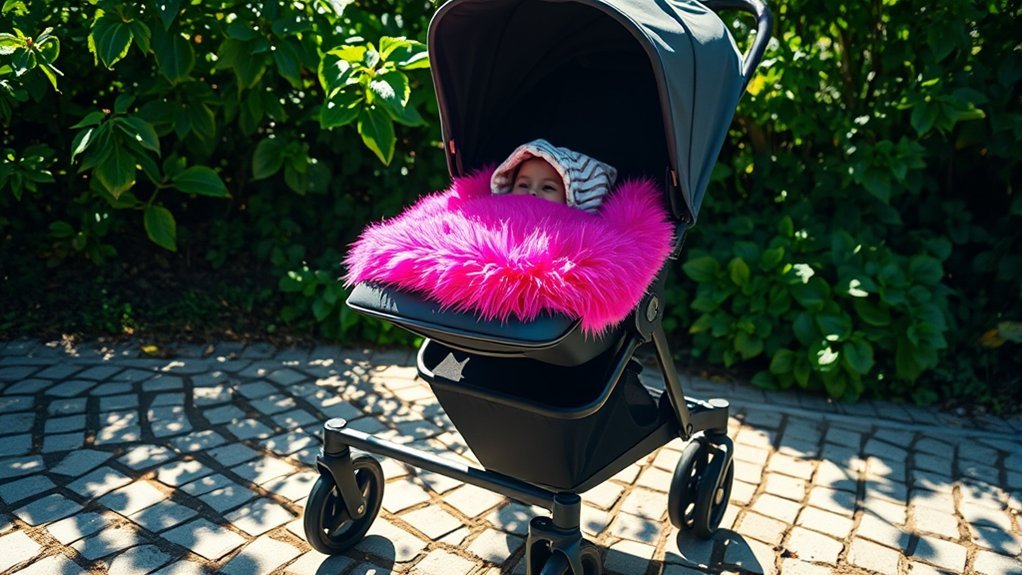
When you choose stroller bunting for your child, it’s vital to confirm it fits securely within the stroller’s harness system.
Ensure your stroller bunting fits securely with the harness system for maximum safety and comfort.
Look for bunting designed with a five-point harness opening that aligns perfectly with your stroller. This guarantees proper installation and keeps your little one safely restrained.
Regularly check that the bunting doesn’t obstruct safety features like brakes and harness straps, as this could lead to serious risks.
Avoid any bunting with loose or long strings that might pose a strangulation hazard.
Following the manufacturer’s guidelines for compatibility is essential for ideal adjustments, confirming both safety and comfort.
Choosing Breathable Materials for Comfort
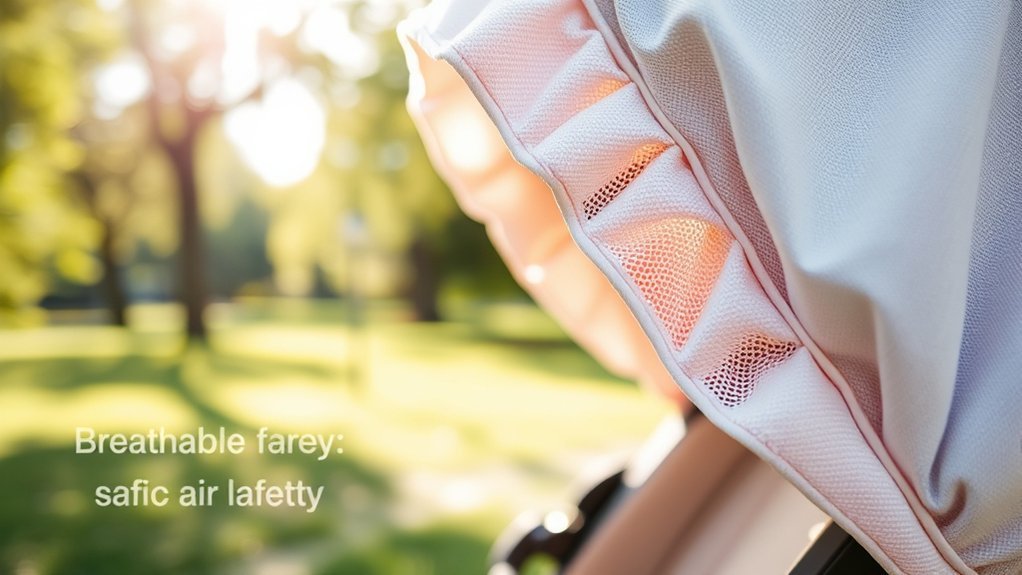
A secure fit is only part of guaranteeing your child’s comfort in a stroller; choosing breathable materials is equally important.
Opt for stroller bunting made from natural fibers like cotton or bamboo. These materials not only regulate body temperature but also reduce the risk of overheating.
Look for bunting with moisture-wicking properties to keep your little one dry and comfy by absorbing sweat and promoting airflow.
Additionally, consider designs featuring ventilation elements like mesh panels for enhanced breathability while still offering protection from the elements.
Lightweight, thin materials are ideal, as they prevent bulkiness that could restrict airflow.
Finally, check for fabric safety certifications to guarantee the materials are free from harmful chemicals, prioritizing your child’s well-being.
Avoiding Strangulation Risks With Bunting
To keep your child safe while using stroller bunting, it’s important to be aware of potential strangulation risks.
Be vigilant about strangulation risks when using stroller bunting to ensure your child’s safety.
Prioritize strangulation prevention by selecting bunting designed specifically for strollers, which often lacks hazardous components like long strings or drawstrings. Verify any cords or strings are no longer than 8 inches to minimize risks.
Always check that the bunting is securely fastened; loose material can become entangled in the stroller’s moving parts. Regularly inspect the bunting for any wear or damage, as frayed edges can increase entrapment risks.
Educate caregivers about monitoring the bunting during use, empowering everyone to maintain a safe environment.
With the right precautions, you can enjoy stress-free outings while keeping your little one safe.
Regular Inspections for Wear and Tear
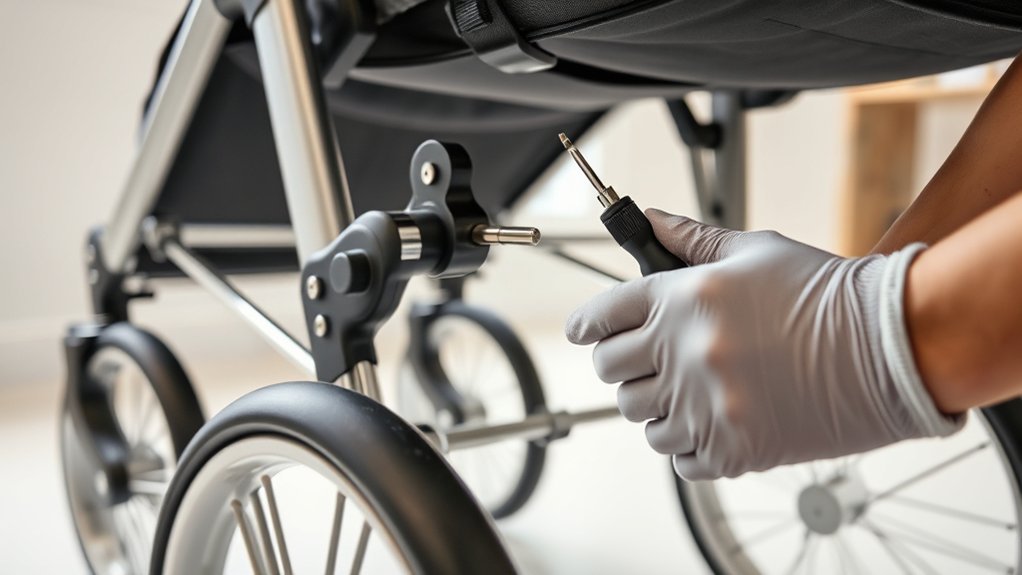
Regular inspections of your stroller are essential for guaranteeing your child’s safety and comfort during outings.
By prioritizing stroller maintenance, you can identify potential hazards before they become serious issues.
Make it a habit to perform safety checks on the following components:
- Brakes and wheels: Confirm they engage and roll smoothly.
- Harness straps: Check for wear and guarantee they’re secure.
- Folding mechanisms: Inspect hinges for functionality.
- Storage basket: Confirm it’s secure and not overloaded.
- Accessories: Verify toys are fastened and choking risks are eliminated.
Always Monitoring Your Baby in the Stroller
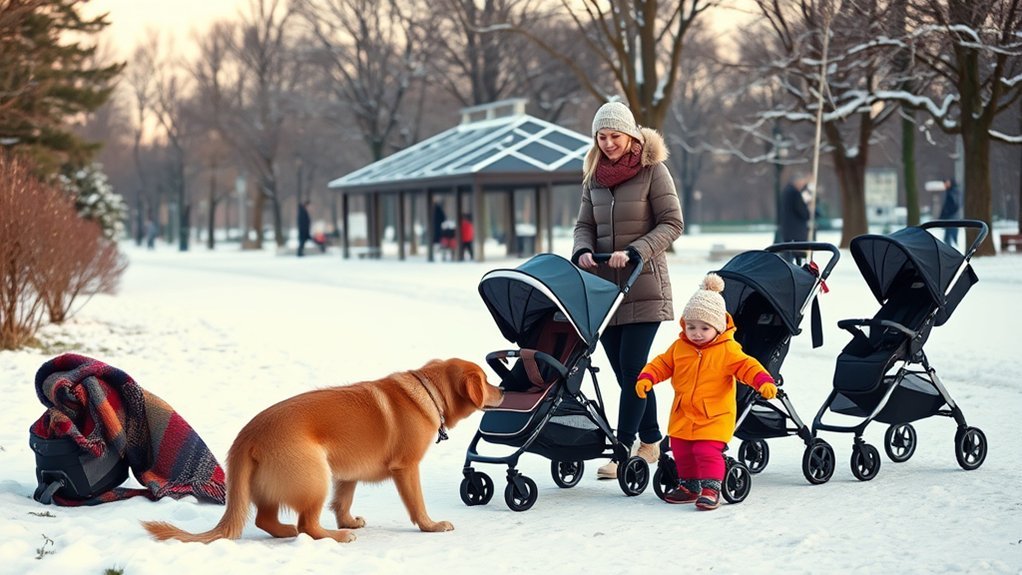
Inspecting your stroller for wear and tear is just the beginning of guaranteeing your child’s safety. Always keep your stroller within sight and never leave your baby unattended, even for a second. Regularly check on your baby while walking to guarantee their comfort and security in the harness. Utilize strollers with adjustable recline features to support their head and neck, especially if they’re infants. Be aware of hazards around you, like uneven terrain or crowds, to prevent accidents. Encourage family members to adopt these monitoring practices for a consistent safety approach.
| Monitoring Tips | Benefits |
|---|---|
| Keep stroller visible | Enhances safety |
| Regularly check baby | Guarantees comfort |
| Use adjustable recline | Provides proper support |
| Stay aware of hazards | Prevents accidents |
Frequently Asked Questions
Can I Use Stroller Bunting in Hot Weather?
Using stroller bunting in hot weather isn’t ideal. It can hinder stroller ventilation and affect temperature regulation, potentially causing your child to overheat. Opt for breathable fabrics and guarantee ample airflow to keep them comfortable.
How Do I Clean Stroller Bunting Safely?
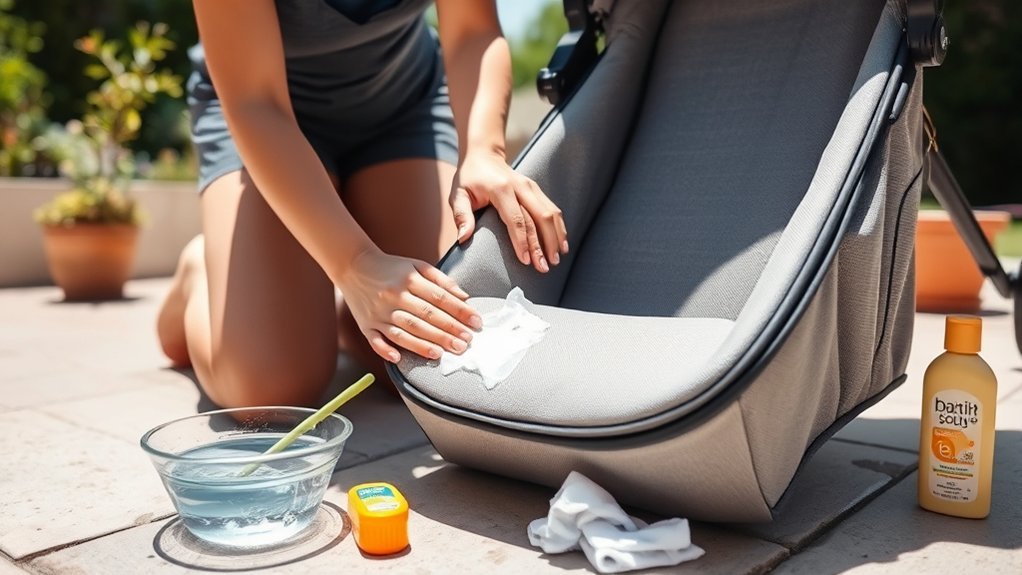
To clean stroller bunting safely, gently hand wash it using mild detergent, ensuring you check the material safety. Avoid harsh chemicals; think of it as caring for a cherished blanket, preserving comfort and safety for your child.
What Age Is Stroller Bunting Suitable For?
Stroller bunting’s usually suitable for infants up to toddlers around three years old. It guarantees infant safety while providing toddler comfort, letting you enjoy outings without worrying about your little one’s warmth and coziness.
Can Stroller Bunting Be Used With Car Seats?
Using stroller bunting with car seats is like a cozy blanket for your little one, but always check for car seat compatibility and follow safety guidelines to guarantee their snug ride is safe and secure.
Are There Specific Brands Known for Safety?
Yes, brands like UPPAbaby and Bugaboo prioritize safety features. They’re known for rigorous testing and reliable materials, ensuring your little one’s secure. Always check reviews and recommendations to find the best fit for your needs.
Conclusion
In conclusion, prioritizing safety when using stroller bunting is essential for comfortable and carefree outings. By fitting the bunting securely, selecting soft, breathable fabrics, and vigilantly avoiding strangulation hazards, you can create a safe space for your little one. Regularly inspecting for wear and tear, along with consistently monitoring your baby, guarantees peace of mind. With these practical precautions, you can enjoy delightful, danger-free strolls together, fostering fond memories while keeping safety at the forefront.